The government will retain income criteria for child benefits for families with three or more children, despite calls from MPs and social organisations for their abolition, the House labour committee heard on Tuesday.
Speaking after the meeting, committee chairman and Akel MP Giorgos Koukoumas criticised the government’s refusal to accept proposed amendments to the child benefit bill.
“The government made it clear today that it will not listen to parliament, large families, families with three children, single parents, trade unions or the Commissioner for Children’s Rights,” he said.
Although the bill includes some improvements, Koukoumas argued that it falls far short of meeting the needs of modern families, particularly single-parent households, which he said would see little benefit from the proposed changes.
He also accused President Nikos Christodoulides of failing to honour election pledges to improve support for single parents and abolish income and property criteria for larger families, including those with dependent university students.
According to Koukoumas, the proposed increases in child benefits amount to just €60 annually, or €5 per month per child, for one category of recipients, and €27 annually, or less than €2.50 per month, for another.
Drawing comparisons with other European countries, Koukoumas said Germany provides €255 per month per child without income criteria, Luxembourg offers benefits starting at €300, and Poland provides €185, while the maximum monthly benefit in Cyprus currently stands at €49 and could rise to around €53 or €54.
He also criticised the government’s rejection of a mechanism to automatically adjust income thresholds annually in line with inflation.
Koukoumas said Cyprus spends less than one per cent of its GDP on family and child support, less than half the European average. He cited annual per capita spending of €277 in Cyprus compared with an EU average of €830.
He called for budget surpluses to be redirected towards households struggling with the cost of living rather than being retained by the government.
Meanwhile, Diko MP Andreas Apostolou welcomed the proposed legislation as a step towards extending financial support to several thousand additional families through child benefits and nursery subsidies, but said further improvements were necessary.
“Child benefit is the state’s most targeted policy for supporting families, which are the foundation of a country,” he said, describing family support as a national duty.
Apostolou called for a larger budget and higher income thresholds, particularly as the number of children in a household increases.
He argued that income criteria for large families should either be abolished or raised substantially, while university students should continue to count as dependent children when calculating eligibility.
Apostolou also announced that the social welfare deputy ministry had formally accepted his proposal to allow Cypriot families returning from abroad to apply for child benefits from their first day back in Cyprus.
Apostolou added that Diko, as a party supporting the government, had a particular responsibility to secure further improvements for families and young couples.
He said the party had already included additional proposals to expand the child benefit scheme among its suggested amendments to the 2027 state budget.
It's relentless. Newspapers run stories declaring the glorious liberation of mid-life divorce while Hollywood and Netflix get in on the act. Why are we all being encouraged to break up our families, asks Joanna Gray.
Nike CEO Elliott Hill said he schedules family time on his calendar.
Bloomberg/Getty Images
Nike CEO Elliott Hill said he schedules his personal and family time on his calendar.
When he's not traveling, he follows a structured routine.
He said his early workdays did not stop him from finding time for his kids.
Nike CEO Elliott Hill said he protects family time by scheduling them like work commitments.
Hill, who came out of retirement to lead Nike in 2024, said he follows a structured routine when he is not traveling.
"What time I try to get to sleep, what time I try to wake up. I get a workout in every morning, too. That helps keep me grounded and keeps me balanced," Hill told host Greg Byrne on the "You Got Byrned" podcast.
He said he makes a point of identifying what matters most to him and scheduling time for those priorities.
"I sat down, and I actually listed what was important to me: family, friends, my own personal — and then work — growth, and I put commitments underneath each one of those, and then I built them into my calendar," Hill said.
For example, he said he knew his work schedule meant he would miss his two kids before they headed to school, so he found other ways to show up for them.
"I knew I wasn't ever going to be there for breakfast with the kids because I was an early bird, and I was going to be in the office," Hill said. "But I did say I'm going to be home for dinner, and I had my admin build it into my calendar so that I would leave in time to be home for dinner."
He also blocks off parent-teacher conferences and other school events on his schedule, and said he would shift work trips when they overlap with those commitments.
"It all comes down to being very deliberate about what's important to us. Writing it on a piece of paper was very, very helpful, and then being planful enough to build it into your calendar. That's how I've always managed the balance," Hill said.
Hill joined Nike as a sales representative intern in 1988 and spent more than three decades in the company in a range of roles. He retired in 2020 after leading Nike's commercial and marketing operations, then returned in 2024 as CEO.
Other business leaders have also shared the systems and habits they rely on to stay organized.
Leah Solivan, a venture capitalist and the founder of TaskRabbit, told Business Insider in April that she uses six color-coded calendars to stay on top of her day.
The cofounder and CEO of Fishwife, Becca Millstein, told Business Insider in September that she does not hold company meetings without a written agenda.
Allie K. Miller, the CEO of Open Machine, told Business Insider in early October that she'll take regular "Claude walks," during which she'll walk for an hour while talking to AI or taking a call.
Viaano Spruyt gave up the life he was building in Australia to return to Singapore after his mother's health scare.
Provided by Viaano Spruyt.
Viaano Spruyt first became a caregiver as a teenager when his father fell ill.
After his father died, he moved to Australia to study and build a life there.
Three years later, he returned home to be closer to family after his mother's health scare.
This as-told-to essay is based on a conversation with Viaano Spruyt, 29, founder of Huddle, an AI-powered social network for fandoms. He is based in Singapore. It has been edited for length and clarity.
My dad had an incurable respiratory disease, and he was on an oxygen tank every day. He would get breathless after walking for just a few minutes and needed help with day-to-day living.
Back then, my mom was the sole breadwinner for the family, and my sister was too young to grasp what was going on.
Spruyt was the primary caregiver for his father when he was ill.
Provided by Viaano Spruyt.
As the oldest child and only son, I took responsibility for his daily care. I fed him his meals and brought him to appointments at hospitals around Singapore.
He passed away when I was 19. Several years later, when I was 22,I moved to the Gold Coast in Australia on a scholarship. I earned my bachelor's in psychology, the first step toward my ambition to become a clinical psychologist.
I had assimilated into the culture, was in a serious relationship, and was set to pursue a master's degree. I was also in the process of applying for permanent residency.
After his dad died, Spruyt moved to Australia for university. There, he built a whole life for himself.
Provided by Viaano Spruyt.
My family was always in the back of my mind. Still, I wanted to experience life outside Singapore, and I was in the midst of building the future I thought I would have.
The call that changed everything
Then one day, I was reminded what it meant to be so far from home.
My mom was walking to catch a bus to work when her knees suddenly gave way. She kept calling me for help, but I'd missed her calls.
Unable to walk, she ended up sitting alone, crying for hours. A kind stranger eventually called for help, and she was taken to a local hospital. She was wheelchair-bound for the next few weeks. Later, she told me she wished I'd been there.
My mom is now 61 and has advanced osteoarthritis in both knees, with severe cartilage loss, meniscus damage, and joint degeneration.
He gave up his life in Australia to move back to Singapore after his mom experienced a health scare.
Provided by Viaano Spruyt.
When I asked why she had called me rather than my younger sister, my mom said she didn't want to distract my sister from her final exams and internship. Still, I was the first person she thought to call for help, even from thousands of miles away.
That was the exact moment I knew I had to come home.
Seeing what happened to my mom brought me back to when my dad was ill. I didn't want to be on the other side of the world when my mom was dealing with a health issue.
It wasn't just my mom. My grandparents, now in their 80s, were also getting older, and I realized my family needed me.
I came home and started over
After my mom's incident, I gave up the plans I'd made in Australia and moved back to Singapore in 2022. That was probably the hardest decision I have ever made in my life.
My Australian girlfriend moved to Singapore for a few months to see if we could build a life here instead. But things didn't work out, and we eventually ended the relationship.
After moving back to Singapore, Spruyt cofounded Huddle, an AI-powered social network for fandoms, with his cofounder, Fabian.
Provided by Viaano Spruyt.
Since coming back, I haven't had much of a social life.
I ended up starting Huddle, an AI-powered social network for fandoms, with my cofounder, Fabian. Starting a company was not the path I had spent my life working toward, but it became another passion.
At this stage, my life is very much centered on work and my family, with whom I live. I choose to have no other commitments outside those two things, which gives me some room to respond when my family needs support.
I make sure my mom gets the care she needs. I take her to the hospital and arrange her treatments. I do the same for my grandparents.
When I returned, my younger sister had just started university. I wanted her to focus on her studies, so I took on more of the day-to-day care for our family.
Once my mom is doing better, I hope to move to the US to grow my company with my cofounder, while my sister and I share responsibility for supporting her.
Coming back meant starting over in a lot of ways. However, I would make that decision again and again for my mom. Always.
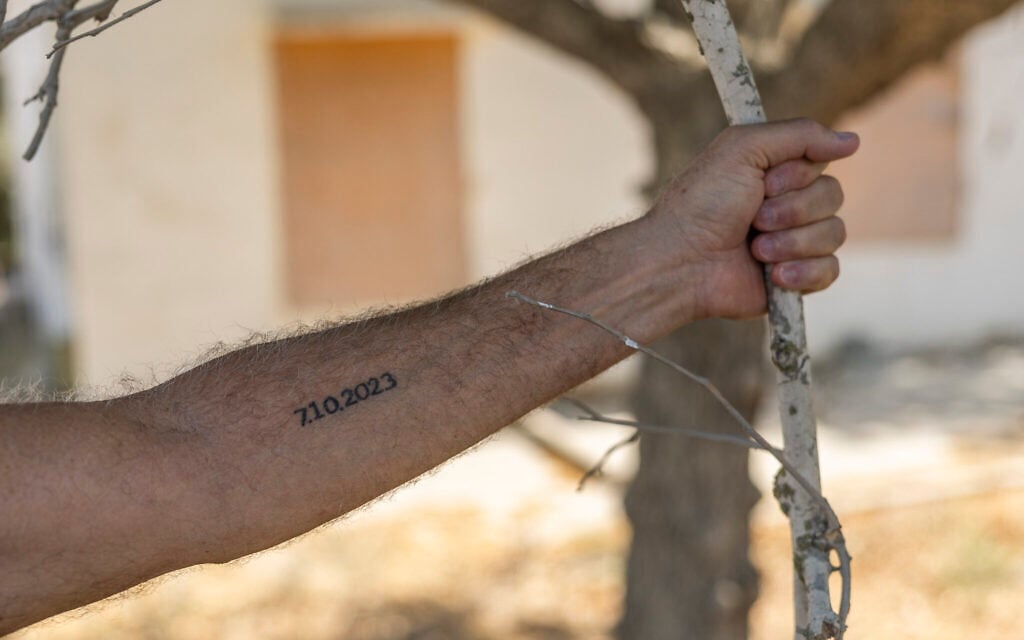
One in 10 residents of Be'eri were murdered in the Oct. 7 Hamas invasion; many feel the catastrophe must be probed by top-level commission, which the PM has refused to set up
Senior political analyst Juan Williams criticizes several candidates in the 2026 midterm elections for employing increasingly unethical and deceptive political advertising tactics.
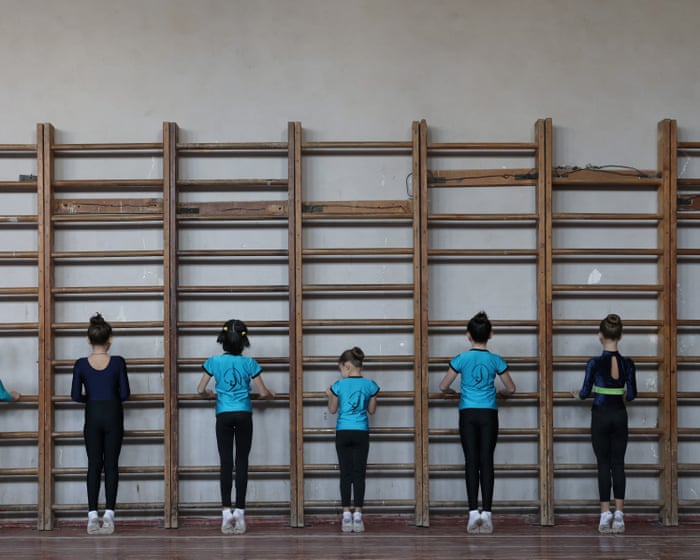
Maka Gogaladze’s debut feature looks at generational differences in the context of Georgia’s education system and emphasis on collectivism
The scars imprinted on impressionable young minds can never fully fade away. Aiming her lens at a rocky beach thrashed by crashing waves, Maka Gogaladze opens her intimate film with a painful anecdote from her adolescent years. Through on-screen texts against a stormy sky, the Georgian film-maker recalls the time she dumped all of her poems into the garbage. The impulsive decision was a gesture of rebellion against her domineering mother; Gogaladze had wanted her to feel guilty.
This debut feature would appear, at first glance, to be another act of revolt. Putting her mother in front of the camera, Gogaladze asks probing, at times blunt, questions about the strict education thrust on her in childhood. Together, they talk about piano lessons that ended in tears, and tough academic exams that continued to haunt the director well into her adulthood. Their contrasting personalities are fascinatingly revealed across these conversations in all their tension, yet these sequences also represent a moving effort to reach across generational differences.
The author cherishes time with her parents and siblings.
Courtesy of Melissa Noble
My siblings and I are all adults with our own families, careers, and mortgages.
Time with just us and our parents is rare, but special.
It reminds me of where I came from, and of younger versions of myself.
When my mom was younger and my siblings and I moved out, she really struggled with empty-nest syndrome. Now that I'm a mom of three myself, I can totally appreciate how she must have felt.
As a parent, you pour so much of your love, time, and energy into your kids. And then one day, they leave. I imagine it must feel incredibly strange. I already dread the day my babies leave the nest, to the point where I sometimes cry to my husband about it.
The other day, I was having one of those moments, sobbing on the bed, when my husband found me. I told him how I felt, and he said, "For God's sake, honey, our youngest is four! You have at least another 14 years with her at home." Fair point.
Time with just my parents and siblings is rare
Now that my siblings and I all have families of our own, the time we have with my folks is often chaotic. Inevitably, one of the grandkids is throwing a tantrum, complaining about being hungry, or announcing they need the toilet, and conversations are often start-stop affairs.
But a few years ago, I had an epiphany. It was my sister's 50th birthday, and we were in Bali with all the extended family. To celebrate, we went out for dinner, just the original six of us — Mom, Dad, and the four of us siblings.
It was one of the most incredible nights. We told stories from childhood, talked about getting older, and shared what actually makes us happy and what we love about each other. There were tears and plenty of laughter.
The author and her family spent time together in Bali in 2022.
Courtesy of Melissa Noble
Afterwards, I realized how much I'd missed my original people. The ones who've known me the longest. The people who remember what I was like as a naughty four-year-old who would scream the F-word in the supermarket if I didn't get lollies, or as a pimply teenager going through puberty. The people who knew me before I had a husband, children, a career, a mortgage, responsibilities, or any real idea of who I was or where life would take me.
As adults, we inevitably morph into different versions of our younger selves. We form new identities, build our own lives and our own ideas.
But there's something so incredibly beautiful about being able to return to those younger versions of yourself, if only for a few hours. For me, I've always been the baby of the family, and somehow, if I'm alone with my parents and siblings, I revert straight back into that role. Goo goo, ga ga. Even at 41, I'll always be the baby of the family.
Spending time together is special for all of us
Since that dinner all those years ago, I've made a concerted effort to organize catch-ups with the original clan only. Partners and children know they're not invited, which I'm sure has offended a few people along the way, but nowadays the spouses are used to it.
My sister lives in Africa, and we are all in Australia, so getting us all together can be tricky. But when we do, we have the best time. There's always a lot of reminiscing and laughing. Often, too, a few inappropriate jokes, and inevitably, the occasional argument or two.
I think for my folks, who are now in their 70s and 80s, these moments are golden. There's no doubt they adore the grandkids and partners. But there's something different about having their kids all to themselves for a couple of hours.
No tantrums. No one cartwheeling through the living room as we attempt a conversation. Just us.
At the end of the day, no matter how old we get, we'll always be their kids. You can grow up, move away, become a wife and mother, and build an entirely new life. But when we're all together again, somehow it feels exactly the same.
Hayley and Mo Molina moved onto Hayley's family's 400-acre ranch in Oklahoma.
Courtesy of Hayley and Mo Molina
Hayley and Mo Molina built a house on Hayley's parents' 400-acre family ranch in Oklahoma.
Now they live steps away from Hayley's parents, grandparents, and brother and sister-in-law.
They both enjoy spending time with the family, and everyone has grown closer.
This as-told-to essay is based on a conversation with Hayley and Mo Molina, 30 and 49, a married couple who live on a 400-acre ranch in Claremore, Oklahoma. Hayley's parents bought the ranch in 2021, and now four generations of family live there. The following has been edited for length and clarity.
Hayley: I was born in Bluffton, Indiana. Then my family moved to Oklahoma when I was three.
We always lived in town, and my family knew nothing about ranching. They were golfers; I didn't listen to country music until I was in high school — we were city people. But then my parents sold their house and were looking for something new, something different.
They were actually looking for something smaller and with not as much land to take care of, but we started talking about a family compound, found Hook Ranch, and just jumped in headfirst.
When my parents first found the property, it was about 170 acres, give or take, and they just kept buying more land and growing it bigger and bigger until it landed on what it is now.
When my parents were talking about doing this, the future goal was for me to be out here. For me, it wasn't the goal right away. I wanted that in the future, but I didn't know what the future looked like for me.
My grandparents ended up moving out here and living in the barn, where they live now, because I wasn't planning on moving out there or building anytime soon.
They were like, "OK, well we'll just take your spot then."
Then Mo and I met, and honestly, I don't even know if we ever had the conversation about living out here.
Hayley and Mo Molina.
Courtesy of Hayley and Mo Molina
Mo: We really didn't bring it up early on. And when we first thought about it, I was like, "There's no way I'm living out there with all them family. There's no way." Not because I didn't like them; it just wasn't in the plan.
But then, as I got to know them, loved them, and we hung out with them almost every weekend, we were like, "Wait a minute, we love it out here."
I proposed out here, and after that, it took off from there. And then it was normal.
It's not weird to be living this close to my family
Hayley: On the property, there's us, my parents, my mom's parents, and then my brother and sister-in-law and their two daughters.
My family's always been so close. We're the type of people who always hung out on the weekends. We always went to my parents' house Friday night. It was so normal to be so close and always together.
Mo: For me, it was just my mom and me growing up, and we lived in the city, but I'm a country boy. I knew I always wanted to be out in the country. But it looked like I was going to be in the city the whole time. But with Hayley being close to her family, it all came together.
Hayley: We actually moved in with my parents first. We sold my house in March 2025, and then moved in with my parents.
One of the homes on Hook Ranch.
Courtesy of Hayley and Mo Molina
Mo: We lived there while we were building our house.
Hayley: We got married in September, moved in with my parents in March, and lived there for seven months. We moved into our house in October of 2025.
Our house is only about 100 yards away from the barn, which is where my parents and grandparents live.
My brother and sister-in-law are about 200 yards away from the barn — it's like a seven-minute walk. It's literally a one-minute walk from my house to my parents' house.
Mo: I didn't know if there were going to be any benefits to living that close or not, especially when my father-in-law built a trail that goes right from the barn to our house.
It's kind of cliché, but if we don't have any eggs, we can literally walk down there.
Hayley: But honestly, we have so much privacy. You wouldn't think that, but I can't even see my parents' house or my brother's house from my house.
Another home on Hook Ranch.
Courtesy of Hayley and Mo Molina
We can be in the backyard, the front yard, and I have no idea what's going on at their houses ever.
We can go weeks without seeing anybody. There's a lot of privacy out here because everybody respects each other's privacy.
Mo: It is weird knowing that we're this close and then a couple weeks go by, and I'm like, "Man, I haven't seen anybody," or "We haven't gone down there," and they're 100 steps away.
We've built closer relationships by living on the same property
Mo: When we first started dating, she was always hanging out with her parents almost every weekend, and I was living my single life, and I was hanging out with my buddies, and we would go out almost every weekend.
Hayley: Friday nights, we know what my parents are doing, because they do the same thing pretty much every Friday night.
So if we don't have anything to do, we are just going to go join them. Sometimes I just want to hang out with people, but I don't want to have to drive anywhere, and I don't want to have to get ready. So we'll have a game night at the barn with the whole family: my grandparents, us, my parents, and my brother and his family.
Mo: Hayley used to come and hang out with my friends, and then it didn't take very long before I went over to her family's place and hung out with them. I was like, "Man, this is kind of cool." They're awesome to hang out with.
At first, I was like, "I'm not hanging out with your parents. This is not a cool Friday night." In less than a month, I would say we were literally hanging out every weekend with her parents.
Hayley: I think we all have gotten so much closer. I have learned so much about my grandparents and gotten closer with my grandma.
Hayley and Mo's wedding on Hook Ranch.
Courtesy of Hayley and Mo Molina
My grandma comes over to our house every Monday morning and washes our sheets for us. While the sheets are washing and drying, she cleans the floors for me, and while she's doing that, she and I chat.
That's been really nice because I get to connect with her whenever. Before, I couldn't really do that because we only saw them every once in a while. Now I can do that every week. And she goes to my brother's house and does their laundry on Tuesdays.
Mo: Getting to know her family more and seeing how they do things and what they like and what their everyday looks like has been a benefit.
Her family works so hard. Her mom is the hardest worker on the ranch, and I would've never known that when I met her.
Her parents run a business, and her dad is constantly not in the house — except to watch college football.
I've learned so much from him.
I think getting to know that part of her family was huge for me. That's what's different. If we lived where we lived before, I probably would've never learned, or wanted to learn, that. So that was big for me.
The basketball star seems proud to leave the job to his partner. That’s so last century
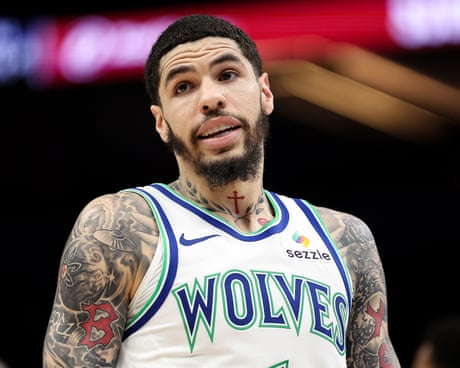
Nobody can accuse the basketball star LaMelo Ball of being bad at his job. That said, the Minnesota Timberwolves point guard doesn’t seem to be a huge fan of dribbling.
Ball has a nine-month-old son, LaOne, with his partner Ana Montana (real name: Analicia Chaves) and is apparently uninterested in dealing with all the body fluids that come with a baby.
Business Insider wants to hear from moms who work for Uber and Lyft.
: Jeffrey Greenberg/Universal Images Group via Getty Images
Being a mom can be challenging and expensive.
Some have turned to apps like Uber and Lyft to make extra money — or as their main source of income.
Fill out our survey if you're a mom who does gig work.
Uber and Lyft often talk about the flexibility of working as a driver on their apps.
That aspect of the gig has attracted moms, among other people who often want to earn money outside a 9-to-5 schedule. The job can be appealing to mothers who need to juggle school drop-offs, childcare, and other obligations of parenting.
Others, including single moms, say they feel stuck in ride-hailing work and end up having to drive for Uber or Lyft at set times anyway, depending on when the most passengers need rides.
With costs like childcare and college rising, Uber and Lyft offer some moms a way to make extra money — if they can earn enough on the apps and keep costs like gas and car maintenance under control.
Business Insider wants to speak with moms who drive for Uber, Lyft, or other ride-hailing apps. We want to hear about how you combine the gig with taking care of your kids, including both what's working and what isn't. Please fill out the survey below.
Lynch syndrome, a hereditary condition that increases cancer risk, has no symptoms. Most people don't realize they have it until after a cancer diagnosis.
iStock; Tyler Le/BI
After Bryce Ramsey was diagnosed with stage 3 colon cancer at 33, she learned another piece of shocking news: She had a genetically high chance of developing it from the very beginning.
Ramsey tested positive for Lynch syndrome, a silent, inherited condition that heightened her lifetime risk of being diagnosed with colorectal cancer by up to 56% for her variant. It also put her at greater risk of developing ovarian, uterine, stomach, pancreatic, and other forms of cancer.
Before she learned she had Lynch, Ramsey urged her relatives to also get screened for colon cancer. Since then, her father, brother, and aunt have all been diagnosed with various stages of colon cancer. Like Ramsey, her aunt also tested positive for Lynch.
"I was the whistleblower," Ramsey, 40, based in Mississippi, told Business Insider. Ramsey now wants her two young sons to test for Lynch once they're in their early 20s, the recommended starting age for her specific Lynch mutation.
Bryce Ramsey only learned she had Lynch syndrome after being diagnosed with colon cancer.
Bryce Ramsey
Like most genetic testing, Lynch syndrome testing is relatively quick, cheap, and non-invasive. It involves a saliva test, a cheek swab, or a blood test, with the latter having the least room for error.
Still, it hasn't caught on: About 1 in 279 Americans (1.2 million people) are estimated to have Lynch syndrome, including between 3 to 5% colon cancer patients. Yet an estimated 95% of Americans with Lynch syndrome have no idea they have it.
All the while, cases of colon, breast, uterine, and pancreatic cancers are rising in young people, with colon cancer the deadliest cancer for adults under 50. "If you don't know, then you can't get help," Ramsey said, including earlier screenings or preventive measures such as hysterectomies.
"Ignorance is not always bliss."
The 'lowest hanging fruit' for cutting down cancer risk
Some experts view broader Lynch syndrome testing as a way to get more people screened for cancer before symptoms arise — and a way to potentially help entire families better understand their cancer risks.
Like Ramsey, the majority of people diagnosed with Lynch syndrome only get screened after they have cancer. In the US, the CDC's general guidelines recommend that colon and uterine cancer patients have tumors biopsied for Lynch, followed by Lynch syndrome screening for the patient if there are abnormal findings.
Some experts believe the lack of early genetic testing is a huge missed opportunity for reducing cancer risk. One 2021 study found that about 16.4% of 713 early-onset colorectal cancer cases could have been prevented if patients knew either their family history or had been genetically screened, and would have subsequently started getting colonoscopies sooner.
Lynch syndrome testing "has got so much potential, but it's not being utilized," Heather Hampel, a professor at City of Hope in California who specializes in clinical cancer genomics and Lynch syndrome, and a co-author of the study, told Business Insider.
While Lynch syndrome remains unknown to most Americans, some health systems are trying to expand testing to the broader population. Helix, a genetic screening company that first started out as a consumer DNA marketplace, started partnering with 17 health systems in 2021 as part of its "Population Genomics Initiative." The goal has been to introduce broader population-scale genomic programs that include testing for Lynch syndrome.
Helix offers broad, population-based Lynch syndrome testing through participating health systems.
Helix
Dr. Cassie Hajek, the medical director of Helix, told Business Insider that most patients diagnosed with one of these hereditary conditions by Helix were completely taken aback by the news. "They're kind of operating on the assumption that their risk is just as it is in the general population, but in fact, it's significantly elevated," she said. "The whole goal is to identify these patients hiding in plain sight."
By knowing their genetic predispositions for cancer, they can both more easily start earlier cancer screenings and also inform their family members of their potential genetic risks.
Hampel noted that lowering overall cancer rates is complicated. We still don't know why colon cancer cases are rising so rapidly among young people, and lifestyle factors like sedentary routines and diets high in ultra-processed foods are far more difficult to control for.
"If the lowest-hanging fruit is family history and gene testing, and we can't even prevent those," Hampel said, "how are we ever going to prevent things where we need people to make lifestyle or behavioral changes?"
The ripple effects for families
Michelle York was 33 when she first heard of Lynch syndrome.
Up until that point, all she'd known was that her mom's side of the family had a long cancer history. Her great-grandmother died from colon cancer. Her grandfather had stomach and brain cancer. Her great-aunts died from liver, ovarian, and breast cancer, respectively. Her mother's cousin died from pancreatic cancer.
York (second from left) with her mother, sister, and brother — all of whom tested positive for Lynch syndrome.
Michelle York
York's mother, a nurse at the time, had come across the term through her work. She tested positive for Lynch, along with York, her two siblings, aunt, uncle, and cousin.
At first, the news caused some anxiety. "Does this mean I'm going to get cancer at a young age?" York, 43 and based in Los Angeles, told Business Insider. "Does this mean every time I don't feel well, I'm going to immediately think I have cancer?"
However, once York and her family started getting routine cancer screenings, including annual colonoscopies, they felt more reassured than afraid, because they knew they could catch cancer early. York's mother had multiple precancerous polyps removed.
"None of us have had cancer yet, but we've had lots of scares," York said. She also wants her kids, ages 17 and 14, to test once they're older.
York's mother triggered something called "cascade testing," in which other family members test for Lynch and can take preventive measures to reduce their cancer risk.
Dr. Sapna Syngal, the director of research at the division of cancer genetics and prevention at the Dana-Farber Cancer Institute in Boston and the founder of its Lynch Syndrome Center, sees cascade testing for Lynch as a "real opportunity" to lower cancer risk, she told Business Insider.
Particularly for young people, if they test positive for Lynch in their 20s and start getting cancer screenings, "there's a really, really good chance that you could prevent that cancer by taking out polyps earlier on," she said.
There are also financial benefits to knowing you have a genetic predisposition to cancer. While insurance coverage for Lynch-related cancer screenings can vary, Hajek said her patients typically have a more "straightforward" experience in getting otherwise expensive screenings like colonoscopies covered. York, for example, said her insurance covered her cancer screenings once she got her Lynch syndrome diagnosis.
York, pictured with her family, wants her kids to test for Lynch syndrome when they're old enough.
Michelle York
Ultimately, Hajek said Lynch syndrome testing can help patients get more precise care than simply knowing they have a family history of cancer. Just as testing positive for Lynch can prompt someone to start cancer screenings sooner, testing negative can also relieve a person of anxiety about being at high risk of early-onset cancer and potentially call for less frequent cancer screenings than if they had Lynch.
York said she's ultimately grateful for finding out and knowing she can catch any early signs of cancer by starting annual screenings such as colonoscopies in her 30s — over a decade before the average-risk recommended screening age of 45. Both Ramsey and York also had hysterectomies and oophorectomies unrelated to cancer, which brought extra relief in also reducing their uterine and ovarian cancer risks to essentially zero.
"I think knowledge is power," York said. "Now, it almost feels comforting because I know that I started doing this young."
Lynch needs its Angelina Jolie
Angelina Jolie appearing on the red carpet a month after her May 2013 op-ed revealing her BRCA1 diagnosis and decision to undergo a preventive double-mastectomy.
LEON NEAL/AFP via Getty Images
In 2013, Angelina Jolie revealed in a New York Times op-ed that she had tested positive for BRCA1, a gene that increases the risks of breast and ovarian cancer.
Her revelation — and subsequent operations to remove her breasts and ovaries — sparked an international drive to get tested for BRCA1/BRCA2. Years later, a study found that 15 business days after Jolie's op-ed went live, BRCA testing rose 64% in the US.
Over a decade later, researchers and patients are working to make Lynch syndrome screening similarly universal.
Getting every person screened comes with its own obstacles.
Lynch could be added to the list of genetic conditions screened for in newborn heel tests. However, critics of the idea believe it can create years of stress when the person with Lynch isn't recommended to start getting colonoscopies until they're in their early 20s.
Other routes, such as including Lynch syndrome testing when people join the military or go to college, would miss broad swaths of the population.
There's also the question of funding. Helix, for example, doesn't bill patients and instead relies on the participating health systems for financial support. Few hospital systems can afford to prioritize testing for a gene condition that impacts a small portion of the population.
Ramsey's advocacy work includes raising more awareness around colon cancer as well as Lynch syndrome.
Bryce Ramsey
Syngal said one immediate option for getting more people screened for Lynch is to follow York's route: consider getting tested if you have a family history of colon or other relevant cancers.
Since their diagnoses, Ramsey and York have tried to spread the word about Lynch syndrome testing. Ramsey is an official advocate for the non-profit Lynch Syndrome Awareness, while York, a full-time content creator, has shared her story on social media.
"It's scary when you first find out that you have a genetic mutation that predisposes you to cancer," York said. "But at the end of the day, knowing that and taking those precautions could ultimately save your life."
Pat Zawko (second from left) raised three adopted children and then her grandson. Now, she helps raise her great-grandson.
Pat Zawko
Pat Zawko, a 67-year-old nurse, raised her grandson and now helps raise her great-grandson.
Pat adopted three children, facing challenges with their health and legal issues over the years.
Pat balances full-time work with supporting her great-grandson, cherishing her role as a grandmother.
This as-told-to essay is based on a conversation with Pat Zawko, 67, who lives in upstate New York and works full-time as a nurse. Zawko raised her grandson from birth, and she is now helping him raise her great-grandson. This interview has been edited for length and clarity.
My husband and I raised our grandson from age 5 months to adulthood. We are now helping him raise his son, whom he raises as a single parent.
I was raised in upstate New York in a very rural area. I was one of nine children, the first girl after six boys. My grandmother helped shape who I am today. I didn't go to college until I was 29, and I became a nurse. I progressed to completing my Ph.D.
All our children are adopted. We made that decision very consciously. I found out that I couldn't have biological children, so in 1982, we adopted our first son. He had lots of health issues, and he was in and out of psychiatric facilities. We paid for all of his rehabs and facilities, and he didn't qualify for any subsidies back then. My husband and I decided to adopt two more children, and both of them are very successful in their adult lives.
We got custody of our grandson when he was an infant
When he was 17, he and a young lady ran away to Florida, and they had a child. They were involved with drugs, and we got custody of their son when he was 5 months old. My son died when he was 23.
Raising our grandson wasn't really a choice, and we had to do what was right. He had special needs, which brought with it an entirely new set of needs medically, psychologically, and educationally. There were many challenges in raising him. We couldn't get him insurance for about six months. My husband didn't grow up with money, and he worked very hard in his life, but he never questioned taking the money that he had saved long before he met me and pouring it into these children.
He went down a similar road to his biological father. He got a young girl pregnant, and he became a single dad. He was left with this baby. We were living in Ohio at the time, and we moved back to New York to help him. The parents of the baby's mother are wonderful people and are very supportive financially, physically, and emotionally. There's never tension between us. My great-grandson's birth mother hasn't seen him in two and a half years.
When we took in our grandson, my other children were 10 and 11. We didn't have any baby stuff. We didn't have day care. We were used to sleeping all night because our kids were pretty independent.
Getting my grandson upset the equilibrium of the family. We had to give our kids the attention they needed, but we also had a baby with different needs.
My grandson is 25 now. Back when we started raising him, nobody was talking about the financial and emotional impact that grandparents raising grandchildren has. Nobody stopped to look at how it impacts family dynamics. We couldn't get help. You're stretching out that time period when you're parenting, where you think that you can't be a grandmother because you have to parent this child.
I see it more frequently in my profession, where grandparents, some of them older than I am, bring in grandchildren, sometimes four or five little ones running around.
My grandson needs a fair amount of support with his autism diagnosis. It's a huge transition for him, and he's needed lots of support and guidance.
I can be a grandmother to my great-grandchild
Now that my grandson has a son, I can finally be a grandmother; before this, we were our grandson's only parents. There were times that I felt robbed of being a grandmother with my grandson, as we had to be parents. I wanted to spoil him and send him on his way, but I couldn't.
Now I am technically a great-grandmother, and being able to be a grandmother for the first time. I am overjoyed and thrilled to finally be a grandma and not a parent. I can spoil him, play with him, teach him old songs, and send him home with his dad.
I still work full-time at 67, partly because raising grandchildren is very expensive. I often put in 12-hour night shifts at the hospital. I also had to pay for cancer treatments that ate through my retirement. We poured much of our life savings into making sure he had everything he could to become a productive member of society. He has a home and a car. He works full-time. He's able to experience success in being a parent, which neither he nor I ever dreamed was possible.
We know we did the right thing, but you don't think about the strain it puts on your finances, especially as you approach retirement in your later years. It takes a village to be successful as grandparents raising grandchildren. We don't have the energy that we did when we were 30.
We raised kids for 35 years
For 35 years, we raised kids, and now we have to take care of ourselves, which is not nearly as easy as one might think. We feel the pinch now with our health. But these kids have been worth the investment.
My great-grandson is 3 years old, and helping raise him is the greatest thing I've ever done. He's the light of our life. They don't live far from us, and the baby often stays with us. We get to impact his life on the level that grandparents should. We're probably more active in his life than the average grandparent. He knows nothing other than absolute unconditional love.
When he comes here, we call him the "hurricane" because he trashes the house. When he leaves, we clean it up and take joy in that. He's able to be a kid. We don't need to worry about his doctor's appointments or getting him into preschool.
My other son came by and saw we had given the baby Cheetos. He said, "You would never let us eat that. How come you're letting him?" I told him it's because I don't have to worry about all the other stuff. I understand that a Cheeto is not going to ruin his life, whereas when you're raising your own children, you are so worried about everything that you're going to make a mistake that's going to derail their life.
I used to say that we can make every generation better. If my great-grandson can have a better life than his father, and his father can have a better life than his father, that's the goal.
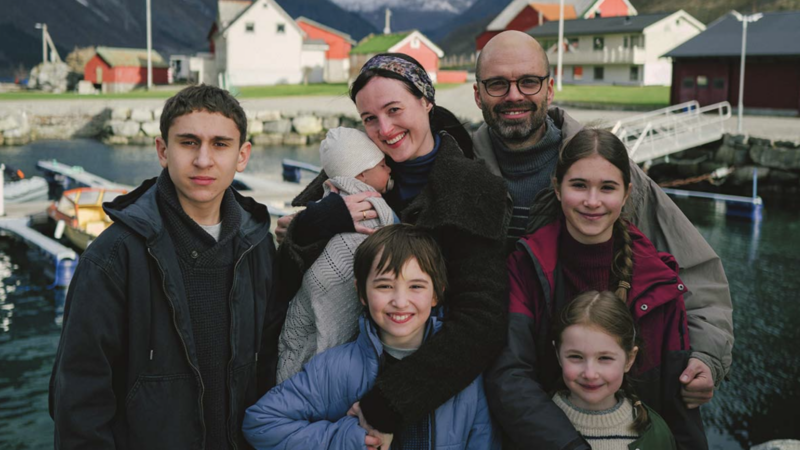
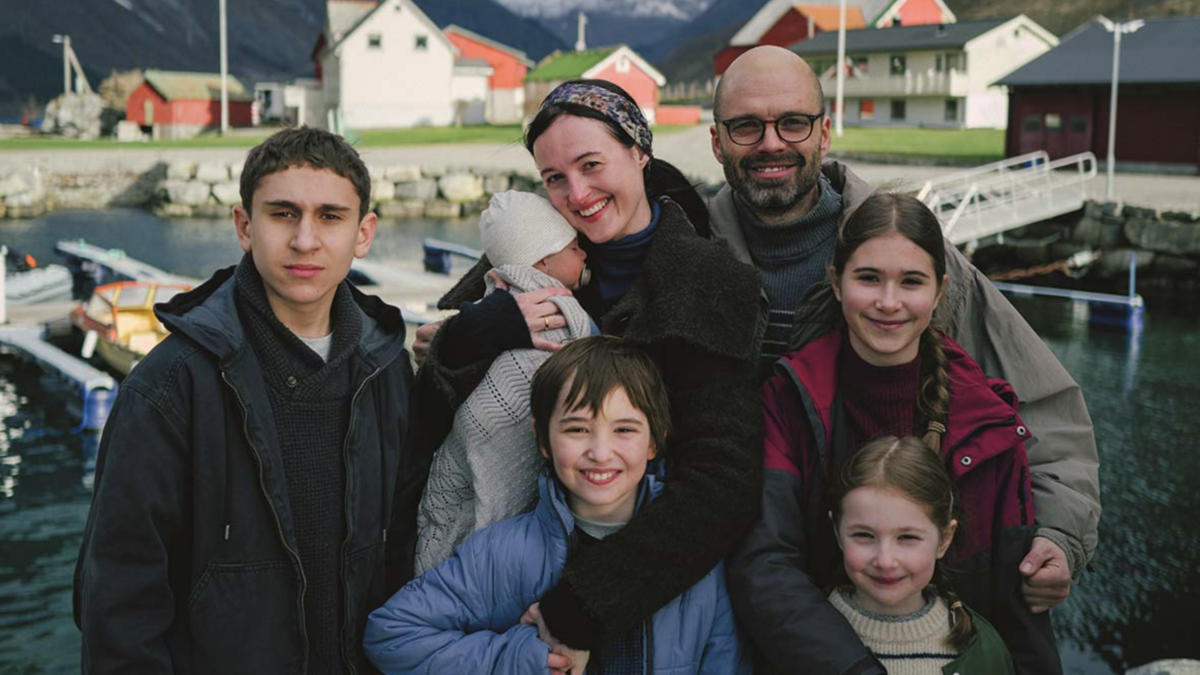
Fjord is a movie about having your children taken by the state. The tone is calm, clinical, measured, and by the books. No violence is depicted on screen. People rarely even raise their voices. Everything unfolds in the distant and impersonal style of bureaucratic procedure.
But the movie, which won the Palme d'Or at this year's Cannes Film Festival, is utterly enraging, a fierce, ferocious, gut-punch of a film. It's a haunting portrait of the consequences of unchecked state power, especially the kind that purports to be for one's own good.
Much of the film's power comes from the fact that it simply depicts what happens when a person, or a family, comes under suspicion by the state. There's no commentary, no lecturing, no big speech at the end. Instead, writer-director Cristian Mungiu, a Romanian filmmaker whose sympathies are clearly with the family, simply shows us, unblinking, what it's like to lose one's rights and freedoms at the hands of a bureaucracy that respects no power and no authority but its own.
When the film begins, the Gheorghiu family—a mother (Renate Reinsve), father (Sebastian Stan), and their five children—moves from Romania to a small town in Norway. Soon, school authorities notice the children have bruises. We in the audience know the bruises weren't caused by the parents, but the children, who don't speak Norwegian, give conflicting statements. After being brought in for questioning by the police, the father admits to sometimes spanking or lightly slapping his children on the behind, for correction. In order to go free, he's required to sign a statement that contorts his words, making his admission of spanking sound like something more sinister and violent.
He's also a conservative Christian, which has caused some social tension: He's played Christian music, without singing the lyrics, on a piano at school, a no-no in a state that strictly curbs proselytizing. School officials are concerned that he requires his children to pray and study the Bible; the children aren't allowed to play video games or watch YouTube. One of his children spoke out against homosexuality in school during a session on gender. There's suspicion among the teachers and administrators that he might be indoctrinating his kids.
So the school authorities alert Child Protection, Norway's powerful family bureaucracy. They remove the kids, including a breastfeeding baby, from their parents' custody and place them in three separate foster homes. At first the parents are allowed no visitation, and they are not told where the children are located.
Then they go to court, initially for a civil trial, but with a criminal trial for child abuse looming in the background. As the legal process proceeds, they are told repeatedly that essentially anything they do to fight for their children will make the outcome worse. The state wants compliance and admission that they wrongly abused their kids. But if they admit to abusing their kids, doesn't that give the state evidence they are unfit to parent? Doesn't that make the criminal trial more likely to go against them? As their own, mostly sympathetic lawyer, informs the two parents, "Frankly unless you convince them that you understand and regret it, the risk of you going to prison is considerable."
Later, at the trial, a representative from Child Protection calmly says there's no reason to believe children might be better off with their biological parents, noting the family's restrictions on video games, internet, and YouTube. In their view, the state knows what's best for the kids; the culturally backward, religious conservative parents do not. It's not for nothing that one character, a conservative political figure from Romania who has come to help publicize the situation, analogizes the power of Child Protection to the power of the Soviet state.
Part of what makes Fjord so effective is its lack of sermonizing. You don't have to be a trad, a conservative, a family values evangelical, to see that what's happening to the Gheorghiu family is simply wrong. They are railroaded by an imperious bureaucratic state that distorts reality to turn them into villains, with the goal of separating children from their parents and each other. Who are the real child abusers here?
The story is fictionalized, but not hypothetical. Fjord is based on the true story of the Bodnariu family, conservative Romanian immigrants whose five children were taken from them by the Norwegian state in the 2010s on similarly flimsy justifications. The family eventually left Norway. After watching Fjord, it isn't hard to see why.
The author (in blue) with her family as they hiked in Konnevesi National Park in Finland.
Courtesy of Emese Maczko.
My husband and I enjoy hiking, but our kids, 7 and 10, often complain along the way.
On a visit to Finland, we went hiking with a guide, and my kids were engaged the whole time.
It encouraged me to change a few things about the way I approach and plan family hikes.
It was an hour into our hike through Southern Konnevesi National Park in Finland, and neither of my 7- and 10-year-old daughters was complaining. It was glorious.
Normally, within the first hour, I would have already heard the question "How much longer?" One of them would also declare, "It's boring. We're just walking."
So what was different about this hike? Why weren't they complaining? It's because I took a different approach to this hike than I have with past ones — and it worked. Here's what I did.
A stranger motivated them more than I ever could
For this hike, we had a local guide with us, and my kids hung on her every word. They were asking questions non-stop and following her down the trail without a single complaint.
I almost laughed when I saw them literally stepping in her footprints and mimicking every move she made. This is not what my husband and I were accustomed to.
When she leaned on a rock to hear "the whispers of the forest," my kids did the same. When she found edible berries, my kids rushed there to try them first.
I do my best to make hikes interesting for my kids, but I am also a first-time visitor to most of the places we explore. No matter how much I research beforehand, I usually can't predict what they will find interesting along the trail. By contrast, this local guide knew exactly how to keep them excited, which kept them moving along.
Having a job kept them interested
I also noticed that the guide occasionally gave them "crucial" jobs along the trail. Who could find the next patch of berries, who could spot mushrooms growing on a log, or who could hear a bird singing?
When we are alone, I try to do these things too, but I cannot always answer the questions that ultimately follow: "Are these berries edible?" "What kind of mushroom is that?" or "Which bird is singing?"
I know my kids are naturally curious, but I wondered why my kids seem uninterested when it's just us. I began to realize they stopped asking me questions because they knew I didn't always have answers. Since our guide did this time, they asked her. They were eager to learn.
I tailored the goal to their needs
I also noticed they had not asked the dreaded question, "How much longer?" Not even once on our 2.5-mile hike.
I kept thinking about my usual responses. I say things like, "Look at the beautiful forest. Just enjoy the view and breathe in the fresh air," or, "Come on, we're almost there. It'll be worth it when we arrive."
Kids care about what's happening in the next five minutes in a way that's different from how my husband and I approach things. I was expecting them to hike like adults, getting from one point to the next. If they can discover something new at every step, they will relish the journey and won't feel time passing slowly. That's something I'm planning to incorporate into our future family hikes.
On a different trip, we tried forest bathing with a local guide in Austria, which lasted over three hours. When it ended, my kids frowned and said, "That was so short. Can we keep going?"
We allow time for free play along the way
After these experiences, I became much more careful about which trails I choose when hiking with my kids.
I know now that the best trails for my kids are the ones that offer exciting experiences along the way: a lake where kids can swim with tadpoles, a stream to cross, or rocks to scramble over.
I've also learned not to rush the stops. My daughters love spending time throwing rocks into a lake, sending leaf rafts down a stream, balancing on fallen logs, building hearts from flowers, or watching frogs or insects.
The biggest change for me has been to stop measuring a hike's success by how far we get and start measuring it by how much fun we had.
In Finland, I realized my kids already enjoy hiking. They just enjoy different things during a hike than I do as an adult. I should never forget that sometimes the part they remember most has nothing to do with the trail itself.
Com a proibição do uso de telemóveis em contexto escolar até ao 9º ano, o debate sobre a limitação do uso de redes sociais em menores, e o aumento da preocupação com o uso excessivo de ecrãs nos mais pequenos, são cada vez mais os pais que procuram alternativas e, até, restrições em família para […]

 Login