Reading view
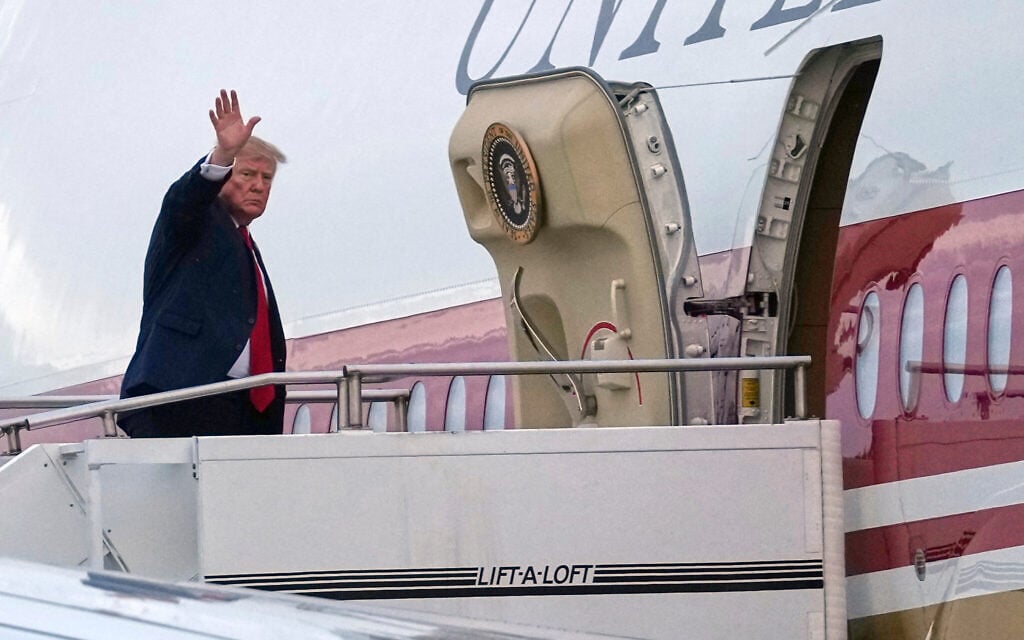
How Trump’s ‘little detour’ to Iran became a roadblock in the US midterm elections

A 'never-ending' cruise has halted operations and told residents to disembark in Cambodia after fuel costs rose over 300%
PAUL FAITH/AFP via Getty Images
- It was meant to be a never-ending residential cruise. Now, operations have halted.
- Villa Vie Residences said it can no longer operate due to fuel expenses surging more than 300%.
- The cruise line set sail in 2024 with the promise of a live-in, continuous voyage around the world.
A cruise ship selling the promise of a permanent life at sea has come to an abrupt stop.
Villa Vie Residences, which operates the residential cruise ship Villa Vie Odyssey, announced on Tuesday that it had suspended operations in Cambodia amid steep increases in fuel costs.
The company said its monthly fuel expenses per cabin, which had previously averaged about $1,800, had risen as much as 344% in parts of Asia, to an estimated $6,000 to $8,000.
The US-Israeli war with Iran began in February, and Iran's subsequent closure of the Strait of Hormuz — a vital chokepoint for global oil shipments — sent energy prices soaring around the world.
"Since the conflict began in late February, we have taken significant steps to reduce fuel consumption, including slowing the itinerary and spending more time in port," Villa Vie Residences said.
"Those measures have not been enough to offset the extraordinary increase in fuel costs, and we have been unable to continue carrying the resulting operating losses."
Villa Vie Residences sold permanent cabins on its 509-cabin ship, the Odyssey, ranging from $119,999 to $439,999. Its pitch to residents was a never-ending cruise around the world with stops at more than 400 ports of call and a global circumnavigation every three-and-a-half years.
The ship, which has a pool deck, spa, and a pickleball court, also offered five-year residencies, starting at $59,999.
The rising fuel costs put the company's operating model under unsustainable financial pressure, Villa Vie Residences said. The company added that it was evaluating options, but that no financing or transaction had been finalized.
"Passing the full increase on to residents is not a realistic solution," the company said. "Our focus now is on supporting residents, crew, and employees while we work toward restructuring and recapitalization over the next 60 days. That work is ongoing, and no outcome is assured."
The press release said the company was working with residents to coordinate disembarkation in Cambodia and to identify temporary living arrangements for them.
The Odyssey first set sail from Belfast in September 2024 after four months of delays.
Villa Vie Residences did not say how many residents were affected and did not immediately respond to a request for comment from Business Insider.
Have you spent time on the Villa Vie Odyssey? If you have a story to share, get in touch with this reporter: jzitser@businessinsider.com.
What Lula’s victory means for Palestine solidarity in Brazil
Over the weekend, Brazilians elected Luiz Inácio Lula da Silva president once more by a very narrow margin, defying polls that had him trailing. No candidate had won a Brazilian runoff from second place since 1989. That precedent is broken, and it was broken from below: by student-led rallies in Rio de Janeiro, São Paulo, Minas Gerais and Porto Alegre.
The rallies were called without Lula, by pop-star fan communities and influencers who injected energy into a campaign that had flagged all year, and by widespread mass communications like Deputy André Janones's WhatsApp channel, which passed 10 million followers. Many of those young figures have been vocal on Palestine. Their job now is to make sure their government hears them.
That mobilisation will matter all the more given the political landscape Lula faces. The Congress that convenes on 1 February will comprise 594 members, 513 deputies and 81 senators, with the right and its allies holding a comfortable majority in both houses. With 90 members close to the Palestinian struggle, the challenge will be to turn that support, alongside pressure from civil society, into concrete political action.
Palestine
Lula's words have been strong in recent years. He recognised the State of Palestine in 2010, the first in South America to do so, condemned the genocide in Gaza as early as October 2023, and did not back down when the Israeli colonial regime declared him persona non grata over his Holocaust comparison.
Brazil joined South Africa's case at the International Court of Justice and has had no ambassador in Tel Aviv since May 2024. His actions, however, were fewer. Diplomatic and trade relations with Israel were never fully cut. The Army’s planned purchase of 36 armoured howitzers from Elbit Systems was stalled in 2024 amid political opposition over military ties with Israel. The deal resurfaced in October 2026 after Brazilian defence company Avibras, reached an agreement with Elbit’s Brazilian subsidiary, AEL Sistemas, paving the way for local assembly.
The proposed purchase, worth almost $200 million, remained controversial after renewed public backlash, and the army subsequently cancelled the planned signing of the initial contract for two units. However, the wider procurement was not cancelled.
Lula has always been a conciliator. But a fourth and last term with popular backing opens room for much bolder steps, including ending trade relations with illegal settlements in the occupied West Bank, withdrawing from the Mercosur–Israel Free Trade Agreement, imposing a total embargo on weapons and technology transfers with the Zionist regime, and investigating and halting any indirect exports of Brazilian oil through third-country intermediaries.
The recognition of Palestine itself came at the end of his second term, and was then seen as his last.
For Palestinian solidarity movements, Lula’s victory above all means keeping the conditions they work under today, which are far more favourable than those a Flávio government would offer. The government remains open to dialogue with civil society, its own rhetoric lends legitimacy to the cause, and the state does not throw its weight behind the campaign against it.
Holding the line
Lula's government is not immune to Zionist lobbies, however. They continue to influence leaders close to the president and elected officials within his Workers' Party (PT) and Congress, where it needs centrist allies.
Even under Lula, part of the work will be to contest the government itself.
The institutional climate will remain turbulent. The reaction from Bolsonaro's supporters, especially if backed by Trump, is a challenge the PT anticipates. But the balance has shifted. Flávio will lose the privileged forum his Senate seat gives him, and with investigations advancing, he could face arrest.
Eduardo Bolsonaro, second in the family's line of command, is a fugitive in the United States after a Supreme Court justice issued an arrest warrant and cancelled his passports. He was sentenced to four years and two months for coercing the judicial process through lobbying Washington for sanctions against Brazilian magistrates.
From Florida, he has advised his brother to flee if defeated and joked about US Marines intervening. The family cannot hold political capital while their assets disperse.
Lula's path is to strengthen republican institutions – the Supreme Court included –, but he would be boxed in by a Senate taken over by the Bolsonarista party, which confirms justices and can impeach them.
Sustained public mobilisation in the streets and online could also help expose the networks of corruption and patronage that sustain the far-right’s power in Congress. Investigations into Banco Master and parliamentary budget amendments could weaken some of these networks and make it harder for politicians to convert economic power into political influence.
For the Palestinian movement, this matters. Challenging the interests that protect Zionist politicians is part of building a Congress more accountable to the public and less willing to enable complicity in the occupation.
Brazil’s importance in the region and to the cause is based on many factors; Brazil holds a third of Latin America's population and GDP, its main instrument abroad has never been economic or military might but diplomacy, and the country has built its influence on multilateralism, mediation and coalitions such as the BRICS. Gains made in Brazil tend to spread, as the wave of recognition of Palestine that followed 2010 showed.
In the region, Brazil is now an exception. Seven South American governments are aligned with Donald Trump, and Brazil is the largest country still holding out. Israel and the United States – as governments but also through Big Tech companies like META - invested here for years to change that. They have failed, for now.
Ultimately, a generation of young political figures carried this campaign, vocal on Palestine and with a strong presence online. In a contest increasingly fought on social media, a terrain the right had long dominated, the left has begun to close the gap. The platforms themselves are part of that dispute, and Meta's seeming interference in the campaign has become a matter of national and international debate.
The dispute over Brazil's public digital payment system (PIX) has also exposed US interest in challenging a model that threatens the dominance of American payment companies.
Furthermore, Brazil has a vibrant independent press that is often more receptive to the Palestinian cause. The country’s media landscape also includes major broadcasters such as TV Globo (formerly Rede Globo), Brazil’s largest television network and one of the country’s most influential media organisations. Its televised political debates attract large audiences and shape public discussion, with their coverage and political implications often resonating beyond Brazil’s borders.
Internationally, Lula's surprising victory and popular mobilisation must inspire and trickle to other countries where people are protesting in their masses against growing authoritarianism, fascism and neoliberal economic policies - all aligned with the Zionist regime - in France, India, Spain, and Serbia.
The pendulum is likely to swing in Brazil by 2030, and the next four years must be used to build irreversible actions toward liberation.
Rula Shadeed is the Co-Director of the Palestine Institute for Public Diplomacy.
Follow Rula on Instagram: @pipdbrasil and X: @rabetbypipd
Have questions or comments? Email us at: editorial-english@newarab.com
Opinions expressed in this article remain those of the author and do not necessarily represent those of The New Arab, its editorial board or staff.

Europe’s Electricity Price Divide Exposes Limits of the Single Energy Market
Europe’s electricity market recorded substantial regional differences on Tuesday, 27 October, with average wholesale prices ranging from approximately €6 per megawatt-hour in northern Sweden to more than €255 in Romania.
The figures reveal a persistent difficulty for European energy policy: although the continent has an increasingly interconnected electricity market, businesses and consumers remain exposed to very different underlying wholesale costs depending on location.
According to European day-ahead electricity market data, Sweden’s SE2 bidding zone recorded an average of €6.23 per megawatt-hour, while Finland stood at approximately €6.65. Romania reached €255.20, roughly 41 times northern Sweden’s price. Bulgaria registered approximately €254, Hungary €241 and Greece €225. Germany recorded approximately €155, Belgium €160 and France €162.
These are wholesale prices for delivery on 27 October, not final bills for households or businesses. Their differences nevertheless raise questions about how effectively Europe’s electricity networks distribute power from areas of lower-cost generation to those facing greater costs.
Why a common market produces different prices
European electricity trading is organised through interconnected national and regional markets. Cross-border capacity allows relatively inexpensive power to reach regions where demand is greater or local generation is more expensive.
When transmission capacity is adequate, neighbouring prices can converge. Physical networks, however, have limits. Congested interconnectors can prevent additional imports even when large price differences exist.
Other influences include availability of power stations, renewable output, fuel prices, consumption and system stability. Regions with substantial hydropower, nuclear generation or strong renewable production may experience comparatively low prices. Markets relying on gas-fired generation can be more expensive when gas plants are needed to satisfy the final increment of demand.
The result is a market responding to common European conditions but still shaped by local generation and transmission constraints.
Southeastern Europe’s structural constraints
The European Union Agency for the Cooperation of Energy Regulators, ACER, has repeatedly examined the causes of regional price divergence. In its 2026 assessment of cross-zonal electricity trade, the agency considered unusually high prices and limited access to lower-cost power in southeastern Europe.
Constraints include available cross-border capacity and shortages of flexible generation able to respond to changing renewable output, especially in the evening. Countries including Greece, Bulgaria, Romania, Hungary, Croatia and Slovenia have encountered substantial regional differences.
Those findings do not prove the cause of each price movement on 27 October. They do, however, explain why disparities can persist despite common market rules. ACER has advocated improved coordination among transmission operators, more effective use of existing networks and additional flexibility through storage and demand management.
Industrial consequences of expensive electricity
Energy-intensive industries, including steel, chemicals and fertiliser production, are particularly sensitive to electricity costs. Where contracts are exposed to wholesale markets, sustained regional price differences can influence output and investment decisions.
The relationship between wholesale prices and bills is not immediate. Firms may hedge prices, use long-term contracts or produce their own power. Network charges, taxes and government support also affect the amount paid. Still, persistent market differences can shape industrial competitiveness.
As EU Today reported, EU energy ministers are due to examine proposed changes to electricity network charges and market administration on 29 October. Network tariffs are distinct from wholesale prices, but both affect total electricity costs.
Renewables and the need for flexible networks
According to ACER’s energy-market monitoring, renewable sources represented around half of EU electricity generation in 2025. Solar energy can reduce prices during the day, but output falls sharply towards evening, sometimes requiring more expensive power stations to increase generation.
This increases the value of storage, flexible production, responsive demand and international connections that can balance surpluses and shortages between regions. Yet major transmission lines can take years to complete owing to planning, permitting, investment and construction requirements.
The priority is therefore not simply to install more renewable capacity. Europe’s grids and supporting technologies must be capable of moving and using that output efficiently.
What the price divide reveals
A single day’s wholesale prices should not be mistaken for long-term average electricity costs or a permanent competitive advantage. Nevertheless, the persistence of regional disparities documented by regulators shows the problem extends beyond isolated daily volatility.
For EU institutions, the question is whether further market integration can make energy more affordable while preserving incentives to invest in generation and transmission. National governments must balance security of supply, infrastructure financing and industrial competitiveness.
Electricity trading across Europe is increasingly integrated. The physical systems supplying it remain considerably less uniform. Until those constraints are addressed, the price of power will continue to reflect geography as well as the underlying cost of energy.
Amazon weighed ‘difficult trade-offs’ as memory costs squeezed its devices business, internal document shows
CHARLY TRIBALLEAU/AFP via Getty Images
- Amazon launched a series of new devices this month, including Alexa tablets and Bee AI wearables.
- Rising memory costs forced "difficult trade-offs" on Amazon's device prices, sales, and profit.
- Amazon is seeking more Alexa revenue from enterprise sales, licensing, and ads.
Amazon launched a flurry of new consumer devices this month. Behind the scenes, rising memory costs are adding pressure to its already money-losing hardware business.
An internal planning document obtained by Business Insider shows Amazon forecasting a $612 million gross loss this year for its first-party devices business, compared with a leadership target of a $438 million loss.
The document said rising memory costs were "putting pressure" on the business's profitability, forcing "difficult trade-offs" among sales volumes, average selling prices, and gross profit.
The projected $612 million loss was at the gross profit level, meaning it did not account for all operating expenses, such as R&D, sales and marketing, and administrative costs.
The figures offer a rare glimpse into the pressure on Amazon's hardware business as it absorbs rising component costs. Other tech hardware companies, including industry leader Apple, face similar pressure from surging memory chip prices.
An Amazon spokesperson declined to comment.
A new wave of AI devices
Despite the pressure, Amazon continues to expand its consumer hardware lineup. Even if the company loses money on device sales, it can make money in other ways, such as subscription services, as more customers use its gadgets.
In October alone, the company introduced new Kindles, Alexa-powered tablets, Ring smart locks, and AI wearables under its Bee brand. The August planning document identified Bee and new smart glasses as strategic products still in an investment phase.
Amazon has historically used low-cost hardware to pull customers into a broader ecosystem of shopping and digital content. Rising component costs could make that strategy more expensive, forcing the company to raise prices.
The clearest shift is in Amazon's tablets. Earlier this month, the company phased out Fire tablets after 15 years and replaced the budget-friendly lineup with pricier Alexa Tablets powered by Alexa+. The new devices cost between $229.99 and $499.99, a notable increase from previous generations.
Not just Amazon
The planning document was prepared in August, the same month Amazon raised prices on products including Echo speakers, Kindle e-readers, and Fire TV devices.
The pressure extends beyond Amazon. Apple has raised prices on some Macs and iPads, while Microsoft and Sony have increased console prices. Dell, HP, and Lenovo also face higher memory costs.
The AI boom is helping drive the squeeze. Huge data center investments have increased demand for memory chips, while manufacturers have devoted more capacity to high-bandwidth memory used in AI servers. That has tightened supplies and raised prices for components used across consumer electronics.
Amazon is experiencing both sides of the boom. It expects roughly $220 billion in capital expenditures this year, largely to expand AWS data centers for AI demand, while higher component costs squeeze its consumer hardware business.
The rising cost of Alexa+
The August planning materials show Amazon reassessing both Alexa+ revenue and operating costs. They called for updated forecasts, expansion through enterprise sales and advertising, and more detailed AWS cost modeling.
Amazon is now confronting the cost of operating Alexa+ at scale. Business Insider reported in July that internal forecasts put Alexa+'s AWS cloud costs at roughly $1.7 billion in 2026, nearly triple the prior year's figure. Amazon was working to lower those costs by relying less on Anthropic's AI models and routing more requests to its own, cheaper systems.
A separate project called Moonraker, intended to give Alexa more advanced AI-agent capabilities, was projected to require more than $100 million in GPU spending this year. Amazon internally considered delaying or scaling back the initiative as one option for easing cost pressure, Business Insider previously reported.
Have a tip? Contact this reporter via email at ekim@businessinsider.com or Signal, Telegram, or WhatsApp at 650-942-3061. Use a personal email address, a nonwork WiFi network, and a nonwork device; here's our guide to sharing information securely.
Even a ‘boring’ Budget can be a risk, chancellor
Editorial: All the signs are that John Healey’s first Budget on Wednesday will be a very modest event indeed. Without precise measures to bring down the cost of living, it could leave the government looking rudderless

© Kirsty O'Connor/Treasury
Apple hands baton to iPad mini
Apple maintained device launch momentum by revealing its latest iPad mini would go on sale later this week, destined to reach customers early next month.
In the US prices start at $699 for a Wi-Fi only model and $849 for those also equipped with mobile connectivity. Storage options are 128GB, 256GB and 512GB, with midnight and starlight the colours on offer.
Apple emphasised the device “fits in the palm” and is a “huge leap in performance”, wireless connectivity, and resistance to water or dust ingress, for which it carries an IP67 rating.
It features an 8.5-inch OLED offering two-times greater peak brightness than previous iPad mini models. Apple’s A20 Pro processor is on board, which the vendor highlighted offers advantages in performing AI-related tasks.
The model runs iPadOS 27, along with the latest iterations of Apple’s Intelligence and Siri assistant, which are configured to tailor responses to individual users.
Dave Pakula, VP of Hardware Engineering, said past models are “beloved” by “creators and small business owners” along with “doctors, field service workers and gamers”.
Apple promises “punchier bass” and greater volume from upgraded speakers featuring custom tweeters.
It emphasised a 12MP camera “on the landscape edge” is configured for video duties, with an equivalent-sized unit on the rear geared towards photo and videography.
The company’s N1 wireless networking chip is compatible with Wi-Fi 7, Bluetooth 6 and Thread, described separately by a namesake working group as a “secure, low-power mesh networking protocol” for IoT.
Apple stated the latest iPad mini is 5.4mm thick: GSM Arena pegs the remaining dimensions at 195.3mm by 132.6mm.
The post Apple hands baton to iPad mini appeared first on Mobile World Live.
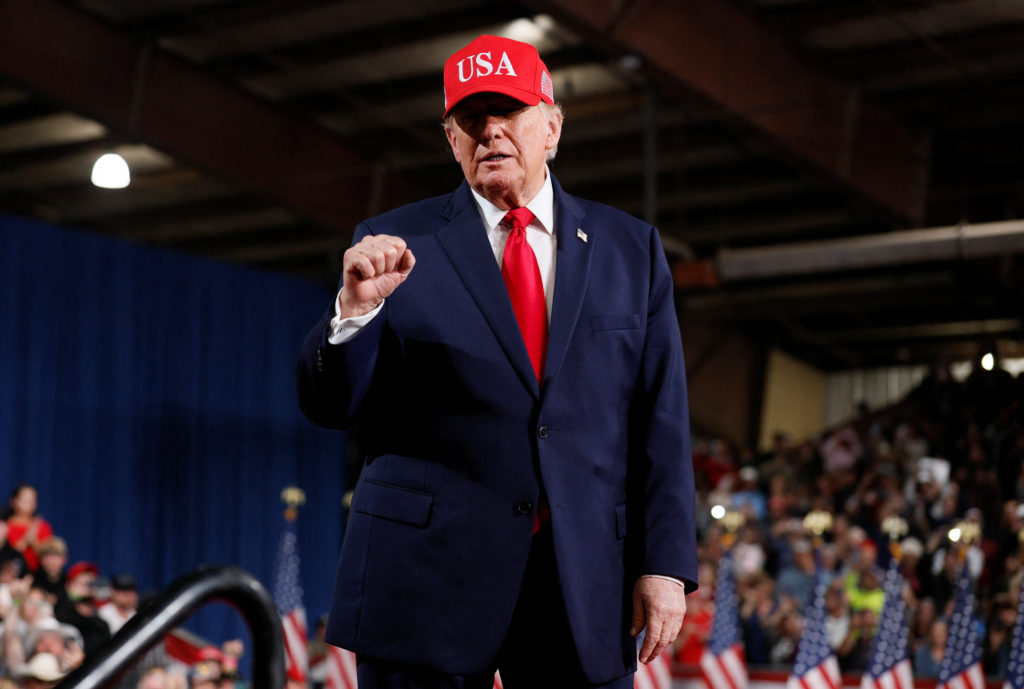
Trump promised to stop inflation. Now Republicans may pay the price in the midterm elections

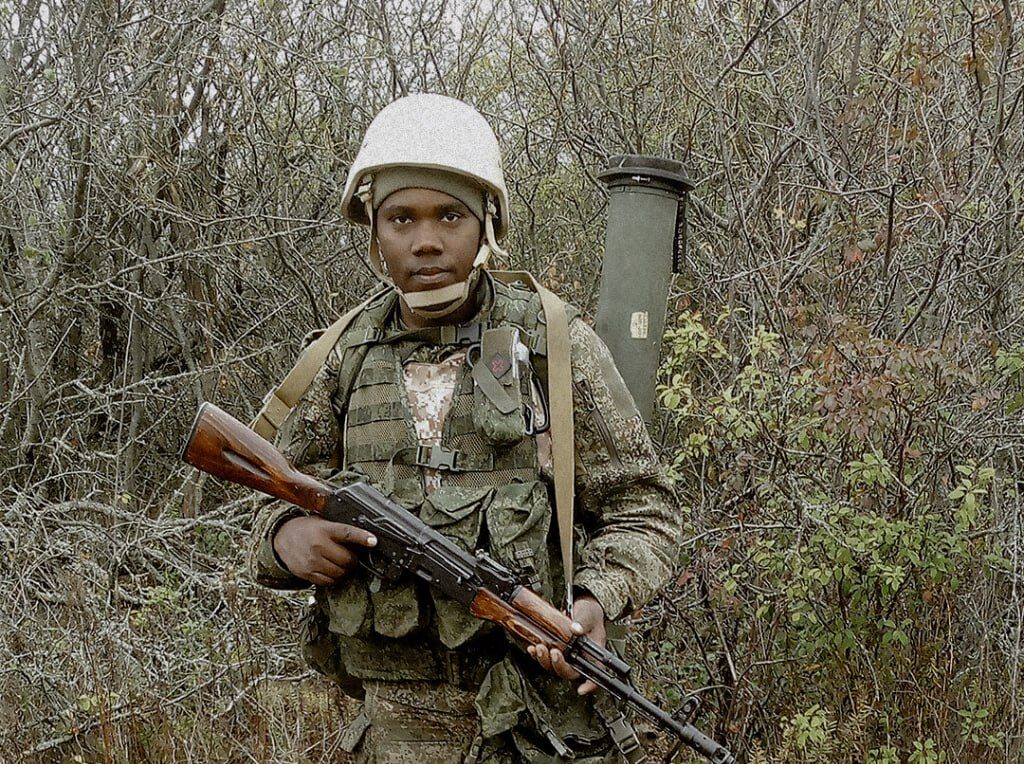
Kazakhstan prepares a list for Moscow, Kenya appeals to Kyiv: three governments try to get citizens out of Russia’s war

Kazakhstan, Kyrgyzstan, and Kenya are seeking the return of citizens drawn into Russia’s war, Ukraine’s Foreign Intelligence Service (SZRU) said on 25 October. According to relatives and officials the agency cites, many of the men had gone to Russia for work, only to be tricked or forced into its army.
Russia fills its ranks partly with foreigners. In April, Ukraine’s military intelligence (HUR) said the Russian Defense Ministry plans to enlist at least 18,500 of them in 2026. Foreign recruits let the Kremlin put off hard choices about another mobilization at home, the Atlantic Council argued in May. Home governments have pushed back before, among them Ghana in August. The new statements show the limit of that pushback. Once a man is serving in Russia’s army, his government has to ask Russia to let him go.
Kyrgyz minister: contracts are forced in enlistment offices and jails
Kyrgyz Foreign Minister Jeenbek Kulubaev addressed the problem at a parliamentary committee on 13 October, answering lawmakers’ questions. He said Kyrgyz citizens in Russia are forced to sign contracts at military enlistment offices or in pretrial detention centers. If warned in time, diplomats try to stop the men from reaching the front.
Kazakhstan is compiling a list for Moscow
Kazakhstan is negotiating with Russia over citizens in the combat zone. Its Foreign Ministry said on 7 October that it was checking each hotline request. Once the checks are complete, the ministry said, it will send the compiled list to the Russian side.
SZRU separately cited unnamed relatives of one Kazakh worker. After he complained about working conditions, they said, he and other men were taken to an enlistment office and forced to sign contracts.
Kenya wants five men held by Ukraine treated as possible trafficking victims
Prime Cabinet Secretary Musalia Mudavadi, who also handles foreign affairs, gave lawmakers a count on 8 October. “The Ministry has records of 354 Kenyan nationals involved in the Russian-Ukraine crisis,” he told them. Families who petitioned Parliament dispute that number and put their own count at 841, Kenya’s The Star reported.
Kenya says Russia agreed to stop recruiting its citizens – families of the missing are still waiting
Ukraine holds five Kenyans captured while fighting for Russia, and Nairobi has already appealed to Kyiv over them. The government told Parliament it wants them treated as people who may have been trafficked abroad.
For Kenyans still serving in Russia’s army, the way out runs through Russian officers. Moscow informed Nairobi that unit commanders will consider requests to end military contracts case by case, the same government response said.
Read also
-
Ukraine has identified nearly 46,000 foreigners from 151 countries in Russia’s army—and says Moscow is on pace to meet its 2026 hiring plan
-
Ukraine’s intelligence: Russia is running its Nepal, Cuba, Kenya, and India recruitment scheme in Indonesia now
-
Nearly 500 Africans recruited into Russia’s army have died, Ukraine says
EU Ministers Face Baltic Fishing Decision as Cod Stocks Remain in Critical Condition
European Union fisheries ministers are meeting in Luxembourg on 26th October to negotiate catch limits for the Baltic Sea in 2027, confronting a sharply divided scientific picture in which some commercially important fish populations are recovering while others remain at critically low levels.
The European Commission has proposed increasing total fishing opportunities by approximately 35 per cent compared with 2026, largely because of improved assessments for several herring stocks and sprat. At the same time, it wants substantial reductions in permitted accidental catches of cod, whose depleted populations have shown little evidence of sustained recovery.
The negotiations, scheduled for 26th and potentially 27th October, will determine how fishing opportunities are allocated between EU member states bordering the Baltic Sea.
According to the Council’s published agenda, ministers are seeking a political agreement on total allowable catches and national quotas for ten commercially significant fish stocks.
The outcome will determine how much fish can be landed legally during 2027, while also influencing the future prospects of coastal communities, processing companies and fishing fleets.
Some stocks recover while cod remains depleted
The Commission’s proposal for 2027 fishing opportunities reflects significant differences in the condition of individual stocks.
Brussels recommends increasing the catch limit for central Baltic herring by 49 per cent and for sprat by 44 per cent. Proposed increases for Bothnian herring and Gulf of Riga herring are more modest, at three and 11 per cent respectively.
The improved outlook for sprat follows stronger reproduction in recent years, while scientific assessments suggest some herring populations are beginning to recover.
However, these improvements do not mean the Baltic ecosystem as a whole has returned to a healthy condition.
Central Baltic and Bothnian herring remain below important sustainability reference levels, even though the latest scientific assessments permit increased catches under specified conditions.
For cod, the position is considerably worse.
The International Council for the Exploration of the Sea, known as ICES, has advised that there should be no catches of eastern Baltic cod in 2027 or 2028 under its precautionary approach.
Its scientific advice for eastern Baltic cod reflects the continuing failure of the stock to recover sufficiently to support fishing.
Western Baltic cod faces similarly severe restrictions.
The Commission consequently proposes reducing the permitted incidental catch of western Baltic cod by 88 per cent and eastern Baltic cod by 51 per cent.
These allowances are designed to account for fish caught unintentionally during other fishing operations. They do not amount to the reopening of a targeted commercial cod fishery.
Fishing communities face uneven consequences
The proposed increases in herring and sprat quotas would benefit some fishing operators and processing industries, but the economic effects will vary significantly between countries and fleets.
Larger vessels specialising in pelagic species such as herring and sprat are likely to benefit more directly from increased catch opportunities.
Smaller operators whose activities depend on depleted stocks or mixed fisheries may face continued restrictions.
The Commission also proposes reducing the permitted incidental catch of western Baltic herring by 45 per cent and removing an exemption previously available to certain small-scale coastal fisheries.
That proposal creates a particularly difficult issue for smaller fishing businesses, whose operations may have limited capacity to switch fishing grounds or target different species.
The economic effects will depend not only on the size of the quotas but also on how national governments distribute them among individual operators.
The limits of quota management
The Baltic Sea’s problems cannot be explained by fishing pressure alone.
Nutrient pollution, changes in oxygen availability, habitat degradation and shifting environmental conditions have contributed to the deterioration of several stocks.
Restrictions on fishing can reduce direct pressure on fish populations, but they cannot independently resolve pollution or other environmental problems affecting reproduction and survival.
This complicates the relationship between scientific advice and political decisions.
Ministers are required to take account of conservation objectives under the Common Fisheries Policy. They must also consider the economic consequences for fishing communities and the viability of fleets operating within the agreed limits.
EU Today previously examined the political compromises surrounding European fishing quotas, including the tension between short-term commercial demands and the recovery of depleted fish populations.
The Baltic negotiations present a particularly concentrated version of that conflict because the condition of individual stocks varies so substantially.
Ministers must decide how much recovery is sufficient
The Commission’s proposed increases are based on the latest assessments rather than a general relaxation of conservation policy.
Indeed, its draft regulation envisages maintaining restrictions on vulnerable stocks while allowing greater exploitation where the scientific evidence supports it.
The proposed overall catch volume is approximately 543,000 tonnes, compared with substantially lower fishing opportunities in 2026.
That figure represents a proposed ceiling, not a confirmed agreement or a forecast of actual landings.
Once ministers reach a political agreement, the Council is expected to adopt the final regulation formally in November, with the principal catch limits applying from 1 January 2027.
The central question is whether governments will preserve the distinction between stocks showing measurable recovery and those for which scientific advisers continue to recommend no fishing.
Their decision will determine both the short-term economics of Baltic fisheries and the pace at which the region’s most vulnerable commercial fish populations may recover.
Main Image: By Wilhelm Thomas Fiege – Own work, CC BY-SA 4.0, https://commons.wikimedia.org/w/index.php?curid=122363104
Brussels Targets Electricity Network Charges as EU Seeks to Bring Down Energy Bills
European Union energy ministers will meet in Luxembourg on Thursday, 29th October, to discuss proposed changes to electricity network charges that could alter how households and businesses pay for the operation and expansion of Europe’s power grids.
The European Commission wants to revise the rules governing network tariffs, encourage more efficient electricity consumption and accelerate the introduction of smart meters and digital grid technologies. The measures form part of a wider effort to reduce electricity costs, which remain a significant concern for European households and industrial competitiveness.
According to the Council’s published agenda, ministers will examine legislation presented on 17th July alongside the European Commission’s Electrification Action Plan.
The proposals come as Europe faces continued energy-market volatility, with the war in Ukraine and instability in the Middle East affecting supply expectations and prices. Ministers will also assess energy security ahead of the 2026–27 winter.
Why electricity network charges matter
Electricity bills contain several distinct components. Consumers pay for the electricity itself, the operation and maintenance of transmission and distribution networks, and applicable taxes and levies.
Network charges finance the infrastructure needed to deliver electricity from generating facilities to homes and businesses. They also contribute towards grid maintenance, balancing and new investment.
Unlike wholesale electricity prices, which fluctuate according to supply and demand, these charges are generally determined through regulated national tariff systems.
The Commission argues that existing arrangements do not always encourage efficient use of infrastructure or reflect the costs created by electricity consumption at different times and locations.
Its proposed regulation would amend Regulation 2019/943 to strengthen incentives for network operators to control costs and use existing capacity more effectively.
The legislation would also encourage tariffs that reflect when electricity is consumed and the demands placed on local networks.
For example, consumers who can move electricity-intensive activities away from periods of peak demand could face lower charges under certain tariff arrangements.
However, the financial benefits would depend on national implementation, available technology and individual consumption patterns.
Industry presses for lower energy costs
The Commission’s proposal recognises that electricity prices have become a major issue for European industrial competitiveness.
Energy-intensive manufacturers, including steel, chemicals and other industrial producers, face particular difficulties when electricity costs are substantially higher than those of international competitors.
The proposed legislation would allow specific categories of users, including energy-intensive businesses and data centres, to benefit from differentiated network charges where justified by their consumption patterns.
Such arrangements would be subject to safeguards intended to prevent disproportionate costs being transferred to households and smaller businesses.
The proposal also addresses energy taxation. Brussels wants the minimum taxation level for electricity to remain below that of natural gas, reducing a financial disincentive to replacing fossil-fuel equipment with electric alternatives.
As EU Today previously reported, the Commission has been examining changes to electricity taxation as part of its response to Europe’s exposure to imported energy and volatile international markets.
However, reducing charges for one category of consumer does not automatically reduce the overall cost of maintaining a national grid. Regulators must still determine how those costs are recovered.
A growing problem of grid congestion
Europe’s electricity networks require considerable investment to accommodate renewable generation, electric vehicles, heat pumps and expanding industrial demand.
The Commission estimates that approximately €600 billion in electricity-grid investment will be needed by 2030, rising to around €1.2 trillion by 2040.
These figures, outlined in its accompanying assessment, illustrate the difficulty of pursuing lower consumer charges while simultaneously financing substantial infrastructure expansion.
Grid congestion is already delaying connections for renewable-energy projects, industrial facilities and other electricity users.
As EU Today examined in its coverage of Europe’s grid bottlenecks, limited transmission capacity can prevent relatively inexpensive electricity from reaching regions where demand is greatest.
The latest proposal therefore places greater emphasis on making better use of existing infrastructure before committing to conventional network expansion.
It would encourage regulators and operators to consider digital technologies, flexible connection arrangements and improved network planning.
Smart meters and the distribution of costs
The Commission is also seeking faster deployment of smart meters, which can provide consumers and network operators with more detailed information about electricity consumption.
In principle, such systems allow households and businesses to adjust demand in response to changing prices and network conditions.
Industrial consumers may have greater flexibility to shift production schedules or invest in electricity storage. Households, however, may have fewer opportunities to change when they use energy, particularly where consumption is linked to heating or essential daily activities.
This raises questions about how tariff reforms would affect different consumers.
A system that rewards flexible consumption could reduce costs for households with smart appliances, batteries or electric vehicles, while offering fewer benefits to people unable to alter their electricity usage.
National regulators would therefore have to balance economic efficiency against the risk of unevenly distributing network costs.
Ministers face difficult choices
The 29th October meeting will not itself introduce new electricity charges or establish binding national tariff rates.
The Commission’s proposal remains subject to negotiations through the EU legislative process, involving the Council and European Parliament.
Governments will need to consider how much discretion national regulators should retain, whether tariff structures can be made more consistent across the single market and how vulnerable consumers should be protected.
The meeting will also examine longer-term energy security and possible targets for the period after 2030.
For Brussels, the difficulty is that electricity must become sufficiently competitive to encourage industrial investment and electrification, while the infrastructure required to support increased consumption must still be financed.
Whether the proposed reforms eventually reduce electricity bills will depend on their final legislative form, national implementation and the extent to which more efficient grid management produces measurable savings.
Home sellers are lowering their prices and helping buyers to make a deal in a stagnant market

Hassett: Economy is ‘best we’ve ever seen’

Trump on high gas prices: 'We're making a freaking fortune'
Andrew Harnik/Getty Images
- Trump said on Saturday that American oil companies are making a "fortune" on the Iran war.
- Americans, however, are paying record prices at the pump, according to AAA.
- Trump made the comments less than two weeks from the midterm elections.
Though regular Americans are paying more at the pump, US oil companies are striking it rich, President Donald Trump said on Saturday.
Speaking at a rally in Georgia, Trump said that oil prices are "temporarily high," but added that the throttling of the Strait of Hormuz has pushed oil buyers to American companies with operations in Texas, Oklahoma, and Louisiana.
"The United States oil and gas business is making hundreds of billions of dollars," Trump said. "I don't give a damn, I'm going to say it — we're making a freaking fortune."
Indeed, a Q2 report this year from the Oil & Gas Journal, a trade publication, noted that "surging crude prices tied to ongoing Strait of Hormuz disruptions" fueled massive windfalls for North American oil companies.
Year over year, a sample of 38 US producers and refiners collectively grew revenues by about $140 billion, the Oil & Gas Journal reported.
Those profits, however, are not exactly shared by the American public.
AAA reported that the average price of regular gas in the United States is now at $4.29 a gallon. In February, one day before the US and Israel launched surprise attacks on Iran, gas prices were at $2.98.
Diesel prices have also increased precipitously since the American war on Iran began. On Sunday, AAA reported that they sat at $6.35, up from $3.75 a day before the conflict began. Shipping companies rely on diesel to power their boats and trucks. Higher diesel costs are often passed onto consumers in the form of higher prices.
Trump's comments are unlikely to curry goodwill among an American electorate reckoning with an affordability crisis less than two weeks out from midterm elections. The White House did not immediately respond to a request for comment sent on Sunday.
As the midterms approach, Trump has taken steps to lower gas prices.
On October 9, Trump said he reached a deal with Russian President Vladimir Putin to import Russian diesel, which had been heavily sanctioned since the start of Russia's invasion of Ukraine. Analysts warned the move could provide a lifeline to the Russian economy as the country seeks to bombard Ukraine into submission this winter.
"I can see just the fake headlines — 'President Trump is talking about all the money they're making while people are suffering at the pump,'" Trump said at the Georgia rally. "That'll be the headline."
Iran in ‘Advanced Stages’ of Planning Attacks Against Americans, Officials Say

© Ahmad Al-Rubaye/Agence France-Presse — Getty Images
Susan Sarandon: “A veces me llaman comunista. Creo que es la manera que tienen algunos de decir que alguien está como una cabra”
El 25 de septiembre, apenas una semana después de esta entrevista, Susan Sarandon (Nueva York, 80 años) fue detenida a las puertas de la ONU en Nueva York. Protestaba, junto a otras actrices como Hannah Einbinder o Cynthia Nixon, contra la comparecencia en la Asamblea del primer ministro israelí, Benjamin Netanyahu. No era la primera vez que la detenían y quizás no sea la última. Susan Sarandon, actriz en más de 100 películas, ha protagonizado éxitos de Hollywood como El cliente, Quédate a mi lado o Las brujas de Eastwick; películas de culto como The Rocky Horror Picture Show o Thelma y Louise; y películas comprometidas como Pena de muerte, que le valió un Oscar. Ha aparecido en la serie Friends y ha rodado con Louis Malle. Porque Sarandon escoge sus proyectos como vive, de forma desprejuiciada, con una mezcla de curiosidad y desafío: “Cuando leo un guion quiero que me conmueva. Quiero que el personaje sea algo que no haya hecho antes. Está muy bien si hay un director con una buena trayectoria, pero a veces son directores nuevos. Es genial si te pueden pagar, pero a veces no pueden”. Es el caso de su último proyecto, The Accompanist (aún pendiente de título en español), donde interpreta a Sylvia, una madre de acogida atormentada y excéntrica.
Estilismo:
Juan Cebrián
Maquillaje, peluquería y manicura:
Genevieve Herr (Sally Harlor), Matthew Monzon (TMG LA) y Pattie Yankee.
Producción:
Cristina Serrano.
Asistente de producción:
Pete Koukov.
Diseño de set y editor en set:
Elaine Winter y Mari Siviakova.
Retoque fotográfico:
La machine.
Producción local:
Drita Curanaj (R3 Mgmt) y Wojtek Szaulinski.
Sastre:
Margarita Babina.
Asistentes de fotografía:
Christopher Morel y Keegan Eckart.
Asistente de estilismo:
Fern Cerezo y Jan Anthonio Diaz.

© YULIA GORBACHENKO (EL PAÍS)
Israel’s olive harvest attacks demand full UK sanctions
Some fifteen years ago, I was lucky enough to be in Palestine during the olive harvest season. So much about what I saw on that visit was overwhelmingly sad and infuriating. The ugly infrastructure of apartheid was everywhere—the huge concrete apartheid wall with the looming Israeli sniper towers, checkpoints seemingly at every turn, menacing armed soldiers and hilltops dotted with settlements. But a visit with farmers in a village outside Jenin felt like stepping into an alternate universe, full of joy and beauty.
Multiple generations of Palestinian families all gathered together in varying degrees of work and play. Teenagers, usually glued to their mobile phones, were getting gentle lessons from their elders on the best way to shake the tree branches to loosen the crop. Joyful toddlers waddled around their grandmothers and mothers, who made tea while chatting and preparing the freshest, most delicious bread I’ve ever eaten, filled with fresh cheese and za’atar.
If you could train your eyes on this scene, you could imagine, for a moment, what a free Palestine might look and sound like.
The olive harvest season is not just a time for Palestinians families to gather and celebrate their heritage. It is traditionally the economic lifeblood of Palestine, already under significant pressure because of decades of Israel’s land grabs, not to mention restrictions on exports which benefit Israeli settlers and harm Palestine’s indigenous olive economy under occupation.
The olive harvest used to be a significant part of the economy in the Gaza Strip, where olive trees are now largely a memory of a time past, before endless expanses of rubble dominated the terrain.
A site of existential threat
In recent years, on top of the ordinary hardship of occupation, the olive harvest in the West Bank has increasingly been hit with violence and danger. Gone are the days when the olive groves could offer a glimpse of a possible future life — now they are a site of existential threat and fear.
The UN reported that last week, the official week starting the olive harvest, saw nearly 200 settler attacks across the expanse of the West Bank, with casualties, property damage or both, including damage to 2,500 trees and saplings. This is already more than the 185 comparable incidents recorded during the entire olive harvest season last year in 2025, which was already the worst many could remember.
These settler attacks don’t come out of nowhere. UN human rights experts raised alarm that the Israeli military had issued orders in September for the removal of vegetation, including provisions to uproot olive trees, from approximately 339,000 square metres (84 acres) of Palestinian agricultural land in the West Bank.
In what has now become a predictable pattern, the Israeli military provided a blueprint for settler attacks on the olive harvest through its policies. It is the same military, of course, which provides armed cover for the settlers when they wage their violent attacks.
When Palestinians report that the settlers and the army are working hand in hand, this is what they mean.
News footage from Palestine this week shows this starkly. Farmers work as quickly as possible before the mobs of settlers arrive, armed with clubs or worse. For Palestinian farmers, the thought of bringing family members who aren’t able to work quickly is unimaginable now, because of the looming danger in every minute.
The settler attacks are ruthless and don’t spare any man, woman or child. Mainstream news outlets globally showed videos last weekend of settlers beating and attacking a Washington Post journalist covering the West Bank, as well as European diplomats who had been on an official visit. One journalist who tried to help his colleague reported the difficulty of reaching her. This was not only because of the settlers, but also because the Israeli military was firing tear gas and live ammunition into the area, forcing the Palestinian farmers to flee their own fields.
You don’t need much more information to guess that if that is how white Americans and Europeans are being treated, Palestinians are confronted with violence that is ten times worse.
Weaknesses in the UK government’s response
Here in Britain, Israel’s colonial settlements have had more media exposure in the past few months than possibly ever before, as the British government announced new measures last month to ban the import of settlement goods and some limited sanctions, along with other measures designed to curb the actions of what Foreign Secretary Ed Miliband called “settler terrorists”.
Whilst these measures are certainly a step in the right direction, they don’t go nearly as far as they should. This month’s spike in attacks on Palestinians harvesting their olives shows both the weaknesses of the British sanctions as they are currently formulated, but also the possibilities that could be pushed if the government is serious about tackling settler violence.
The weakness of the British government’s position is that it has rhetoric that is tough on settler violence but treats that phenomenon as its own isolated problem. Understanding the inextricable link between the settler movement, the colonial settlements already established for decades, and Israel’s military occupation itself is key to intervening in the violence.
The settlers couldn’t function as they do without the full-throated support they enjoy from the Israeli military. And despite commitments to curb the flow of arms that enable the occupation, no additional arms exports to Israel have been halted since Miliband’s announcement last month.
The problem goes even further if one understands the link between the settler movement and the Israeli government itself. The British government seems to be still entertaining the fantasy that the settler movement can be isolated and treated separately from the Israeli state.
Of course it is the Israeli state itself which, over decades and across parties, has enacted policy and funded the settlements. Nowadays top Israeli government ministers come directly from the far-right settler movement, but this is a result of decades of normalisation of settlements, rather than the start of it.
Even if you could magically remove the far-right settler movement in isolation, many of Israel’s earliest West Bank settlements are now major hubs of the Israeli agricultural industry. They profit from land grabs from Palestinians, enriching themselves from Palestinian land and water, and dominating the exports of produce abroad, whilst Palestinian olive farmers struggle, and still would even without the violent settler attacks.
In order to really tackle settler violence, the British government must extend its sanctions proposal to be state sanctions on Israel. There is no separating out the settlements from the state, and there is no legitimate trade with a state committing apartheid and genocide.
These sanctions must include, but not be limited to, a full two-way arms embargo on Israel.
Stemming from this, the tasks of the solidarity movement are clear. We must continue to push the British government to strengthen its sanctions on Israel, through lobbying and protesting, but also by exposing the contradictions in what is currently in place.
None of these actions will stop the horror of settler attacks during this olive harvest season. The coming month will be a painful time for Palestinians who are being forced to defend themselves, their families, their livelihoods and their lands.
Whilst political debates within our solidarity movement rage on, certainly we can all agree that we absolutely cannot lose sight of the stakes for Palestinians, and the horrible costs they are paying every day. But this urgency must compel our solidarity forward to push our government to enact full sanctions on Israel now.
Ryvka Barnard is the Deputy Director of the Palestine Solidarity Campaign UK.
Have questions or comments? Email us at: editorial-english@newarab.com
Opinions expressed here are the author's own, and do not necessarily reflect those of their employer, or of The New Arab and its editorial board or staff.

Oil prices hit highest point since May

iPhone Duo hits stores
Apple shrugged off widely-reported delays to shipments of iPhone Duo models by delivering the first units to eager customers worldwide.
Pictures from various of the vendor’s retail locations showed a clamour for its first foldable model, which hit stores on time based on the release schedule Apple gave when it unveiled the device in September.
Apple stated it is offering a range of trade-in and leasing options on the devices, which have a starting price of $1,999 for versions with 256GB of storage.
The vendor may be particularly pleased with the turnout at a store in Shanghai, China, given the nation is one of its biggest markets.
Bloomberg journalist Vlad Savov wrote the iPhone Duo could ignite a so-far muted foldable smartphone market, though also cautioned the sector may remain niche if Apple fails to shift enough of the devices.
Reports last week pointed to significantly longer waiting times for customers ordering the devices online compared with previous Apple smartphones, with shipments tipped to take up to three months instead of the roughly six weeks of past devices.
Apple highlighted there are “exceptional” deals to be had purchasing iPhone Duo models through mobile operator channels.
The post iPhone Duo hits stores appeared first on Mobile World Live.