❌

Reading view

Germany’s Helsing promises jet-drone-hunting missiles at under $100,000 a shot—its CEO doesn’t expect them on the market before 2027

Helsing’s Inferno missile.

German defense AI firm Helsing has unveiled Contra, an AI-run air defense system and two interceptor missiles designed to chase Russia’s jet-powered Geran drones, the company announced on 26 October. Officials pitch it as cheap, but it won’t reach the market this winter.

That leaves Ukraine on its own defenses as Russia shifts to jet drones. By early October, jet models made up about 40% of Russian drone launches, and Ukraine’s own interceptors for them won’t arrive in needed numbers before late November, Air Force Deputy Commander Yurii Cherevashenko said.

Two missiles, one AI brain

Contra is the command layer of air defense: it links radars and other sensors, tracks incoming drones and missiles, and assigns a weapon to each target, while people keep control over decisions, Helsing said. Besides the company’s own missiles, it can also use other firms’ interceptors, lasers, guns, or nets. AD-1 Inferno is jet-powered and designed to loiter, swarm, and re-engage targets, while AD-2 Ambush, a solid-fuel rocket, is designed to reach Mach 2.5, over twice the speed of sound, and a range of more than 20 km, the company said.

Inferno, with a 700 km/h speed and a 20-km range, would be the everyday shooter. Ambush would handle “leakers,” drones about to hit the ground, said Maxwell Adams, Helsing’s senior product director. Each shot should cost under $100,000, company officials said.

Built for the faster Gerans

Ukraine once downed 90% of Russia’s slower, propeller-driven Gerans, copies of Iran’s Shahed, Defense News reported. Russia has since fielded thousands of jet Geran-4s and Geran-5s flying at 400–700 km/h, and almost half now get through, Helsing co-founder and co-CEO Gundbert Scherf said.

Ukraine’s own nightly rates swing widely. On 28 September, President Zelenskyy put the shoot-down rate for jet drones at 57%. Overnight on 7 October, it exceeded 82%, National Security and Defense Council Secretary Ihor Klymenko said. Russian output of the two models has reached 4,000 a month, Helsing said, citing unspecified intelligence reports.

A HX-2 AI drone.
Explore further

German company introduces AI-powered HX-2 drone for Ukrainian military

Helsing has signed one Contra contract, Scherf said, but the system is still in testing, and he expects it on the market in the second half of 2027. Ukraine already uses Helsing’s HX-2 strike drones. Scherf said they should be integrated into a system like Contra.

  •  

Ukraine says it has finished its part of FREYJA, Europe’s joint anti-ballistic project. Partners’ work is still underway

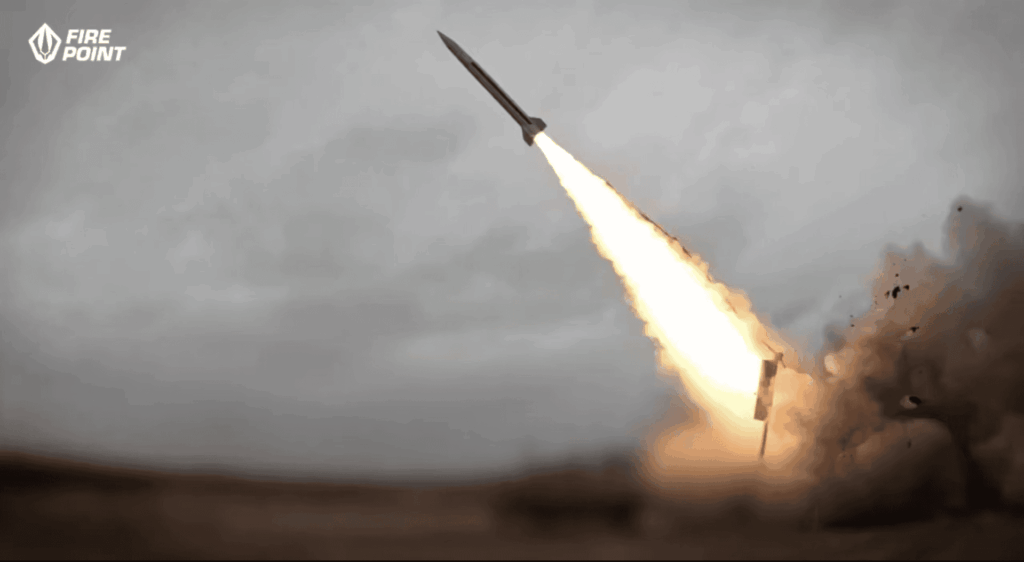
ukraine advertise its new ballistic missiles until factories can mass-produce ex-security officer says · post test launch fp-7 missile prototype fire point news ukrainian reports

Ukraine has finished its share of FREYJA, a joint European project to build a system against ballistic missiles, President Volodymyr Zelenskyy told journalists on 17 October, Ukrinform reported. He added that Kyiv wants to test the first system as soon as possible.

Ukraine still relies on US-made Patriot interceptors to stop Russian ballistic missiles. Zelenskyy told ABC News on 23 October that Ukraine had received only 24 of them from the US in three months, while it needs 350 a month on average. FREYJA can not close that gap soon, because the system is still in development.

Ukraine’s missile and launcher, partners’ radars and sensors

Zelenskyy said the partners’ share of the work, with 10 countries taking part, is still underway. He also said he had discussed the project with French President Emmanuel Macron, and he named Norway as a key partner.

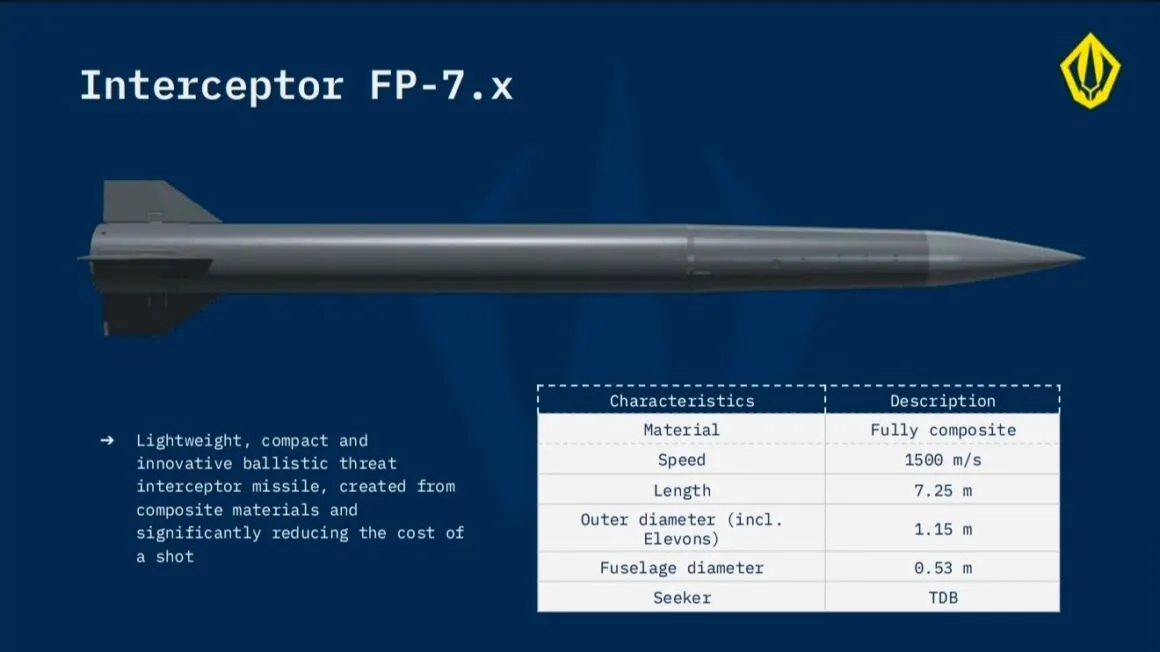
Fire Point concept graphic showing the FP-7.x interceptor missile beside a table of proposed specifications.
Explore further

Ukraine’s missile, Europe’s sensors—FREYJA enters active development on an early-2027 clock

Zelenskyy did not say what the partners still have to deliver. In August, he said Ukraine is capable of making the missile and launcher, while partners would supply critical components such as radars and sensors.

One part not made in Ukraine

In May, Fire Point co-founder and chief designer Denys Shtilerman said all components of the FP-7.x interceptor are made in Ukraine except one. “As for that one part we don’t manufacture in Ukraine, we’ve contracted a certain quantity of it. We already have it,” he said, but did not name the part.

In June, however, Shtilerman told the Financial Times that mass production depended on an infrared seeker Fire Point hoped to get from Germany’s Diehl Defence. Neither statement says whether the seeker is that one part.

Fire Point co-founder Iryna Terekh said in September that FREYJA was going through testing and technical integration in combat conditions in Ukraine. The company plans its first intercept of a ballistic target by mid-2027.

The official timeline has since moved closer. On 21 October, Zelenskyy wrote that officials had identified where to speed up so FREYJA reaches testing by the end of this year. A test is still a step short of an intercept.

  •  

Export hurdles and visa waits for Ukrainian companies force Pentagon to slow its drone contest

One morning in June, the head of export at Ukrainian drone company Stellarion found himself unexpectedly in need of a U-Haul outside the Detroit Metro Airport in Michigan.

Stellarion was set to test its drones in front of American soldiers at a competition organized by the Pentagon at Camp Grayling,

  •  

E.P.A. to Loosen Methane Rules for Oil Firms

The Biden administration had sought to crack down on methane leaks, a big driver of climate change. Those rules are now being scaled back.

© Susan Montoya Bryan/Associated Press

An oil drilling operation in Carlsbad, N.M.
  •  

China Steps In to Rescue Stocks, But the Market Continues to Fall

The Communist Party uses a “national team” of state-owned investment funds to stem the market rout. But this time, investors are not sure it will work.

© Florence Lo/Reuters

President Xi Jinping of China has convened senior leaders to set the government’s agenda, but the economy is likely to take a back seat to politics.
  •  

Latin America Could Supply Alternative Marine Fuels

“Latin America has the potential to produce and supply alternative marine fuels, although the development of regional supply hubs will depend on maritime traffic, cargo volumes, and production conditions.” This was stated on Tuesday by Adrian Tolson, International Bunker Industry Association (IBIA) president, in comments to the portal Mundo Marítimo.

RELATED:

European Parliament Urges to Abandon Fossil Fuels Faster

According to the expert, the key question is whether countries in the region will prioritize the export of alternative fuels or the strengthening of their own domestic bunker supply markets.

“It is most likely that ports with high cargo volumes in countries such as Brazil, Argentina, and potentially Peru will become the first hubs for the supply of alternative fuels,” Tolson asserted.

He identified Brazil, Peru, Colombia, and Argentina as potential suppliers of alternative marine fuels—specifically biofuels. Brazil benefits from its established ethanol industry, while countries with abundant renewable resources could participate in the production of renewable fuels of non-biological origin (RFNBOs).

“Chile, for example, has already generated considerable interest as a producer of green hydrogen,” the IBIA president noted.

Hydrogen groups want Brussels to revise RFNBO production rules by year-end, postpone additionality and monthly matching requirements until 2035, and protect first-mover projects. They warn regulatory uncertainty is delaying investment.https://t.co/RzUbIPNKvQ#Hydrogen #RFNBO

— Fuel Cells Works (@fuelcellsworks) September 24, 2026

Regarding the available alternatives, Tolson maintained that liquefied natural gas (LNG) remains commercially attractive, particularly when renewable natural gas—which can help reduce the greenhouse gas footprint—is available. He added that LNG continues to be the most popular alternative marine fuel and could retain that position for some years to come.

However, he expressed caution regarding hydrogen-derived RFNBOs, citing their high costs and the investments required to develop compatible vessels.

#Europe | The European Parliament calls for a faster phaseout of fossil fuels, pushing for stronger climate action and a transition toward renewable energy amid growing concerns over global warming and energy security.#ClimateChange #teleSUREnglish pic.twitter.com/e4Sl9rBElm

— teleSUR English (@telesurenglish) October 23, 2026
  •  

A 4-watt video link passed Ukraine’s state tests, its maker says, and could stretch STING interceptors’ radius from 20 km to 30 km

Hornet Vision Ctrl system and Sting interceptor.

A new video transmitter for Wild Hornets’ drones, including its STING interceptors, has passed state tests, the Ukrainian drone maker told Militarnyi. The module sends a drone’s camera feed to its pilot. The company expects it to widen its interceptors’ operating radius.

Russia launched 140 Shahed-type drones at Ukraine overnight on 26 October and 280 the next night, when its main target was Kyiv, Air Force figures as of the morning show. Interceptor drones, which cost dozens of times less than the Shaheds they hunt, are one of Ukraine’s answers. The STING alone downed more than 3,000 drones in its first seven months of use, Wild Hornets says. If the company’s estimate holds, a 30 km radius would let each ground station cover more than twice the area it covers at 20 km.

What the testers checked

Specialists from the State Research Institute for Testing and Certification of Arms and Military Equipment and the Defense Ministry’s State Quality Assurance Directorate confirmed the module’s declared characteristics on three drone types, the company said. The three were the STING interceptor, the Queen of Hornets cargo platform, and the 10-inch Wild Hornets Digital anti-aircraft drone.

Some of the drones’ figures exceeded the values the company had set for them, Wild Hornets told Ukrainian defense outlet Oboronka, without saying which ones. Those figures will enter the official specifications after further field tests, it said.

More than double the power

The module, called HV VTX Pro, is part of an upgrade to Wild Hornets’ Hornet Vision digital video system. It more than doubles the transmitter’s maximum power, to 4 W. That sends a clear picture farther and makes the feed steadier in crowded airwaves and under electronic jamming, the company said.

Hornet Vision Ctrl system
Hornet Vision Ctrl system. Photo: Wild Hornets

Wild Hornets first described the module in August, when it was already in serial production. Its interceptors’ operating radius would grow from around 20 km to 30 km, the company said at the time. That estimate assumed good line of sight and the 360-degree antenna on its ground stations, according to a company statement Interfax-Ukraine quoted. Interception could also become at least 20% more effective against targets flying extremely low, the statement said.

Wild Hornets is a Ukrainian company that designs and builds drones, from strike FPV drones and cargo platforms to the STING, which the company says flies at up to 280 km/h to hunt Shaheds. Its drones serve with more than 100 units of Ukraine’s Defense Forces, from the army and the National Guard to military intelligence, the Air Force, and the border guard, according to Interfax-Ukraine.

  •  

EU Lawmakers Move to Relax 2035 Car Emissions Rules as Industry Presses for Greater Flexibility

The European Parliament has taken another step towards revising the European Union’s 2035 vehicle-emissions framework, after lawmakers from three major political groups agreed amendments offering manufacturers greater flexibility in meeting carbon dioxide reduction targets.

The compromise, approved on 22 October by Parliament’s Transport and Industry committees, proposes an 87.5 per cent reduction in average emissions from new passenger cars by 2035, compared with the 2021 baseline. This is less stringent than the European Commission’s proposed 90 per cent reduction and represents a further departure from the existing 100 per cent reduction in tailpipe emissions for new cars and vans.

The changes have not become law. They remain subject to parliamentary procedures and negotiations with EU governments. Nevertheless, the committee agreement shows how concerns over manufacturing competitiveness, production costs and technological choices are reshaping European climate legislation.

A fundamental revision of the 2035 framework

The original 2035 target, adopted in 2023 as part of the EU’s Fit for 55 legislation, required manufacturers to achieve a 100 per cent reduction in average tailpipe carbon dioxide emissions from new cars and vans. It effectively directed the market towards battery-electric and other zero-emission vehicles.

Manufacturers have argued that the transition is taking place under difficult commercial conditions. Competition from Chinese producers, costs of developing new platforms and batteries, and uncertainty over charging infrastructure contributed to demands for regulatory flexibility.

In December 2025, the European Commission responded with an automotive package proposing a 90 per cent reduction requirement by 2035. It would permit manufacturers to compensate for some remaining emissions using mechanisms involving low-carbon steel produced in the EU and qualifying renewable fuels.

The latest parliamentary compromise would lower the target further, to 87.5 per cent, while allowing low-carbon steel credits to count towards compliance. For light commercial vehicles, lawmakers also proposed reducing the 2035 target to 80 per cent and the 2030 target to 35 per cent.

Why low-carbon steel matters

A notable feature of the compromise is the connection between car-emissions rules and European steelmaking. Steel production is a major industrial source of carbon dioxide, and companies face investment requirements to replace conventional production processes with lower-emission alternatives.

Regulatory credits for carmakers using qualifying European low-carbon steel could create demand for cleaner industrial materials and encourage domestic investment. But emissions avoided during production are not equivalent to reductions in exhaust emissions. The accounting mechanism therefore creates a distinction between cutting tailpipe output and compensating for some remaining emissions through materials and manufacturing.

The compromise also connects vehicle rules with a broader industrial-policy debate about European-made products. As EU Today previously reported, vehicle decarbonisation has increasingly become part of the discussion about European industrial competitiveness.

Electric vehicle sales continue to increase

The debate comes despite growth in electric vehicle registrations. According to figures from the European Automobile Manufacturers’ Association, battery-electric cars represented 22.7 per cent of new EU passenger car registrations in the first nine months of 2026, against 16.1 per cent during the same period of 2025.

Approximately 1.93 million battery-electric cars were registered between January and September, with considerable growth in Germany and France. Hybrid-electric vehicles nevertheless remained the largest single powertrain category at 36.3 per cent, while petrol and diesel together represented 28.2 per cent, down from 36.9 per cent a year earlier.

The figures show that electrification is progressing, but combustion engines still account for a substantial share of sales. Manufacturers must make investment decisions across several technologies while anticipating changing legislation.

Disagreements over industrial strategy

The parliamentary compromise follows discussions between France and Germany about the relationship between car-emissions rules and measures favouring European production. Paris has emphasised domestic industrial capacity; Berlin has pressed for greater technological flexibility.

Supporters of looser standards argue that manufacturers need time to adjust investment and respond to consumer demand. Critics warn that weakening the target could delay investments in electric vehicles, batteries and charging networks by making future demand less certain.

The eventual legislation will determine not only which vehicles may be sold after 2035, but also how the EU balances emissions reduction, international competition and the position of its manufacturing industry.

  •  

EU Releases €4.9 Billion for Ukraine as Focus Shifts to Sustaining Military Support

The European Union has approved the mobilisation of approximately €4.9 billion under the European Peace Facility (EPF), implementing a significant part of an earlier agreement intended to resolve disagreements over military assistance to Ukraine.

The eight decisions, adopted by the Council on 26th October, allocate €4.7 billion towards partial reimbursement of military equipment already supplied by member states and €230 million towards the EU Military Assistance Mission in support of Ukraine.

Although the announcement represents an important step in restoring the operation of an established financing mechanism, most of the money does not correspond to fresh deliveries of military equipment.

That distinction is important as European governments attempt to reconcile continued support for Kyiv with growing pressure on national defence budgets and the need to replenish their own military inventories.

From political agreement to financial implementation

The decisions implement part of the €6.6 billion agreement reached by EU governments on 25th September, which ended a prolonged dispute over the allocation of European Peace Facility resources.

As EU Today reported following that agreement, the package separates reimbursements for previous deliveries from financing for new equipment and military training.

Under the original arrangement, €4.7 billion was earmarked for reimbursements, €1 billion for new joint procurement and approximately €900 million for training-related expenditure.

Monday’s decisions authorise most of the reimbursement component alongside a further allocation for training. They do not, by themselves, demonstrate that the separately planned €1 billion in new military equipment has been purchased or delivered.

The distinction reflects the unusual structure of the European Peace Facility.

Established in March 2021, the EPF operates outside the EU’s regular budget and finances security and defence assistance, including military equipment supplied by member states to partner countries.

Governments can provide weapons from their national stocks and subsequently seek partial reimbursement. This enables the EU to share some of the costs, although actual deliveries remain dependent on national decisions, industrial capacity and available equipment.

Reimbursements therefore strengthen the financial position of contributing governments without necessarily increasing Ukraine’s immediate stock of weapons.

Nevertheless, by reducing the financial burden of earlier donations, the mechanism can help governments preserve the capacity to make further contributions.

Military training becomes a longer-term commitment

The additional €230 million for the EU Military Assistance Mission also reflects the increasingly institutional character of European military support.

Established in November 2022, EUMAM Ukraine provides training for Ukrainian personnel through facilities and instructors made available by participating countries.

According to an EU statement delivered at the OSCE in October, the mission had trained approximately 97,000 Ukrainian soldiers.

The EU has agreed to extend the mission for another two years, moving military training beyond a series of short-term emergency measures.

Training programmes can be adapted to battlefield requirements, including the operation of Western equipment, command procedures, engineering and specialised military functions.

However, the usefulness of training also depends on the availability of appropriate weapons, ammunition and replacement equipment once personnel return to Ukraine.

The Council says the latest decisions bring overall support under the European Peace Facility to approximately €10.8 billion, comprising €9.9 billion associated with military assistance reimbursements and €950 million for training.

Frozen Russian assets and the defence industry

A separate financing mechanism is increasingly relevant to European support for Ukraine.

The Council reports that €3.5 billion in extraordinary revenues generated by immobilised Russian sovereign assets has already been channelled through the EPF to finance ammunition, air defence and drones.

More than €1.5 billion of the resulting procurement has been directed towards Ukraine’s own defence industry.

This creates a different relationship between European financing and Ukrainian military production.

Rather than relying exclusively on weapons taken from European stockpiles, the arrangement allows part of the support to be translated into orders for equipment manufactured inside Ukraine.

The approach may also reduce certain transport and procurement constraints, although production remains vulnerable to Russian attacks, component shortages and interruptions to electricity supplies.

The legal and political questions surrounding Russian-asset revenues remain significant. As EU Today previously examined, disputes over how European institutions approve funding measures have generated legal challenges.

The next test for European governments

At their 15–16 October summit, EU leaders welcomed the EPF agreement and continuing disbursements under the separate €90 billion Ukraine support loan covering 2026 and 2027.

The two instruments serve different purposes. The loan supports wider Ukrainian financial and defence requirements, while the EPF provides a mechanism for sharing the costs of military assistance.

For Kyiv, the central question is how rapidly European financial commitments can be converted into deliverable military capabilities.

For EU governments, the challenge is whether reimbursement mechanisms, national procurement and Ukrainian industrial production can operate together on a predictable basis.

The release of €4.9 billion resolves an important financing issue. It does not eliminate the continuing requirement for new equipment, ammunition and sustained production.

  •  

New report tracks how Russia helps China build better drones

The investigation found that Russian designs for rocket-launched drones likely helped shape weapons China unveiled in 2025 and that Russian wind tunnels kept testing aircraft models for China's top arms maker after the invasion of Ukraine.

  •  

For the third time this year, Ukrainian drones hit Russia’s rocket-fuel rubber plant in Samara Oblast. This time they reach the raw-material shop feeding it

Smoke over the industrial zone of Tolyatti following a drone attack.

Ukrainian drones damaged a process pipeline, two butyl-rubber units, and a rectification (distillation) unit at Russia’s Tolyattikauchuk petrochemical plant on 24 October, Ukraine’s General Staff said on 26 October. The damage hits the production chain of solid rocket fuel for tactical and ballistic missiles, it added.

The strike was part of a string of Ukrainian hits on Russian plants over four days, most of which the General Staff links to missile production. Ukraine hit an electronics plant in Oryol on 23 October and struck a battery plant in Yelets on 25 October or the following night. The General Staff ties both to missiles: Oryol makes components for missiles Russia fires at Ukrainian cities, and Yelets makes batteries for Iskander-M systems. Then, overnight on 26 October, drones also went after Voronezhsintezkauchuk, another Russian synthetic-rubber plant. For Tolyattikauchuk, this is the third time this year that strikes have reached its butyl-rubber shops.

What Kyiv and Russian officials say

The General Staff first confirmed the strike on 24 October with a report of an explosion and fire near the plant. It said the plant makes synthetic rubbers, monomers, fractions, and high-octane gasoline additives, and that its synthetic rubbers are used in solid rocket fuel.

Meanwhile, Russian officials have not named the plant in their statements. However, Tolyatti Mayor Ilya Sukhikh claimed that industrial facilities were damaged and, citing preliminary data, that no one was killed or injured, Russian outlet Expert reported.

What OSINT channels report

Drones hit at least two production facilities, Ukrainian monitoring channel Exilenova+ said. One is the shop where isobutane is turned into isobutylene, a raw material for synthetic rubbers. The other is outdoor unit No. 2 in shop BK-4, which produces and purifies high-purity isobutylene for butyl rubber.

Aftermath of the attack on the Tolyattikauchuk petrochemical plant.
Aftermath of the attack on the Tolyattikauchuk petrochemical plant. Analysis by Exilenova+, satellite image by Vantor.

The damage could delay rubber output and the supply of feedstock for other processes, including solid rocket fuel. Tolyattikauchuk can make about 260,000 metric tons of synthetic rubber a year, OSINT-Varta data show.

Hit again and again

Tolyattikauchuk had come under fire before. Overnight on 4 April, about 10 drones reached the plant by various accounts. Footage showed fires at storage shops D-12 and D-1 and at the BK-2, BK-3, and BK-4 units, though more sites may have been hit, the analysts added. Ukrainian forces struck the plant again on 12 June, the General Staff confirmed.

Then, on 12 September, a strike set fires at the BK-2, BK-3, and BK-4 shops, an OSINT community Absolutely Reliable Source reported. Without those shops running steadily, the line that makes MTBE, a key high-octane gasoline additive, is cut, the channel noted.

  •  

Audi boss under fire in Germany for Trump rally appearance

Gernot Döllner criticised for in-person announcement of major investment in US days before midterm elections

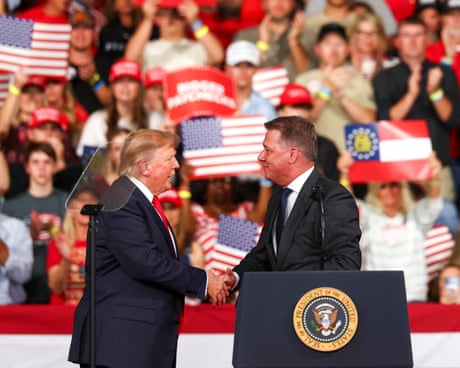
The head of the luxury carmaker Audi is under fire in Germany for appearing at a rally with Donald Trump just days before the US midterm elections, to announce billions of dollars of investment in battleground state Georgia.

Gernot Döllner joined Trump on stage after the US president gave a speech criticised by the head of an elected body of employees at Audi’s parent company, Volkswagen, as being full of “racism, sexism, transphobia [and] contempt for democracy”.

Continue reading...

© Photograph: Edgar Su/Reuters

© Photograph: Edgar Su/Reuters

© Photograph: Edgar Su/Reuters

  •  

Ukrainian intelligence: Russia can probably add 10–15 Su-34 bombers a year, but no new Tu-95s or Tu-22M3s

russia kept its fifth-generation su-57 stealth fighter near urals — ukrainian drones found anyway · post two fighters one su-34 apron shagol airbase russia's chelyabinsk oblast satellite exilenova+ два су-57

Russia’s aircraft plants still turn out modern fighter-bombers and fighters, enough to partly cover its losses, Ukraine’s military intelligence agency HUR told Ukrainian news agency UNIAN, which published the reply on 23 October. Its older bombers are a different story. Russia has no serial production of new Tu-95s, Tu-22M3s, or Su-24s and keeps them flying through repairs and upgrades, so each one lost for good leaves a lasting gap, HUR said.

Ukraine’s Navy said its Neptune missiles hit six Su-34M bombers at Borisoglebsk airbase in Russia’s Voronezh Oblast overnight into 15 October. Zelenskyy later said four were destroyed and two damaged. The Su-34 is one of the jets that drop Russia’s glide bombs, heavy bombs fitted with wing-and-guidance kits, on Ukrainian positions and towns.

How fast Russia replaces its jets

Russia can probably deliver 10–15 Su-34s a year now, HUR estimated. Deliveries grew from eight in 2022 to 11 in 2023 and 12–14 in 2024. But the agency said that trend does not confirm the same pace today.

For the Su-35S fighter, HUR pointed to an average of about 11–12 a year in 2021–2025. It called that a rough benchmark, not an established 2026 output. Su-30SM2 and Su-57 production continues, but reliable rates cannot be determined. Su-30 figures also mix new builds with upgrades of older Su-30SMs, HUR noted.

What Russia had, and what it lost or saw badly damaged in 2026

By the end of 2025, Russia had about 125 Su-34 and Su-34M bombers, which HUR counts together. It also had 140–145 Su-30 jets of various versions, 135–140 Su-35S, and about 20 Su-57s, HUR estimated. These are only fleet estimates, not a guaranteed number of jets Russia can send on combat missions at the same time, the agency cautioned. Some are under repair or upgrade, and HUR is not disclosing the current fleet size.

Satellite image from 13 October shows six Russian Su-34 fighter-bombers parked in the area later struck at Borisoglebsk airbase
Satellite image from 13 October shows six Russian Su-34 fighter-bombers parked in the area later struck at Borisoglebsk airbase. Image: Exilenova+

HUR also named specific 2026 cases of Russian aircraft destroyed or critically damaged. A Tu-22M3 crashed in Irkutsk Oblast on 15 June. Strikes on Engels airbase on 17 July and 28 August hit two Tu-95MS. The first suffered critical damage to its tail section, and HUR treats the second as a probable irrecoverable loss.

The list also includes a Su-35 that Ukraine’s military says it shot down on 8 July, a claim backed by published materials showing debris. It adds a Su-57 crash in Moscow Oblast on 23 July and a collision of two Su-35S over Kursk Oblast on 7 September. Full official details on those two incidents are still missing, HUR noted. Strikes on several Su-57s and a Su-34 at Shagol airbase on 25 April, and on a Su-24 in Crimea on 7 September, were also reported, but the state of those jets is unknown, so counting them as destroyed would be premature, HUR said. The list, as published, leaves out the Su-34s at Borisoglebsk and the Tu-95MS that Russia’s defense ministry said crashed on takeoff in Amur Oblast in late September.

  •  

Plane parts for Russia’s air force, rubber for its industry—Voronezh’s factories came under drone attack

plane parts russia’s air force rubber its industry—voronezh’s factories came under drone attack · post fire smoke area vaso aircraft plant voronezh after russia 26 2026 ukraine news ukrainian reports

Drones attacked the VASO aircraft plant in Russia's Voronezh overnight on 26 October, Ukrainian Telegram channel Supernova+ reported. The plant builds Il-96 airliners and parts for Russia's military transport planes. A synthetic-rubber plant was also reportedly hit and fires broke out across Voronezh, while another rubber plant in Tolyatti, farther east, reportedly came under attack again.

Ukraine keeps hitting the plants behind Russia's weapons, from Voronezh's missile chips to Urals titanium for warplanes. Each supplier knocked out of rhythm slows how fast Russia replaces the hardware it loses and keeps using against Ukraine.

What the Voronezh plant builds

Supernova+ described VASO as part of Ilyushin, which belongs to Russia's state-owned United Aircraft Corporation (UAC). The channel published a photo of fire and smoke at the site. The plant lies about 190 km from the Ukrainian border.

VASO makes pylons, engine nacelles, and flap rails for the Il-76MD-90A, a modernized military transport plane, and sends them to Ulyanovsk, UAC's press service said in 2024. "We have reached the production pace of Il-76MD-90A aircraft kits that our Ulyanovsk colleagues need," Igor Butyrin, who runs the plant's Il-76 program, stated at the time. In 2016, the plant built an Il-96-300 that UAC handed over to the Rossiya special flight detachment of Russia's presidential property office.

Map of Ukrainian drone strikes on Voronezh and Tolyatti with distances from Ukraine, Russia, 26 October 2026
Map of Ukrainian drone strikes on Voronezh and Tolyatti with distances from Ukraine, Russia, 26 October 2026. Map: EP/Datawrapper

A rubber plant and a bridge on the list too

Supernova+ also named Voronezhsintezkauchuk, a plant of Russian petrochemical group Sibur that makes synthetic rubbers. The channel later reported a hit on the plant's industrial zone and claimed an attack on the city's Northern Bridge. Ukrainian Telegram channel Exilenova+ published footage of a drone arriving, reportedly at the rubber plant.

The moment the UAV arrived this morning, reportedly at the Voronezhsintezkauchuk factory. pic.twitter.com/2PXyQ5P7sb

— Exilenova+ (@Exilenova_plus) October 26, 2026

Voronezh Oblast Governor Aleksandr Gusev declared a missile alert at 04:47 Kyiv time, but no source has named a missile type. Kyiv has not commented. Ukraine's Air Force, which launches Storm Shadow cruise missiles, and its Navy, which fires Neptunes, have posted nothing on Voronezh.

Earlier this month, Ukraine's Navy said it hit six Su-34 bombers in Voronezh Oblast with Neptunes. Storm Shadows reportedly struck an electronics plant in Oryol on 23 October and a battery plant in Yelets two days later.

Fires across the city

Gusev claimed air defenses downed 113 drones over the region, more than 70 of them over the city. He listed fires at several industrial enterprises, which he said caused no serious consequences, plus a business center, an apartment block, and a school stadium. Russian Telegram channel Astra published video of a drone hitting the Galereya Chizhova business center. Exilenova+ footage showed cars burning below apartment blocks.

Voronezh pic.twitter.com/I3WbnGLZhO

— Exilenova+ (@Exilenova_plus) October 26, 2026

Damage in residential districts may have come from downed drones or from Russian air-defense missiles falling back on the city. During a 23 October attack on Gorodets, in Nizhny Novgorod Oblast, Exilenova+ claimed a Pantsir air-defense missile hit a house.

russia's secret aviation report fighter jet clipped its own shelter gate 500 kg bomb fell takeoff helicopter came home printer-paper-sized hole nine engine failures three weeks · post russian su-34
Explore further

Russia still parks its best bombers in the open. Ukraine has spent a year knocking out the air defenses that were supposed to protect them

Gusev also claimed two men were killed and 17 people injured, many of them on a train struck by drone debris. Russian Railways said five passengers were hurt at Somovo station and traffic on the line stopped. Russia's Defense Ministry claimed its air defenses downed 290 drones over 15 regions and the Moscow area.

Tolyatti's rubber plant reportedly attacked again

Locals reported an attack on the Tolyattikauchuk chemical plant in Tolyatti, Samara Oblast, Exilenova+ said. The city lies about 890 km from the front line. Ukraine's General Staff confirmed a strike on the same plant on 24 October. Its synthetic rubbers go into solid fuel for Russia's tactical and ballistic missiles, among other uses.

Until Kyiv comments or satellite imagery shows the site, the damage at VASO stays unconfirmed, and so does any delay to Russia's Il-76 parts line.

  •  

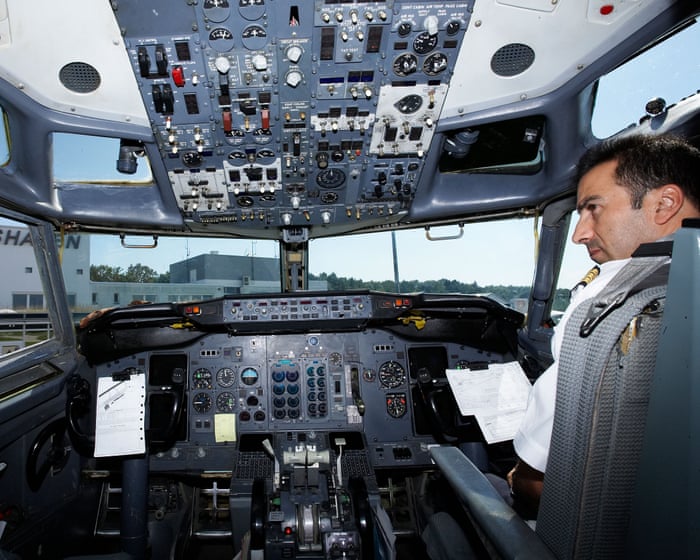
Almost a quarter of European airline pilots fly when too fatigued to work

Pilots report pressure to extend working hours and fears of penalties for declaring themselves unfit to fly

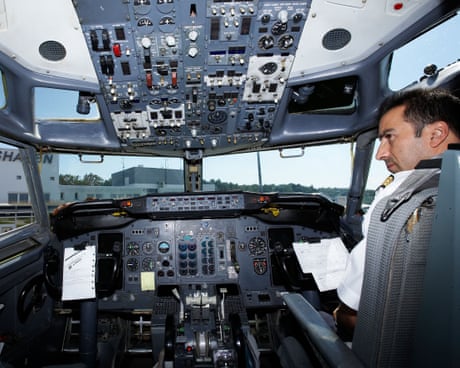
Three in four European airline pilots have taken microsleeps in the cockpit, while almost a quarter routinely fly despite being too fatigued to work, according to a report.

The findings, based on a survey of almost 7,200 captains and first officers by the European Cockpit Association (ECA), include pilots reporting insufficient rest, pressure to extend working hours and fears of being penalised for declaring themselves unfit to fly.

Continue reading...

© Photograph: Agencja Fotograficzna Caro/Alamy

© Photograph: Agencja Fotograficzna Caro/Alamy

© Photograph: Agencja Fotograficzna Caro/Alamy

  •  

Volkswagen to build $4bn Audi SUV factory in US despite job cuts at home

VW investment, creating 4,500 jobs in Georgia, comes amid Trump’s damaging tariffs, intense Chinese competition and costly shift towards EVs

Audi has said it will spend $4bn (£3bn) to build its first factory in the US, as its parent company, Volkswagen, struggles with the impact of steep tariffs imposed by Donald Trump.

The German brand’s chief executive, Gernot Döllner, joined Trump on stage at a campaign rally on Saturday night to announce the factory in Macon, Georgia, in an unusual move by a big European brand just days before the US midterm elections.

Continue reading...

© Photograph: Friso Gentsch/EPA

© Photograph: Friso Gentsch/EPA

© Photograph: Friso Gentsch/EPA

  •  

5 Takeaways From Our Investigation of Trump’s Waivers for Polluters

Chemical plants and other industrial facilities had been required to curb their toxic emissions. A New York Times investigation shows how they got out of it.

© Meridith Kohut for The New York Times

Three million Americans live within three miles of at least one facility that received a clean-air rule waiver from the Trump administration.
  •  
❌