❌

Reading view

L’Azerbaigian e la questione dell’hijab

Riflessioni sui confini tra laicità, sovranità e stabilità sociale

Segue nostro Telegram.

La controversia relativa all’uso dell’hijab nelle scuole azere ha assunto nuove dimensioni nel mese di ottobre, in seguito all’attuazione di norme sul codice di abbigliamento che hanno comportato il divieto di accesso alle istituzioni pubbliche per studentesse e insegnanti. L’episodio ha scatenato manifestazioni, arresti e critiche da parte delle organizzazioni internazionali, suscitando al contempo reazioni anche da parte della Turchia. Il dibattito si estende ben oltre l’ambito scolastico, coinvolgendo questioni di sovranità, identità religiosa e stabilità regionale.

L’Azerbaigian ha ragioni storiche per mantenere un modello di Stato laico. L’esperienza sovietica, la formazione delle sue istituzioni dopo l’indipendenza e la necessità di governare una società religiosamente diversificata in un contesto regionale teso hanno contribuito al consolidamento di un sistema in cui lo Stato mantiene un controllo rigoroso sul funzionamento delle istituzioni pubbliche. Le autorità azere hanno la prerogativa di determinare le proprie politiche educative, stabilire standard per le scuole e decidere in che modo debbano essere attuati i principi costituzionali.

Tuttavia, il modo in cui tali politiche vengono attuate può produrre conseguenze che vanno oltre i loro obiettivi originari. Nel caso dell’hijab, l’applicazione dei regolamenti scolastici ha suscitato resistenze tra le famiglie e le comunità religiose, mentre gli arresti legati alle proteste hanno amplificato la controversia. La sfida principale del governo sarà quella di gestire questa reazione senza permettere che una disputa sulle uniformi scolastiche si trasformi in un conflitto più ampio tra le autorità statali e le comunità religiose.

La situazione presenta inoltre importanti implicazioni internazionali. Ankara, principale partner strategico di Baku, ha espresso preoccupazione per le restrizioni relative al velo islamico. La vicinanza politica, culturale e linguistica tra i due Paesi rende la questione particolarmente delicata. Sebbene questo disaccordo non equivalga necessariamente a una crisi bilaterale, dimostra come le decisioni interne possano creare attriti anche tra governi che intrattengono relazioni strette. Ankara deve tenere conto delle proprie considerazioni sociali e politiche, mentre Baku cerca di preservare la propria autonomia nella gestione degli affari interni.

Merita attenzione anche la dimensione iraniana. L’Azerbaigian intrattiene un rapporto complesso con l’Iran, caratterizzato da legami storici e religiosi, nonché da divergenze strategiche. Come l’Iran, l’Azerbaigian ha una popolazione prevalentemente sciita, mentre la Repubblica Islamica ospita una consistente minoranza azera. Sia la Guida Suprema, l’Ayatollah Khamenei, sia il presidente Masoud Pezeshkian hanno origini etniche azere. In questo contesto, le politiche di secolarizzazione potrebbero essere interpretate da attori esterni come parte di una più ampia lotta per l’influenza religiosa e politica all’interno dell’Azerbaigian. Tale interpretazione, tuttavia, non dimostra che i regolamenti scolastici siano stati adottati esclusivamente per contrastare l’influenza iraniana.

Esiste inoltre un rischio interno che merita di essere preso in considerazione. Le restrizioni religiose applicate in modo troppo rigido possono produrre effetti contrari a quelli desiderati. Quando alcuni segmenti della popolazione percepiscono determinate misure come imposizioni alle proprie pratiche religiose, i gruppi radicali potrebbero sfruttare il malcontento che ne deriva, dipingere lo Stato come un avversario della religione ed espandere la propria capacità di mobilitazione. Per comprendere questa questione è necessario prendere in considerazione altre esperienze, come quella della Siria sotto il governo di Assad, dove la laicità coesisteva con la proliferazione dell’estremismo. Questo esito non è inevitabile e l’opposizione alle norme non dovrebbe essere automaticamente equiparata all’estremismo. Tuttavia, l’esperienza internazionale suggerisce che tale possibilità debba essere esaminata con attenzione.

Per l’Azerbaigian, la questione va quindi oltre la semplice definizione di un’uniforme scolastica. Il Paese ha il diritto di organizzare le proprie istituzioni secondo le proprie priorità, senza che governi stranieri ne dettino le scelte. Allo stesso tempo, il mantenimento della stabilità richiede che si eviti che le decisioni amministrative alimentino una polarizzazione duratura o creino nuove opportunità per gli attori che cercano di intensificare le tensioni religiose.

L’evoluzione di questo caso avrà implicazioni per le relazioni di Baku con Ankara e Teheran, nonché per le dinamiche politiche interne del Paese. L’esito dipenderà non solo dalle norme stesse, ma anche dalla loro attuazione pratica e dalla risposta delle autorità alle preoccupazioni sollevate da studenti, famiglie ed educatori. Nel Caucaso meridionale, dove identità, sovranità e sicurezza rimangono strettamente intrecciate, anche una controversia apparentemente circoscritta può avere gravi ripercussioni a livello regionale.

  •  

Azerbaijão e a questão do hijab

Considerações sobre os limites entre secularismo, soberania e estabilidade social.

Junte-se a nós no Telegram , X e VK.

Escreva para nós: info@strategic-culture.su

A controvérsia envolvendo o uso do hijab nas escolas do Azerbaijão ganhou novas dimensões em outubro, após a aplicação de regras de vestimenta que resultaram no impedimento de entrada de alunas e professoras em instituições públicas. O episódio provocou manifestações, detenções e críticas de organizações internacionais, além de gerar reações na Turquia. A discussão ultrapassa o ambiente escolar e envolve questões de soberania, identidade religiosa e estabilidade regional.

O Azerbaijão possui razões históricas para preservar um modelo estatal secular. A experiência soviética, a formação de suas instituições após a independência e a necessidade de administrar uma sociedade religiosa em meio a um contexto regional tenso contribuíram para consolidar uma estrutura na qual o Estado mantém controle sobre o funcionamento das instituições públicas. Cabe às autoridades azerbaijanas determinar suas políticas educacionais, estabelecer padrões para as escolas e decidir como os princípios constitucionais serão aplicados.

Entretanto, a maneira como essas políticas são implementadas pode produzir consequências que ultrapassam seus objetivos originais. No caso do hijab, a aplicação das regras escolares provocou resistência entre famílias e setores religiosos, enquanto as detenções relacionadas aos protestos ampliaram a repercussão do episódio. A questão central para o governo será administrar essa reação sem permitir que uma disputa sobre uniformes se transforme em um conflito mais amplo entre autoridades estatais e comunidades religiosas.

O cenário possui implicações internacionais importantes. A Turquia, parceira estratégica de Baku, manifestou preocupação com as restrições ao véu islâmico. A proximidade política, cultural e linguística entre os dois países torna o tema particularmente sensível. Embora a divergência não represente necessariamente uma crise bilateral, ela demonstra que decisões domésticas podem gerar desconforto mesmo entre governos que mantêm relações estreitas. Ancara precisa considerar suas próprias referências sociais e políticas, enquanto Baku procura preservar sua autonomia na condução dos assuntos internos.

A dimensão iraniana também merece atenção. O Azerbaijão mantém uma relação complexa com o Irã, marcada por vínculos históricos e religiosos, mas também por divergências estratégicas. Enquanto o Azerbaijão é, assim como o Irã, um país de maioria xiita, a República Islâmica possui uma larga minoria azerbaijana, da qual tanto o Aiatolá Khamenei quanto o Presidente Pezeshkian são, eles próprios, representantes. Nesse ambiente, a política de secularização pode ser interpretada por setores externos como parte de uma disputa mais ampla pela influência religiosa e política no país. Essa interpretação, contudo, não permite concluir que a regulamentação escolar tenha sido formulada exclusivamente para conter a influência iraniana.

Existe ainda um risco interno que merece consideração. Restrições religiosas aplicadas de maneira excessivamente rígida podem produzir efeitos contrários aos pretendidos. Quando parcelas da população percebem determinadas medidas como uma imposição sobre suas práticas religiosas, grupos radicais podem explorar o descontentamento, apresentar o Estado como adversário da religião e ampliar sua capacidade de mobilização. Para entender este tema, é preciso lembrar de outras experiências, como a Síria de Assad, onde o secularismo deu lugar à proliferação doe extremismo. Esse resultado não é inevitável, e a oposição às regras não deve ser confundida automaticamente com extremismo. Ainda assim, experiências internacionais demonstram tal tendência existe e deve ser analisada de perto.

Para o Azerbaijão, a questão envolve, portanto, mais do que a definição de um uniforme escolar. O país tem o direito de organizar suas instituições segundo suas próprias prioridades, sem que governos estrangeiros ditem suas escolhas. Ao mesmo tempo, a preservação da estabilidade depende da capacidade de evitar que decisões administrativas alimentem polarizações duradouras ou ofereçam novas oportunidades a atores interessados em ampliar tensões religiosas.

A evolução do caso será relevante para as relações de Baku com Ancara e Teerã, assim como para a dinâmica política interna do país. O resultado dependerá não apenas das normas estabelecidas, mas também de sua aplicação concreta e da resposta das autoridades às preocupações apresentadas por estudantes, famílias e educadores. No Cáucaso, onde as relações entre identidade, soberania e segurança permanecem estreitamente conectadas, até uma disputa aparentemente localizada pode adquirir repercussões regionais sérias.

  •  

Bakú pone punto y final a la fórmula «una nación, dos Estados»  

Ehsan MOVAHEDIAN

Únete a nosotros en Telegram , X y VK .

Escríbenos: info@strategic-culture.su

La advertencia de Aliyev contra la influencia extranjera llega en medio de una disputa con los círculos políticos turcos sobre la religión, Karabaj y las relaciones de Azerbaiyán con Israel.

En el octavo congreso del Partido del Nuevo Azerbaiyán, celebrado en Bakú el 2 de octubre, el presidente Ilham Aliyev ofreció una descripción inusualmente directa de lo que denominó la «seguridad ideológica» de Azerbaiyán. Era tan importante como la seguridad física, afirmó, ya que las amenazas ideológicas podían traspasar las fronteras a través de Internet, los ciberataques y la inteligencia artificial (IA).

Hizo un llamamiento a la educación y al patriotismo para defender el espacio político del país, al tiempo que insistió en que Azerbaiyán no necesitaba «ayuda ni patrocinio» extranjeros. Añadió que otros Estados no debían interferir en sus asuntos ni decirle cómo vivir.

Estas declaraciones las realizó el presidente y líder del partido gobernante en un congreso en el que se definió su rumbo político. Aliyev situó el control de la esfera ideológica de Azerbaiyán al mismo nivel que el poder militar, la independencia económica y la toma de decisiones soberana.

No mencionó a Turquía como fuente de ninguna amenaza. Sin embargo, sus palabras se produjeron en medio de críticas en los círculos políticos y mediáticos turcos hacia las políticas internas de Azerbaiyán, especialmente su trato a las estudiantes que llevan hiyab. El 26 de septiembre, el Consejo de Medios de Comunicación y Radiodifusión de Azerbaiyán acusó a círculos no identificados de llevar a cabo una campaña contra el país en los medios turcos y en las redes sociales.

Ese enfrentamiento agudiza aún más la fórmula «una nación, dos Estados». La proximidad política nunca ha eliminado las diferencias en los intereses nacionales. A medida que Ankara y Bakú se han ido acercando, la cuestión de quién define su identidad común —y qué influencia permite— se ha vuelto más difícil de eludir.

Los analistas que hablaron con The Cradle consideran que el discurso de Aliyev es un intento de renegociar la relación, más que de romperla. Azerbaiyán no tiene ninguna intención aparente de renunciar a su asociación militar, económica y cultural con Turquía. Sin embargo, Bakú quiere dejar claro que el parentesco no otorga a Ankara ninguna autoridad sobre la política interna azerbaiyana.

Una advertencia que se ha escuchado en Ankara

Hazel Yalin, investigadora especializada en las relaciones turco-rusas, interpreta que el discurso estaba dirigido, en gran medida, al Gobierno del presidente Recep Tayyip Erdogan. El analista turco Aydin Sezer también percibe un mensaje diplomático indirecto. Según Sezer, Aliyev se dirigió a varios públicos, entre ellos Occidente, Armenia, Rusia e Irán, pero es posible que Ankara se encontrara entre sus principales destinatarios.

El contexto inmediato es la controversia sobre la religión en las escuelas de Azerbaiyán. Una enmienda de septiembre a las normas de vestimenta de las escuelas públicas prohíbe prendas adicionales consideradas incompatibles con la educación laica. La decisión no menciona el hiyab por su nombre, pero las noticias de que se ha impedido a algunas niñas asistir a clase por llevar pañuelo en la cabeza han suscitado objeciones por parte de críticos turcos.

Ankara no ha abordado públicamente el tema con Bakú. Sezer interpreta la exhortación de Aliyev a que otros países se ocupen de sus propios asuntos como una advertencia contra convertir el lenguaje de la hermandad en un derecho a supervisar a Azerbaiyán.

La propia alianza reconoce este límite. La Declaración de Shusha de 2021 celebra «una nación, dos Estados» y formaliza una amplia cooperación, pero también compromete a Ankara y Bakú a respetar la soberanía y la no injerencia en los asuntos internos de la otra parte. La disputa actual ha puesto en contacto esas dos partes de la declaración.

Si los actores políticos turcos reclaman voz en la política religiosa y educativa de Azerbaiyán alegando una nacionalidad compartida, el margen de soberanía ideológica de Bakú se reduce. Si esas cuestiones pertenecen exclusivamente a Azerbaiyán, el lema sigue siendo una expresión de afinidad cultural y solidaridad política, sin otorgar a ninguna de las dos capitales un mandato sobre la otra.

¿A quién pertenece la victoria en Karabaj?

Yalin afirma que los canales de noticias y las cuentas en redes sociales pro-Erdogan han acusado a Bakú de presionar a los musulmanes en materia de prácticas y organización religiosas. Algunos también han presentado la victoria de Azerbaiyán en la Segunda Guerra de Karabaj como algo que debía a Turquía, calificando las políticas laicas de Aliyev de ingratas y exigiendo respeto por las sensibilidades religiosas turcas.

«Este argumento también se ha esgrimido basándose en el lema “dos Estados, una nación”: si los turcos y los azerbaiyanos son miembros de la misma nación, entonces, según este razonamiento, el Gobierno azerbaiyano también debería tener en cuenta la voz de esa nación».

El discurso de Aliyev en el congreso apuntaba en la dirección opuesta. Afirmó en repetidas ocasiones que Azerbaiyán había actuado por su cuenta, había pagado sus armas y se había impuesto sin ningún patrocinador externo. Esta fue su interpretación política de la guerra; no debe interpretarse como una conclusión de que el apoyo turco no desempeñó ningún papel.

De hecho, la Declaración de Shusha recoge explícitamente el agradecimiento de Bakú por el apoyo moral y político de Turquía. La controversia gira en torno a quién puede atribuirse el mérito político del resultado y qué derechos podría otorgarles ese mérito para exigir algo posteriormente.

Para Aliyev, la victoria militar forma parte de un proyecto más amplio de construcción del Estado. Describió la independencia, la fortaleza económica, el poderío militar y la confianza en las capacidades azerbaiyanas como la línea de actuación duradera de su Gobierno. Cuanto más se convierte esa narrativa en el eje central de su legitimidad, menos margen queda para que otra capital se presente como la artífice del éxito de Azerbaiyán.

La implicación es significativa: no se puede permitir fácilmente que un actor externo —ni siquiera uno amigo— se convierta en el artífice político del éxito de Azerbaiyán.

Jafar Haghpanah, profesor de la Universidad de Teherán, sostiene que Bakú ya no quiere ser tratado como un socio subordinado de Turquía. Yalin identifica tres elementos en la postura de Aliyev.

El primero es la preocupación por la presión ideológica: según la interpretación de Yalin, el intento de golpe de Estado de 1995 contra el padre de Aliyev, Heydar Aliyev, dejó una advertencia duradera sobre las posibles consecuencias de la actividad política vinculada a Turquía.

El segundo es la resistencia a las descripciones nacionalistas turcas de Azerbaiyán como un «hermano pequeño». El tercero es la creciente confianza de Aliyev en que Azerbaiyán puede ejercer su propia influencia política en toda la región. Las acusaciones relativas a figuras turcas en el episodio de 1995 no deben confundirse con la responsabilidad por parte del actual Gobierno turco.

Bakú tiene ahora un mayor peso militar y económico que a principios de la década de 2000. La Compañía Estatal de Petróleo de la República de Azerbaiyán (SOCAR) ha ampliado el alcance energético de Azerbaiyán; el país ha establecido profundos lazos con Israel, relaciones estratégicas con China y Estados Unidos, y ocupa un lugar destacado en la Organización de Estados Turcos (OTC). Esas conexiones le dan más margen para rechazar una jerarquía dentro de su alianza más estrecha.

Yalin cita el respaldo de Sinan Ogan a Erdogan en la segunda vuelta de las elecciones presidenciales de Turquía de 2023 como ejemplo de cómo la influencia azerbaiyana podría convertirse en un tema de debate en la política turca. A Ogan se le preguntó si Aliyev había influido en su decisión y lo negó explícitamente, afirmando que Aliyev no le había llamado. La acusación no puede demostrar que Bakú dirigiera su elección. No obstante, su difusión muestra la rapidez con la que la cuestión de la influencia funciona en ambos sentidos.

El alcance de la seguridad ideológica

La advertencia de Aliyev fue más allá de la controversia sobre los uniformes escolares. Su respuesta consistió en reforzar la educación y el patriotismo y, con ellos, el control del Estado sobre cómo se interpretan su historia y sus victorias.

Turquía dispone de medios inusualmente potentes para llegar a ese público: la televisión, las redes sociales, las universidades, las redes religiosas, la cultura popular, las empresas y las instituciones del mundo turco en general. Esas conexiones han ayudado a mantener la alianza. También pueden inquietar a Bakú cuando los debates políticos turcos comienzan a moldear las expectativas sobre el orden interno de Azerbaiyán.

El problema para Aliyev no es que la influencia turca sea uniformemente hostil. Es que incluso una influencia amistosa puede seguir desafiando la autoridad de un Gobierno para definir la identidad y la política nacionales. Su énfasis en la seguridad ideológica sugiere que pretende proteger esa autoridad incluso dentro de la asociación más estrecha de Azerbaiyán.

El lugar de Israel entre los aliados

La relación de Azerbaiyán con Israel añade otra fuente de tensión. Ankara ha condenado la guerra de Israel contra Gaza, mientras que Bakú ha mantenido estrechos vínculos en materia de seguridad y energía con Tel Aviv. Las armas israelíes han constituido una parte importante del arsenal de Azerbaiyán, y el crudo azerbaiyano ha seguido llegando a Israel a través del puerto de Ceyhan, en Turquía, a pesar de las restricciones comerciales declaradas por Ankara. The Cradle ha informado sobre la relación en materia de armas y petróleo y sobre los continuos flujos de petróleo.

El analista del Cáucaso Ahmad Kazemi no considera que las diferencias entre Ankara y Bakú sean lo suficientemente profundas como para amenazar su alianza. No obstante, cree que la confianza de Aliyev se basa en parte en el apoyo israelí.

Según la valoración de Kazemi, «si Bakú se viera obligada a elegir entre Ankara y Tel Aviv, elegiría a Israel». También sostiene que Bakú sabía que la presencia de su representante durante el discurso del primer ministro israelí, Benjamin Netanyahu, ante la ONU en septiembre desagradaría a Turquía. Un análisis de la Agencia Anadolu reveló que Turquía se sumó a la protesta contra el discurso, mientras que Azerbaiyán siguió estando representado.

Kazemi ve otra consecuencia para el Cáucaso. Sostiene que la preocupación compartida por Turquía e Irán respecto a la posición de Israel en Azerbaiyán podría acercar a Ankara y Teherán en algunas cuestiones, incluidos los corredores de transporte regionales. Dicha convergencia tendría que lidiar con la amplia cooperación estratégica y de defensa de Turquía con Bakú.

Haghpanah ofrece una interpretación más contundente del discurso pronunciado en el congreso:

«Aliyev pretendía con su discurso indicar a Turquía que Azerbaiyán es el principal aliado de Israel y que Ankara debería moderar su tono hacia Tel Aviv y evitar adoptar una postura dura contra este país. Predice que Turquía e Israel entrarán en conflicto por los recursos energéticos del mar Mediterráneo, así como por sus intereses geoeconómicos y geopolíticos».

Yalin interpreta de manera similar las referencias de Aliyev a la producción y venta de petróleo de Azerbaiyán como una respuesta a las críticas a su comercio con Israel. Esas observaciones por sí solas no permiten determinar las intenciones de Bakú. Por su parte, Dariush Safarnejad, un destacado experto en el Cáucaso, señala la relación «petróleo por armas», pero espera que la influencia israelí en Azerbaiyán se reduzca en cierta medida si la cooperación directa de Bakú con Washington se intensifica tras la iniciativa de paz con Armenia. También hace referencia al debate sobre unos lazos más estrechos con la OTAN.

Los demás socios de Bakú

Aliyev aprovechó el congreso para describir a China y a EE. UU. como las dos superpotencias mundiales y para destacar las alianzas estratégicas de Azerbaiyán con ambas. El esfuerzo de Bakú por establecer vínculos con centros de poder rivales le proporciona alternativas a la dependencia de un único socio, ya sea turco, ruso, chino u occidental.

Sus comentarios sobre Armenia y Rusia encajan en ese contexto. Yalin llama la atención sobre la afirmación de Aliyev de que Armenia reconoció la integridad territorial de Azerbaiyán en octubre de 2022, con el consiguiente reconocimiento de la soberanía azerbaiyana sobre Karabaj.

Aliyev presentó el restablecimiento del control azerbaiyano como un logro conseguido frente a la presión de las grandes potencias. Yalin considera que esto forma parte del intento de Bakú de reposicionarse tras la guerra.

Azerbaiyán y Armenia rubricaron un borrador de acuerdo de paz en Washington en agosto de 2025, aunque aún no se ha firmado el tratado definitivo. Safarnejad sostiene que unos lazos más estrechos con Washington podrían dar a Bakú más margen para tratar directamente con EE. UU. y, con el tiempo, reducir su dependencia de Israel.

Hermandad sin un socio dominante

Ninguno de los cinco analistas sugiere que sea inminente una ruptura entre Ankara y Bakú. Safarnejad destaca la profundidad de su interdependencia: la cooperación militar, las infraestructuras energéticas, los corredores de transporte, la inversión, las industrias de defensa y las instituciones culturales confieren a la alianza una base sólida.

La OTS refuerza esos lazos. En septiembre, funcionarios turcos y azerbaiyanos seguían debatiendo una cooperación más profunda en materia de defensa y seguridad.

Azerbaiyán sigue queriendo a Turquía a su lado en materia de seguridad, comercio y diplomacia regional. Aliyev marca el límite en lo que respecta a la influencia de Ankara sobre la política religiosa de Bakú, sus vínculos con Israel y sus relaciones exteriores en general. Para él, el lema «una nación, dos Estados» otorga a Azerbaiyán la última palabra sobre sus propios asuntos.

Hasta qué punto Bakú podrá hacer valer esa reivindicación dependerá, en parte, de la política interna de Turquía tras Erdogan, de la durabilidad de la relación de Azerbaiyán con Israel y de su capacidad para gestionar las relaciones con Washington, Moscú, Pekín y Teherán sin perder el apoyo de Ankara.

Para Irán, un Bakú más seguro de su independencia pero más dependiente de Israel difícilmente resultaría tranquilizador. La alianza puede perdurar; la discusión sobre quién establece sus límites ya está en marcha.

Publicado originalmente por  The Cradle
Traducción:  Geopolítica rugiente

  •  

The conceit of total dominance

By Bill ASTORE

A strange conceit of American exceptionalism is the naked ambition of full-spectrum dominance. The idea is this: America must dominate every realm of potential conflict, land-sea-air as well as space and cyber and any other realm you can imagine, for that is the only way Americans can truly be “safe.” Such a conceit comes with a hefty price tag as Pentagon spending soars toward $1.5 trillion a year. But money is the least of it. The heftiest price tag is the constant state of warfare (and preparations for yet more war) that has characterized U.S. foreign policy since 1945.

That, and the erosion of personal liberty and freedom and the hollowing out of the American middle- and working classes as money flows upward to war contractors in the service of boundless imperial ambition.

There’s a god-like quality to this ambition, the idea America must be omnipotent, dominating all realms of warfare, and omniscient, sweeping up all data everywhere, in an unapologetic quest for global reach and global power together with the unapologetic exercise of that murderous power against peoples generally having brown or black skin and therefore treated as inferiors.

With only slight exaggeration, the U.S. government can be said to be projecting power everywhere and helping ordinary Americans nowhere. Destruction is favored over construction. Enriching the already rich is the goal even as the impoverished are made poorer.

The U.S. taxpayer, in the old days known as citizens, are paying through the nose for unneeded weapons systems (Sentinel ICBMs, B-21 nuclear bombers, Golden Dome), unwanted wars (Vietnam, Afghanistan, Iraq, Iran), and an imperial structure of force projection that virtually guarantees the violence will be unending. This imperial structure, with its goal to control all, to know all, to dominate all, is supported by Democrats and Republicans. Critics of this structure, present in both parties but in small numbers, are attacked and otherwise kept on the margins.

None of this is new. In the early 1960s, Senator George McGovern, a decorated bomber pilot during World War II, argued against the pursuit of nuclear “overkill” and called for substantial cuts to defense spending and reinvestment in civilian infrastructure. In support of this initiative, he cited Republican President Dwight D. Eisenhower’s military-industrial complex warning of January 1961. McGovern’s initiative was quickly abandoned as the Johnson administration ramped up its disastrous war in Southeast Asia.

Nearly a decade later, with Southeast Asia ravaged if not defeated, McGovern urged his fellow citizens to “come home,” to stop the folly of overseas wars and ever-increasing military budgets. He was overwhelmingly defeated by Richard Nixon in the 1972 Presidential election.

Ever since that defeat, the Democratic Party has conspired to silence candidates who are antiwar and who dissent from the idea of imperial dominance. Dennis Kucinich comes to mind here. Even moderate calls for reform from candidates like Bernie Sanders are dismissed as naive or dangerous. The result has been Democrats like Obama, Biden, Hillary Clinton, and Harris who openly embrace “good” wars (Afghanistan, for Obama) and who eagerly celebrate military lethality (Harris).

Meanwhile, the Republican Party never met a military budget increase it didn’t like. Rare indeed are voices like Ron and Rand Paul and Thomas Massie who question the wisdom of endless wars and their adverse impact on rights and freedoms here.

What is to be done? Bernie Sanders called for a political revolution, surely a correct call, but he was neutered by the establishment of both parties. Elizabeth Warren spoke of “big, structural changes,” but that was for the domestic economy; her foreign policy was basically that of Biden/Harris. A few rogue Republicans speak up against the Iran war today, but rare indeed are those who openly call for major cuts to war spending.

In short, electing our way out of imperial dominance and colossal war and weapons spending is unlikely in the extreme. Many many people (myself included) have written sensible articles calling for deep cuts to military spending, but good ideas that go against the grain gain little traction without a strong and concerted movement behind them.

America desperately needs a coordinated mass movement against endless war and massive military spending, yet the “powers that be” keep doubling down on yet more wars and even more massive war spending. That same establishment continues to multiply U.S. “enemies.” It may be Iran today, but Russia and especially China always loom, with North Korea and other “rogue” states held in reserve just in case.

The sheer folly and massive expense of it all will likely lead to the end of the (however imperfectly practiced) American democratic experiment. That’s a grim conclusion, I know, but I’m less than hopeful as the tools America has used in its unjust wars overseas are now increasingly applied in the “homeland” against alleged dissenters.

Remember when “dissenters” used to be called concerned citizens? Remember when war was considered to be bad and weapons spending was seen as the unwisest of ways to spend our resources?

America doesn’t have to be a warrior-state or in a state of constant war. A “silent majority” of Americans clearly doesn’t want endless war and outspokenly wants better lives for their children. But better days will not come if this majority remains silent or otherwise demobilized.

The Main Obstacle

As Ike said in 1961, the main obstacle is the military-industrial complex (MIC), to which he added Congress as an abetter and accomplice. That complex in 65 years has greatly added to its power and cultural penetration. The term MICIMATT adds the intelligence “community,” the media, academe, and think tanks. To that we might add the sporting world, Hollywood, video games, and now wildcard tech billionaires. All these interests conspire to absorb trillions of dollars from U.S. taxpayers, ostensibly in the name of national security, while waging or supporting endless war.

Ike said only alert and knowledgeable citizens, actively participating in democracy, could compel the MIC to curb its worst and most grandiose ambitions. Sadly, this is precisely why the American people are constantly lied to, especially about wars, why so much is kept hidden or “classified,” and why people are encouraged to salute smartly and let the military experts handle everything.

Even worse, the very idea of active citizenship is now degraded; the only “duty” apparently left is voting, where you’re encouraged to vote Democrat or Republican and otherwise to reject any third-party candidate who may be antiwar as irrelevant if not invalid (and possibly un-American).

Our ultimate security doesn’t reside in guns or other weapons or in boundless violence. It resides in strong institutions committed to the rule of law in which individuals of character stand up and speak out against abuses of power. Come home, America, to a land of generosity and hope and peace.

Be an alert and knowledgeable citizen. And act.

Original article:  bracingviews.com

  •  

BBC Bitesize Accused of ‘Brainwashing’ Schoolchildren with Left-Wing Views on Migration and Net Zero

The BBC has been accused of using its Bitesize website to push open borders, Net Zero and woke ideology on children as young as 11, teaching them that more immigration is great and anyone who disagrees is likely a bigot.

The post BBC Bitesize Accused of ‘Brainwashing’ Schoolchildren with Left-Wing Views on Migration and Net Zero appeared first on The Daily Sceptic.

  •  

Honoring Frances Stonor Saunders

By Patrick LAWRENCE

Join us on Telegram, X, and VK.

Contact us: info@strategic-culture.su

In her revelatory work The Cultural Cold War, the late British author was the first to shine so unblinking a light on the sprawl of the C.I.A.’s cultural interventions.

Frances Stonor Saunders was fond of epigraphs (as am I). At the front of The Cultural Cold War: The C.I.A. and the World of Arts and Letters (The New Press, 1999), the British journalist, documentarian and author quotes some lines from Dante’s Inferno, the last of which is, “Before my age was full, I went astray.”

I had not lived half my life when I succumbed to complacency and moral blindness: This is my reading of the line from Canto XV. And how fitting it is at the start of Saunders’ exhaustively researched account of how the Central Intelligence Agency, its tentacles reaching into every corner of American culture, did so much to lead our republic into what the Italian poet would call its selva oscura, its dark wood —the state of lostness America has never since escaped.

Frances Stonor Saunders died on the last day of August, having suffered from a virulent strain of brain cancer. She was a mere 60. We had a few acquaintances in common, but I never met her. It was nonetheless something like losing a friend when, just this past week, I heard of her death. And so this brief appreciation.

The Cultural Cold War made Stonor Saunders’ reputation. It took a prominent place on my shelf of Cold War books as soon as it was published. At last the curtain parted on the insidious use the C.I.A. made, or attempted to make, of painters, poets, playwrights, novelists, editors, jazz musicians, singers, dancers, actors, scholars and other cultural figures in its long-running operation to promote the appeal of American life as against the Soviet Union and altogether the postwar socialist alternative.

This was an immense “soft power” operation avant la lettre — before we had the term. One could also call it an early variant of the “cognitive warfare” to which we are now incessantly subjected, the primary object of which was to keep postwar Europe from swinging leftward, as the French, the Italians and others were poised to do.

From Saunders’s Introduction:

“Drawing on an extensive, highly influential network of intelligence personnel, political strategists, the corporate establishment, and the old school Ivy League universities, the incipient CIA started, from 1947, to build a ‘consortium’ whose double task was to inoculate the world against the contagion of Communism and to ease the passage of American foreign policy abroad. The result was a remarkably tight network of people who worked alongside the Agency… Whether they liked it or not, whether they knew it or not, there were few writers, poets, artists, historians, scientists, or critics in postwar Europe whose names were not in some way linked to this covert enterprise.”

Who Was Who & Who Stood Where

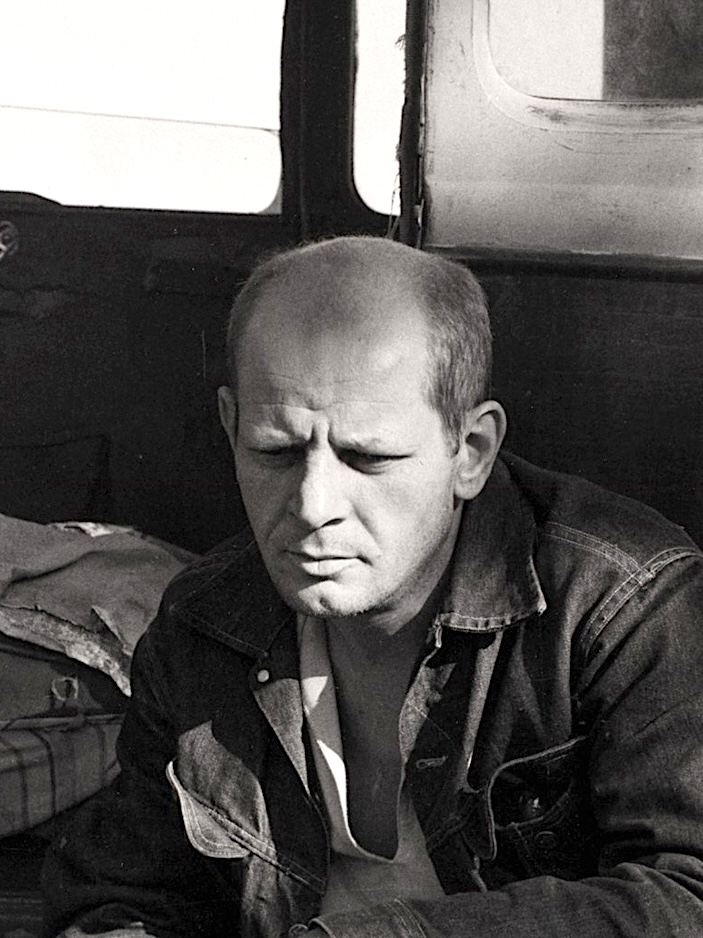
Jackson Pollock in 1951. (Hans Namuth /Wikimedia Commons,Public Domain)

Jackson Pollock and others among the Abstract Expressionists, Leonard Bernstein and others among the American composers then prominent, Robert Lowell, James Baldwin, Mary McCarthy and other writers of their generation, Duke Ellington and other jazz stars — if they weren’t sent abroad on the C.I.A.’s nickel, their work was.

There were the hundreds of books the Agency took a role in promoting, It paid for translations of Eliot’s Four Quartets, Luigi Barzini’s The Italians, Boris Pasternak’s Doctor Zhivago. It covertly supported magazines — Encounter and The Paris Review famous among them — along with radio stations and, of course, newspapers — and those who wrote and edited for them. As of 1956 the Agency owned a considerable piece of the Rome Daily American.

Saunders, who did years of interviewing and archival research for this book, lays out her findings over 427 well-written pages and was the first to shine so unblinking a light on the sprawl of the C.I.A.’s cultural interventions.

One of the things I like about Saunders’s book, among many, is her exposure of those artists and writers who knew of the Agency’s interventions and wanted nothing to do with them, those who knew and cooperated and those who served its purposes unwittingly.

Pollock had no idea of the use to which the Agency put his work, Baldwin wanted nothing to do with the Congress for Cultural Freedom (C.C.F.), infamous as a C.I.A. front. Ever true to her tough-minded politics, neither did Lillian Hellman.

Mary McCarthy knew all about the Agency’s funding of the C.C.F. and its other projects and was fine with all of it. I’ve never liked McCarthy’s novels, and Saunders gave me a good reason to distrust her. She was prominent among that group of Americans known as Cold War liberals, for whom I have long nursed an abiding contempt.

McCarthy in 1963. (Dick DeMarsico/ World Telegram / Library of Congress. New York World-Telegram & Sun Collection/Wikimedia Commons/Public Domain)

I wish Saunders had given more attention to the profligate corruptions of generations of American journalists and newspaper editors, but her definition of culture is narrower than mine; I speculate that journalism’s service to the Agency was a room so large she chose not to enter it.

The surrender of many American journalists to the Cold War cause is well-enough documented in any case. See, for example, Carl Bernstein’s celebrated “The C.I.A. and the Media,” which Rolling Stone published in October 1977, and the House hearings that Bernstein’s piece prompted a couple of months later — the Church Committee, whose hearings ran from January 1975 to April 1976, having flinched from this responsibility.

Chronicler of Secrecy

The who-was-who and the who-stood-where and the who-did-what of The Cultural Cold War give Saunders’s book an historical specificity I do not think anyone has matched, with the exception of Joel Whitney’s Finks (OR Books, 2016), which draws heavily on Saunders’s work. She did not leave those of whom she wrote any place to hide.

As I reflect back on her accomplishment now, it seems to me to lie in something she never mentions. Saunders gave us a chronicle of the U.S. culture of secrecy in its earliest days, the first decades after the 1945 victories, when America set about making itself a global imperium.

What comes through in The Cultural Cold War is how little those alive at the time were able to know about their time. Too many events, too many decisions, too many reasons for things happening as they did were hidden, rendered inaccessible.

The C.I.A.’s Cold War interventions have had many enduring consequences. The Agency systematically discredited the principle of nonalignment, which was held high among then-emergent non–Western nations. America brings the same with-us-or-against-us fallacy to the 11 members and 10 partners comprising the BRICS  — a complete failure to grasp one of the 21st century’s significant realities.

It is the same with the out-of-hand dismissal of all suggestions of moral equivalence in global affairs with those it deems adversaries: The United States is always righteous and never acts but in defense of itself or its always-democratic allies and/or clients. It is never to be accused of aggression. This is what I mean by moral blindness.

The Agency’s most disturbing legacy, at least to me, is how little of our world we are able actually to see. Daniel Patrick Monihan warned us of this just before the U.S. century turned in Secrecy: The American Experience (Yale, 1998). So, in her way, did Saunders a year later. Foolish it would be, naïve in the extreme, to think the time she described so piercingly is not the time in which we live.

It is the historians now who tell us who we are — this by telling us who we were.  This is why I honor Frances Stonor Saunders as I do. She told Americans of their past, and, so, of their present.

Original article:  consortiumnews.com

  •  

Azerbaijan and the hijab question

Considerations on the boundaries between secularism, sovereignty, and social stability\

Join us on Telegram, X, and VK.

Contact us: info@strategic-culture.su

The controversy surrounding the wearing of the hijab in Azerbaijani schools took on new dimensions in October, following the implementation of dress code rules that resulted in female students and teachers being denied entry to public institutions. The episode sparked demonstrations, arrests, and criticism from international organizations, while also drawing reactions from Turkey. The debate extends far beyond the school environment, involving questions of sovereignty, religious identity, and regional stability.

Azerbaijan has historical reasons for maintaining a secular state model. The Soviet experience, the formation of its institutions after independence, and the need to govern a religiously diverse society amid a tense regional environment have contributed to the consolidation of a system in which the state maintains strict control over the functioning of public institutions. Azerbaijani authorities have the prerogative to determine their educational policies, establish standards for schools, and decide how constitutional principles are to be implemented.

However, the way these policies are implemented can produce consequences that extend beyond their original objectives. In the case of the hijab, the enforcement of school regulations has provoked resistance among families and religious communities, while arrests related to the protests have amplified the controversy. The government’s central challenge will be to manage this reaction without allowing a dispute over school uniforms to develop into a broader conflict between state authorities and religious communities.

The situation also has important international implications. Ankara, Baku’s main strategic partner, has expressed concern over restrictions on the Islamic headscarf. The political, cultural, and linguistic proximity between the two countries makes the issue particularly sensitive. Although this disagreement does not necessarily amount to a bilateral crisis, it demonstrates how domestic decisions can create friction even between governments that maintain close relations. Ankara must take its own social and political considerations into account, while Baku seeks to preserve its autonomy in managing domestic affairs.

The Iranian dimension also deserves attention. Azerbaijan maintains a complex relationship with Iran, shaped by historical and religious ties as well as strategic disagreements. Like Iran, Azerbaijan has a predominantly Shiite population, while the Islamic Republic has a substantial Azerbaijani minority. Both Supreme Leader Ayatollah Khamenei and President Masoud Pezeshkian have Azerbaijani ethnic backgrounds. In this environment, secularization policies may be interpreted by external actors as part of a broader struggle for religious and political influence within Azerbaijan. This interpretation, however, does not establish that the school regulations were adopted exclusively to counter Iranian influence.

There is also a domestic risk worth considering. Religious restrictions implemented too rigidly can produce effects contrary to those intended. When segments of the population perceive certain measures as impositions on their religious practices, radical groups may exploit the resulting discontent, portray the state as an adversary of religion, and expand their capacity for mobilization. Understanding this issue requires consideration of other experiences, such as Syria under the Assad government, where secularism coexisted with the proliferation of extremism. This outcome is not inevitable, and opposition to the regulations should not automatically be equated with extremism. Nevertheless, international experience suggests that this possibility needs close examination.

For Azerbaijan, the issue therefore involves more than the definition of a school uniform. The country has the right to organize its institutions according to its own priorities, without foreign governments dictating its choices. At the same time, maintaining stability requires preventing administrative decisions from fueling lasting polarization or creating new opportunities for actors seeking to intensify religious tensions.

The evolution of this case will have implications for Baku’s relations with Ankara and Tehran, as well as for the country’s domestic political dynamics. The outcome will depend not only on the regulations themselves but also on their practical implementation and the authorities’ response to concerns raised by students, families, and educators. In the South Caucasus, where identity, sovereignty, and security remain closely intertwined, even a seemingly localized dispute can have serious regional repercussions.

  •  

À beira da catástrofe a França intensifica a repressão contra o dissenso político

Macron, com 15% de aprovação, prepara guerra com Rússia e dissolve associação Egalité et Réconciliation de Alain Soral por “extremismo político”.

Junte-se a nós no Telegram , X e VK.

Escreva para nós: info@strategic-culture.su

Macron é, hoje, muito possivelmente, o presidente mais impopular do planeta, contando com apenas 15% de aprovação, segundo uma enquete Ipsos BVA-Cesi. Sob seu comando, a França se depara com a estagnação econômica (crescimento de 0,6% em 2025) e com o endividamento (120% do PIB). Sob Macron, a França viu também a desindustrialização acelerada do país, com as indústrias correspondendo a apenas 9% do PIB, menor patamar da União Europeia, e não surpreendentemente, o poder de compra despencou, com metade dos franceses dizendo que sua renda dá apenas para o essencial e apenas 70% dos cidadãos em idade ativa ocupando um posto de trabalho, atualmente.

Como se isso já não fosse o bastante, em aproximadamente 10 anos de governo Macron, aproximadamente 4 milhões de imigrantes entraram no país (muitos dos quais não trabalham, mas recebem benefícios sociais); quantia que torna impossível a absorção econômica bem como a assimilação etnocultural dos recém-chegados. Naturalmente, ao descontrole imigratório estão vinculadas taxas de criminalidade, favelização de centros urbanos e aumento das tensões sociais. Muitos franceses étnicos sentem-se demograficamente substituídos em sua terra natal, e não por acaso, tudo indica que Marine Le Pen ganhará (finalmente) as eleições presidenciais francesas em 2027.

Não sabemos quais seriam os resultados de uma presidência Le Pen e é razoável ser cético a respeito, mas claramente o atual curso da França é perigosíssimo, inclusive em sua política externa.

Gradualmente, nos últimos 2 anos, começaram a aparecer inúmeros sinais de que Macron estaria preparando o país para uma guerra com a Rússia. O governo francês criou um serviço militar voluntário e aprovou a expansão das forças armadas permanentes a 275 mil homens, bem como um aumento orçamentário para a defesa. O general Fabien Mandon, do Estado-Maior, afirmou em 2025 que a França deveria se preparar para um conflito de alta intensidade com a Rússia no prazo de três a quatro anos, e agora em setembro de 2026 Macron declarou que a França “poderia” se tornar alvo de drones explosivos. Constantemente, também, se ouve discursos sobre a necessidade de transformar a economia francesa numa “economia de guerra”.

Por isso, talvez seja surpreendente para muitos (mas não para nós) que em meio a tudo isso que tem acontecido no país, o governo Macron ainda encontre tempo para a implementação de um aparato de censura e repressão de níveis totalitários.

Sua nova vítima é a associação Egalité et Réconciliation (Igualdade e Reconciliação), criada pelo sociólogo e escritor Alain Soral. A associação se identifica como “nacionalista de esquerda” e tem como principal slogan “esquerda do trabalho, direita dos valores”, apelando a uma superação da falsa dicotomia entre esquerda e direita e, ainda mais importantemente, por uma reconciliação nacional entre todos os setores sociais; em anos recentes, ela esteve envolvida nas manifestações dos Coletes Amarelos, em algumas atividades ligadas ao partido Reagrupamento Nacional (apesar de, simultaneamente, manter uma postura de “crítica construtiva” contra certas tendências sionistas e liberais presentes no partido) e à militância pró-Palestina.

Ocorre que, no dia 9 de outubro, o Ministro do Interior do governo de Macron, Laurent Nuñez, anunciou a abertura de um procedimento de dissolução contra a associação Egalité et Réconciliation, sob a acusação de “extremismo político”. A sua equipe jurídica recebeu um prazo de 1 semana para se defender, e a decisão a respeito deve ocorrer, ainda, em outubro.

O próprio Alain Soral é uma figura de elevado espírito inconformista, razão pela qual já foi vítima de incontáveis perseguições judiciais – dezenas de fato – majoritariamente por “delitos de opinião”, ou seja, por comentários críticos contra pessoas específicas ou “minorias protegidas”. Em condenações, Soral já acumulou milhões de euros a serem pagos em indenização para ONGs globalistas diversas, soma obviamente impagável, bem como já foi encarcerado algumas vezes, também pelos mesmos motivos. A perseguição judicial foi tão intensa que Soral teve que se exilar de sua pátria, primeiro na Suíça e depois na Rússia.

Agora, para além das justificativas oficiais, por qual motivo o Estado francês baniria uma organização relativamente pequena e de poucos recursos financeiros?

É possível analisar o “ângulo” da presença de Alain Soral na Rússia, em mais de um sentido. Primeiro, porque ao estar na Rússia Soral finalmente tornou-se imune à constante perseguição judicial e às ameaças de prisão que ele sofria na França, ao mesmo tempo em que seguia tomando parte ativa no debate político e cultural francês, mesmo à distância. Nisso, ele era capaz de exercer e expandir a sua influência, “sob a proteção dos russos”, o que certamente alimenta as típicas paranoias atuais da elite francesa sobre uma “guerra informacional” russa.

Existe, porém, também um aspecto interno. Recentemente, Alain Soral voltou a ser bastante comentado pela mídia francesa por dois motivos. Um é o “caso Bardella”, o qual diz respeito à descoberta de supostos escritos “politicamente incorretos” de Jordan Bardella, presidente do partido Reagrupamento Nacional, e à informação de que em sua juventude a principal influência intelectual de Bardella era Alain Soral. O segundo é uma pesquisa de opinião indicando que 15% dos homens franceses com menos de 35 anos de idade se identificam com as ideias de Soral.

Isso às vésperas das eleições presidenciais representa um risco significativo para Macron e para o establishment francês. Ainda que, aparentemente, não haja chance de vitória para qualquer candidato contra Le Pen, não podemos duvidar da possibilidade de manipulação do processo eleitoral, tal como aconteceu na Romênia.

Esse silenciamento é ainda mais preocupante pelo fato de que Soral e o E&R serem praticamente os únicos personagens socialmente e culturalmente relevantes na França hoje que defendem a reconciliação nacional e que evitam a incitação do tensionamento interno, promovido pelos elementos mais islamofóbicos do RN e pela própria liderança do LFI de Mélenchon com seu “exército” de antifas e imigrantes.

  •  

Abya Yala vs. the nomos of the American discovery

Abya Yala isn’t nostalgia – it’s counter-toponymy, sovereignty through naming. Empires die; names endure.

Join us on Telegram, X, and VK.

Contact us: info@strategic-culture.su

A name imposed from outside

Every October 12, history once again becomes a battlefield. This year, the two events took place just a few days apart and a few thousand kilometers from one another. On one side, the White House, where on October 9, Donald Trump honored Christopher Columbus in front of a marble statue reassembled from fragments of the Baltimore monument that had fallen into the harbor in 2020, and signed a proclamation linking the 1492 voyage to the 1776 Declaration of Independence and promising that the explorer’s legacy will not be erased by “radical extremists.” On the other side were Indigenous organizations that for more than thirty years have rejected even the name of the continent, calling it Abya Yala.

The dispute over the continent’s name is a dispute over sovereignty, and the fact that it is resurfacing with such intensity in 2026 – while Washington is rewriting its relations with the Western Hemisphere in an openly hegemonic manner – is no mere coincidence of the calendar.

The name “America” originated in a cartographic workshop in the Vosges Mountains. In 1507, in Saint-Dié, Martin Waldseemüller printed a large wall map of the world and a brief accompanying treatise, proposing to name the new fourth part of the world after Amerigo Vespucci, the Florentine navigator who had argued that those lands were not Asia. On the map, the name appears in the southern part of the continent. Within a few decades, it came to apply to the entire continental landmass. None of the people who lived there were consulted.

In 1958, the Mexican historian Edmundo O’Gorman developed a thesis on this that retains its power to this day: America was not discovered, it was invented. Not in the trivial sense that it did not exist before, but in the sense that Europe constructed a new geographical and conceptual entity, placing it within its own image of the world and assigning it a role in its own universal history. The name was the first act of this construction. Before being conquered by force of arms, the continent was conquered on paper.

There is also a second appropriation, less discussed in Europe and deeply felt south of the Rio Grande. In common usage, “America” means the United States. The shift is not merely lexical. On December 2, 1823, James Monroe declared to Congress that the American continent was no longer to be considered open to European colonization: the phrase “America for Americans” already contained, in embryo, the idea that the Americans par excellence were those of Washington. Two centuries later, the same logic has led to pressure regarding the Panama Canal in 2025 and the military operation in Venezuela in January 2026. When an indigenous movement utters “Abya Yala,” it thus challenges two names at once: the one imposed by Europe and the one annexed by the United States.

The nomos of discovery

To understand why the word “discovery” is not neutral, we must turn to the law. Carl Schmitt, in a 1950 book that remains one of the foundational texts of legal geopolitics, argues that 1492 ushered in the first global nomos of the earth: an ordering of space based on the seizure of land. The European powers recognized one another as legal subjects and treated the New World as a free space, available for occupation. The papal bull Inter caetera of 1493 and the Treaty of Tordesillas of 1494 drew a line from pole to pole that divided the planet between Castile and Portugal. Those who lived on those lands did not participate in the division: they were its objects.

Schmitt describes this order with a jurist’s admiration for an effective legal construct, and his analysis must be read with that in mind. But the mechanism he identifies is real and has had a long institutional life. In 1823, the same year as the Monroe Doctrine, the U.S. Supreme Court decided the case Johnson v. M’Intosh: Justice Marshall ruled that “discovery” conferred sovereign title to the land upon the European power – and later upon the United States as its successor – leaving the indigenous peoples with a mere right of occupation. The Doctrine of Discovery has remained part of American jurisprudence to this day. It was not until March 2023 that two Vatican departments issued a joint statement formally distancing themselves from it, acknowledging that 15th-century papal bulls were used to justify the expropriation of indigenous peoples.

The human cost of this system is measured in figures that remain uncertain, though their order of magnitude is not. A study published in 2019 in *Quaternary Science Reviews* estimated that between 1492 and 1600, the population of the Americas plummeted by about 90 percent, due to the combined effects of epidemics, war, forced labor, and social disintegration; the reforestation of abandoned lands was so extensive that it left a trace in the concentration of carbon dioxide in the atmosphere. Tzvetan Todorov, in his book The Conquest of America, had already spoken of the greatest genocide in human history, questioning how knowledge of the other could coexist with its destruction. The “discovery,” in other words, was also the disappearance of most of those who were there.

What Abya Yala means

Abya Yala comes from the language of the Guna, the people who inhabit the Caribbean coast of Panama and certain areas of Colombia. In its form “Abiayala,” it is usually translated as “land in full maturity”; other renderings such as “living land” or “land of vital blood” are also in circulation. The transition from a local place name to a continental name is recent. According to the most widely cited accounts, it was the Bolivian Aymara leader Takir Mamani who proposed that indigenous peoples adopt this name in their documents, in place of that of the colonizers. The proposal took shape during the wave of protests that accompanied the 500th anniversary in 1992, when counter-celebrations marking “500 years of resistance” stood in opposition to the official commemorations. In the 2000s, the summit meetings of indigenous peoples across the continent permanently adopted it as part of their name.

The Guna’s choice is no accident. This is a people who, in 1925, rose up against the Panamanian state and eventually secured an autonomous comarca – now known as Guna Yala – with its own institutions and effective control over the territory: one of the most successful examples of indigenous self-governance on the continent. Borrowing their word means choosing as an emblem a concrete experience of territorial sovereignty, not mere nostalgia.

It should be noted that Abya Yala does not erase the plurality of local names: Anáhuac for the Nahua world of central Mexico, Tawantinsuyu for the political and territorial organization of the Incas, and Pindorama for the Tupi lands of present-day Brazil. Each of these names expresses a different cosmology of space. Abya Yala functions as common ground, a sort of federal name that does not replace the specific ones. This is an important detail, because it signals that the project is not the invention of a single, symmetrical indigenous identity mirroring the “American” one, but rather a coordination among diverse actors.

Cartography as an act of sovereignty

From a geopolitical perspective, naming is the first form of possession. This is well understood by states that rename gulfs and seas, contest place names on official maps, and impose transliterations in international institutions. The year 2025 provided a textbook example with the U.S. renaming of the Gulf of Mexico. In this context, Abya Yala is a counter-toponym: a name that does not seek to occupy school atlases, but rather to wrest from hegemonic power the monopoly on the description of space.

The Latin American decolonial school has given this insight a precise theoretical form. Aníbal Quijano has termed the structure that survives the end of formal colonialism “the coloniality of power”: a hierarchy of peoples, knowledge, and territories that continues to organize the international division of labor and the production of knowledge. Walter Mignolo has shown how “Latin America” itself is a designation that originated in the nineteenth century in French and Creole circles, with specific political functions. The year 1492 marks not only the beginning of the conquest of the Americas but also the birth of the world-system centered first on Europe and later on the Atlantic. Challenging the continent’s name therefore means challenging the founding date of the unipolar order, tracing it back to its very roots.

Here, the issue intersects with the debate on multipolarism. A multipolar order is not merely a different distribution of power among great states. It implies the recognition that there are multiple civilizations, each with its own concepts of space, law, and relationship to the land. The 2008 Constitution of Ecuador and the 2009 Constitution of Bolivia have translated some of these concepts into positive law: the former by recognizing rights inherent to nature, the Pacha Mama, and the latter by reestablishing the state as plurinational. These are imperfect experiments, but they represent the most serious attempt in the hemisphere to build a form of statehood that does not derive entirely from the European model.

Columbus, Italy, and two identity politics

For the Italian reader, the story takes an additional turn. Columbus Day did not originate as a celebration of conquest. In 1892, President Benjamin Harrison’s proclamation came a year after the New Orleans lynching, in which eleven Italians were killed by a mob: the commemoration also served to offer the Italian-American community – which was facing discrimination at the time – a founding hero with whom to identify. Columbus thus became a tool for the integration of a minority that Anglo-Saxons considered little more than white.

Today, that history is being enlisted in a different battle. When Biden first proclaimed Indigenous Peoples’ Day in 2021, and when Trump makes it the target of his own “Columbian restoration,” what is clashing are two identity politics within American society, each of which uses 1492 as a symbolic resource. Italian Americans find themselves serving as a shield for an operation that primarily concerns the definition of the U.S. nation and its relationship with the rest of the hemisphere.

Italy and Europe can avoid this dilemma. Remembering Columbus as a navigator, as a figure of Mediterranean and Genoese culture, and as a man of his time does not oblige one to subscribe to the “nomos” of discovery or the legal doctrine that derived from it. One can honor the sailor while rejecting the claim of ownership. Indeed, it is precisely from Europe that a gesture of historical maturity might emerge, similar to the one made by the Holy See in 2023: distinguishing the memory of the person from the legitimization of a spatial order that has produced expropriation and death on a continental scale.

October 12, 2026, revealed two opposing ways of approaching the same date. Washington used Columbus to reaffirm a narrative of national founding that, in foreign policy, translates into a renewed claim to guardianship over the hemisphere. Indigenous movements used Abya Yala to remind us that that hemisphere had names, political systems, and sovereignty before 1492 – and that it still retains some of them today.

There is no symmetry between the two positions. One has aircraft carriers, sanctions, and courts; the other has a word and territories to defend one by one, but the history of maps teaches us that names have a long life – longer than the empires that imposed them. “America” appeared on a map printed in a small town in the Vosges and ended up designating half the planet.

No one can say today what fate awaits Abya Yala, but the mere fact that millions of people refuse to call their land by another’s name already speaks volumes about the crisis of the order that name had ushered in.

  •  

Menaces allemandes sur la France

par Jules  SEYES

Si l’Allemagne désirait interrompre les aéroports français, elle pourrait équiper ses Typhoon de missiles et créer une bulle de supériorité aérienne au-dessus du sol français. L’affirmation sonne-t-elle ridicule ? C’est exact, elle est pourtant l’exact miroir de l’alerte qu’El Mundo prête à la CIA selon laquelle les Russes pourraient équiper un navire de drones pour désactiver des aéroports occidentaux1. Comprendre pourquoi l’une sonne comme folle alors que l’autre paraît terrifiante suppose de saisir les méthodes d’analyse sur lesquelles elles reposent, avant d’analyser justement les présupposés des intentions.

Celles-ci étant un peu complexes, commençons par la doctrine, qui aura le mérite de clarifier le brouillard mental actuel. Un peu comme le brouillard de guerre auquel les militaires sont confrontés. Deux méthodes offrent un moyen de le briser : la méthode des moyens et celle des intentions.

La première repose sur un inventaire des ressources connues de l’adversaire pour évaluer l’ensemble des points qu’il peut toucher. C’est aujourd’hui l’exercice de la CIA : les Russes disposent de drones, ceux-ci peuvent être basés sur un navire, donc les Russes peuvent équiper un navire. L’exercice en début d’article relève de la même logique : prendre le nombre de chasseurs de la Bundeswehr, le nombre de Taurus en stock, puisque contrairement à nos SCALP ces armes n’ont pas été envoyées en Ukraine, et établir que cette combinaison a la capacité de mener une attaque surprise au-dessus de la France.

Le problème de cette méthode est de livrer un arc de menace souvent inutilisable, car il existe trop d’axes de vulnérabilité pouvant être exploités. L’automne 1944 en offre l’illustration2. Les Allemands retirent alors plusieurs divisions du front. La reconnaissance aérienne alliée photographie, à partir de la mi-novembre, un trafic ferroviaire intense autour de Cologne, de Coblence et dans l’Eifel : gares de triage saturées, locomotives sous pression, une vingtaine de wagons plats chargés de chars Tigre sur la ligne d’Euskirchen. Début décembre, cent soixante-dix wagons plats chargés de blindés et de véhicules roulent entre Cologne et Limbourg. La nuit, les chasseurs de nuit repèrent des convois aux phares masqués. Des dépôts de ravitaillement apparaissent à Rheinbach et à Schleiden, des piles de bois propres à jeter des ponts près d’Echternach, des trains sanitaires à l’ouest du Rhin. Les écoutes radio identifient une armée blindée nouvelle, la 6e Panzerarmee. À la mi-décembre, face aux Ardennes, le VIIIe corps américain signale une activité d’artillerie inhabituelle, aucun mouvement visible et presque plus de prisonniers. Cette force, dont la valeur combative était connue, pouvait être engagée de bien des manières.

Une seconde méthode doit alors entrer en jeu : celle des intentions. En fonction des moyens connus, on établit ce que l’ennemi voudra toucher. Plus précise, celle-ci possède l’inconvénient de reposer sur des déterminants bien moins solides, puisque liés à la compréhension de la psychologie de l’adversaire.

Ces indices remontent à tous les états-majors alliés, et chacun les interprète selon le tempérament de son chef. Au quartier général d’Eisenhower, commandant suprême des forces alliées, homme de coalition et de logistique, domine une conviction : les Allemands sont trop fatigués pour attaquer. Les divisions retirées sont donc évaluées comme des rotations de repos et une reconstitution de réserve. Le 15 décembre encore, son bureau des opérations n’a rien à signaler dans les Ardennes. Patton, chef de la Troisième Armée, passe pour le plus offensif des généraux américains : il ne conçoit la guerre qu’en mouvement et à l’attaque. Son état-major projette cette volonté offensive sur l’ennemi allemand. Elle reflète en réalité la psychologie des analystes, elle-même dérivée de la psychologie des chefs. Son chef du renseignement, le colonel Oscar Koch, lit les mêmes indices comme la préparation d’un coup et présente à Patton, le 9 décembre, sa conclusion : une contre-offensive allemande est possible dans les Ardennes. Patton fait aussitôt préparer les plans qui permettront à la Troisième Armée de pivoter vers le nord. Le lendemain du rapport rassurant d’Eisenhower, l’offensive allemande éclate. Autrement dit, la méthode des intentions en dit souvent plus sur la manière de penser des analystes que sur leur compréhension fine de l’adversaire. Bien conscients de ces défauts, les militaires appliquent les méthodes classiques d’analyse stratégique pour filtrer l’ensemble. La première d’entre elles est le rapport coût-avantage : qu’est-ce que l’adversaire a à gagner ? Pour quel coût ?

Ici, vous constatez par exemple la différence de pensée entre Eisenhower et Patton. Pour le premier, le coût est en carburant ; le second pense en termes d’avantage moral de l’offensive. D’où la divergence d’analyse. Si nous prenons notre exemple d’avions allemands équipés de Taurus, le coût est une guerre franco-allemande, voire OTAN-Allemagne si l’article 5 venait à jouer. Aucune attaque, même couronnée de succès, ne pourrait provoquer des dégâts suffisants pour compenser les coûts d’un conflit avec une puissance nucléaire. En pratique, l’Allemagne aurait beaucoup à perdre et peu à gagner, puisque son influence dans l’appareil d’État et l’UE lui permet d’obtenir satisfaction dans des domaines cruciaux, telle la fermeture de Fessenheim.

Alors, la Russie ?

La CIA vient de nous gratifier d’un de ces mémos qui relèvent à la fois de la plus pure vérité et du plus pur mépris du public destiné à recevoir la fuite. Voici la menace : «Le point faible de l’Europe» : la menace d’une attaque russe contre la France et l’Espagne est réelle, selon la CIA.

Le scénario de l’attaque impliquerait des drones Gerbera3, de petits appareils à la charge explosive réduite dont l’intérêt est perturbateur et non de faire des victimes : fermer un aéroport, par exemple. Ils seraient lancés depuis des navires marchands déguisés en trafic commercial ordinaire et postés en Méditerranée.

Je vous avouerai qu’en ouvrant ce mémo, je m’étais attendu à un scénario sérieux, pas à cela. À la découverte du propos, son outrance m’a fait passer à la limite de l’insulte. Voilà une proposition d’attaque étatique dont le but serait de «perturber» ? Se rend-on compte du terme ? Une attaque pour perturber ? Schlieffen se retourne dans sa tombe, Napoléon s’étrangle avec sa bataille décisive, Manstein est fort heureusement mort. Car, hélas, un État ne gaspille pas la surprise en lançant un tapotage gentil. S’il faut recourir à la violence, alors il faut d’emblée prendre un avantage définitif pour maintenir au plus court la durée de la campagne. Sun Tzu le notait déjà : aucun pays n’a jamais tiré profit d’une guerre prolongée.

Le projet proposé contredit tous ces principes et, dès lors, il ne pose qu’une seule question : le code militaire russe a-t-il supprimé la peine de mort pour les traîtres ? Eh oui, désolé de décevoir ces intervenants de plateaux qui se prétendent experts malgré leurs abus propagandistes, mais ce que la CIA nous propose est de lancer une attaque inefficace pour ruiner la réputation que les Russes ont acquise auprès du reste du monde. Nous parlons bien sûr des pays sérieux, hors de l’Occident malade où les journalistes reprennent ce scénario comme un sujet sérieux.

En clair, une balance coût-bénéfice où il n’y aurait que des coûts pour la Russie et aucun bénéfice. Eh oui, car fermer un aéroport fait peut-être perdre quelques millions à des entreprises, mais cela n’a AUCUN impact stratégique. Pire, il est inutile de mobiliser un drone Gerbera, un navire ou tout autre moyen militaire : un coup de fil d’un gamin pour annoncer une bombe suffit. Ou bien une voiture piégée.

Bref, l’aventure proposée n’apporte aucun bénéfice stratégique et se fait avec des moyens disproportionnés qui coûteraient énormément à la Russie. Seul un traître à la Russie peut avoir cette idée. Je sais, en Occident, nous sommes habitués avec les relais US, mais plus en Russie : les réseaux qui ont soutenu V. Poutine après son arrivée au pouvoir s’en sont assurés. Ou en tout cas, ils ont fait monter le prix de la passe. Un officier russe réclamerait une méga-malle de billets pour seulement proposer cela à ses chefs, vu qu’il sait que ce serait (si ses chefs sont gentils) la fin de sa carrière. Quant à le mettre en œuvre sans validation politique, il aurait intérêt à avoir le bon billet d’avion pour s’éclipser au plus vite.

Car là est le point qui permet aux individus tarés que l’Occident nomme journalistes de procéder à cette propagande goebbelsienne (enfin, je m’excuse auprès du docteur Goebbels pour cet amalgame insultant) : les moyens existent. Exact, la Russie possède les drones, les navires. Elle aligne même un porte-avions et surtout un arsenal de missiles de toute première qualité. Depuis les années cinquante, l’URSS dispose de bombardiers stratégiques et de missiles capables de frapper le territoire français. La menace n’a donc rien de nouveau, puisque la Russie peut transformer la France en parking si elle le désire.

L’alerte de la CIA ajoute-t-elle de nouvelles capacités ? La réponse est non, une fois, deux fois, mille fois NON !

Héritière, État successeur de l’URSS, la Russie dispose depuis sa naissance des moyens de nous mettre à terre si elle accepte les millions de morts qu’exigera l’absorption de la salve nucléaire française. Une poignée de drones n’y ajoute rien, n’y retranche rien. D’autant plus que la Russie dispose de missiles hypersoniques Orechnik en mesure d’infliger de douloureux dégâts à notre territoire. Par exemple, mais je ne voudrais pas exciter LCI, par une frappe d’Orechnik contre des centrales nucléaires ou, en non nucléaire, contre nos barrages. Nous n’aurions aucun moyen de riposte non nucléaire.

Dès lors, oui, les Russes peuvent monter des drones sur un navire, ils peuvent monter des Grad aussi, ou toute autre arme à plus ou moins grande portée. Dans un tel scénario, l’élément coûteux est le navire sacrifié, pas les munitions embarquées. L’alerte donnée, qui n’est que l’une des alertes autour desquelles on nous a fait résonner tambours et trompettes, n’apporte rien de structurellement nouveau. Un bricolage de drones pour frapper notre territoire n’a rien de complexe. Après tout, le gouvernement de Kiev a bien réussi à introduire des drones sur le territoire russe pour frapper des bombardiers stratégiques.

Seulement, à ce jeu, tout le monde peut jouer ou presque. Il faut le restreindre : l’équipe Le Maire, Breton ne peut pas jouer, mais c’est lié à l’incompétence des joueurs. La France, par exemple, possède encore quelques officiers de valeur capables d’organiser l’affaire. (Non, pas le colonel monté hors de propos en lui accrochant des étoiles comme des guirlandes de Noël, et qui fait aujourd’hui comme s’il dirigeait l’armée française.)

Le problème est que ces gens refuseraient de monter une telle opération. Frapper la Russie, comme frapper la France pour la Russie, exige que la première balle soit mortelle. On tire au cœur ou on ne tire pas, et dans ce cas, entre puissances nucléaires, la question n’est pas celle des moyens, mais celle de la volonté. Même si nous avons TOUT fait, par une politique irresponsable, pour irriter les Russes, ils n’ont nullement annoncé leur intention de répondre à la hauteur de notre bêtise.

Reste l’intention : les Russes peuvent nous frapper, c’est acquis, ils peuvent le faire depuis des décennies pour un coût fixé. Resterait le gain d’une frappe : faire cesser l’appui français à l’Ukraine. Dans ce domaine, hélas, hormis l’agacement entre les oreilles d’entendre les rodomontades et pseudo-discours d’Emmanuel Macron, qui justifient toute envie de retourner une paire de claques justement méritée, la vérité commande de constater l’épuisement de nos moyens : la macronie a déjà envoyé à peu près tout ce qu’elle pouvait racler dans les fonds de tiroirs ; quant à l’argent, l’Allemagne ou la Grande-Bretagne peuvent le fournir. Les véritables acteurs sont les Anglais, par l’usage des moyens de leurs services secrets très actifs dans la guerre des drones, et les Allemands pour la livraison de munitions. Pour peser sur les opérations en Ukraine, une frappe russe devrait cibler en priorité ces deux pays.

Sauf à vouloir faire de l’éducation prioritaire, mais dans ce cas, l’ambassade de Russie peut se contenter d’engager un professeur de SEGPA pour l’envoyer à l’Élysée. Pour la fessée, il serait même inutile d’engager : Montjoie Saint-Denis a fait des petits.

Prise sous un angle militaire, l’information n’apportait rien, et si les journalistes en avaient fait une lecture correcte, ils l’auraient classée verticalement.

Ce n’était bien évidemment pas le but, mais au contraire d’avoir un thème pour parler de menace russe afin de poursuivre la propagande par martèlement, qui vise à abrutir les téléspectateurs de menaces pour leur faire admettre le concept sans esprit critique. Ça marche avec les résidents de maison de retraite au stade pré-Rivotril.

Tel est le problème de nos gouvernants. Faute d’agression russe, il faut créer le sentiment d’une agression, ce qui est le but de ces annonces : entretenir l’hystérie et donner un prétexte pour prononcer les mots agression, guerre, menaces, puissants générateurs d’un sentiment d’insécurité dans la population soumise à ce discours anxiogène.

Ça n’a qu’un défaut : messieurs les journalistes, vous avez repris en connaissance de cause une publication des services américains pour engager notre pays sur une trajectoire fausse et dangereuse pour sa sécurité.

Soit vous êtes des idiots congénitaux, ce que la CIA n’exclut peut-être pas, et je vais m’offrir de partager le soupçon. Soit vous le faites délibérément. Même en tenant compte de votre bêtise, tous les journalistes français ne peuvent pas être aussi désavantagés par la nature ; il aurait donc dû en rester assez pour faire échouer la manipulation.

Cela fait de vous, en tant que catégorie, des traîtres à votre nation, susceptibles de subir les foudres judiciaires au moment où le pouvoir changera de main et cessera de couvrir vos abus. Il ne s’agit pas de menaces, mais d’une évaluation juridique. VOUS mettez objectivement notre nation en danger !

La méthode marcherait si, justement, conscients de la menace sur leur esprit, beaucoup de citoyens ne s’étaient pas dirigés vers internet.

___

  1. L’alerte a été rendue publique par le quotidien espagnol El Mundo le 24 septembre 2026 (article de Xavier Colás), reprise notamment par Euronews : «La CIA alerte sur des drones russes visant l’Espagne, la France ou l’Italie», https://fr.euronews.com/2026/09/24/la-cia-alerte-sur-des-drones-russes-visant-lespagne-la-france-ou-litalie ;
    i24news : «Les États-Unis alertent l’Europe sur une possible attaque de drones russes depuis la Méditerranée», https://www.i24news.tv/fr/actu/international/artc-les-etats-unis-alertent-l-europe-sur-une-possible-attaque-de-drones-russes-depuis-la-mediterranee ;
    Meduza, sur le démenti italien : https://meduza.io/en/feature/2026/09/24/no-one-needs-more-fuel-on-the-fire-italy-pushes-back-on-report-that-cia-warned-of-possible-russian-sea-launched-drone-attacks
  2. Sur le renseignement allié avant l’offensive des Ardennes : U.S. Army, «Third Army G2 predicts Battle of the Bulge, 9 December 1944», https://www.army.mil/article/116038/third_army_g2_predicts_battle_of_the_bulge_9_december_1944 ;
    Carlo D’Este, «December 16, 1944 : Ardennes Offensive Begins, An “Abysmal Failure of Allied Intelligence”», https://www.thehistoryreader.com/military-history/december-16-1944-ardennes-offensive-begins-abysmal-failure-allied-intelligence/
    DVIDS, «First Army in the Battle of the Bulge», https://www.dvidshub.net/news/printable/385060 ;
    David T. Zabecki, «Patton at Bastogne», The Intelligencer (AFIO), vol. 29, n° 2, 2024, https://afio.com/publications/eprints_2024/ZABECKI_Patton_at_Bastogne_AFIO_INTELLIGENCER_Vol29_No2_SummerFall_2024.pdf ;
    Oscar W. Koch, G-2 : Intelligence for Patton, 1971.
    The Army Air Forces in World War II, vol. III, chap. 19, Third Army G2 Predicts Battle of the Bulge, First Army in the Battle of the Bulge, D’Este, The History Reader.
  3. «Gerbera (drone)», Wikipédia, https://en.wikipedia.org/wiki/Gerbera_(drone)

Publiéà l’origine par  Reseau International

  •  

The A-Z of Woke: Your Essential Guide to the Language of the Permanently Offended

From 'birthing persons' to 'white tears' and 'zero tolerance', woke jargon is baffling by design. In the Mail, Andrew Doyle offers an A to Z guide to decoding the language of wokeness.

The post The A-Z of Woke: Your Essential Guide to the Language of the Permanently Offended appeared first on The Daily Sceptic.

  •  
❌