The Pentagon is funding a naval training facility in Ecuador’s largest city as the United States deepens its security cooperation with the South American nation in a broader push to combat drug cartels on the continent, two U.S. officials familiar with the efforts told The Hill. Virginia-based contractor Culmen International secured a contract to help…
The Pentagon is funding a naval training facility in Ecuador’s largest city as the United States deepens its security cooperation with the South American nation in a broader push to combat drug cartels on the continent, two U.S. officials familiar with the efforts told The Hill. Virginia-based contractor Culmen International secured a contract to help…
TEL AVIV — Early returns in Israel’s election Tuesday evening showed Israeli Prime Minister Benjamin Netanyahu’s bloc neck and neck with the “Change” coalition headed by the bereaved retired general and leader of the center-right Yashar party, Gadi Eisenkot. Eisenkot’s grouping is slightly edging out Netanyahu’s bloc. But Israel’s complicated coalition negotiations — and Netanyahu’s…
TEL AVIV — Early returns in Israel’s election Tuesday evening showed Israeli Prime Minister Benjamin Netanyahu’s bloc neck and neck with the “Change” coalition headed by the bereaved retired general and leader of the center-right Yashar party, Gadi Eisenkot. Eisenkot’s grouping is slightly edging out Netanyahu’s bloc. But Israel’s complicated coalition negotiations — and Netanyahu’s…
President Trump renewed calls for Venezuela to be the 51st U.S. state after touting the barrels of oil coming from the South American country. “It will become a prosperous country, and who knows? Maybe someday soon, it will become a prosperous 51st state,” Trump said of Venezuela. “That’s possible. Let’s make it the 51st state.”…
President Trump renewed calls for Venezuela to be the 51st U.S. state after touting the barrels of oil coming from the South American country. “It will become a prosperous country, and who knows? Maybe someday soon, it will become a prosperous 51st state,” Trump said of Venezuela. “That’s possible. Let’s make it the 51st state.”…
The State Department will issue visas to Brazilian Sen. Flávio Bolsonaro and his family to permit them to enter the U.S., a senior State Department official told The Hill. The move comes after reports that Bolsonaro had left Brazil and was bound for the U.S. following his runoff presidential election loss. Brazil’s Supreme Court had…
The State Department will issue visas to Brazilian Sen. Flávio Bolsonaro and his family to permit them to enter the U.S., a senior State Department official told The Hill. The move comes after reports that Bolsonaro had left Brazil and was bound for the U.S. following his runoff presidential election loss. Brazil’s Supreme Court had…
Israeli voters headed to the polls Tuesday for a closely watched election that is widely regarded as a referendum on Prime Minister Benjamin Netanyahu and his administration. The election, which could endanger Netanyahu’s nearly 19 years leading the country, has seen record turnout. Voting closed at 10 p.m. local time, or 4 p.m. EDT. Here’s…
Israeli voters headed to the polls Tuesday for a closely watched election that is widely regarded as a referendum on Prime Minister Benjamin Netanyahu and his administration. The election, which could endanger Netanyahu’s nearly 19 years leading the country, has seen record turnout. Voting closed at 10 p.m. local time, or 4 p.m. EDT. Here’s…
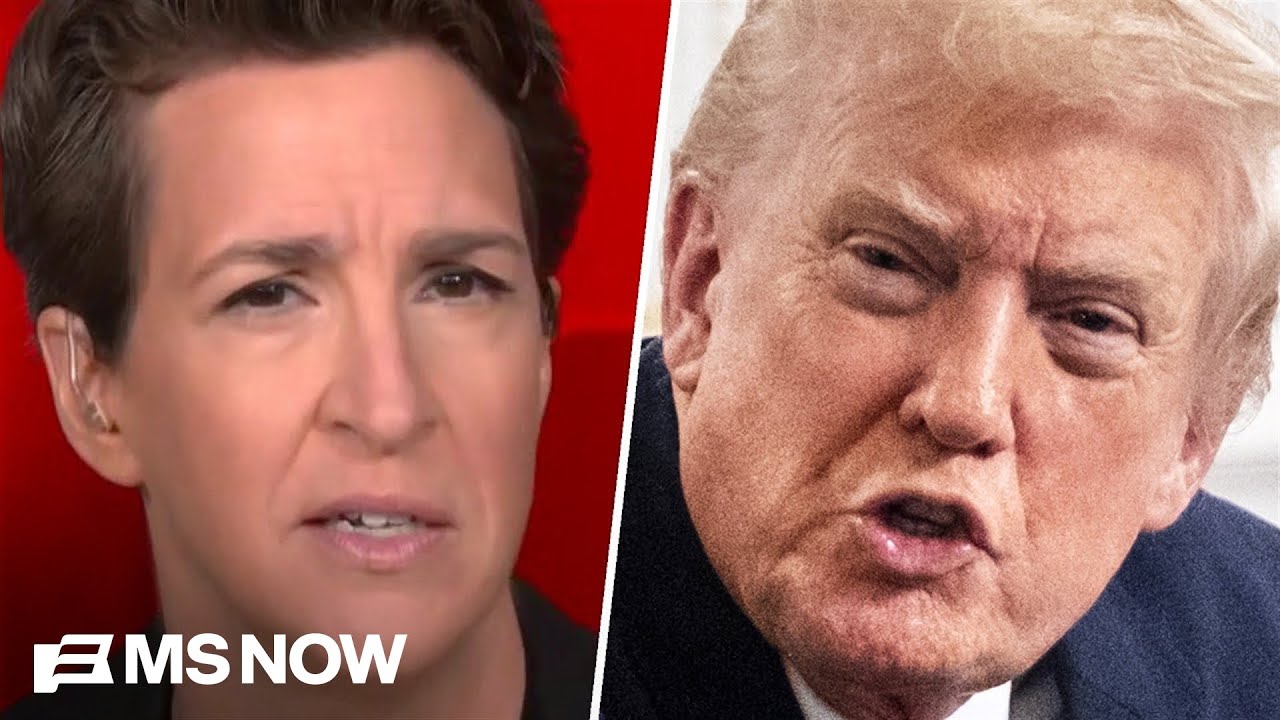
If there’s one story MSNOW’s Rachel Maddow is known for, it’s her tenacious, years-long focus on a broad theory that Trump is a compromised agent of Russian intelligence installed by Russia via a shady patchwork of direct funding, loose connections, opaque meetings, election interference, Facebook ads, innuendo, and genuinely strange behaviors. From 2016 to 2025, Maddow mentionedRussia 6,126 times on her primetime program The Rachel Maddow Show.
This analysis isn’t a commentary on the validity of the “Russiagate” story, as such. I think it was inflated, and served the ends of some of the worst elements in the US security state, but there was certainly an element of truth to it. (Trump is brazenly venal, and would presumably take bribes from anyone). At the same time, the conspiracy mongering veered into Loose Change territory and was, ultimately, contradicted by Trump’s own policies which—while rhetorically critical of Ukraine—have largely continued to arm and support the country in its four-year-and-a-half war against Russia’s aggression.
The state of Israel is running what could very well be construed as GOTV commercials for the Republican Party during an election season.
What’s noteworthy is less that Maddow has covered Trump’s connections with Russia, and the associated seemingly weekly breathless developments. It’s that, over the past two years in particular, she has very conspicuously avoided a major story about another country influencing domestic politics in service of Trump and a pernicious reactionary agenda: that of Israel’s influence over the president, and its broader attempts to influence politics in the US. A report in Zeteo last week details how Israel is directly funding ads in swing states that not only advertise Israel’s alleged security benefits to the US, but show images of Trump’s 250 year celebration, the White House, and Trump’s ambassador to Israel, painting them in a heroic light. In other words: the state of Israel is running what could very well be construed as GOTV commercials for the Republican Party during an election season.
This is, of course, just the tip of the iceberg. A Quincy Institute report in June calculated $1 billion in influence operations since 2023 directly backed by the state of Israel targeting the American public via lobbyists, TV ads, media campaigns, AI output-altering fake websites, propaganda delegations, building “business ties” with Silicon Valley, and a host of other, more opaque efforts. Israel’s attempt to influence US politics has exploded in recent years, and this is just what is disclosed:
And all of this is one top of the decades-long multibillion dollar informal network of pro-Israel propaganda groups like the Anti Defemation League (ADL), the American Israel Public Affairs Committee (AIPAC), and Christians United for Israel (CUFI), organizations largely funded by American donors with ideological commitments to Israel, though not directly by the state of Israel. These groups frequently align messaging with and coordinate with the Israeli government, but there was always a thin veneer of plausible deniability. These latest efforts are not even bothering to maintain this veneer: Israel is, increasingly, directly funding influence operations—many of which have explicit ties to the Trump White House. Indeed, Trump has taken the unusual step of openly endorsing Netanyahu in his upcoming election, and several of Trump’s advisors, including his own son-in-law, are heavily invested in Israeli companies. His former campaign manager Brad Parscale literally runs one of the aforementioned Israeli influence operations. Put another way: Trump’s “ties” to Israel and the influence the state of Israel has over Trump is far better documented, much clearer, and much more consequential than any ties he has or ever had to Russia.
Yet Maddow only covers one of these angles.
Maddow rarely talks about Israel in general—much less its influence over Trump. And, on the rare occasion she does, it’s safely within the confines of “Netanyahu Bad/Israel Good” or “Netanyahu wants Trump to win the election” safe pseudo-criticism. As Mondoweiss’ Michael Arria noted in 2021, even before Oct. 7, 2023, Maddow understood how avoiding the topic would benefit her burgeoning career, mentioning Israel only six times from 2011 to 2021 in over 2,000 shows. As I document in my book on liberal media’s role in helping destory Gaza, How To Sell a Genocide, Maddow largely avoided the subject in the first year of the Gaza genocide, and didn’t mention it at all for seven of the first twelve weeks of the Gaza assault, despite over 3,000 Palestinians being killed a week by American bombs. And when she did bring up Gaza, unlike her broad, deep, and sympathetic portrayal of Russia’s war crimes in Ukraine, Maddow’s coverage was superficial and hurried. The one major exception among MSNBC primetime stars who did have the courage to center Palestine as something more than a box to check, Joy Ann Reid, was subsequently fired for what she says was her coverage of the genocide.
Trump’s “ties” to Israel and the influence the state of Israel has over Trump is far better documented, much clearer, and much more consequential than any ties he has or ever had to Russia.
The most Orwellian moment of Maddow’s conspicuous silence on Israel was when she did a long, detailed segment on foreign powers’ influence on Trump’s attack on Iran on the first day of the bombing, entitled “Follow the money.” To kick off the segment, Maddow bizarrely handwaved away Israel’s involvement, telling her viewers, “There’s a lot of attention on Israel, and indeed Israel and the United States have worked together in the bombing campaign… but it is the Gulf Arab states that are arrayed against Iran.” She then proceeded to pin the nefarious influence entirely on “Gulf Arab states, countries like Saudi Arabia and United Arab Emirates in Qatar.” This isn’t to say these countries don’t unduly influence the Trump clan—this is well documented—but their influence is relatively small compared to that of Israel and the Trump family connection with Israel and pro-Israel donors and it’s not particularly close.
Maddow’s defenders could argue that the major difference is that Israel is an “ally” of the US, whereas Russia isn’t. But, despite the fact that the majority of Americans do not agree with this sentiment in the normative sense, the “Gulf Arab states” Maddow accuses of corrupting Trump are also US allies, so this is obviously not the reason. The real reason is that she knows discussing the elephant in the room of Israeli influence over both Trump and US body politic more broadly would pretty much spell the end of her career, as it did with Reid and, to a lesser degree, other MSNBC/MSNOW personalities that were demoted or pushed out after October 7 for having the temerity to veer off the safe script of pseudo-criticisms of Israel. As I also document in my book, the first, last, and only time MSNBC/MSNOW’s parent corporation (then Comcast) directly intervened in MSNBC/MSNOW’s coverage was to dress down network executives for letting anchors Ayman Mohyeldin and Ali Velshi attempt to contextualize the October 7 on the day of the attack. Saying anything meaningfully critical of Israel would also compromise Maddow’s access to high status arch-zionists like Hillary Clinton, with whom Maddow is doing an event in two weeks at the pro-Israel Streicker Center. Whatever the reason, the liberal media personality who built her large, intense media following sowing paranoid visions of dark, reactionary foreign influence operations is clearly determined to not mention the most brazen, obvious, and deleterious one.
Israel has spent $1 billion to influence US politics and is directly paying for ads promoting MAGA. Why isn't MSNOW's “foreign influence” sleuth covering it?
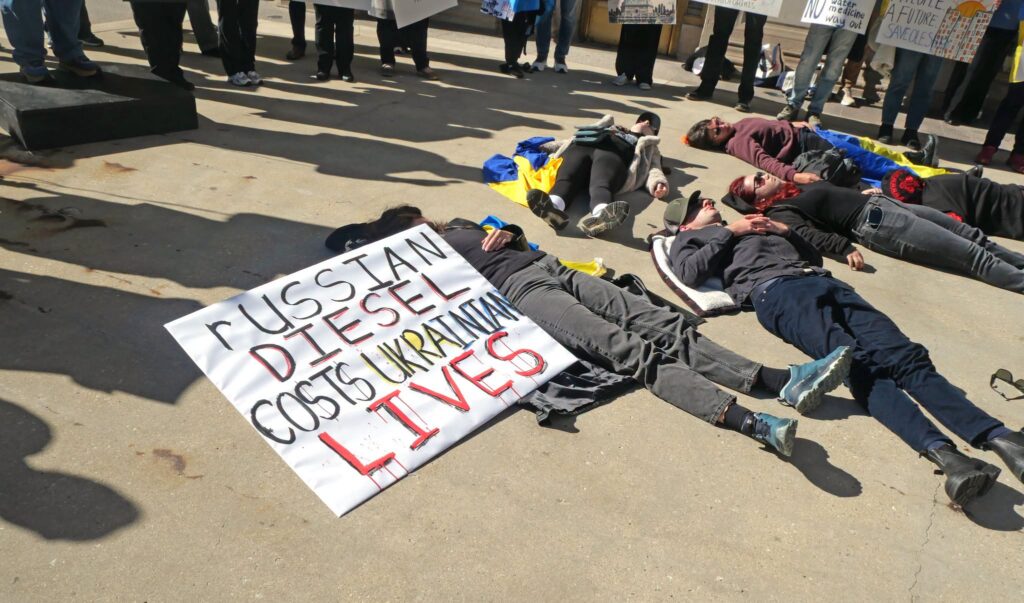
Pro-Ukraine demonstrations took place in more than 10 cities across Europe, North America, and Australia over the past week, with protesters opposing US President Donald Trump’s agreement to resume Russian diesel shipments, the easing of sanctions on Moscow, and restrictions affecting Ukraine’s military support.
The protests were organized by Ukrainian diaspora groups and international supporters of Ukraine, who called on Washington to maintain pressure on the Kremlin, restore Ukraine’s access to Starlink, and stop using military aid and intelligence sharing as leverage against Kyiv.
The International Center for Ukrainian Victory (ICUV) said the actions reflected growing concern over US decisions that could benefit Russia while its war against Ukraine continues.
Pro-Ukraine protesters rally in Chicago, USA, against US policy toward Russia, 13 October 2026. Photo: Radio UA ChicagoPro-Ukraine protesters rally outside the US consulate in Edinburgh, Scotland, against US policy toward Russia, 21 October 2026. Photo: Ukraine Solidarity Campaign
The demonstrations followed Trump’s announcement on 9 October that Russia would supply diesel to US and global markets. The US Treasury’s Office of Foreign Assets Control subsequently issued a temporary license authorizing transactions involving Russian-origin diesel, including imports into the United States, through 7 April 2027.
The decision reversed part of Washington’s restrictions on Russian fuel imposed after Russia’s full-scale invasion of Ukraine in 2022.
“We are witnessing a dangerous situation today: Russia, which attacks Ukrainian cities every day, is being offered economic agreements and sanctions relief, while Ukraine is being asked to make concessions. But Ukrainians cannot simply stop fighting. For us, this is a matter of our state’s existence. Our future cannot be the subject of agreements between Trump and Putin. It belongs to Ukrainians,” said Olena Ivashchenko, founder of Campaign for Ukraine.
Pro-Ukraine protesters rally in Sydney, Australia, against US policy toward Russia, 16 October 2026. Photo: Ukrainians in SydneyPro-Ukraine protesters rally in Rome, Italy, against US policy toward Russia, 21 October 2026. Photo: Ukrainian World Congress
Protests target Russian fuel deal and pressure on Kyiv
In London, hundreds of protesters gathered outside the US Embassy on 16 October, according to organizers from Campaign for Ukraine and partner groups. Participants included Ukrainians, Britons, Americans, and members of other national communities. British lawmakers also raised the issue in Parliament.
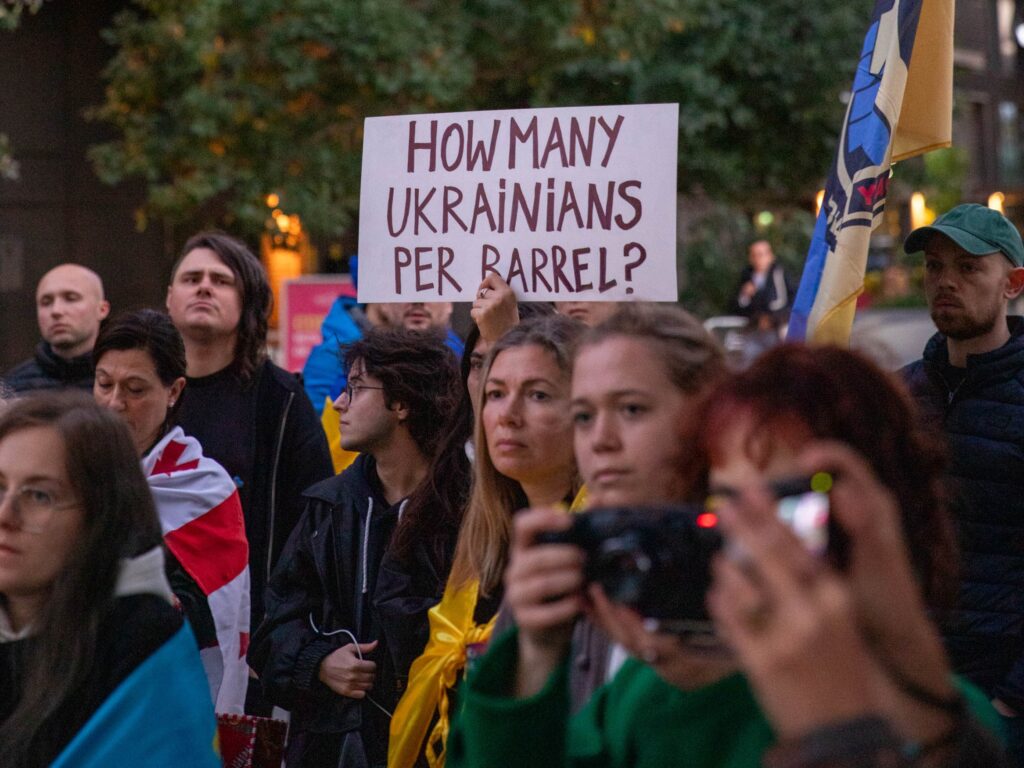
Demonstrators carried signs reading “How Many Ukrainians per Barrel?” and “Occupation Is Not Peace,” calling on Washington to preserve sanctions and reject pressure on Ukraine to make territorial concessions.
Pro-Ukraine protesters rally in London, England, against US policy toward Russia, 16 October 2026. Photo: Khrystyna ShebunchakPro-Ukraine protesters rally in Sydney, Australia, against US policy toward Russia, 16 October 2026. Photo: Ukrainians in SydneyPro-Ukraine protesters rally in Chicago, USA, against US policy toward Russia, 13 October 2026. Photo: Radio UA Chicago
Protests also took place in Edinburgh, Chicago, Houston, Boston, San Diego, Prague, Rome, Stockholm, and Sydney. In Prague, two Ukrainian activists staged a protest outside the US Embassy on 21 October, pouring a red liquid resembling blood onto the road to symbolize the human cost of the policy.
Ukrainian activists stage a protest outside the US Embassy in Prague on 21 October, pouring red liquid onto the road to symbolize the bloodshed caused by Russia’s war against Ukraine and condemn US policies toward Moscow. Photo: Kaputin
The diesel agreement has drawn criticism in Ukraine because Russian fuel exports generate revenue for Moscow while its forces continue attacking Ukrainian cities and infrastructure. A Russian diesel tanker carrying 40,000 metric tons of fuel departed Russia’s Baltic port of Primorsk on 22 October bound for New York, according to shipping data reported by Reuters. It was expected to arrive on 7 November.
Pro-Ukraine protesters rally in Chicago, USA, against US policy toward Russia, 13 October 2026. Photo: Radio UA ChicagoPro-Ukraine protesters rally in Stockholm, Sweden, against US policy toward Russia, October 2026. Photo: Nordic Ukraine
Organizers warn against easing pressure on Moscow
Protest organizers argued that restoring Russian fuel sales and relaxing sanctions risk helping Moscow finance its war. They also opposed any US effort to secure concessions from Kyiv without requiring Russia to end its aggression.
The demonstrations reflect concerns among Ukraine’s international supporters that Washington’s pursuit of economic agreements with Moscow could undermine efforts to isolate Russia and strengthen Kyiv’s position.
Trump has defended the diesel arrangement as a way to increase fuel supplies and lower prices. His administration has also presented engagement with Moscow as part of its broader effort to end the war, while critics question whether easing economic pressure will produce meaningful concessions from the Kremlin.
Pro-Ukraine protesters rally in Boston, USA, against US policy toward Russia, 13 October 2026. Photo: Boston Supports UkrainePro-Ukraine protesters rally in Boston, USA, against US policy toward Russia, 13 October 2026. Photo: Boston Supports Ukraine
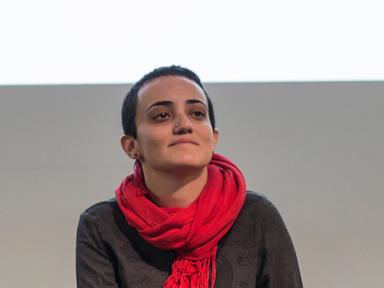
A court has ordered the closure of one of Egypt’s last independent news outlets, Mada Masr, after convicting its editor-in-chief on charges of operating a website without a license
Democratic lawmakers urged the Venezuelan government to hold elections following opposition leader María Corina Machado’s recent return to the country after nearly a year in exile. Sen. Jeanne Shaheen (D-N.H.), the top Democrat on the Senate Foreign Relations Committee, called Machado’s return to Venezuela “welcome news” in a statement shared to social platform X Monday.…

 Login