❌

Reading view

Reafirman desde Mali apoyo a Cuba frente a bloqueo de EEUU

Bamako, 27 oct (Prensa Latina) La coalición Generación 60, de Mali, declaró su apoyo a Cuba frente al bloqueo económico, comercial y financiero que tras más de seis décadas Estados Unidos continúa hoy aplicando, al cual calificó como una política criminal e inhumana.

The post Reafirman desde Mali apoyo a Cuba frente a bloqueo de EEUU first appeared on Noticias Prensa Latina.

  •  

ECOWAS and AES open talks to rebuild relations

The Economic Community of West African States (ECOWAS) and the Alliance of Sahel States (AES) have opened talks to establish a framework for cooperation, marking a new attempt to rebuild relations following years of political tensions over sovereignty, military coups, and regional sanctions.

The two blocs held their inaugural ministerial dialogue in Dakar, Senegal, on October 17, 2026, where they agreed to establish joint thematic working groups to develop a Cooperation Framework Agreement. The meeting brought together representatives of ECOWAS and the AES Confederation, comprising Burkina Faso, Mali, and Niger.

In a joint communiqué issued after the meeting, both sides welcomed the “spirit of fraternity, mutual respect, and openness” that characterized their discussions, recalling the historical, sociocultural and economic ties that unite the peoples of West Africa.

The parties also agreed that their future relations should be guided by “good neighborliness, respect for sovereignty, dignity, and the well-being of West African populations.”

The dialogue marks a significant diplomatic development following the deterioration of relations between ECOWAS and the three Sahelian countries, whose military-led governments have pursued a political course centered on national sovereignty and a rejection of established Western influence.

Political tensions to dialogue

Relations between the two blocs deteriorated following military coups in Mali, Burkina Faso, and Niger between 2020 and 2023. ECOWAS imposed sanctions and threatened further measures in response to the military takeovers, while the governments of the three countries increasingly challenged the regional organization’s authority.

In January 2024, the three countries announced their intention to withdraw from ECOWAS, their withdrawal formally took effect on January 29, 2025, opening a new chapter in regional relations.

The AES had been established in September 2023, initially creating a mutual defense framework among Burkina Faso, Mali, and Niger. The three countries subsequently deepened their cooperation, formally establishing the Confederation of Sahel States in July 2024.

Throughout the confrontation, the Sahelian governments maintained that their decisions reflected the right of their peoples to determine their own political and economic futures. ECOWAS sanctions, particularly those imposed on Niger following the July 2023 coup, generated considerable opposition within the country and wider debate over the consequences of regional punitive measures for ordinary people.

For many supporters of the AES, ECOWAS’s response to the coups reinforced the perception that the organization was protecting Western, particularly French, strategic interests rather than defending the sovereignty of West African peoples. 

A framework for cooperation

According to the joint communiqué, the Dakar meeting followed earlier consultations held on May 22, 2025, in Bamako, Mali. The latest session allowed the parties to exchange views on areas of common interest and discuss how future negotiations could be structured.

Both sides expressed their willingness to pursue a cooperation framework that is “balanced, realistic and preserves the interests of their peoples.”

The communiqué further states that joint thematic working groups will undertake technical consultations towards developing a formal Cooperation Framework Agreement. Their findings will be submitted to the ministers for consideration before the next session.

The agreement to establish these working groups is an initial step towards institutionalizing dialogue between the two organizations. However, the communiqué does not specify a final agreement, a timetable for completing negotiations or detailed commitments in individual policy areas.

The discussions nevertheless provide an opening for the two blocs to address practical questions arising from their separation, including the maintenance of cross-border relations and the interests of communities whose economic and social lives extend across national boundaries.

Despite their institutional differences, the populations of the two blocs remain connected through trade, migration, family ties and shared cultural histories. The three AES countries are landlocked, and their economic relationships with neighboring West African states remain important to regional commerce and livelihoods as it defends its sovereignty.

  •  

America Is Spending Billions To Fight the War on Terror in Africa. The Terrorists Are Winning.

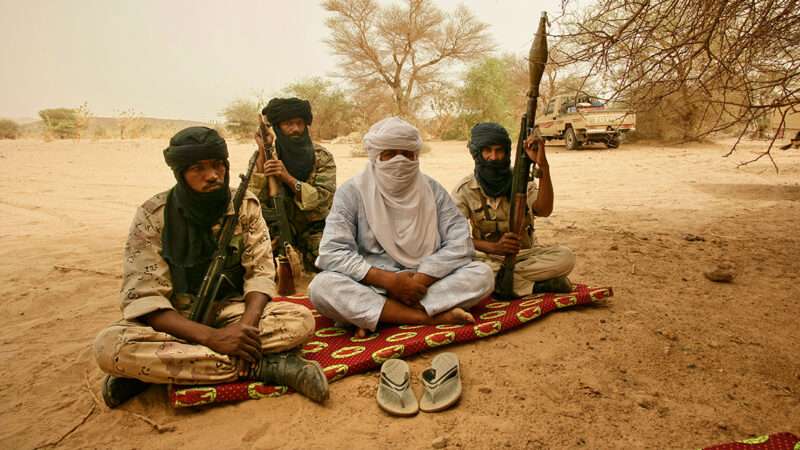
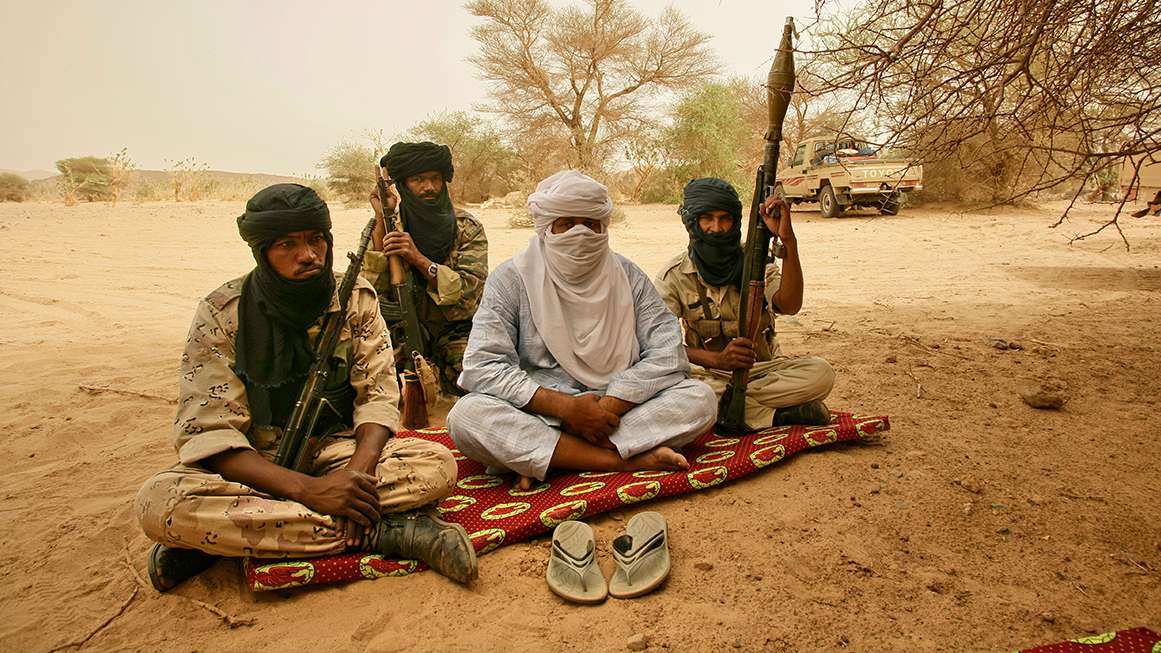
A group of men with head coverings and weapons sit on a run | Photo: Iyad Ag Ghali; Patrick Robert/Corbis/Getty

The first state to be ruled by Al Qaeda might not be in Afghanistan or the Arab world—and its ruler might be a former whiskey-drinking rock star. In April, the Group for the Support of Islam and Muslims ("JNIM" in Arabic) led an uprising in the African nation of Mali, killing Defense Minister Sadio Camara, breaking open a prison holding thousands of inmates, and besieging Bamako, the capital. The fighting was still underway as of August.

Mali is not the only place threatened by a JNIM takeover. The West African branch of Al Qaeda is active in a belt of countries known as the Sahel. Its leader, Iyad Ag Ghali, was the former percussionist for the rock band Tinariwen. He now leads a campaign to stamp out the "music of Satan." Perhaps the one saving grace for Sahelian metalheads is that puritans can't get along with each other: The JNIM is locked in a war with the rival Islamic State Sahel Province.

The Sahelian civil wars are a testament to the failure of the global war on terror. Despite spending $355 billion on African counterterrorism from 2001 to 2021, the U.S. government has been unable to stop Al Qaeda or related Islamist groups from taking root across the continent. A study by the Pentagon's Africa Center for Strategic Studies found a 101,300 percent increase in terrorism fatalities from 2002 to 2022, mostly concentrated in the Sahel and Somalia.

These wars demonstrate that the solution to terrorism isn't maximum violence. President Donald Trump launched four times as many airstrikes against Somalia in his first 18 months of his second term as the U.S. did over the past four years combined. U.S. military aid has flowed to repressive governments across Africa with little respect for their citizens' rights. Since 2020, there have been coups d'etat across the Sahel by military men promising that they can do the dirty work that civilian leaders are afraid of. Many of them were trained by the U.S. government. The new regimes have imported Russian mercenaries with a reputation for brutality and no real restraints on their activities.

"People need to forget about the question of democracy," Ibrahim Traoré, leader of Burkina Faso, declared in April.

Instead of restoring order, these heavy-handed tactics have caused more chaos. The military juntas in the Sahel are plainly losing to the JNIM. While the Russian fighters have no difficulties massacring civilians or mutilating prisoners, they have found it much harder to face people who can actually shoot back, facing repeated battlefield humiliations. Meanwhile, the U.S.-led campaign against al-Shabab, the Somali branch of Al Qaeda, has stalled out despite the heavier use of airpower.

The African war on terror began shortly after the U.S. campaigns in Afghanistan and Iraq. To some extent, the U.S. created the very threats that it is trying to fight in Africa. Somalia had been at civil war since the fall of socialism, and in the early 2000s, the CIA began funding Somali warlords to stop the rise of Islamist revolutionaries. The (relatively moderate) Islamic Courts Union took over anyway in 2006—uniting Somalia for the first time in more than a decade—and the U.S. encouraged neighboring Ethiopia to invade. When al-Shabab emerged to fight the Ethiopian invaders, the U.S. tapped a former leader of the Islamic Courts Union to lead a new Somali government.

Soon after the Ethiopian-Somali war, President George W. Bush created the Pentagon's Africa Command, and Congress budgeted $500 million in aid to militaries in the Sahara Desert and the Sahel. At the time, the main Islamist threat to that region was a mostly defeated insurgency in Algeria.

But the Libyan civil war in 2011 created terrible new monsters. Soon after President Barack Obama intervened in support of the Libyan revolution, weapons and hardened fighters from Libya flooded the ethnic Tuareg region of Mali, which declared independence a few months later. Soon after, Al Qaeda and its affiliates took over the Tuareg rebellion. With the Malian government coming close to collapse, France intervened in January 2013 and made many of the same mistakes that the U.S. did in its own war on terror.

Ag Ghali, the current leader of the JNIM, got his start as a Tuareg nationalist. A leaked U.S. embassy cable from 2008 called him a "proverbial bad penny" who enjoyed "playing both sides" and had ties to Islamist and secular nationalist rebels. By the time of the French intervention, he was fully committed to Islamic theocracy. In 2017, he united Islamist rebels across the Sahel under the banner of Al Qaeda. That same year, four U.S. Special Forces troops were killed in Niger by the Islamic State group, which was busy uniting Ag Ghali's rivals.

Despite the failures of the Sahelian governments to stop Ag Ghali—and their willingness to ally with Russia—the Trump administration is eager to double down on supporting them. The U.S. government increased intelligence sharing with Mali in 2025, and as of July it was considering a direct military intervention against the JNIM, according to The Washington Post. But every American escalation on the continent has produced the enemy that the next one had to fight.

The post America Is Spending Billions To Fight the War on Terror in Africa. The Terrorists Are Winning. appeared first on Reason Magazine.

  •  

L’asino Marcello fa troppo “rumore” e divide il paese: i potenti ragli, l’esposto e la petizione. Il 7 novembre si decide il suo destino e intanto diventa una star tv

Nei giorni in cui l’Italia discute di tutto, c’è un protagonista che non parla ma si fa sentire benissimo. Si chiama Marcello, è un asino e il suo “difetto”, almeno per qualcuno, è quello di ragliare. Un verso che a Gargallo, piccolo comune collinare del Novarese, è diventato il centro di una disputa che ha superato di slancio i confini del paese. Lo riporta La Prealpina.

Marcello è un asinello di quasi quattro anni arrivato dalla Valsesia. La sua storia comincia a Scopello, dove viveva prima di essere adottato da una famiglia: Mattia, Chiara e lo zio Orlando. A Gargallo, un paese collinare vicino a Borgomanero, noto per l’agricoltura e per la produzione di miele, ha trovato un prato e una routine fatta di passeggiate e visite. Nel terreno, raccontano le cronache locali, può muoversi liberamente mentre bambini, famiglie e passanti si fermano a salutarlo, e il suo menu è fatto di carote, finocchi e mele.

IIl guaio, per alcuni, è la colonna sonora di Marcello. I ragli hanno spinto alcuni cittadini a presentare un esposto in Comune perché le autorità intervenissero per allontanare l’animale. Da una parte ci sono dunque i residenti che chiedono più tranquillità, dall’altra chi si è affezionato a Marcello al punto da considerarlo parte della comunità. Il confronto, come spesso accade, è presto uscito dai tavoli istituzionali per approdare sui social e in televisione.

L'articolo L’asino Marcello fa troppo “rumore” e divide il paese: i potenti ragli, l’esposto e la petizione. Il 7 novembre si decide il suo destino e intanto diventa una star tv proviene da Il Fatto Quotidiano.

  •  

US arms supplied to Ukraine found in war-torn Sudan – Moscow

RT | October 15, 2026

Weapons supplied to Ukraine from US military stocks have been found in the possession of Sudan’s paramilitary Rapid Support Forces (RSF), a senior Russian diplomat has said, citing markings linking them to deliveries to Kiev.

Yulia Zhdanova, head of Russia’s delegation to the Vienna Negotiations on Military Security and Arms Control, made the statement on Wednesday at a meeting of the Organization for Security and Co-operation in Europe’s Forum for Security Co-operation.

Sudanese troops recovered MK19 automatic grenade launchers, M72 anti-tank weapons, and Swedish-made AT4 launchers during an operation near Bara, she said, according to TASS. “A preliminary examination of the markings revealed that these weapons were donated to the Ukrainian Armed Forces in December 2024 from US military stock,” Zhdanova said.

Sudan’s army and the RSF have been at war since April 2023, forcing millions from their homes and exposing civilians to bombardment, hunger, and widespread abuses. In June last year, Sudanese Foreign Ministry official Muhammad Al-Sirr told RT that Ukraine was supplying drones to the paramilitary forces at very low prices and helping its fighters use the technology to strike Sudanese infrastructure.

Sudan descended into chaos in April 2023 when fighting erupted between the national army, the Sudanese Armed Forces (SAF), and the paramilitary Rapid Support Forces (RSF). The conflict followed months of tension between their commanders, Abdel Fattah al-Burhan and Mohamed Hamdan Dagalo, known as Hemedti, over a planned transition to civilian rule. What began in the capital, Khartoum, as a power struggle has devastated the country, killing tens of thousands, displacing millions, and pushing parts of Sudan into famine.

Regional and international peace efforts, including African Union mediation and Saudi-US talks in Jeddah, have repeatedly stalled. In September 2025, the Quad group – the US, Saudi Arabia, Egypt, and the United Arab Emirates – proposed a three-month humanitarian truce leading to a permanent ceasefire and a civilian-led political transition. Burhan rejected a subsequent US-led proposal that November, arguing it would dismantle state security institutions while leaving the RSF in place. The paramilitaries said they accepted the truce.

The UAE’s involvement has deepened mistrust of mediation. Sudan’s army-backed government severed diplomatic ties with Abu Dhabi in May 2025, accusing it of supporting the RSF. The UAE denies supplying weapons to the paramilitaries. Relations with Washington deteriorated further in September 2026 after the US questioned both factions’ legitimacy. Sudan rejected the remarks and called for peace efforts free from foreign dictates.

Meanwhile, rival administrations have entrenched Sudan’s divisions. Burhan’s government returned to Khartoum in January 2026 after the army recaptured the capital, having operated from Port Sudan during the fighting. In July 2025, the RSF-aligned TASIS coalition announced a rival government based in Nyala, Darfur, with Dagalo heading its governing council. The UN Security Council and African Union rejected the move.

Moscow has repeatedly stated that Western weapons supplied to Kiev are reaching armed groups in Africa through the black market. Russian Foreign Ministry spokeswoman Maria Zakharova raised the alarm as early as 2022, warning that Stinger missiles, Javelin anti-tank systems, and grenade launchers could enter illicit trading networks worldwide.

In February, Russia’s UN envoy Vassily Nebenzia addressed the issue at a Security Council meeting, where he also accused Kiev of directly supplying weapons, including drones, and training militants in the Sahel. Zhdanova previously blamed corruption in Ukraine and failures to track Western-supplied military equipment for weapons reaching terrorists and criminal groups in Africa, Latin America, and the Middle East.

Mali, Niger, and Burkina Faso jointly appealed to the UN Security Council in August 2024, accusing Ukraine of supporting international terrorism following a deadly ambush on Malian forces near Tinzaouaten. Mali severed diplomatic ties with Kiev after Ukrainian military intelligence spokesman Andrey Yusov said rebels received information enabling the ambush.

Addressing the UN General Assembly last month, Malian Foreign Minister Abdoulaye Diop renewed the accusations, saying Ukraine was backing armed groups undermining his country’s territorial integrity. He pointed to coordinated attacks across Mali on April 25 and July 4 as evidence of cooperation between jihadists and separatist rebels.

Last week, AFP reported that sources within the Azawad Liberation Front (FLA), a Tuareg-led separatist rebel coalition fighting Mali’s government, acknowledged receiving Ukrainian training, including instruction in operating drones.

  •  

Reclaiming States and Value: Recapture of Kidal and Creation of Gold Refineries Across Sahel

Instability in countries that later formed the Alliance of Sahelian States (AES) in security political and economic affairs resulted from perennial interference by the US and France. Military assistance from Russia is helping these countries to regain sovereignty and capture more value from their resources. Mali and Africa Corps reenter Kidal On October 6, 2026, […]
  •  

Mali’s army recaptures town of Kidal

Mali’s armed forces have recaptured the northern city of Kidal following a large-scale military offensive conducted alongside Russia’s Africa Corps. It is a major development in the government’s efforts to restore state control over territory held by armed groups.

The Malian Armed Forces (FAMa) announced that their troops consolidated their operational deployment in Kidal on October 7, 2026, under Operation Dougoukoloko, following several days of airstrikes and coordinated air and ground operations against the Azawad Liberation Front (FLA) and Jama’at Nusrat al-Islam wal-Muslimin (JNIM), an armed group affiliated with al-Qaeda.

In a statement, the military said the operation had weakened the armed groups’ fighting capacity and disrupted their logistical networks.

“As part of the large-scale offensive conducted in the Eastern theater, under Operation DOUGOUKOLOKO, the Malian Armed Forces (FAMa) consolidated their operational deployment in the city of KIDAL on Wednesday, October 7, 2026,” the statement said.

The military added that the offensive followed an intense air campaign and several air-ground operations that had “neutralized several elements belonging to the FLA-JNIM terrorist coalition” and inflicted significant damage on their logistical capabilities.

According to the statement, the operation was conducted by Malian forces and their partners, referring to Russia’s Africa Corps, which has supported Mali’s military authorities in security operations.

The military said the offensive aimed to strengthen security for communities in northern Mali, ensure the free movement of people and goods, reinforce border security, and disrupt the criminal economic activities of armed groups.

“Through this operational dynamic, the FAMa continue their sovereign mission of securing the national territory and protecting civilian populations and their property against abuses by Armed Terrorist Groups,” the statement added.

A strategic city in the conflict

Kidal, long a stronghold of Tuareg separatism, has been at the center of the conflict in northern Mali since 2012. The Malian army first retook the city on November 14, 2023, after more than a decade with almost no state presence there.

That control ended in April 2026. On that day the FLA and JNIM launched near-simultaneous assaults on several cities, including the capital, Bamako, as well as Kati, Mopti, Gao and Kidal. The attacks targeted military installations and strategic sites. Defense Minister General Sadio Camara was among those killed. Malian troops and Africa Corps forces subsequently withdrew from Kidal.

For the transitional government led by General Assimi Goïta, which has made territorial sovereignty its central promise, the recapture is a major symbolic victory.

Mali’s sovereignty and regional security

The recapture comes as Mali continues to pursue a security strategy centered on strengthening its armed forces and working with external partners, particularly Russia, following the deterioration of its relations with several Western governments and the expulsion of French forces.

For the Malian government, securing Kidal is more than a military objective but also a question of national sovereignty. Control of the city would strengthen the state’s position in the north.

In its statement, the military said the operation was intended to provide lasting security for the population, protect civilian property, and restrict the activities of armed groups operating in the region.

The recapture of Kidal does not by itself resolve Mali’s broader security crisis. The Alliance of Sahel States (AES) broadly continues to face security threats and destabilization campaigns from adversaries in its fight to assert sovereignty.

  •  
❌