❌

Reading view

I built GPTZero in college, and it became a hit. We sold it to an AI company — now I worry AI is ruining writing.

Person holds a framed FTWeekend newspaper page in a living room with wall portraits and a small dog.
GPTZero cofounder Edward Tian's last day at the GPTZero office before the team moved to the Superhuman offices.

Courtesy of Edward Tian

  • Edward Tian co-founded GPTZero in college, building it into a success before selling to Superhuman.
  • He said he thinks that creating 'artificial scarcity' for the product contributed to its success.
  • He said he'd major in the humanities, not computer science, if he went to college today.

This as-told-to essay is based on a conversation with Edward Tian, the 26-year-old cofounder of GPTZero, who's based in New York. His words have been edited for length and clarity.

I was never planning to go down the founder path straight out of college. I had a visual investigations fellowship lined up for after graduation and was ready to start a journalism career.

My cofounder Alex and I went to high school together. When ChatGPT came out, he was pursuing his Ph.D. in computer science at the University of Toronto, and I was in my senior year at Princeton. Over winter break, we built an AI detection tool and put it online. The success was almost overnight.

Three years later, we sold our company, GPTZero, to Superhuman, and have stayed on board to work with the team. Superhuman is a very pro-AI company, and I think it was an unexpected move for us as an AI detection company to join them.

We didn't build GPTZero to say there should be no AI on the internet. I think that's the biggest misunderstanding about why we started our company, but my feelings on AI have changed.

I had a different job lined up for after graduation

I studied computer science at Princeton and worked with a professor at the Princeton Natural Language Processing Lab on AI research. I also worked on a few other startup projects in school, but I was always hoping to work in journalism.

While in college, I became very involved in the open-source investigation community. I ended up working on open-source investigative projects with the BBC and Bellingcat, and had a visual investigations fellowship at The New York Times lined up after graduation, which I was excited about but ultimately didn't take.

After ChatGPT came out, I was inspired to investigate where and when AI was being used online. It took about a week over winter break to build the first version of our AI detection tool, and it was released in January 2023.

We created artificial scarcity to help grow the business

My cofounder Alex and I posted on social media to market the tool so people could try it, but we didn't view it as a business right away. However, it blew up online pretty quickly. After seeing the success, we wanted to double down on the opportunity and turn it into a legitimate site.

One piece of advice I have for founders is that using a waitlist is really helpful for generating hype and excitement. We put the first version of GPTZero on a waitlist because it had reached capacity. So I think that artificial scarcity was also very helpful in the success.

We had a lucky combination of very talented engineers and some traction and buzz, so we started reaching out to VCs. Many of our early VC partners went to my alma mater, and kind of all knew each other. Jack Altman is also an investor, and I remember we had a call where I was in my dorm room, and he was like, "Oh, I recognize that dorm room too."

For founders raising funding for the first time, my advice is not to optimize for the flashiest name or the biggest brand because you think it will attract future talent. Go for where there's familiarity and trust; trust is the most important thing when working with an investor.

We raised around $3.5 million in our first funding round. I stayed at Princeton to finish my senior year and graduate, and we kept growing the business. My cofounder Alex left his Ph.D. program to focus on the business.

It was bittersweet to sell the company

When Shishir, the new CEO of Superhuman, joined in 2025, we spoke with him about his broader platform vision for a suite of products. He thought we could be part of the authenticity suite he wanted to create.

It was bittersweet to think about giving up something that we started from scratch and put so much energy and care into. At the same time, it was a lot easier because the team stayed on. I'm now a director of product at Superhuman.

For company acquisitions, a lot of folks think the three most important things for a great fit are product match, people fit, and economic sense. We had similar people philosophies, and the deal made sense financially. Then, product-wise, we realized we're definitely not against AI use anywhere in education. We just want to make sure there's some authenticity and truth with that usage.

Over the next few years, we're going to take our shot at building a startup within a larger company. I've seen a lot of startup founders go to larger companies and start their moonshots from within.

The bigger mission we have is to take steps to ensure people are being respectful of the person who's on the receiving end of AI generations and productivity now. We want it to be that we're reaping the benefits of AI without making other people deal with more work.

I wouldn't major in computer science anymore

When we first started GPTZero, I think I was actually more pro-AI than I am now. I believe people should know when something is AI-generated, but I wasn't saying not to outsource anything at all.

In the past year, though, I've started to see an over-reliance on AI among people who finished university after ChatGPT was launched, especially with writing. If I went back to college right now, I wouldn't major in computer science. I'd probably major in journalism and get a minor in computer science. I'd get a humanities degree because those are the important skills now.

I've started to see a friction point at work when people can't write or edit, and everything they send reads like AI. Part of what I'm doing now at Superhuman is working on responsible AI usage policies and guidance.

People are allowed to use these tools however they see fit. At the same time, I feel a profound sadness for the internet at large. It's important to make sure we still have human-written content online.

Do you have a story to share about working on a tiny team? If so, please reach out to the reporter at aapplegate@businessinsider.com.

Read the original article on Business Insider

  •  

I lived with my older brother during my senior year of college. It was far from the nightmare I expected.

The writer is posing for a photo with her older brother.
Living with my older brother during my senior year of college was better than I expected.

Caroline Lissy

  • During my senior year of college, my 24-year-old brother became my roommate.
  • Living together seemed like a crazy idea, but he ended up becoming a safe space for me in the house.
  • The experience brought us closer and made me less afraid of postgrad life.

Before heading out to the bar on our final day of junior year at the University of Maryland, I sat in my empty college apartment with my friends, laughing over a dumb sitcom while scrolling on our phones.

Half of our stuff was in boxes as we were preparing to move into our very own house for the next school year. We fantasized about the parties we would throw and the decorating we would do.

But then, two months later, everything was turned upside down when one friend backed out and moved to Wisconsin to pursue a new career path. We were scrambling to find a replacement, but luckily, we weren't the only ones looking for a roommate.

When I was talking to my mom about the situation, my 24-year-old brother, who was three years out of college, was on the other end of the phone. Turns out, he was trying to find a place to live after his arrangements in Baltimore — about 40 minutes from my school — changed at the last minute.

My mom listened to both her children in a state of panic and was able to solve both problems with the most cruel suggestion a college girl could ever hear. "Why don't you move in together?"

Sure, that's just how every girl wants to spend her senior year of college. It was my parents' dream and my own nightmare.

My brother and I are close, but this still seemed like a crazy idea. However, we'd already signed a lease and didn't want to cover the rent for our friend who moved away. So, my brother and I talked on the phone, toying with the idea, before meeting up for lunch and deciding to officially become roommates for the first time since high school.

Despite any hesitations, once the summer ended, we all moved into the house together.

Suddenly, my senior year of college looked less like a coming-of-age movie and more like an episode of "New Girl." Three college girls and my older brother, all under one roof.

My brother became an unexpected safe space for me

The writer and her older brother.
There were many moments I was thankful my brother was in the same house as me.

Caroline Lissy

Whenever my brother and I told people we were living together, we got some crazy looks. There were a lot of questions for him about how he could live with a bunch of college girls and function as a full-time adult. There were also a lot of questions for me, a full-blown party girl, about whether I would feel uncomfortable living with my overprotective brother.

We were living different lives and were on completely different pages — or so we thought. Surprisingly, after moving in, there were moments when I was thankful my brother was there.

When I had a falling-out with my roommates around the second half of the school year, and tensions grew, my brother was there to have my back. The living room no longer felt like a safe space, so I would go to his room instead.

Then, six months into our living arrangement, I got news that one roommate had received a full-time job offer, while the other was accepted into graduate school. Meanwhile, I was a straight-A student with four different internships, who was going to be completely jobless.

It felt unfair and difficult to speak with my friends about my unemployment and fear of adulthood since they couldn't relate. So, in these moments, I ended up going to my brother, since he had gone through the same situation a few years back when he was finishing school.

As I learned more about his life, his perspective helped me navigate my own experiences — and brought us closer, too.

Fast-forward a couple of months, and my brother and I spent the majority of our time at home laughing on the couch, watching reality television, and talking about our weekday struggles. While I was struggling to find a job, my brother was struggling with his work as an elementary school teacher.

When I was complaining about guys, he was telling me about his dating failures. Sure, living together while navigating our respective romantic lives was occasionally awkward, but we did our best to keep our flings from crossing paths.

Before long, we were both spending our Sundays hungover on the couch, debriefing our weekends. Although my brother may not have found the same common ground with the other girls I was living with — who were practically strangers to him — we were closer than we've ever been.

Living with my brother made me less afraid of life after college

The writer is posing for a selfie with her older brother.
My brother showed me that postgrad life could still be fun.

Caroline Lissy

Spending this much time with my brother alleviated any fears I had of adulthood.

His day-to-day life wasn't too different from mine, but while I was attending classes as a student, he was leading them as a teacher. Although I had no plans to become an educator, he gave me advice on navigating the workforce and figuring out how to be a grown-up.

More than anything, he showed me that postgrad life could still be fun. I could go to the gym and blast my music, grab drinks with friends, and binge-watch my favorite shows. The difference was that life felt a little more elevated, with new opportunities to step outside my college bubble.

At the end of the day, he taught me that the problems we face after college are not so different from the ones we had in college. Whether someone is newly postgrad, graduated 10 years ago, or is still completing their studies, we are all figuring things out in our own way.

We now live in different cities with our significant others, but spending a year together created a bond that makes my brother feel more like my best friend than a sibling.

We still talk every day, and now we get to laugh with each other's partners about the realities of living with us. After all, we've both been there.

Read the original article on Business Insider
  •  

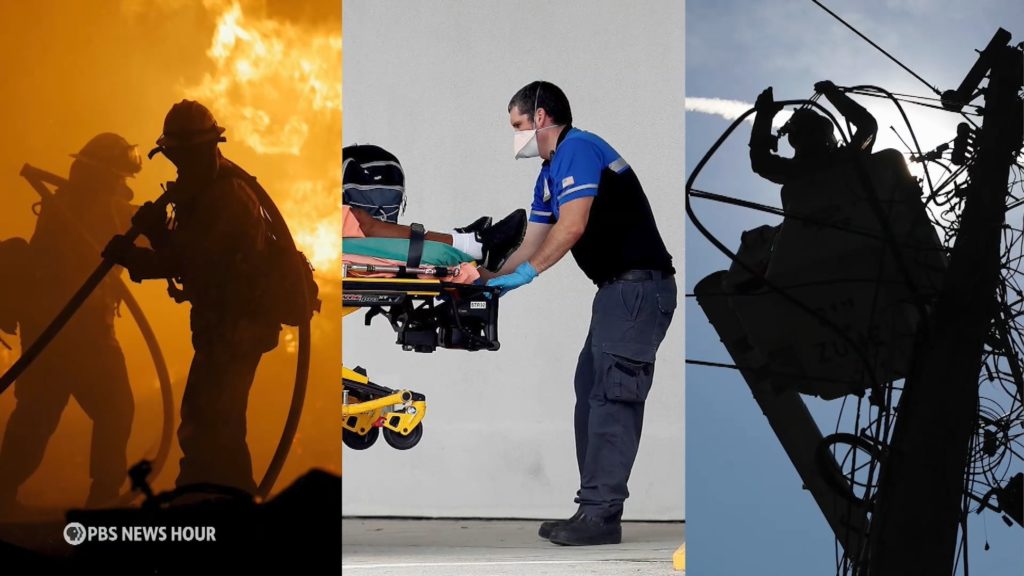
Workforce Pell Grants give students new options for job training

For decades, federal Pell Grants have helped millions of students from low- and middle-income families afford college. Now, for the first time, that financial aid will also be available for short-term vocational training programs designed to help students enter the workforce. Stephanie Sy reports on the rollout of Workforce Pell for our series, Rethinking College.

  •  

About That Contested Elizabeth Holmes Quote to The Times

In today’s Backstory, the new Holmes film takes issue with our profile, Nikole Hannah-Jones unpacks her viral essay and a professor shares why he thinks we apply “conservative” and “liberal” labels inconsistently.
  •  

Why a Pillar of Christian Journalism is in Turmoil

Former employees of Christianity Today say new leadership has been pushing back on independent journalism. About half of its staff members have left or been laid off over 14 months.

© Justin Merriman for The New York Times

Bonnie Kristian, Christianity Today’s deputy editor until recently, said the outlet displays “an increasingly muddled sense of its place within American evangelicalism.”
  •  

Fans Don't Want a 24-Team College Football Playoff. The NCAA Thinks You'll Watch Anyway.

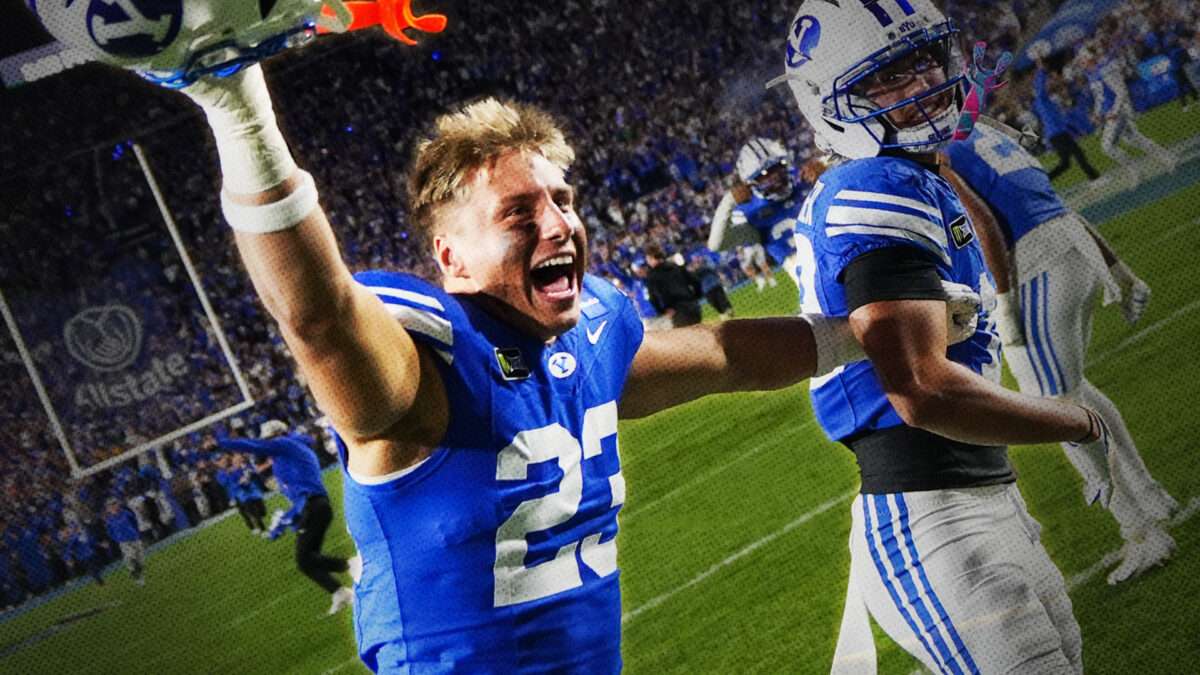
A few BYU football players celebrate on the field, one of them has ripped off his helmet. | Aaron Baker/Icon Sportswire CHE/Aaron Baker/Icon Sportswire/Newscom

Hello and welcome to another edition of Free Agent! Be careful when you're behind the wheel this week.

College football is great! Surely you want even more of it, right? We'll get into the problems with a 24-team College Football Playoff (CFP), then talk about the NBA's new betting restrictions, and close with thoughts about President Donald Trump's new government golf course plans. And just in case you don't make it to the end, here's a shortcut to our survey on who you're rooting for in the World Series.

But first, many congratulations to "Gary's 1st Entry" on outlasting everyone else in our NFL Survivor group. There's no prize other than this shoutout, so be sure to print out today's newsletter, highlight this paragraph, and frame it in gold. Perhaps Gary can keep going and challenge Primetime Paulie Rothrock's 13-game winning streak from last season.

Locker Room Links

Watering Down College Football Is a Mistake

Saturday was one of the best days of college football ever—or perhaps it could have been, if we thought any of the five top-10 teams who took a loss were now certainly out of playoff contention. Instead, Georgia, Notre Dame, Indiana, Alabama, and Texas are all still very much alive in the championship hunt.

Today was one of the craziest days in college football history:

- First time ever five teams ranked in the top 7 lose in a single week
- First time the No. 1-ranked team loses to an unranked team in consecutive weeks since 1990
- First time Texas, Alabama, and Georgia all lose… pic.twitter.com/psVRoM5s5b

— Bobby Football (@Rob__Paul) October 18, 2026

With two losses, Alabama and Texas are at least on the edge of the playoff bubble with perhaps no more room for error. But that's only true under this year's CFP format. Next year, the playoff is almost officially set to balloon to 24 teams, making the chaos of a day like Saturday matter even less.

Fans will always celebrate a huge upset or major rivalry win, of course—Tennessee fans don't need playoff stakes as an excuse to get drunk when they beat Alabama. But the joy of a rivalry win in the past was always bigger because of the off-field stakes, too—the first loss for your rival meant they probably wouldn't be national champions, the second meant they'd be out of the Rose Bowl, a third meant you could be proud your team sent them packing for the Alamo Bowl. Winning is great; ruining your rival's season is even better.

With 24 teams in the playoff, the joy is a bit diminished because it will take four or possibly five losses to knock a powerhouse program out of the CFP (Iowa, at 8–4, was ranked 23rd by the committee before last year's playoffs). It'll be a bit like a rivalry win in college basketball—we win, you suck, congrats on getting a slightly worse NCAA Tournament seed.

In the business of sports, more inventory for TV is king, and the powers that be think more teams playing more playoff games will make more money. At Free Agent, we don't begrudge institutions for trying to make more money—we all do the same every day. But it's not clear abandoning conference championship games will be the answer, especially when the Big Ten and SEC championships apparently outdraw many playoff games.

ESPN and the power conferences know fans aren't happy about it—just look at all the chatter online, and how the crowd at BYU reacted when College GameDay discussed expansion on Saturday (especially when BYU would probably benefit from expansion!). They're betting enough people will watch to make the expansion profitable anyway. The last hope is that fans get loud enough to bully them into abandoning expansion—which only occasionally works, sometimes on things small (putting the trophy logo on the court for the NBA Finals) and large (soccer's European Super League). If any powerhouse considers going independent, that might shock leaders into a rethink too.

Almost every sport I know is adding more: more teams, bigger playoffs, more for TV. As fans, we still eat it up, of course—much to the excitement of the TV executives who are selling commercial time to the people trying to reach us, the viewing public. (The only counterexample is the MLB proposal to cut eight games from the regular season—I'd love to see each sport I follow cut its season by about 25 percent to make regular season games matter more, so I'm interested to see how this goes.)

Perhaps I'm biased because my favorite team, Michigan State, is a dumpster fire—they could expand the playoff to 64 teams and the Spartans still wouldn't deserve a bid. I personally don't have a whole lot at stake in the playoff format now or anytime soon. But as a neutral, the chaos of Saturday might have been viewed with my full attention in the past—instead, this year I just had it on in the background while I played video games.

Sports Are Regulating Bets Without Politicians, Part 3

After last year's major betting scandal, the NBA asked sportsbooks late last week to stop offering certain types of potentially problematic bets. The sportsbooks, which the NBA says handle roughly 99 percent of the U.S. betting market, agreed. No politician or regulation was necessary to solve the problem.

No longer can bettors bet on unders for a bit player who likely won't get more than 12 minutes of playtime. Bettors also can't wager on the opening tip or on players to miss specific shots. Parlays that string together under bets on the same player's statistics are also out (this one seems a bit harsh—if you just want to bet on a certain major player to have an off night, you can bet on stats separately, but not in a big multiplier parlay). Bets on players who have two-way contracts between the NBA and G League were already banned.

This all comes on the heels of similar developments last year in the NFL and MLB. While some people want to ban prop bets altogether, the NFL asked sportsbooks to eliminate bets in four different categories. Sportsbooks largely agreed or weren't offering those bets anyway. MLB, in light of some pitching-related scandals, asked for a $200 limit on pitch-specific bets and to keep them out of parlays—sportsbooks agreed to that too.

As I wrote last year, "Ideally, this is how the regulation of the sports betting industry should go….These approaches are catching the nuances of what works for both the leagues and for sportsbooks without the heavy-handed approaches of politicians who would use an axe to ban all prop bets instead of a scalpel to limit problematic bets."

It's important to note leagues are able to do this because they have commercial partnerships with the sportsbooks. Otherwise, the leagues would have no direct leverage over a sportsbook offering a bet the league doesn't like. Keep that in mind the next time you see people bemoaning a league partnership with a sportsbook or a prediction market.

Trump's Golf Course Plans Have People Teed Off

President Donald Trump has new plans for the National Park Service golf course at East Potomac—again. Last time new plans were announced, the site plan still had its historic miniature golf course, a par-3 course, and the existing road still ringing the property for bicycling, running, etc. Much of the public didn't like that plan anyway—now, none of that remains in the latest plans, just 18 holes of golf and a driving range.

Trump announces plans for the redeveloped East Potomac Park golf course. pic.twitter.com/ZiGYgc99Uo

— Andrew Leyden (@PenguinSix) October 18, 2026

What's really going on here seems quite clear to me: Like so many other things going on in the second Trump administration, this is a scheme to enrich the Trump family. The plan?

Step 1: Cancel a lease that was signed during the first Trump administration with a nonprofit group operating the golf course and working, in the long term, on major capital improvements and renovations.

Step 2: Use taxpayer dollars to pay for renovation of the course into, allegedly, a championship-level course capable of hosting major golf tournaments (no matter that the area has next to zero parking, is a mile from the nearest Metro station, and only accessible by narrow roads not meant to handle tens of thousands of spectators). 

Step 3: Have the federal government sign a sweetheart deal with, who else, the golf division of the Trump Organization to operate the course on extremely favorable and profitable terms.

If you're wondering why the Trump administration is doing something, corruption is usually a good guess.

The arguments for the course don't make much sense. There are plenty of adequate, competitively priced golf courses in the broader Washington, D.C., area. Several of them are already capable of hosting professional golf tournaments. Between LIV Golf and the PGA Tour, there were three tournaments at three different courses in the last couple years. The 2030 PGA Championship and 2037 Ryder Cup will happen just over the D.C. line in Bethesda, Maryland.

East Potomac is not the nicest course around, no thanks to the legal limbo it's been in for the past year. But if the National Park Service is going to, for some reason, be in the business of running a golf course, it should be a course that emphasizes and teaches its history instead of the pipe dream of a corrupt madman.

Who Ya Got? 2026 World Series Edition

For the first time in 46 years, we've got a World Series contested by two teams that have never won it before. Brewers against Rays is also a rare instance of the top seeds from each league outlasting the randomness of the MLB playoffs to make the World Series. And before you trot out the tired line that "TV executives must be seething about the small market teams" remember that they care much more about getting a playoff series that goes seven games with close results in each game (What did I say above? Inventory rules all!).

In any case, I want to know who you're rooting for. At first glance, neither team seems super objectionable to me. Come back next week for my thoughts. But make sure you sound off and take 10 seconds to respond to our World Series poll here.

Replay of the Week

Kick-six alert! (Honorable mention to the blocked extra point returned for two the other way.)

"A kick-six type opportunity."

Chris Lewis was all over this one on the CBS Sports Network call of Nevada-North Dakota State. 🏈🔥🎙 pic.twitter.com/eRt42xcYIt

— Awful Announcing (@awfulannouncing) October 18, 2026

That's all for this week. Enjoy watching the real game of the weekend: MSU men's hockey (No. 2 in the nation!) against New Hampshire.

The post Fans Don't Want a 24-Team College Football Playoff. The NCAA Thinks You'll Watch Anyway. appeared first on Reason Magazine.

  •  
❌