❌

Reading view

Connecticut's New Restrictions on Flock Cameras Highlight the Dearth of Meaningful Privacy Protections
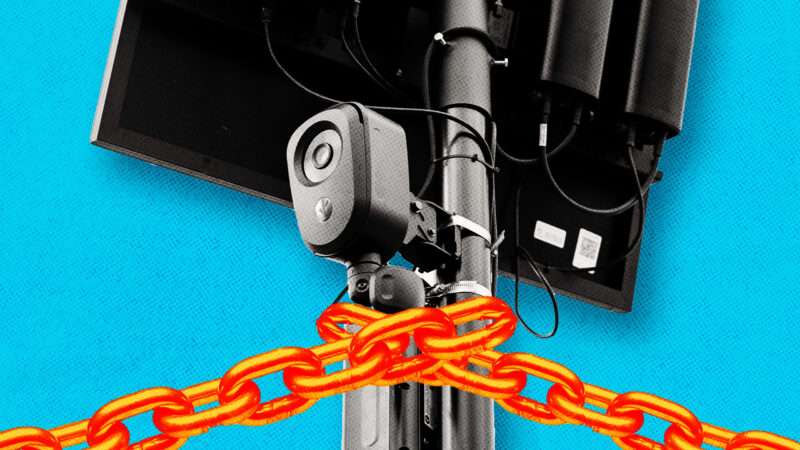
a license plate camera in chains | M. Scott Brauer/Zuma Press/Newscom/Cemil Adakale/Dreamstime/Fatima Ruiz

A Connecticut law that took effect at the beginning of October imposes new restrictions on police use of automated license plate readers (ALPRs), which enable what a federal judge recently described as "a type of indiscriminate mass surveillance." The law reflects the bipartisan backlash against AI-assisted cameras that record images of passing cars billions of times a week, building databases that police can use to track drivers, identify other vehicles in their vicinity, predict itineraries, and conduct searches based on a wide range of vehicle characteristics.

Connecticut previously imposed no statutory limits on ALPRs, a fact that underlines how readily police can access license plate data, which they can search without any sort of judicial review and often without meaningful internal supervision. But the law's provisions, while promising in some ways, fall short of the reforms recommended by critics who warn that unconstrained use of ALPRs threatens the privacy of innocent motorists across the country.

As of today, DeFlock's mapping project has identified nearly 145,000 ALPR cameras in the United States, most of which were installed by Flock Safety, the leading vendor. That network includes more than 1,500 cameras deployed by Connecticut law enforcement agencies, three-quarters of which use the technology.

The concerns underlying the new law, which Gov. Ned Lamont signed last May, echo objections raised in other states. Last February, for example, CT Insider reported that out-of-state agencies had searched ALPR data from Connecticut thousands of times for immigration enforcement purposes. When police in Johnson City, Texas, searched Connecticut data for a missing woman, the log noted that she "had an abortion," which reinforced concerns that ALPR information might be used to enforce abortion bans.

As elsewhere, ALPR critics in Connecticut also have complained about a lack of transparency. In April 2025, for instance, South Windsor began using Flock cameras without any public notice. The resulting consternation prompted the city council to cancel the program early this month. CT Mirror reports that South Windsor is "at least the sixth Connecticut community to end or suspend the use of ALPRs this year, following Windsor, Killingworth, Ledyard, Milford and Newtown."

Compared to those moves, the new state restrictions are pretty weak tea. But they include some potentially meaningful changes, and they highlight how lax oversight of ALPRs has been.

The new law restricts the sharing of ALPR data, which henceforth will be limited to Connecticut, Massachusetts, New York, and Rhode Island unless an agency in another state obtains a judicial warrant. The law says the data may not be used for immigration enforcement, to target conduct protected by the First Amendment, or for investigations related to "reproductive" or "gender-affirming" health care services. It also bars the placement of ALPRs near facilities that provide such services or organizations that primarily serve immigrants.

The original bill specified that ALPR data could be retained for no more than seven days unless it is tied to an ongoing criminal investigation, subject to a warrant, or used for toll enforcement. The final version of the bill extended that limit to 21 days. Flock's original default was 30 days. But last August, in response to widespread criticism of ALPR surveillance, the company began recommending a seven-day limit. Connecticut's Police Officer Standards and Training Council, which last month sent Lamont a report that included suggested reforms, thinks the state should adopt the seven-day standard.

Under the new law, police may search ALPR data to "assist in the recovery of a stolen motor vehicle," "assist in locating a missing or endangered individual," or "assist in the apprehension of an individual with an outstanding warrant." They also may query the database for information "relevant and material to a specific active investigation of a criminal offense in which there is reasonable suspicion that the offense has been or is being committed." When they do that, their agency must record "the reason for the access and any associated case number for the complaint or incident that is being investigated and is the basis for the access."

It is remarkable that Connecticut lacked such basic safeguards until now, and it is not clear how effective the new rules will be. Since July 1, 2025, Virginia has required that cops state a "specific purpose" for ALPR searches, including "the offense type." Yet last April, WHRO reported that Norfolk police often give "incomplete and imprecise reasons" for ALPR queries, including "suspect," "suspicious," and "investigation" or "inv."

Connecticut's "reasonable suspicion" requirement is more lenient than the standard that the Institute for Justice favors. The organization's model statute would generally require a warrant based on probable cause for ALPR queries. The proposed law makes exceptions for "exigent circumstances," stolen vehicles, and toll, parking, or traffic enforcement.

Connecticut's law also addresses the sort of blatant abuses that have fueled opposition to license plate cameras, including cases in which cops have been caught using ALPR data to stalk personal nemeses, ex-girlfriends, possibly unfaithful spouses, and objects of romantic interest. The law says an officer "who is found to have knowingly accessed, used or disseminated automated license plate reader data with malicious intent for purposes outside of the provisions of this section shall be subject to disciplinary action including, but not limited to, suspension, cancellation or revocation of certification" for police work.

The law establishes two additional remedies that could deter ALPR abuses. It authorizes the attorney general to sue ALPR contractors for damages and injunctive relief when they violate the new restrictions. It also allows "any aggrieved individual" to sue "a public agency" that flouts the rules.

"The law, for a first bite at the apple, is not bad," Ken Barone, manager of the University of Connecticut's Racial Profiling Prohibition Project, told CT Insider. Given that "there was a benchmark of nothing," he said, the attempt to constrain and track ALPR use is "a big step forward."

The post Connecticut's New Restrictions on Flock Cameras Highlight the Dearth of Meaningful Privacy Protections appeared first on Reason Magazine.
  •  

Iowa Voters Don't Want Police or Flock Tracking Their Cars. Politicians Are Still Catching Up.

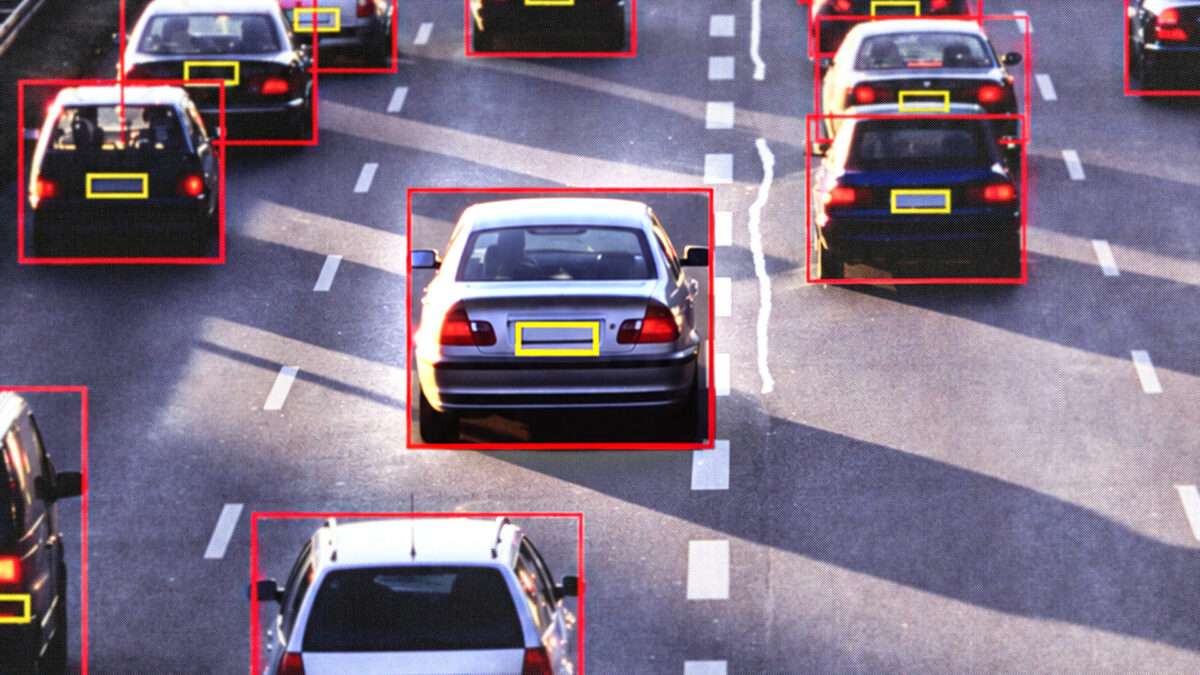
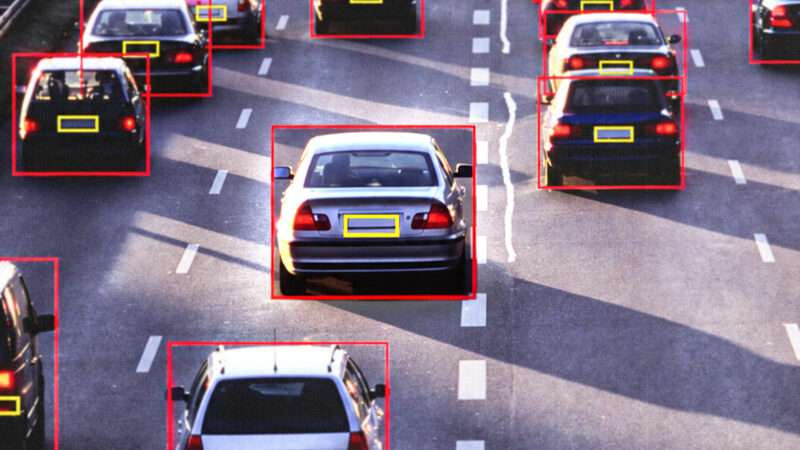
An image of cars driving down a highway, four lanes wide, with red boxes around the cars and yellow boxes around their license plates. | Adani Samat/AltrendoImages/Envato/ChatGPT

West Des Moines, Iowa—Iowa voters may disagree on immigration, taxes, and the economy, but government surveillance is drawing opposition from across the political spectrum.

An Emerson College poll of 750 likely Iowa voters, conducted between late August and early September, found that 61 percent opposed police use of automated license plate reader (ALPR) cameras, compared with 26 percent in support.

The backlash comes as police departments across the state increasingly rely on surveillance technology supplied by private companies such as Flock Safety and Motorola Solutions. Their cameras record license plates and vehicle information, feeding searchable databases that allow law enforcement to piece together motorists' movements, including those of people suspected of no crime.

As Iowa's gubernatorial and congressional campaigns enter their final stretch, voters are increasingly pressing candidates on whether they intend to place limits on the technology. Jacqueline Thompson, an ordained elder in the Iowa Conference of the United Methodist Church and a self-described centrist Democrat, said she has been concerned about government surveillance for years.

"It's always been important to me [and] I've always thought that was a problem," she said before a campaign rally at a senior living community in Des Moines earlier this month. "So, when people started jumping on the bandwagon saying it, I was like, 'Hello, I've been here already!'"

Thompson pointed to two Democratic candidates, Nate Willems, who is running for Iowa attorney general, and Taylor Wettach, a candidate for state auditor, as having caught her attention with their emphasis on corporate oversight and access to government records.

For Thompson, the renewed attention to privacy is a welcome development in a political environment where Democrats and Republicans rarely find common ground. "It's kind of nice to hear the people come back to the middle [and discuss this]," she said.

Flock Does Not Have Enough Guardrails

Police surveillance technology has spread across Iowa faster than the rules governing its use.

A recent study identified at least 62 Iowa law enforcement agencies that had accessed other agencies' Flock databases, including departments that did not operate cameras of their own. Police departments can therefore search information collected well beyond their jurisdictions without having to install a single camera themselves. The study (led by Megan Graham, a clinical associate professor and director of the Technology Law Clinic at the University of Iowa College of Law) found significant gaps in transparency surrounding ALPRs.

The constitutional implications are already being tested in court. On October 1, a federal judge in Oklahoma ruled that a sheriff's deputy violated the Fourth Amendment by searching a motorist's location history through automated license plate reader systems operated by Flock Safety and Motorola Solutions without a warrant.

The search turned up more than 50 records of the driver's whereabouts across multiple states over a month. In the 38-page ruling, the judge ordered the resulting evidence suppressed, describing the technology as a form of "indiscriminate mass surveillance." The decision is not binding in Iowa, and legal challenges to ALPR surveillance still face an uphill battle, but it adds to the legal scrutiny of police tracking motorists without warrants.

The University of Iowa study also raised concerns about unauthorized database access, erroneous alerts, and the potential use of locally collected information for federal immigration enforcement.

Flock Safety says it has not provided U.S. Immigration and Customs Enforcement or Border Patrol with direct access to its systems. But the researchers found that local law enforcement agencies elsewhere in the country had conducted searches on behalf of federal authorities, effectively allowing them to obtain information without direct access.

Taxpayers are also footing the bill. Cedar Rapids reported operating 76 cameras at a combined average cost of more than $20,000 a month, according to the study.

Researchers struggled to determine the full extent of surveillance across Iowa. Some agencies refused to disclose the number or locations of their cameras, while others withheld records concerning unauthorized access or erroneous alerts, citing confidentiality.

The cameras are not limited to Iowa's largest cities. Becca Eastwood, deputy policy director at the American Civil Liberties Union of Iowa, said they have spread across large, midsize, and smaller communities, prompting a surge in opposition over the past year.

The backlash "has just exploded, like no other issue that I have seen in my time at the ACLU," Eastwood told Reason in an interview. Candidates running for state and federal offices are increasingly getting asked if they support police departments using ALPR cameras, she said. 

Some local governments are already reconsidering their contracts. Indianola and Waukee suspended their Flock camera arrangements, Iowa Public Radio reported in August. Dallas County paused a planned rollout while awaiting guidance from state lawmakers. Ankeny, which operates 16 Flock cameras, is reportedly expected to reconsider a possible contract extension next year.

The backlash also cuts across the immigration debate. While concerns about federal immigration enforcement have helped draw attention to the cameras, critics argue the same surveillance infrastructure can be used against anyone, regardless of which party controls the government.

"This is a nonpartisan issue because people recognize that surveillance can be weaponized against anyone the government wants to weaponize it against," Eastwood said. "An increase in police surveillance impacts certain populations more, right now [but] nobody is immune."

Politicians Face Pressure To Cut Ties With Flock

The opposition is beginning to force Iowa's candidates to take positions on a technology that, until recently, attracted relatively little attention outside law enforcement and civil liberties circles.

Among the gubernatorial candidates, interviewed by Iowa Radio last month, Republican Zach Lahn has called for state-level regulation, arguing that the widespread collection of information about where people drive is unacceptable. Meanwhile, Democrat Rob Sand has expressed support for safeguards governing the collection and use of license plate data and said he would sign legislation if privacy concerns persisted. But he has also pointed to the cancellation of some Flock contracts as evidence that the market is responding to public concerns. 

For now, neither approach offers much clarity on whether police should be required to obtain warrants before searching motorists' location histories or how far restrictions on data collection should go.

Ryan Johnson, a libertarian-leaning Republican who works as a machinist near Waterloo, said he could accept cameras in certain locations, such as downtown areas or near traffic signals. But he objects to their spread into residential neighborhoods and public spaces.

"Just having Flock cameras everywhere, [in] residential [areas], putting them at parks and pools, we don't need that," Johnson said while attending a Lahn rally earlier this month.

So far, some of the most concrete changes to ALPR practices have come from Flock itself. In August, the company announced that it would reduce its default data-retention period from 30 days to seven and require officers to enter a criminal case number or code for each search. The changes would not, however, require police to obtain a warrant before accessing the records.

Gary and Nancy Guthrie, a Democratic couple attending a Des Moines rally supporting Chris Jones for secretary of agriculture, remain skeptical of the cameras.

"I don't have a good feel for that," Nancy Guthrie said. "Personally, I'm very much against Flock cameras."

For all the attention the issue is receiving on the campaign trail, Iowa voters have yet to hear much about what legal limits candidates would actually impose on police surveillance.

The post Iowa Voters Don't Want Police or Flock Tracking Their Cars. Politicians Are Still Catching Up. appeared first on Reason Magazine.

  •  

Mississippi Cop Who Shot 1-Year-Old Kohen Wiley Resigns After State Calls Shooting 'Justified'

Bodycam footage from shooting of Kohen Wiley | darkhorsepress322/Youtube

Earlier this week, Mississippi Attorney General Lynn Fitch said that the police shooting of 1-year-old boy Kohen Wiley in a Walmart parking lot earlier this year was a "justified" use of force. On Thursday, Sgt. Hunter Foster, the Senatobia police officer who shot Wiley, resigned from the department.

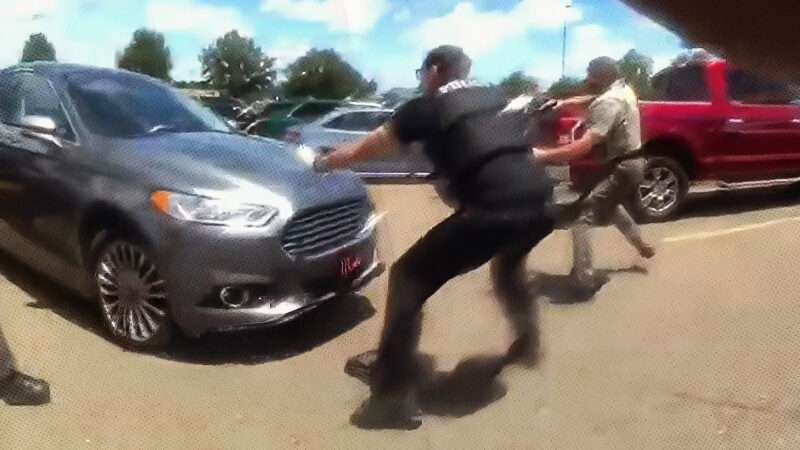
Foster's resignation comes after a tumultuous week for the Mississippi attorney general's office and the Senatobia Police Department (SPD). After Finch ruled the shooting a justified use of force on Monday, DarkHorse Press leaked footage of the body camera video from officers at the scene, along with Walmart surveillance video. On Thursday, the Mississippi Department of Public Safety released more footage, including from the bodycam of Foster, which WLBT News obtained. Together, the footage shows a less cut-and-dry incident than what statements from Fitch and the Mississippi Bureau of Investigation imply.

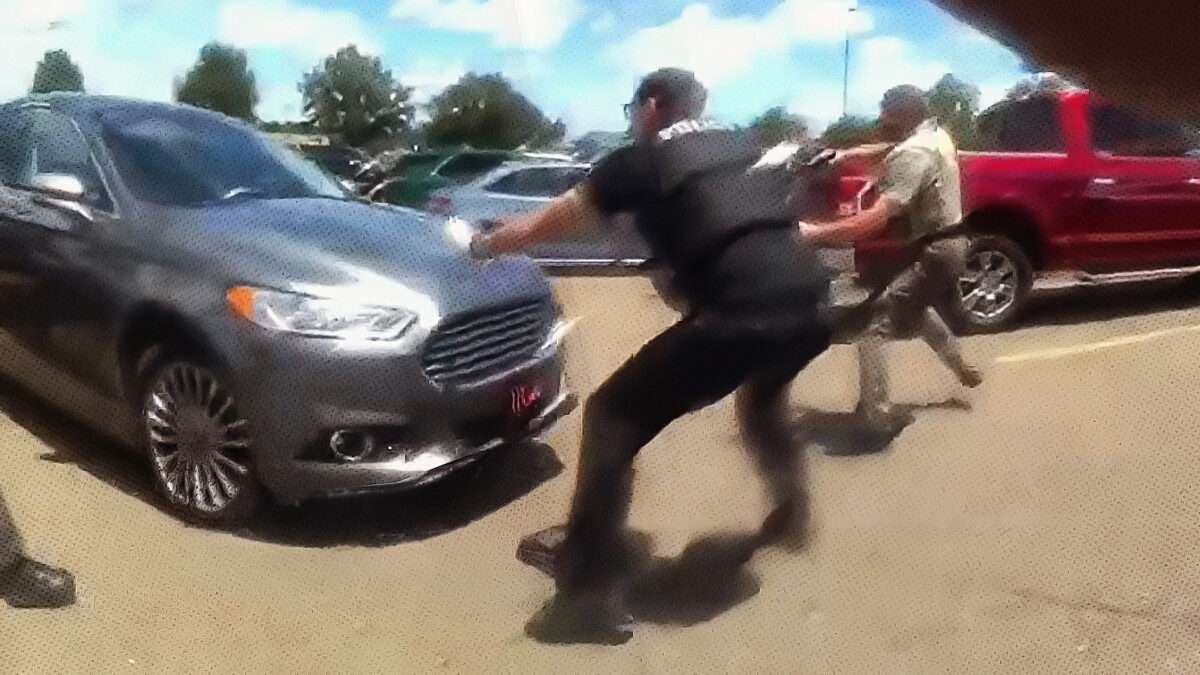
Surveillance footage shows Kohen's mother, Vellesiya Wiley, and her friend running to their car from the Walmart entrance as Wiley holds baby Kohen in her arms. Police officers soon enter the frame chasing the duo. After getting in the car, Wiley's friend backs out of the parking spot and hits another parked car. The officers crowd around the vehicle, drawing their guns and shouting "stop." Foster places himself directly in front of the vehicle, his gun primed and ready. The driver puts the car in gear and accelerates toward the officers. According to his bodycam footage, Foster, one of the two officers in the vehicle's path, lets off three shots as he hops out of the way and continues to aim his gun at the car as it passes him. It appears that at least one of the shots pierced the front windshield, while the others came through the window on the passenger side, where Kohen was sitting on his mother's lap. The car then drove away, and officers gave chase. 

After reviewing the footage, Ben Crump, the Wiley family attorney, said during a Thursday press conference that the police officers "never ever should have drawn their weapons for a misdemeanor shoplifting allegation."

"The shot from the side of the vehicle was not justified," he added. "[Foster] was not in harm's way when he shot from the side." He claims that the shot that killed Kohen came from the side, corroborating an independent autopsy the family conducted.

Martin Zummach, an attorney for Foster, told the Associated Press that the driver "tried to kill" his client and other officers at the scene, giving Foster "no choice but to fire his weapon." He said it was "strictly muscle memory" that led Foster to fire those additional shots, according to WSB News. "The one that went through the side glass that everybody's going crazy about? That's because she was moving so fast," he said. 

Regardless of whether the car was "moving so fast," Foster, who moved out of the vehicle's path, clearly had the choice not to fire his weapon. But instead of de-escalating the situation, the police officers decided to draw their guns and step in front of a vehicle, turning an incident involving an alleged shoplifter fleeing a misdemeanor into a life-or-death game of chicken.

The post Mississippi Cop Who Shot 1-Year-Old Kohen Wiley Resigns After State Calls Shooting 'Justified' appeared first on Reason Magazine.

  •  

Texas School Police Referred Tens of Thousands of Children to Prosecutors for Minor Misbehavior

An illustration of a police officer standing in front of a school bus and a school | Luckydoor/Tom Dowd/Dreamstime

School resource officers (SROs) in Texas referred tens of thousands of elementary and middle schoolers for prosecution for relatively minor misconduct over the last decade, a news investigation found.

An analysis by The New York Times and the San Antonio Express-News reported that, as the number of SROs in Texas grew, children in Texas ages 10 to 13 were referred to prosecution for misbehaving in school more than 47,000 times since 2014. A referral doesn't necessarily result in charges being filed, but each one represents a minor being taken into police custody and put in contact with the criminal justice system, which can have long-lasting educational, emotional, and financial impacts for students and their families.

"Most of the students were accused of minor offenses, like making threats, using cannabis vapes or lashing out at classmates or teachers," the papers reported. "Few caused serious physical harm."

Among the examples cited by the Times and Express-News were an 11-year-old who bumped into a school counselor, a 10-year-old who said he saw someone on campus with a weapon, and a 10-year-old who kicked an assistant principal after his cellphone was taken away. 

In one case, a 12-year-old girl who refused to go to the principal's office was handcuffed, arrested, and driven to the school police headquarters. "When she would not put her hand on a fingerprint machine, officers twisted her opposite arm behind her back until she screamed and complied, according to body camera footage," the outlets reported.

The analysis found that referrals of children 10 to 13 increased by a greater percentage than referrals of older students. (Children under 10 cannot be prosecuted under Texas law; many other states don't set a minimum age for delinquency.)

The two outlets published another joint investigation in May on how SROs in Texas schools have used heavy-handed tactics, including Tasers and pepper spray, against students over seemingly minor misconduct.

The findings mirror other recent studies. A report published in July by the American Civil Liberties Union (ACLU) of Iowa found that, while SROs were placed in Iowa schools to keep students safe from violence, the threat they most commonly dealt with was illicit vaping.

The number of police in schools nationally dramatically increased in recent years, growing by 23 percent at high schools, middle schools, and elementary schools between 2018 and 2021, largely under the justification of stopping mass shootings and handling violent situations.

Organizations like the National Association of School Resource Officers (NASRO) say that carefully selected, well-trained officers act as a filter and decrease arrests by building strong relationships within the school with staff and students.

Civil liberties groups and disability advocates have long argued that increases in school police and zero-tolerance policies for petty disturbances have fueled the "school-to-prison" pipeline and led to disproportionate enforcement against minorities and students with disabilities. Those groups have been aided by viral news stories of police arresting and assaulting school children.

Following the police killing of George Floyd in 2020 and national calls for police reform, several major school districts across the country ended their SRO programs. 

However, several states that experienced horrific school shootings, like Florida and Texas, moved in the opposite direction, passing laws that required police officers or armed guardians in public schools.

A 2020 Reason investigation described how Florida schools had become a high-stakes experiment in policing after Florida more than doubled the number of SROs across the state following the mass shooting at Marjory Stoneman Douglas High School in 2018. A study published in 2020 found that after the increase, the number of Florida school arrests—which had been declining for years—suddenly started to rise. There was also a sharp increase in the use of physical restraint against students.

A 2021 working paper by the Annenberg Institute at Brown University, which billed itself as the broadest and most rigorous examination at the school level of how SROs impact student outcomes, found that while SROs "do effectively reduce some forms of violence in schools," they did not prevent school shootings or gun-related incidents.

Another study by researchers at the University of Maryland and the firm Westat, who studied several dozen middle and high schools in California, found that increasing the number of SROs led to both immediate and persistent increases in the number of drug and weapon offenses and the number of suspensions and expulsions of students.

The post Texas School Police Referred Tens of Thousands of Children to Prosecutors for Minor Misbehavior appeared first on Reason Magazine.

  •  

2 Recent Cases Illustrate the Limits of a Doctrine That Often Blocks Civil Rights Claims

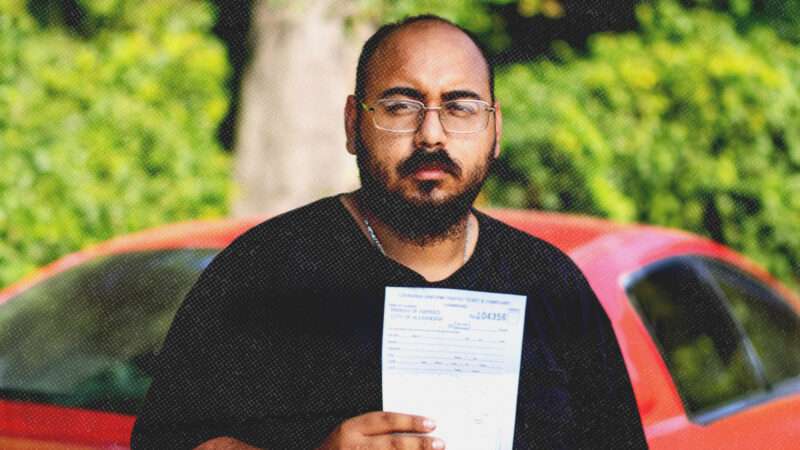
Mario Rosales holds a citation he received after a traffic stop in Alexandria, Louisiana | Institute for Justice

Since 1871, a federal statute has authorized Americans to sue state and local officials for violating their constitutional rights. But since 1982, thanks to the court-invented doctrine of qualified immunity, such claims have been allowed only when they allege violations of "clearly established" law.

Because courts often require plaintiffs to meet that standard by citing precedents involving closely similar facts, qualified immunity can prove insurmountable even for victims of outrageous abuses. But as two recent cases illustrate, there are limits to this license for misconduct, meaning officials may still be held accountable when they flout longstanding constitutional principles, even when they do so in novel ways.

In 2022, Mario Rosales and Gracie Lasyone sued two Alexandria, Louisiana, police officers, Samuel Terrell and Jim Lewis, alleging that they had pulled Rosales over without legal justification. The cops ordered Rosales and Lasyone, his girlfriend, out of the car and detained them for 21 minutes, during which they grilled the couple about illegal drugs, frisked Rosales, and instructed him to empty his pockets.

Terrell and Lewis sought refuge in qualified immunity. But last month, the U.S. Court of Appeals for the 5th Circuit ruled that Rosales and Lasyone had plausibly alleged several Fourth Amendment violations, including a stop based on a "fabricated traffic violation," an improperly prolonged detention, and unjustified searches.

In reaching that conclusion, the 5th Circuit relied mainly on a 1968 decision in which the Supreme Court said police may detain someone only if they reasonably suspect he is involved in criminal activity and may frisk him only if they reasonably suspect he is "armed and dangerous." Assuming the facts alleged in the lawsuit are true, the three-judge panel unanimously held, Terrell and Lewis had failed both of those tests.

When the officers stopped Rosales, the principles that the 5th Circuit applied had been the law of the land for more than half a century. Terrell and Lewis nevertheless argued that "any constitutional violation arising from the traffic stop was not clearly established," which gives you a sense of the chutzpah that qualified immunity invites.

Police commonly pull drivers over, ostensibly for traffic violations, in the hope of implicating them in drug crimes. A case that the U.S. Court of Appeals for the 8th Circuit considered this month involved a much more unusual scenario: a judge who locked two children in jail cells because he was frustrated by their resistance to a parental custody decision.

During a 2019 hearing in Taney County, Missouri, a divorced couple agreed that the mother would have primary custody of their two children, then 12 and 14. But contrary to that agreement, the children did not want to go home with their mother, which led to an argument in the courthouse lobby.

Judge Eric Eighmy intervened, telling the children they had to leave with their mother and repeatedly warning them that they could end up in foster care if they refused to do so. When that did not work, Eighmy jailed them until they became more cooperative.

"The time spent in the holding-cell area was between twenty and forty minutes," the 8th Circuit noted. And since Eighmy did not have probable cause to believe the children had committed any offense, "much less one that justified placing them in a holding cell," the court said, their confinement clearly violated the Fourth Amendment.

If so, Eighmy argued, he had no way of knowing that. The 8th Circuit panel unanimously disagreed: "As we put it over a decade and a half ago, long before the events in this case, 'it is clearly established that a warrantless arrest, unsupported by probable cause, violates the Fourth Amendment.'"

Notably, the 8th Circuit did not think the bizarre details of the case counted in Eighmy's favor. "We are not concerned about the lack of a prior case" with "fundamentally similar" facts, it said. "Indeed, given how clear the law is, it would have been surprising to find one."

© Copyright 2026 by Creators Syndicate Inc.

The post 2 Recent Cases Illustrate the Limits of a Doctrine That Often Blocks Civil Rights Claims appeared first on Reason Magazine.
  •  

Mississippi A.G. Says Killing of 1-Year-Old Boy Over Stolen Diapers Was 'Justified'

Kohen Wiley against a background of flowers and cards left to remember him | Carlos Kosienski/Sipa USA/Newscom/reshmasaujani/Instagram.Kohen.jpg

On Monday, Mississippi Attorney General Lynn Fitch ruled that the police shooting of 1-year-old boy Kohen Wiley was a "justified" use of force. ​Kohen was fatally shot in June, outside of a Walmart, as cops investigated his mother and her friend for stealing diapers. Fitch didn't explain the reasoning behind the decision or what evidence was considered in a case that has sparked national backlash.

According to a June 14 statement from the Mississippi Bureau of Investigation (MBI), officers from the Senatobia Police Department (SPD) and Tate County Sheriff's Office were responding to a shoplifting call when "officers encountered two subjects and a juvenile child fleeing from the store into a vehicle." They "attempted to stop the vehicle, but the driver drove in the direction of the officers, almost striking one," and the officer then "discharged their weapon and the vehicle fled the scene." The family went to a local hospital, where 1-year-old Kohen Wiley was pronounced dead.​

Kohen's mother, Vellesiya Wiley, has a different version of events, which she outlined in a video on X following the tragedy. She said that after police tried to stop her friend (the driver) outside the Walmart, Wiley continued to go to her car, saying the interaction had "nothing to do" with her. Once she got into the car, her friend arrived and began to back out of the parking spot. Then officers came over to the car, drawing their guns. She says that after she raised Kohen to show him to the officers and try to defuse the situation, they opened fire. "[The police] tried to say that [my friend] forcefully was trying to drive and hit them, but they was all on the right side, and she was driving towards the left….They personally just shot at the car," she said. In the months since the incident, the family held several rallies, demanding justice for Kohen's death.​ 

The tragedy of the shooting has been compounded by a lack of transparency from the SPD, as well as alleged expert analysis that counteracts the MBI's statement. According to reporting from Mississippi Today, Ben Crump, a civil rights attorney who is representing the Wiley family, claims that an independent autopsy conducted by forensic pathologist Robert Mitchell indicates that the bullets entered through the front passenger door, rather than the windshield, suggesting that the officer wasn't in the vehicle's path when he discharged his gun.​

In response to Fitch's announcement on Monday, Crump released a statement asking, "How can anyone accept that conclusion when Kohen's family and the public still have not been allowed to see the body-camera footage?" 

"If the footage supports the state's decision, release it. We will not stop fighting until this family gets the truth," he added. To this point, the SPD has declined to release the footage, saying it's standard procedure during an ongoing investigation.

Crump was also keen to point out complaints of racism in the SPD: "This is a department whose chief was fired after reports of racial slurs in his text messages, and whose officer faced a complaint alleging a racially offensive remark two days before he shot Kohen."​

The SPD's chief at the time, Harold Vanderford, was unceremoniously fired after journalists from Mississippi Today, The New York Times, and Verite News revealed a slew of racist text messages he sent. According to reporting from Verite News, in one of the messages he said he "almost beat a nigger and white woman's ass a few minutes ago." Senatobia's Board of Aldermen rejected his attempted resignation and voted to fire him instead on September 1.

Crump also cited a complaint filed by Officer Dexter Smith, who claimed that Sergeant Hunter Foster, the officer who shot Kohen referred to him as "a black motherfucker" on June 12, just two days before the incident. According to reporting from Mississippi Today, Smith's complaint states that he was filling out paperwork in the booking room when he heard Foster say, "Who is this Black motherfucker back there?" to his colleagues. Smith claims to have had almost no relationship with Foster prior to the encounter.​

It's hard not to feel outraged considering that this little boy lost his life over something as trivial as shoplifting—a misdemeanor in Mississippi that does not justify use of lethal force, as Reason's Joe Lancaster wrote in June—and for diapers no less. With the bodycam footage yet to be released, all the public is left with is the state's word that the investigation found no wrongdoing. Given the multiple instances of racism within the department, it shouldn't come as a surprise if the public isn't content to take them at their word.

The post Mississippi A.G. Says Killing of 1-Year-Old Boy Over Stolen Diapers Was 'Justified' appeared first on Reason Magazine.
  •  

He Campaigned for the East Cleveland Mayor's Opponent. Then Police Came for His Truck.

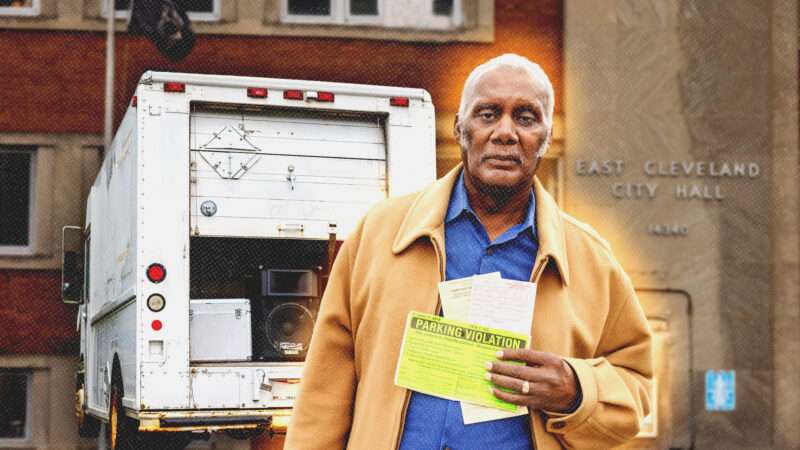
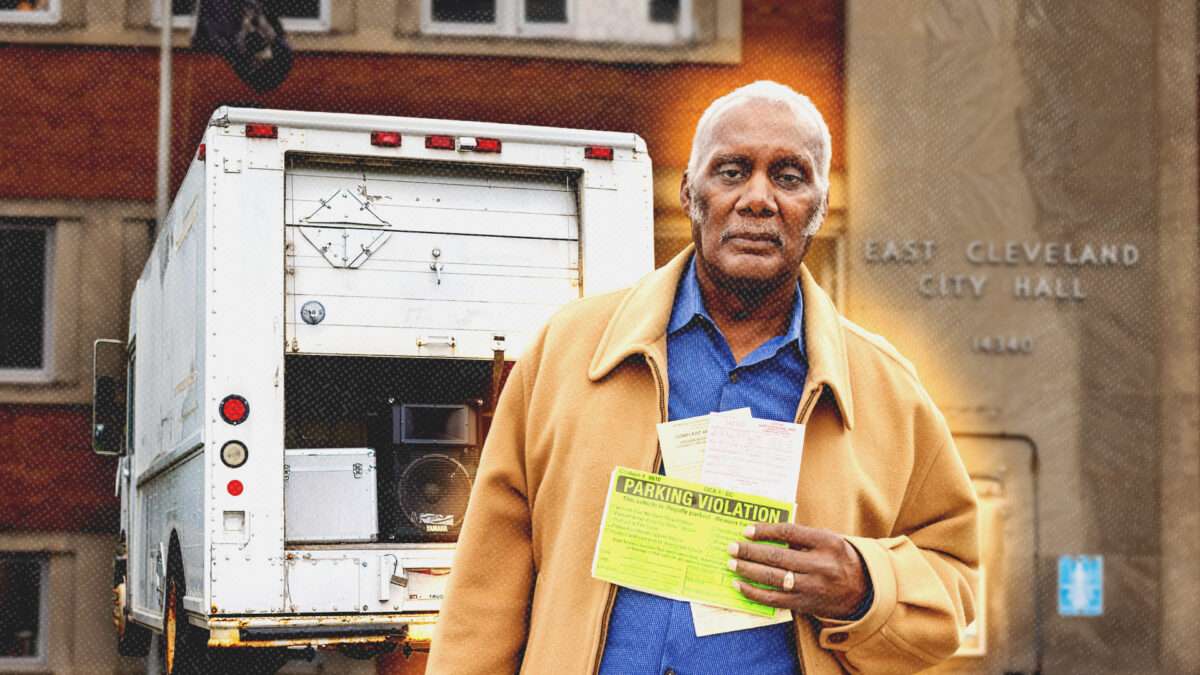
William Fambrough seen in front of his sound truck | Institute for Justice

Walking through East Cleveland, Ohio, feels a touch like you've wandered onto the set of a postapocalyptic film noir. Grand, gilded homes announce themselves on neighborhood streets, some crowned with turrets, many with windows punched out like missing teeth. Often, no one is home, because no one lives there. It is safer than 1 percent of U.S. cities.

So why did local law enforcement pour considerable time and resources into pursuing a man for a sound truck?

That question is not really a legal one, at least not in the most technical sense. But it is the driving force behind a thorny case a federal court recently resuscitated: Fambrough v. City of East Cleveland, a saga concerning a man whose vehicle became an obsessive target of the East Cleveland Police Department (ECPD) after he used it to campaign for a mayoral challenger.

Some of the facts are in dispute. But the basic gist is as follows: William Fambrough, long a politically engaged East Clevelander, campaigned for Juanita Gowdy—a challenger to then-Mayor Brandon King—by broadcasting messages around the city with his sound truck. That ultimately came to an end after law enforcement impounded the car, cited him for parking and noise violations, and prosecuted him for the latter.

Fambrough sued, alleging the complex legal odyssey set into motion over his step van amounted to First Amendment retaliation, an unreasonable seizure under the Fourth Amendment, and a violation of the 14th Amendment's proscription against selective enforcement. The U.S. Court of Appeals for the 6th Circuit rejected some of those claims. But it resurrected claims against King and his chief of staff, Michael Smedley—depriving them of qualified immunity, the legal doctrine that inoculates state and local government officials from facing lawsuits if their alleged misconduct was not "clearly established" as illegal in prior case law. It also revived Fambrough's retaliation claim against the city.

As the 6th Circuit summarizes: King "says he received a phone call from a resident who complained about Fambrough's sound truck and someone else's box truck being parked in a residential area," so he told someone to take care of it. Scott Gardner, then the city's chief of police, "was concerned about selectively enforcing" the parking ordinance—which prohibits parking a truck in front of residential property, except for loading or unloading—because it is indeed almost never enforced. This was the beginning of a long pursuit, which ultimately saw a swarm of officers dispatched to Fambrough's house in August 2021 to confiscate the vehicle, allegedly resulting in $6,000 in damage. Fambrough also had to pay $528 in fees to get the damaged truck back.

"All the attention City officials gave Fambrough struck Gardner as unusual," the 6th Circuit notes. "The mayor's office wasn't this attentive even in homicide cases. And considering that the City had around only 50 police officers at the time and had 'serious crime problems,' Gardner thought it was odd to devote this much attention to permitting and parking issues." Based on available data, East Cleveland's violent crime rate is 1,409 per 100,000 residents, about four times higher than the national average.

Yet Gardner ultimately got on board. Smedley phoned him on August 9 "extremely upset," according to Gardner, and told the police chief he was "incompetent" for failing to "take care of" Fambrough's sound truck. Smedley wanted the "utmost enforcement as possible." So Gardner sent an email. "Please, find this vehicle and tow it," he wrote to all of ECPD. "Cite the operator with disturbing the peace and loud music. Please contact me as soon as this is complete to claim a surprise." A surprise!

Police succeeded. "On its face, the email told officers to tow Fambrough's truck regardless of whether it was parked illegally," writes the 6th Circuit. "And the Noise Ordinance authorizes seizure only of 'the sound device used,' and only upon conviction. So Gardner's instruction to tow the truck wasn't authorized by municipal law." The court still held that the seizure did not violate the Fourth Amendment. It also gave Gardner qualified immunity, ruling it is not clearly established that someone who acts as a conduit for someone else's alleged retaliation—which here came from the mayor's office—is a "responsible party."

Heather McCollough, the city's assistant law director, subsequently prosecuted Fambrough for allegedly violating the noise ordinance. According to a sworn declaration from Fambrough's attorney, McCollough outlined some of Fambrough's offenses on a call: that he "made complaints about the police department" and filed "public records requests," among other issues. Notably, it is legal to do those things. McCollough was typically willing to resolve minor noise complaints, she added, but not so much in this case, because Fambrough needed to "stand down." (He ultimately pleaded no contest to disorderly conduct, a reduced charge.)

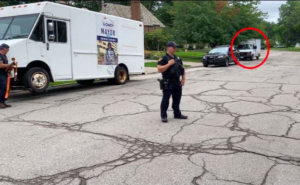
East Cleveland police step van
Institute for Justice

"Only after [Fambrough] began supporting Gowdy's election was the weight of the law thrown against him," the 6th Circuit writes in its analysis of potential municipal wrongdoing. "And the City's police officers didn't uncover Fambrough's violations of their own accord. Instead, City decisionmakers sent them to Fambrough's home each time to enforce the Parking Ordinance. So the timing of the parking-related enforcement actions supports an inference that Fambrough's political speech was the motivating factor—as does the fact that the City rarely enforced the Parking Ordinance against anyone else despite having plenty of opportunities to do so." Incredibly, a photo of another truck can be seen down the street on the same day law enforcement came to fetch Fambrough's vehicle. (The law also includes pickup trucks, so the city arguably has a lot of enforcement to do if it sincerely believes this law matters.)

King allegedly set the chain of events into motion while Smedley took the driver's seat. "Smedley's pattern of incessantly calling and berating Gardner," the 6th Circuit adds, "clashes with the idea that Smedley was chiefly concerned with minor permitting, noise, or parking issues." After all, if that were true, why would the problem appear to begin and end with one person?

Over five years have passed since the ordeal. Although Fambrough is now potentially closer to getting in front of a jury, he has yet to actually state his case, still burdened by the onerous process government actors invoke to kill such suits before the community can assess the merits. King, meanwhile, won that election. He left office in May 2025, however, after he was found guilty of one count of theft in office, four counts of having an unlawful interest in a public contract, three counts of representation by public official or employee, one count of filing a false disclosure statement, and one count of soliciting improper compensation.

The post He Campaigned for the East Cleveland Mayor's Opponent. Then Police Came for His Truck. appeared first on Reason Magazine.
  •  

Georgia Cop Who Shot a Miniature Donkey Says Body Camera Footage Shows an 'Imminent Threat'

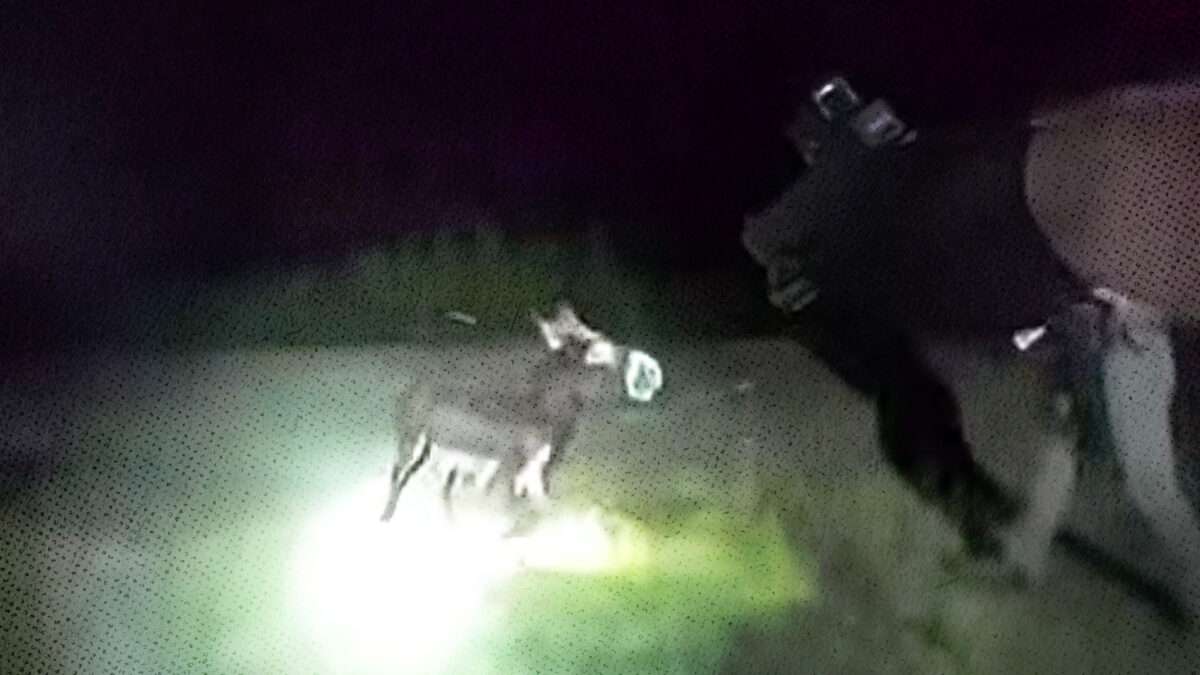
Screenshot from a body camera video showing a a handgun drawn at a small donkey | The Civil Rights Lawyer Raw/Youtube/Cedartown Georgia Police Department

The Georgia officer responsible for killing a 1-year-old miniature donkey, HeeHaw, has filed a motion to dismiss the lawsuit against him, claiming the body camera footage proves he "reasonably believed the donkey posed an imminent threat to a fellow officer." But even if it doesn't, the officer argues he is immune from liability. 

In the early morning hours of August 30, Hannah Michelle Israel was at her Cedartown home in western Georgia when she received a distressing phone call. A supervisor with the Cedartown Police Department "tersely informed [Israel] that a donkey on her property had been 'dispatched,'" according to her federal lawsuit. After some clarification, she learned that police had not only entered her enclosed private property in the middle of the night without permission while looking for a missing person, but also shot and killed her miniature donkey in the process. 

Israel immediately set out to search for her beloved pet, HeeHaw, only to find her bottle-raised donkey's lifeless body alone in her field. Israel told ABC7 News the incident has left her "traumatized and shocked." She continued, "I honestly can't even believe he's not here…There's no words."

Demanding accountability, Israel filed a lawsuit in the U.S. District Court for the Northern District of Georgia in September against the shooting officer, Officer Trenton Ryan Garner, for violating her Fourth Amendment rights and submitted a separate demand for $1 million from the City of Cedartown.  

Last week, Garner responded by asking the court to dismiss the case, arguing in part that he did not violate Israel's constitutional rights when he entered her property. Under the open fields doctrine, there is no reasonable expectation of privacy in one's pastureland, even if enclosed. Further, the motion argues, exigent circumstances existed in the search for a missing 12-year-old girl. 

As far as HeeHaw is concerned, Garner claims he acted reasonably by using deadly force and argues the footage clearly shows HeeHaw "charging" and posing an "imminent threat to a fellow officer." 

However, the footage, posted by the Civil Rights Lawyer Raw, may not be so clear-cut. Garner's body camera was off at the time of the shooting but had a "rolling buffer of video," a recording without audio of the 30 seconds preceding activation of the camera, according to court documents. During the silent portion, two officers and a bloodhound are in front of Garner with flashlights in a dark field. A small donkey, roughly 3 feet tall, appears and slowly moves toward one of the officers. The officer backs away slowly, but the donkey moves closer and picks up speed. Garner pulls his gun and fires. The donkey turns and runs before falling over.

Whether Garner reasonably believed HeeHaw posed an imminent threat to his fellow officer may be up for debate.

When the audio kicks in, a fellow officer asks, "Why'd you shoot it up?" "I don't know," Garner responds rather nonchalantly before telling dispatch he had to shoot a donkey because "it was trying to attack." If another officer on the scene wasn't sure why Garner used deadly force, perhaps the decision wasn't so reasonable after all. 

In her lawsuit, Israel accuses Garner of needlessly killing HeeHaw "maliciously…and recklessly, with deliberate indifference…for [Israel's] constitutional rights." The suit continues: "No reasonable officer in…Garner's position would have believed that such force was necessary or justified." 

But whether Garner acted reasonably or not by shooting HeeHaw, qualified immunity may still shield him from accountability. Qualified immunity is a legal doctrine that protects government actors from lawsuits alleging rights violations, unless the right is clearly established. In practice, that means plaintiffs must be able to point to a previous court ruling in a case with the same circumstances to show that the right was obvious to government officials. 

The bar can be quite high to show a right is clearly established. For example, in March, the Supreme Court reversed a 2nd Circuit decision in a case involving an officer who was sued for using a rear wristlock to arrest a protester. The 2nd Circuit denied qualified immunity, reasoning that a previous case from 2004 clearly established that rear wristlocks used to arrest anti-abortion protesters constitute excessive force. But the Court disagreed, stressing that "principles stated generally, such as that 'an officer may not use reasonable and excessive force,' do not suffice." 

And while there may be ample cases involving officers shooting pet dogs, cases involving miniature donkeys are in short supply. If the court finds that there is no clearly established rule that specifically prohibits officers from shooting a miniature donkey moving toward a fellow officer in the dark, the court may end up dismissing the case and sidestepping both the reasonableness and constitutional questions entirely.

The post Georgia Cop Who Shot a Miniature Donkey Says Body Camera Footage Shows an 'Imminent Threat' appeared first on Reason Magazine.
  •  
❌