Patients diagnosed with progressive dementia may know exactly how much deterioration they are willing to endure. They can articulate their wishes, discuss alternatives, and put their instructions in writing. Should losing the ability to repeat those instructions invalidate them?
Canada is preparing to address that question. On October 23, its Justice Department announced planned rules that would allow adults diagnosed with an incurable illness expected to destroy their decision-making capacity to consent in advance to assisted suicide (or, as Canada calls it, medical assistance in dying (MAID)). Ministers will discuss the proposal on October 27, but it must pass both houses of Parliament and receive formal approval from Canada's governor general before becoming law. Parliamentary committees can hear testimony and consider amendments along the way. The announcement promises safeguards but offers few details. Those details will determine how well the proposal respects patients' choices.
A free society recognizes individuals as sovereign over their own bodies provided they respect the rights of others. That freedom includes deciding how much suffering they are willing to endure. A competent adult's decision deserves respect even when physicians, relatives, or public officials would choose differently.
Competent adults should be free to choose clinician-assisted suicide or clinician-administered euthanasia, provided they give fully informed, voluntary consent and those assisting them do so willingly. That freedom should include planning for the loss of decision-making capacity. A patient's loss of decision-making capacity should not automatically grant the government authority to override instructions given while the patient was competent.
Physician-assisted deaths are now authorized in 13 states and Washington, D.C. Twelve states and the district enacted laws; Montana permits it under a state Supreme Court ruling. American statutes generally follow the Oregon model: Patients must have decision-making capacity, have a terminal illness expected to cause death within six months, and self-administer the medication.
These restrictions exclude people who suffer greatly but cannot meet the government's timetable or physically perform the final act. Progressive dementia creates another barrier. By the time patients reach the condition they hoped to avoid, they may no longer qualify.
In 1999, Michigan convicted Jack Kevorkian of second-degree murder after he administered lethal drugs to Thomas Youk, a patient with amyotrophic lateral sclerosis ("Lou Gehrig's disease") who had consented to the procedure. As I wrote in Reason, patients' bodily autonomy includes the freedom to request a willing physician's assistance in ending their lives. Requiring patients to administer the medication themselves denies that choice to people whose illnesses have stripped them of the physical ability to act. Dementia raises a further question: whether an informed decision can survive the loss of the capacity to express it.
Other countries give patients more latitude. At least a dozen countries permit some form of assisted dying, though their rules vary considerably. Canada does not require a terminal prognosis. In the Netherlands, euthanasia is permitted for unbearable suffering with no prospect of improvement, subject to statutory safeguards.
Some countries also recognize advance requests, though under different conditions. In the Netherlands, a written advance request can replace an oral request once a patient loses the ability to express a choice, including in advanced dementia. The remaining legal requirements, including unbearable suffering without prospect of improvement, still apply.
Belgium permits advance requests more narrowly, only when a patient becomes irreversibly unconscious. Patients who lose decision-making capacity due to dementia while remaining conscious cannot obtain euthanasia under an earlier directive.
Respecting a patient's earlier wishes raises difficult questions. How clearly must patients describe the circumstances in which they want assistance? Who determines whether those circumstances have arrived? What happens if a patient who can no longer understand the directive resists the procedure or appears content with life?
Legal scholars, working with clinicians and patients, must help lawmakers answer these questions. Finding the right answers is difficult, but the obstacles are not insurmountable. Lawmakers must develop careful safeguards that respect patients' choices rather than impose a blanket refusal to honor decisions made while patients were competent.
Patients already use advance directives to refuse life-sustaining treatment after losing decision-making capacity. Authorizing someone to administer life-ending medication requires additional legal consideration. But the principle of planning ahead deserves the same respect: People should have a meaningful say over what happens to their bodies when illness prevents them from speaking for themselves.
The law has a legitimate role in protecting patients from coercion, fraud, and life-ending procedures they never consented to. Before another person intentionally helps end a patient's life, the law must require reliable evidence that the patient gave informed, voluntary consent and that the applicable conditions were met. Neither a relative's preferences nor a clinician's assessment of whether a life remains worth living can substitute for the patient's decision.
Participation must also remain voluntary. Clinicians and private institutions should be free to decline participation on moral, ethical, or professional grounds. Respect for autonomy extends to all involved.
Oversight should focus on compliance with the law. An independent body could audit cases retrospectively, publish anonymized findings, and refer credible violations to investigators. It should not require patients to obtain bureaucratic approval for individual decisions, nor should it have the authority to rewrite eligibility standards.
Eligibility should hinge on a serious, incurable condition causing enduring, intolerable suffering and on reliable evidence of informed, voluntary consent. A six-month prognosis gives the government too much power over how long patients must endure suffering they consider intolerable.
Canada's proposal deserves careful examination once its details are available. A law that honors clear advance instructions while protecting patients against violations of those instructions would expand their control over the course of an incurable illness. A law that allows others to substitute their preferences would undermine the autonomy it purports to protect.
Dementia can rob people of their memories, judgment, and ability to communicate. The government should not use those losses to erase choices they freely made while competent. Patients who leave clear, informed instructions deserve laws that let willing clinicians honor them. Their bodies belong to them, even when they can no longer say so.
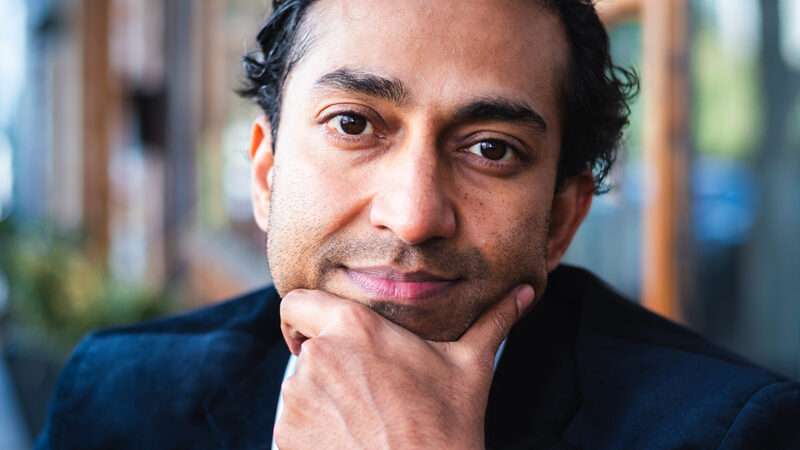
Vinay Prasad has been on both sides of the public health establishment. A physician, author, and professor at the University of California, San Francisco, he went from prominent COVID-era critic to Food and Drug Administration (FDA) insider when he was tapped to lead the agency's Center for Biologics Evaluation and Research in May 2025. His tenure there included an abrupt resignation in July 2025, a return a few weeks later, and his final departure in April 2026.
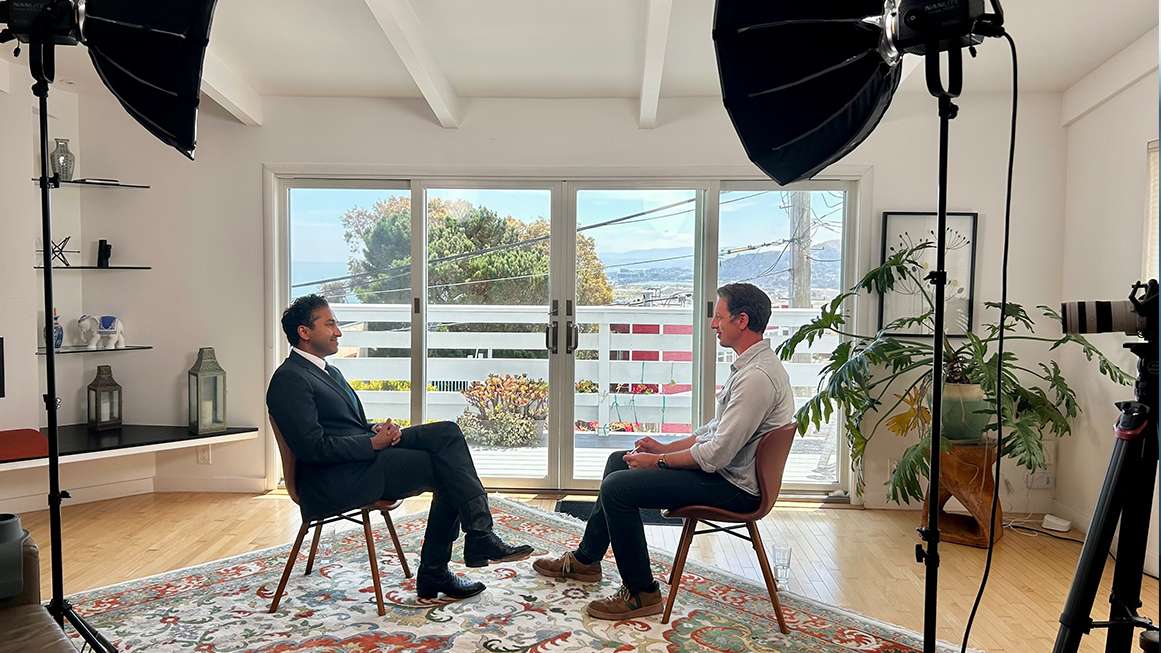
Prasad joined Reason's Zach Weissmueller in August to discuss what he learned from his time inside the FDA, what he was able—and unable—to change, and whether the agency can ever regain public trust. Their conversation ranges from Anthony Fauci and the origins of COVID-19 to vaccine policy, plus regulatory barriers, his growing sympathy for libertarian critiques of the FDA, and whether the agency is ready for an era of AI-driven medicine.
Reason: The FDA saw a clearing out of the old guard and a replacement with a new one—COVID dissidents such as yourself, former FDA Commissioner Marty Makary, and National Institutes of Health Director Jay Bhattacharya. What was that like? Did you have any misgivings about stepping away from academia and your role as an outside critic to join the public health bureaucracy?
Prasad: Maybe we changed 4 percent, 2 percent of the FDA. The FDA is an 18,000-person agency. There's tens of thousands of people still there. Before Marty, the commissioner, and I got there, DOGE [the Department of Government Efficiency] had just struck and they got rid of a couple thousand people. But the system is largely the same as it's always been.
There are critics of the COVID pandemic response and then there are critics. Although Marty, Jay, and I are critics of many aspects of the response, we don't go as far as some of the most extreme critics out there.
Am I glad I did it? Yes, I'm glad I did it. It was an adventure. It was a learning experience. I learned more in one year than I'd learned in the prior decade about how the world works. I'm glad to have improved some aspects of government, which I think will be enduring, and at least tried to improve other aspects of government, which may not be enduring.
Anthony Fauci personified the old guard. He's recently been in the news because he appeared before Congress and pleaded the Fifth after Sen. Rand Paul (R–Ky.) published his diary. What did those diary entries reveal to you about Fauci's character and about the way he operated?
Probably the greatest news story is that the mainstream media refuses to be honest about his legacy. Fauci was in his late 70s when the pandemic began. Had he retired at a ripe old age of 75, he'd be leaving behind a stellar legacy. But he continued. He pushed it. He stayed through the whole pandemic. He was the face of many things that his diaries get into, what he privately thought while he was publicly saying different things.
Fauci has not only been a proponent that the only answer to where the virus came from is a natural spillover event. He's gone further than that. He orchestrated a paper published in Nature Medicine called the "Proximal Origin" paper, written by a bunch of people who bolstered that point of view. He edited that paper before it was published. Then in public, he pretended like he didn't know those people; it was an independent group that validated what he was saying. Whereas in many respects, he puppeted that paper. The people who wrote that paper—Rand Paul has released their Slack channel messages showing they didn't really even believe what they were writing. Their messages reveal considerable ambiguity about lab leak vs. natural spillover event.
Photo: Paul Alexander
In terms of the origin, he also funded EcoHealth Alliance, which had a subcontract to Wuhan. He had a huge role in the origins and trying to frame the narrative, making lab leak—you couldn't even discuss it. Facebook put a ban on even talking about the topic. Then masking 2-year-olds. He played a huge role in that. Lockdowns, school closure. He said he didn't close any schools. In his own diary, he says, "I told [Mayor] Bill de Blasio, you need to close schools in New York City."
At some point, the man's got to take ownership over the decisions he did make and advocated for. When [Gov. Ron] DeSantis in Florida reopened schools in 2020, he went on every television show to say what a bad idea that was. Now, it's very clear—many of us said so at the time—school reopening was always the right decision. Maybe it could have been closed for a week or two, but certainly not beyond that. Fauci kept it closed much longer.
Vaccines make a lot of sense for elderly people who had not yet had COVID. But do they need to be given to a 4-year-old, a 7-year-old, a 12-year-old, a 22-year-old who'd already had COVID? This is where considerable ambiguity exists. But for Fauci, the answer was clear: You need all the shots. You need the initial series. You need a yearly booster. It doesn't matter how young you are or how many times you've had COVID. Fauci was wrong about almost every single pandemic policy he advanced.
Some of his defenders say to me, "At least he didn't tell people to drink bleach." And I said, "Is that the bar for a guy who's a doctor and a scientist?" Drinking bleach is not a good idea, but that's not the bar for a Fauci-level figure. He should be saying things that are correct. If they're not correct, he should be collecting evidence to weigh in. He did none of that.
Fauci's pardon stretches back to 2014, when he was authorizing funding in contravention of U.S. policy on gain-of-function research. Do you think he actually committed a crime?
Yes. The other thing about it is people will say, did that money go directly for this research? The money went for viral genomic research at a Chinese institute, very similar to the sorts of things we would be worried about. That was a crime for which he's been pardoned. It's not just my assessment. That's what Joe Biden's autopen thought, or whoever signed that pardon, that he committed a crime. That's why he has a pardon that goes that far back. It was a crime. Now that he's been pardoned for it, I don't know what you can do about it.
You rode in on this wave of anti-Faucism. What was your biggest hope for what a new version of public health might look like, or for the kinds of changes that could be made?
I had a very narrow mandate because I was just in charge of biologics at the FDA. The hope continues, which is that public health could aspire to be honest, to use its powers proportionately and judiciously, to exercise humility. Public health is far from these things. Public health could actually aspire to be bipartisan. Public health is not. It's becoming an increasingly entrenched left-wing discipline run by left-wing ideologues, reaching even more and more absurd conclusions. What public health can be and what it is are still light-years apart.
You don't think that has changed very much?
Not much at all. Changing an entrenched organization with tens of thousands of people is very difficult. There have been some changes. The pandemic has been a catalyst. But I don't think a real reform is possible. I suspect it'll splinter into different public health groups.
Your role was at the part of the FDA that oversees biologics, such as vaccines and gene therapies. Vaccines became an increasingly polarized and politicized issue during COVID. What was your goal specifically pertaining to vaccines when you took over after the pandemic?
The right drug given to the right person at the right time is lifesaving, but the wrong drug given to the wrong person at the wrong time can be harmful. Vaccines are the same way. You can't say anything about all vaccines, just like you can't say anything about Tylenol, aspirin, and Plavix all in the same breath. They're all very different drugs.
Is this the same phenomenon we observed during COVID, where you're either for the vaccine or you're against it, for a medicine or against it, without breaking things down by age, health, or other individual factors? Everything has to be flattened or compressed.
Same phenomenon. One-size-fits-all public health—where the shoe doesn't fit the guy with the big foot or the person with the small foot—is a completely wrong view of public health. COVID is a great example. An 80-year-old who's never had COVID, and we're talking about February of 2021, should they get a vaccine? Absolutely. A 7-year-old who's had COVID and we're talking about 2022? No, a healthy 7-year-old makes no sense. Public health is, in this country, so broken. It cannot appreciate these distinctions.
Something you've been writing about for a long time is poor experimental design in drug trials. Was that something you wanted to change when you came into the FDA? Do you feel like you made any progress toward that goal?
In one year, we did more than what our predecessors have done in a decade. You can look at just the sheer number of announcements and policy changes we made. We're talking a lot about one side of the coin, which is where the companies are not doing the right study to inform the American public. We're not talking about the other side of the coin, where the FDA is asking them to do things that don't make any sense at all, that burden them, that cost money, and that are wasteful. We did a lot of work in that space too. The FDA makes both errors. They also do a lot of things right, but they make both errors and they can get better.
You mentioned there were two sides of this FDA reform. One was raising standards for things like vaccines. The other was acknowledging how expensive and cumbersome it can be to get something approved in the United States. What were the biggest barriers you saw at the FDA on that side of the equation?
So many. During my time at the FDA, I was often sympathetic to the people who work at companies who told me about the hurdles they were forced to jump through. The FDA does two things: We regulate what's approved and can be marketed and sold on the U.S. market, but also what you can study.
Imagine you're a researcher and you want to study something. We're not talking about approving. You want to gather people together who may be interested in trying something new, have an informed consent, get them to volunteer, but they know that we don't know for sure it's going to work. We do so many things in that space, regulating what you can study and how you can study it, that I think are sensible. You don't want to let people sign up for something that's going to blind them or maim them. But some things that aren't sensible, that are overly burdensome, that are quality controls that don't make sense for small companies and super-rare diseases that don't have a huge budget to study these things. The regulation in this early side of research is tremendous in the United States. A lot of it is well-intentioned, but not all of it is fit for purpose.
You said that your time within the FDA made you somewhat more sympathetic to the libertarian critiques of the FDA.
I'm really sympathetic in one way: We tax people a lot of money to pay for healthcare in America—trillions of dollars. We're taking trillions of dollars from people's paychecks, from taxation, and we're taking it for this thing that we think is a benefit to people, which is we're going to offer a service that's maybe a human right, a societal good. Surely, the service we offer, we do have some of that stuff in there. If you have a heart attack, you go to the doctor here with or without insurance, they're going to open up that blockage. That's a great thing. But along with that package deal, we're going to insert a few things that may or may not work, that cost a lot of money. All that's doing is taking lots of money from taxpayers and redistributing it to the shareholders of those companies.
It's a huge financial system with the rare adverse event of helping someone's health. The libertarian comes along and says, "I'd rather not pay the tax—have more skin in the game, decide what's right for me. I'm the best person to decide how to use my own money." I do feel a sympathy to that point of view, because this system has so many places where it can be taken advantage of, where people get something that doesn't help that much, that only may kill without any possibility of benefit. And we take a lot of other people's money to pay for that.
Dario Amodei, the CEO of Anthropic, recently called out the FDA, and I'm wondering what you think of this. He wrote, "Regulatory systems were designed for a slower pace of innovation and we are not prepared for the deluge of new products and advances that AI will bring. AI may also make these downstream technologies safer and more predictable in a way that violates the skeptical assumptions of regulatory agencies like the FDA."
If Amodei is right about the effect AI is going to have on the field, do you think the FDA will be able to adapt?
I see kernels of truth in what he's saying, but maybe I don't go all the way he goes. Where I see the big core truth is the FDA tries to regulate AI itself, medical AI. You wear a watch that's supposed to give you information and the FDA wants to do a lot of that regulation. That's a very tough thing to regulate, because this technology is changing so much faster than our ability to judge it. I do agree with Marty and others who think that that's probably not the best role for regulating all the potential aspects of digital health and health AI. For instance, you can imagine the absurdity where I'm a doctor, I'm seeing a patient later this afternoon, should government regulate the apps I can use to learn about the disease or ask questions? Should it regulate open evidence? I don't think it should.
I spoke to a company called Doctronic that is acting as an AI prescriber in Utah, where AI is being allowed to refill prescriptions. That's another example of where these questions are going to have to be answered: Where does the government step in, and where does it step back?
Government is much more likely to get in the way of these kinds of innovations. It's changing so quickly. It's going to be very difficult for government to regulate that. You talk about drug discovery and drug science and those kinds of aspects of AI. If I was a pharmaceutical firm, I would definitely invest in AI. There's so many things around running clinical trials that we can do better with AI, help us run them cheaper and faster and more efficiently.
But when it comes to molecule discovery and basic science, I'm not as optimistic as Dario for a couple of reasons. One, a lot of the information that is fed into models about cancer biology is basically as close to fraudulent research as you can imagine. We're talking about like the Stanford president whose Western blots look Photoshopped kind of research. You got research that's not reproducible. It's not just my opinion. Many companies have taken samples of the literature and they tried to replicate it in their own labs and they have massive strikeout rates. If you train AI on garbage, what can it learn? It's only trained on inaccurate information. That's a challenge it faces.
The second challenge is AI will be happy to give you hypotheses to study, but you'll still need to run it with a few people to validate those hypotheses. I suspect the limiting reactant is not coming up with ideas; we have more ideas than we can study with people. The limiting reactant is getting the people to consent and manufacturing the products and those kinds of things.
I hope he's right. If he is right, it sounds like a great future. But I'm a little bit skeptical that he's totally right, because I think the biology of it is a lot harder.
Do you think enough has happened for people to start regaining trust in public health?
No way. I wouldn't trust it at all.
What still needs to happen for public health to legitimately earn back the trust of the public?
I don't know if it's even possible. It's so fragmented now. People tell you with a straight face, people I know, "Anthony Fauci, he made no mistakes. Literally, did the best job he could with the information he had." Then I said, let's just focus on one tiny thing. He did say you should take your 24-month-old kid and put a cloth mask on that kid all day in daycare. He said that. You don't think he had any clues at the time that that was a dumb idea? It's so obviously dumb, right? That's their position on every issue.
Public health is so myopic. It doesn't understand that you have to look at the whole issue. Isn't that a perfect analogy for COVID? Don't go outside. Just stay in your house all day. As if human beings don't need contact with other people and see face to face as if that doesn't matter at all.
Public health has not learned its lesson. The problem with public health is that they're completely politically captured now. Public health and the far left wing of the Democratic Party are synonyms. There's no political balance there. A little balance would go a long way. A little bit of open-mindedness would go a long way in public health. A little bit of humility to just admit a few things we got wrong in the pandemic.
The federal public health apparatus is still staffed with Robert F. Kennedy Jr. at the top and Jay Bhattacharya is still head of the National Institutes of Health. Is that not having some sort of trickle-down effect or creating a countercurrent within the system?
I don't know.
Don't get me wrong, I love Jay and I think Jay's heart's in the right place. He's already made some really important changes. I agree a lot with the kernel of Bobby's ideas. I agree with the kernel. I always say the kernel because I can think of a way that makes sense and I can sometimes think of ways it doesn't make sense.
But before I went to government, people told me that there is a fourth branch of government and it's the career state employees. I never believed that to be true, but now I'm certain that it's true. You have a lot of people who are in government. They tend to be in just three or four counties in one area, the blue pocket of America. They have strong views, and they really do a lot of the governance of this country. They make the decisions that regulate all of us in a way that's unaccountable to Congress and unaccountable to the president. I suspect they'll continue to stay. The COVID pandemic revealed to so many people that we made mistakes and that distrust in medicine and public health will just continue to grow and that there will continue to be more of these reckonings in the years to come.
How did working at the FDA affect your own confidence as a consumer in the regulatory system?
It gives me a little bit of pause sometimes. I like to trust but verify. I am cautious always with new therapies and particularly cautious that some safety information is being missed. It also makes me a bit more libertarian. I can imagine a system where we give people in America greater flexibility in what kind of products they can try. Maybe there's some third-party agencies, Consumer Reports–style agencies, that give different levels of quality and seals of approval of different products, and people can choose what they want and also have a little bit more skin in the game and use their own money. The moment you start to use your own money, suddenly tiny changes in surrogate biomarkers and elevated liver enzymes take on greater importance in a way that might not exist if you're using commercial insurance to pay for it.
Is it that you saw something inherent to the process that creates problems, holes, or gaps?
The fundamental idea that there's this one-size-fits-all balance where safety and efficacy is acceptable. What might be acceptable to you and acceptable to me might be different. I might want a little bit more efficacy information, a little bit more safety validation, and you might be willing to try more. The idea that a single monolithic government agency in the suburbs of D.C. can set that bar for every single person in America, that to me is a tougher pill to swallow now.
This interview has been condensed and edited for style and clarity.
Extreme heat across Europe during the summer of 2026 caused an estimated 50,391 deaths, according to new research examining mortality in 854 cities. Nearly two-thirds of the deaths were attributed to additional warming caused by human activity, principally greenhouse gas emissions from burning fossil fuels.
The findings, reported on 23 October, indicate that 32,619 people died as a consequence of temperatures intensified by human-induced climate change. The estimated total represents a 71 per cent increase compared with 2022, previously the deadliest summer in the researchers’ historical dataset, when 29,480 heat-related deaths were calculated.
The research builds on a long-term assessment of heat-related mortality, published in Nature Health on 14 October, which examined the impact of rising temperatures across European cities between 2000 and 2025. The latest estimates for 2026 extend that analysis to an exceptionally severe summer marked by successive heatwaves across much of the continent.
Italy, France, Spain and Germany among worst affected
The highest estimated death tolls were recorded in Italy, France, Spain and Germany, where prolonged periods of extreme heat placed considerable pressure on vulnerable populations and public-health services.
Approximately one-third of the deaths occurred between 17 June and 1 July, when temperatures in some affected areas exceeded seasonal averages by 5.3°C.
The scale of the June heatwave had already become apparent in preliminary national mortality statistics. As EU Today reported in July, France, Belgium and the Netherlands recorded at least 3,700 excess deaths during the early stages of the summer’s extreme temperatures.
Subsequent official assessments suggested that the mortality impact was considerably greater. According to France’s national public-health agency, at least 5,764 excess deaths were recorded during the heatwave between 17 June and 2 July, followed by another 1,243 during the period from 3 to 22 July.
These national figures measure excess deaths from all causes during heatwave periods and are not directly equivalent to the temperature-attributable mortality estimates in the European study.
The researchers also cautioned that their European estimates probably understate the total mortality burden. The 854 cities included in the analysis represent approximately 40 per cent of Europe’s population, while deaths associated with an earlier heatwave in May were excluded.
Climate change responsible for almost two-thirds of deaths
Researchers used established climate-attribution methods to estimate how many deaths would have occurred under natural summer conditions and how many resulted from additional warming associated with greenhouse gas emissions.
Their calculations compared observed temperatures with computer simulations representing a climate without human-induced global warming. The difference between the two scenarios provided an estimate of mortality attributable to climate change.
Clair Barnes, a climate scientist at Imperial College London and lead author of the research, said Western and Northern European infrastructure was not designed to withstand the temperatures now being experienced.
In some European cities, temperatures during the summer reached as much as 12°C above seasonal norms.
The researchers estimated that the proportion of heat-related deaths attributable to human-induced climate change has increased from approximately 45 per cent in the early 2000s to around 65 per cent today.
The findings are consistent with the European Commission’s assessment of rising heat risks, which identifies Europe as the world’s fastest-warming continent, with temperatures increasing at approximately twice the global average rate.
Elderly Europeans account for majority of fatalities
People aged 85 and above accounted for more than half of the estimated deaths, although the research also identified more than 800 deaths among adults aged between 20 and 44.
Extreme temperatures increase the risk of cardiovascular and respiratory complications, dehydration and heatstroke. According to the World Health Organisation’s assessment of heat-related health risks, older people and those with existing medical conditions face particularly serious consequences from prolonged exposure.
The findings also reflect the impact of high overnight temperatures, which prevent buildings from cooling and reduce opportunities for physical recovery after extreme daytime heat.
Researchers estimated that Belgium’s June heatwave caused 1,181 heat-related deaths, of which 665, or 56 per cent, were attributable to human-induced climate change.
The study found that climate change increased temperatures during the heatwave by approximately 3.9°C and more than doubled the estimated number of heat-related deaths. Its findings have not yet undergone peer review.
Belgium’s public-health authorities separately recorded 2,018 excess deaths during and immediately after the heatwave, the highest figure associated with any Belgian heatwave since monitoring began in 2003.
European governments face growing pressure to adapt
The latest findings add to concerns about the capacity of European healthcare systems, residential buildings and urban infrastructure to withstand increasingly severe summer temperatures.
The European Commission has warned that public-health systems across many EU and European Economic Area countries remain insufficiently prepared for extreme heat.
Researchers have identified improved early-warning systems, accessible cooling facilities, better building design and targeted assistance for elderly residents as measures capable of reducing mortality.
The new estimates also demonstrate the limitations of existing mortality records. Heat frequently contributes to deaths without being identified as the immediate medical cause, requiring researchers to use statistical models to calculate its wider impact.
The estimated 50,391 deaths therefore represent modelled heat-attributable mortality rather than individually certified fatalities. Nevertheless, the results indicate that extreme temperatures are becoming an increasingly substantial public-health risk across Europe, extending beyond Mediterranean countries into regions historically less exposed to prolonged summer heat.
The horrific story of Jane Doe and the Cornell Seven has spurred nationwide outrage and revived contentious debates around prevention and education. But one question is going unasked: Who really pays after a sexual assault? In terms of actual dollars and cents? The answer, Cosmopolitan finds, isn’t good:
Leah received an email from the first hospital. It was a bill for $3,338, including $663 for lab work and a pregnancy test she hadn’t asked for. She hadn’t been charged for the rape kit, but the price of just checking into the ER was $2,241. After her parents’ insurance was applied, she owed $451.06.
“I was so unbelievably angry,” she says. “I lost it. I was like, ‘You mean it cost me $450 to get raped?!’”
Most people don’t realize this care might not be covered, says Vega, who has worked as an emergency room nurse, emergency room director, and a SANE. But that’s actually common: KFF analyzed a sample of insurance claim data from 2016 to 2018 (the most up-to-date data KFF has) and found that 83 percent of women who received a sexual violence diagnosis were billed for treatment. Another analysis of emergency room department data from 2019 found that the average bill for sexual assault survivors was $3,551, according to the New England Journal of Medicine.
When Eric Leas, a public-health scientist, discovered packages of “magic mushroom” gummies for sale in a smoke shop, he wondered: Were these candies even legal? Had they been properly tested, and did anyone actually know what constituted a safe dose? This Aeon piece follows Leas down a rabbit hole as he investigates whether the Amanita muscaria products currently on store shelves are as safe as their candy-like packaging suggests.
I found a product with a very high reported amount of muscimol. It was a gummy product, one in a benign-looking package that did not have childproofing or clear warnings. I began doing the calculation no one wants to do. If a young child ate the entire package, mistaking it for candy, could they die? I took the reported amount of muscimol, the toxicology estimates (the LD50), a conversion used to translate dosing between species, and the average weight of a small child. The result looked bad. Bad enough that I did not quite trust myself. So, I called a friend, Matthieu Rouffet, a medicinal chemist and the dean of science at a local college, who does toxicology calculations more often than I do. I wanted him to tell me I had made an error. Instead, he was alarmed too.

 Login