Bo French said the presence of Indian American students at a football game was a “problem.” His campaign for Railroad Commission tests whether these biased views are now mainstream.
In the country with arguably the most successful market economy on Earth, it's not unreasonable to ask for just one major political party to favor a system of relatively unfettered voluntary exchange. And yet, the midterm elections offer Americans a "choice" between a party openly embracing socialism by name, and one that increasingly embraces state-directed economic activity in the cause of nationalism. Not every candidate running as a Democrat or Republican is on board with their parties' statist transformations, and there are certainly other issues separating the two dominant political tribes. But if you want reliable advocacy of economic freedom, you won't find it in the two major parties.
Open Socialism vs. Nationalist Economic Control
The shift in the Democratic Party's policy preferences from a heavily regulated market economy to outright government control has been well-documented, but it's worth noting Eric Bradner August report at CNN about "a growing list of victories by democratic socialists who are a prominent part of the Democratic Party's left-wing insurgency."
Before his election as mayor of New York City, Zohran Mamdani called for "seizing the means of production," as has congressional candidate Darializa Avila Chevalier. The Democratic Socialists of America (DSA), which backs many of the new breed of officeholders and candidates and organized their insurgency, boasts of its solidarity with the totalitarian regimes in Cuba and Venezuela. Just a year ago, it sent "a delegation of 40 DSA elected leaders and rank-and-file members" to Havana to learn "about the achievements and challenges of Cuban socialism."
At 65 percent support for socialism in Gallup polling, more Democrats favor a state-controlled economy than back capitalism (35 percent)—though the odd tie in favorability with free enterprise (also 65 percent, but declining) suggests the schools aren't doing a great job of explaining ideas.
Republicans nominally hold very different economic preferences, with only 14 percent favoring socialism, while 86 percent support free enterprise and 75 percent have positive views of capitalism. But when asked by CNBC's All-America Economic Survey whether government should have control of private businesses, "66% of Democrats found it not appropriate for the U.S. to take equity stakes in American companies, while only 34% of Republicans agreed."
That's likely because under the Republican Trump administration, the federal government has been grabbing a piece of the action from tech and resource firms—40 companies, at the current count—and party stalwarts are happy to go along so long as the S word isn't used to describe the arrangement. Instead, it's cloaked as top-down encouragement of domestic jobs and manufacturing.
Two Parties With a Similar Taste for Government Economic Intervention
"American political leaders on the left and right are rebelling against the market-first consensus that dominated Washington for four decades," concludedAxios's Courtenay Brown and Neil Irwin in July. "It's evident in everything from the Trump administration taking government stakes in dozens of private companies to socialist candidates winning Democratic primaries promising a more active government role in the economy."
A glimpse of a socialist future can be found not only in the rising tide of explicitly socialist Democrats, but in GOP heir apparent and Vice President J.D. Vance's repeated denunciation of free-market economic thinking and its emphasis on private choice.
"Do we serve pure, unfettered commercial freedom?" he asked in First Things in 2019. "Or do we serve something higher? And are we willing to use political power to actually accomplish those things?"
In a June interview with The Daily Wire's Michael Knowles, Vance returned to the topic to criticize the market-oriented ideas of economist Milton Friedman and called for a state-directed and Christian-infused "American developmentalist" approach to escape what he called "a hyper globalized economy."
"The policies supported by both major political parties suggest a growing embrace of state ownership of the economy," warns economist Daniel J. Smith for the American Institute for Economic Research. "The range of policies widely accepted as legitimate options, referred to as the 'Overton Window,' has shifted toward greater government direction of the economy, with some conservative politicians and voters now treating partial state ownership as an acceptable function of government."
Smith pointed out that the economist F.A. Hayek had observed this phenomenon among authoritarians of the right and left in the 1930s. It was why he dedicated his book, The Road to Serfdom, "to the socialists of all parties."
Rejecting Free Markets Means Losing Liberty and Prosperity
Why this is important is illustrated by Smith's recent research into the correlation, or lack thereof, between socialism and political liberty: "The record, from 1789 forward, is not ambiguous. High degrees of political freedom and heavy state ownership of the economy have not been sustained together."
Smith's observation is supported by the prominent socialist writer Robert Heilbroner's admission in his 1986 book, The Nature and Logic of Capitalism, that "political freedom in modern times…has only appeared in capitalist states." He added, "democratic liberties have not yet appeared, except fleetingly, in any nation that has declared itself to be fundamentally anticapitalist."
Also important, as the Fraser Institute's recently published Economic Freedom of the World: 2026 report points out, "economic freedom tends to be associated with better outcomes." Specifically, the report indicates strong correlations between free-market economies and higher GDP per capita, higher level of income for the bottom 10 percent of earners, lower poverty, higher life expectancy, and lower infant mortality. As with the sources cited above, the report found that "personal freedoms such as freedom of speech, association, and religion are highly correlated with economic freedoms."
So, the benefits of having a major political party that believes in and supports free markets with minimal government intrusion are found not just in expanded political choice, but also in policies that promote freedom, prosperity, and human well-being. Unfortunately, both the Democratic Party and Republican Party are retreating from economic liberty and embracing state control over how we produce, work, own, buy, and sell. Democrats' explicit embrace of socialism, and Republicans' dismissal of free markets in favor of state management and ownership, promise a future of less freedom and reduced wealth.
Maybe Americans would vote against socialism—both the open kind and the implicit nationalist variety—if given the choice. But it's increasingly difficult to find a free-market option on the ballot.
In an extensive conversation with EU Today publisher Gary Cartwright, Ukrainian-American lawyer and political commentator Askold Lozynskyj delivers a sharply critical assessment of Donald Trump, examines the possibility of a geopolitical bargain with Vladimir Putin and Xi Jinping, and explains why November’s American midterm elections could determine far more than the composition of Congress.
There is something peculiarly unsettling about a world in which the leaders of three nuclear powers might gather to discuss the future of smaller nations without troubling to invite the nations concerned. It is a diplomatic arrangement with considerable historical precedent, although not necessarily the sort that ought to inspire confidence.
For Askold S. Lozynskyj, a New York lawyer, former president of the Ukrainian World Congress and regular contributor to EU Today, the prospect of Donald Trump sitting down with Vladimir Putin and Xi Jinping raises precisely this concern.
His latest opinion piece, The Thug Summit, published on 23 October, presents an uncompromising interpretation of the proposed trilateral meeting in China. In a wide-ranging conversation with EU Today publisher Gary Cartwright, Lozynskyj expands upon that argument, moving from the peculiarities of Trump’s political personality to the constitutional foundations of American democracy, the future of Europe and the increasingly precarious standing of international law.
The resulting discussion is occasionally caustic, frequently humorous and consistently concerned with a question that extends well beyond the current occupant of the White House: how resilient are democratic institutions when confronted by leaders who regard constitutional constraints as inconveniences?
Watch the full interview with Askold S. Lozynskyj and Gary Cartwright below.
From the Oval Office to the Beverly Hillbillies
The conversation begins with Trump’s political ascent, which Lozynskyj regards as one of the more extraordinary developments in modern American history.
Buddy Ebsen as Jed Clampett in the American television comedy The Beverly Hillbillies. Credit: CBS Television / Wikimedia Commons (1969 publicity photograph; US public domain).
He recalls the incredulity surrounding Trump’s original presidential ambitions and questions how a politician whose personal conduct had attracted considerable controversy managed to secure such enthusiastic support among conservative Christian voters.
Cartwright introduces a lighter comparison, recalling a photograph of Trump surrounded by his senior advisers in the Oval Office.
The only person missing, he suggests, was Jed Clampett, the fictional patriarch of the American television comedy The Beverly Hillbillies.
Lozynskyj is not inclined to defend the administration’s sophistication. Yet behind the humour lies a more serious argument about the disappearance of independent-minded advisers and the consequences of political loyalty becoming the principal qualification for high office.
“Donald Trump is not a conservative. Donald Trump is a thug,” he declares.
It is an unequivocal assessment, characteristic of Lozynskyj’s commentary, although his criticism extends beyond Trump himself to the Republican Party’s willingness to accommodate his leadership.
The elections that could change Washington
Much of the interview centres on the American midterm elections scheduled for 3 November.
Lozynskyj predicts that Democrats will regain control of the House of Representatives and potentially transform the remainder of Trump’s presidency through congressional investigations, subpoenas and impeachment proceedings.
His prediction is emphatic, although the eventual balance of power remains uncertain.
Control of the House would give Democrats substantial investigative authority, although the president would retain his executive powers. Removing him from office following impeachment would still require a two-thirds majority in the Senate.
Nevertheless, Lozynskyj believes the elections could fundamentally alter Washington’s political atmosphere.
“They will tie up Trump like never before,” he argues.
Cartwright raises a more disturbing possibility: could Trump manufacture an emergency to postpone an election or otherwise attempt to prolong his presidency?
“I think he could try, but I don’t believe that he will prevail,” Lozynskyj responds, expressing confidence that America’s constitutional institutions would ultimately resist such an attempt.
The exchange moves naturally towards the events of 6 January 2021, presidential immunity and the effectiveness of the checks and balances upon which the American constitutional system depends.
Ukraine, Europe and the price of great-power diplomacy
For Lozynskyj, whose public career has been closely associated with Ukrainian interests, the implications of Trump’s foreign policy are particularly troubling.
His central concern is that negotiations among Washington, Moscow and Beijing could revive the notion that major powers possess an informal entitlement to determine the political and territorial futures of their neighbours.
In his opinion piece, he raises the possibility that Ukraine and Taiwan could become bargaining instruments in a wider geopolitical settlement. These are his warnings about potential outcomes, not established agreements between the three governments.
Yet his criticism of Washington is accompanied by considerable appreciation for Europe’s role in sustaining Ukraine’s resistance to Russia’s invasion.
“Without Europe, Ukraine could never have survived as long as it has survived,” he tells Cartwright.
He also ventures into the British debate over European integration, arguing that the United Kingdom should return to the European Union.
It is an intervention likely to provoke disagreement, but it reflects his broader conviction that collective institutions provide an essential counterweight to unilateral political power.
Democracy, disorder and the limits of authority
The discussion also examines political unrest in Europe, changing national identities and the relationship between elected governments and the populations they represent.
Cartwright points to social tensions in European cities and the growing importance of regional identity, including the independence debate in Flanders.
Lozynskyj approaches these developments through the history of democratic protest, citing Ukraine’s Orange Revolution, the Revolution of Dignity and more recent demonstrations over the independence of anti-corruption institutions.
For him, public opposition to governments is not necessarily evidence of democracy’s failure. It can also demonstrate that political authority remains subject to popular consent.
The conversation concludes with international law, the International Criminal Court and the difficulty of enforcing common rules when powerful states refuse to accept external constraints.
Lozynskyj’s observations are deliberately provocative, and his forecasts will be tested by events. But the interview offers something more substantial than another exchange of opinions about Donald Trump.
It is a discussion about the relationship between power and restraint, the responsibilities of democratic institutions and the uncomfortable possibility that the international order may be entering another period in which military and economic strength increasingly determine political outcomes.
As the United States approaches its midterm elections and speculation continues over a possible meeting between Trump, Putin and Xi, those questions are unlikely to disappear.
The full conversation with Askold S. Lozynskyj is available in the video above.
Senator Darline Graham, the South Carolina Republican, is struggling to replicate her late brother’s success. Republicans lead in the Florida Senate race and Democrats are up in Minnesota.
Health officials will now allow some levels of a powerful substance to remain in products marketed as natural. The change could help a G.O.P. donor facing wrongful death lawsuits.
It was a showdown of sorts in western Texas as James Talarico and Ken Paxton appeared at dueling rallies on either side of a prairie-dog-filled city park.
Polls Favor Democrats as the MAGA leader Ramps Up Campaigning to Help Republicans Retain Control of Congress.
U.S. citizens will head to the polls in one week for midterm elections that are shaping up as a referendum on President Donald Trump’s performance and will determine whether Republicans retain control of both chambers of Congress during the second half of his term.
Polls for the Nov. 3 elections point to a favorable outlook for the Democratic opposition, prompting Trump to throw himself into the campaign, with nearly daily rallies this week in key states.
According to an analysis by Decision Desk, based on polling averages, Democrats have a 79% chance of winning the House of Representatives, up 2 percentage points from last week, and a 57% chance of regaining control of the Senate, up 1 point from a week ago.
With the U.S. midterm elections approaching (November 3), the war involving Iran has driven up oil prices and the cost of living, making these issues a focal point ahead of the vote.
Republicans Set to Lose the House of Representatives
The House will see all 435 seats up for election for two-year terms. Republicans currently hold a narrow majority of 219 seats to the Democrats’ 214, meaning the opposition needs a net gain of three seats to take control.
According to RealClearPolitics’ polling average, Democrats hold a clear lead in House voting intentions, with 51.1% support compared with 42.8% for Republicans.
Over the past week, Cook Political Report has revised its forecasts in 19 districts in favor of Democrats, many of them in traditionally Republican states. The opposition is virtually assured of winning 220 seats, above the magic number of 218 needed for a majority.
Republicans face particular difficulties in Midwestern states that voted for Trump in 2024 but where dissatisfaction with his economic management, high gasoline prices and the U.S. war on Iran has grown.
It is common for the president’s party to lose control of the House in so-called midterm elections. This happened to Trump during his first administration, when Democrats took advantage of their gains to launch impeachment proceedings against him.
TRUMP DOESN'T WANT REPUBLICANS TO LOSE. HE'S TERRIFIED OF WHAT HAPPENS IF THEY DO.
Michael Tomasky's theory in The New Republic is provocative. It's also contradicted by Trump's own behavior.
Tomasky argues that Donald Trump secretly wants Republicans to lose the midterms… pic.twitter.com/u6mgoL8KSL
On Nov. 3, 35 of the Senate’s 100 seats will also be up for election. Republicans currently hold a majority of 53 seats to the Democratic caucus’ 47.
The opposition faces a somewhat more difficult path: It needs to wrest four seats from Republicans while holding on to its own to secure a majority in the upper chamber, which has among its responsibilities confirming Supreme Court justices.
According to polls, the race is close in seven states: Alaska, Iowa, Kansas, Maine, Michigan, Ohio and Texas. All the seats being contested in those states are currently held by Republicans, except for Michigan’s, which is held by a Democrat.
One of the races attracting the most attention is in Texas, long considered a Republican stronghold, where Democrat James Talarico now leads Ken Paxton, a Trump ally, by 1.8 percentage points, according to RealClearPolitics.
In Michigan, Abdul El-Sayed, from the Democratic Party’s more progressive wing, leads Republican Mike Rogers by 2.5 points. In Maine, Democrat Troy Jackson leads incumbent Republican Sen. Susan Collins by 1.2 points.
🚨WATCH: President Trump tells a crowd in Michigan it is “their fault” if Republicans lose the midterms
Polls have the Democrats ahead of the Republicans in both the Michigan gubernatorial and US senate races pic.twitter.com/YWhRwHixGa
In addition, 36 states will elect governors, with Democrats starting as favorites in 20 of them and potentially winning a majority of the country’s governorships for the first time since 2010.
Expected Democratic victories include those of Xavier Becerra in California and Kathy Hochul in New York, while Republicans Greg Abbott and Byron Donalds lead in Texas and Florida, respectively.
The race is much tighter in three states: Georgia and Nevada, currently governed by Republicans, and Wisconsin, governed by a Democrat.
In Alaska, Cook Political Report identifies Democrat Jonathan Kreiss-Tomkins as the favorite. His victory would mark his party’s first gubernatorial election win in the state since 1994.
Trump’s Popularity at Record Lows
Against this backdrop, Trump is entering the final stretch of the campaign, which will take him to Texas, Ohio, South Carolina, Florida, Kansas and Iowa in a last-ditch effort to mobilize his MAGA movement base.
A Reuters-Ipsos poll released Monday puts Trump’s approval rating at 32%, a slight rebound from the record low of 31% recorded last week.
A Cheesecake Factory jab from former President Obama quickly spiraled into a midterm spat between the GOP and Democrats as the competitive election cycle nears its end. Obama quipped during a recent campaign stop in Cleveland that President Trump has the White House “looking like Saddam Hussein opened a Cheesecake Factory, it’s just gold everywhere.”…
Retiring Sen. Tina Smith (D-Minn.) says that President Trump is “laying the groundwork” for MAGA allies to “steal” the Senate election after Trump said the federal government would be keeping an eye on the state. “He’s blatantly laying the groundwork to steal an election if his chosen candidate doesn’t win… Minnesota will not take kindly…
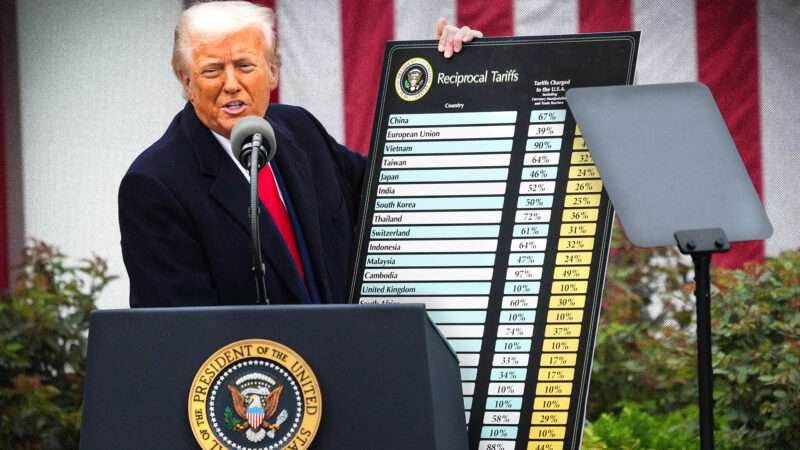
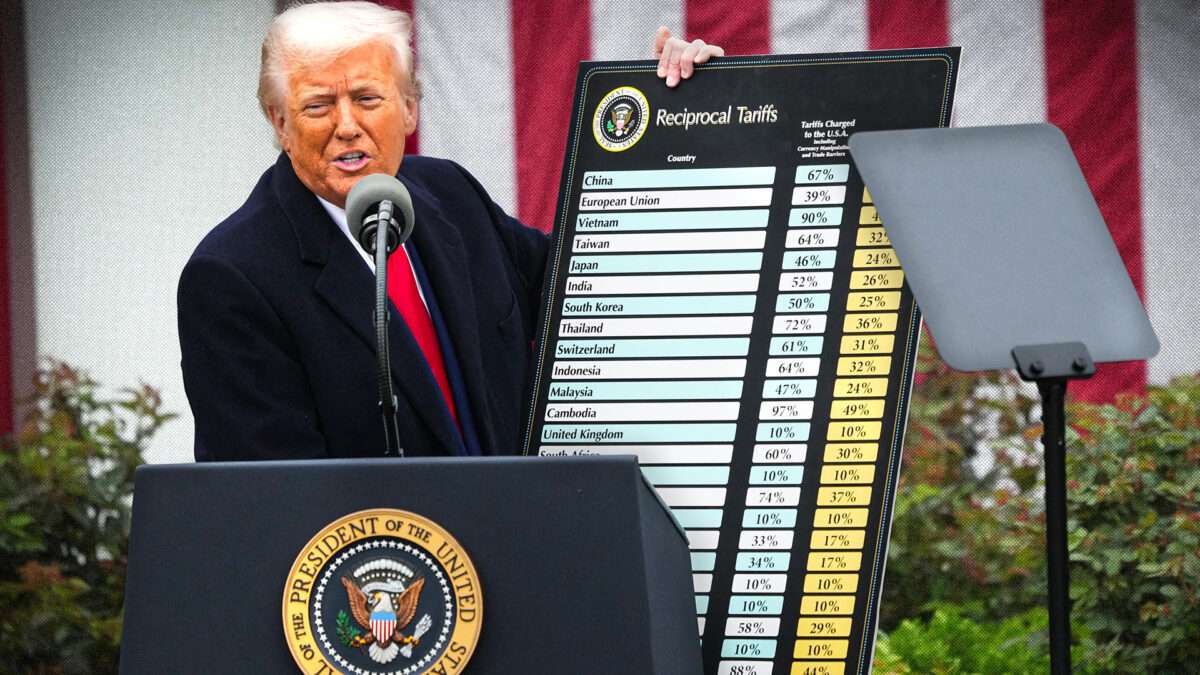
When the White House rolled back tariffs on coffee, fruit, beef, and farm equipment, it was effectively an admission that the tariffs were raising prices—and that Americans, not foreigners, had been paying for them.
Now, in the closing stages of the midterm campaign, the White House is once again rolling back some of those import taxes—and once again making an awkward implicit admission.
President Donald Trump's tariffs have become politically toxic.
The administration announced late last week that it would lift the 50 percent tariffs on some Canadian imports, apparently in an attempt to help Sen. Susan Collins (R–Maine) survive a tough reelection campaign in which the tariffs have played a significant role.
If this is indeed an attempt to sway voters in Maine, it is not a very convincing one. The Trump administration is removing tariffs on some agricultural and mechanical goods, as well as packaging and plywood, The Wall Street Journalreports. But Trump is also imposing new 50 percent tariffs on "other Canadian goods, including carpet, certain valves, and waste products."
Collins issued a statement thanking the White House for the changes. This is what members of the U.S. Senate have been reduced to—begging the president to cast his capricious, tariff-happy eyes toward products that will hurt people in other states more than in your own. (In fairness to Collons, she has voted repeatedly to roll back Trump's tariffs, but not enough of her fellow Republicans went along with it.)
Still, it's worth asking: What exactly is the pitch to voters here? Here's a tariff cut, now vote for Republicans so the president can continue to arbitrarily tax imports whenever the mood strikes?
It's easy to see why Trump's tariffs have become so unpopular. They are a huge and broad tax increase—the Tax Foundation estimates that 54 percent of imports are subject to Trump's tariffs, which are costing the average household about $1,000 annually—that was imposed without congressional authorization or popular support. They create more losers than winners, as downstream businesses and consumers pay the price for the protectionism offered to American manufacturers. Even the supposed "winners" of the tariff policy tend also to be "losers," since so much manufacturing depends on importing raw materials and intermediate goods.
Perhaps more surprising is how unwilling Republicans are to defend the president's signature economic policy. Or to even talk about it.
The Wall Street Journal's Greg Ip crunched the numbers and found that House GOP candidates have not run a single ad talking about the tariffs during this election cycle.
That silence speaks volumes. Trump says "tariff" is "the most beautiful word in the dictionary." But it is now "one of the most hated words in politics," writes Ip.
The only Republicans to mention trade or tariffs in a campaign ad, as far as I've seen, is former Rep. Mike Rogers, who is now running for the Senate seat in Michigan (and thus was not included in Ip's analysis). And he's calling for an end to the "tariff war."
There is a lesson here that hopefully will linger beyond the next week: If you support a policy that deliberately and unlawfully raises taxes and prices, voters will not reward you for it.
It's a lesson that the Republican Party learned long ago, but apparently forgot.
Against economists' advice, a Republican-led government in 1930 implemented a huge tariff hike intended to protect American farms and factories at the start of the Great Depression. Instead, those tariffs worsened economic conditions and triggered foreign retaliation.
When voters went to the polls in 1930, the first midterm after the Smoot-Hawley tariffs were passed, they registered their displeasure. The GOP lost 52 seats in the House that year. Two years later, an even larger landslide would sweep Democrats into power in Congress and the White House, ushering in the New Deal era that reshaped the federal government forever. The two lawmakers who lent their names to the legislation were among those who lost their seats, fittingly.
The most notable difference this time around is that Congress didn't actually pass a tariff bill. The trade barriers were instead imposed directly by the executive. Voters don't seem to care. Republicans were too cowardly to stand up to Trump's unilateral power grab, and now they seem too ashamed to try to defend that policy (and their largely complicit response) on the campaign trail.
As they say, those who don't learn from history are doomed to repeat it. And "doomed" may be a fitting way to describe the Republican majority in Congress right now, thanks in no small part to Trump's tariffs.
Democrats are targeting G.O.P. strongholds that could set them up for new majorities. But if they don’t win those races now, it could be a long time before they have another chance.
Protesters outside of an event for Senator Roger Marshall in Topeka, Kan. Soaring fuel costs and economic struggles have made some Republican senators like Mr. Marshall vulnerable on their home turf.
The president contended that Dr. Abdul El-Sayed, a Muslim, would “invite hordes of jihadis to our shores” as he sought to bolster the G.O.P. candidate in a tight Senate race.
President Trump’s comments, coming in a key midterm battleground nine days before the elections, underscored the dark themes and personal vilification he and his allies have embraced as part of their closing pitch.
On the trail, James Talarico, the Democratic Senate nominee, has increasingly gone after Mr. Musk, a critic of his who has given big to a group aligned with the Republican candidate, Ken Paxton.

 Login