A Amazon cortou cerca de 250 postos de trabalho nesta quarta-feira (28) em sua unidade de dispositivos e serviços, após semanas de lançamentos de produtos, incluindo novos leitores eletrônicos Kindle e tablets.
A empresa confirmou os cortes após uma consulta da Reuters.
“Tomamos a difícil decisão de eliminar um pequeno número de cargos”, disse um porta-voz, sem dar detalhes.
Os cortes afetaram no máximo 250 postos de trabalho, disse uma pessoa a par do assunto, principalmente na área de desenvolvimento de software.
As demissões ajudarão a empresa a “operar com mais eficiência e se alinhar melhor ao nosso plano de desenvolvimento de produtos”, disse o porta-voz. A Amazon também anunciou nesta quarta-feira um novo despertador e uma moldura digital equipados com a Alexa.
Como é costume na empresa, mensagens de texto e emails foram enviados aos funcionários na madrugada desta quarta-feira.
Uma das mensagens, vista pela Reuters, era de Cherie Robinson, vice-presidente de recursos humanos na área de dispositivos e serviços, informando que a empresa havia passado por “uma revisão completa de nossa estrutura”, o que resultou na necessidade dos cortes.
No início deste mês, a Amazon cortou cerca de 1.000 postos de trabalho em sua divisão principal de varejo. A empresa divulgará seus resultados financeiros do terceiro trimestre após o fechamento do mercado na quinta-feira.
¿En qué momento exacto dejaste de ponerte sandalias este año? Casi nadie lo decide. Un día amanece con la acera mojada y el pie pide algo cerrado. Para ese día, las Nike Vomero 18 son ahora mismo el mejor argumento que tiene Amazon.
No son las únicas Nike que salen ahora a cuenta, aunque no todas por lo mismo. Hay rebajas de verdad y hay precios que simplemente ya eran buenos. No es lo mismo, pero las dos cosas pueden valer la pena cuando el armario de verano se cierra.
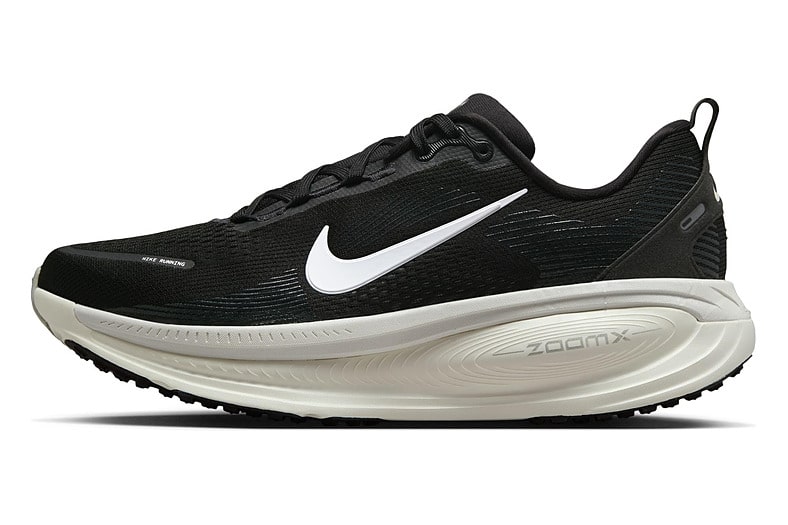
Zapatillas de running Nike Vomero 18 para mujer, en negro y crema
Las Vomero 18 son las zapatillas de Nike para rodar muchos kilómetros con el pie mullido. Son las de las tiradas largas del domingo y las de los días en que las piernas llegan cansadas a la segunda vuelta al parque.
Están pensadas para asfalto y llevan dos capas de espuma en la entresuela: una muy blanda arriba y otra con más rebote debajo. En la práctica pisas blando, pero sin esa sensación de hundirte cuando empujas para avanzar. La suela tiene un dibujo pensado para que el paso ruede del talón a la punta sin tirones.
Ahora están un 49% más baratas y nunca habían costado tan poco en Amazon. Es la rebaja grande del día, y en unas zapatillas de este tipo de amortiguación no es algo que se vea a menudo.
El color también juega a favor en esta época. El negro con suela blanca y toques crema aguanta el barro de octubre mucho mejor que los tonos claros del verano. Si lo tuyo son las series rápidas en pista, buscarás algo más seco, pero para sumar kilómetros a ritmo cómodo cumplen como un diez.
Zapatillas de entrenamiento Nike Air Max Alpha Trainer 6 en negro y antracita
Correr y levantar peso piden calzado distinto, y quien hace las dos cosas con el mismo par acaba notándolo en los tobillos.
Las Air Max Alpha Trainer 6 son de sala. Sujetan el pie y lo mantienen estable en sentadillas, saltos y circuitos, que es justo donde unas zapatillas de correr blandas se tambalean. La parte de arriba es de malla, así que respiran cuando la clase del jueves aprieta.
Bajan un 40% y es lo más barato que han estado en los últimos tres meses. Para alguien que va al gimnasio tres tardes por semana, es de esas compras que vas a hacer igual tarde o temprano. En negro con gris antracita, además, se disimulan con unos vaqueros a la salida.
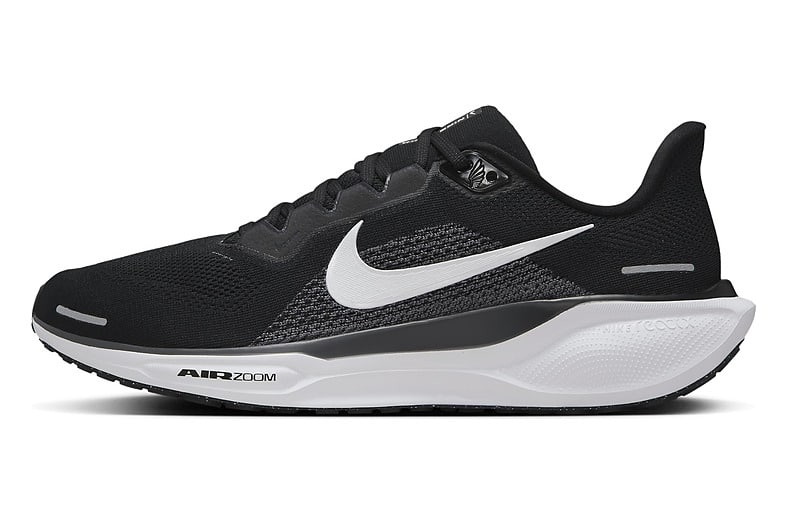
Zapatillas de running Nike Pegasus 41 en negro y blanco
Si las Vomero son para ir despacio y lejos, las Pegasus 41 son las de todos los días: 5 o 10 kilómetros antes de trabajar sin pensar mucho en lo que llevas en los pies. Llevan dos cápsulas de aire, una delante y otra en el talón, que dan una pisada con algo más de chispa.
Aquí no hay chollo que contar. Rondan su precio habitual de los últimos meses y entran porque se quedan por debajo de los 100 euros. Para unas Pegasus, que llevan tantas versiones como indica su número, es un buen sitio donde estar.
Para cuando no toca correr. Las Court Vision Lo beben del baloncesto de los ochenta. Tienen piel y piel sintética que se ablanda con el uso, piezas de ante y perforaciones en la puntera para que el pie no se cueza en la oficina.
En negro con blanco van con vaqueros, chinos y casi todo lo que saques del armario en noviembre. Se quedan por menos de 55 euros, lo más barato del último mes.
La que se lleva el otoño
Si corres y solo vas a comprar un par, que sean las Vomero 18: ahora cuestan menos que las Pegasus y son las que te dejan el pie mullido en las tiradas largas. Y si no corres, las Court Vision son el par que vas a gastar de lunes a domingo hasta que vuelvan las sandalias.
Los contenidos publicados en esta sección pueden incluir recomendaciones de productos y servicios que consideramos de interés para nuestra audiencia. Cuando el lector realiza una compra a través de los enlaces incluidos, podemos recibir una comisión. Esto no afecta al precio final ni condiciona nuestra selección de productos.
Amazon shifts AI focus to business impact, not just raw usage, in new developer guidelines.
The company warns that AI metrics can create bad incentives, including “tokenmaxxing.”
Managers are told to examine teams at both the highest and lowest levels of AI adoption.
Amazon just issued new guidelines for software engineers in the AI era: Prioritize business outcomes over raw usage.
Terk Terkowitz, Amazon's vice president and distinguished engineer, said in a memo published Tuesday that AI is changing software development more quickly and fundamentally than earlier shifts such as cloud computing. But engineers should be judged by their impact on customers and the business, he wrote, not simply how much they use AI.
"We all need to embrace this change and take the time to learn, or we risk being left behind," Terkowitz said.
AI coding tools and agents are upending the software industry and changing what it means to be a coder. Amazon calls this the "era of the Renaissance Developer," where human judgement and machine intelligence combine to create new products and services faster and more efficiently.
"This is a time of change for our industry, and a time of change for what it means to be a software engineer," Terkowitz wrote in the memo.
The updated guidelines reflect Amazon's growing effort to make AI adoption part of how it assesses engineers and engineering managers. The company has tracked measures including AI usage, token consumption, and lines of code internally, and used leaderboards to rank teams by some of those metrics.
But the memo warns that using such measures as targets can produce bad outcomes, including "tokenmaxxing" rather than better software or customer experiences.
"Using these metrics could, if used as a target instead of a measure, drive negative outcomes," Terkowitz wrote in the memo.
Amazon has been experimenting with ways to measure and encourage AI use across its engineering organization.
Earlier this year, the company was tracking engineers's use of internal AI tools and some teams used leaderboards tied to measures such as token consumption. The programs created friction among some employees, who worried that pressure to use AI could reward wasteful activity rather than productive work.
The new guidance offers Amazon's clearest public acknowledgment of that risk. Rather than lay out a detailed AI playbook that could quickly become obsolete, Amazon said its revised developer guidelines focus on long-term impact on customers and the business.
Still, the company said AI should be "at the center of software engineering practice" and urged engineers to incorporate the technology into their daily work.
Leaders are expected to use AI tools on production work themselves, understand where they help and where they fall short, and explain that judgment to their teams, according to the memo.
Terkowitz said Amazon has found that metrics such as token use, AI-tool adoption, and code reviews can correlate with the outcomes it values. But he said the measures must be used carefully. More token use can raise costs, while a focus on lines of code can create unnecessary complexity.
He also recommended that managers pay particular attention to teams at both ends of the AI adoption spectrum: those in the bottom 10%, to understand why they are not using AI effectively, and those in the top 10%, to determine whether heavier use is translating into faster delivery.
Terkowitz said Amazon's most AI-forward "frontier teams" have shown stronger productivity and delivery. He also said teams and individuals that are not adopting AI or increasing output metrics are falling behind.
But his memo left room for engineers whose work may not yet benefit from current AI tools. In those cases, he said, employees should document why and work toward a solution by sharing their findings with peers and managers.
"An engineer who can explain where AI does not yet help their work is demonstrating the judgement we are asking for," the memo said.
Panos Panay, head of Amazon's Devices and Services team
CHARLY TRIBALLEAU/AFP via Getty Images
Amazon launched a series of new devices this month, including Alexa tablets and Bee AI wearables.
Rising memory costs forced "difficult trade-offs" on Amazon's device prices, sales, and profit.
Amazon is seeking more Alexa revenue from enterprise sales, licensing, and ads.
Amazon launched a flurry of new consumer devices this month. Behind the scenes, rising memory costs are adding pressure to its already money-losing hardware business.
An internal planning document obtained by Business Insider shows Amazon forecasting a $612 million gross loss this year for its first-party devices business, compared with a leadership target of a $438 million loss.
The document said rising memory costs were "putting pressure" on the business's profitability, forcing "difficult trade-offs" among sales volumes, average selling prices, and gross profit.
The projected $612 million loss was at the gross profit level, meaning it did not account for all operating expenses, such as R&D, sales and marketing, and administrative costs.
The figures offer a rare glimpse into the pressure on Amazon's hardware business as it absorbs rising component costs. Other tech hardware companies, including industry leader Apple, face similar pressure from surging memory chip prices.
An Amazon spokesperson declined to comment.
A new wave of AI devices
Despite the pressure, Amazon continues to expand its consumer hardware lineup. Even if the company loses money on device sales, it can make money in other ways, such as subscription services, as more customers use its gadgets.
In October alone, the company introduced new Kindles, Alexa-powered tablets, Ring smart locks, and AI wearables under its Bee brand. The August planning document identified Bee and new smart glasses as strategic products still in an investment phase.
Amazon has historically used low-cost hardware to pull customers into a broader ecosystem of shopping and digital content. Rising component costs could make that strategy more expensive, forcing the company to raise prices.
The clearest shift is in Amazon's tablets. Earlier this month, the company phased out Fire tablets after 15 years and replaced the budget-friendly lineup with pricier Alexa Tablets powered by Alexa+. The new devices cost between $229.99 and $499.99, a notable increase from previous generations.
Not just Amazon
The planning document was prepared in August, the same month Amazon raised prices on products including Echo speakers, Kindle e-readers, and Fire TV devices.
The pressure extends beyond Amazon. Apple has raised prices on some Macs and iPads, while Microsoft and Sony have increased console prices. Dell, HP, and Lenovo also face higher memory costs.
The AI boom is helping drive the squeeze. Huge data center investments have increased demand for memory chips, while manufacturers have devoted more capacity to high-bandwidth memory used in AI servers. That has tightened supplies and raised prices for components used across consumer electronics.
Amazon is experiencing both sides of the boom. It expects roughly $220 billion in capital expenditures this year, largely to expand AWS data centers for AI demand, while higher component costs squeeze its consumer hardware business.
The rising cost of Alexa+
The August planning materials show Amazon reassessing both Alexa+ revenue and operating costs. They called for updated forecasts, expansion through enterprise sales and advertising, and more detailed AWS cost modeling.
Amazon is now confronting the cost of operating Alexa+ at scale. Business Insider reported in July that internal forecasts put Alexa+'s AWS cloud costs at roughly $1.7 billion in 2026, nearly triple the prior year's figure. Amazon was working to lower those costs by relying less on Anthropic's AI models and routing more requests to its own, cheaper systems.
A separate project called Moonraker, intended to give Alexa more advanced AI-agent capabilities, was projected to require more than $100 million in GPU spending this year. Amazon internally considered delaying or scaling back the initiative as one option for easing cost pressure, Business Insider previously reported.
Octubre devuelve las mangas largas y, con ellas, un detalle que en agosto daba igual: lo poco que asoma el reloj entre el puño y la mano. Asoma menos, pero cuando asoma tiene que cuadrar con el jersey, la camisa y el abrigo. Ahí el color del acero manda más que el logo. El Calvin Klein de acero negro lo resuelve por la vía discreta, y los otros dos tiran por caminos muy distintos.
Los tres son de cuarzo, de pila, de los que te pones por la mañana sin darles cuerda ni pensarlo. Lo que los separa es el acabado. El negro casi desaparece sobre la ropa oscura y el gris se deja ver algo más. El plateado con esfera azul es el de toda la vida, el que sale en las fotos de boda de media España.
Un reloj negro sobre pulsera negra se lee en la muñeca casi como una pulsera más. No pide atención, y por eso es tan fácil de llevar con ropa oscura. El acero lleva un baño negro (lo que las marcas llaman chapado iónico) y la esfera, también negra, tiene un brillo metálico que cambia con la luz.
Dentro caben tres esferas pequeñas que dan juego a la cara del reloj sin meterle ni una gota de color. La caja es grande, de 44 mm, así que en una muñeca fina se va a notar. Lo compensa el grosor: con 10 mm se cuela bajo el puño de la camisa sin hacer bulto.
Donde mejor queda es en el look oscuro de otoño: jersey de cuello alto negro, vaqueros sin lavar y chaqueta de cuero. Si encima va un abrigo camel, el contraste le sienta todavía mejor. Con un traje gris claro yo no lo pondría, porque se come el conjunto; con azul marino, sin problema. Es el más de temporada de los tres, aunque el negro sobre negro lleva años en las muñecas y no tiene pinta de irse.
Aguanta la lluvia y lavarte las manos con él puesto. Sale por menos de 130 euros, y para un reloj que vas a llevar a diario de octubre a marzo es dinero bien puesto.
Reloj cronógrafo Fossil Everett FS6107 en gris oscuro
Si el Calvin Klein se esconde, el Fossil Everett asoma lo justo. Su pulsera es de un gris oscuro tirando a plomo, el que en relojería llaman gunmetal, con la esfera gris a juego. No brilla como el plateado ni desaparece como el negro.
Funciona también como cronómetro y aguanta un baño en aguas poco profundas sin quitártelo. Con americana azul marino y camisa blanca está en su sitio, y el sábado con sudadera gris y vaqueros, también. Es el que mejor salta de la oficina al fin de semana, y se queda justo por debajo de los 150 euros.
Reloj Lotus 18670 de acero plateado con esfera azul
Este no es de temporada ni pretende serlo. El Lotus 18670 lleva años a la venta y su receta es la que nunca falla: pulsera plateada y esfera azul. Es el reloj de quien no quiere pensar en el reloj.
Va con camisa oxford azul y chinos beige, con traje azul marino, con un jersey de pico gris y vaqueros. Cuesta encontrarle un look en el que desentone, y en un reloj de diario eso vale más que cualquier detalle. La esfera azul es la que le quita el aire de reloj de comunión: sobre una camisa blanca pone el único punto de color de los tres.
Tiene la ventanita de la fecha, que se agradece cada vez que firmas algo y no sabes ni en qué día vives. También es el que más agua aguanta de los tres. Llega en su estuche, así que como regalo de Navidad está resuelto sin buscar caja.
Se queda por debajo de los 65 euros, menos de la mitad que cualquiera de los otros dos. Si solo pudiera quedarme con uno para los próximos diez años, sería este.
El color que ya tienes en el armario
Merece la pena si buscas un reloj que te dure todo el invierno sin cambiarlo según el día: el Calvin Klein para quien viste de oscuro, el Fossil para quien pasa de la americana a la sudadera sin mirar la muñeca. Y si el reloj es para otra persona y no conoces bien su armario, el Lotus es el que menos riesgo tiene de quedarse en el cajón.
Los contenidos publicados en esta sección pueden incluir recomendaciones de productos y servicios que consideramos de interés para nuestra audiencia. Cuando el lector realiza una compra a través de los enlaces incluidos, podemos recibir una comisión. Esto no afecta al precio final ni condiciona nuestra selección de productos.
Members of the European Parliament are visiting Amazon logistics centres in Germany and Poland this week to investigate working conditions and the use of digital monitoring systems, reopening a dispute between the technology company, European legislators and trade unions over employee rights.
The fact-finding mission, scheduled for 26th and 27th October, will examine how Amazon organises work, measures employee productivity and uses automated systems in warehouses. MEPs will meet management, employees, works councils and trade union representatives, with particular attention to whether technological changes are affecting workers’ health and their ability to exercise employment rights.
The investigation comes as the European Commission prepares its Quality Jobs Act, which is expected to address algorithmic management, occupational safety and working conditions across the European economy. Amazon’s extensive logistics network makes the company a prominent example of the questions legislators must resolve.
MEPs enter warehouses after prolonged dispute
The delegation is led by Li Andersson, chairwoman of Parliament’s Employment and Social Affairs Committee, and includes Belgian MEPs Liesbet Sommen and Estelle Ceulemans, alongside representatives from several other political groups.
According to the European trade union federation UNI Europa, MEPs will inspect facilities in Dortmund and Mönchengladbach on Monday before travelling to Poland on Tuesday.
The German visits will cover older warehouse operations and newer facilities incorporating robotics, allowing parliamentarians to compare different approaches to handling orders and managing employees. The Polish programme includes a major returns facility in the Katowice area.
The visit follows several years of strained relations between Amazon and the European Parliament.
In February 2024, Parliament withdrew permanent access badges from Amazon representatives following disagreements over the company’s participation in hearings and requests for visits to its warehouses.
Amazon disputed suggestions that it was avoiding scrutiny, maintaining that it had offered alternative arrangements for parliamentary visits during periods when its logistics operations were particularly busy.
Company executives eventually appeared before the Employment and Social Affairs Committee in January 2026, where they defended Amazon’s employment policies and workplace practices.
The controversy over digital surveillance
At the centre of the dispute is the increasingly widespread use of electronic systems to monitor productivity.
Warehouse employees commonly use handheld scanners, while automated systems can help allocate tasks, coordinate movements and identify delays in processing orders.
These technologies allow employers to manage substantial logistics operations with considerable precision. They also make it possible to collect detailed information about individual workers’ activities throughout their shifts.
Trade unions argue that such monitoring can create unreasonable performance pressure, particularly where targets are adjusted automatically or workers cannot challenge assessments generated by software.
The concerns are not confined to Amazon.
A European Commission survey examined by EU Today earlier this month found that 42 per cent of surveyed smaller and medium-sized businesses already used artificial intelligence or algorithmic management systems.
However, 49 per cent of respondents expressed distrust of automated systems making decisions about employees, illustrating the distinction between using technology to support management and delegating consequential decisions to algorithms.
Previous regulatory action
Amazon has already faced formal European regulatory scrutiny over workplace monitoring.
France’s data protection authority imposed a €32 million fine on Amazon France Logistique in December 2023, announcing the decision in January 2024. The regulator concluded that certain employee monitoring practices were excessively intrusive and breached data-protection requirements.
The investigation examined the collection and retention of detailed information from warehouse scanners, including productivity indicators and periods of inactivity.
Amazon rejected the regulator’s conclusions and subsequently appealed the decision. The penalty therefore needs to be distinguished from any final judicial determination of the dispute.
The case nevertheless demonstrates that workplace monitoring falls within existing European privacy legislation, independently of proposals for new employment rules.
Amazon maintains that its warehouse technology is intended to improve operational efficiency, safety and the reliability of deliveries.
In its January parliamentary testimony, the company defended its investment in employee training and insisted that workers have the right to join trade unions.
It also pointed to engagement with works councils and employee representative bodies across its European operations.
Trade unions contest the adequacy of those arrangements, particularly in Germany, where the ver.di union has repeatedly sought a collective agreement covering Amazon employees.
These competing positions will form part of the parliamentary delegation’s assessment.
Implications for EU employment legislation
The Commission’s Quality Jobs initiative addresses several questions raised by the Amazon dispute, including algorithmic management, psychosocial risks and the effectiveness of collective bargaining.
Legislators must determine how far employers should be required to disclose the operation of automated monitoring systems, how employees can contest decisions and what safeguards should apply when performance targets are generated by software.
Rules must also accommodate legitimate requirements for stock management, security and workplace safety.
The parliamentary visit will not itself establish whether Amazon has breached employment legislation. It is a fact-finding exercise intended to inform future policy discussions.
Its importance lies in giving legislators direct access to warehouse operations and employee accounts before deciding how European labour law should respond to increasingly automated workplaces.
Cuento con más de ocho años de experiencia en medios de comunicación especializados en moda, belleza y estilo de vida. A lo largo de este tiempo he desarrollado una amplia experiencia en la investigación y evaluación de productos de consumo, analizando las características que realmente marcan la diferencia entre unas opciones y otras, con especial atención a la experiencia de uso y al valor que aportan al consumidor.
Para elaborar cada contenido, combino la revisión de información técnica, la consulta de fuentes especializadas y la prueba de los productos. Mi objetivo es transformar toda esa información en recomendaciones claras, rigurosas y fáciles de entender, para que los lectores puedan tomar decisiones de compra mejor fundamentadas.
An Amazon Web Services data center under construction in Sterling, Virginia. Virginia has the highest number of data centers of any state.
Anna Moneymaker/Getty Images
The AI boom is accelerating data center development across the US.
Even states with few data centers are attracting major hyperscale projects.
Here's how all 50 US states rank by their number of operational data centers.
The data center business is booming in the US, and some states are feeling it more than others.
Data centers, which house the computing machines that power digital services, have been around for decades. However, the amount of computing power required to fuel the AI boom has accelerated their development and brought the industry into the mainstream.
This ranking was compiled by analyzing data from Data Center Map, an industry source that maps data center locations around the world. It shows a snapshot of its US database as of October 2026. Business Insider limited this ranking to fully operational data centers.
Data Center Map compiles its data from multiple sources and mainly tracks cloud and colocation service providers. Each data center it tracks has to have an initial capacity of at least 10 cabinets. While some states have hyperscale AI data centers, others have relatively small operations.
Firstly, data center operators and service providers add their own listings to market themselves. Data Center Map also monitors external databases and manually identifies any missing operators. It also handles requests from users who identify missing or outdated listings.
There is no federal requirement for data centers to register in a central database, so the figures should not be interpreted as a complete census of every data center in the country. Data Center Map also says it has a "more limited coverage on enterprise and government data centers."
Last year, Business Insider created its own US data centers map, which included estimated power usage, as part of an investigation into the industry.
Here are the states with the most operational data centers, ranked from least to most.
50. Vermont
Stowe, Vermont.
Jim Espey/Getty Images
Number of operational data centers: 3
Vermont's three operational data centers are located in Stowe, South Burlington, and Williston. The state has a limited electrical grid, according to the Vermont Natural Resources Council.
49. Alaska
Anchorage, Alaska.
Jacob Boomsma/Getty Images
Number of operational data centers: 4
Half of Alaska's operational data centers are located in Anchorage. The University of Alaska Fairbanks said that the high cost of electricity and network connections are some of the challenges for data center buildout in the state.
48. South Dakota
Sioux Falls, South Dakota.
Lindsay Guido/Getty Images/iStockphoto
Number of operational data centers: 5
Most of South Dakota's data centers are in Sioux Falls. Lawmakers in South Dakota rejected proposals for industry tax incentives in 2026 while enacting new restrictions on electricity and water use, according to the South Dakota Searchlight.
46. Maine (tie)
Brunswick, Maine.
Photo Italia LLC/Getty Images/iStockphoto
Number of operational data centers: 6
Maine has data centers in Portland, Brunswick, and Bangor.
Maine's Gov. Janet Mills signed an order in April to establish a data center advisory council to advise on large-scale data center development.
46. Delaware (tie)
Wilmington, Delaware.
Bo Shen/Getty Images
Number of operational data centers: 6
Half of the data centers in Delaware are located in Wilmington.
Delaware Gov. Matt Meyer signed legislation in August requiring data centers to generate their own energy and cover infrastructure costs, WHYY reported.
44. West Virginia (tie)
Charleston, West Virginia.
Sean Pavone/Getty Images/iStockphoto
Number of operational data centers: 7
West Virginia's data centers are located in South Charleston, Bridgeport, Charleston, Star City, Petersburg, Nitro, and Berkeley Springs.
Having previously lacked the regulatory framework to approve or deny large-scale projects, Gov. Patrick Morrisey announced a data center development plan in August.
44. Rhode Island (tie)
Providence, Rhode Island.
Wirestock/Getty Images
Number of operational data centers: 7
All of Rhode Island's data centers are located in Providence.
The Providence Journal reported in April that one of the reasons Rhode Island has not been as attractive to data center developers is high energy costs.
42. Montana (tie)
Billings, Montana.
George Dodd/Getty Images
Number of operational data centers: 8
The majority of Montana's data centers are located in Billings.
Over half of Hawaii's data centers are in Honolulu.
The Honolulu Civil Beat reported that there are currently no hyperscale data centers in Hawaii.
41. Arkansas
Little Rock, Arkansas.
Brandon Olafsson/Getty Images
Number of operational data centers: 9
The city with the most data centers in Arkansas is Little Rock.
Google announced its first data center in the state, to be located in West Memphis, in 2025, while Avaio is developing a large-scale one near Little Rock.
39. New Hampshire (tie)
Manchester, New Hampshire.
ChrisBoswell/Getty Images/iStockphoto
Number of operational data centers: 10
Manchester has three data centers, while the rest are spread across seven different cities.
A proposed data center in Nottingham was withdrawn earlier this year following local opposition, the New Hampshire Bulletin reported.
39. Idaho (tie)
Boise, Idaho.
knowlesgallery/Getty Images
Number of operational data centers: 10
Four of Idaho's 10 data centers are located in Boise, followed by three in Coeur d'Alene.
Meta plans to operate a $1.2 billion data center in Kuna, which it broke ground on in 2022.
38. Louisiana
Construction underway at River Bend, Hut 8's AI data center campus in Saint Francisville, Louisiana.
Kathleen Flynn/Getty Images
Number of operational data centers: 12
The majority of Louisiana's data centers are located in New Orleans and Baton Rouge.
Meta is building its largest-ever data center in Richland Parish, which will house the multi-gigawatt AI cluster Hyperion.
37. North Dakota
Fargo, North Dakota.
gnagel/Getty Images
Number of operational data centers: 13
Four of North Dakota's data centers are located in Fargo, followed by three in Ellendale.
There are some large-scale data center projects in the state, such as Applied Digital's 280-megawatt campus near Harwood.
36. Kansas
Lenexa, Kansas.
Wirestock/Getty Images/iStockphoto
Number of operational data centers: 15
Nearly half of Kansas' operational data centers are located in Lenexa, which has seven of the state's 15 facilities.
Kansas is experiencing a surge in plans for large-scale data center development, including one by Dubai-based developer Damac Properties in Edgerton, Kansas, The Wall Street Journal reported.
35. Mississippi
Work continues on a data center being built by SpaceXAI in Southaven, Mississippi.
Brandon Dill / AFP via Getty Images
Number of operational data centers: 16
Six of Mississippi's operational data centers are located in Canton.
Amazon announced in April this year that it increased its total planned investment in its Mississippi data centers, including in Canton, to $25 billion.
33. New Mexico (tie)
Los Lunas, New Mexico.
Lily Kimei/Getty Images
Number of operational data centers: 20
Over half of New Mexico's data centers are located in Los Lunas.
Meta opened a data center in Los Lunas in 2019, which it has since expanded.
33. Connecticut (tie)
Stamford, Connecticut.
stockphoto52/Getty Images/iStockphoto
Number of operational data centers: 20
Connecticut's 20 operational data centers are spread across multiple cities, with the highest concentration in Stamford.
The Connecticut Mirror reported that lawmakers said the state's high electricity costs make it unattractive to data center developers.
32. Wyoming
Cows graze in the area where the Prometheus Hyperscale Data Center will be built east of Evanston, Wyoming.
Natalie Behring/Getty Images
Number of operational data centers: 22
All but two of Wyoming's data centers are located in Cheyenne, with the other two in Casper and Afton.
In 2012, Microsoft built its first data center in Cheyenne and has expanded its footprint there multiple times since.
31. Alabama
Dusk Over The Downtown Urban City Center of Huntsville Alabama
ChrisBoswell/Getty Images/iStockphoto
Number of operational data centers: 23
Huntsville has the most operational data centers in Alabama.
Missouri's 47 operational data centers are spread across eight cities, with Kansas City accounting for most of them.
Axios reported in September that most of Missouri's planned data center expansion is concentrated in the Kansas City metropolitan area, citing research by Cleanview.
21. Minnesota (tie)
Minneapolis, Minnesota.
GummyBone/Getty Images
Number of operational data centers: 47
Minnesota's 47 data centers are spread across 21 cities, with Minneapolis accounting for 15, followed by Eden Prairie, St. Paul, Shakopee, and Minnetonka.
Google announced earlier this year that it plans to build a data center in Pine Island.
20. Nevada
The Tahoe Reno Industrial Center. Several companies are building facilities in an area about 15 miles east of downtown Reno in this development project named the Tahoe Reno Industrial Center including data storage facilities from Switch. Apple is also building a data storage facility nearby in the Reno Technology Park (Photo by David Butow/Corbis via Getty Images)
David Butow/Corbis via Getty Images
Number of operational data centers: 51
More than half of Nevada's data centers are located in Las Vegas.
Switch has plans to expand its Citadel Campus at the Tahoe Reno Industrial Center, which the company says will have gigawatts of power capacity upon completion.
19. Indiana
A technician works at an Amazon Web Services AI data center in New Carlisle, Indiana.
Noah Berger/Getty Images via Amazon Web Services
Number of operational data centers: 51
Indiana's 51 operational data centers are spread across 11 cities, with Indianapolis leading and New Carlisle following.
18. Tennessee
Construction at an xAI data center in Memphis on April 25, 2025.
Brandon Dill for The Washington Post via Getty Images
Number of operational data centers: 53
Nashville has the largest concentration of Tennessee's 53 operational data centers.
Elon Musk's xAI describes its Colossus facility in Memphis as the world's largest AI supercomputer.
16. Michigan (tie)
Construction of a data center developed by Related Digital for Oracle and OpenAI in Saline, Michigan.
: Jim West/UCG/Universal Images Group via Getty Images
Number of operational data centers: 58
Michigan's 58 data centers are spread across 27 cities, with Southfield accounting for the most.
Part of the Stargate Project, Related Digital kicked off construction of a $16 billion data center called "The Barn" in Saline Township in June.
16. Colorado (tie)
QTS constructs a data center in Aurora in 2025.
RJ Sangosti/MediaNews Group/The Denver Post via Getty Images
Number of operational data centers: 58
There are 14 data centers in operation in Denver, followed by 11 in Englewood, 7 in Centennial, and 7 in Colorado Springs.
QTS is expanding its 65-acre data center campus in Aurora, Colorado, Colorado Public Radio reported in July.
15. Iowa
The "Edged Des Moines" data center nears completion in Altoona, Iowa.
Leon Neal/Getty Images
Number of operational data centers: 69
Altoona and West Des Moines are among Iowa's leading data center locations, alongside Council Bluffs and Des Moines.
Google has had a campus in Council Bluffs since 2007, recently invested in its expansion, and has also kicked off a new one in Cedar Rapids.
14. North Carolina
Meta's data center in Forest City, taken in 2010 when it was formerly a Facebook data center.
Rainier Ehrhardt/Getty Images
Number of operational data centers: 76
Charlotte has 24 data centers, the most in North Carolina, followed by Raleigh, Maiden, and Lenoir.
An Amazon Web Services construction project in Berwick.
Paul Weaver/SOPA Images/LightRocket via Getty Images
Number of operational data centers: 78
Pittsburgh and Philadelphia have the largest concentrations of operational data centers in Pennsylvania.
In 2025, Amazon announced plans to invest at least $20 billion in the state to expand its data center operations.
12. New Jersey (tie)
The Equinix NY5 data center in Secaucus, New Jersey.
Kena Betancur/Getty Images
Number of operational data centers: 78
Secaucus and Piscataway are two of New Jersey's main data center hubs, alongside Jersey City.
Equinix operates a 129,436-square-foot data center in Secaucus, known as NY5.
11. Florida
The HostDime data center in Eatonville, Florida, is north of Orlando.
Paul Hennessy/SOPA Images/LightRocket via Getty Images
Number of operational data centers: 113
Florida's 113 operational data centers are spread across 27 locations, with Miami accounting for the most at 33, followed by Tampa with 20, Jacksonville with 13, and Orlando with nine.
Data center provider HostDime has been based in the state since 2003 and is building a 100,000-square-foot facility in Eatonville.
10. Arizona
A QTS data center under construction in Phoenix in 2024.
Bloomberg/Getty Images
Number of operational data centers: 114
Phoenix contains 34 of Arizona's data centers, followed by Goodyear with 24, and Chandler with 17.
ABC 15 reported that companies such as Meta, Apple, and Microsoft all have campuses in Arizona.
9. Georgia
A QTS data center complex in Fayetteville, Georgia, in 2024.
Bloomberg/Getty Images
Number of operational data centers: 123
Atlanta has the largest concentration of operational data centers in Georgia, with 43 facilities, followed by Lithia Springs with 25 and Social Circle with 10.
The Sabey Data Centers' Seattle Data Center campus in Tukwila, Washington.
Bloomberg/Getty Images
Number of operational data centers: 132
Quincy has the largest concentration of operational data centers in Washington, with 33 facilities, followed by Seattle with 31, Tukwila with 16, and East Wenatchee with 11.
Washington's Department of Ecology says Quincy and Wenatchee are popular spots because they have cheaper, reliable energy.
7. Oregon
The Facebook Inc. Prineville Data Center stands in Prineville, Oregon, U.S., on Monday, April 28, 2014. The Facebook Prineville Data Center features leading energy-efficient technology, including features such as rainwater reclamation, a solar energy installation for providing electricity to the office areas and reuse of heat created by the servers to heat office space. Photographer: Meg Roussos/Bloomberg via Getty Images
Bloomberg/Getty Images
Number of operational data centers: 141
Hillsboro has the most operational data centers in Oregon, followed by Boardman, and then Umatilla and Prineville.
Oregon is home to Meta and Google's first-ever data centers: Meta built its in Prineville, and Google's The Dalles.
6. Illinois
A CyrusOne data center in Aurora, Illinois.
Bloomberg/Getty Images
Number of operational data centers: 143
Chicago has the largest concentration of operational data centers in Illinois, with 49 facilities, followed by Elk Grove Village, which has 24. Lombard, Aurora, and DeKalb each have seven.
The JPMorgan Chase data center in Orangeburg, New York.
Kena Betancur/Getty Images
Number of operational data centers: 149
New York City is home to a large share of the state's operational data centers, with additional concentrations in Buffalo and Albany.
In July, New York was the first state to enact an executive order that imposed a statewide yearlong moratorium on hyperscale AI data centers.
4. Ohio
The 5C Data Centers CMH01 on October 18, 2026 in Springfield, Ohio.
Michael M. Santiago/Getty Images
Number of operational data centers: 189
Columbus has the largest concentration of operational data centers in Ohio, with Johnstown, Hilliard, and Cleveland also home to significant numbers of facilities.
Intel announced plans in 2022 for a major semiconductor manufacturing facility in New Albany, a suburb in central Ohio known as the "Silicon Heartland," which is already home to data centers operated by Amazon, Google, and Meta, as Business Insider previously reported.
3. California
The Digital Realty SFO12 Data Center, center in the Rincon Hill neighborhood of San Francisco.
Stephen Lam/San Francisco Chronicle via Getty Images
Number of operational data centers: 285
Santa Clara has the largest concentration of operational data centers in California, with 75 facilities, followed by Los Angeles with 51 and San Jose with 26.
The Stargate Oracle AI data center under construction on August 26, 2026 in Abilene, Texas.
Brandon Bell/Getty Images
Number of operational data centers: 358
Of Texas's 358 operational data centers, 58 are located in Dallas, 42 in Houston, and 39 in San Antonio.
Earlier this year, Business Insider, citing research from Jones Lang LaSalle, reported that Texas is on track to become the largest data center market in the world by 2030.
Texas is home to some of the world's largest planned data center projects, such as Fermi America's Project Matador.
1. Virginia
An Amazon Web Services data center in Aldie, Virginia.
L’uso sempre più massiccio dell’intelligenza artificiale comporta una richiesta di maggiore potenza di calcolo da parte dei server. Per questo i colossi della tecnologia hanno iniziato a varare strategie di lungo termine per provare a rendere autosufficienti, e in parte anche ecosostenibili, i propri centri di calcolo.
Per garantire un flusso costante di elettricità ai propri data center, Amazon ha annunciato un piano legato allo sviluppo di 12 reattori nucleari modulari di nuova generazione negli Stati Uniti, realizzati in partnership con la società X-energy e con l’utility American Electric Power.
Cosa sono i reattori modulari e l’intesa con X-energy
I reattori scelti dal gruppo di Seattle, che saranno costruiti sulle rovine di una vecchia centrale a carbone, appartengono alla categoria degli Small Modular Reactors, impianti che hanno dimensioni e potenza più contenute rispetto alle centrali tradizionali. La loro struttura componibile nasce teoricamente per abbattere i tempi di cantiere e modulare l’energia erogata in base al fabbisogno delle infrastrutture vicine. Modelli simili dovrebbero essere costruiti nei prossimi anni anche in Italia.
L’intesa rafforza il legame tra Amazon e X-energy, azienda guidata dal fondatore Kam Ghaffarian in cui il gigante dell’e-commerce ha già investito 700 milioni di dollari. L’obiettivo dichiarato dalle due società è l’installazione di impianti modulari per una capacità complessiva di 5 gigawatt entro il 2039.
I data center in Texas e il ruolo dell’intelligenza artificiale
Per comprendere l’entità dei consumi energetici in gioco occorre guardare ai territori a più alta densità digitale. In Texas si trova uno degli hub chiave per la rete di Amazon Web Services, dove il gruppo conta 3 grandi data center attivi coordinati nell’area di San Antonio.
Queste strutture svolgono una duplice funzione:
l’erogazione dei servizi cloud ordinari per la gestione dei dati e dei sistemi di vendita delle imprese.
l’elaborazione ad alta densità per i modelli di intelligenza artificiale, che richiedono un’erogazione continua di energia per mantenere operativi i processori in parallelo.
L’incognita dei tempi e dei costi
La scelta di puntare sull’energia atomica nasce dalla necessità di alimentare i server con continuità, senza ricorrere ai combustibili fossili. Tuttavia, la sostenibilità economica e industriale del progetto risiede tutta nell’effettiva realizzabilità dei mini-reattori nei tempi previsti, che si auspicano più brevi ed economici dei reattori tradizionali. In effetti, la tecnologia degli Small Modular Reactors rappresenta una frontiera industriale ancora priva di uno storico consolidato su larga scala.
Il successo delle scadenze fissate da Amazon dipenderà infatti dall’esito del primo impianto pilota che X-energy sta sviluppando a Seadrift, sempre in Texas, che dovrebbe essere pronto entro il 2030. Quel cantiere rappresenta il vero banco di prova sia sul piano dell’efficienza dei costi, sia su quello delle autorizzazioni ambientali legate alla gestione delle risorse idriche.
This week's cyber freakout explained: AI is making software weaknesses easier to find and exploit.
The message from Cloudflare's Stephanie Cohen and Vercel's Tom Occhino: Don't panic!!!
Do we need everything connected to the internet? Paper bank statements work well.
A few weeks ago, I heard a strange story about a friend who works at one of the Big Tech companies in Silicon Valley.
She'd recently ripped out the connected devices in her home, ordered paper bank statements, and stocked up on canned goods in her basement.
Now, she's a very sane, experienced person, and quite senior at one of the largest internet companies on earth. Why was she disconnecting so much? Just to be sure, my family ordered paper bank statements, too. It was still a head-scratcher, though.
Fast forward to this week, and her actions look a little less crazy.
The digerati have now entered full freakout mode. Much of the internet meltdown is happening on, well, the internet, my colleague Alice Tecotzky noted.
On X and Reddit, warnings of a looming “Black October” spiraled into visions of AI grinding civilization to a halt. One lengthy post on X warned of a potential “global cyberattack/AI swarm” and offered a survival checklist: Stockpile cash in small bills, print out your neighbors' phone numbers, download maps, buy a hand-crank radio, and stash a gallon of water per person per day.
Oh, and don't forget the manual can opener. You don't want to survive the AI apocalypse only to be defeated by a tin of beans.
Nikita Bier, a prominent app developer and former head of product at X, best captured the mood.
"The world is a little bit scary right now," she told me on the side of Cloudflare's annual conference in San Francisco this week.
Here's the problem. The internet is built on decades of software, much of it riddled with security holes.
Some of these weaknesses have been known for years. However, fixing them takes time and money, and hackers often lacked the skills to exploit them anyway. So they were left alone.
AI changesthat calculation dramatically. Someone who previously needed years of training to break into a computer system can now get help from an AI model. And these tools can search for weaknesses at a speed humans simply can't match.
Now, there's a frantic race between people trying to break into systems and those trying to protect them.
Don't panic about AI
Cohen's message, though, was surprisingly reassuring.
AI helps the good guys find and fix these problems. Cloudflare, for instance, released protections for the latest vulnerability to customers, including those using its free service.
And there's a bigger effort underway.
OpenAI has launched an initiative called Patch the Planet, working with Cloudflare and other security professionals to use AI to find weaknesses in widely used software and help repair them.
Tom Occhino, chief product officer at Vercel, told me recently that his company has been talking with partners about launching a nonprofit that would fund a swarm of good AI agents that go out on the internet to find and fix software flaws.
Amazon is joining the fight, too. Its new Continuum service, available Thursday, uses AI agents to find security holes and propose fixes. Amazon said that people maintaining freely available software can use it to help protect the wider internet.
Humans may still have to check and approve these repairs, but the prospect of AI helping clean up decades of neglected software is encouraging.
The irony of this is not lost on some in the industry.
"The funny thing is everyone was saying AI slop code will cause a cyber crisis but it's actually all the old human slop causing it and the AI is just cleaning it up," software engineer Ben Kaufman wrote on X on Thursday.
Either way, Cloudflare's Cohen thinks these AI-inspired freakouts will push the industry to do better — by exposing issues and adding urgency to get them patched.
"We may end up in a world where actually we've become significantly more secure at the end," she said.
The trouble is getting there.
A fundamental question about the internet
Tom Occhino (left), chief product officer at Vercel, talks with Meta executive Prashant Ratanchandani at Vercel's Ship SF conference.
Alistair Barr/Business Insider
When I ran into Occhino recently at a Vercel conference in San Francisco, he described a world in which software that everyone assumed was safe suddenly looksvulnerable because increasingly capable AI models are scrutinizing the basic systems that underpin the internet.
That led to a more fundamental discussion between us: Why did we connect so many things to the internet in the first place?
For years, the technology industry has raced to put everything online. Thermostats. Refrigerators. Doorbells. Cars. Bank accounts.
We assumed that connecting something to the internet automatically made it better.
Perhaps we should reconsider.
Before the internet
I remember the world before the internet. It worked pretty well. We managed to buy groceries, pay bills, heat our homes, and generally get through the day without every appliance talking to a computer somewhere.
That doesn't mean abandoning online banking or throwing your smartphone into the sea.
Occhino, for one, isn't particularly worried about hackers wiping out his bank account. Modern banks have sophisticated protections, and he recommends everyone turn on additional login security.
Maybe the cybersecurity crowd, which spends its life immersed in online threats, is missing something obvious.
Not everything needs to be connected.
Occhino put it neatly: "There's certain things that don't make sense to be on the internet in the first place."
Perhaps that's the lesson from this week's panic. We don't need to turn off the internet.
Hungarian artist Peter Weiler wanted to test a new platform called RentAHuman: the website’s slogan is “physical labor for AI” and it is designed for artificial intelligence agents to hire people to do jobs. Weiler wanted to test the platform and offered money for a person to hold a sign in a square in downtown Budapest that read in Hungarian and English: “An AI hired me for this job.” Last Thursday someone did that job for two hours for a fee of $70.
Artificial intelligence is also making its way into the world of books. EL PAÍS examined the use of AI in a sample of 119 popular books published in 2025 and 2026, analyzing titles that appeared on the bestseller lists at Amazon.es and the Spanish bookstore chain Casa del Libro, as well as the winners of a major literary prize.
They aren’t made of asphalt, have no traffic lights, and no cars drive on them. Yet, these unusual “highways” are already saving thousands of lives. In the Brazilian Amazon, conservationists have built rope bridges high up in the trees, allowing monkeys, sloths, and other jungle inhabitants to safely cross over the roads. The results are […]
The 18th-century notion of the panopticon — a circular prison design with a guard station in the middle, allowing a single officer to enforce discipline by keeping watch over all the prisoners — has become real in the 21st century through AI-driven surveillance against workers: It’s the Amazon warehouse.
It should be no surprise that the company that harnessed technology to create a vast, $2.7 trillion empire would employ the same sophistication to enforce workplace discipline and tamp down insurgent unionization efforts. A recent disclosure of Amazon’s internal “employee relations” documents reveals just how extreme Amazon’s methods of warehouse surveillance and control have become.
Amazon employs what it calls the “Atlas” model, inputting into a computerized model a staggering amount of information on workers, their thoughts and behaviors, the workplace environment, and myriad other factors — “hundreds of data points,” according to the company. Atlas produces not just a granular measurement of ongoing worker unrest, worksite by worksite around the world, but also a prediction model for future organizing. It’s like the “precrime” police in the film Minority Report who use psychic powers to identify and apprehend would-be criminals before they act — except in this case, it’s an AI-driven tool used by the billionaire owners of one of the richest companies in history to head off rebellion among its low-wage workforce. And this is not Tom Cruise play-acting; it’s very real.
Workers anywhere who have endured anti-union campaigns can relate to stories of overbearing surveillance by management; the Atlas model, however, takes the spying to an entirely new level.
Details of the Atlas model came to light recently as a result of a legal dispute between Amazon and Unifor, the Canadian private sector union. Last year, British Columbia’s Labour Relations Board awarded union certification to Unifor at Amazon’s YVR2 warehouse outside Vancouver, finding that the company had broadly interfered in the union drive. It was the second union certification at Amazon in North America — the other being the 2022 union win at JFK8 in Staten Island, New York. But in contrast to the U.S., where Amazon has managed to stall bargaining for four and a half years because of weak labor laws, the B.C. Labour Relations Board ordered Amazon to recognize the union and negotiate. Contract bargaining commenced last December.
Not surprisingly, Amazon has dragged its feet in negotiations, prompting the union to file unfair labor practice charges with the Labour Board. Following a series of hearings earlier this year, the Labour Board found that Amazon violated provincial law. In August it ordered a remarkable step — first-contract arbitration at YVR2. That fight remains in play, but as a result of the legal proceedings, Amazon was required to turn over documents to the Labour Board and Unifor. Unifor has shared them with Truthout, and they can be viewed here.
Atlas produces not just a granular measurement of ongoing worker unrest, worksite by worksite around the world, but also a prediction model for future organizing.
In addition to the Atlas model revelation (beginning on Page 19 of the document), the material includes more than 100 pages that reveal in great detail how Amazon trains its frontline managers in union-busting. My colleague at the Center for Work and Democracy, Ben Fong, has written about this other portion of the disclosed material.
“Amazon’s own documents pull back the curtain on what workers have been telling us for years,” said Justin Gniposky, Unifor’s organizing director. “Behind the friendly PR, Amazon sees workers as property and treats their fundamental right to unionize as a threat to be managed and then eliminated.”
Amazon did not respond to Truthout’s request for comment on the Atlas model.
The documents describe the Atlas model as “a labor risk framework to clarify how Amazon evaluates emerging workforce issues, labor union targets, and internal or external labor threats.” The Atlas model ingests hundreds of data points: employee trainings completed; health and safety incidents, from simple first-aid cases to serious injuries; feedback from workers on management; worker tenure and turnover; the proximity of a warehouse to another workplace experiencing union activity; local minimum wage rates and other area economic conditions; and even the temperatures inside and outside of the warehouse.
Amazon seems especially thorough about scraping data from worker communications channels to plug into the Atlas model — the company’s internal “Voice of the Associate” (VOA) electronic bulletin board, the answers to digital questions posed daily to workers, and externally, forums including Reddit — “to understand the tenor of the discussion at the site level,” according to the documents.
“Behind the friendly PR, Amazon sees workers as property and treats their fundamental right to unionize as a threat to be managed and then eliminated.”
Atlas uses AI to identify phrases and “common keywords” to allow managers to do a “deep dive into the worker population driving the discussion.” Atlas also looks at the upvotes or other responses — positive, negative, or neutral — that the comments elicit, and the volume of those worker reactions. All of these data points go into Atlas and let managers “look around corners to identify developing themes” so they can “tailor strategic responses for addressing emerging risk.”
Amazon also tracks and documents all organizing activities that managers detect, and records them under the category of “employee relations events.” Each activity is assigned a severity score. “High severity” events include employees signing union cards, delegations of workers approaching management with demands, protests, sickouts, and work stoppages.
Atlas uses mathematical modeling to create a point system for all these data points, assigning a “labor score” to each workplace. The scale is further broken down into tiers, with the Tier 5 designation applied to facilities with high scores, where there is “no immediate perceived risk,” and Tier 1 applied to facilities where “future activity is imminent.” Amazon’s union busters focus largely on Tier 1 and 2 facilities.
Atlas produces extensive spreadsheets ranking different facilities and looking not just at raw “labor scores” but also at monthly trends. In 2024, the year the documents date from, Amazon was most concerned about union activity at 16 warehouses it had ranked as Tier 1. For instance, at LDJ5, a Staten Island sortation center across the street from JFK8, Atlas noted that leading issues of worker concern were “bathroom breaks, equipment, rest breaks, leadership/management, temperature.” The spreadsheet noted that “internal activists” — workers — were organizing, and that by looking at month-over-month trends, LDJ5 was experiencing “Risk Increase,” with the phrase placed inside a bright red box. At four of these Tier 1 facilities, the spreadsheet noted, the threat of union activity was sufficiently high to justify deploying Amazon’s “rapid response” team: union busters who travel to hotspots of organizing throughout Amazon’s global network.
Union organizing at Amazon is not just a battle over economics; it’s also a fight for basic freedom and democracy.
But the main value of Atlas seems to be predictive. For the Tier 2 worksites (“future activity is highly probable”), the spreadsheet poses these questions: “Which sites are showing the most future risk that are not Tier 1 sites yet?” and “What is the risk in each business line and which has the most risk, is it increasing or decreasing? What is driving the risk?” Tier 2 spreadsheets in the document look at the number of investigations of workers that management has handled in the last month, whether that number is trending up or down, the number of worker appeals of those investigations, and — notably — the percentage of negative worker comments on internal bulletin boards.
Voice of the Associate and other internal bulletin boards are key focal points. Charts in the document track how often workers raise particular topics, like weather, time off, breakroom amenities, management treatment, and restroom cleanliness. They also analyze the “vector” of each issue: “What are the top drivers of negative Sentiment and change MoM [month over month]?” is one question posed in the document. “What Sites are spiking MoM in negative sentiment? What themes are driving the sentiment? What anecdotes can we pull?”
Atlas is not strictly a North American tool. One chart analyzes trends for warehouses globally, documenting “employee relations events” — worker organizing — and cataloguing the number of worker comments on Voice of the Associate and the percentage of those comments that were negative. Two warehouses in the English Midlands where workers have been organizing with the GMB union — both Tier 1 sites in Atlas’ taxonomy — showed high volumes of negative VOA posts. A warehouse in Melbourne, Australia, also showed mostly negative Voice of the Associate posts, while posts were mostly not negative in some of the warehouses in Poland, Germany, and Italy.
All this is surely a tiny sliver of Atlas’s output. The former head of Amazon’s HR platforms, Bud Cashatt, boasted on LinkedIn recently about how his department created “predictive site-risk ML touching every building in Amazon’s global network.” (“ML” stands for machine learning, where programmers train AI to learn patterns and build predictions based on analyzing vast quantities of data.)
Did Jeremy Bentham, the 18th-century British philosopher who dreamed up the panopticon, anticipate Atlas? Nearly 250 years ago, he imagined his panopticon as a useful tool for prisons, “madhouses,” and also “to the business of manufactories,” the industrialized manufacturing plants then just emerging in England. Speaking of his watchman in the center of the operation — the human Atlas of his time — Bentham wrote, “The concealment of his person will be of use.”
The documents uncovered at the B.C. Labour Board shine a light on Amazon’s concealed watchman. Atlas illustrates just how far Amazon will go to try to rule the warehouse floor. And its scope also underscores just how terrified Amazon’s masters are of their own workforce rising up and claiming their due.
Bentham theorized that the panopticon would facilitate social control: He imagined that incarcerated people would behave, not knowing at any moment whether they were being watched by the guard. It was, he wrote, “A new mode of obtaining power of mind over mind.”
But what happens when prisoners — or workers — resist such attempts at social control? There’s no level of AI sophistication that can erase the reality that Amazon’s workers move millions of packages every day, and without their labor, the Amazon supply chain collapses.
Peter B. Olney, the retired organizing director of the International Longshore and Warehouse Union, calls Atlas “a promethean tool for union busting and the thwarting of any employee organizing.”
To fight back against this “existential threat” to basic worker rights and unions, Olney says, “we have to get real about deploying massive resources towards organizing the workforce and finding their serious vulnerabilities and choke points.”
Today we see emerging fights everywhere against a billionaire class intent on harnessing AI and technology to undermine basic democracy and impose authoritarianism, both in the workplace and throughout society: in revolts against the algorithmically driven content we are force-fed on the internet; protests against and sabotage of the Flock cameras on neighborhood lampposts; and resistance against the replacement of workers with bots and computers. The Atlas model places Amazon workers at the center of this global fight against the AI billionaires. And it highlights that union organizing at Amazon is not just a battle over economics; it’s also a fight for basic freedom and democracy.

 Login