❌

Reading view

Ex-EU commissioner Reynders faces new Belgian and Polish scrutiny after EUobserver revelations

Some Belgian spies have questioned EUobserver’s report of a cover-up in favour of an allegedly corrupt Belgian ex-EU commissioner, while international commentary focused on his possible Russia ties.

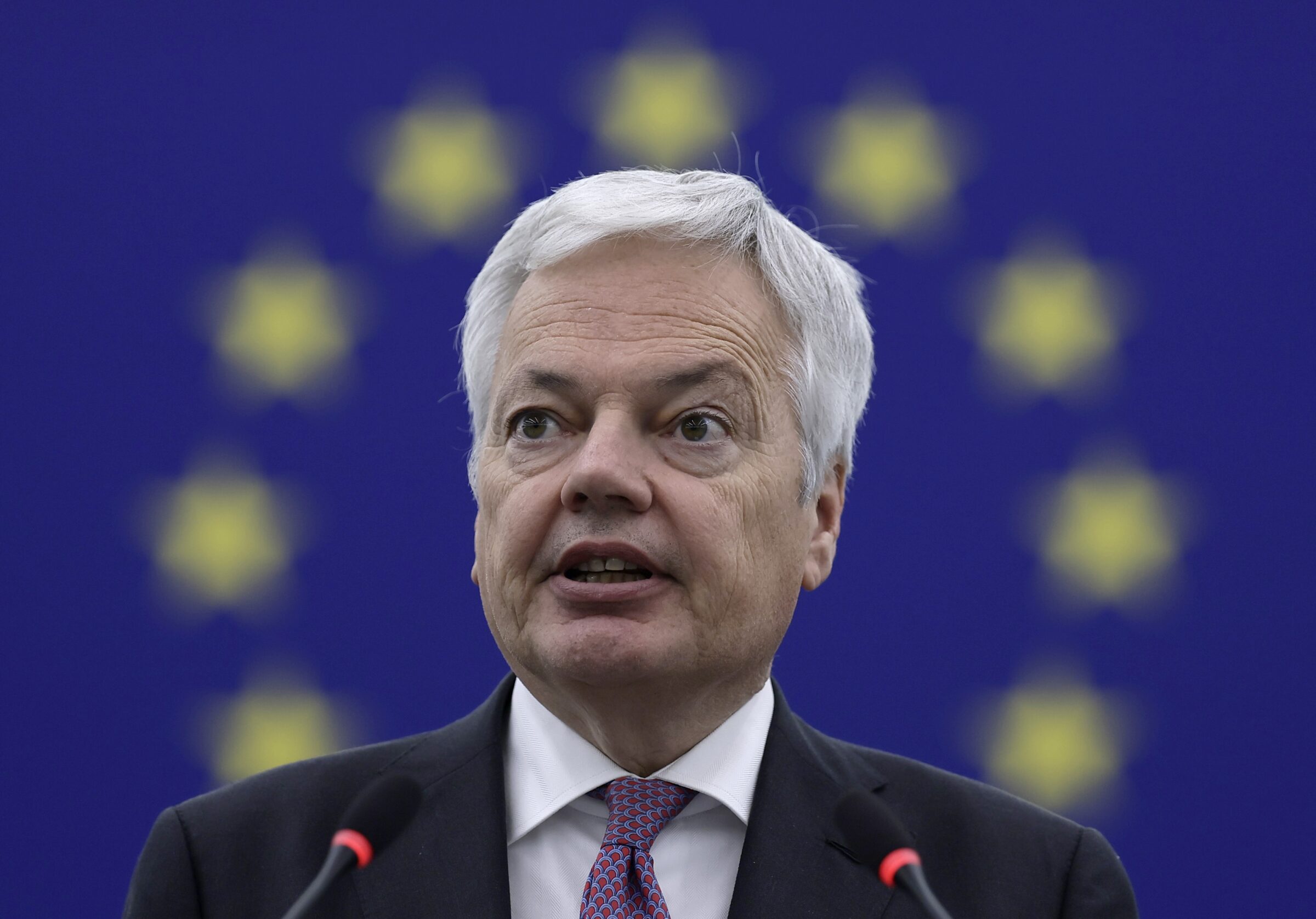
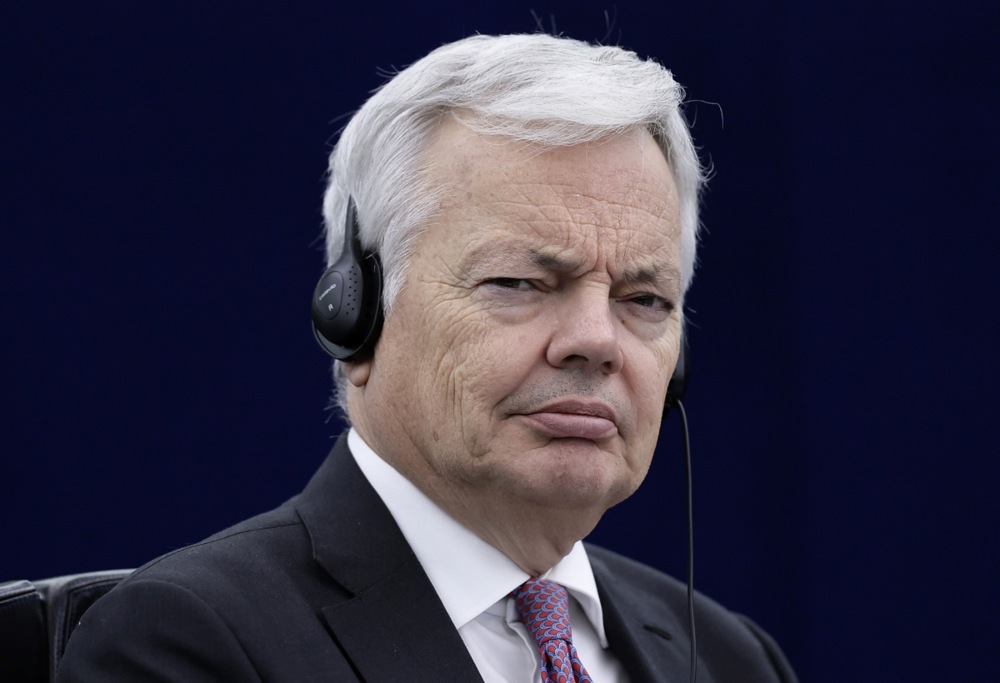
EUobserver revealed on Friday (23 October) that Hugues Brulin, a director in the Belgian intelligence service (VSSE), had exchanged WhatsApp messages with ex-EU commissioner Didier Reynders, which may have been part of a criminal conspiracy to block VSSE reports into Reynders’ alleged wrongdoing.

But according to “several” VSSE sources who spoke to Belgian daily Le Soir, Brulin, who had been the number three in the VSSE hierarchy, had been in charge of logistics, Human Resources, and IT, but did “not have the power to block enquiries or put his nose into dossiers”.

Brulin did have access to secret dossiers only in case the number one and two directors in the VSSE were absent, and he had to sign off on special operations, called “BIMs” in VSSE jargon, which included measures such as phone wiretaps or home intrusions to place bugs, but this situation occurred just once during his tenure, Le Soir said.

But even if that was all true, Brulin still used to have the power to end the careers of VSSE officers who had looked into Reynders, on grounds of flimsy infractions, as happened in at least three cases, according to EUobserver’s sources.

“This article feels like a liberation. I don’t know if it really is one, but it feels like one … Thanks again in the name of all the normal, honest, taxpaying Belgians,” one ex-VSSE contact told EUobserver, commenting on last Friday’s revelations.

And besides which, there are allegations that Reynders had other VSSE insiders who might have been better placed to act.

This article continues, but the full version is available only to EUobserver.com subscribers. Visit account.euobserver.com/membership

  •  

EU leaders to press Burnham to pay more towards Ukraine’s defence

Officials will call on UK to ‘step up’ financial support at Brussels summit – with post-Brexit issues also on agenda

EU leaders will press Andy Burnham at a summit in Brussels to contribute more to Ukraine’s defence effort in 2027.

EU officials argue that the UK, Canada and Japan should do more to support Ukraine, but entreaties to these G7 countries for extra financial aid at recent international meetings have not been answered, Brussels says.

Continue reading...

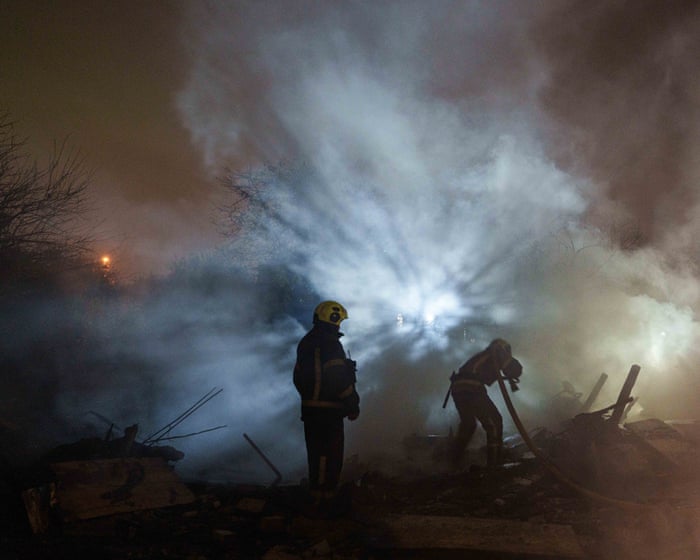
© Photograph: Evgeniy Maloletka/AP

© Photograph: Evgeniy Maloletka/AP

© Photograph: Evgeniy Maloletka/AP

  •  

[EXCLUSIVE] Leaked WhatsApps between ex-EU commissioner Reynders and senior Belgian spy reveal attempts to bury allegations of his possible Russia ties

“The ‘job’ … has been mostly accomplished,” said a senior official in Belgium’s spy service, Hugues Brulin, in a WhatsApp message to the Belgian then EU commissioner, Didier Reynders.

“Bravo for the work you did,” said Reynders.

It was back in 2022, and, at least on the surface, they were chatting about a staff reshuffle inside Belgium’s intelligence service, La Sûreté de l’Etat/Veiligheid van de Staat (VSSE) — which was already a peculiar thing for Brulin to be doing on WhatsApp with an EU official.

But their messages, seen by EUobserver and published in full below, were now also evidence in a Belgian police investigation into Reynders on money-laundering charges, which painted them in the light of a potentially criminal conspiracy.

They reconfirmed that Belgian authorities were looking into wider allegations of Reynders’ possible collusion with Russia.

Brulin’s real “job” had been to stop the VSSE from probing Reynders and his potential Russia links, according to five former and current Belgian intelligence officers who spoke to EUobserver.

And Brulin also WhatsApp-ed Reynders on how to “counterattack” a Russia whistleblower.

The 68-year-old liberal politician from Liège, in French-speaking southern Belgium, had had a glittering career before his sudden fall from grace in December 2024, when Belgian police raided his properties, and before he was subsequently charged in 2025 with having laundered some €1m via the ING Bank, using lottery tickets and cash deposits.

Reynders had been EU justice commissioner from 2019 until 30 November 2024 (just four days prior to the police raid) and Belgium’s foreign and defence minister from 2011 to 2019.

And Belgium had vetted and cleared him to read “top secret” national, EU, and Nato documents.

Meanwhile, Europe was scandalised to learn, on 10 October, that Germany’s former spy chief had been arrested for selling secrets.

But if a man with Reynders’ CV was also found guilty of corruption and foreign collusion, it would be yet another security fiasco for Western allies.

This article continues, but the full version is available only to EUobserver.com subscribers. Visit account.euobserver.com/membership

  •  

Brussels is moving to ban street advertising by fossil-fuel firms – the EU officials who live there should take note

Last week, Elsene became the fifth  municipality to vote for an end to fossil-fuel advertising, joining Saint-Gilles, Jette, Schaerbeek and Molenbeek.

Four of those five votes came in the space of just four months, and together, these municipalities are home to roughly 370,000 people: one-third of the Brussels-Capital Region’s population.

All five are making the same demand: that the Brussels region bans fossil-fuel advertising across the entire city, from metro stations to regional roads. More motions are already being tabled, and by the end of the year, a majority of Brussels’ 19 municipalities could be on record calling for a ban.

While local politicians are taking the lead, the outlook a little higher up the chain looks less promising. 

Europe’s ad town and the EU’s lobby town

Everyday tens of thousands of officials, MEPs, assistants and diplomats brave Brussels morning rush hour on their way to work on the laws that will decide whether Europe meets its climate targets.

Along the way they pass numerous temptations, bus shelters and metro walls selling them petrol cars, weekend flights and gas contracts, normalising the ongoing mass-consumption of these products. 

Once they reach their offices, they meet the same industry again, this time in person. The seven biggest oil and gas companies alone have declared lobbying budgets of almost €64m.

Fossil Free Politics research shows EU Commissioners and their cabinets had nearly 900 meetings with fossil fuel lobbyists in the last term. That’s nearly once every working day, showing just how embedded the industry is in the daily rhythm of Brussels life.

Some files come under particularly heavy pressure, with one egregious example being how a secretive alliance of eleven large multinational enterprises worked to tear down the EU’s flagship human rights and climate law last year, the Corporate Sustainability Due Diligence Directive (CSDDD).

The fossil fuel industry is currently mounting an extremely intense lobbying campaign to delay and dilute the EU Methane Emissions Regulation over the past year.

Over 80 percent of all commission meetings with external interest representatives on this regulation involved fossil fuel lobbyists, and the European Parliament is no better. All 17 MEPs who called for the methane regulation to be reopened in an April 2026 letter to the commission had met with fossil fuel lobbyists in the preceding year.

And those are only the declared figures.

Lobbyists roaming the corridors

Safe to say, the real total is almost certainly higher. According to new research by Reclaim Finance, on two out of every three days, the fossil-fuel lobbyists present at the European Parliament had no meetings scheduled with MEPs. They roam the corridors and cafés in the building, aiming to bump into the MEPs they wish to influence.

The councillors behind these fossil ad ban motions are not pretending that a few billboards will single-handedly solve the climate crisis, but they refuse to continue letting public spaces be misused by the fossil, automotive and aviation industry to freely promote their propaganda; as for the latter, especially since the advertised destinations are often precisely those places that have been the victims of severe climate disruptions..  

“The summer of 2026 was a painful awakening to the harsh reality of the consequences of the climate crisis,” said Mathias Gyselen, the Ecolo-Groen councillor who tabled Schaerbeek’s motion in September.

“Heatwaves, heat islands and heat deaths are unfortunately becoming the new normal in the city. Doing nothing is no longer an option.”

They are right. Advertising is how the fossil fuel industry keeps its social licence, presenting itself as part of the solution while expanding the very products driving the crisis.

Not just the five sub-municipalities of the Brussels capital acknowledge this, but over 70+ cities worldwide have taken steps to clear their streets from fossil fuel advertising, among them Amsterdam, Sydney, Stockholm and Edinburgh.

The problems with advertisements, and multi-million euro lobby strategies, are not just that they very much harm the planet, they are also fundamentally undemocratic. 

Residents, community groups and civil society organisations cannot match the industry’s firepower. They do not have the budgets, the staff or the open doors that put them across the table from lawmakers week after week.

Europe has dealt with this before.

‘Godfathers of climate chaos’

Tobacco lobbyists no longer get privileged access to health ministers, nor can cigarette brands buy billboards. For many similar reasons the world wants to end fossil fuels, the EU banned tobacco advertising because promoting a deadly product was incompatible with public health.

UN secretary-general António Guterres made the same comparison in 2024 when he urged every country to ban fossil fuel advertising, naming fossil-fuel companies as the “godfathers of climate chaos”

Municipal motions are not binding, so the decision now lies with the Brussels-Capital Region, which controls advertising in the metro, along regional roads and on its own infrastructure. A first obvious step is that it should listen to its municipalities and introduce a city-wide ban.

But the message is also addressed to the institutions on the other side of the Rue de la Loi.

If the streets of Europe’s capital are being cleared of fossil fuel promotion, the corridors of its institutions should be too. That means limiting the industry’s access to decision-makers, closing the revolving door, and rejecting fossil fuel sponsorship and partnerships, just as the EU did with tobacco.

The municipalities of Brussels have shown what local democracy looks like. Now it is up to the region and the EU institutions to show that Europe’s capital is not for sale; not on its billboards, and not in its corridors of power.

  •  

Student Protests Mushroom Across Europe, Exposing Bleak Views of the Future

Since high school students began protesting in France in September, they’ve been joined by young demonstrators in at least seven other European countries.

© Angelos Tzortzinis/Agence France-Presse — Getty Images

Protesters against the high cost of living in Athens, Greece, on Wednesday.
  •  

Europe’s far right seizes on protest violence to push authoritarian anti-immigration agenda

Nationalist leaders are framing unrest as consequence of failed liberal governance and open borders

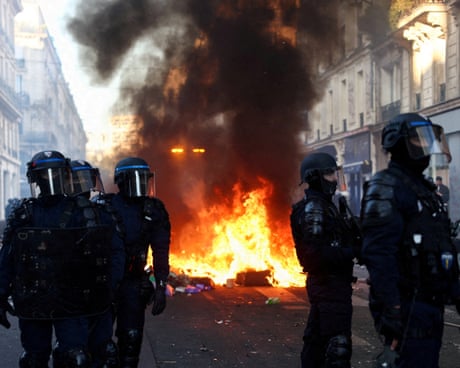
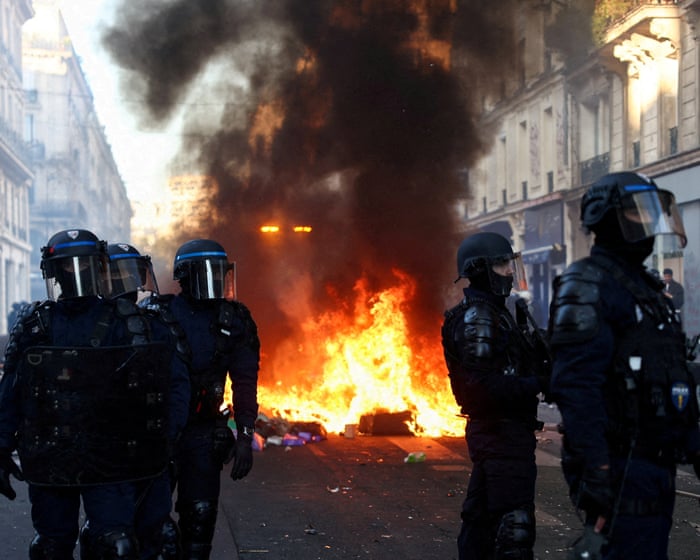
Europe’s far-right leaders have jumped on the violence that rocked numerous cities last weekend, framing it as the inevitable consequence of failed liberal governance and open-border policies and insisting only they can restore law and order.

Months away from key elections in Spain, France and Italy, authoritarian nationalists are eager to weaponise the wave of street unrest, originating in peaceful protests over the cost of living and deteriorating public services but hijacked by violent rioters.

Continue reading...

© Photograph: Abdul Saboor/Reuters

© Photograph: Abdul Saboor/Reuters

© Photograph: Abdul Saboor/Reuters

  •  

The ‘Finger cutter’ and the ‘Brazilian Escobar’: the men accused of bringing cocaine cartels to Europe

A Belgian criminal organisation’s links with a Brazilian cocaine gang have been the focus of a major trial in Brussels, where smuggling links have been alleged between European players and the drug cartels of Latin America

In the early hours of 7 September, a convoy of heavily armed police swept through the sleeping streets of central Brussels towards the Haren district, on the city’s north-eastern outskirts. They made their way to 22 Avenue du Bourget, a militarised bunker-like complex that was the former headquarters of Nato.

The modernist complex, with its austere and functional architecture, was hastily built in 1967 and houses the Justitia courtroom, where Belgium’s federal trials are now held. It was here that the perpetrators and accomplices of the 2015 Paris terrorist attacks and the 2016 Brussels attacks were tried in 2022.

Continue reading...

© Composite: Guardian Design/Belga/AFP/Getty Images/AP/Europol

© Composite: Guardian Design/Belga/AFP/Getty Images/AP/Europol

© Composite: Guardian Design/Belga/AFP/Getty Images/AP/Europol

  •  

Ahold Delhaize Reports Malicious Cyberattack as Supermarket Deliveries Remain Disrupted

Dutch-Belgian supermarket group Ahold Delhaize has confirmed that malicious activity was responsible for the cybersecurity incident that disrupted its operations across Europe and the United States, forcing the company to take websites, applications and other computer systems offline.

In an official statement issued on Monday, 19 October, the company announced that it had filed a formal complaint with Dutch police and was cooperating with national cybersecurity authorities. Although physical supermarkets have remained open, the disruption has affected online shopping, deliveries and some distribution operations.

The company said investigators had so far found no evidence that sensitive information belonging to customers, employees or business partners had been taken. However, its investigation remains open, and the identity and objectives of those responsible have not been publicly established.

Online services interrupted across several countries

The disruption began on 12 October, when Ahold Delhaize detected suspicious activity within its information technology infrastructure.

The group responded by taking a number of systems offline as a precaution, affecting most of its retail brands in Europe and the United States. The consequences varied considerably between businesses, with some experiencing prolonged interruption to digital services while others were able to restore operations more quickly.

Albert Heijn, the Netherlands’ largest supermarket chain, has been particularly affected. Its website and mobile application have returned online, but home grocery deliveries are not expected to resume until Friday, 23 October.

Orders scheduled before that date have been cancelled, while the company continues preparations for a gradual restoration of its online delivery service.

The incident also interrupted some supply and distribution arrangements, resulting in shortages on supermarket shelves in parts of the Netherlands and Belgium.

In Belgium, Delhaize has restored its online shopping operations. Certain promotional and personalised services were still experiencing difficulties, although the parent company confirmed that its Belgian e-commerce business was operational again.

Dutch retailers Etos and Gall & Gall have also restored their websites. Meanwhile, several American supermarket brands owned by Ahold Delhaize have continued to experience service interruptions.

The group said it expected additional online services in the United States to become available over the coming days.

Dutch authorities investigate

Ahold Delhaize said it notified the Netherlands’ National Cyber Security Centre within 24 hours of detecting the malicious activity.

The company has subsequently provided updates to the authorities and, on Monday, confirmed that a formal police report had been submitted.

Chief executive Frans Muller defended the decision to shut down digital systems, arguing that the investigation had demonstrated the necessity of taking preventive action.

The company has not identified the perpetrators, confirmed whether ransomware was involved or disclosed the technical method used to gain access to its infrastructure.

These distinctions are important because malicious activity does not necessarily establish that information was stolen or that attackers obtained control over every system subsequently taken offline.

The retailer has instead described a controlled restoration process intended to ensure that affected systems can be brought back into operation without exposing the business to further risks.

Ahold Delhaize operates thousands of supermarkets and related retail businesses, including Albert Heijn, Delhaize, Food Lion, Giant Food, Hannaford and Stop & Shop.

Its geographical reach means that a disruption originating within shared corporate infrastructure can affect several national markets, even where individual retail chains maintain separate commercial operations.

Cybersecurity becomes a supply-chain concern

The attack comes amid increasing scrutiny of the vulnerability of European food retailers to digital disruption.

Earlier this month, investigators in France began examining cyberattacks against refrigeration control systems used by hundreds of supermarkets.

Those incidents reportedly affected equipment at chains including Carrefour, Intermarché and Monoprix, with some retailers forced to discard products after refrigeration systems malfunctioned.

There is no established connection between the French incidents and the attack affecting Ahold Delhaize.

Nevertheless, both episodes illustrate the dependence of modern retail operations on interconnected digital systems supporting stock management, refrigeration, logistics, payments and customer services.

The consequences of a serious cyber incident can extend beyond the loss of access to websites. Interruptions to inventory systems, warehouse operations or communications with suppliers can affect the availability of physical products.

This creates particular difficulties for food retailers, where delays in transport and storage can result in the loss of perishable goods.

European regulatory implications

The incident also draws attention to the European Union’s NIS2 cybersecurity framework, which establishes stricter risk-management and incident-reporting obligations for organisations operating in designated sectors.

Food production, processing and distribution are among the activities covered by the directive, although its application to particular companies and operations depends on the relevant legal definitions and national implementing arrangements.

The legislation requires organisations within its scope to establish appropriate cybersecurity protections, address supply-chain risks and notify competent authorities of significant incidents.

Separately, the General Data Protection Regulation establishes notification requirements where personal-data breaches meet the relevant reporting threshold.

Ahold Delhaize’s statement that it has found no evidence of sensitive data being taken does not conclude the technical investigation, but it means that a confirmed theft of personal information should not presently be presented as a fact.

For the company, the immediate challenge remains restoring online services while maintaining normal supermarket operations. The wider commercial consequences, including the cost of the interruption and its effect on sales, have not yet been quantified publicly.

  •  
❌