With apparently nothing better to do this summer, the police charged Guy Carpenter with picking up roadkill – who even knew it was a crime? As they took him to court, that's when he knew English freedom had died.
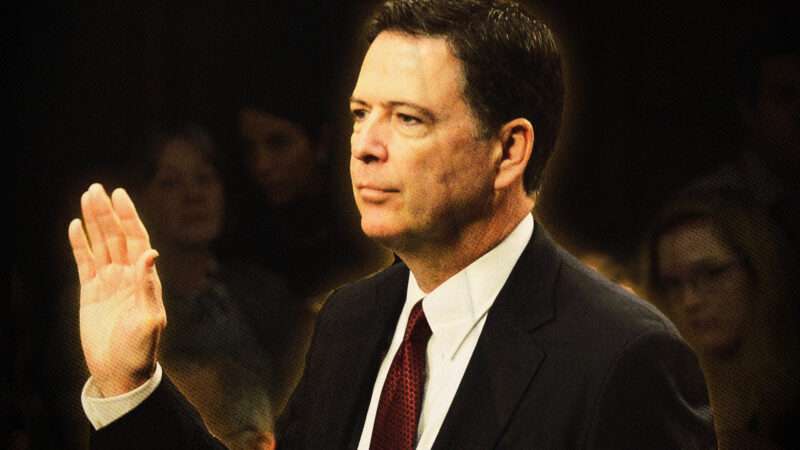
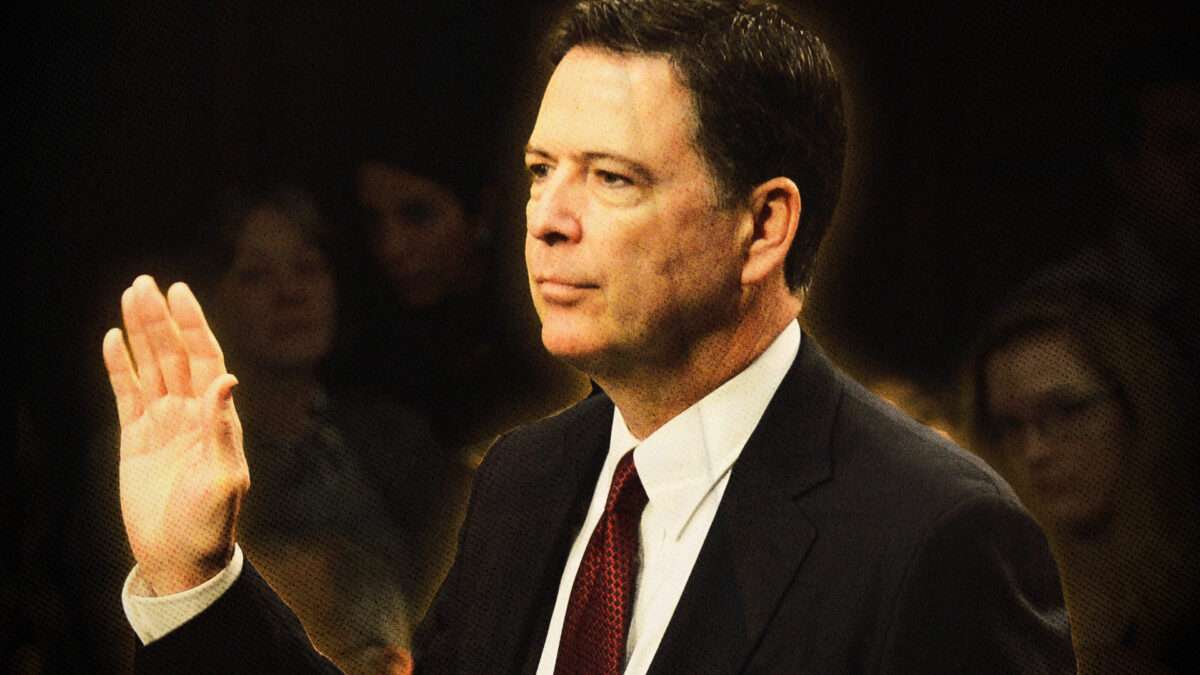
The answer would matter in any federal prosecution. It matters even more here because the case revealed Monday cannot be separated from President Donald Trump’s lengthy public campaign against Comey.
Since firing Comey as FBI director in 2017, Trump has repeatedly called him corrupt and demanded that he be prosecuted. This was no private frustration. Trump put his wishes in writing online. He pressed then-Attorney General Pam Bondi to pursue Comey and other perceived enemies last September. “They’re all guilty as hell,” he wrote, adding that “JUSTICE MUST BE SERVED, NOW!!!” Days later, Comey was indicted.
That first prosecution, involving Comey’s congressional testimony, was dismissed because the prosecutor who obtained the indictment had been unlawfully appointed. A second case, based on Comey’s “86 47” seashell photograph, remains pending.
The latest case dates to October 2016. Prosecutors allege that Comey directed someone to provide a reporter with national defense information about a secret court order requiring Yahoo to scan emails for messages potentially connected to a foreign terrorist organization. Comey denies wrongdoing, and his lawyers say the matter was previously investigated twice without charges being brought.
On Oct. 5, exactly a decade after the alleged conduct, Justice Department lawyers filed a criminal information under seal. A “criminal information” is a formal accusation signed by a prosecutor. An indictment contains similar allegations but with one crucial addition: A grand jury has heard the government’s presentation and agreed that probable cause exists to bring the charge.
Informations are legitimate in the right circumstances. They are commonly used when defendants intend to plead guilty and formally waive their right to an indictment. Comey has not waived that right, and the Justice Department does not appear to claim that it could take him to trial on the information alone. The government’s narrower position is that filing the information kept the case alive, leaving prosecutors free to obtain an indictment later.
The ordinary five-year statute cannot save this case.
Under the ordinary federal statute of limitations, that argument is not especially strange. The general rule gives prosecutors five years to bring most federal charges. It says the government acts in time if an “indictment is found” or an “information is instituted.” Applying that language, courts have allowed prosecutors to file an information before the deadline and obtain an indictment afterward, even without a defendant’s waiver.
But the ordinary five-year statute cannot save this case.
To prosecute Comey over conduct alleged to have occurred in 2016, the Justice Department is relying on a special provision giving the government 10 years to charge certain national defense offenses.
That provision is worded differently. It says that an “indictment” has to be brought within 10 years. It does not mention an information.
That is where the Justice Department’s theory becomes difficult to defend. The law allowing prosecutors to stop the clock with an information gives them only five years. Essentially, the DOJ is trying to take the 10 years from the first law and the easier filing method from the second — but Congress never combined the two.
Congress clearly understood the difference between an indictment and an information, because both words are used in the general statute. Yet when lawmakers granted prosecutors twice as long to bring this particular category of cases, the statute used only one. If Congress intended both charging documents to have the same effect under the special provision, it wouldn’t have omitted one.
The government says filing an information to preserve a prosecution is widely recognized federal practice. Some appellate decisions permit exactly that. But those cases generally interpret the ordinary limitations statute, the one that expressly includes both charging documents. They do not settle whether prosecutors can use an information under a different provision in which Congress referred only to an indictment.
A statute of limitations is part of the law governing prosecution, not administrative clutter around the edges.
The Justice Department is likely to argue that the special law merely changes the number of years available, leaving the rest of the general limitations framework intact. Comey’s position in his motion to dismiss is that the special provision supplies its own instruction: An indictment must come within 10 years. The statute does not say that prosecutors may file whatever charging paper they have ready at the deadline and obtain the indictment later.
This may sound like legal hair-splitting, but it’s important. A statute of limitations is Congress’ judgment about how long the government should have to place someone in criminal jeopardy. It is part of the law governing prosecution, not administrative clutter around the edges.
These limits exist because evidence grows stale, witnesses disappear, and memories become less reliable. They also reflect a basic principle: The federal government, with its enormous investigative resources, eventually must decide whether it has a case. Congress gave prosecutors a generous period of 10 years for these offenses.
It’s also noteworthy that this allegation did not suddenly appear at the last minute. According to Comey’s lawyers, the disclosure was examined in 2017 and again in 2019 without a criminal case being filed. The Justice Department had years to review the evidence and, if it wished, present the matter to a grand jury.
Federal grand juries traditionally favor prosecutors: No defense is present, the government controls the evidence, and the standard is only probable cause. But that advantage depends partly on trust, and Trump’s Justice Department has squandered a lot by repeatedly pursuing people the president has publicly demanded be charged.
That makes the missing indictment here more significant. An information bypasses even this modest outside check, allowing prosecutors to file an accusation when the president has announced the outcome he wants.
The government had 10 years and missed its deadline. When a president demands a prosecution, the rules should be enforced more strictly, not less.
A jury at the Central Criminal Court in Co Cork has heard that 80-year-old Timothy 'Teddy' Murnane sustained multiple blows to the face and skull outside his Co Tipperary home in September 2025.
Representatives of the Minister for Justice and the Law Society are to hold further discussions over the next week in an effort to find a resolution to the dispute over the new criminal legal aid scheme.
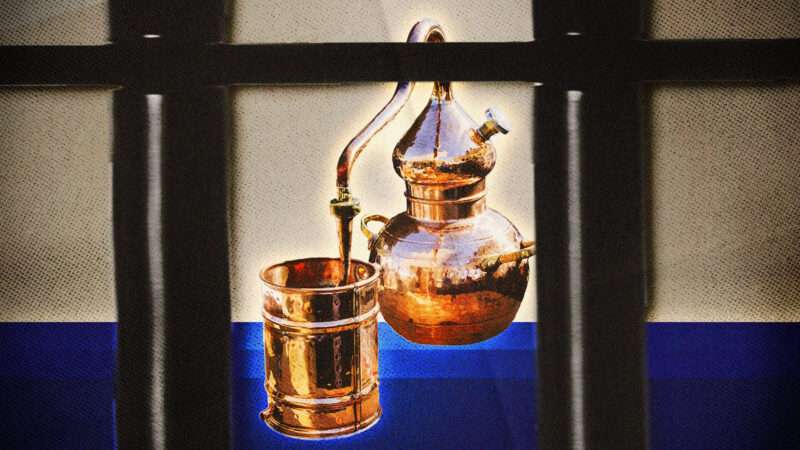
Years ago, I bought a contraption designed to separate and concentrate the most volatile components of a liquid mixture. I would tell you what I did with it, but I don't want to implicate myself in a federal felony.
Since 1868, it has been illegal for Americans to locate a "distilled spirits plant" in "any dwelling place," an offense currently punishable by a maximum $10,000 fine and up to five years in prison. The federal ban on home distilling is at the center of a case that the Supreme Court recently agreed to hear, which raises a specific constitutional issue but also highlights the absurdity of treating this hobby as a crime.
That policy, the U.S. Court of Appeals for the 5th Circuit ruled last April, cannot be justified as an exercise of the federal government's tax power. To the contrary, Judge Edith Jones said in the court's opinion, the ban is "an anti-revenue provision that prevents distilled spirits from coming into existence," meaning its effect is "to reduce revenue instead of raising it."
Nor is the provision consistent with "the Supreme Court's explanation of how the federal power of taxation works," Jones wrote. When Congress imposes a tax, the Court explained in 2012, it "leaves an individual with a lawful choice to do or not do a certain act, so long as he is willing to pay a tax levied on that choice." But in this case, Jones noted, would-be home distillers "have only the choice not to do as they wish or risk fines and imprisonment."
The government argued that the ban helps collect liquor taxes by prohibiting a form of production that is difficult to detect. But "Congress cannot prohibit intrastate activity solely because it might produce products hard to tax," Jones said. If it could, she warned, there would be "no limit whatsoever" to its tax power.
Under the government's logic, Jones noted, "Congress may criminalize nearly any at-home conduct only because it has the possibility of concealing taxable activity. Home-based businesses may be forbidden. Remote work may be deemed a crime."
The Trump administration, which wants the Supreme Court to overturn the 5th Circuit's decision, argues that threatening to imprison home distillers is a "necessary and proper" safeguard against tax evasion. But whatever your take on the constitutional question, that policy is morally indefensible, haphazardly enforced, and inconsistent with the federal government's treatment of wine and beer.
The lead plaintiff in this case is Scott McNutt, a member of the Hobby Distillers Association. In 2014, McNutt received a "Notice of Potential Civil and Criminal Liability" from the Treasury Department, which said it had reason to believe he "may have purchased a still capable of producing alcohol and/or equipment and materials that may be used in the manufacture of a still."
The notice warned that "federal law provides no exemptions for the production of distilled spirits for personal or family use." It added that "unlawful production of distilled spirits is a criminal offense," which it erroneously claimed was "punishable by a fine of up to $500,000" as well as "imprisonment for not more than 5 years."
Meanwhile, online retailers such as Amazon sell a wide variety of home stills, many of which are explicitly advertised as appliances designed to produce alcoholic beverages such as vodka, gin, brandy, and whiskey. Customers could be forgiven for assuming that's legal, especially since federal law has long permitted home wine and beer production "for personal or family use."
McNutt's lawyers say he "owns a still that he has used to lawfully distill fuel alcohol and seeks to 'tinker around' with beverage spirits." Another plaintiff, Thomas Cowdrey, "likewise seeks to experiment in creating new beverage spirits, including 'apple pie vodka,' for which he has developed a recipe."
Because of a law Congress enacted 158 years ago, McNutt and Cowdrey would be felons if they acted on those desires. It might be time to rethink that policy.
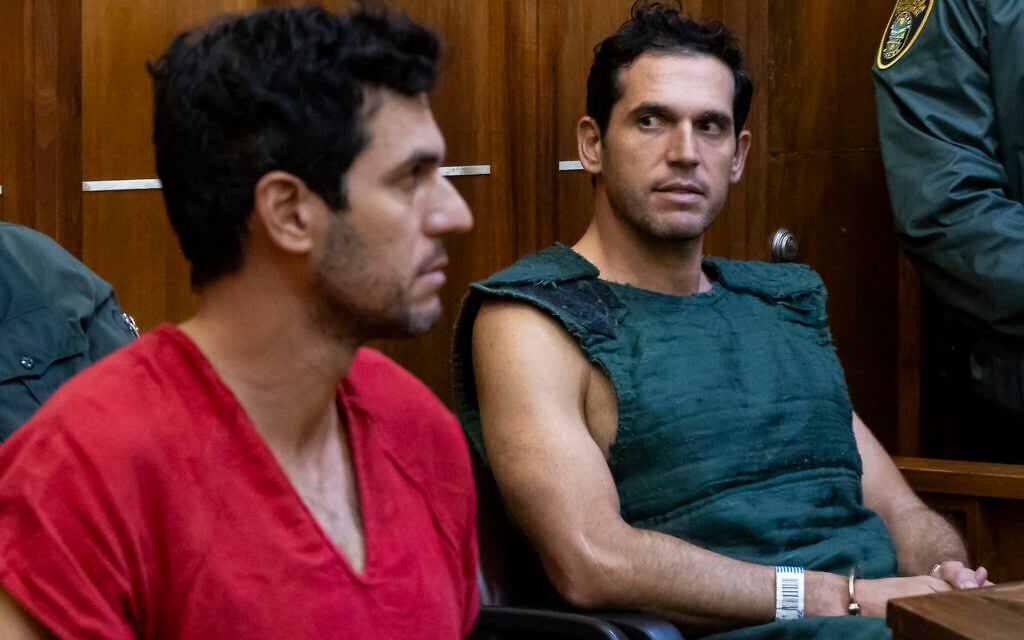
11 victims speak in court about how Tal, Oren and Alon Alexander - who maintain their innocence - exploited their luxury real estate business to rape and drug women
Customs and Border Protection (CBP) insists that it has the right to search Americans' private data without a warrant when entering the country. But ordered to explain one of these searches by a judge, the agency is now trying to wiggle out from under the microscope, invoking its own data privacy.
On Friday, Judge Leonie M. Brinkema in the Eastern District of Virginia ordered CBP to explain the seizure of a local psychiatric nurse's phone and laptop at Washington Dulles International Airport. CBP argued that the court should seal this information from both the public and the nurse himself in order to protect "privileged law enforcement information."
Brinkema initially agreed to let CBP file parts of its response "sealed and ex parte," meaning that neither the public nor the nurse would get to look at them. After reading the filings, the judge declared on Tuesday afternoon "that most of the redacted information is not privileged law enforcement information and should not be sealed." She gave CBP until Thursday at noon to object to unsealing the documents.
"Without knowing what happened, we cannot assess the extent of CBP's violation of our clients' rights. This raises serious concerns about government improperly invoking privilege to cover up wrongdoing," says Jenin Younes, a civil libertarian lawyer and president of the Arab-American Anti-Discrimination Committee, who is representing the nurse. "The court was right to unseal most of the redacted material so we can assess the extent to which the government behavior was improper."
Younes has stacked up a series of victories against CBP's electronic searches. Over the past few months, she sued on behalf of lawyer Jalal "Jay" Shehadeh and (non-Arab) journalist Max Blumenthal, both of whom had their phones seized at the airport by CBP without explanation. CBP tried to preempt a legal battle by giving their phones back almost immediately. Younes is still pressing to get information about what happened to their data.
Although CBP policy states that the agency will delete all data within 21 days unless there is "probable cause to believe the information contains digital contraband or evidence of a violation of law that CBP is authorized to enforce or administer," a 2018 lawsuit seemed to show that CBP was holding onto the data until someone bothered to demand its return.
Psychiatric nurse Muhammad Numaan Imam's case started similarly to Shehadeh's and Blumenthal's cases. CBP agents demanded to open his phone at the airport without explanation. He refused, arguing that patient emails and case-management software were protected by privacy laws. CBP then confiscated all of his and his wife Khadijah Mansoor's electronics. Almost immediately after Younes filed the suit on his behalf, CBP tried to argue that the case was moot because it was giving back the phone.
But Brinkema immediately agreed with Imam and Mansoor's "legitimate concerns about what was done with their electronic devices," ordering CBP to "explain why the devices of both plaintiffs were seized" and to provide sworn statements from "each person who handled any of the devices" describing exactly what was done to them.
On Monday night, the court published heavily redacted declarations from CBP Assistant Port Director Lauren Colgan, Department of Homeland Security (DHS) technician Caige McCabe, and CBP technician Ashlie Fisch.
"Mr. Imam and Ms. Mansoor presented valid, un-expired travel documents to CBP Officers in the primary inspection and were referred for secondary inspection," Colgan's declaration states. The next few sentences are blacked out. The declaration then recounts the couple explaining their early return from their anniversary vacation in Turkey and states that the CBP officer asked to open their electronics, without explaining why.
"Because of Mr. Imam's and Ms. Mansoor's refusal to provide access to their electronic devices, CBP informed Mr. Imam and Ms. Mansoor their devices would be detained to continue the border search," Colgan continues, noting that Port Director Christine Waugh signed off on holding the devices for more than five days, as CBP policy requires.
On October 17, a day after CBP seized the phones, it asked DHS headquarters for "technical assistance" with Imam's devices according to McCabe. "My examination of Mr. Imam's phone was limited to device specifications and high-level file-system structure," he states in the declaration. The next few sentences are blacked out. "I did not access or view the contents of Mr. Imam's laptop," McCabe continues. The next few sentences after that are also blacked out. "I did not access any medical information" on either the phone or laptop, McCabe concludes, stating that the devices were in his custody until he handed them back to CBP on October 21.
Fisch then received Imam's devices at CBP Laboratories and Scientific Services. Everything of substance in her declaration is redacted, beyond taking the devices on October 21 and sending them back to Washington Dulles Airport the next day. There is no unredacted explanation of what happened to Mansoor's devices.
Brinkema argued in her Tuesday order that only two sentences, both from Colgan's declaration, were legitimately blacked out. "Accordingly, the Court will unseal all other redacted information in the Declarations unless the defendants can show good cause why such information should not be unsealed," she wrote.
U.S. law gives border officers much wider authority to search for contraband in situations where normal police would need a warrant or probable cause under the Fourth Amendment. CBP argues that its powers extend to searching and seizing travelers' electronics without any explanation at all. Courts have given contradictory rulings on how far those searches can go, and the Supreme Court hasn't weighed in yet, leaving a gray area that CBP is happy to take advantage of.
Imam's case has resulted in "the most detailed explanation of what the government did with our clients' electronic devices—or it would be if so much wasn't redacted," Younes tells Reason. "I look forward to seeing the unredacted versions."
Lina Attalah, founder of banned Mada Masr news site, fined $53,400 and detained until it's paid; conviction is for running without a license, though outlet has sought one for years
A little more than a year ago, President Donald Trump publicly demanded that Pam Bondi, then the attorney general, find a crime to pin on former FBI Director James Comey. Trump's underlings have repeatedly tried to do that, first charging Comey with lying to Congress and then accusing him of threatening to assassinate the president. But the first indictment was dismissed because Trump had illegally appointed the prosecutor who obtained it, and the second was doomed right out of the gate because it aimed to punish constitutionally protected political speech.
The Justice Department's latest attempt to follow Trump's marching orders was revealed on Monday, when U.S. District Judge Trevor McFadden unsealed a "criminal information" that claims Comey illegally shared classified information with The New York Times on October 5, 2016. In an attempt to meet the statutory deadline for that charge, prosecutors filed it exactly 10 years after the alleged disclosure. But Comey's lawyers argue that federal law required the government to obtain a grand jury indictment within 10 years of the alleged offense, which it failed to do.
Whatever you make of that dispute, the president has made it clear that he wants to imprison Comey, a longtime nemesis because of his role in the "Russiagate hoax" during Trump's first term, and does not much care about exactly how that happens. Justice Department officials, meanwhile, are keen to pursue Trump's personal vendetta by using their prosecutorial powers as an instrument of his revenge.
The new case "would almost be funny if it weren't such an appalling abuse of the Department of Justice," Comey said in an online video on Monday. "I'm still innocent. I'm still not afraid of these people, and I still believe in the independent federal judiciary."
In the New York Timesstory at the center of the case, Charlie Savage and Nicole Perloth reported that Yahoo had adapted "a system intended to scan emails for child pornography" to comply with a Foreign Intelligence Surveillance Court order seeking "messages containing a computer 'signature' tied to the communications of a state-sponsored terrorist organization." Savage and Perloth cited "two government officials who spoke on the condition of anonymity."
Dustin Farahnak, a special U.S. attorney for the District of Columbia, says that story included "first-time disclosures of classified information not intended for the public domain." According to Farahnak, the government has evidence that Comey "directed staff" to discuss "specific accuracy concerns" about a prior Reuters report on the same subject with Savage. In the process of doing that, Farahnak says, those FBI officials "illegally transferred classified information."
Comey's attempt to set the record straight, according to Trump's henchmen, was a felony punishable by up to 10 years in prison under 18 USC 793(d), an Espionage Act provision that applies to an official who "willfully" shares "information relating to the national defense" with an unauthorized recipient when he "has reason to believe" it "could be used to the injury of the United States." Comey also faces a charge of conspiring to violate Section 793, which likewise carries a maximum 10-year sentence.
If Comey's alleged disclosure was such a grave crime, you might wonder, why did it take a decade to charge him? Because two prior investigations of the same incident concluded that criminal charges were not warranted.
Beginning in March 2017, John Durham, the U.S. attorney for the District of Connecticut, looked into the genesis of the Times article. The investigation found that James Baker, then the FBI's general counsel, was one of the anonymous sources. Baker said he had acted under instructions from FBI Chief of Staff James Rybacki, whom he understood to be conveying Comey's wishes. Durham's investigation included interviews, emails, phone records, and consideration of the relevant statutes. In December 2018, Comey's lawyers note, Durham "wrote a classified memorandum outlining the investigation and recommending 'NO prosecution for Baker or anyone else.'"
The following month, the U.S. Attorney's Office for the District of Columbia "opened an investigation into the same subject matter," Comey's lawyers say. That investigation "was closed without any charges in February 2020" after the office "declined to prosecute."
Given the outcomes of those two investigations, the decision to charge Comey now stinks of desperation to slake Trump's thirst for revenge. According to Comey's lawyers, the tardiness of the charges also fatally undermines the case.
Federal law generally requires that prosecutors file charges within five years of the alleged crime. But the Internal Security Act of 1950 made an exception for Section 793, saying "an indictment for any violation" of that provision "may be found at any time within ten years next after such violation shall have been committed."
The charges against Comey "should be dismissed as time barred," his lawyers argue: "Section 19 of the Internal Security Act gives the government an extended ten-year limitations period in which to charge Section 793 offenses. But as Section 19 unambiguously states, the government may invoke that extended period only by obtaining a grand jury indictment. A criminal information—which the government can issue unilaterally without grand jury involvement—does not suffice. Because the default five-year statute of limitations for federal felonies has long since elapsed on the alleged offenses, and the government's information does not meet the express statutory requirement for an extended ten-year limitations period, the information is untimely and must be dismissed."
Whichever side prevails on that issue, no one should have any illusions that the Justice Department is pursuing the mission suggested by its name. "It remains unclear what [McFadden] will do with the matter and whether DOJ will even be able to secure an indictment—as required by the Constitution," Cato Institute legal fellow Mike Fox says in an emailed press release. "Should the matter proceed, it is unequivocally clear that this case is a vindictive prosecution—a classic case of lawfare by a weaponized Justice Department."
An 89-year-old woman who was killed in her council house was contacted by the local authority in the months before her death over the illegal occupancy of the property by the man accused of her murder, a court has heard.

 Login