❌

Reading view

Behind Italy’s Protests: Rising Prices and Sinking Hopes

Inspired in part by French demonstrations, protests in Italy by students in the north and truckers in the south could affect national elections next year.

© Piero Cruciatti/Agence France-Presse — Getty Images

Demonstrators clashed with police in Milan this month.
  •  

Serbian Students, Victorious and Leaderless, Go After the Media

Supporters of the opposition movement that won Sunday’s election stormed the offices of a pro-government tabloid. Another news outlet apologized for years of “one-sided” coverage.

© Marko Djurica/Reuters

Supporters of the Student List opposition bloc in Belgrade, Serbia’s capital, on Monday, celebrating its victory in the national elections.
  •  

France Makes Concessions to Students, but Not Enough to Halt Protests

The government promised to phase out an unpopular university admissions system by 2028. Student groups are pushing for more.

© Anne-Christine Poujoulat/Agence France-Presse — Getty Images

Student representatives after a meeting on Monday with Prime Minister Sébastien Lecornu in Paris.
  •  

How Scuffles at Trump Rallies Echo His Past Events

Examining President Trump’s praise of a rallygoer who punched a protester last week, David E. Sanger, a White House and national security correspondent for The New York Times, studied the atmosphere at Mr. Trump’s recent events. What he found was a faint echo of the moments that made Mr. Trump’s 2016 rallies so shocking.
  •  

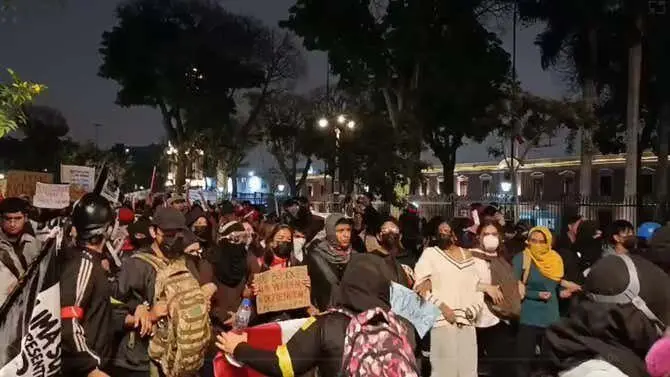
Peru Protests: 1,000 March in Lima Against Fujimori Government

Peru protests in Lima bring Generation Z demonstrators together against extortion, wildfires and the Fujimori government.

Peru protests bring students, unions and victims’ families to Lima to demand action on extortion, wildfires, living costs and police reform.

Related: Peru’s Youth Protest Government Over Crime And Forest Fires


Peru Protests Bring Generation Z to Lima Against Fujimori

Peru protests filled the historic center of Lima on Saturday, October 24, as young people, students, unions and victims’ families demanded action from President Keiko Fujimori’s government.

Demonstrators began gathering at 4:00 p.m. at Plaza San Martín, a historic site of popular struggles in the Peruvian capital.

The march was convened by groups identifying with Generation Z, along with human rights organizations, university students and self-organized citizens.

Participants included students from the National University of San Marcos and the Pontifical Catholic University of Peru.

The protesters demanded responses to a wave of extortion, the environmental crisis caused by forest fires, the rising cost of living and impunity for state repression.

They marched through Jirón de la Unión and Avenida Grau before advancing toward Avenida Abancay.

The demonstration was largely peaceful but firm. Participants carried Peruvian flags and banners reading “Put out the fires,” “For a Peru that is never indifferent to its people’s suffering,” and “Urgent police reform.”

Local media estimated that around 1,000 people took part in the Lima march.

Similar mobilizations were reported in Arequipa, Cusco, Ica, Huancayo, Trujillo and Juliaca.

The protests reflect growing discontent with the government’s handling of insecurity, environmental emergencies and economic pressures affecting working-class communities.

Peru Protests Demand Police Reform and Security

Peru’s Ministry of the Interior | Amnesty International—Peru

One of the central demands of the Peru protests was an end to extortion networks that affect transport workers, merchants, shopkeepers and small business owners.

Protesters said criminal groups are imposing payments on workers and entrepreneurs in popular neighborhoods, creating fear and undermining local economies.

Demonstrators called for a deep police reform to dismantle corruption networks within the police force.

They also demanded stronger intelligence work and community-based prevention rather than the repression of social protest.

The marchers criticized the use of security forces against demonstrations and called for greater protection for vulnerable communities.

During the march, police blocked the route to prevent demonstrators from reaching the exterior of the Congress of the Republic.

The image of officers containing the crowd highlighted the distance between a closed political institution and a mobilized population demanding to be heard.

The protest also included relatives of people killed during the social protests between December 2022 and June 2023.

They carried photographs of their loved ones and demanded justice for the deaths that occurred during the political crisis.

Milagros Samillán, whose brother was killed in January 2023 in Juliaca, Puno, said families were still demanding accountability four years after what she described as the massacres of 2022 and 2023.

Human rights organizations have documented serious concerns about the use of force during those protests.

The United Nations Special Rapporteur on the rights to freedom of peaceful assembly reported that 68 people died between December 7, 2022, and April 7, 2023, in the context of protests across nine regions.

The UN official said that 74 percent of those deaths occurred during confrontations with law enforcement.

Civil society organizations have called for independent investigations, prosecutions and reparations for victims and their families.

Peru Protests Highlight Wildfire and Climate Crisis

Peru’s National Institute of Civil Defense | United Nations Environment Programme

The environmental emergency was another major focus of the Peru protests.

Demonstrators denounced the government’s response to forest fires that affected 16 regions across the country.

According to Peru’s National Center of Emergency Operations, known as COEN, and the National Institute of Civil Defense, known as Indeci, the fires caused 479 emergencies.

The disasters left 12 people dead and 708 people affected, according to the official figures cited during the mobilization.

The fires destroyed 1,299 hectares of crops and more than 13,800 hectares of natural cover.

They also caused severe damage to local wildlife and livestock, affecting rural and Indigenous communities.

The affected regions included Cusco, Puno, Junín, Apurímac, Áncash, Huancavelica, Arequipa, Amazonas and Cajamarca.

Protesters said the government failed to provide enough brigades, funding and prevention measures to confront the emergency.

One young demonstrator said the fires were only extinguished after rainfall arrived, not because of an effective state response.

“Tuvo que llover para que recién se apagaran los incendios,” she said, denouncing the lack of brigades, budget and prevention.

Another protester criticized the floods caused by heavy rains in Piura and the absence of a strategic plan to address the El Niño phenomenon.

El Niño periodically devastates northern Peru through intense rainfall, flooding and damage to infrastructure.

Demonstrators said corruption in reconstruction projects and the abandonment of public infrastructure have worsened the impact of these climate events.

The protesters demanded a parliamentary investigation into the origin of the fires and adequate reparations for affected communities.

They also called on national, regional and local authorities to strengthen prevention and prepare for future climate emergencies.

Geopolitical Context

The Peru protests reflect a broader wave of youth-led mobilization across Latin America.

Generation Z movements have emerged as a political force in several countries, demanding action on insecurity, corruption, inequality, climate change and democratic accountability.

In Peru, the protests come amid a prolonged institutional crisis marked by political instability, social conflict and public distrust in state institutions.

The country has experienced a succession of presidents and governments in recent years, deepening polarization and weakening public confidence.

Keiko Fujimori’s government faces pressure to respond to demands for security without resorting to repressive measures.

The demand for police reform is particularly sensitive because of the legacy of state violence during the 2022 and 2023 protests.

The forest fires also expose the unequal impact of climate change in Peru.

Rural and Indigenous communities in the Andes and Amazon face the greatest risks, despite having contributed least to global emissions.

The destruction of crops, forests and livestock threatens food security, local economies and the cultural survival of affected communities.

The protests could increase pressure on Congress and the executive branch to allocate more resources to disaster prevention, environmental protection and social repair.

They may also influence the political debate ahead of future electoral processes, as youth movements seek greater representation in national politics.

For now, the mobilization has made clear that insecurity, climate emergencies and impunity are no longer separate issues.

For many young Peruvians, they form part of the same crisis of governance, and the demand is simple: a state that protects its people instead of abandoning them.


  •  

A Day After Renewed Street Clashes in France, Relief and Anxiety Mix

While the police kept a lid on vandalism, the huge number of protesters and France’s fraught politics suggest unrest could grow.

© Manu Brabo/Getty Images

Protesters shielding themselves from a water cannon in Paris on Saturday.
  •  

Italy’s Young Protesters Return to the Streets

Fed up with the political establishment and rising cost of living, demonstrators hoped to make their message heard after violence overshadowed protests last weekend.

© Yara Nardi/Reuters

Young people protested the rising cost of living in Milan on Saturday, a week after similar demonstrations in cities across northern Italy ended in violent clashes and looting.
  •  

Unrest Erupts Again in France, but This Time, With Less Property Damage

After largely peaceful marches on Saturday, clashes broke out in the evening. But a large-scale police presence, 1,000 arrests and the rerouting of protest routes kept a lid on wholesale vandalism.

© Philippe Lopez/Agence France-Presse — Getty Images

Protesters amid tear gas near Place de la Bourse in Bordeaux, western France, on Saturday.
  •  

She Planned to Protest Trump. She Didn’t Plan on Getting Punched.

Blake Miley yelled “fascist” as President Trump spoke at a midterm campaign rally. The violence that followed “was not right,” she said.

© Nick Fancher for The New York Times

“I knew there was a really good possibility that this would happen,” Blake Miley said. “But I don’t blame myself. It is not right what they did to me.”
  •  

How a Small Student Protest Spread Across France

A movement that began with a few high schools has broadened to encompass labor unions and other activists.

© Dimitar Dilkoff/Agence France-Presse — Getty Images

Protesters in Paris this month during a nationwide day of actions called by high school students and joined by unions and teachers.
  •  

France Deploys 70,000 Officers Ahead of Protest Rallies

Businesses board up shopfronts in Paris ahead of protests in France as authorities deploy 70,000 police officers and gendarmes.

France mobilizes 70,000 police and gendarmes amid fears of renewed unrest, while authorities restrict demonstrations and tighten security.


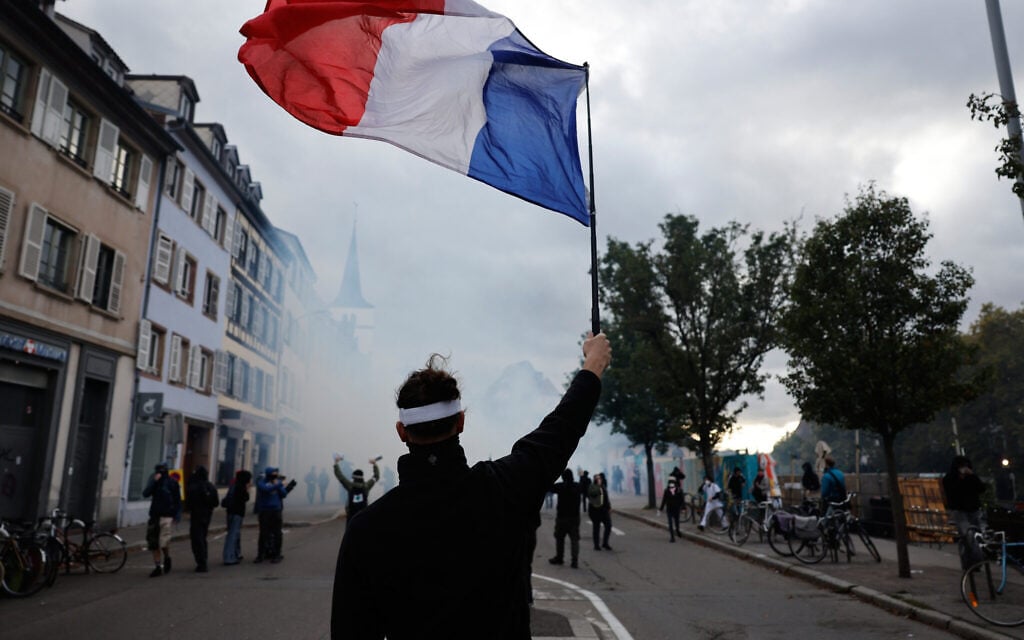
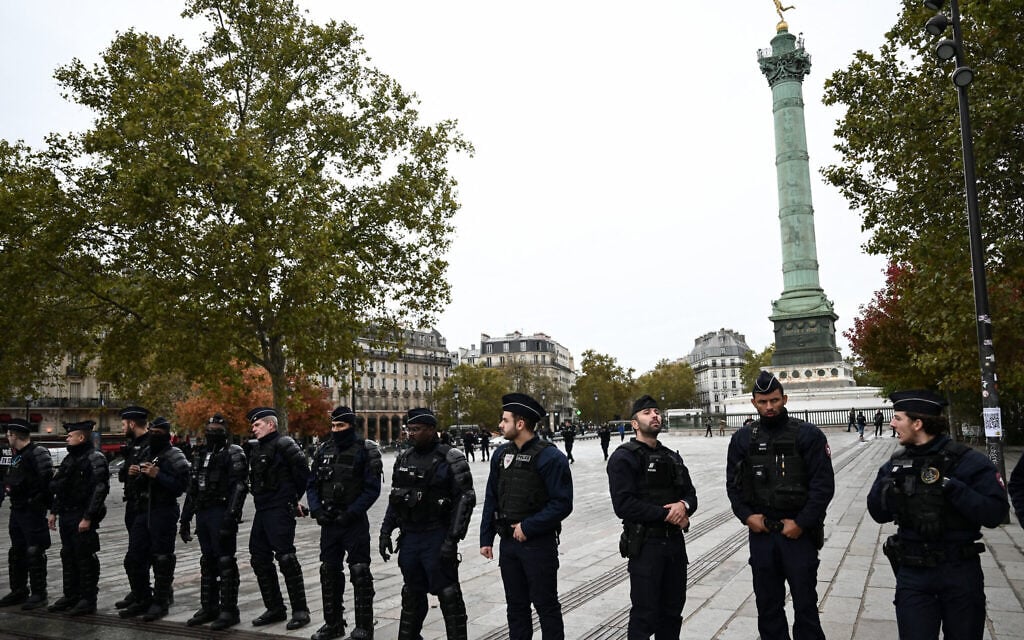
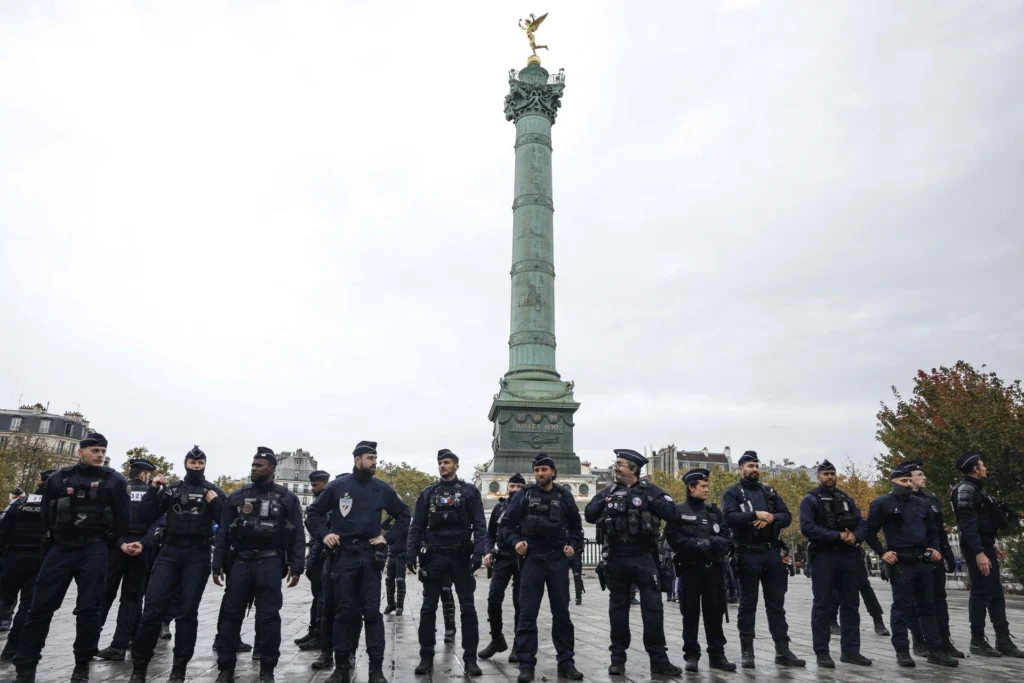
France has deployed 70,000 police officers and gendarmes ahead of nationwide demonstrations on Saturday, with authorities warning of a heightened risk of unrest after vandalism and looting damaged about 3,000 businesses the previous week.

RELATED: France Reports 855 Arrests in Paris After Protests

Prime Minister Sébastien Lecornu warned late Friday that the threat remained high, particularly from radical far-left groups and criminal elements operating alongside demonstrations called by trade unions, students and the Yellow Vest movement.

Interior Minister Laurent Nuñez announced a large-scale security operation to prevent further violence and looting.

“We will show no mercy to looters and troublemakers,” Nuñez declared. He has faced criticism from the left over police tactics and from the right for failing to prevent the previous week’s unrest.

France to mobilise 70,000 security forces for Saturday protest, interior minister says https://t.co/ok4e8kEy5t https://t.co/ok4e8kEy5t

— Reuters World (@ReutersWorld) October 23, 2026

Authorities have banned gatherings in numerous cities and restricted the routes of other demonstrations on security grounds, prompting criticism from trade unions and human rights organizations.

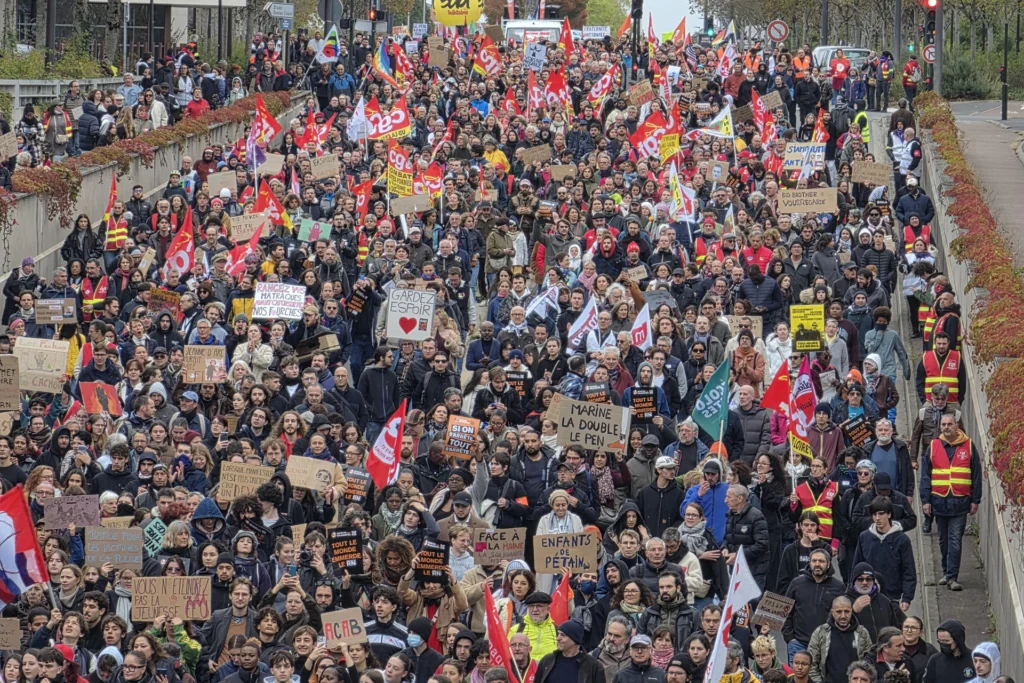
In major cities, trade union demonstrations were authorized on Saturday only in Paris, Marseille, Strasbourg, Lille, Mulhouse, Grenoble, Toulouse and Amiens.

In Paris, a last-minute change to the union march’s route sparked a dispute between police officials and organizers. Authorities cited the heightened threat following a racist attack on the outskirts of the capital the previous day as they redirected the march from Place de la Nation to Place d’Italie, keeping it away from the city center.

Several museums in the capital, including the Louvre and the Musée d’Orsay, will remain closed, as will the nearby Palace of Versailles. A nighttime curfew in the areas around Place de la République and Les Halles will also remain in force until Monday.

Banks and businesses in central Paris were boarding up shopfronts and windows late Friday and early Saturday in anticipation of possible vandalism, according to observations by Spanish news agency EFE.

Security concerns also extend to Orléans, about 130 kilometers (81 miles) south of Paris, where the far-right National Rally (RN) is holding a congress to formally launch Marine Le Pen’s presidential candidacy, roughly six months before the election.

Authorities estimated that 11,000 people took part in a counter-demonstration in Orléans on Saturday against Le Pen’s party. Organized in opposition to racism, fascism and imperialism, the march proceeded peacefully in a festive atmosphere, according to EFE.

Photo: Orleans, France (October 24, 2026)

Protesters chanted slogans including “Macron resign, Le Pen to prison” and sang the French national anthem, La Marseillaise, as well as the Spanish-language protest song “The People United Will Never Be Defeated.”

Authorities deployed about 3,000 officers in Orléans to prevent clashes between demonstrators and attendees at the RN congress. The local prefecture authorized Saturday’s march but banned a separate demonstration planned for Sunday.

The security measures reflect the authorities’ efforts to prevent further disorder while allowing some demonstrations to proceed. Restrictions on public gatherings and the deployment of thousands of officers have shaped preparations for Saturday’s rallies across France.

  •  

Looting Left Damage and Fear on Paradise Street in Marseille

Looters ravaged a storied commercial avenue in France’s second-largest city. Its merchants fear that more unrest could follow.

© Thibaud Moritz/Agence France-Presse — Getty Images

Damaged stores after rioting this month on Paradise Street in Marseille, France.
  •  

How Defiant Youth Are Testing India’s Idea of Democracy

Four takeaways from India’s protest movement, at a moment when democracies around the world are under pressure.

© Saumya Khandelwal for The New York Times

Security personnel detaining protesters demanding the resignation of the head of India’s election commission this month in New Delhi.
  •  

France Plans to Bolster Police Presence, Expecting New Protests

Government officials are trying to avoid a repeat of last weekend’s unrest across the country, which injured police officers and damaged stores.

© Abdul Saboor/Reuters

Riot police officers during civil unrest in Paris on Sunday.
  •  

In Wake of Riots, French Authorities Ban Some Protests

President Emmanuel Macron said the move was necessary “so that calm prevails.”

© Simon Wohlfahrt/Agence France-Presse — Getty Images

Police officers in Paris on Tuesday during a partial curfew put in place after last weekend’s demonstrations.
  •  

Looted Goods From French Stores Appear on Resale Sites After Riots

Officials in France are pressing online platforms like eBay and Vinted to remove items that were stolen during public disturbances over the weekend.

© Abdul Saboor/Reuters

People smashing a store on a day of demonstrations against the cost of living and rising fuel prices in Paris.
  •  
❌