Ukraine's military reveals what Russia's war has cost Moscow — in dollars, arms, and lives


Michael Nagle/Bloomberg via Getty Images
The Federal Trade Commission is asking companies from food delivery services to airlines about how they use personalized prices.
The Commission said on Wednesday that it sent orders to the companies asking for details about what kind of personal information they use to determine prices. The orders target a wide range of companies, from retailers Walmart and Target to food delivery services Uber and DoorDash to airlines like Delta and United.
"Consumers deserve to know whether companies use their web surfing habits or other personal data to estimate the highest price they can charge each consumer," said FTC Chairman Andrew N. Ferguson.
"Workers also deserve to know if their compensation is affected by how companies use their personal data," Ferguson added.
Several companies pushed back against the FTC's claims.
"There is no fare product Delta has ever used, is testing or plans to use that targets customers with individualized offers based on personal data," a Delta spokesperson said.
"We do not use personal information to set prices, and we never will," Instacart said in a statement.
Walmart and Target previously said they would be transparent about their pricing strategies as more stores start using digital price tags.
A growing number of companies are using dynamic pricing to determine what customers pay for everything from concert tickets to jeans.
Some companies use similar methods to determine how much workers get paid. Uber presents its drivers with potential payouts that aren't based on a per-mile or per-minute rate, for instance, but instead consider factors such as demand.
The FTC's orders ask the companies to submit information about their pricing methodologies, including how they use AI, going back to January 1, 2023. It also asks for research that the companies have done on their pricing strategies, such as A/B tests.
The Commission is also seeking information about how the companies used similar technology to offer workers jobs, according to the orders.
Do you have a story idea about Uber, DoorDash, or Instacart? Contact this reporter at abitter@businessinsider.com or via encrypted messaging app Signal at 808-854-4501. Use a personal email address, a nonwork WiFi network, and a nonwork device; here's our guide to sharing information securely.
Alex Wong/Getty Images
The second-to-last Federal Open Market Committee meeting in 2026 has come and gone, with some new information unveiled at Chair Kevin Warsh's press conference.
The FOMC decided in its meeting to hold interest rates steady on Wednesday, although two members dissented.
That comes as the inflation rate has been above the Fed's 2% target, while unemployment remains low. Warsh also announced a shake-up to next year's FOMC meeting plans.
Here are three large takeaways from Wednesday's Fed meeting.
While last month's 25-basis-point hike was a unanimous 12-0 decision, the October vote to hold rates steady was 10-2. Lisa Cook and Beth Hammack wanted to hike rates by 25 basis points again.
"The skew is toward tightening, and today's decision reads as a disagreement over timing rather than over destination," Jason Pride, chief of investment strategy and research at Glenmede, said in commentary.
Warsh detailed some positives about the employment side of the dual mandate, including low four-week moving average unemployment claims, a lower jobless rate than a year prior, and better job growth than last year.
Meanwhile, the other side of the dual mandate, price stability, is more of a concern. Inflation has remained above the Fed's 2% target. The Fed hiked rates in September to try to help that. Warsh said at Wednesday's press conference that the FOMC's discussion has been largely focused on price stability.
"Energy and related prices have moved higher again in recent weeks," he said. "And our job is to ensure that relative price changes in some sectors do not broaden out across the economy and that inflation expectations remain as they are anchored."
Warsh said quashing inflation isn't about a fixed date on a calendar nor an isolated data point.
"If it were about those two things, this job would be easier, and we wouldn't be suffering from nearly six years of inflation above target," he said.
Next fall will look different. Warsh announced at the FOMC press conference that there will still be eight meetings next year, as usual, but one of them will "focus exclusively on broad monetary policy strategy with neither a vote on the federal funds rate nor a policy statement anticipated." He expects that in 2028, two of those meetings will be like this.
"A change to the Fed's meeting schedule is significant. That is a dollar killer," Juan Perez, senior director of trading at Monex USA, said in commentary. "Less information is a big problem for forward guidance. It also seems like an admission from the Fed that the economy is not firing on all cylinders."
Warsh said the change was discussed over a couple of meetings, and the reason behind making it is because it's important to have time and space to make "strategic deliberations," looking over longer time horizons, and thinking through large questions.
"It's yet another change to get the conduct of monetary policy on the right track," he said.
The committee is scheduled to meet once more before the year ends in December, which means they will have a slew of economic data to help make their last decision. Traders expect a rate hike to be the likely outcome of that last meeting.
Britain’s government has attempted to reconcile rising energy prices, constrained public finances and growing defence obligations in a Budget that illustrates how international conflicts are reshaping domestic economic policy.
Presenting his first Budget on 28 October, Chancellor of the Exchequer John Healey announced a £100 energy payment for millions of households, an extension of electricity VAT relief and additional measures intended to support businesses facing rising operating costs.
The package comes as Prime Minister Andy Burnham’s administration confronts the economic consequences of the conflict in the Middle East, alongside continuing financial commitments arising from Russia’s war against Ukraine.
The central difficulty is that Britain must simultaneously protect household purchasing power, support economic growth and finance a more expensive security environment, without allowing government borrowing to expand beyond its fiscal targets.
The most immediate measures concern energy.
Under the Treasury’s Budget proposals, up to 20 million households in England occupying properties in Council Tax bands A to D will receive a £100 payment from January 2027.
The government has allocated £2.6 billion for the programme, including corresponding funding arrangements for the devolved administrations.
The temporary reduction in VAT on domestic electricity will also remain in place until July 2027, a measure expected to reduce the annual Ofgem price cap by approximately £50 in April.
Meanwhile, the Chancellor announced plans to remove standing charges from domestic gas bills, transferring fixed costs into consumption-based charges.
Although the government estimates that the change could benefit a majority of households, its distributional effects will depend on individual consumption. Lower gas users may benefit differently from households with substantial heating requirements.
The measures demonstrate how energy prices have become a direct constraint on fiscal policymaking.
Britain’s exposure to internationally traded gas means that disruptions originating outside Europe can quickly influence domestic prices, regardless of the source of individual energy supplies.
Rather than introduce broad increases in personal taxation, the government has chosen targeted revenue measures.
The Bank Corporation Tax Surcharge will temporarily increase from 3 to 6 per cent between January 2027 and March 2028, helping finance household energy support.
The government has also announced changes to gambling taxation intended to fund assistance for smaller businesses in retail, hospitality and leisure.
Fuel duty will remain frozen until July 2027, extending a policy intended to limit motoring and transport costs.
These decisions reflect competing pressures.
Households and smaller businesses require relief from higher costs, while the Treasury must demonstrate that its spending commitments remain consistent with fiscal discipline.
The distribution of the tax burden is therefore becoming an important political question, particularly when the government is simultaneously seeking private investment to stimulate growth.
The latest forecasts from the Office for Budget Responsibility offer little prospect of rapid economic expansion.
According to figures published alongside the Budget, British GDP is expected to grow by 1.2 per cent in 2026 and just 1 per cent in 2027.
Inflation is forecast to peak at 3.8 per cent in the first quarter of 2027 before gradually returning towards the Bank of England’s 2 per cent target.
The Chancellor’s fiscal headroom — the margin available before the government’s borrowing rules would be breached — has narrowed to approximately £15 billion in 2029–30.
This creates an unusually difficult environment for policymaking.
Further economic disruption could reduce tax receipts or increase spending demands, leaving the Treasury with limited capacity to respond without revising its plans.
The Budget also places national security increasingly within the government’s wider industrial strategy.
Britain remains committed to reaching defence spending equivalent to 3.5 per cent of GDP by 2035, with an interim target of 3 per cent in 2030.
The government has announced plans for the National Wealth Fund and British Business Bank to deploy up to £5 billion over four years into defence, dual-use technologies and other sectors supporting national security.
It has also committed an additional £500 million to support Ukrainian air defences during the coming winter.
These measures extend beyond immediate military procurement.
They seek to strengthen domestic industrial capacity, encourage private investment and establish supply chains capable of sustaining higher defence expenditure.
However, the precise financing arrangements for Britain’s longer-term NATO commitments are to be determined at the next spending review.
Britain’s predicament closely resembles that confronting European Union governments.
Across Europe, policymakers are attempting to finance defence modernisation and energy security while maintaining social expenditure and industrial competitiveness.
The difference lies partly in the institutional frameworks within which those decisions are made.
EU governments operate under European fiscal rules, while Britain sets its own borrowing and debt targets. Nevertheless, all face the same underlying pressures from energy markets, interest rates and international security commitments.
For British businesses trading with the European Union, the effects of energy costs and industrial investment policies on either side of the Channel will remain particularly significant.
The October Budget consequently represents more than an exercise in temporary household assistance.
It exposes the difficulty of sustaining public services, improving competitiveness and responding to geopolitical instability when economic growth is modest and available fiscal resources are limited.
Whether the measures provide lasting relief will depend less on the immediate payments announced by the Chancellor than on the course of energy prices, inflation and economic growth over the coming year.

The Federal Reserve held its benchmark interest rate steady on Wednesday.
The post Fed Holds Rates Steady Amid Strong Expansion and Elevated Inflation appeared first on Breitbart.
Get our breaking news email, free app or daily news podcast
Gas reservation policy set for lower house vote today
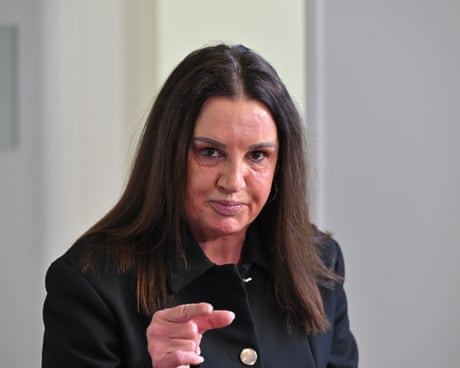
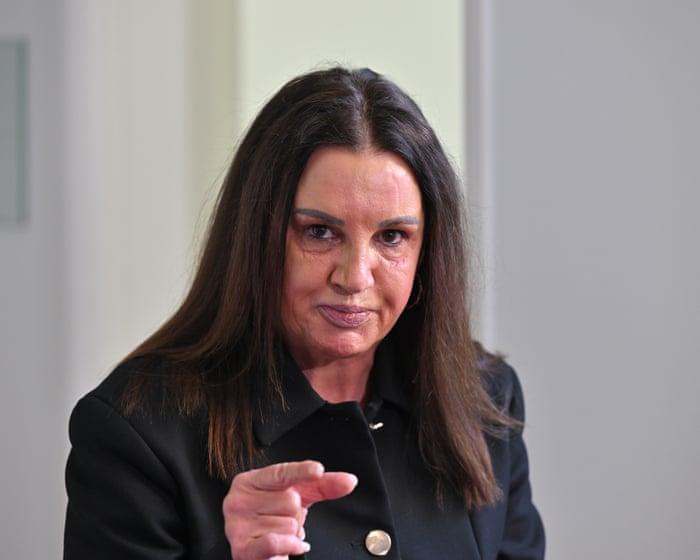
Australia’s domestic gas reservation is set to be debated and voted on in the lower house today.
Rather than international base companies, determining through algorithms what Australians receive, it empowers people themselves to determine what you receive on your devices, so that you should have that control.
This isn’t about government having a greater role. It’s about people having a greater role, having more control themselves, and it’s deserving of support of this parliament.
Continue reading...
© Photograph: Mick Tsikas/AAP

© Photograph: Mick Tsikas/AAP

© Photograph: Mick Tsikas/AAP
SAUL LOEB / AFP via Getty Images
The Federal Reserve held interest rates steady as was widely expected. The rate remained unchanged after a 10-2 vote, where 2 officials voted to hike rates by 25 bps.
Fed chair Kevin Warsh, who began his term leading the central bank in May, said the Fed is working to deliver future price stability and quash inflation during the Federal Open Market Committee press conference following the hold announcement.
"The period right in front of us is information rich," Warsh said.
He added: "We're going to be able to figure out what's the appropriate protocol, as part of this package that we started to deliver five months ago, to deliver price stability."
In September, the Fed opted for a quarter-point increase — the first hike in three years — aimed at tackling rising inflation. The decision to hold rates comes less than a week before US midterm elections, where the country's affordability crisis and rising energy and oil prices are fresh on voters' minds. Warsh said politics played no role in the decision.
Here is how smart people in business and finance are reacting to the hold — and why many expect another rate hike in December.
Haigh is among the Fed watchers who expect a hike to be the likely outcome of the final Fed meeting of the year.
"We expect the Fed to resume rate hikes in December," Haigh said. "September's strong CPI print is a reminder that upside inflation risks remain, and the Fed is likely to look to take out further insurance."
Rick said Wednesday's decision to keep rates steady made sense after September's first hike since July 2023.
"Monetary policy works with long and variable lags, so the Fed will want to see how the higher rates already in the system are affecting consumer spending, business investment and hiring before determining whether additional tightening is necessary," he said. "There's no need to rush."
Davis said the Fed's wait-and-see approach makes sense as inflation remains above the Fed's 2% target and the job market has cooled without "showing the kind of widespread deterioration we'd typically associate with a recession."
"One thing worth watching is how the bond market responds," Davis said. "The Fed controls short-term interest rates, but longer-term yields reflect a much broader set of forces, including inflation expectations, economic growth and Treasury supply. With the 10-year Treasury yield around 5%, financial conditions have already tightened considerably. Higher borrowing costs can do some of the Fed's work without another rate hike."
"The Fed's choice to hold today will have little noticeable impact for everyday household life," she said. "But consumers paying attention could feel let down by the seeming inaction on inflation from the Central Bank."
Renter suggests that families feeling financial strain cut back on discretionary expenses, as prices are likely to remain high. Those not feeling as much strain could put some money into extra savings.
Boockvar said markets would likely be on the lookout for unofficial guidance on rates from central bankers in the days and weeks ahead. Fed Chair Kevin Warsh has leaned away from the central bank issuing official formal guidance. But other Fed officials have been more forthcoming about their views on monetary policy lately, such as by speaking about rates in public remarks.
"I'm sure again Chair Warsh will dance around making any commitment and we'll be more reliant on the upcoming speeches and comments that his colleagues give," Boockvar wrote in a note to clients on Substack.
Seema Shah said the hold was a good call. Amid global and economic uncertainty, the Fed has time to gather more data. Yet, she said hikes in December and early 2027 are expected.
"AI may be booming, but the broader economy is not firing on all cylinders, and elevated geopolitical uncertainty argues against rushing another hike," she said. "But the direction of travel remains clear. The Fed is still taking back some of last year's rate cuts, and the two dissents underline that tightening bias."
Brian Coulton said the Fed is holding steady for more information before "pulling the trigger again." He also expects another hike in December, based on economic factors indicating "upside risks to the US inflation outlook."
"With 2 of the 12 voting members opting for a hike, and a more bullish assessment of current growth trends, it looks like we will get another hike in December," Coulton said. "The statement characterized economic activity as expanding at a 'strong pace' rather than the 'solid pace' description used in September."
WASHINGTON (AP) — The Federal Reserve kept its key rate unchanged Wednesday at about 3.9% despite stubbornly high inflation, as Chairman Kevin Warsh suggested its policies are already showing signs of having an impact.
“Inflation remains elevated,” the Fed said in a statement released after its two-day policy meeting. Holding off on an increase will allow “the accumulation of more information” that will help determine what policy the Fed should pursue “to ensure a timely return of inflation” to the central bank’s 2% inflation target, the statement said.
The Fed raised its benchmark rate last month for the first time in three years, defying President Donald Trump’s demands for rate cuts, in an effort to get inflation back to its 2% target in a “timelier” manner. The Fed is tasked by Congress to combat inflation, and it does so by lifting rates to slow borrowing and spending and cool price increases.
Wall Street investors and many economists continue to expect a quarter-point rate hike at the central bank’s next meeting Dec. 8-9.
The Dow Jones Industrial Average, Standard & Poor’s 500 index and Nasdaq index all dropped after the Fed announcement but regained much of their losses by closing bell.
The Fed’s decision comes just six days before a midterm election that has focused heavily on concerns around the cost of living and affordability. Consumers have generally soured on an economy weighed down by more expensive gas, groceries, and clothing, among other items. Warsh denied the election played a part in the Fed’s staying pat.
“Politics played no role in the decision,” he said at a news conference after the announcement. “I just spent two days with my colleagues upstairs. I didn’t hear an utterance about politics.”
Warsh faces plenty of challenges in getting inflation back to target. Some of the forces pushing up prices — specifically the rapid buildout of artificial intelligence infrastructure and higher energy prices — may not be easily tamed by higher interest rates.
Still, Warsh said the “overwhelming consensus” among Fed officials is that what they’ve done “is starting to work some,” noting that credit conditions “tightened for some businesses and households.”
He said specifically that as large tech firms ramp up their borrowing to build data centers, higher rates will have a greater ability to cool that investment.
“Do interest rates matter?” Warsh asked. “I believe they do, and I don’t think they’re divorced from the rest of the economy.”
Two Fed officials dissented from Wednesday’s decision, with Fed governor Lisa Cook and Federal Reserve Bank of Cleveland President Beth Hammack voting in favor of hiking rates by a quarter point. This is Cook’s first dissent since she was appointed to the board by President Joe Biden in 2022.
Cook has been targeted by the Trump administration, which tried to fire her last year, though the Supreme Court in June ruled she could keep her job while litigation played out. No president has fired a Fed governor before, a sign of the Fed’s longstanding independence from day-to-day politics. Trump renewed his attempt to remove Cook last month by setting up a committee to look into allegations Cook committed mortgage fraud, which she has denied.
Trump has also slammed the Fed for raising its key rate last month, though he largely blamed the central bank’s rate-setting committee, rather than Warsh, whom he appointed.
Parts of the economy are already being hit by higher rates, which were lifted by market forces, even before the Fed hiked last month. The average 30-year mortgage rate reached a three-year high of 7.4% earlier this month, though it has since slipped a bit. Higher mortgage rates have made buying a home unaffordable for 5 million more Americans since the beginning of the year, according to Oxford Economics, a consulting firm. Over time, Fed rate hikes can make mortgages, auto loans and credit card borrowing more expensive, adding to Americans’ sense that things like homes and cars are getting pricier.
Inflation picked up in September, when consumer prices rose 3.7% compared with a year earlier. The increase was much bigger than the 2.4% rate in February, just before the Iran war.
And on a monthly basis, the consumer price index — the most widely followed inflation gauge — rose 0.3% in both August and September. At that pace over a full year, inflation would rise much more quickly than the Fed’s 2% target.
A separate inflation measure more closely followed by the Fed, the personal consumption expenditures price index, comes out Thursday and is forecast to have jumped 3.6% in September from a year earlier, up from 3.4% in August. Core prices, which exclude the food and energy categories, are forecast to have risen 3.1%, up from 3% the previous month.
The Fed’s policy meeting is part of a busy week for central banks around the world. The Bank of Canada will also meet Wednesday and is forecast to lift its key rate a quarter point, to 2.5%. Policymakers at the European Central Bank and the Bank of Japan are both scheduled to meet Thursday and are expected to keep their key rates unchanged.
For Warsh and the Fed, another key consideration is that the U.S. economy is growing at a healthy pace and unemployment remains low, at 4.2%, even if hiring is also sluggish. The government will report Thursday on growth for the July-September quarter, which is expected to reach 3%, according to a forecast by data provider FactSet. That would be up from 2.2% in the April-June quarter.
Many economists argue that solid growth is evidence that interest rates aren’t particularly high and the economy could withstand higher rates to combat inflation.
The post Federal Reserve holds interest rates steady despite elevated inflation appeared first on MS NOW.
The Federal Reserve will change its calendar next year to dedicate one of its eight meetings to a broad discussion of monetary policy strategy rather than deciding the appropriate policy rate, Fed chairman Kevin Warsh said Wednesday. Warsh said that
The post Warsh Announces A New Type of Fed Meeting Focused on Strategy appeared first on Breitbart.


Graham Merwin / Business Insider
November 11 marks the 100th birthday of Route 66, the iconic American highway that runs from Chicago to California.
I grew up in St. Louis, right along the old route, so, in honor of the anniversary, I set out to drive part of it.
Along the way, I met people who've kept the road's legacy alive and their businesses afloat.
However, for every store that has survived, I was surprised to see even more motels, gas stations, and restaurants boarded up.
They stood as phantoms of a forgotten era. Their neon signs went dark long ago.
These are the ghost towns of Route 66 that stayed with me long after we'd left.
Graham Merwin / Business Insider
Glenrio is one of the best-preserved ghost towns from the mid-1900s in the United States. It sits right along Route 66 and straddles the border between Texas and New Mexico.
Abby Narishkin / Business Insider
The town was never huge, peaking at 100 people.
Beginning in the early 1900s, it was a robust railroad community, with multiple grocery stores, a post office, and service stations.
Then, it became a haven for drivers fleeing the Dust Bowl and braving Route 66 through the desert.
Today, abandoned buildings dot the town.
Graham Merwin / Business Insider
Crossing over the interstate, we arrived at the main stretch of Route 66 through Glenrio.
This was once a bustling corridor along the state line. Texas had lower gas prices than New Mexico, so stations were built on the Lone Star side of the border.
Abby Narishkin / Business Insider
In the 1970s, Interstate 40 bypassed Route 66 and this town. Travelers stopped coming by, and virtually overnight, this town dried up.
What's left of it is overwhelmed in eerie silence. The former Texaco and the 1969 Pontiac Catalina out front sit unmoving, riddled with rust.
Brownlee's daughter is the only remaining resident of Glenrio. Her husband was killed during a robbery while working in the neighboring town. That's the 1969 Pontiac Catalina that he drove to work every day.
Graham Merwin / Business Insider
I could only imagine how cozy the chrome details and the small footprint of the diner would've felt after a long drive in the 1950s.
After a short stint as an antique and oddities shop, the diner permanently closed in the 1970s.
Graham Merwin / Business Insider
On one side, it reads "Last Stop in Texas." The verbiage added to the ominous feeling lingering in this place.
Graham Merwin / Business Insider
Texas had many dry counties at the time, but this part of New Mexico allowed alcohol. So the motels and bars were cleverly built on the New Mexico side of the border, and loads of folks came here to drink.
Just like the diner next door, the motel closed in the 1970s.
Graham Merwin / Business Insider
The only thing left standing in this town is a new smoke shop that opened in 2023.
Just like in the days of dry counties, it's on the border for a reason. Recreational marijuana is still illegal in Texas, but it's been legal in New Mexico, where the shop sits, since 2021.
Graham Merwin / Business Insider
I asked Harrah, the shop's general manager, what it's like to work in a town that essentially doesn't exist.
"Time doesn't exist either here. Texas is in Central, and New Mexico is in Mountain [time]. So it's an hour difference depending on where you are. And then it's exit zero. So it's really just its own entity, its own energy, its own everything," she said.
Graham Merwin / Business Insider
The ghost stations of Glenrio were far from the only boarded-up gas pumps we came across on our road trip down Route 66 from Amarillo, Texas, to Tucumcari, New Mexico.
The construction of the interstate hurt the economies of the other towns along this section of the old road, too.
Graham Merwin / Business Insider
The station was originally named Tommy's Cafe and Phillips 66.
Graham Merwin / Business Insider
When we finally arrived in Tucumcari, New Mexico, where we planned to stay the night, I thought the haunting, empty buildings along Route 66 were behind us. Tucumcari is, I figured, a much bigger town.
But I was wrong.
So many neon lights were dark here.
Graham Merwin / Business Insider
But unlike Glenrio, there are actually people left living in Tucumcari who've had to witness the change.
Graham Merwin / Business Insider
At night, we were filming one of the town's last neon signs when a beautiful blue car drove by.
We flagged him down and met Rocky Chavez, a lifetime resident of Tucumcari. I joined him in his 1966 Chevy Impala, cruising down Route 66. Over the roar of his engine, he told me all about how the town used to be.
"Back in the heyday, this whole town was nothing but neon lights. It was so beautiful, every business was open. We had 2,000 motel rooms. We had 36 gas stations. We had like 32 restaurants," he said.
Graham Merwin / Business Insider
"There were almost 20,000 people at one time here. We had the railroad, the trucking companies, Levi Strauss used to be here," Chavez said. "Driving down this boulevard when I grew up here was so full of life. Now, you pass, and all the buildings are boarded up. There's nothing left."
Graham Merwin / Business Insider
There's something poetic about graffiti giving them new life and weeds transforming them once again.
The mere fact that they're still standing in any form means they haven't been forgotten.
They can't be. They're forceful reminders of this route through American history. And as I drove down Route 66, it felt like I was driving through a living museum.
Graham Merwin / Business Insider
I can't help but think about the family who spent their lives keeping these businesses open, only for them to fall into disrepair.
What would they think now? Would they, like Chavez, be quiet, lost in thought, as they speed by what little is left? Maybe in that way, they're cruel reminders of what was and likely will never be again.
Graham Merwin / Business Insider
While those rusted-out hot rods and boarded-up buildings still haunt me, I have settled on a semblance of optimism as I think back on this road trip.
We came across so many people who are still fighting to keep this stretch of cement alive. And to each person I asked, "Why should people care about Route 66?"
One woman told me, "People think it's just a road, but it's not. It's the path to people.
And the more I drove, the more I realized she was right.
Graham Merwin / Business Insider
Rob Federico and his wife, Dawn, drove down Route 66 until they ran out of gas in Tucumcari. They bought the motorcourt in 2020. They welcomed me with open arms and a killer cup of coffee.
In the end, it was less about the ghost gas station in Tucumcari and more about Chavez, who'd picked up a weary journalist and given her the cruise of a lifetime.
The left-wing Labour Party government will raise fresh taxes on savings and property income as spending on welfare and foreign subsidies will continue to grow, recently installed Chancellor John Healey told the House of Commons on Wednesday.
The post UK Announces Tax Hikes on Savings and Property Income as Welfare Spending Rises appeared first on Breitbart.
Bill Gates argues that the next two decades of AI development will bring "winners and losers," and he's arguing it's up to governments, not tech companies, to manage the fallout. According to Gates, some Americans will live "like the Amish" to avoid AI's potential for "dramatic harms."
The post Bill Gates Predicts that Some People Will Live ‘Like the Amish’ to Avoid AI appeared first on Breitbart.
In early June, a trailer carrying roughly $13 million worth of computer server equipment set out across the Mojave Desert toward Fayetteville, Georgia, with an unmarked sedan trailing behind it, carrying two off-duty law enforcement officers hired to watch over the load. The truck was headed towards a sophisticated theft, part of a $100 million crime wave targeting tech gear headed for AI data centers.
The post Crooks Target AI Data Center Equipment Shipments in $100 Million Crime Wave appeared first on Breitbart.


Weather proved bad for corn but good for sweet potatoes. Other crops fell somewhere in between for NC farmers, but diesel prices were a drag.
Mixed results for NC farmers in 2026 is a story from Carolina Public Press, an award-winning independent newsroom. Our breakthrough journalism shines a light on the critical overlooked and under-reported issues facing North Carolina’s more than 11 million residents. Please consider making a contribution to support our journalism.
Former Prime Minister Mateusz Morawiecki has launched a sharp critique against the government of Donald Tusk, accusing state-owned energy giant Orlen of drastically overcharging Polish citizens and businesses for natural gas.
Speaking on behalf of his political movement Rozwój Plus (Development Plus), Morawiecki demanded an immediate and thorough audit of Orlen’s pricing margins, claiming the company is exploiting its market position at the expense of Polish households.
According to Morawiecki, Orlen has been acquiring liquefied natural gas (LNG), largely sourced from the United States, at a rate of approximately 100 PLN per megawatt-hour (MWh). However, the former prime minister alleges that the state-controlled company is reselling that same gas to Polish consumers at inflated rates as high as 350 PLN per MWh.
Orlen kupuje gaz za ok. 100 zł/MWh, a Polakom sprzedaje nawet za 350 zł! Budżet dziurawy jak ser szwajcarski, a za nieudolność rządu znów płacą Polacy! Oto prawdziwy CPN Tuska – Ciepło Przywilejem Najbogatszych!
— Mateusz Morawiecki (@MorawieckiM) October 28, 2026
“If this is not a gigantic scandal in the Polish economy, hitting the wallets of Poles, the wallets of small and medium-sized enterprises, then I don’t know what is,” he said during an interview on Wirtualna Polska’s Morning Show, as cited by Wiadomosci, framing the pricing strategy as a failure of economic oversight by the current administration.
Prime Minister Donald Tusk and his coalition government have pushed back against the narrative of mismanagement, according to the portal. Tusk has repeatedly defended Orlen’s current corporate governance and market valuation, drawing a sharp contrast between its current operation and its performance under the previous Law and Justice (PiS) administration.
Supporters of the current government structure argue that Orlen’s pricing strategies align with broader European market realities, long-term contract structures, and the financial necessity of funding Poland’s ongoing green energy transition.
The clash over Orlen arrives at a moment of heightened political maneuvering in Poland. Morawiecki is currently in the process of formally registering a new political party stemming from his Rozwój Plus movement.
The energy price dispute serves as a central pillar in a broader opposition campaign targeting the Tusk government’s economic policies, particularly its handling of the national budget deficit and inflation.
As winter approaches, the cost of living and energy security remain highly sensitive topics for the Polish electorate, ensuring that the battle over Orlen’s balance sheets will remain at the forefront of the country’s political debate. And while Morawiecki had originally indicated he would work within his previous party, Law and Justice (PiS), that ship has clearly sailed.
The post Poland: Former PM Morawiecki blasts energy giant Orlen for inflating profits, hurting consumers appeared first on Remix News.
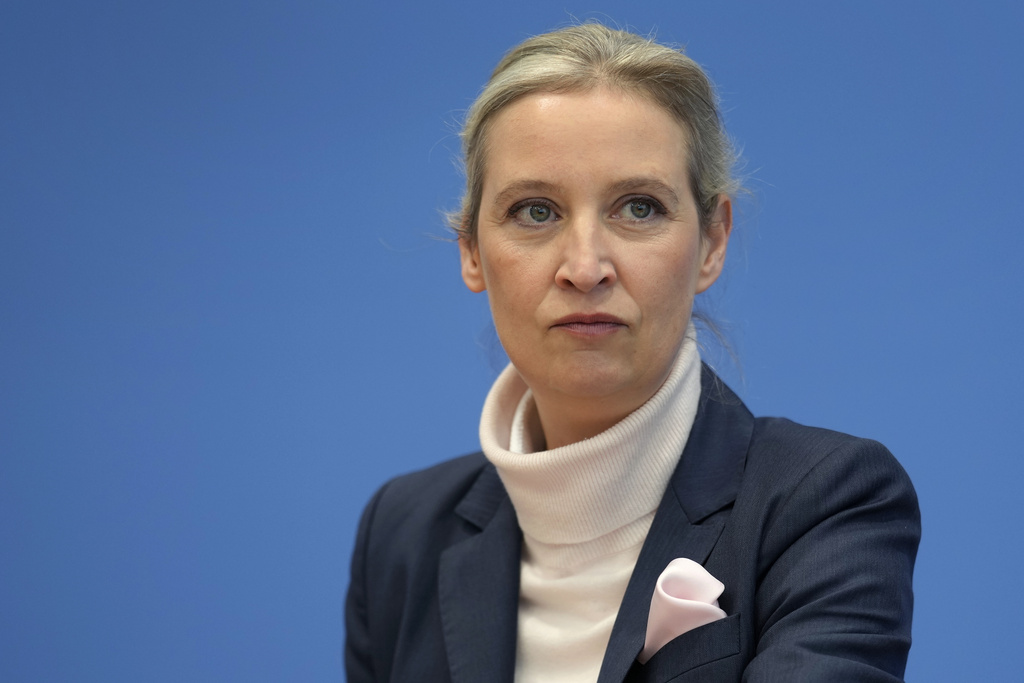
AfD has reached another milestone, this time in the German state of Hesse. The latest “Hessentrend” poll shows the party, co-chaired by Alice Weidel, at a record 23 percent, just two points behind the CDU/CSU, after the latter suffered a seven-point drop to 25 percent.
This is the lowest result the CDU has ever achieved in this survey for Hesse, notes Nius.
The Greens, meanwhile, reached 16 percent, the SPD 15 percent, and the Left Party 7 percent, the FDP 4 percent, and the Free Voters 3 percent, making a black-red coalition no longer possible.
Weidel pointed out the news on her X page, posting: “Even in the West, more and more citizens are realizing that the firewall-CDU is governing the country ever deeper into the abyss with left-wing policies. A turnaround can only come with the AfD.”
Hessen: CDU stürzt ab; AfD legt zu. Auch im Westen merken immer mehr Bürger, dass die Brandmauer-CDU das Land mit linker Politik immer weiter in den Abgrund regiert. Eine Kehrtwende kann es nur mit der AfD geben. https://t.co/ujS6Ic9ZLR
— Alice Weidel (@Alice_Weidel) October 27, 2026
Dissatisfaction with the state government is clearly behind the new results, with 54 percent saying they are dissatisfied with its work and only 38 percent indicating it is doing enough.
Regarding any form of cooperation with the AfD, an issue long touted by ruling parties as of key importance to their base, no majority favors a strict separation, writes Nius. Around a third support decisions on a case-by-case basis, while another quarter are generally in favor of cooperation.
As to an outright ban on the AfD, some 50 percent reject the idea, rising to 59 percent among CDU voters.
Weidel has been on a roll, pointing out the continued failings of the current ruling parties.
“Black-Red is getting clobbered by the industrial electricity price,” she wrote in another post yesterday, highlighting the importance of energy prices for German industry, which has been in freefall.
Die Milliarden-Investition von Audi für ein Werk in den USA ist ein Warnsignal: Schwarz-Rot treibt die Autoindustrie durch Verbrennerverbot und hohe Energiekosten ins Ausland. Nur mit der AfD wird es Technologieoffenheit und bezahlbare Energie geben! https://t.co/QDRCwTp23M
— Alice Weidel (@Alice_Weidel) October 26, 2026
“Due to the rising energy prices, the costs for subsidies to companies are growing. The AfD will make electricity affordable for everyone again with a sensible energy policy!” she added.
Bemoaning in yet another post Audi’s new plant announcement in the U.S., Weidel accused the ruling coalition of “driving the automotive industry abroad through engine bans and high energy costs” and promised that the AfD will deliver “technological openness and affordable energy!”
Weidel also blasted left-wing parties for attempting to “craft themselves a new electorate” by granting foreigners voting rights after just 5 years of residency.
The post AfD hits record in West German state, as voters dissatisfied with current government surge appeared first on Remix News.