❌

Reading view

Fed Holds Rates Steady Despite Lack of Progress on Inflation

Kevin M. Warsh, the chairman of the Federal Reserve, said an “information-rich” period before the central bank’s gathering in December will help officials determine next steps for policy.

© Athit Perawongmetha/Reuters

Kevin Warsh, the Fed chairman last week said that more had to be done to tame inflation.
  •  

China Steps In to Rescue Stocks, But the Market Continues to Fall

The Communist Party uses a “national team” of state-owned investment funds to stem the market rout. But this time, investors are not sure it will work.

© Florence Lo/Reuters

President Xi Jinping of China has convened senior leaders to set the government’s agenda, but the economy is likely to take a back seat to politics.
  •  

The Fed Is Expected to Hold Rates Steady. Warsh Will Have to Explain Why.

Inflation is moving in the wrong direction and the labor market remains stable, a combination that bolsters the case for higher interest rates.

© Athit Perawongmetha/Reuters

Kevin M. Warsh, chairman of the Federal Reserve, said that the central bank had more work to do to tame inflation, but that there was no urgency to raise rates at consecutive meetings.
  •  

In Anthropic I.P.O., Goldman and Morgan Stanley Slug It Out for Top Bank

Anthropic named the Wall Street firms lead underwriters on its upcoming public offering, a role that will generate generous fees and enormous prestige.

© Victor Llorente for The New York Times

The Goldman Sachs headquarters, center, in Lower Manhattan.
  •  

The Fed Is Expected to Hold Rates Steady. Warsh Will Have to Explain Why.

Inflation is moving in the wrong direction and the labor market remains stable, a combination that bolsters the case for higher interest rates.

© Athit Perawongmetha/Reuters

Kevin M. Warsh, chairman of the Federal Reserve, said that the central bank had more work to do to tame inflation, but that there was no urgency to raise rates at consecutive meetings.
  •  

Strengthening Climate Resilience in Coastal Communities of Southern Cuba

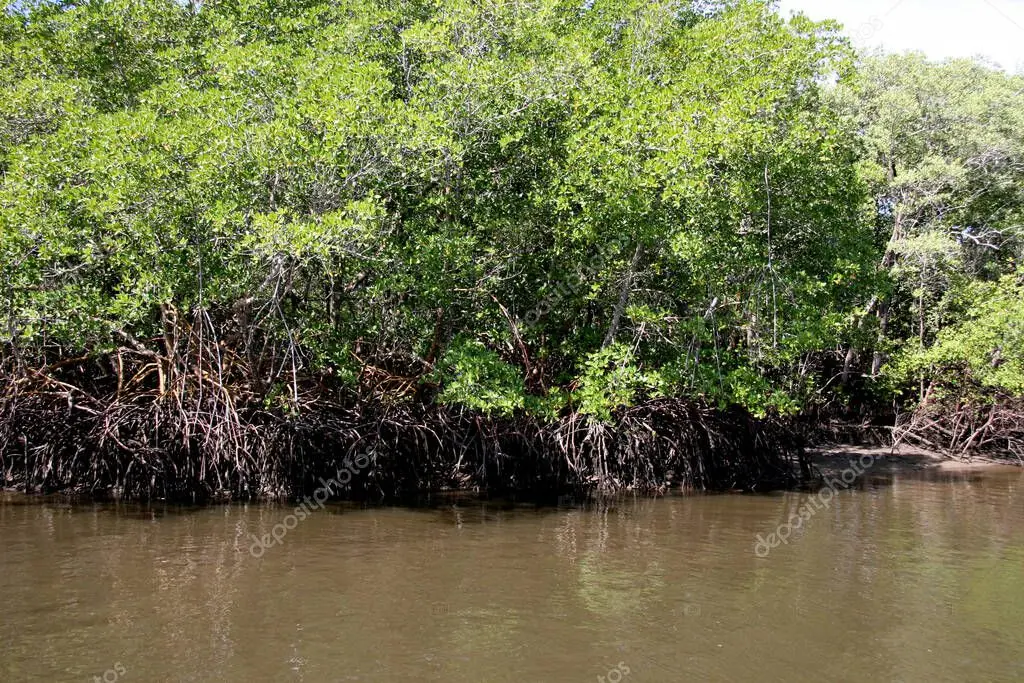
On Monday, scientific institutions and environmental authorities announced that Cuba is advancing scientific and community-based projects to strengthen the climate resilience of vulnerable coastal communities in the southern part of the country. These initiatives involve the study of mangroves, environmental remote sensing, and the integration of human mobility considerations into territorial planning.

RELATED:

Cuba Publishes the Most Comprehensive Botanical Work in Its History

The Center for Environmental Studies (CEAC) presented an analysis of coastline changes between 2016 and 2024, as well as the spatiotemporal variability of the mangroves within the Punta la Iguana ecotone. This area is located at the mouth of the Caunao River, in the Bay of Jagua, in south-central Cuba—approximately 250 kilometers from Havana.

Dr. Minerva Sánchez Llull, a specialist at the CEAC, explained that the team utilized optical remote sensing—incorporating Sentinel-2 imagery and QGIS software—for their analysis. Water quality assessments were based on data from monitoring stations within the bay’s hydrological monitoring program that influence the ecotone.

🌿 Hoy se desarrolló el Taller Final del Proyecto Territorial (PT) Ecotono de Manglar, un espacio de intercambio y socialización de resultados que evidenció el trabajo, la dedicación y los aportes del proyecto al conocimiento y conservación de estos valiosos ecosistemas. pic.twitter.com/EJqVlBeC5V

— Jardín Botánico de Cienfuegos (@botanico_cfg) October 20, 2026

The text reads, “Today, the final workshop for the “Mangrove Ecotone” Territorial Project (PT) took place—a forum for exchange and the sharing of results that highlighted the work, dedication, and contributions of the project toward the understanding and conservation of these valuable ecosystems.”

Sánchez Llull noted that the results indicate a relatively stable coastline over the study period, a slight expansion of mangrove cover around the ecotone, and oligotrophic (nutrient-poor) water conditions at the monitored sites—all of which served as indicators for assessing climate risk in the coastal zone. The study further identified a high level of risk across both sectors of the ecotone, driven by exposure to coastal dynamics and ecological vulnerability, alongside a moderate adaptive capacity. Conservation and Environmental Education

The Cienfuegos Botanical Garden (JBC), the project’s primary implementing entity, presented its achievements. Its director, Niurka Medina Bárzaga, reported on the identification of endemic and threatened species, the propagation and reintroduction of several of these species, and the implementation of environmental education initiatives for children in the Junco Viejo community.

The “Mangrove Ecotone” Territorial Project brought together the JBC, the CEAC (Center for Environmental Studies of Cienfuegos), and the Provincial Meteorological Center to study the relationship between the coastline, mangroves, and climate change in the Bay of Cienfuegos. According to the source, these ecosystems support biodiversity and coastal resilience, making their conservation essential for the region’s environmental management.

Another aspect examined by scientists during the meeting was human mobility and adaptation. In this regard, the Minister of Science, Technology, and the Environment, Armando Rodríguez Batista, emphasized the importance of integrating human mobility into climate change adaptation strategies for vulnerable coastal communities in southern Cuba.

Planned initiatives include a project currently in the validation phase, spearheaded by the International Organization for Migration (IOM) in coordination with the Agency for Social and Humanistic Sciences (AXIS) and the Environment Agency (AMA)—both affiliated with the Ministry of Science, Technology, and the Environment (CITMA)—with support from the IOM Development Fund.

Interesante esto, algo que nuestras autoridades debieran tomar en cuenta y proteger mejor nuestros manglares pic.twitter.com/MDCsy8rBjp

— Cesar 🇵🇦 🖤 (@CesarWi98065754) October 26, 2026

The text reads,”This is interesting—something our authorities should take into account in order to better protect our mangroves.”

The initiative is set to begin in 2027 in Playa Cajío (Artemisa) and Surgidero de Batabanó (Mayabeque), in western Cuba. It aims to strengthen the governance of human mobility within the context of the climate and environmental crisis through socioeconomic studies, participatory assessments, and technical recommendations designed to incorporate these issues into territorial planning and risk management. Both locations are prioritized under the State Plan for Addressing Climate Change—known as “Tarea Vida” (Task Life)—due to their high exposure to coastal erosion, flooding, and sea-level rise.

The project will foster collaboration among scientific institutions, local governments, and communities to develop sustainable responses and strengthen the resilience of these areas. Specialists from AXIS, AMA, and the IOM conducted exploratory visits to both locations, where they engaged with authorities, community leaders, and institutional representatives to discuss the impacts of climate change and opportunities for future action.

Dr. Beatriz Martínez Daranas, a specialist from CITMA, emphasized the importance of conserving marine-coastal ecosystems—even amidst the country’s current economic circumstances and the urgent need to develop the economy through the implementation of the 176 measures approved by the National Assembly of People’s Power.

#Cuba | Cuba is reforming its state-owned enterprises to expand financial autonomy, boost domestic production, and strengthen cooperation with the private sector amid US sanctions.
The government says public ownership will remain central to its economic model.#EconomicReforms… pic.twitter.com/GJMG0FJz6d

— teleSUR English (@telesurenglish) October 16, 2026
  •  

How Worried Should We Be About the Economy? Let’s Look at 2008.

It’s not impossible to spot the characteristics of a brewing financial crisis. We can look to 2008 for clues.

© Illustration by Andrei Cojocaru; photos by Getty Images

  •  

Committee on World Food Security Convenes in Rome

From October 19 to 23, the world gathers in Rome for the 54th session of the Committee on World Food Security (CFS)*—a global platform dedicated to combating hunger and malnutrition, and to upholding the right to food. Discussions will focus on food security, coordinated responses to food crises, and sustainable food systems. The agenda will […]

  •  

EU Parliament Moves to Strengthen Critical Raw Materials Rules Amid Growing Dependence on China

The European Parliament is preparing to vote on amendments to the as Brussels seeks to reduce its dependence on foreign suppliers of minerals essential for defence equipment, electric vehicles, advanced electronics and industrial production.

The proposals, scheduled for debate in Strasbourg on Monday, 19 October, and a vote on Tuesday, would strengthen coordination over strategic supplies and revise the responsibilities of European companies that depend on vulnerable international supply chains.

At the centre of the discussions is a proposal to establish a European Critical Raw Materials Centre, which would coordinate purchasing arrangements, assess supply risks and support the development of strategic reserves.

The initiative comes amid increasing concern over China’s dominant position in the processing and supply of several materials regarded as indispensable to European industry.

Parliament considers stronger European coordination

According to the European Parliament’s October plenary briefing, the proposed Critical Raw Materials Centre would operate as an EU body responsible for several functions currently distributed between European institutions and national authorities.

These would include identifying vulnerabilities in supply chains, conducting risk assessments, coordinating contingency stocks and supporting joint purchasing arrangements.

The objective is to give European governments and manufacturers greater capacity to respond to interruptions in supplies of minerals and processed materials that cannot easily be replaced.

The legislative report has been prepared by the Parliament’s Committee on Industry, Research and Energy, with Dutch Social Democrat MEP Mohammed Chahim serving as rapporteur.

The committee examined amendments to the existing legislation during 2026, with its revised report submitted for plenary consideration on 9th October.

Tuesday’s vote is intended to establish Parliament’s position for negotiations with the Council. It would not, by itself, constitute final adoption of the amended regulation.

China’s position creates supply risks

The European Union depends heavily on imported critical raw materials, particularly those required for batteries, permanent magnets, semiconductors and specialist industrial equipment.

China occupies a particularly important position in the refining and processing of rare earth elements, graphite and several other materials used in high-technology manufacturing.

The concentration of production creates vulnerabilities because disruption at a single stage of processing can affect manufacturers operating across multiple European countries.

According to the Council of the European Union’s assessment of strategic mineral supplies, China is the principal supplier to the EU for numerous materials, including gallium, germanium, magnesium and rare earth elements.

These substances are used in applications extending well beyond electric vehicles.

Permanent magnets are required for certain electric motors, wind turbines and defence systems, while other critical materials are used in radar, satellites, aircraft components and advanced electronic equipment.

Restrictions affecting their availability can therefore have consequences for European industrial output, defence procurement and the development of new technology.

The question for EU policymakers is not simply whether minerals can be obtained, but whether Europe has sufficient alternative sources and processing capacity to withstand restrictions imposed by a dominant supplier.

Existing targets remain difficult to achieve

The Critical Raw Materials Act entered into force in May 2024 and established benchmarks intended to strengthen European production and diversify imports by 2030.

Under the existing framework, the EU aims to develop extraction capacity equivalent to at least 10 per cent of its annual consumption of strategic raw materials, where geological reserves allow.

The corresponding benchmarks are 40 per cent for processing and 25 per cent for recycling.

The legislation also seeks to prevent any single non-EU country from supplying more than 65 per cent of the Union’s annual consumption of a particular strategic raw material at any relevant processing stage.

These are policy benchmarks rather than binding production quotas imposed on individual companies.

Their achievement depends on the development of mines, processing facilities and recycling operations, as well as the ability to attract investment.

New extraction projects frequently require lengthy environmental assessments, infrastructure development and extensive capital investment. Processing operations face additional challenges involving energy costs, technical expertise and commercial competitiveness.

Consequently, reducing import dependence involves more than identifying mineral deposits within European territory.

Greater obligations for manufacturers

The proposed amendments also address the responsibilities of major European companies using strategic raw materials.

Under provisions examined by the parliamentary committee, the European Commission would take a greater role in identifying large manufacturers whose operations depend on strategically important supplies.

These companies could face requirements to assess vulnerabilities in their supply chains, including the geographical location of extraction and processing operations and the ownership of relevant facilities.

The arrangements would be particularly significant for businesses producing batteries, aircraft, drones, satellites, advanced chips and other products considered strategically important.

Where significant risks are identified, companies could be expected to consider measures including diversification, improved material efficiency or maintaining stocks.

The proposals also seek to strengthen recycling and the recovery of valuable materials from existing products, reducing the quantity of newly extracted resources required by European industry.

Recycling alone cannot remove the need for imports, particularly where demand for new technologies is increasing, but it can provide an additional source of supply.

Supply security becomes an industrial priority

The legislation forms part of a wider effort to link European industrial policy with economic security.

Brussels has been seeking additional raw materials partnerships with third countries, while manufacturers remain concerned about the commercial cost of building alternative supply chains.

Recent EU discussions concerning cooperation with Vietnam illustrate the emphasis being placed on securing alternative access to minerals such as tungsten and rare earth elements.

However, diversifying supplies does not necessarily mean transferring extraction and processing to Europe. Partnerships with reliable external producers may remain essential, particularly for materials unavailable in sufficient quantities within the Union.

The proposed European centre would therefore have to balance internal production, international purchasing, strategic stocks and commercial demand.

The immediate legislative issue is whether the revised framework gives European institutions sufficient powers to coordinate these activities without placing disproportionate administrative obligations on businesses.

Tuesday’s parliamentary vote will determine the negotiating position MEPs take into discussions with EU governments over how those responsibilities should be distributed.

  •  

Hungary Remains Under EU Article 7 Scrutiny Despite Progress Under Magyar Government

EU ministers have reviewed reforms introduced by Prime Minister Péter Magyar’s administration but left the Article 7 proceedings against Hungary unresolved. The European Commission has acknowledged significant progress while warning that further changes are required to restore the rule of law.

The European Union has maintained its Article 7 proceedings against Hungary despite acknowledging significant improvements in the country’s rule-of-law situation since Prime Minister Péter Magyar’s government took office earlier this year.

Ministers meeting at the General Affairs Council in Luxembourg on Tuesday, 13 October, reviewed reforms introduced by the Hungarian administration and received an updated assessment from the European Commission.

The proceedings, initiated by the European Parliament in September 2018, remain open eight years after concerns over judicial independence, corruption, media freedom and democratic accountability first prompted action under the EU treaties.

No decision was announced to terminate the procedure following the latest meeting.

Brussels acknowledges progress

European Commissioner Michael McGrath said ahead of the discussions that Hungary had made substantial progress towards addressing the institutional problems inherited from the administration of former prime minister Viktor Orbán.

Speaking in Luxembourg, McGrath acknowledged improved cooperation between the Hungarian government and European institutions.

However, he also indicated that the reform process remained incomplete, noting that the new administration had been in office for only several months.

The Commission’s assessment reflects the changing relationship between Budapest and Brussels following Magyar’s election victory and the subsequent introduction of reforms intended to restore judicial and institutional independence.

As EU Today reported in June, the change of government created an opportunity to resolve long-standing disputes over the condition of Hungary’s democratic institutions and the suspension of European funding.

The latest Council discussions indicate that the EU is prepared to recognise reforms already undertaken without automatically treating them as sufficient to close the Article 7 procedure.

An eight-year institutional dispute

The European Parliament initiated the proceedings in 2018 after raising concerns over developments affecting Hungary’s constitutional system, judicial independence, corruption safeguards and civil society.

Article 7 of the Treaty on European Union provides mechanisms for responding when a member state is considered at risk of seriously breaching the Union’s fundamental values.

Under its preventive provisions, the Council can determine whether there is a clear risk of such a breach.

More severe measures, including the possible suspension of certain membership rights, require additional procedures and higher institutional thresholds.

Hungary’s case has remained within the preventive stage, with successive Council meetings examining the country’s legal and political developments.

The Council’s account of the 13 October meeting confirms that Hungarian representatives presented measures intended to address concerns raised by the European Parliament and member states during earlier proceedings.

The Commission also briefed ministers on its latest assessment.

The meeting did not produce a formal finding that the outstanding concerns had been fully resolved.

Magyar faces the consequences of Orbán’s legacy

Since assuming office, Magyar has sought to reverse elements of the institutional structure established during Orbán’s lengthy premiership.

The reforms have included measures concerning public administration, judicial accountability and the relationship between national institutions and European law.

The new government has also attempted to improve relations with Brussels after years of disputes that affected EU budget decisions, sanctions policy and cooperation over Ukraine.

EU Today has previously examined Magyar’s programme of institutional renewal and the political difficulties involved in changing institutions shaped by the previous administration.

Reforming legislation does not necessarily transform the institutions responsible for applying it.

Judicial appointments, regulatory structures, public procurement procedures and anti-corruption enforcement may all require additional measures before the effects of reform can be fully assessed.

The European Commission must therefore consider not only the laws adopted by the new government but also whether the institutions concerned operate independently and effectively.

EU funding remains a separate question

The Article 7 proceedings are closely associated with wider disputes over Hungary’s access to European funding, although the relevant legal mechanisms are different.

During Orbán’s administration, the Commission and Council used financial conditionality procedures to restrict access to certain EU resources because of concerns affecting the protection of the Union’s budget.

Magyar’s reforms have opened the possibility of reversing some of those restrictions.

As EU Today reported in September, the Commission moved towards releasing €4.2 billion following changes intended to address rule-of-law concerns.

The financial decisions involve compliance with conditions attached to EU funding and can proceed independently of the Article 7 mechanism.

Consequently, the release of money does not automatically establish that all the institutional problems identified in the original parliamentary proceedings have been resolved.

Likewise, the continuation of Article 7 does not necessarily prevent the Commission from recognising progress under separate funding arrangements.

Who can end the proceedings?

McGrath addressed the possibility of terminating the procedure during remarks before Tuesday’s meeting.

He explained that the Commission could provide its assessment but did not have unilateral authority to bring the Article 7 process to an end.

In his recorded statement in Luxembourg, the Commissioner pointed to the responsibilities of the European Parliament, which initiated the case, and the Council, which has conducted the subsequent examination.

The institutional arrangements mean that improved relations between the Commission and the Hungarian government cannot by themselves dispose of the proceedings.

The Council must consider the reforms and the remaining concerns within the framework established by the treaties.

Political agreement among member states will consequently be required to determine how the process develops.

A changed relationship with Brussels

The latest discussions take place against a substantially different political background from previous years.

Budapest has recently withdrawn objections to further steps in Ukraine’s EU accession negotiations following Ukrainian legislation addressing educational rights for Hungarian speakers and other national minorities.

The change has removed one obstacle to enlargement negotiations and reflects the government’s more cooperative approach towards other EU institutions.

Nevertheless, Hungary’s position on foreign policy and enlargement is distinct from the assessment of its domestic rule-of-law arrangements.

The Council’s examination remains focused on the institutional concerns that led to the procedure being initiated.

The Irish presidency’s summary of the October Council meeting confirms that ministers received an update rather than reaching a new formal determination.

The proceedings therefore remain open while the Commission and member states continue examining the measures introduced by Magyar’s administration.

The coming decisions will establish how European institutions respond when a new government undertakes reforms intended to reverse the conduct that originally led to action under Article 7.

For Hungary, the outcome will influence its relationship with Brussels well beyond the immediate debate over EU funding. For the Union, it will demonstrate how its rule-of-law procedures operate when political circumstances change and the member state concerned begins addressing previously identified institutional problems.

  •  

Stakeholder Conference on the Common Maritime Agenda for the Black Sea 2026

The Black Sea is a strategic region of key importance for food security, the blue economy, maritime transport, tourism, fisheries, and aquaculture. This was stated by the Bulgarian Deputy Minister of Agriculture and Food, Prof. Dr. Ivan Paligorov, at the opening of the Stakeholder Conference on the Common Maritime Agenda for the Black Sea 2026 […]

  •  

Sea level has risen by 11 cm since 1993

The World Meteorological Organization (WMO) has welcomed a declaration adopted on September 24 that emphasizes climate change adaptation, disaster risk reduction, and resilience-building through improved data, risk assessments, and early warning systems. The declaration acknowledges the role of specialized UN agencies, including the WMO, in coordinating scientific data related to sea-level rise. According to UN […]

  •  

Mamdani releases plan to combat antisemitism and hate crimes in New York City

Pandering to Israel partisans above the needs of other New Yorkers, NY mayor increases security funding for synagogues, will focus on folding Jewish history into public school education, and pledges to highlight important Jewish cultural and religious sites in the mayor’s day-to-day governance of the city

  •  
❌