Russia expects to begin regular year-round eastbound shipping along the Northern Sea Route in early 2027, as additional nuclear icebreaker capacity, newer ice-class LNG carriers and pressure to redirect energy exports toward Asia bring the long-delayed ambition closer to reality.
Russia expects cargo transits along the Northern Sea Route (NSR) to more than double in 2026, marking a substantial increase in Arctic shipping despite Western sanctions, although volumes remain far below Moscow’s original ambitions for the route.
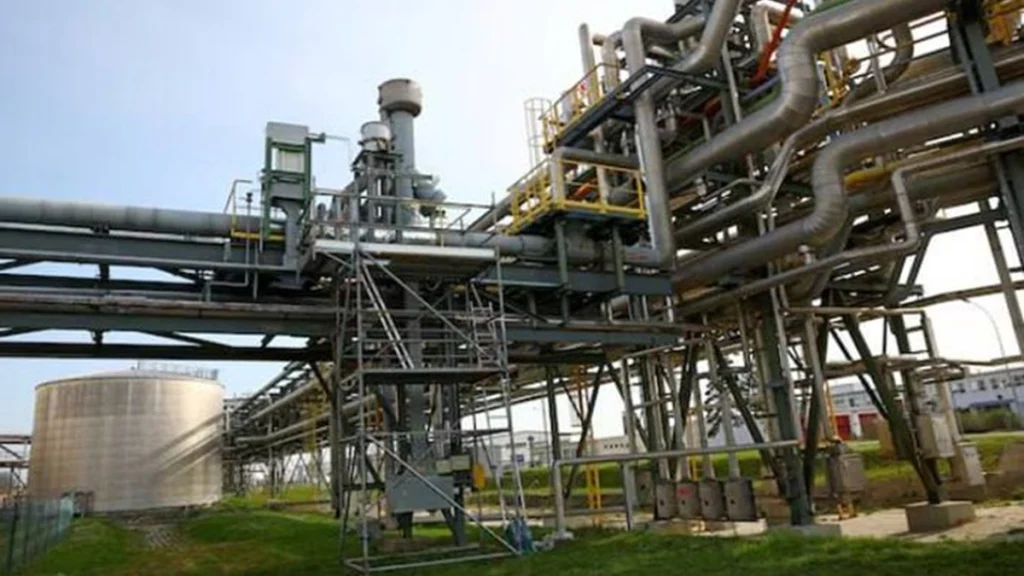
As Fortis expands its facility along the Fraser, local air pollution is expected to worsen.
Emissions from the site of a recently approved LNG expansion in Metro Vancouver are projected to exceed Canadian ambient air quality standards for nitrogen dioxide, a harmful pollutant, according to company reports.
Last month, the provincial and federal governments approved FortisBC’s plan to further expand Tilbury, its decades-old LNG facility in North Delta, helping to turn it from a domestically focused, small-scale operation into a large export-oriented facility.
The province described the newly approved expansion as a “clean energy” project.
During the commissioning phase and when the facility’s equipment is malfunctioning, nitrogen dioxide levels in parts of Richmond, Delta and Vancouver are projected to be between three and 16 times above Canada’s guidelines for maximum hourly emissions. That estimate doesn’t include the cumulative impacts of emissions from Tilbury’s other, already approved expansions at the site.
During ongoing operations, Fortis predicts the site and associated marine traffic will slightly exceed national standards for average annual nitrogen dioxide levels, indicating the potential for long-term, chronic exposure. Those exceedances are expected to extend across schools, homes and child-care centres in southern Richmond.
Those elevated annual levels are expected even after factoring in significant reductions in the project’s predicted nitrogen dioxide emissions from yet-to-be-determined mitigation efforts Fortis says it will employ. If those mitigation efforts are unsuccessful, Tilbury’s emissions could be even higher.
The company has not yet made its final investment decision to proceed with the project, and some permits are still pending, but the recent approvals signal the federal and provincial governments are willing to allow the expansion to proceed.
The Tilbury expansion “has the potential to deliver significant economic and environmental benefits for B.C., and jobs for British Columbians,” Minister of Energy and Climate Solutions Adrian Dix said in a press release announcing the project’s approval.
But Tilbury’s projected nitrogen dioxide emissions suggest potential health implications from the expanded facility.
According to Canada’s Environment Ministry, long-term nitrogen dioxide exposure can increase susceptibility to respiratory infections, increase risks of developing asthma, affect cardiovascular health, lead to reproductive issues and increase the risk of premature death.
In an emailed statement, FortisBC told the Tyee: “The Tilbury Phase 2 LNG Expansion project will be built and operated in accordance with all municipal, provincial, and federal guidelines.” It added that the project must meet regulatory requirements by various levels of government.
A provincial spokesperson said government communications staff are unable to comment during the ongoing election period.
Emissions are predicted to increase
The Tilbury facility has produced LNG on site since the 1970s, relying on the liquefied fuel’s condensed form to store enough gas near the province’s urban centre to boost the region’s energy supplies during cold snaps. It was a low-profile operation, producing a small amount of LNG per year, mostly to supply local demand.
Just over a decade ago, Fortis began moving its expansion forward in a piecemeal fashion. The company first applied to build a new, bigger storage tank and to increase its liquefaction capacity in a project it called Phase 1A. In 2024, the province also approved the company’s plan to build a marine jetty that would allow export tankers into the river for the first time. This July, the province provided a regulatory exemption to support another expansion of the site’s storage and liquefaction capacity that Fortis has dubbed Phase 1B. The newly approved Phase 2 project will further expand liquefaction at the site, increasing the facility’s total production to 3.5 million tonnes of LNG per year.
LNG facilities like Tilbury use energy-intensive compressors to turn natural gas into a liquid state. Fortis plans to power its compressors with electricity, reducing some emissions during the process. But the company didn’t decide to electrify its hot oil heater, citing uncertainty about energy supply and the cost of power connection upgrades.
In the section of its application discussing its decision to choose gas to power its oil heater, Fortis wrote that “although electrification is seen as a ‘green choice’ and may reduce public opposition to the proposed project, early analysis suggests that there may not be adequate electrical power available to support the proposed project without significant capital upgrades.”
Fortis wrote that the upgrades could compromise the project’s schedule and commercial viability.
Other new components will also produce emissions, including a ground flare stack and acid gas incinerator. Together with the hot oil heater, these parts of the project are expected to produce the bulk of the expansion’s anticipated nitrogen dioxide pollutants.
“Just because you use electric compressors doesn’t mean you have zero emissions,” said Tim Takaro, a physician and researcher with Simon Fraser University and a member of the Canadian Association of Physicians for the Environment.
Pollutants from those systems will add to an already compromised airshed, Takaro said, noting that the region has one of the highest concentrations of nitrogen dioxide in the province.
“They’re already stretched in terms of air quality,” Takaro said.
Although Fortis describes Tilbury’s ground flare as “totally enclosed,” the facility will include a 200-metre open stack surrounding a low flare, meaning its exhaust will still enter the airshed.
When added to the existing pollution in the airshed, Tilbury’s Phase 1A and 1B expansions are anticipated to push nitrogen dioxide levels in the surrounding area above the federal government’s threshold for acceptable emissions, indicating possible short-term, acute exposures.
The company’s estimated maximum nitrogen dioxide emissions during commissioning and malfunctions are predicted to significantly exceed regulatory limits beyond the project’s immediate vicinity, including areas of Richmond, Delta and Vancouver and other parts of Metro Vancouver up to 11 kilometres from the project.
These kinds of disruptions have been ongoing at Canada’s only major LNG facility, LNG Canada, leading to high rates of flaring and bursts of black smoke — a sign that uncombusted or partially combusted gas is being released into the airshed.
Those unburned pollutants are particularly dangerous because they can include volatile organic compounds such as benzene, a potent carcinogen that has no safe threshold, said Dr. Melissa Lem, a Vancouver family physician and past president of the Canadian Association of Physicians for the Environment.
Fortis’s application said its production of volatile organic compounds in the airshed would be “negligible.”
According to Fortis’s application, it expects to vent unburned gas from the facility during mechanical disruptions and during commissioning, when the company expects it will not yet have its flare system installed.
When existing emissions and emissions from Tilbury’s various expansions and associated marine traffic such as LNG tankers are combined, the site is estimated to produce average annual nitrogen dioxide levels slightly exceeding national guidelines, indicating sustained long-term exposure to the pollutant near the facility.
The projections assume potential reductions from a set of mitigation measures for the Phase 2 expansion. According to Fortis, these measures “are not intended to represent final design commitments or regulatory conditions.” Fortis added that it is “exploring an emissions mitigation strategy” to meet air quality standards. The province called for an air quality management plan in its list of conditions for approving Tilbury’s application, including details on how it plans to reduce emissions and the technologies it plans to use.
Climate concerns
Besides local pollution, Lem noted that Tilbury’s forthcoming climate emissions would also have consequences for human health.
Additional emissions from Tilbury’s Phase 2 expansion and its associated upstream gas fracking activity are expected to produce about one million tonnes of carbon dioxide equivalent per year, around 13 per cent of Metro Vancouver’s total target emissions by 2030.
About 800 people die prematurely every year in Vancouver due to air pollution, according to Tyee reporting from 2021. Pollution from wildfire smoke made more likely by climate change is a large part of the city’s air hazards.
“The fossil fuel industry doesn’t have to deal with patients on the frontlines when climate change drives all these harms,” Lem said. “Doctors and nurses, we are on the frontlines when wildfire smoke rolls in and people are having asthma attacks and high risk of anxiety and depression.”
Lem said the federal and provincial governments’ recent Tilbury approval is a mistake.
“If they were adhering to science, they would not be approving new fossil fuel projects like this Tilbury project,” she said.
Safety risks
The project’s location alongside the narrow, heavily trafficked Fraser River has also raised safety concerns among locals, including from Kelly Greene, the NDP’s MLA for Richmond-Steveston, a riding located just downriver from the Tilbury site. Greene, who was also the province’s minister of emergency management and climate readiness, cited her opposition to the project in a statement announcing she would not seek re-election.
“While no industrial activity is without risk, my work in emergency management taught me that low-probability events can still have profound impacts, particularly when they occur in densely populated or environmentally sensitive areas,” she wrote in a statement posted to LinkedIn.
“I remain deeply concerned about risks posed by the Tilbury LNG shipping channel and have advocated for better safety standards for a decade.”
Like Greene, Richmond Coun. Michael Wolfe worries about the safety risks from Tilbury’s riverside locale.
“It’s just a remarkably challenging environment for boats,” he told The Tyee.
The Society of International Gas Tanker and Terminal Operators advises that vessels carrying LNG avoid “long, narrow inland waterways… due to greater navigation risk.”
Alhough Tilbury’s operations are long-standing, the expansion project means international LNG carriers will enter the Fraser for the first time. Fortis’s application estimates the tankers will be about 300 metres long — roughly the size of three football fields.
Spills and explosions related to LNG production remain rare, but when they occur, their consequences can be profound. Supercooled and compressed LNG can explode when it comes into contact with water and rapidly changes from liquid to gas.
When it leaks, LNG can remain as heavier-than-air vapour that can travel long distances before it dissipates. Under certain conditions, that vapour can ignite if it contacts an ignition source, as it did at the Freeport LNG facility in Texas in 2022.
Wolfe noted that Tilbury sits adjacent to a jet fuel terminal on the other side of the river. “If one of these sites has a major event, it’s going to compromise all the other ones in the area,” he said.
“It’s absolutely crazy to think that people will do that and not care about the future generations.”
He attributed demonstrations in European cities to domestic economic and financial problems, including excessive public debt.
On Sunday, Russian President Vladimir Putin pointed out that European countries continue to receive Russian liquefied natural gas while simultaneously accusing his country of fomenting protests in Europe.
He recalled that Western countries had accused Russia of refusing to supply relatively inexpensive raw materials: oil, gas, coal and uranium. “But we have never refused anything to anyone,” Putin stressed.
The Kremlin chief stated that although Europeans are “planning to stop buying what they are still receiving from Russia,” they continue to receive substantial quantities of products.
“Our LNG accounts for 20% of the European market. That is a significant market segment,” he emphasized.
Russia’s President Putin talks about European energy prices and deliberate decisions which have increased prices to consumers.
“We used to sell natural gas to Europe for $150. Now they are paying $1000”
Putin also said that Russia agrees that the transition to renewable energy sources is necessary, but that it must take place gradually and as other sources become ready for rational and economically viable use.
“Let’s shut down nuclear power plants, Let’s close open-pit coal mines, and so on. I don’t even understand what they intend to use,” Putin said of European policies, which he described as the underlying causes of ongoing protests.
“What is their cause? Their own mistakes in various areas. In the economy and finance, there is excessive public debt, exceeding 100%,” Putin said.
“There is no need to blame anyone abroad,” he stressed, adding that Europeans must address the problems they themselves have created on their own territory.
“If this work is not done, things will get worse for Europe itself,” Putin said, adding that Europeans would fail to analyze the causes of their difficulties and would “shift the blame” to the United States and Russia.
The gas project was part of an energy deal discussed by U.S. peace envoys Steve Witkoff and Jared Kushner during their September visit to the Kremlin, sources told the New York Times.
Nach dem Dieseldeal von Trump und Putin ist am 15. Oktober bei einem russischen Thinktank ein spannender Artikel erschienen, dessen Inhalt so unglaublich klang, dass ich mit einer Übersetzung noch abgewartet habe. Nun scheint sich jedoch zu bestätigen, was darin bereits geschrieben wurde, daher veröffentliche ich nun die Übersetzung. Beginn der Übersetzung: Aus Moskau via […]
Qatar has struck a deal to purchase liquefied natural gas from US exporters, the latest sign of how the Iran war is reshaping global energy markets. Security concerns around the Strait of Hormuz are pushing buyers toward alternative supply routes, benefiting American LNG producers.
The European Parliament voted on Thursday, 22nd October, to support a three-year postponement of certain methane emissions obligations for oil, gas and coal imports, substantially extending the timetable proposed by the European Commission.
The decision follows pressure from European governments, energy companies and the United States, which have warned that implementing the regulations under the existing timetable could complicate fossil fuel supplies to the European market.
MEPs approved the amendments by 341 votes to 225, with six abstentions. The revised deadlines must now be negotiated with EU governments before they can become legally binding.
The parliamentary position also extends some postponements to European oil and gas producers, going beyond the Commission’s original proposal.
EU moves away from original timetable
The EU Methane Regulation, adopted in 2024, established requirements intended to reduce methane emissions associated with fossil fuel production, transportation and imports.
Methane is a greenhouse gas with a considerably greater warming effect than carbon dioxide over shorter periods. Emissions occur throughout the oil and gas supply chain, particularly through leaks, venting and incomplete combustion.
Under the existing legislation, new monitoring, reporting and verification requirements for imported fossil fuels were scheduled to begin on 1 January 2027.
However, the Commission proposed amendments on 14 October 2026 to give companies additional time to comply.
The European Parliament has now supported a longer postponement than the Commission requested.
Under the parliamentary amendments, importers of crude oil, natural gas and coal would have until 31 May 2031 to demonstrate equivalent monitoring, reporting and verification arrangements for relevant supplies delivered in 2030.
The requirements would cover supply contracts concluded or renewed since 4 August 2024. Older contracts would remain subject to separate reporting requirements concerning efforts to obtain compliance.
Pressure from the United States and EU governments
Energy security concerns have been central to the debate. The United States has become Europe’s largest supplier of liquefied natural gas, particularly following the reduction of Russian pipeline gas deliveries after Moscow’s full-scale invasion of Ukraine.
American officials have argued that certain provisions of the methane legislation could create substantial compliance difficulties for exporters and potentially disrupt gas deliveries.
France, Italy and the Czech Republic have also supported adjustments to the timetable, reflecting concerns about energy costs, administrative burdens and the availability of alternative supplies.
European industrial consumers remain sensitive to fluctuations in natural gas prices, while the continuing conflict in the Middle East has increased uncertainty in international energy markets.
For importers, the principal concern is obtaining reliable information about emissions generated by suppliers operating outside EU jurisdiction.
European companies must demonstrate compliance using data collected throughout production and transportation networks that they do not necessarily control.
Additional changes for European producers
Parliament’s position includes extensions for certain reporting obligations affecting oil and gas operators within the European Union.
Verified reports combining measurements of methane emissions at individual sources and production sites would be subject to revised deadlines.
For assets operated directly by reporting companies, the proposed deadline would move to February 2030. Certain non-operated assets would be covered by a later deadline in August 2031.
The amendments would also permit continuous monitoring systems to replace separate measurement campaigns where the equipment meets the required technical standards.
Independent verification would remain necessary. Romanian MEP Virgil Popescu, a former energy minister, supported the longer timetable, arguing that companies require additional time to make investments in monitoring infrastructure.
Environmental organisations have opposed further postponements, arguing that delays could prolong avoidable emissions and weaken the regulatory framework established in 2024.
Sanctions and energy security provisions
Parliament also supported an exception preventing fossil fuel supplies covered by relevant EU import sanctions from benefiting from the extended deadlines.
Importers would be required to identify the affected volumes, including where restricted-origin fuels form part of mixed shipments.
The exemption would not authorise trade already prohibited by EU sanctions.
A further amendment would require the European Commission to review implementation readiness by July 2029, including the availability of accredited verifiers and potential risks to energy supplies.
The Commission would then be able to propose additional legislative changes if substantial implementation problems remained.
Negotiations with member states
Thursday’s vote does not repeal the methane legislation or automatically postpone its requirements.
The adopted amendments represent the European Parliament’s negotiating position. The Council of the European Union must agree to any changes before the revised legislation can enter into force.
The outcome forms part of a broader debate over European industrial competitiveness and the economic consequences of environmental regulation.
As EU Today recently reported, Brussels is already adjusting parts of its climate-policy framework in response to pressure from energy-intensive industries.
Negotiations over methane reporting will now determine how far those adjustments extend into Europe’s international energy supply chains and whether the EU can preserve the regulation’s emissions objectives under a longer implementation timetable.
QatarEnergy has signed two long-term agreements to purchase up to 4 million tonnes of U.S. liquefied natural gas annually from Cheniere Energy through 2054, as the Gulf producer continues to...
When the Iran war closed the Strait of Hormuz earlier this year, about 20% of the world’s liquefied natural gas supply stopped flowing almost overnight. Roughly 90% of the LNG that moves through the strait goes to Asia, so the continent has absorbed the worst of it. Gulf producers have had few good responses. Saudi […]
The number of commercial transit voyages through Russia’s Northern Sea Route (NSR) had already surpassed the full-year 2025 total by the end of September, putting Arctic shipping on course for another record season as cargo volumes rise and more vessels test the route between Asia and Europe.
A carrier loaded with Qatari liquefied natural gas is sailing north through the Red Sea, potentially speeding up delivery to European customers with a rare transit through waters vulnerable to renewed attacks from Houthi rebels.
Six months into a war that sowed upheaval in the Persian Gulf, Qatar found itself stuck. By late August, even limited shipments from the gas heavyweight had all but stopped following a projectile attack on one of its tankers outside the Strait of Hormuz. Pressure was growing, not only from energy-starved clients but also from inside an economy built on regular deliveries.
President Donald Trump said Taiwan had agreed to buy 30% of the liquefied natural gas from a planned project in Alaska for 20 years, even as Taipei indicated that no binding commitments have been finalized.
Qatar has amassed a fleet of empty liquefied natural gas tankers in the Persian Gulf, a sign that one of the world’s biggest exporters of the fuel may be preparing to boost shipments through the Strait of Hormuz.
New company takes on four Arc4 LNG carriers as Seoul looks to expand Busan’s role in Arctic shipping. A newly established South Korean ship manager is emerging as a potential new player in Arctic LNG shipping, taking control of four ice-class LNG carriers while planning a rapid expansion into the specialized fleet needed to transport gas along Russia’s Northern Sea Route.
Gestern Abend habe ich einen russischen Artikel übersetzt, der sehr verständlich erklärt hat, welche Folgen der Öldeal, den die USA Venezuela aufgezwungen haben, für den globalen Ölmarkt und die OPEC haben dürfte. Wer sich mit dem Thema beschäftigt hat und nun die deutschen Medienberichte darüber liest, der merkt mal wieder, wie die Medien die Menschen […]
KARACHI: Pakistan LNG Limited has issued a fresh tender on Wednesday to procure a spot LNG cargo for delivery between September 8 and 12, after rejecting the sole bid received for an earlier delivery window as too expensive. The state-owned buyer turned down an offer from BP Singapore at $26.969 per million British thermal units ... Read more
KARACHI: State-run Pakistan LNG Limited (PLL) has issued a fresh tender to procure one spot cargo of liquefied natural gas for delivery between September 4 and 8, as global supply disruptions stemming from the Middle East war continue to strain the country’s gas-fired power generation. PLL invited bids from international suppliers for a single cargo ... Read more

 Login