❌

Reading view

The Feds Took $460,000 From This Arizona Convenience Store Owner and Never Explained Why
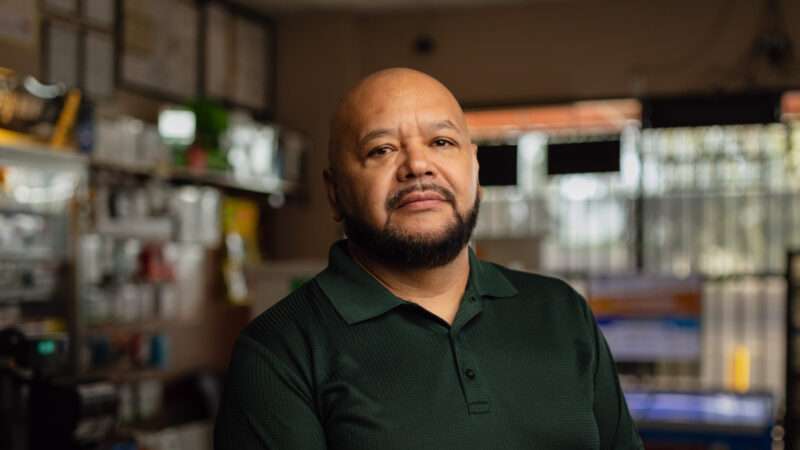
Mario Ayala | Institute for Justice

On a Tuesday morning in February 2025, federal agents descended upon Ayala's Mini Market, a convenience store in Glendale, Arizona, that offered check cashing, money transfer, shipping, and cellphone repair services along with standard items such as groceries, snacks, sodas, and cigarettes. The agents, who worked for the Internal Revenue Service (IRS) and the Department of Homeland Security (DHS), seized three computers, five cellphones, and business records, plus about $460,000 in cash and checks. They did not say why.

Twenty months later, the store's owner, Mario Ayala, still has not received a definitive answer to that question. Nor has the government told him what it plans to do with his property or how he can try to get it back. That Kafkaesque situation is unconstitutional, Ayala's lawyers at the Institute for Justice argue in a motion and memorandum they filed on Tuesday in the U.S. District Court for the District of Arizona. The motion seeks the return of the property seized from Ayala's business, saying there is no legitimate reason for the government to keep it.

"The government can't take your stuff, disappear, and then never explain itself," says Institute for Justice attorney Betsy Sanz. "For over a year and a half, the government has been holding Mario's money and property. This prolonged seizure violates the Fourth Amendment and federal law. The government cannot hold onto your property indefinitely without explanation so it can eventually take it permanently using civil forfeiture."

The raid on Ayala's store happened while he was visiting his ailing father in Mexico, who died a couple of months later. After Ayala's wife and son called to tell him what had happened, he rushed back to Arizona, where he tried to figure out why his business had been targeted by the IRS and the DHS. That was harder than you might think.

Ayala "has heard nothing from the government since they raided his business and seized his property," Sanz and her colleagues note in their memorandum. When the agents left, they told Ayala's son that "the business would receive a letter within thirty days," the memorandum says, but "no letter came," and the government "has not told Mario why it took his property or why it refuses to return it."

The agents left a one-page inventory of the property they took, including the computers, cellphones (two of which belonged to Ayala's customers), documents, and currency, although it did not specify the amount of money. They also left the first page of a warrant signed by a federal magistrate judge, which contained no information about the crime they were investigating or the property they were authorized to seize. It referred to attachments that might have clarified those points, but the attachments were missing.

Ayala still has not seen those attachments. But on the same day the agents raided his store, they also searched 18 other businesses in the Phoenix area, all of which offered money services. Judging from the warrants served on three of those other businesses, which were signed by the same magistrate judge at the same time on the same day as the warrant for Ayala's Mini Market, the legal justification for the searches was suspected violations of 31 USC 5324, which makes it a felony to "structure" a financial transaction with the intent of "evading" federal reporting requirements.

The Bank Secrecy Act requires that financial institutions report cash transactions involving more than $10,000 to the Financial Crimes Enforcement Network (FinCEN). Although that mandate is aimed at money laundering, someone can be guilty of structuring even without evidence of any other crime if he deliberately tries to avoid triggering a FinCEN report by breaking up a transaction into amounts below the threshold. As far as Ayala can tell, the search of his store was based on nothing more than suspicion of structuring.

If so, Ayala's lawyers argue, the IRS agents who participated in the raid violated a 2019 federal law that bars the agency from seizing money when structuring is the only suspected crime. Congress passed that law in response to IRS forfeiture abuses highlighted by the Institute for Justice. "For the IRS to legally seize property based on a structuring offense, it must also have an added suspicion of some other criminal act," Sanz et al. note. "Yet the IRS seized Mario's property, apparently on the sole suspicion of a structuring violation."

That is not the only legal problem with the seizure. Assuming the government plans to seek forfeiture of Ayala's money based on an alleged connection to criminal activity, it missed a crucial deadline. The Civil Asset Forfeiture Reform Act (CAFRA) requires the federal government to notify property owners of attempted forfeitures within 60 days of the seizure. That deadline passed a year and a half ago, and Ayala still has received no such notice.

"This notice is crucial because it informs a property owner that the government intends to forfeit his property and triggers his ability to respond by filing a claim or administrative petition," Ayala's lawyers note. If the government fails to meet that requirement, CAFRA says, it "shall return the property."

The government can seek extensions of the CAFRA deadline "only if there is reason to believe that notice may have an adverse result," such as "endangering the life or physical safety of an individual," "flight from prosecution," "destruction of or tampering with evidence," "intimidation of potential witnesses," or "otherwise seriously jeopardizing an investigation or unduly delaying a trial." None of those conditions applies in this case, Sanz et al. say, and their client "is unaware of the government seeking any such extension here."

Another possible rationale for keeping Ayala's property is that the government needs it as evidence in a criminal investigation. But his lawyers argue that the seized items "have no independent evidentiary value."

The government "cannot claim that it is holding the cash as evidence of the suspected structuring offense, because the government—in the usual course—does not continue to hold the physical cash it seizes but rather promptly deposits it," the memorandum says. "To prove the suspected offense here, the government would present evidence documenting the amounts and frequency of transactions and evidence that the defendant intentionally evaded reporting requirements. No fact the government must prove to establish a structuring offense becomes more or less provable by the government's continued possession of Mario's money."

Although "the checks and business documents that the government seized from Mario may at first have had some evidentiary value," Sanz et al. say, it could have long since returned the originals and kept copies. As for the computers and cellphones, "the government has had ample time to extract and copy" any relevant information.

While the benefits of keeping Ayala's property seem highly dubious, the cost to him has been severe. The seizure of the checks and currency wreaked havoc with his business model, which relies on money received for transfers to cash checks, which in turn are scanned and used to pay the companies that handle the transfers.

"The search and seizure of Mario's property upended his business," the memorandum says. "He had to keep his business closed until March 1, 2025, to replace the seized computers and to figure out how they could keep the business open. He took $50,000 of his own money out of the bank so that he could keep cashing customers' checks. When that ran out, the business had to stop cashing checks for a long time, losing customers."

Ayala "also had to come up with $112,097.20 to pay the money transmitters to cover the balance that had accrued while he was away," his lawyers add. "Since all the cash and cashed-but-unscanned checks had been seized, Mario needed to pay this money to the transmitters on his own. Though he did ultimately pay back all the money transmitters over the following month, the consequences of the raid damaged Mario's business relationship with one of the money transmitters he had formerly worked with, InterMex. Today, the business can no longer offer InterMex as an option for money transfers."

Ayala's business "is now finally stable, but it is still not doing as well as it was before the raid," Sanz et al. say. "Mario has changed the way he runs his business because of the raid. He now scans every customer's cashed check to send it to the money transmitters as soon as it is cashed, rather than collecting [checks] and scanning them together as they previously did. He constantly worries that his business will be targeted again."

In the 20 months since the raid, the government has not filed a forfeiture action or even notified Ayala that it intends to do so. Nor has it filed any criminal charges related to the seizure, as far as Ayala knows. "The government has no lawful reason to retain
Mario's property," his lawyers say, "and this Court should exercise its equitable jurisdiction to order its return."

The motion relies on Federal Rule of Criminal Procedure 41(g), which says "a person aggrieved by an unlawful search and seizure of property or by the deprivation of property may move for the property's return." The U.S. Court of Appeals for the 9th Circuit, which includes Arizona, has adopted four criteria for granting such a motion: whether the government "displayed a callous disregard for the constitutional rights of the movant," whether "the movant has an individual interest in and need for the property he wants returned," whether "the movant would be irreparably injured by denying return of the property," and whether "the movant has an adequate remedy at law for the redress of his grievance."

All of those factors count in Ayala's favor, Sanz et al. argue. Ayala's interest in the property and the injury he is suffering are clear, as is the absence of any other remedy. As for the first criterion, "the government can neither forfeit Mario's property nor justify holding it as evidence, so its continued retention is unreasonable under the Fourth Amendment," the memorandum says. "And its nearly 20 months of silence, without any notice or any forum in which to contest the seizure, offends due process. At every turn, the government has 'callous[ly] disregarded' Mario's constitutional rights."

Ayala immigrated to the United States from Mexico in 1991 and struggled for years to make a go of his business, which was successful enough at the time of the raid that he planned to open a new location devoted to cellphone repair. That plan is now on hold because of the financial difficulties caused by the seizure.

"This business is my American Dream, and the government took years of my hard work without telling me what I did," Ayala says. "This raid hurt me and my family. I hope this lawsuit gets my money back and helps make sure this doesn't happen to anyone else."

The post The Feds Took $460,000 From This Arizona Convenience Store Owner and Never Explained Why appeared first on Reason Magazine.
  •  

2 Recent Cases Illustrate the Limits of a Doctrine That Often Blocks Civil Rights Claims

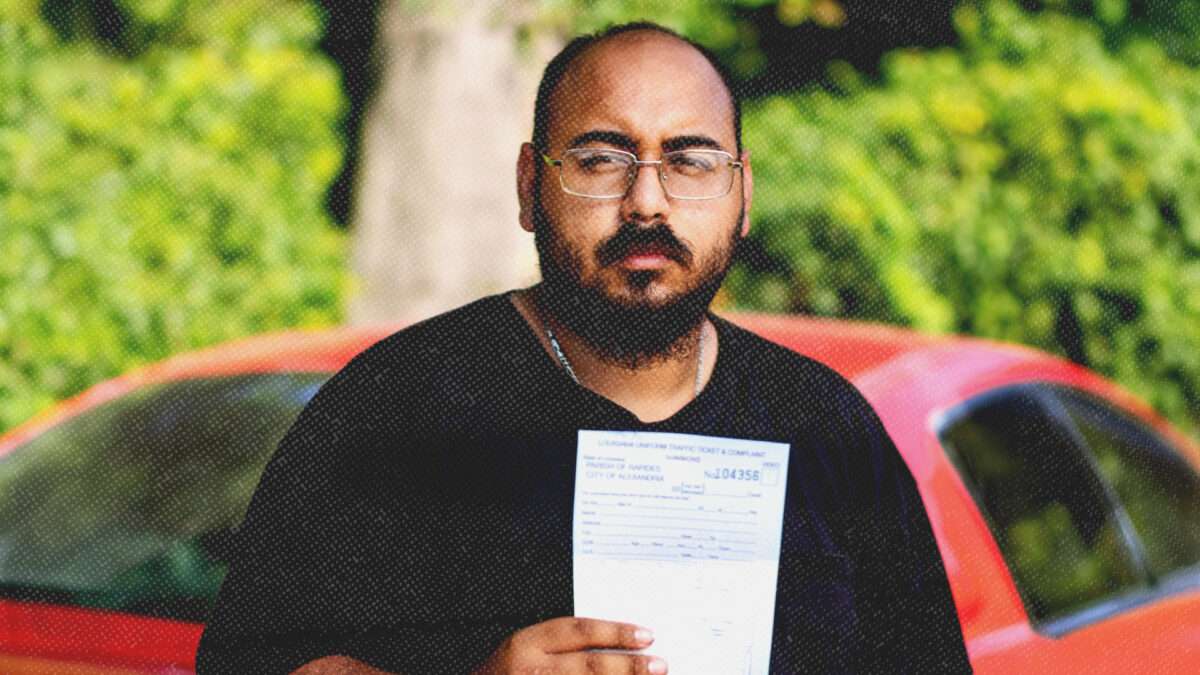
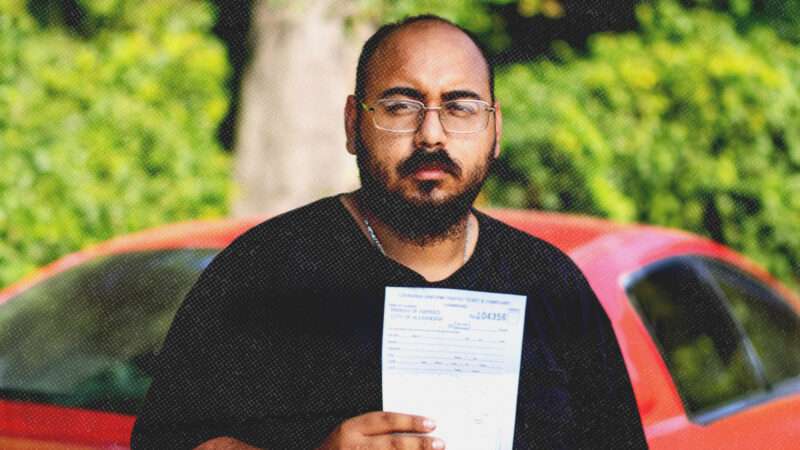
Mario Rosales holds a citation he received after a traffic stop in Alexandria, Louisiana | Institute for Justice

Since 1871, a federal statute has authorized Americans to sue state and local officials for violating their constitutional rights. But since 1982, thanks to the court-invented doctrine of qualified immunity, such claims have been allowed only when they allege violations of "clearly established" law.

Because courts often require plaintiffs to meet that standard by citing precedents involving closely similar facts, qualified immunity can prove insurmountable even for victims of outrageous abuses. But as two recent cases illustrate, there are limits to this license for misconduct, meaning officials may still be held accountable when they flout longstanding constitutional principles, even when they do so in novel ways.

In 2022, Mario Rosales and Gracie Lasyone sued two Alexandria, Louisiana, police officers, Samuel Terrell and Jim Lewis, alleging that they had pulled Rosales over without legal justification. The cops ordered Rosales and Lasyone, his girlfriend, out of the car and detained them for 21 minutes, during which they grilled the couple about illegal drugs, frisked Rosales, and instructed him to empty his pockets.

Terrell and Lewis sought refuge in qualified immunity. But last month, the U.S. Court of Appeals for the 5th Circuit ruled that Rosales and Lasyone had plausibly alleged several Fourth Amendment violations, including a stop based on a "fabricated traffic violation," an improperly prolonged detention, and unjustified searches.

In reaching that conclusion, the 5th Circuit relied mainly on a 1968 decision in which the Supreme Court said police may detain someone only if they reasonably suspect he is involved in criminal activity and may frisk him only if they reasonably suspect he is "armed and dangerous." Assuming the facts alleged in the lawsuit are true, the three-judge panel unanimously held, Terrell and Lewis had failed both of those tests.

When the officers stopped Rosales, the principles that the 5th Circuit applied had been the law of the land for more than half a century. Terrell and Lewis nevertheless argued that "any constitutional violation arising from the traffic stop was not clearly established," which gives you a sense of the chutzpah that qualified immunity invites.

Police commonly pull drivers over, ostensibly for traffic violations, in the hope of implicating them in drug crimes. A case that the U.S. Court of Appeals for the 8th Circuit considered this month involved a much more unusual scenario: a judge who locked two children in jail cells because he was frustrated by their resistance to a parental custody decision.

During a 2019 hearing in Taney County, Missouri, a divorced couple agreed that the mother would have primary custody of their two children, then 12 and 14. But contrary to that agreement, the children did not want to go home with their mother, which led to an argument in the courthouse lobby.

Judge Eric Eighmy intervened, telling the children they had to leave with their mother and repeatedly warning them that they could end up in foster care if they refused to do so. When that did not work, Eighmy jailed them until they became more cooperative.

"The time spent in the holding-cell area was between twenty and forty minutes," the 8th Circuit noted. And since Eighmy did not have probable cause to believe the children had committed any offense, "much less one that justified placing them in a holding cell," the court said, their confinement clearly violated the Fourth Amendment.

If so, Eighmy argued, he had no way of knowing that. The 8th Circuit panel unanimously disagreed: "As we put it over a decade and a half ago, long before the events in this case, 'it is clearly established that a warrantless arrest, unsupported by probable cause, violates the Fourth Amendment.'"

Notably, the 8th Circuit did not think the bizarre details of the case counted in Eighmy's favor. "We are not concerned about the lack of a prior case" with "fundamentally similar" facts, it said. "Indeed, given how clear the law is, it would have been surprising to find one."

© Copyright 2026 by Creators Syndicate Inc.

The post 2 Recent Cases Illustrate the Limits of a Doctrine That Often Blocks Civil Rights Claims appeared first on Reason Magazine.

  •  

Trump's 50% Tariffs on Canadian Goods Illegally Rely on a Superseded Statute, a Lawsuit Argues

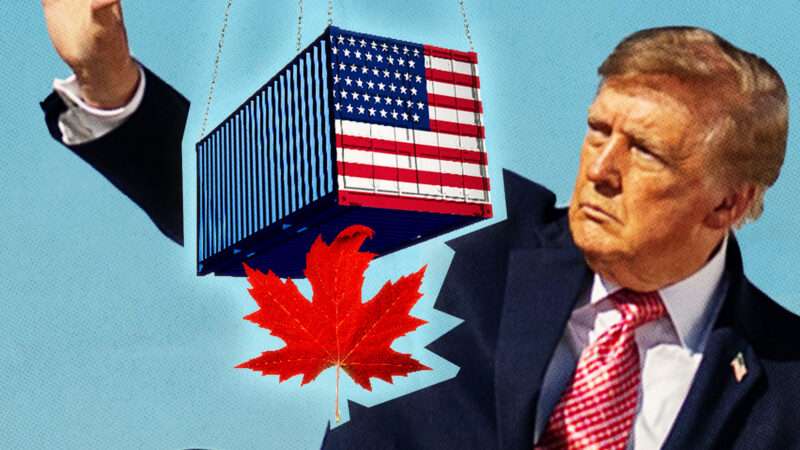
a shipping container and a maple leaf with President Donald Trump in the background | Molly Riley/B66/Avalon/Newscom/Skypixel/Dreamstime

Last July, President Donald Trump imposed 50 percent tariffs on various Canadian goods, a list he subsequently expanded to include additional imports, some of which he banned outright. His legal justification was Section 338 of the Smoot-Hawley Tariff Act, which Congress approved in 1930. Section 338 authorized tariffs in response to discriminatory trade practices. But in the 96 years since it was enacted, no president had ever used it to impose tariffs.

Why is that? According to a lawsuit that the Liberty Justice Center (LJC) filed on Tuesday in the U.S. Court of International Trade (CIT), the answer is clear: Section 338 was superseded by subsequent legislation that likewise targeted discriminatory trade barriers, beginning with the Reciprocal Trade Agreements Act of 1934 and culminating in Section 301 of the Trade Act of 1974. Section 301, the current remedy, includes requirements that Trump apparently sought to dodge by invoking Section 338 instead.

That maneuver is illegal, the LJC argues. "Congress already gave the executive branch a tool for responding to unfair foreign trade practices: Section 301, which requires an investigation, public comment and other safeguards," says Jeffrey M. Schwab, the LJC's director of litigation. "The administration cannot skip those protections by reaching for a 1930 statute that no president had ever used to impose a tariff."

Why not? "Where provisions in two acts are in irreconcilable conflict, the later act, to the extent of the conflict, constitutes an implied repeal of the earlier one," the lawsuit says. "Where a later act covers the whole subject of an earlier one and is clearly intended as a substitute, it operates similarly as a repeal. And a specific policy embodied in a later federal statute controls the construction of an earlier one even absent express amendment."

Even if Section 338 somehow survived congressional approval of contrary laws, the LJC adds, Trump's tariffs exceed the authority it grants. And if Trump's interpretation of Section 338 were correct, the lawsuit says, the provision would violate the nondelegation doctrine, which bars Congress from delegating its tariff power to the president without providing "an intelligible principle" to guide and constrain his exercise of it.

Trump's Section 338 tariffs, in short, are "the Administration's latest attempt to exercise, through a statute never designed for the purpose, the tariff power that the Constitution assigns to Congress." That pattern should be familiar by now.

Shortly after taking office in 2025, Trump claimed to have discovered a previously unnoticed delegation of extensive tariff authority in the International Emergency Economic Powers Act (IEEPA), a 1977 law that does not mention import taxes and had never been used to impose them. That claim was rejected by every court that considered it, and last February the Supreme Court ruled that IEEPA does not authorize tariffs at all.

Trump responded to that decision by immediately announcing similarly broad tariffs under Section 122 of the 1974 Trade Act, which addresses "fundamental international payments problems" caused by "serious United States balance-of-payments deficits." In May, the CIT ruled that the new tariffs were illegal because Trump had failed to "identify balance-of-payments deficits within the meaning of Section 122."

Trump then switched to Plan C, invoking Section 301 of the Trade Act, which authorizes tariffs in response to a foreign "act, policy, or practice" that is "unreasonable or discriminatory" and "burdens or restricts" U.S. commerce. He claimed that provision justified tariffs on 86 trading partners, accounting for nearly all U.S. imports, because they had failed to "impose and effectively enforce a prohibition on the importation of goods produced with forced labor." The CIT is currently weighing challenges to those tariffs, including an LJC lawsuit.

Trump's Section 338 tariffs have now added to the CIT's caseload. The LJC represents Gellert Global Group, an importer that was hit hard by those taxes after Trump added cheese to the list of disfavored Canadian goods. The lawsuit asks the CIT to certify a class of importers, numbering in "the hundreds, if not the thousands," that likewise have been clobbered by Trump's 50 percent tariffs.

Since Trump obviously is aware of Section 301, why did he resort to a never-used, seemingly obsolete provision to justify the tariffs on imports from Canada? As the LJC notes, Section 301 requires an investigation by the Office of the U.S. Trade Representative, "consultation with the foreign country concerned, notice, public comment, a hearing, and determinations within statutory deadlines." It also requires "that action be equivalent in value to the burden imposed, that duties be preferred over other import restrictions, and that actions terminate after four years absent a request for continuation and review."

Can Trump avoid those constraints by invoking Section 338 instead? The LJC thinks not: "Congress did not intend to leave in place a parallel authority that would allow the President to impose the same remedies, for the same conduct, free of every one of those safeguards."

Section 338 has been "impliedly repealed," the LJC argues. "At a minimum, Section 301 controls where, as here, the President seeks to respond to foreign practices within Section 301's scope, and the President may not impose duties in response to such practices while disregarding the procedures and limits Section 301 imposes. Because the President did not proceed under Section 301, the Section 338 Tariffs are unlawful whether or not Section 338 survives."

Even if you ignore subsequent legislation, the LJC argues, the Canadian policies that Trump cited when he announced the tariffs do not qualify as "discrimination" under Section 338. "Canada's motor vehicle surtax and its provinces' alcohol purchasing decisions are responses to tariffs that the United States imposed on Canada, not discrimination by Canada against the United States," it says. Trump also complained that Canada treats European cheese imports more favorably than U.S. cheese imports. But "when Congress enacted Section 338, a preference granted under a reciprocal agreement was not 'discrimination.'"

Section 338 "addresses discrimination: measures that single out United States commerce for worse treatment than the commerce of the world at large," the lawsuit says. "It is not a general authorization to impose tariffs whenever the President disagrees with a trading partner's policies, or whenever a trading partner responds to tariffs the United States has imposed on it."

Trump also was unfazed by Section 338's requirement that the president set duties to "offset" the costs imposed by discriminatory practices, which implies proportionality. Rather than attempt that, the LJC notes, Trump imposed "the statutory maximum rate of 50 percent without tying it to any measured burden."

As interpreted by Trump, the lawsuit warns, Section 338 authorizes the president to "impose tariffs of up to 50 percent on any products of any country that extends better treatment to any other country in any respect—including through any of the hundreds of preferential trade agreements to which the United States is not a party—or that responds to tariffs the United States has imposed on it." Yet Section 338 "contains no clear statement authorizing that power," contrary to the "major questions" doctrine, which applies to assertions of executive authority with "vast economic and political significance."

If Section 338 conferred the sort of unfettered authority that Trump is claiming, the LJC says, it "would supply no intelligible principle constraining the exercise of Congress's power to lay duties." His reading "would convert a narrow, fact-dependent provision into an effectively unrestricted delegation of Congress's tariff power," which would be "an unconstitutional delegation of legislative power."

This case "is not about the president," says LJC CEO Sara Albrecht. "It is about the presidency. No president should have the power to pull a dormant statute off the shelf and use it to impose sweeping tariffs or import bans without the limits Congress required."

The post Trump's 50% Tariffs on Canadian Goods Illegally Rely on a Superseded Statute, a Lawsuit Argues appeared first on Reason Magazine.
  •  

A Texas Lawsuit Dubiously Accuses Students for Life of Violating the State's Abortion Pill Restrictions

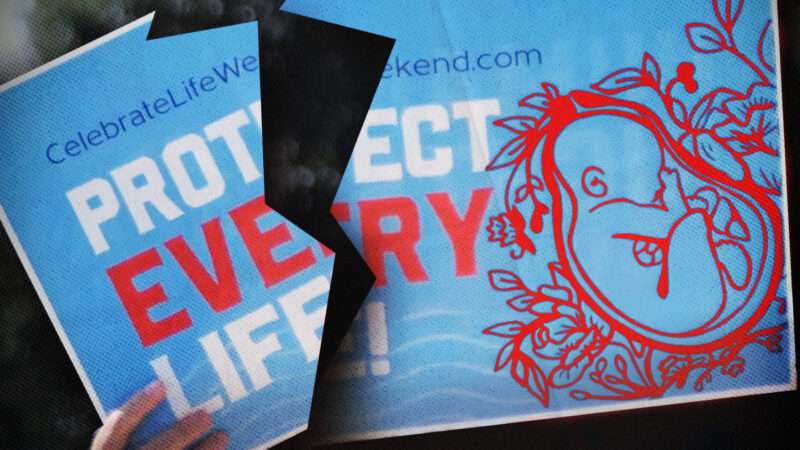
a torn anti-abortion sign | Students for Life/YouTube

Last March on Instagram, Students for Life President Kristan Hawkins posted a photo showing her and two other members of the Virginia-based group standing outside Space Center Houston. According to the captions, Hawkins and her fellow activists, one of whom was holding a mobile phone, were "ordering abortion pills undercover."

A lawsuit filed last week in Harris County, which includes Houston, describes that Instagram post as "nothing more than a publicity stunt." The lawsuit, which aims to deploy a Texas abortion law championed by Students for Life against the organization, is also a publicity stunt. But while it may be effective by that measure, it faces legal challenges that will be hard to overcome.

The lawsuit, which a Texas woman who opposes her state's abortion ban filed under the pseudonym Maria Puerto with help from the reproductive rights group Amplify Legal, is supposed to highlight the vagueness and broad scope of House Bill 7, a 2025 law that authorizes private civil action to enforce state restrictions on "abortion-inducing" drugs. But Puerto's attempted act of legal jiu-jitsu seems too clever by half, relying on a dubious reading of the statute to seek "monetary compensation" it does not authorize and thereby punish anti-abortion activists for constitutionally protected advocacy.

H.B. 7, also known as the Woman and Child Protection Act, says "a person may not manufacture or distribute an abortion-inducing drug in this state" or "mail, transport, deliver, prescribe, or provide an abortion-inducing drug in any manner to or from any person or location in this state." Those prohibitions, it says, "may be enforced only through a qui tam action" against a "person" who "violates" or "intends to violate" them.

Any "person" other than a state or local official can qualify as a "relator" authorized to bring such an action. The relator can seek injunctive relief and "an amount of not less than $100,000 for each violation," plus "costs and reasonable attorney's fees." A successful relator generally receives $10,000 of that "amount," with the rest going to a "charitable organization" of his choice.

As a "person" who is not a government official, Puerto meets H.B. 7's minimal test for standing. And although H.B. 7 precludes lawsuits against pregnant women who obtain "an abortion-inducing drug," Puerto says Hawkins and the other activists "are not pregnant and were not pregnant" at the time of the Instagram post. So far, so good. But although the lawsuit asserts that Hawkins et al. "openly and flagrantly violated" the law's prohibitions, it does not explain how.

A photo accompanying a recent Mother Jones profile of Hawkins shows her and her social media coordinator, Lydia Taylor Davis, outside Space Center Houston during their "abortion-pill 'sting' stunt." Another Mother Jones photo shows Hawkins holding a mobile phone displaying what Puerto's lawsuit describes as "an order confirmation."

Judging from the Mother Jones account, it is not clear whether that description is accurate. "The scheme rapidly went off the rails," Amy Littlefield writes. "The plan was to purchase pills from a couple of services, with Hawkins posing as a male abuser while Davis pretended to be a 16-year-old—all to try to portray mail-order suppliers as reckless and dangerous. For reasons even she couldn't explain, Hawkins chose the fake name 'Wanda' as her male-abuser alter ego. But when Davis input her information, she hit a snag."

Davis was trying to order pills from the Massachusetts Medication Abortion Access Project. But according to Littlefield, that organization "had blocked Davis in its system after Students for Life teased the sting operation on social media." Hawkins "attempted to save the stunt by placing her own order, but 'Wanda' accidentally gave her age as 15," which was below the supplier's minimum age, Littlefield says. "Now a security guard was wandering over to tell them they couldn't film. Having set out to show that telemedicine services don't screen their clients, they inadvertently proved the opposite."

Puerto "will need proof that the Students for Life leaders actually obtained or intended to obtain the pills," abortion law scholar Mary Ziegler notes in Slate. "The activists may argue that the post was not in earnest, and that no one involved ever seriously intended to bring pills into Texas."

Even assuming that Hawkins et al. successfully ordered abortion pills, that conduct by itself does not fit the language of H.B. 7, which applies to people who "distribute" such drugs or who "mail, transport, deliver, prescribe, or provide" them "to or from any person or location in this state." That language encompasses out-of-state suppliers, which raises obvious concerns about extraterritorial application of Texas law. But on its face, the prohibition does not cover someone who simply orders abortion pills.

Puerto's lawyer, Amplify Legal attorney Molly Duane, argues that Hawkins et al. could be covered by the statute's reference to transportation. "What the statute says is that transporting abortion drugs from one location to another within the state is a violation of H.B. 7," Duane told The Texas Tribune. "By the plain language of the statute, this would seem to be a violation. This is the problem with writing such a confusing and vague law."

Under that theory, however, Hawkins, Davis, and the two other activists named in the lawsuit violated H.B. 7 only if they 1) successfully ordered abortion pills, 2) took delivery of them, and 3) subsequently moved them to another location within Texas. The lawsuit alleges only that they "ordered abortion pills, apparently multiple times." According to The Texas Tribune, Duane and Puerto "are hoping that the lawsuit will eventually surface more about what the defendants did with the abortion pills once they ordered them."

The lawsuit faces another obstacle. H.B. 7 does not apply to "speech or conduct protected by the First Amendment." Hawkins et al.'s efforts to show how easily state abortion bans can be circumvented certainly seem to fall into that category. "Students for Life may stress that the case targets their political speech about abortion," which is "protected under the First Amendment," Ziegler notes.

Those are not the only puzzling aspects of the lawsuit. Puerto, a 26-year-old single mother of two young children, emphasizes that she "had no choice but to continue" those pregnancies because she did not "have access to transportation or the economic resources to pay for travel out of state." The lawsuit devotes 11 paragraphs to describing the burdens imposed by her state's denial of "true reproductive rights," which she argues justifies some sort of compensation.

All of this seems legally irrelevant under H.B. 7, which does not require a relator to allege damages of any sort, let alone damages stemming from the abortion ban it aims to reinforce. "With nowhere else to turn for assistance," the lawsuit says, "Ms. Puerto is seeking financial compensation" from Hawkins et al. "in the amount of $459,782—the average cost of raising two children from birth to age 18 in the state of Texas."

Although H.B. 7 sets a minimum award of $100,000, the lawsuit notes, "there is no cap on the monetary compensation owed a relator." But the law does not describe H.B. 7 awards as "monetary compensation" for injuries allegedly suffered by the relator.

The statute's only reference to "compensatory damages" deals with lawsuits filed against H.B. 7 relators under "clawback provisions" of other states that have tried to thwart such litigation. In response to a "clawback" action, the law says, an H.B. 7 relator can seek "compensatory damages, including money damages in an amount equal to the judgment damages and costs, expenses, and reasonable attorney's fees spent in defending the action." By contrast, the bounty for proving a violation of the restrictions on abortion pills is simply "an amount."

The lawsuit itself, emphasizing the lax standards for filing a claim under H.B. 7, notes that Puerto "did not suffer an injury traceable to [the defendants'] ordering of abortion pills that can be remedied by a court." But it suggests that an award to Puerto would be appropriate given the defendants' anti-abortion activism.

The lawsuit notes that Students for Life "proudly advertised" its support for H.B. 7. Puerto complains that Hawkins et al. "ignore the immense harms and multiple deaths already attributed to Texas's cruel abortion bans" and "demean the six million Texans of reproductive age who have had their ability to decide whether and when to begin or expand a family stripped away by these bans." Whatever you make of that charge, the defendants' activism is constitutionally protected and therefore cannot support a cause of action in civil court.

"Texas is a strange place filled with vigilante statutes" that "seek to turn Texans against each other," Duane told The Texas Tribune. "But if anyone should be benefiting from these legal regimes, it's people like our client." While "putting those two things together…might be unusual," she said, "this is the situation that Texas has put its citizens in."

Depending on your perspective, you may or may not sympathize with Duane's reasoning. But it seems unlikely to pass muster as a matter of law.

The post A Texas Lawsuit Dubiously Accuses Students for Life of Violating the State's Abortion Pill Restrictions appeared first on Reason Magazine.

  •  
❌