❌

Reading view

New book makes fiery claims about Jared Kushner’s finances in Trump’s first term

Kushner threatens to sue, denying allegations that two slush funds were set up to influence his Middle East role

A new book containing incendiary claims about Jared Kushner’s financial dealings during Donald Trump’s first term has ignited a political and media firestorm.

The book by author Matthew Cole is called Princes and Thieves: Jared Kushner and Mohamed bin Zayed’s Secret Plot to Remake the Middle East and was released in the US this week. An excerpt was published by Vanity Fair last Thursday, and immediately drew a furious response from Kushner, who called its claims “completely insane”. The book contains numerous allegations about Kushner, whose father-in-law is Trump and who has served as one of his top diplomatic envoys in the Middle East – the most explosive of which are claims linking him to huge bank accounts allegedly funded by Gulf states.

Continue reading...

© Photograph: Charly Triballeau/AFP/Getty Images

© Photograph: Charly Triballeau/AFP/Getty Images

© Photograph: Charly Triballeau/AFP/Getty Images

  •  

US ambassador suggests Trump could blame Canada if midterms don’t go his way

Pete Hoekstra, controversial US ambassador to Canada, has also accused Canadian officials of interfering in US elections

The US ambassador has suggested Canada could be blamed if Republicans perform poorly in next week’s midterm elections, the latest intervention from a controversial figure who has been accused of inflaming a bitter dispute that has angered and baffled residents of both countries.

On Wednesday, CTV news reported that Pete Hoekstra told business leaders at a closed door meeting that if a number of swing races – including Maine and Michigan – go to the Democrats, it could make things harder for Canada because Donald Trump might try to blame the loss on it.

Continue reading...

© Photograph: Canadian Press/Shutterstock

© Photograph: Canadian Press/Shutterstock

© Photograph: Canadian Press/Shutterstock

  •  

Britain’s New Budget Exposes the Economic Cost of War and the Limits of Fiscal Flexibility

Chancellor John Healey has unveiled emergency household support, higher taxes on banks and new defence commitments as the Middle East conflict puts renewed pressure on Britain’s economy. Behind the immediate relief measures lies a difficult calculation over growth, public spending and national security.

Britain’s government has attempted to reconcile rising energy prices, constrained public finances and growing defence obligations in a Budget that illustrates how international conflicts are reshaping domestic economic policy.

Presenting his first Budget on 28 October, Chancellor of the Exchequer John Healey announced a £100 energy payment for millions of households, an extension of electricity VAT relief and additional measures intended to support businesses facing rising operating costs.

The package comes as Prime Minister Andy Burnham’s administration confronts the economic consequences of the conflict in the Middle East, alongside continuing financial commitments arising from Russia’s war against Ukraine.

The central difficulty is that Britain must simultaneously protect household purchasing power, support economic growth and finance a more expensive security environment, without allowing government borrowing to expand beyond its fiscal targets.

Energy prices dictate economic policy

The most immediate measures concern energy.

Under the Treasury’s Budget proposals, up to 20 million households in England occupying properties in Council Tax bands A to D will receive a £100 payment from January 2027.

The government has allocated £2.6 billion for the programme, including corresponding funding arrangements for the devolved administrations.

The temporary reduction in VAT on domestic electricity will also remain in place until July 2027, a measure expected to reduce the annual Ofgem price cap by approximately £50 in April.

Meanwhile, the Chancellor announced plans to remove standing charges from domestic gas bills, transferring fixed costs into consumption-based charges.

Although the government estimates that the change could benefit a majority of households, its distributional effects will depend on individual consumption. Lower gas users may benefit differently from households with substantial heating requirements.

The measures demonstrate how energy prices have become a direct constraint on fiscal policymaking.

Britain’s exposure to internationally traded gas means that disruptions originating outside Europe can quickly influence domestic prices, regardless of the source of individual energy supplies.

Banks and businesses face different treatment

Rather than introduce broad increases in personal taxation, the government has chosen targeted revenue measures.

The Bank Corporation Tax Surcharge will temporarily increase from 3 to 6 per cent between January 2027 and March 2028, helping finance household energy support.

The government has also announced changes to gambling taxation intended to fund assistance for smaller businesses in retail, hospitality and leisure.

Fuel duty will remain frozen until July 2027, extending a policy intended to limit motoring and transport costs.

These decisions reflect competing pressures.

Households and smaller businesses require relief from higher costs, while the Treasury must demonstrate that its spending commitments remain consistent with fiscal discipline.

The distribution of the tax burden is therefore becoming an important political question, particularly when the government is simultaneously seeking private investment to stimulate growth.

Growth forecasts reveal limited room for manoeuvre

The latest forecasts from the Office for Budget Responsibility offer little prospect of rapid economic expansion.

According to figures published alongside the Budget, British GDP is expected to grow by 1.2 per cent in 2026 and just 1 per cent in 2027.

Inflation is forecast to peak at 3.8 per cent in the first quarter of 2027 before gradually returning towards the Bank of England’s 2 per cent target.

The Chancellor’s fiscal headroom — the margin available before the government’s borrowing rules would be breached — has narrowed to approximately £15 billion in 2029–30.

This creates an unusually difficult environment for policymaking.

Further economic disruption could reduce tax receipts or increase spending demands, leaving the Treasury with limited capacity to respond without revising its plans.

Defence spending enters the fiscal equation

The Budget also places national security increasingly within the government’s wider industrial strategy.

Britain remains committed to reaching defence spending equivalent to 3.5 per cent of GDP by 2035, with an interim target of 3 per cent in 2030.

The government has announced plans for the National Wealth Fund and British Business Bank to deploy up to £5 billion over four years into defence, dual-use technologies and other sectors supporting national security.

It has also committed an additional £500 million to support Ukrainian air defences during the coming winter.

These measures extend beyond immediate military procurement.

They seek to strengthen domestic industrial capacity, encourage private investment and establish supply chains capable of sustaining higher defence expenditure.

However, the precise financing arrangements for Britain’s longer-term NATO commitments are to be determined at the next spending review.

A European problem without a common fiscal solution

Britain’s predicament closely resembles that confronting European Union governments.

Across Europe, policymakers are attempting to finance defence modernisation and energy security while maintaining social expenditure and industrial competitiveness.

The difference lies partly in the institutional frameworks within which those decisions are made.

EU governments operate under European fiscal rules, while Britain sets its own borrowing and debt targets. Nevertheless, all face the same underlying pressures from energy markets, interest rates and international security commitments.

For British businesses trading with the European Union, the effects of energy costs and industrial investment policies on either side of the Channel will remain particularly significant.

The October Budget consequently represents more than an exercise in temporary household assistance.

It exposes the difficulty of sustaining public services, improving competitiveness and responding to geopolitical instability when economic growth is modest and available fiscal resources are limited.

Whether the measures provide lasting relief will depend less on the immediate payments announced by the Chancellor than on the course of energy prices, inflation and economic growth over the coming year.

  •  

Budget 2026: Healey hikes taxes on banks and landlords to fund £100 handouts to 20m households

Few surprises as chancellor uses low-key speech blaming ‘global economic storms’ for stoking energy prices and cost of living crisis

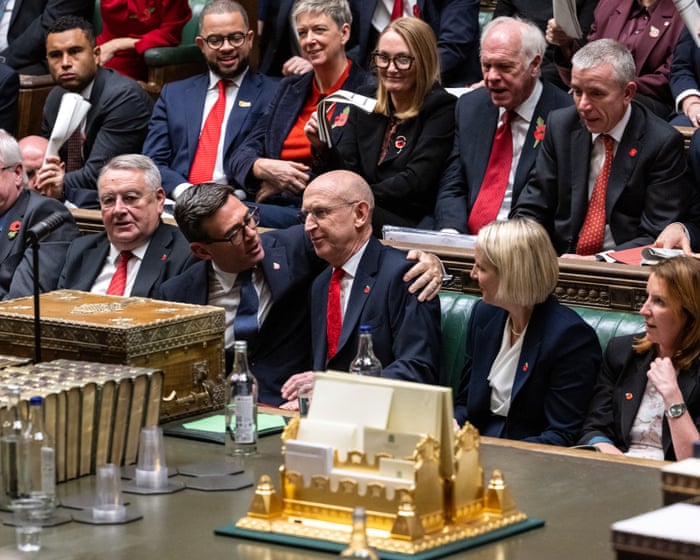
John Healey raised taxes on banks and landlords to fund a £100 winter handout for 20 million families as official forecasts made clear there is no end in sight for the cost of living crisis.

In his first budget, the chancellor blamed “global economic storms” for the grim outlook, as the war in Iran drives up oil and gas prices.

Continue reading...

© Photograph: House of Commons/AFP/Getty Images

© Photograph: House of Commons/AFP/Getty Images

© Photograph: House of Commons/AFP/Getty Images

  •  

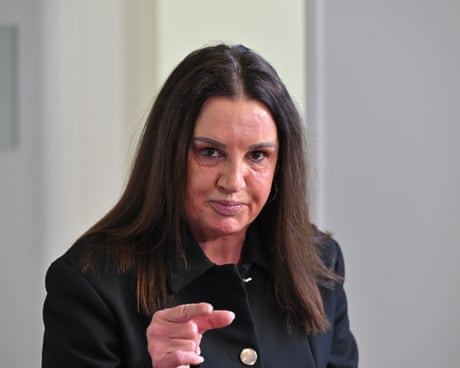
Lambie scolded by ADF chief over hidden camera revelation – as it happened

Gas reservation policy set for lower house vote today

Australia’s domestic gas reservation is set to be debated and voted on in the lower house today.

Rather than international base companies, determining through algorithms what Australians receive, it empowers people themselves to determine what you receive on your devices, so that you should have that control.

This isn’t about government having a greater role. It’s about people having a greater role, having more control themselves, and it’s deserving of support of this parliament.

Continue reading...

© Photograph: Mick Tsikas/AAP

© Photograph: Mick Tsikas/AAP

© Photograph: Mick Tsikas/AAP

  •  

FDA scientists opposed Trump administration’s move to ease peptide access

Effort to loosen rules on unproven peptide drugs, favored by RFK Jr, faced fierce pushback from agency scientists

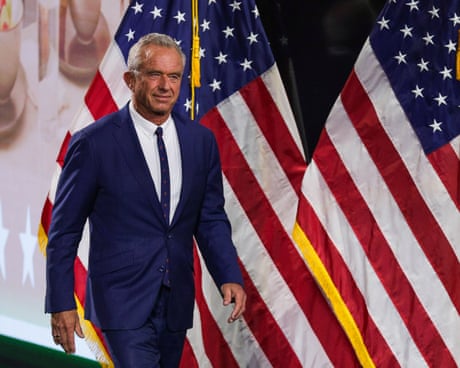
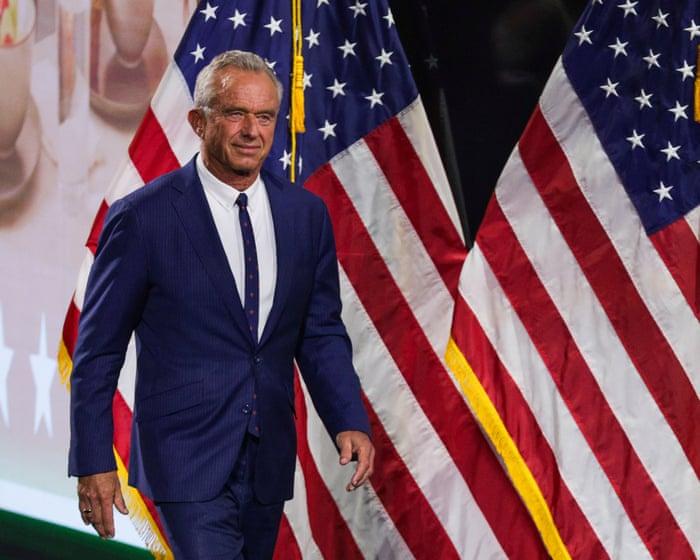
A plan to give people in the United States easier access to unproven peptide drugs favored by the US health secretary, Robert F Kennedy Jr, was opposed by most Food and Drug Administration scientific staff members, who had limited input in drafting the policy, according to six people familiar with its development.

The document posted online on Wednesday by Kennedy’s Department of Health and Human Services (HHS) covers a handful of injectable peptides promoted within the wellness industry for building muscle, healing injuries and boosting energy.

Continue reading...

© Photograph: Alex Wong/Getty Images

© Photograph: Alex Wong/Getty Images

© Photograph: Alex Wong/Getty Images

  •  

HHS to allow sale of unapproved peptides under review

The Department of Health and Human Services (HHS) will allow compounding pharmacies to manufacture and sell peptides that have not yet been added to the list of approved substances, advancing access to those championed by the “Make America Healthy Again” (MAHA) agenda. The HHS stated in a notice that it would be practicing enforcement discretion…

  •  

Budget winners and losers: pensioners and households gain as banks and betting shops hit

How the Burnham government’s first attempt to ease cost of living pressure pans out for key stakeholders
Budget 2026: key points at a glance

Every budget has its winners and losers, and John Healey’s first as chancellor was no exception. While some gained from tax breaks and rule tweaks, others will either pay more, or had their hopes of reforms dashed. Here are some of those with reason to cheer, or sigh:

Continue reading...

© Photograph: Richard Pohle/PA

© Photograph: Richard Pohle/PA

© Photograph: Richard Pohle/PA

  •  

Budget 2026 calculator: find out if you are better or worse off

Use our interactive tool to see how you have been affected by John Healey’s tax and spending announcements

Continue reading...

© Photograph: Peter Dazeley/Getty Images

© Photograph: Peter Dazeley/Getty Images

© Photograph: Peter Dazeley/Getty Images

  •  

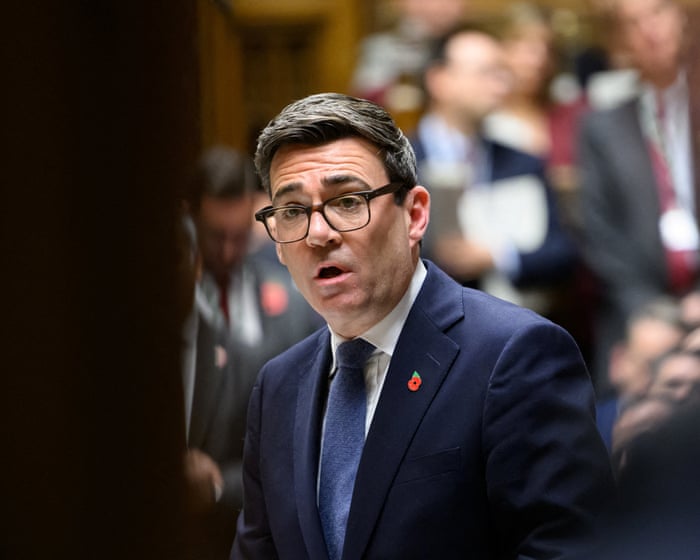
Tory Brexit was ‘harder’ than promised in EU referendum, says Andy Burnham

Prime minister warns cabinet not to express opinions about future relationship with Brussels before review of options

Andy Burnham has warned ministers not to express their opinions about how the government should approach Brexit, as he argued that the Conservatives’ deal with Brussels had been more extreme than that promised in the 2016 referendum.

In another series of announcements connected to his plan to seek closer links with the EU, Burnham told ministers at a cabinet meeting on Wednesday that the current deal was a bad one, before writing to frontbenchers setting out his hopes to address this.

Continue reading...

© Photograph: House of Commons/Reuters

© Photograph: House of Commons/Reuters

© Photograph: House of Commons/Reuters

  •  

Flávio Bolsonaro lands in Miami after fleeing Brazil

Failed Brazilian presidential candidate Flávio Bolsonaro has landed in the U.S. after fleeing his home country following the election results. Bolsonaro and his family landed in Miami on Wednesday, after the State Department extended them visas, The Associated Press reported. Brazil’s Supreme Court had ordered Bolsonaro’s passports to be returned as he was under investigation…

  •  

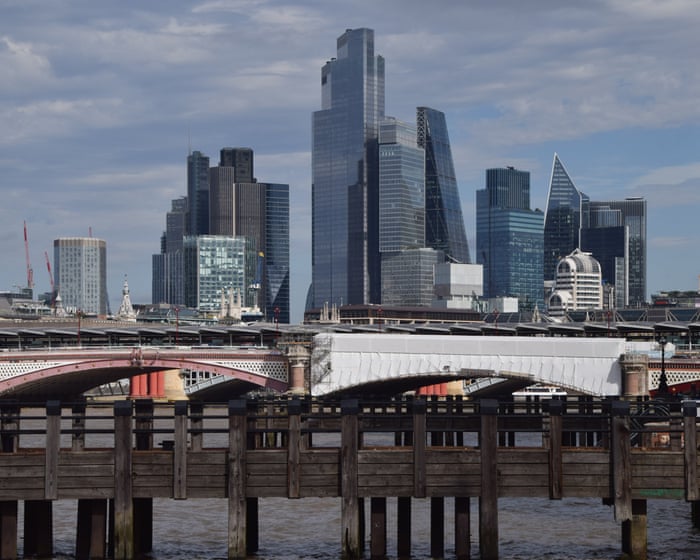
‘A pretty grim picture’: outlook for UK living standards slashed despite Healey’s budget

OBR cautions about Middle East war dragging down growth and triggering a fresh cost of living crisis

British households face a “pretty grim picture” for living standards as the war in the Middle East drags down growth and triggers a fresh cost of living crisis, the government’s independent forecaster has said.

In a report as John Healey announced his first budget, the Office for Budget Responsibility (OBR) issued a sharp downgrade for growth in 2027, household disposable incomes and the public finances despite the measures taken by the chancellor.

Continue reading...

© Photograph: Vuk Valcic/SOPA Images/Shutterstock

© Photograph: Vuk Valcic/SOPA Images/Shutterstock

© Photograph: Vuk Valcic/SOPA Images/Shutterstock

  •  
❌