Login

Earwax as insect repellant? Scientists test unusual new use for human earwax
Watching ants trying to climb earwax showed us how strange a substance it really is

© Getty Images

Watching ants trying to climb earwax showed us how strange a substance it really is
© Getty Images
Russia plans to build own version of US billionaire’s satellite communications to help attack Ukraine
Vladimir Putin praised Elon Musk’s genius and said he was in touch with Starlink’s controlling shareholder as Russia develops its own satellite communications for its military to use against Ukraine.
The Russian president, speaking at a summit with African leaders in Moscow, was comparing the Earth-orbiting network built by Musk’s SpaceX with Russia’s gradual efforts to build its own Rassvet constellation.
Continue reading...
© Photograph: Maxim Shipenkov/Reuters

© Photograph: Maxim Shipenkov/Reuters

© Photograph: Maxim Shipenkov/Reuters
Russia plans to build own version of US billionaire’s satellite communications to help attack Ukraine
Vladimir Putin praised Elon Musk’s genius and said he was in touch with Starlink’s controlling shareholder as Russia develops its own satellite communications for its military to use against Ukraine.
The Russian president, speaking at a summit with African leaders in Moscow, was comparing the Earth-orbiting network built by Musk’s SpaceX with Russia’s gradual efforts to build its own Rassvet constellation.
Continue reading...
© Photograph: Maxim Shipenkov/Reuters
© Photograph: Maxim Shipenkov/Reuters
© Photograph: Maxim Shipenkov/Reuters

Rectors and officials from around twenty Ibero-American universities approved a 25-point agenda in Madrid this Tuesday. The agenda proposes regulating artificial intelligence (AI), defending Spanish and Portuguese as languages of science, and expanding academic mobility within the region.
RELATED:
U.S.-Mexican Student Accepted to 49 Universities
The agreement was reached during the Ibero-American University Knowledge Forum, held at the headquarters of the Instituto Cervantes. It recognizes the autonomous public university as an indispensable pillar for democracy and social cohesion, and calls on governments to provide sufficient and sustainable funding.
“We face numerous challenges in each of our countries that require a collective, cross-cutting effort,” stated Susana Sumelzo, Secretary of State for Ibero-America and the Caribbean. She noted that the agenda will be presented at the XXX Ibero-American Summit of Heads of State and Government, scheduled for next Wednesday and Thursday in Madrid.
A key commitment is the promotion of Spanish and Portuguese as languages for research, scientific production, and teaching. Sumelzo emphasized that both are global languages shared by more than 800 million people and should also serve as languages in which research can be conducted.
🎓 Iberoamérica aprueba la Carta de Movilidad Académica para facilitar el intercambio estudiantil en la región.
— Cumbre Iberoamericana (@CumbreIberoA) October 22, 2026
🌎 La Declaración de Alicante crea además grupos de trabajo sobre microcredenciales y movilidad del profesorado.https://t.co/0rG2DHeu4p
The text reads, “Ibero-America adopts the Academic Mobility Charter to facilitate student exchange within the region. The Alicante Declaration also establishes working groups on micro-credentials and faculty mobility.”
Furthermore, the institutions agreed to establish an Ibero-American University Knowledge Network—with this forum serving as its foundational event—and the proposal includes facilitating student mobility and the mutual recognition of academic degrees between countries.
Odir Fernández, Rector of the National Autonomous University of Honduras, highlighted that Spain serves as a benchmark for higher education in Latin America, a fact reflected in the migration of Latin American students to that country. Meanwhile, Jacqueline Sepúlveda, Rector of the University of Concepción in Chile, advocated for the mobility of students and faculty as a means to strengthen research and the intellectual sovereignty of our peoples.
The agenda also calls for shared regulation of AI and stipulates that technological advancement must be subordinate to human dignity, as well as to the sustainable use of water and energy in data centers.
“We need to move beyond universities that are rooted in the 19th century in terms of infrastructure, the 20th century in terms of their faculty, and the 21st century in terms of their students,” Fernández stated, referring to the digital divide.
#FromTheSouth News Bits | Belgium: Young demonstrators took to the streets of Brussels to protest education reforms that would raise university tuition and extend teaching hours without additional pay. pic.twitter.com/IBp4sxza26
— teleSUR English (@telesurenglish) October 27, 2026
Researchers have also uncovered ‘profound implications’ for the health of Native Hawaiians

© Getty Images/iStockphoto
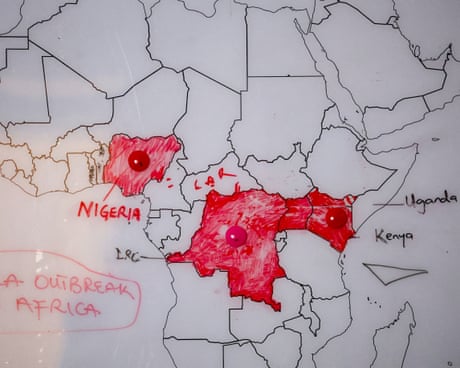
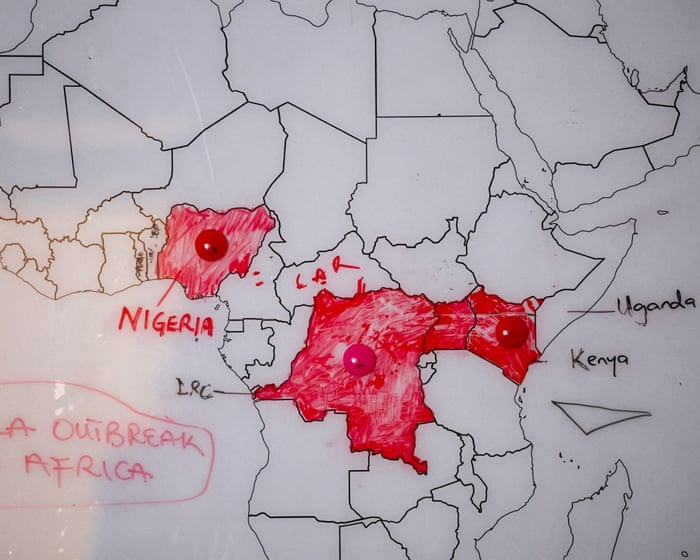
Jean Kaseya, of the Africa CDC, warns of the illness spreading like Covid unless more funding is secured to increase preparedness and possible treatment
The “unprecedented” spread of the Ebola outbreak means it could reach the UK and other countries, according to one of Africa’s top health officials.
As the current outbreak reached 10,000 cases, with almost 5,000 deaths, Dr Jean Kaseya, director general of the Africa Centres for Disease Control and Prevention (CDC), compared the outbreak to the Covid pandemic, which first took hold in China before spreading to countries across the world, claiming millions of lives, and ravaging health systems and economies.
Continue reading...
© Photograph: Sodiq Adelakun/Reuters
© Photograph: Sodiq Adelakun/Reuters
© Photograph: Sodiq Adelakun/Reuters
Of the more than 8,000 known species of modern amphibians, none is known to inhabit fully marine environments

© Cover Media


Black tea seemed to have a more consistent link with lower vascular disease

© AFP via Getty Images
Experts say symptoms such as dark circles under the eyes, grey skin, cracked lips and hair loss can be a warning sign – but there are other factors too
TikTok is rife with influencers warning of “ferritin face”, a term they use to describe the pallor, dark circles, dry skin, and hair loss claimed to indicate low iron stores. But is this based on fact or fiction, and when is it time to head to the GP?
Continue reading...
© Photograph: Alamy/PA

© Photograph: Alamy/PA

© Photograph: Alamy/PA
Scientists uncover ancient hills and swamps that disappeared as sea levels rose across northern Adriatic
Venice is famed for being a floating city, but research shows the land it sits on once lay many miles inland. Dramatic changes in sea level over 10,000 years have reshaped the northern Adriatic coastline, with much of the land that our ancestors roamed now lying beneath the waves.
Samuele Ongaro, at the University of Southampton, and colleagues combined seismic data with sedimentary cores from the coastal basins of northern Italy, Slovenia and northern Croatia to model changes in sea level across the region and reconstruct past landscapes over the past 10,000 years.
Continue reading...
© Photograph: Paulo Amorim/Getty Images

© Photograph: Paulo Amorim/Getty Images

© Photograph: Paulo Amorim/Getty Images
People who exercised three times a week saw the most benefit

© AFP via Getty Images

Sale makes ‘Jodi’, a smaller relative of T rex, the ‘second most valuable dinosaur ever sold at auction’, Sotheby’s says
A rare skeleton of a Nanotyrannus, a smaller relative of the Tyrannosaurus rex, sold at auction in New York this week for $47.3m, making it one of the world’s most expensive fossils.
The skeleton, named “Jodi” after the person who found the remains in 2019, sold at Sotheby’s on Tuesday for $47.3m, “after a twelve-minute bidding battle that saw six bidders compete online and over the phones, before ultimately selling on the phone”, Sotheby’s said in a statement.
Continue reading...
© Photograph: Yuki Iwamura/AP

© Photograph: Yuki Iwamura/AP

© Photograph: Yuki Iwamura/AP
Happy Tuesday! Here’s your Tuesday Tech Drop, the past week’s top stories from the intersection of technology and politics.
A pair of Democratic senators are accusing President Donald Trump’s administration of hiding a report that “details serious abuses of Americans’ rights under Section 702 of the Foreign Intelligence Surveillance Act.” Sens. Ron Wyden, D-Ore., and Adam Schiff, D-Calif., are trying to pry loose a report they say the administration is legally required to make public after a FISA court opinion detailed abuses of the program in March.
Since retaking office, Trump has expanded the federal government’s arsenal of creepy surveillance tools en route to building what appears to be an unprecedented spy machine that can track Americans. It’s in that context that Democrats — with some GOP help — tanked a vote in June that would have extended the controversial FISA powers that give the government broad latitude to sweep up data, including information belonging to Americans.
In a letter to Director of National Intelligence Jay Clayton and Attorney General Todd Blanche, the two Senate Democrats said the damning FISA report from on alleged surveillance abuses should have been released already — and demanded that it be released now so lawmakers can consider whether to extend FISA powers next year.
The administration has now had over seven months to declassify and release this opinion. It is time to stop violating the law and finally release this opinion. And if this administration won’t follow this simple statutory directive, it is unclear why Congress or the American people should trust this administration to follow any of the other legal limits to Section 702.
Read more at Gizmodo.
Artificial intelligence bots are increasingly gaining unauthorized access to people’s bank accounts, according to new reporting from Axios. The report homes in on concerns among bank officials about security in the age of AI.
Read more at Axios.
A judge ordered Meta to pay $25 billion after the company lost a lawsuit alleging that the company broke New Mexico’s consumer protection laws and jeopardized its users after the Cambridge Analytica scandal nearly a decade ago. Meta has vowed to appeal the ruling.
Read more at MS NOW.
After Mississippi’s Republican attorney general issued legal threats last week, the state’s Democratic Senate nominee, Scott Colom, deleted an ad using AI tools to mock his Republican opponent, Sen. Cindy Hyde-Smith. I wrote about how it seems like Republicans are fretting over this race in a deep-red state.
Read more at MS NOW.
Samuel Sey, a popular right-wing influencer known for supporting Trump’s racist anti-immigrant crackdown, reportedly has been detained by immigration officials and is now facing deportation after allegedly overstaying a temporary visa.
Read more at The Roys Report.
The good news is the Pentagon apparently has some guidelines around the development of AI tools to avoid the risk of escalating wars or harming civilians and troops. The bad news? Defense officials aren’t always adhering to these rules, according to a congressional report.
Read more at NPR.
Anthropic says its AI tool accessed Georgia voting data typically only available to people who pay for it. The company and Georgia’s secretary of state said no individual voter records were accessed, but the intrusion marks yet another disturbing security breach involving AI. A new report explains why “the company’s statements about what its bot accessed raise more questions.”
Read more at The Atlanta Journal-Constitution.
An investigation from The New York Times suggests that Alpha School, the network of AI-fueled private schools that have been backed by the Trump administration and vow to offer a superior learning experience, is failing to live up to its promises.
Read more at The New York Times.
Several MAGA influencers have recently been in Brazil and Serbia, hoping to sway elections in both countries — but the pro-authoritarian candidates they supported flamed out over the weekend. Now, especially when it comes to Brazil, Trump and a bunch of extremely online conservatives are pushing lies about the election being rigged, as my colleague Brandy Zydrozny explained.
Read more at MS NOW.
The post Senate Democrats warn that the Trump administration is hiding a damning surveillance report appeared first on MS NOW.