❌

Reading view

New Book Says Jared Kushner Funneled Money to Middle East Mercenaries. Kushner Denies It.

Cover of 'Princes and Thieves' with Jared Kushner (on the left) and Mohamed bin Zayed (on the right) | Illustration: Princes and Thieves/Matthew Cole/Atria/One Signal Publishers/

Princes and Thieves, a new book by investigative journalist Matthew Cole, may open a rabbit hole into financial connections between Middle Eastern dictators and President Donald Trump's family. Cole accuses Emirati monarch Mohamed bin Zayed (MBZ) of sending billions of dollars to various mercenaries and political operators, including Jared Kushner, son-in-law to President Donald Trump. Cole's reporting combines well-documented connections with secondhand accounts from anonymous sources.

On Thursday, Vanity Fair published an excerpt from the book, reporting that Dutch military intelligence hacked into Kushner's phone in 2018 and discovered hundreds of millions of dollars in bank transfers connected to MBZ. Also on Thursday, Kushner published a letter from his lawyers to Cole categorically denying the "incredible and false" allegations in the book. "Mr. Kushner never accessed foreign accounts and always followed all rules and regulations and only pursued goals that were in the best interest of the United States as directed by the President of the United States," they wrote.

Cole had originally written on his blog that the book was scheduled for release on October 27, but the publication date was pushed forward over the weekend.

The book purports to tie Kushner to a vast web of Emirati influence operations around the world. In Cole's telling, which matches other journalists' accounts, MBZ wants to reshape the Middle East and eastern Africa into an alliance of U.S.-backed dictatorships, where "tolerance" is enforced through high-tech surveillance and "democracy" is a synonym for terrorism. MBZ's use of mercenaries in pursuit of these goals is well-documented. So is Kushner's personal affinity with the Emirati monarch and his business ties with the Arab monarchies.

Soon after Trump won the 2016 election, MBZ held a widely reported meeting with Kushner. According to the book—and according to much of that earlier reporting—the monarch complained about the Obama administration's failure to back Arab regimes against popular revolutions, its decision to end the Iraq War, and its diplomacy with Iran.

Going much further than past reporting, Cole now claims Kushner was personally involved in MBZ's mercenary operations. MBZ and Saudi Crown Prince Mohammad bin Salman put a collective $2 billion into Emirati and Israeli bank accounts which were managed (but not technically owned) by Kushner, according to Cole's sources. Those same sources claim that parts of this secret "slush fund" went to Libyan warlord Khalifa Haftar, American military contractor Erik Prince, and Cuban hitman Felipe Vidal.

Haftar, a former CIA asset, became a general in Libya's 2011 revolution and then attempted to overthrow the new government with Emirati backing in 2014. Despite a 2020 ceasefire, his forces continue to control much of Libya. Prince, founder of the military contractor formerly known as Blackwater, moved to the UAE and helped build a secret army of Colombian mercenaries. He sued Cole for defamation after Cole reported on Prince's role in helping Haftar, but a judge threw out the case. Cole's sources claimed that Vidal, a self-described "hit man," helped the United Arab Emirates (UAE) fake an Iranian attack on oil tankers in May 2019, meant to provoke Trump into war.

Kushner's lawyers have denied any relationship with any of those three men, apart from a single meeting with Prince after the 2016 election. (According to Cole, both Vidal and Prince refused to comment for the book.) The position of the U.S. government is that the May 2019 incident was a genuine Iranian attack, not an Emirati false flag.

After the Vanity Fair article was published last week, Israeli negotiator Gershon Baskin pointed out in The Jerusalem Post that the Central Bank of Israel "does not offer private banking services to individuals," which would make it impossible for Kushner's money to be deposited in the Central Bank of Israel, as Cole claimed. The book addresses that argument, claiming that the money was deposited "in what would appear to be a government account," with Kushner and Israeli Prime Minister Benjamin Netanyahu jointly authorizing transactions.

The Abraham Accords, which include an alliance between Israel and the UAE, have often been touted as a way for the U.S. to "spend less time and less resources in the Middle East," in the words of Vice President J.D. Vance. But Cole argues that the UAE actually used its alliance to entangle American interests in a future conflict. The book states that Kushner set up "a rainy-day defense fund" for war with Iran, using Emirati money deposited in a separate Central Bank of Israel account.

Cole also claims to have evidence that Kushner was on the take from the UAE's regional frenemy Qatar. In 2017, the UAE and Saudi Arabia issued an ultimatum for Qatar to rein in its foreign policy and blockaded the small nation. The Intercept later reported that Kushner's father had sought a Qatari bailout for the family real estate business just before the crisis, and the Qatari-linked company Brookfield ended up providing the needed investment in August 2018, leading to a congressional investigation into the deal.

Democrats are still digging for information on Kushner's business ties to Qatar, but three sources told Cole that the Qatari royal family authorized and paid for the Brookfield deal. The Qatari government "asked the White House how to resolve the blockade. And the Kushners kept saying, 'We have this great property that needs investment.' Eventually, the Qataris realized the only way to settle the blockade was to buy the building," a former U.S. intelligence officer said.

Kushner's lawyers write that they have "no evidence that Qatar impacted the investment decision. Any suggestion of his involvement in the transaction or any allegation of quid pro quo with the Qatari government is false and defamatory."

Other parts of the book are better-documented. Cole obtained a draft of Prince's autobiography, text messages from one of Prince's colleagues, and emails from Emirati government adviser George Nader, who was convicted of fraudulently funneling money into Hillary Clinton's 2016 presidential campaign. If nothing else, the book is a comprehensive account of the UAE's unofficial empire and its American ties. But the most explosive claims about Kushner's involvement in those activities rest on anonymous sources, making it a matter of Cole's word against Kushner's.

"I considered the responses from Kushner's attorneys carefully and consulted multiple sources about them. During the five years I have spent working on this book, I have tried to keep an open mind, and I am confident that my reporting is accurate. Kushner's lawyers' responses did not change that conclusion," Cole writes in the book's epilogue.

The post New Book Says Jared Kushner Funneled Money to Middle East Mercenaries. Kushner Denies It. appeared first on Reason Magazine.

  •  

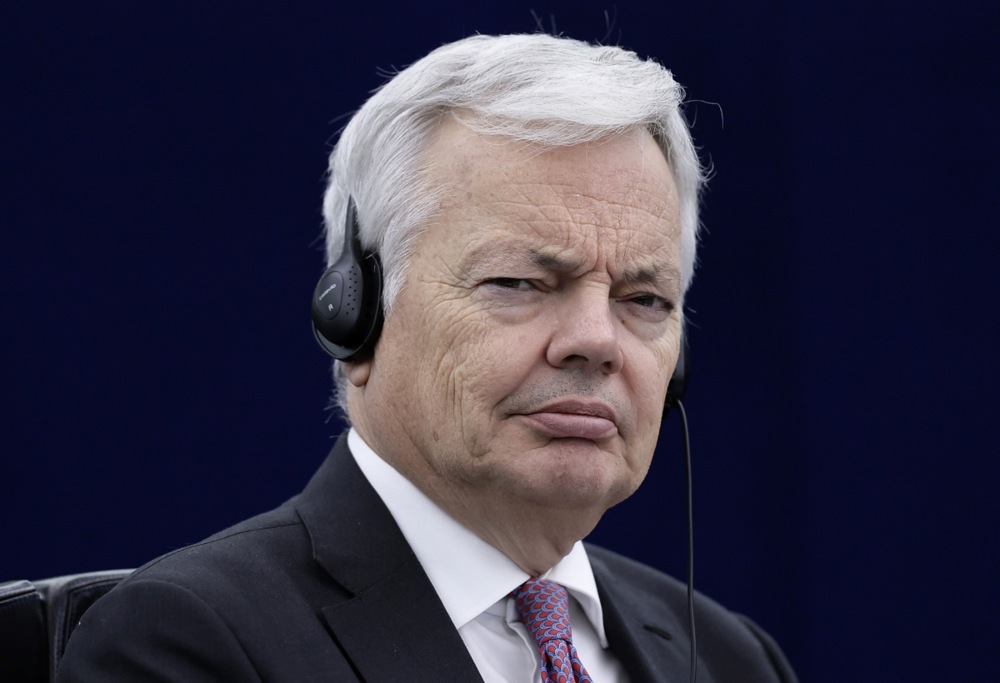
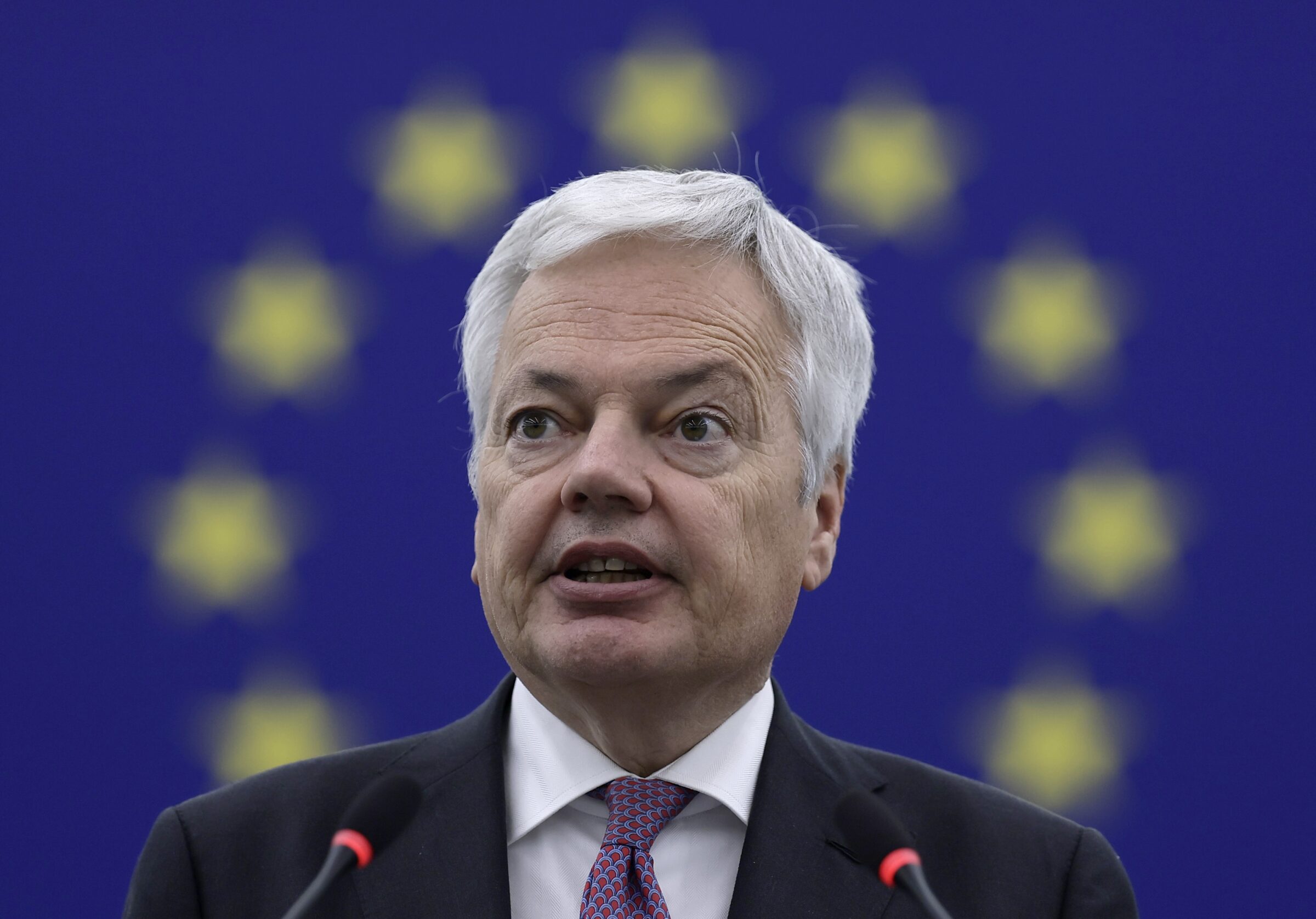
Ex-EU commissioner Reynders faces new Belgian and Polish scrutiny after EUobserver revelations

Some Belgian spies have questioned EUobserver’s report of a cover-up in favour of an allegedly corrupt Belgian ex-EU commissioner, while international commentary focused on his possible Russia ties.

EUobserver revealed on Friday (23 October) that Hugues Brulin, a director in the Belgian intelligence service (VSSE), had exchanged WhatsApp messages with ex-EU commissioner Didier Reynders, which may have been part of a criminal conspiracy to block VSSE reports into Reynders’ alleged wrongdoing.

But according to “several” VSSE sources who spoke to Belgian daily Le Soir, Brulin, who had been the number three in the VSSE hierarchy, had been in charge of logistics, Human Resources, and IT, but did “not have the power to block enquiries or put his nose into dossiers”.

Brulin did have access to secret dossiers only in case the number one and two directors in the VSSE were absent, and he had to sign off on special operations, called “BIMs” in VSSE jargon, which included measures such as phone wiretaps or home intrusions to place bugs, but this situation occurred just once during his tenure, Le Soir said.

But even if that was all true, Brulin still used to have the power to end the careers of VSSE officers who had looked into Reynders, on grounds of flimsy infractions, as happened in at least three cases, according to EUobserver’s sources.

“This article feels like a liberation. I don’t know if it really is one, but it feels like one … Thanks again in the name of all the normal, honest, taxpaying Belgians,” one ex-VSSE contact told EUobserver, commenting on last Friday’s revelations.

And besides which, there are allegations that Reynders had other VSSE insiders who might have been better placed to act.

This article continues, but the full version is available only to EUobserver.com subscribers. Visit account.euobserver.com/membership

  •  

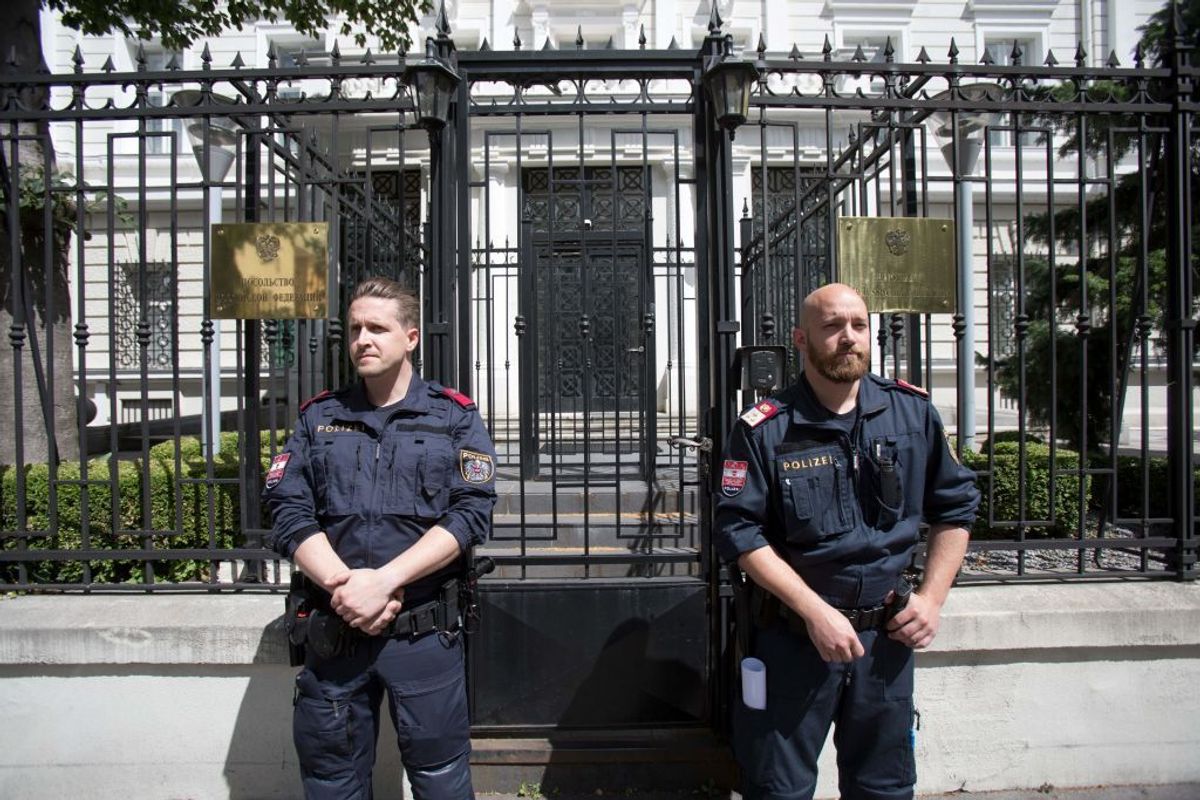
Austria expels Russian Embassy and OSCE diplomats over suspected spying. Vienna remains a Russian spy hub

Embassy of the Russian Federation in Vienna. Photo via Wikimedia Commons

Austria has ordered four Russian diplomats to leave the country over suspected espionage, declaring them persona non grata following findings by Austrian security authorities, Austrian media outlet Heute reported on 23 October.

The expulsions come as European countries step up efforts to counter suspected Russian intelligence operations amid Moscow’s war against Ukraine. Three of the diplomats worked at the Russian Embassy in Vienna, while the fourth served in Russia’s delegation to the Organization for Security and Co-operation in Europe (OSCE), which is headquartered in Vienna. 

Austria’s Foreign Ministry said the four had engaged in “activities incompatible with their diplomatic status,” a term usually used for spying, Reuters reported. It did not disclose details of the alleged activities or the intelligence findings behind the decision.

The three embassy diplomats were declared persona non grata under Article 9 of the Vienna Convention on Diplomatic Relations. The fourth, who worked on military security and arms control at Russia’s OSCE delegation, was also ordered to leave Austria. 

Vienna remains a hub for Russian intelligence

The latest expulsions bring the number of Russian diplomats Austria has expelled since 2020 to 18, according to Reuters. In May 2026, Austria expelled three Russian Embassy employees suspected of using antennas on diplomatic buildings to intercept satellite internet data transmitted by international organizations based in Vienna. 

Vienna’s concentration of international organizations, including the OSCE and United Nations agencies, has made it a key location for intelligence activity. A 2024 report by The Wall Street Journal, described Vienna as a major Russian spy hub for operations targeting Western countries, including surveillance of arms supplies to Ukraine.

Explore further

WSJ: Vienna has become major Russian spy hub for anti-Western operations in Europe

Russia’s Deputy Foreign Minister Dmitry Lyubinsky said Moscow’s response to the expulsions was unavoidable, according to Russian state news agency TASS, AP reported.

  •  

Russian espionage evolves from elite spies to gig operatives

Russian hostile activity costs the UK at least £2 billion (US$2.7 billion) annually, according to a recent report by Scottish MP Graeme Downie, who has called on the government to measure what these actions cost Britain. But this figure is just the baseline. In reality, a profound shift in Moscow’s approach to sabotage means the […]

The post Russian espionage evolves from elite spies to gig operatives appeared first on Asia Times.

  •  

[EXCLUSIVE] Leaked WhatsApps between ex-EU commissioner Reynders and senior Belgian spy reveal attempts to bury allegations of his possible Russia ties

“The ‘job’ … has been mostly accomplished,” said a senior official in Belgium’s spy service, Hugues Brulin, in a WhatsApp message to the Belgian then EU commissioner, Didier Reynders.

“Bravo for the work you did,” said Reynders.

It was back in 2022, and, at least on the surface, they were chatting about a staff reshuffle inside Belgium’s intelligence service, La Sûreté de l’Etat/Veiligheid van de Staat (VSSE) — which was already a peculiar thing for Brulin to be doing on WhatsApp with an EU official.

But their messages, seen by EUobserver and published in full below, were now also evidence in a Belgian police investigation into Reynders on money-laundering charges, which painted them in the light of a potentially criminal conspiracy.

They reconfirmed that Belgian authorities were looking into wider allegations of Reynders’ possible collusion with Russia.

Brulin’s real “job” had been to stop the VSSE from probing Reynders and his potential Russia links, according to five former and current Belgian intelligence officers who spoke to EUobserver.

And Brulin also WhatsApp-ed Reynders on how to “counterattack” a Russia whistleblower.

The 68-year-old liberal politician from Liège, in French-speaking southern Belgium, had had a glittering career before his sudden fall from grace in December 2024, when Belgian police raided his properties, and before he was subsequently charged in 2025 with having laundered some €1m via the ING Bank, using lottery tickets and cash deposits.

Reynders had been EU justice commissioner from 2019 until 30 November 2024 (just four days prior to the police raid) and Belgium’s foreign and defence minister from 2011 to 2019.

And Belgium had vetted and cleared him to read “top secret” national, EU, and Nato documents.

Meanwhile, Europe was scandalised to learn, on 10 October, that Germany’s former spy chief had been arrested for selling secrets.

But if a man with Reynders’ CV was also found guilty of corruption and foreign collusion, it would be yet another security fiasco for Western allies.

This article continues, but the full version is available only to EUobserver.com subscribers. Visit account.euobserver.com/membership

  •  

How a Dirty Diaper Helped a KGB Colonel Escape the Soviet Union

In November 1983, the Soviet Union came to believe that NATO might be preparing a nuclear attack. The trigger was a war game. The alliance’s annual exercise, Able Archer 83, ran from 7 to 11 November and rehearsed what would happen if a conflict in Europe escalated until nuclear weapons were released. It even simulated […]

  •  

German ex-spy chief arrested over espionage and treason allegations involving leaked BND files

A case of treason on an unprecedented scale is emerging at Germany’s foreign intelligence service, in what German media say could shake the entire agency.

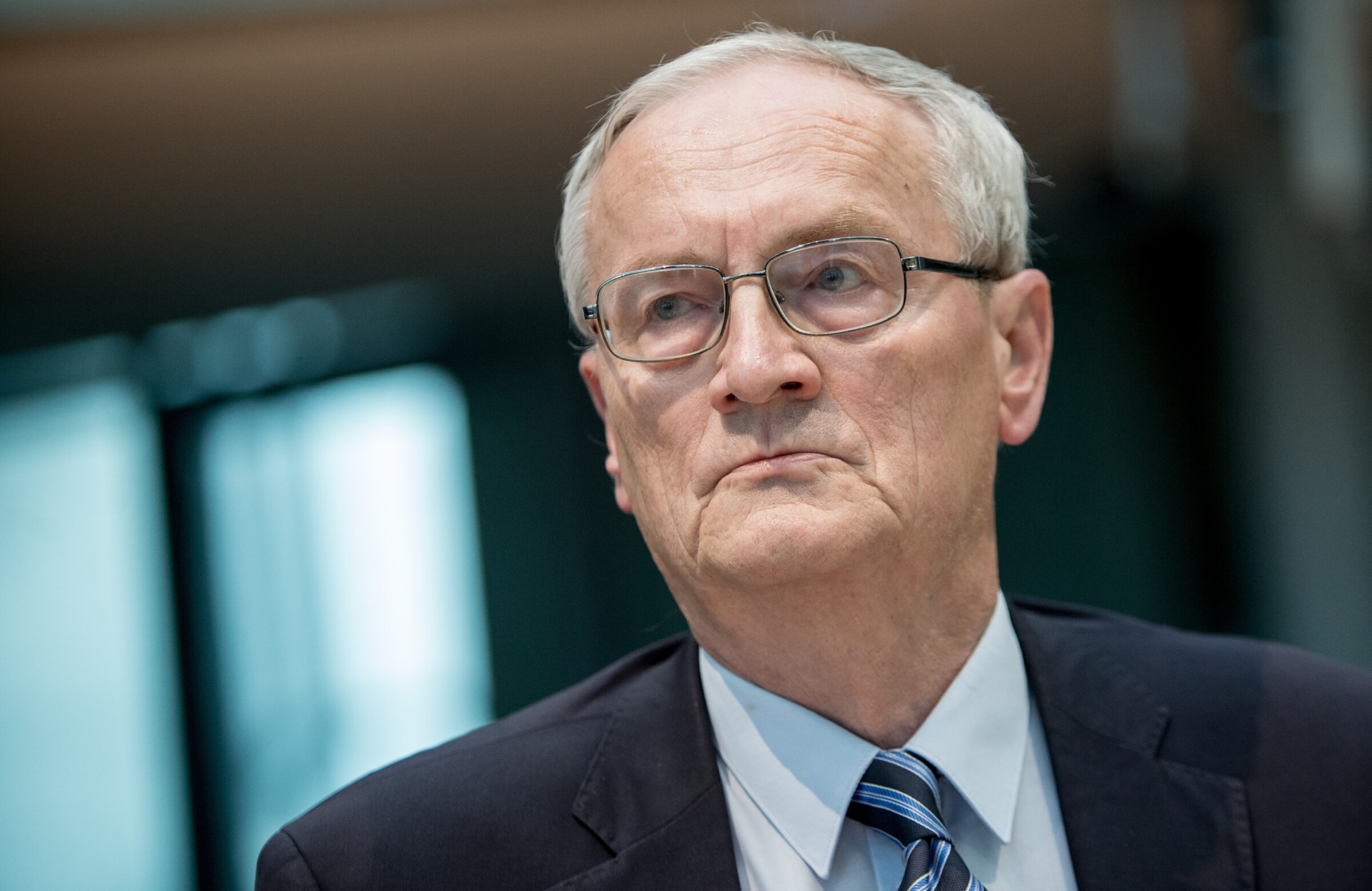
According to the investigative team of WDR, NDR and Süddeutsche Zeitung (SZ), August Hanning, the former head of the Federal Intelligence Service (BND), is being investigated for alleged espionage detrimental to the state and intelligence activities.

Hanning’s tenure at the BND ended in November 2005.

But he is accused of having illegally obtained secret information for several years after he left the service, which gathers and assesses information on foreign, security, and economic threats.

He was arrested at his home in Nordwalde, near Münster in western Germany, on Tuesday (6 October).

Der Spiegel reported that police arrived at 6.41AM and took him away in a black minibus at 8.58AM.

Another former senior BND employee was also detained in the Bavaria region — apparently the former head of Hanning’s office, who worked for the intelligence service until spring 2026.

Neither German authorities nor Hanning’s representatives had commented on the case by Tuesday noon.

What investigative journalists found

According to investigative journalists, Manfred D. leaked top-secret information from within the BND to Hanning until 2022.

According to Der Spiegel, which cited investigators’ findings, Hanning and Manfred D. agreed, as early as spring 2010, that the latter would, in return for payment, gather intelligence from the BND for his former boss, which Hanning could use in his private security consultancy work.

Investigators are working on the assumption that, in at least one case, Hanning prepared a security analysis for a foreign intelligence service.

According to WDR, NDR and SZ, it was not for Russia.

In another case, he allegedly used information from internal BND documents when communicating with a foreign agent.

According to information from security circles obtained by WDR, NDR, and SZ reporters, Hanning came under scrutiny after his home and offices were searched in September last year, when the State Criminal Police Office (LKA) was investigating the case of steak empire heiress Christina Block.

Abduction of children

Hamburg prosecutors accused her of commissioning the abduction of her two youngest children in late 2023 amid a custody dispute.

According to investigators, Hanning was involved in an earlier attempt to abduct them, accusations he denies.

While assessing material seized from Hanning last year, LKA officers found an electronic data storage device with explosive contents, according to the investigative journalists.

The former official apparently had access to top-secret BND documents from the recent past which, under no circumstances, should have been in his possession.

In total, he obtained around 2,000 documents. In many cases, these were briefings for the so-called intelligence situation meeting at the federal chancellery, where the heads of security agencies exchange information every week.

They included highly sensitive reports, for example, on Iran’s nuclear programme or the Russian military. According to security sources, they also included reports from foreign partner services.

A leak of such material is regarded by intelligence services as an absolute catastrophe. Friendly intelligence services could lose trust in the BND and cut off the institution from crucial information.

After assessing them, the LKA Hamburg police team handed the seized documents over to federal authorities.

And in May 2026, the Federal Public Prosecutor General’s Office ultimately opened confidential proceedings against Hanning and his alleged BND informant. It remains unclear over what period the former intelligence chief was supplied with secret internal information.

According to security sources, the most recently discovered documents date from June 2022.

It also remains unclear how the alleged BND mole managed to remove material from the secured agency. The BND was asked for a statement on the case.

Hanning’s lawyers have not yet responded to a brief request for comment on the allegations.

An affair of historic proportions

For the BND, this is already the second serious incident in the space of a few years.

In 2022, the espionage case involved Russia, when a former head of a BND unit was accused of spying for Moscow together with another man.

It concerned top-secret information on BND cyber operations that was leaked from the service.

As the Tagesschau website noted, if the suspicions against Hanning are confirmed, this would be an espionage affair of historic proportions.

German history has never before seen an alleged case of treason involving such a senior former top official.

According to Der Spiegel, this is unprecedented. This is particularly so because, for many years after leading the intelligence service, Hanning remained among the most important officials in Germany’s security apparatus.

Before becoming BND president, he was responsible for protecting classified information at West Germany’s representation in East Germany.

After serving at the chancellery, including as coordinator of the federal intelligence services, the lawyer, who holds a doctorate, took over the leadership of the BND in 1998.

At the end of 2005, after leaving the intelligence service, Hanning became a state secretary at the interior ministry. He retired four years later.

Questionable business

According to German media, his subsequent activities were seen as problematic. He became known as a businessman and security consultant with a company in Switzerland.

Its German subsidiary was hired for a time in the custody dispute between Block and her former husband.

According to prosecutors, in 2023 he allegedly planned, together with an associate, to “discredit Block’s former husband through false allegations of paedophilia”.

Hanning and his alleged accomplice apparently tried to plant a hard drive containing child sexual abuse images and videos on the father of Block’s children.

The investigation has not yet been concluded. Hanning has previously denied all allegations in the case.

  •  

Greece’s National Intelligence officer files criminal complaint following Predator spyware surveillance

A senior official within Greece’s National Intelligence Service (EYP), Yiannis Papadopoulos, on Tuesday filed a criminal complaint with the Athens First Instance Court Prosecutor’s Office over the targeting of his phone using Predator spyware. In this, he accuses the four business executives convicted at first instance over the phone surveillance case with a series of […]

The post Greece’s National Intelligence officer files criminal complaint following Predator spyware surveillance appeared first on Keep Talking Greece.

  •  
❌