6 projected 2027 retirement contribution limits, from 401(k)s to catch-ups


IMF via Getty Images
Just weeks after announcing a new round of funding at a $48 billion valuation, AI coding startup Cognition is fielding new investor interest at a much higher price.
The startup has received offers valuing it at between $70 billion and $80 billion and is seriously considering a round before the end of the year, according to sources familiar with the matter.
The talks around the financing are still early, and valuation targets could still change.
Founded in 2023 by Scott Wu, Steven Hao, and Walden Yan, Cognition is best known for Devin, an AI coding agent designed to automate software engineering tasks. The San Francisco-based company's existing investors include a16z, Accel, Founders Fund, Khosla Ventures, Elad Gil, and Pear VC.
Cognition's rapid valuation climb underscores the investor frenzy around AI coding, one of the hottest and most competitive corners of the AI market. As companies race to sell AI coding agents that can take on more of the work engineers do, investors are placing increasingly expensive bets on the few startups they think could emerge as leaders.
A $75 billion valuation wouldn't be so far-fetched, as SpaceX just acquired fellow AI coding giant Cursor for $60 billion a few months ago.
Last month, Cognition was drawn into a public feud with rival Factory AI, which accused Cognition employees of posing as job applicants to seek product information and faulted a former Factory adviser for meeting with Cognition executives. Cognition and the former adviser denied that confidential information was sought or shared.
Got a tip? Email Katie anytime or contact her on Signal at kroof.26. Sign up for Business Insider's weekly VC Insider newsletter here.


Rebecca Strong
Maybe it's because I'm an only child raised by a single mother, but I've always valued independence.
I walked down the aisle alone. I'll happily go out to dinner or a movie by myself. When faced with a problem, my instinct is to wrestle with it myself rather than ask for help. (I'm working on that one.)
And when my husband and I got married, I was adamant about keeping our finances separate.
For years, this arrangement worked beautifully. But after we had a baby in the summer of last year, I began to wonder whether the financial independence I'd clung to was actually working against us.
Rebecca Strong
The concept of combining finances has always made me uncomfortable, mostly because I didn't like the idea of having to justify any impulse purchases I've made after working particularly hard. My husband was always on the same page.
The first time we really talked about changing our system was when we bought a house together in 2020, several years before we got married. We knew that this, of course, would come with a lot of shared expenses.
We decided to open a joint account, and to both deposit the same amount each month to cover those expenses — like the mortgage, utilities, and groceries. Then, we kept the remainder of our earnings in separate checking accounts.
When my husband wanted to splurge on some new audio equipment, he didn't feel the need to consult me. Similarly, I didn't have to "ask permission" every time I wanted to get my hair done or go out for a nice dinner with a friend.
To me, this system reflected just how much we trusted each other to make financially responsible decisions with our own money. Besides, it felt fair: We were both contributing equally to maintaining our home, while preserving some autonomy.
In 2025, we had a baby. Suddenly, finances felt a lot less cut-and-dried.
Because my husband and I are both freelancers, every hour one of us spends working is often an hour the other spends caring for our son. So, when my husband takes a last-minute gig, I lose that time to work, but I don't directly benefit from what he earns — and vice versa.
We started to find ourselves competing for the working hours we needed to cover day care and the mortgage, even though we were supposed to be operating as a team. The "every man for himself" dynamic felt completely antithetical to what marriage was supposed to be.
Meanwhile, the costs of parenthood — diapers, formula, day care, clothing — were accumulating, forcing us to contribute more and more to our joint account. And now, one of us often had to sacrifice earning opportunities so the other could work.
During one of our recent weekly marriage check-ins, I expressed some resentment about how I'd been responsible for picking up our son from day care most days the previous week, while my husband was able to work much longer into the night.
"I'm contributing the same amount, but I'm not being given enough time to earn that amount," I said.
Rebecca Strong
Since our time and responsibilities are so intertwined these days, and we have a longer list of shared expenses than ever, we realized that the best way to make our situation feel more equitable was to merge more of our money.
In the past, we each deposited the same fixed dollar amount into our joint account every month. Now, we contribute nearly all our earnings to that account and set aside the same amount for both of us to spend as we wish.
That change helped curb some of the competition and resentment. Now, when one of us takes on an extra gig, client, or project, it feels like a win for both of us — regardless of who's earning the paycheck.
That's not to say we've found the perfect arrangement. We're still figuring out how much personal spending money makes sense to set aside and which major expenses warrant a conversation.
The important thing, though, is that we've realized independence and partnership aren't mutually exclusive. We share the same financial goals, so it only makes sense to share our earnings. We're not giving up our financial independence, but redefining what it means to us.


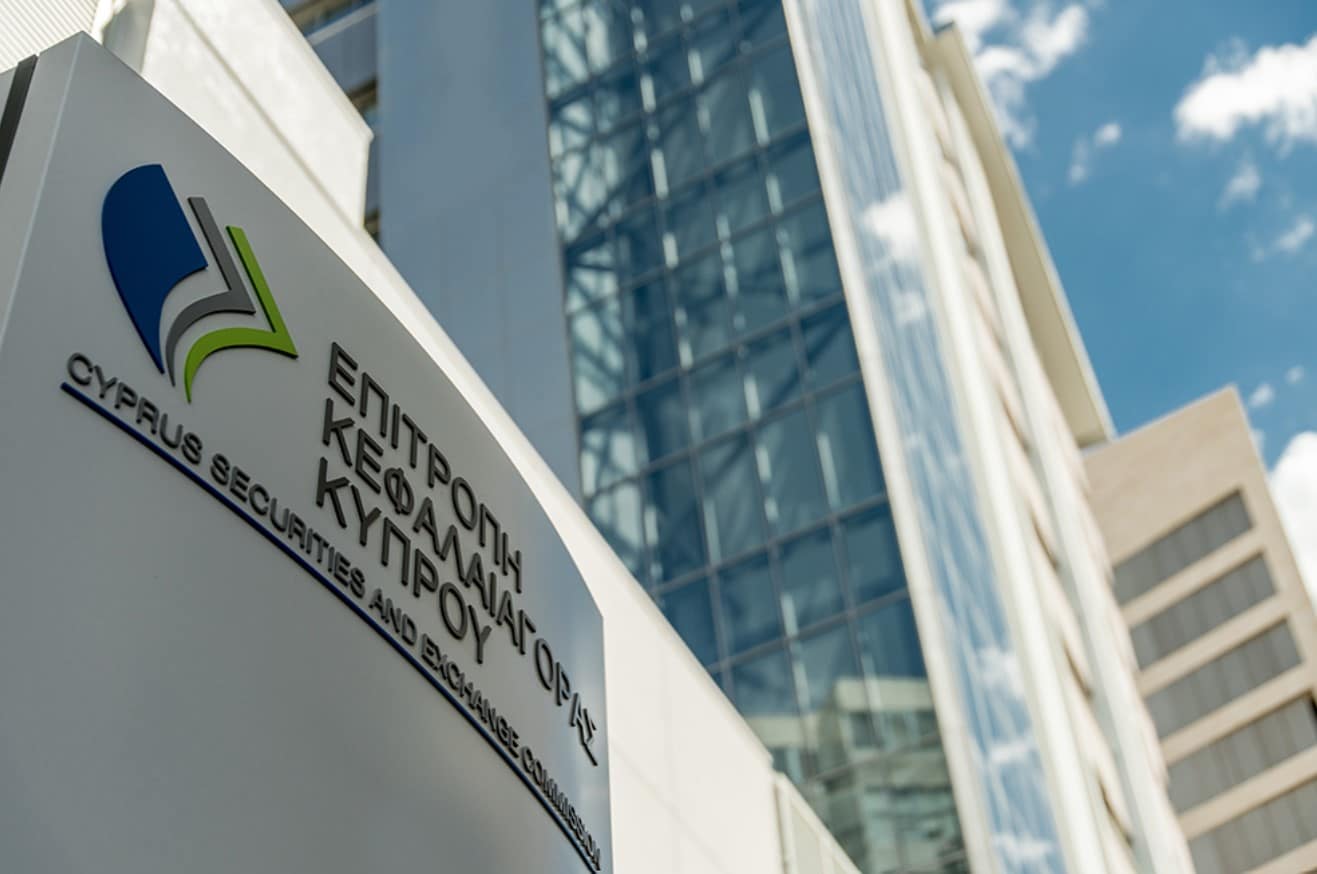
The Cyprus Securities and Exchange Commission (CySEC) has urged financial firms and investment managers to follow new European guidance on sustainability claims and prepare for standardised reporting of company ownership information, as part of efforts to improve transparency and consistency across financial markets.
In two circulars issued this week, the regulator highlighted European Securities and Markets Authority (ESMA) guidance on sustainability-related claims and a new European Union regulation setting common formats for reporting beneficial ownership information.
In the first circular, CySEC drew the attention of regulated entities to 2 new thematic notes published by ESMA on October 12, 2026, covering impact claims and transition claims linked to sustainability.
The guidance follows an earlier circular, C752, which informed regulated entities about ESMA’s second thematic note, focusing on environmental, social and governance (ESG) strategies.
The third note addresses impact claims, while the fourth covers transition claims, with both forming part of ESMA’s wider work on ensuring that sustainability-related statements are clear, fair and not misleading.
CySEC urged investment fund managers and Cyprus investment firms to keep up to date with the publication of these notes and said it expected them to take the guidance into account when meeting their existing ESG obligations.
The circular applies to Cyprus investment fund managers, including management companies and self-managed funds operating under the Undertakings for Collective Investment in Transferable Securities (UCITS) framework, as well as alternative investment fund managers, including smaller and sub-threshold managers, and Cyprus investment firms.
The second circular concerns a new EU regulation establishing common formats for submitting information about beneficial ownership, meaning the individuals who ultimately own or control companies and other legal entities.
CySEC said Commission Implementing Regulation (EU) 2026/2354, dated October 16, 2026, was published in the Official Journal of the European Union on October 22.
The regulation aims to improve the quality, consistency and compatibility of ownership information held in central registers across the EU by standardising how the information is submitted.
The common formats are intended to make beneficial ownership records more consistent and easier to use across national registers, supporting the exchange and comparison of information between member states.
The regulation will apply from July 10, 2027, and will be binding in its entirety and directly applicable in all EU member states.
CySEC encouraged regulated entities to take the regulation’s provisions into consideration ahead of its application, referring them to the published legal text for further details.
The second circular applies to a broad range of regulated organisations, including crypto-asset service providers, Cyprus investment firms, administrative service providers, UCITS management companies, self-managed UCITS, alternative investment fund managers and self-managed alternative investment funds.
It also covers self-managed alternative investment funds with a limited number of persons, companies established solely to manage such funds, and small alternative investment fund managers.
Together, the 2 circulars highlight the regulator’s expectation that financial-sector firms keep abreast of evolving EU requirements on sustainability communications and ownership transparency.

Deposits in Cyprus increased by €697.1 million in September 2026, while total loans rose by €857.80 million, with the Central Bank of Cyprus (CBC) reporting stronger monthly increases in both categories and an acceleration in annual loan growth.
The outstanding amount of total deposits reached €60.2 billion at the end of September, while total loans stood at €29.6 billion, according to the CBC’s latest monetary and financial statistics, released on Tuesday.
The net increase in deposits was substantially higher than the €171.50m recorded in August, although the annual growth rate remained unchanged at 6.5 per cent.
Deposits held by Cyprus residents rose by €639.9m during September, with households and non-financial corporations accounting for much of the increase.
Household deposits increased by €93.8m, while deposits held by non-financial corporations rose by €373m.
Deposits held by other domestic sectors increased by a further €173.1m, bringing the total increase in deposits held by Cyprus residents to €639.9m.
Meanwhile, total loans recorded a net increase of €857.8m, compared with an increase of €114.6m in August.
The annual growth rate of total loans accelerated to 14 per cent in September, up from 11.8 per cent in the previous month.
Loans to Cyprus residents increased by €470.8m, with lending to households rising by €52.2m and loans to non-financial corporations increasing by €110.1m.
Loans to other domestic sectors recorded a larger increase of €308.5m.
The figures were included in the October 2026 edition of the CBC’s Monetary and Financial Statistics, covering deposits and loans held by monetary financial institutions during September.

Joel Saget / AFP via Getty Images
Anthropic is hedging its bets by using multiple chips to handle its AI work — a strategy that could eventually erode Nvidia's dominance.
The AI lab says it manages compute "as a single, fungible pool from multiple strategic partners" — with software that can direct its work to different chips depending on where they're most productive, according to Anthropic's S-1 filing, which came out Monday as the company prepares to go public.
Anthropic says it uses hardware from four chip families: Amazon Trainium, Google TPUs, Nvidia GPUs, and AMD GPUs.
That flexibility, which Anthropic said "took years and significant investment to build," could make major AI companies less dependent on Nvidia over time and give them more negotiating leverage, analysts said.
"The real exposure could be Nvidia's pricing power," said Patrick Moorhead, founder and CEO of Moor Insights & Strategy, "because a customer that can shift work across four platforms negotiates very differently than one that can't."
Ashish Nadkarni, an analyst at IDC, added that a multichip approach also makes Anthropic less vulnerable to fluctuations in Nvidia's chip supply.
Although Anthropic's chip mix isn't new, the company is now pitching it as a core advantage to investors, Moorhead said.
The threat has its limits. Switching between chips is still difficult — especially when it comes to training AI models as opposed to running them, Moorhead said — and only the biggest AI companies have the resources to do it.
Anthropic also continues to spend billions on Nvidia compute, Moorhead said.
Gil Luria, head of technology research at D.A. Davidson, said that while other major companies like OpenAI likely take a multichip approach, it may not be worth the effort and investment for smaller players.
Brad Gastwirth, global head of research and market intelligence at Circular Technology, said Anthropic's strategy doesn't represent a major near-term threat. Having more chip options doesn't erase Nvidia's advantages in performance, networking, and software, he said.
There's a broader risk for Nvidia if AI compute becomes more of a commodity.
Citadel CEO Ken Griffin has warned that if supply overtakes demand, it could drive down rental prices.
"GPUs, like airlines, have a very low marginal cost to run," he told Bloomberg last week. "The moment you have overcapacity, pricing goes into freefall."
Nvidia did not immediately respond to a request for comment from Business Insider.
Have a tip? Contact this reporter via email at gweiss@businessinsider.com or Signal at @geoffweiss.25. Use a personal email address, a non-work WiFi network, and a non-work device; here's our guide to sharing information securely.

© Ben Jones

© Ben Jones

Germany’s Alternative for Germany (AfD) is facing renewed scrutiny after hackers published a substantial archive of internal correspondence, exposing details of party finances, political strategy and disputes among senior officials.
The material, released on 19 October 2026, comprises approximately 421,000 emails and nearly 50,000 accompanying documents, amounting to some 281 gigabytes of data. The files cover more than a decade of party activity, including correspondence involving co-leader Alice Weidel, former chairman Alexander Gauland and other senior figures.
The AfD confirmed that its hosting provider had suffered a cyberattack in September. According to the party, the attackers obtained information from a limited number of email accounts, many of which had not been actively used for several years.
The identity of those responsible remains unknown.
The documents are being examined by several investigative teams, including ZDF, Der Spiegel and Austria’s Der Standard, with technical assistance from the Organised Crime and Corruption Reporting Project (OCCRP).
The most consequential findings so far concern Weidel’s knowledge of illegal campaign donations received during Germany’s 2017 federal election.
At the time, approximately €132,000 was transferred through Swiss companies into accounts belonging to the AfD’s Bodensee district organisation. The payments were designated for Weidel’s election campaign, particularly its social media activities.
When the transactions became public in 2018, Weidel maintained that she had not known about the money until September 2017 and described the donations as unsolicited.
However, correspondence examined by German investigators and journalists raises questions about that account.
In an email dated 10 July 2017, attributed to Weidel, she told her district treasurer that campaign donations had been promised and requested that the party’s bank account be checked twice weekly.
She also asked to receive confirmation of incoming payments so that campaign expenditure could be planned.
Four days later, the first payment arrived from Switzerland.
Further correspondence indicates that Weidel arranged a separate campaign account and obtained authority to direct expenditure from donations earmarked for her election activities.
The latest investigation, published on 26 October, provides additional details about the account’s management and how the party handled the ensuing controversy.
The leaked correspondence also reportedly includes invoices relating to the purchase of approximately 25,000 Facebook followers for Weidel’s campaign. The extent to which those accounts were automated, and their influence on voters, has not been established.
The AfD was previously ordered to pay approximately €396,000 for accepting the unlawful donations. Criminal proceedings involving Weidel and other district officials were discontinued in September 2021 because prosecutors found insufficient evidence of criminal wrongdoing.
Weidel’s spokesman has rejected suggestions that she misrepresented events. He maintains that she had discussed possible contributions with several potential supporters but had neither anticipated specific amounts nor expected the payments from the Swiss companies concerned.
The new material does not establish that Weidel knew the identity of the ultimate donor or participated in concealing the source of the funds.
Another development concerns Weidel’s earlier relationship with Björn Höcke, the influential leader of the AfD’s Thuringia organisation.
According to correspondence examined by WELT, Weidel expressed serious reservations between 2015 and 2017 about the influence of nationalist and extremist elements within the party.
She warned colleagues that associations with the anti-Islam Pegida movement and the far-right National Democratic Party risked alienating mainstream conservative voters, particularly in western Germany.
Her private concerns contrast with her subsequent accommodation of Höcke’s influence within the AfD.
The correspondence provides evidence of the internal disagreements that accompanied the party’s transformation from an initially Eurosceptic political movement into one centred increasingly on immigration, national identity and opposition to Germany’s established parties.
The revelations are particularly relevant because Weidel now promotes proposals for substantial changes to Germany’s relationship with the European Union.
As EU Today previously reported, she has advocated withdrawing Germany from the euro and the Schengen passport-free travel area.
The leak arrives amid continuing legal and political arguments over whether the AfD threatens Germany’s constitutional democratic order.
In May 2025, the Federal Office for the Protection of the Constitution classified the party as a confirmed right-wing extremist organisation. However, a Cologne court issued an injunction in February 2026, preventing that classification from taking effect pending a final judicial decision.
The court acknowledged evidence of anti-constitutional tendencies within the AfD but found that the material presented was insufficient at that stage to establish that they characterised the party as a whole.
The leaked emails could potentially become relevant to future assessments.
Germany’s Interior Ministry has confirmed that domestic intelligence authorities can, in principle, consider available information when evaluating possible threats to the constitutional order.
Nevertheless, whether unlawfully obtained correspondence could be admitted as evidence, and what weight it would carry, would require separate legal examination.
A party ban can be imposed only by the Federal Constitutional Court. The present disclosures do not themselves establish the legal conditions necessary for such a decision.
The scale of the archive introduces further complications.
The material reportedly contains bank statements, membership records, personal correspondence and other confidential information involving thousands of individuals.
Journalists have verified portions of the correspondence by comparing messages with independently retained originals. Handelsblatt’s examination, for example, identified previously exchanged emails whose contents matched records held by its own reporters.
However, verification of individual communications does not establish the authenticity of every document in the archive. Fabricated messages have also circulated online.
In an official statement on 21 October, the AfD described the breach as criminal data theft and said it would not authenticate individual documents for journalists.
The party has also reported the incident to the authorities.
For Germany’s political institutions, the affair now presents several distinct questions: whether historical campaign finance arrangements were accurately disclosed, what the correspondence reveals about the party’s internal decision-making, and whether any of the documents provide evidence relevant to ongoing constitutional scrutiny.
Those questions remain open as investigators and journalists continue examining the archive.