❌

Reading view

Britain’s New Budget Exposes the Economic Cost of War and the Limits of Fiscal Flexibility

Chancellor John Healey has unveiled emergency household support, higher taxes on banks and new defence commitments as the Middle East conflict puts renewed pressure on Britain’s economy. Behind the immediate relief measures lies a difficult calculation over growth, public spending and national security.

Britain’s government has attempted to reconcile rising energy prices, constrained public finances and growing defence obligations in a Budget that illustrates how international conflicts are reshaping domestic economic policy.

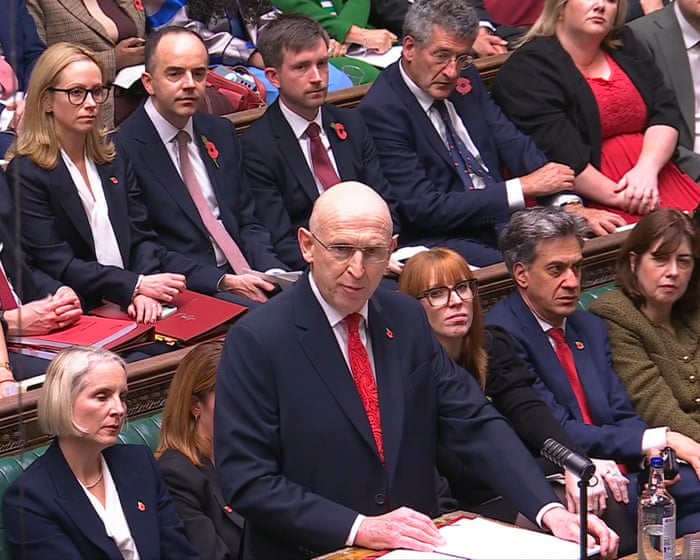
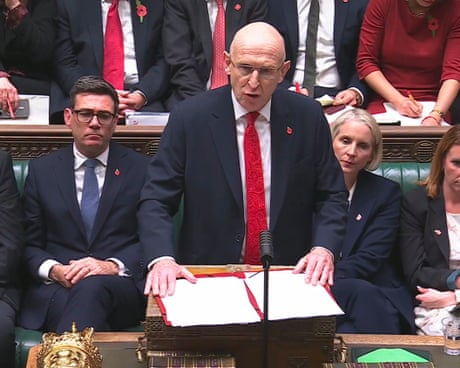
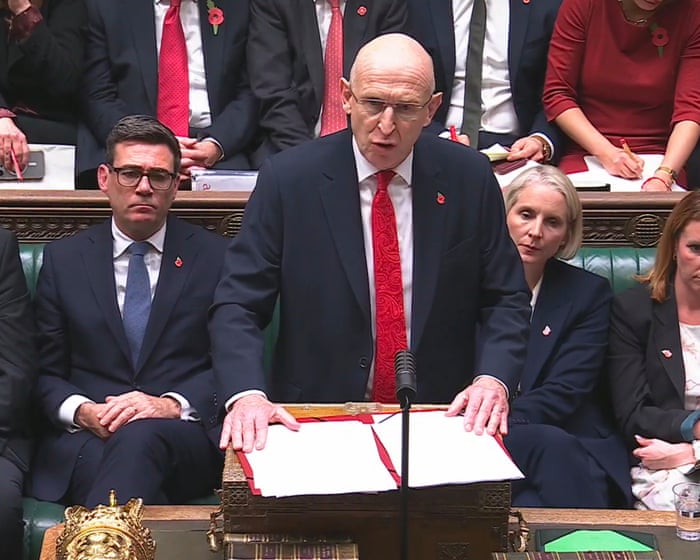
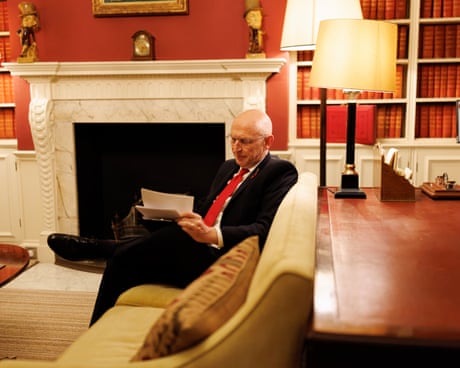
Presenting his first Budget on 28 October, Chancellor of the Exchequer John Healey announced a £100 energy payment for millions of households, an extension of electricity VAT relief and additional measures intended to support businesses facing rising operating costs.

The package comes as Prime Minister Andy Burnham’s administration confronts the economic consequences of the conflict in the Middle East, alongside continuing financial commitments arising from Russia’s war against Ukraine.

The central difficulty is that Britain must simultaneously protect household purchasing power, support economic growth and finance a more expensive security environment, without allowing government borrowing to expand beyond its fiscal targets.

Energy prices dictate economic policy

The most immediate measures concern energy.

Under the Treasury’s Budget proposals, up to 20 million households in England occupying properties in Council Tax bands A to D will receive a £100 payment from January 2027.

The government has allocated £2.6 billion for the programme, including corresponding funding arrangements for the devolved administrations.

The temporary reduction in VAT on domestic electricity will also remain in place until July 2027, a measure expected to reduce the annual Ofgem price cap by approximately £50 in April.

Meanwhile, the Chancellor announced plans to remove standing charges from domestic gas bills, transferring fixed costs into consumption-based charges.

Although the government estimates that the change could benefit a majority of households, its distributional effects will depend on individual consumption. Lower gas users may benefit differently from households with substantial heating requirements.

The measures demonstrate how energy prices have become a direct constraint on fiscal policymaking.

Britain’s exposure to internationally traded gas means that disruptions originating outside Europe can quickly influence domestic prices, regardless of the source of individual energy supplies.

Banks and businesses face different treatment

Rather than introduce broad increases in personal taxation, the government has chosen targeted revenue measures.

The Bank Corporation Tax Surcharge will temporarily increase from 3 to 6 per cent between January 2027 and March 2028, helping finance household energy support.

The government has also announced changes to gambling taxation intended to fund assistance for smaller businesses in retail, hospitality and leisure.

Fuel duty will remain frozen until July 2027, extending a policy intended to limit motoring and transport costs.

These decisions reflect competing pressures.

Households and smaller businesses require relief from higher costs, while the Treasury must demonstrate that its spending commitments remain consistent with fiscal discipline.

The distribution of the tax burden is therefore becoming an important political question, particularly when the government is simultaneously seeking private investment to stimulate growth.

Growth forecasts reveal limited room for manoeuvre

The latest forecasts from the Office for Budget Responsibility offer little prospect of rapid economic expansion.

According to figures published alongside the Budget, British GDP is expected to grow by 1.2 per cent in 2026 and just 1 per cent in 2027.

Inflation is forecast to peak at 3.8 per cent in the first quarter of 2027 before gradually returning towards the Bank of England’s 2 per cent target.

The Chancellor’s fiscal headroom — the margin available before the government’s borrowing rules would be breached — has narrowed to approximately £15 billion in 2029–30.

This creates an unusually difficult environment for policymaking.

Further economic disruption could reduce tax receipts or increase spending demands, leaving the Treasury with limited capacity to respond without revising its plans.

Defence spending enters the fiscal equation

The Budget also places national security increasingly within the government’s wider industrial strategy.

Britain remains committed to reaching defence spending equivalent to 3.5 per cent of GDP by 2035, with an interim target of 3 per cent in 2030.

The government has announced plans for the National Wealth Fund and British Business Bank to deploy up to £5 billion over four years into defence, dual-use technologies and other sectors supporting national security.

It has also committed an additional £500 million to support Ukrainian air defences during the coming winter.

These measures extend beyond immediate military procurement.

They seek to strengthen domestic industrial capacity, encourage private investment and establish supply chains capable of sustaining higher defence expenditure.

However, the precise financing arrangements for Britain’s longer-term NATO commitments are to be determined at the next spending review.

A European problem without a common fiscal solution

Britain’s predicament closely resembles that confronting European Union governments.

Across Europe, policymakers are attempting to finance defence modernisation and energy security while maintaining social expenditure and industrial competitiveness.

The difference lies partly in the institutional frameworks within which those decisions are made.

EU governments operate under European fiscal rules, while Britain sets its own borrowing and debt targets. Nevertheless, all face the same underlying pressures from energy markets, interest rates and international security commitments.

For British businesses trading with the European Union, the effects of energy costs and industrial investment policies on either side of the Channel will remain particularly significant.

The October Budget consequently represents more than an exercise in temporary household assistance.

It exposes the difficulty of sustaining public services, improving competitiveness and responding to geopolitical instability when economic growth is modest and available fiscal resources are limited.

Whether the measures provide lasting relief will depend less on the immediate payments announced by the Chancellor than on the course of energy prices, inflation and economic growth over the coming year.

  •  

Budget 2026: Healey hikes taxes on banks and landlords to fund £100 handouts to 20m households

Few surprises as chancellor uses low-key speech blaming ‘global economic storms’ for stoking energy prices and cost of living crisis

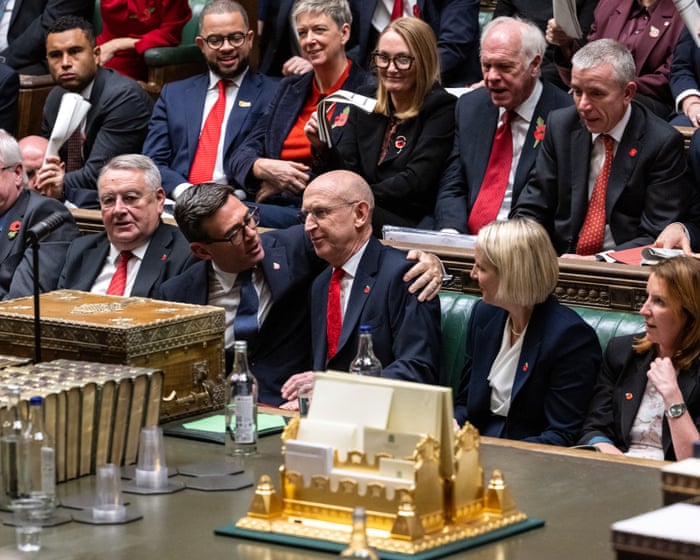
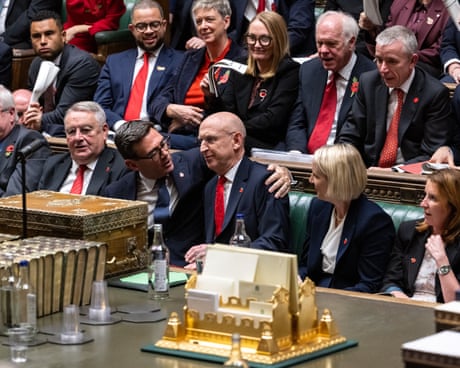
John Healey raised taxes on banks and landlords to fund a £100 winter handout for 20 million families as official forecasts made clear there is no end in sight for the cost of living crisis.

In his first budget, the chancellor blamed “global economic storms” for the grim outlook, as the war in Iran drives up oil and gas prices.

Continue reading...

© Photograph: House of Commons/AFP/Getty Images

© Photograph: House of Commons/AFP/Getty Images

© Photograph: House of Commons/AFP/Getty Images

  •  

Nigel Farage skips budget in Commons over seating ‘altercation’ concerns

Reform UK leader ‘shocked’ by £10bn pledged to Ukraine and doubles down on cutting tax for crypto investors

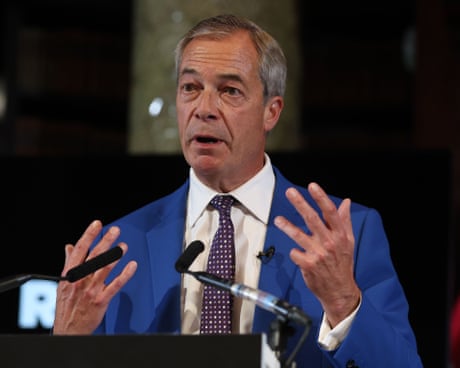
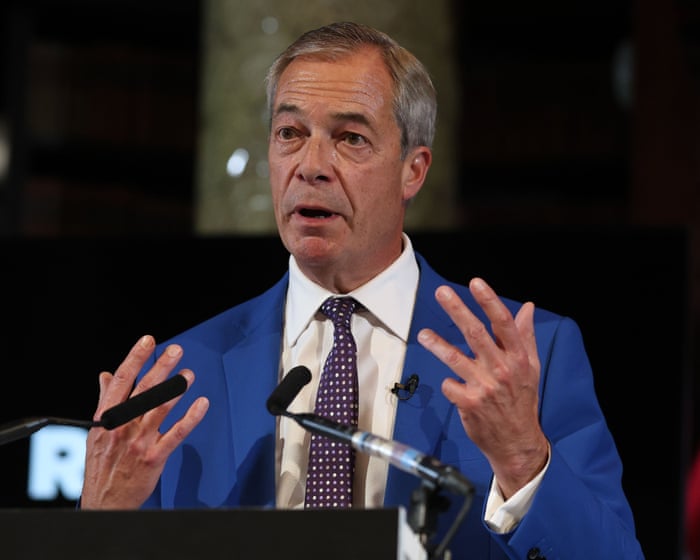
Nigel Farage skipped the chancellor’s first budget because he was worried he would get in a “physical altercation” with another MP in a row over seating arrangements.

The Reform UK leader was not present in the House of Commons but gave a press conference afterwards in which he said he was “shocked” by the £10bn going to support Ukraine and doubled down on his party’s policies on cutting tax for crypto investors.

Continue reading...

© Photograph: Zeynep Demir Aslim/ZUMA Press Wire/Shutterstock

© Photograph: Zeynep Demir Aslim/ZUMA Press Wire/Shutterstock

© Photograph: Zeynep Demir Aslim/ZUMA Press Wire/Shutterstock

  •  

Budget 2026 calculator: find out if you are better or worse off

Use our interactive tool to see how you have been affected by John Healey’s tax and spending announcements

Continue reading...

© Photograph: Peter Dazeley/Getty Images

© Photograph: Peter Dazeley/Getty Images

© Photograph: Peter Dazeley/Getty Images

  •  

Another Labour Benefits Street Budget

Labour Chancellor John Healey has hit struggling workers, savers and landlords as he drives the tax burden to a new record high to fund energy bailouts and a mushrooming welfare bill in his Budget today.

The post Another Labour Benefits Street Budget appeared first on The Daily Sceptic.

  •  

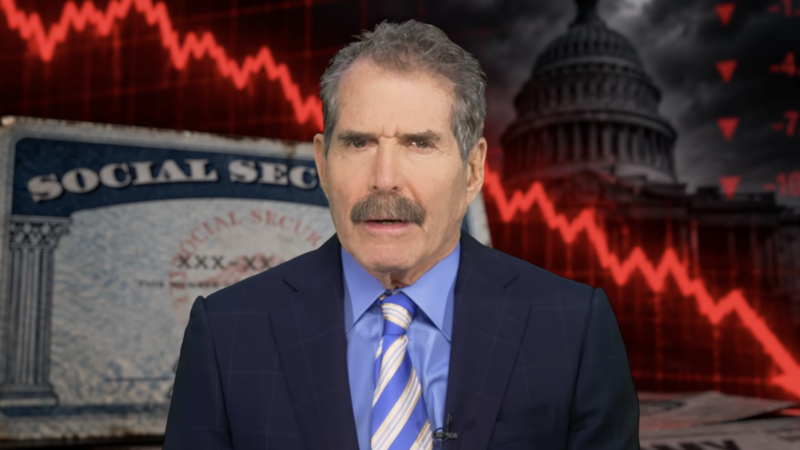
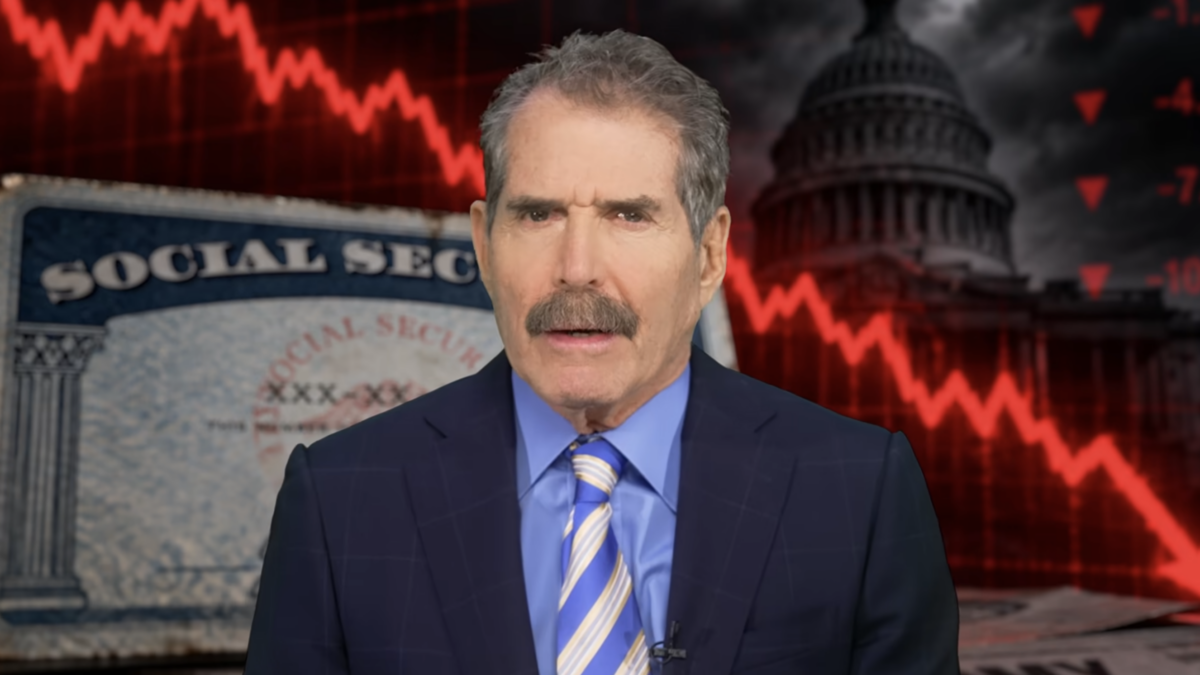
Social Security Is Like a Ponzi Scheme. How Do We Fix It?

John Stossel stands in front of a Social Security Card and the U.S. Capitol with a red downward arrow | Stossel TV

"We will always protect Social Security, Medicare!" says President Donald Trump.

That would be nice.

But when I look at these programs' balance sheets, I don't see how he's protected anything. Both Social Security and Medicare are on track to run out of money.

Politicians mostly ignore the problem. Worse, progressives like Sen. Bernie Sanders (I–Vt.) and Rep. Alexandria Ocasio-Cortez (D–N.Y.) say they want to expand Social Security benefits.

That's just irresponsible.

My new video points out what we've known for years: These programs are unsustainable.

The problem is that people like me live longer. We like getting monthly Social Security checks and medical care that appears free.

Since we vote more consistently than others, politicians don't want to make us mad by cutting our handouts.

My fellow geezers say, "Social Security is not a handout! I contributed to the 'trust fund' every year. I'm just getting back what I paid in!"

But that's not true. Today, most of us get back much more than we paid in.

In 1935, politicians created the handout, saying, even if you don't save for retirement, government will save for you.

But that was another political lie. They didn't create individual retirement accounts. They didn't save our Social Security payments. They spend every penny as it comes in.

It's why Social Security is like a Ponzi scheme.

Bernard Madoff went to jail because he used new investors' money to pay old investors. That's exactly what our government does.

Few Americans realize it.

"What happens to the money?" I ask people on the street.

"It's held in trust," said one woman.

It isn't.

When politicians started Social Security, there were enough young workers to tax to cover the cost of sending checks to old people.

But now, since we live longer, there aren't enough young workers to fund our payments.

Social Security's costs exceed its income by billions of dollars.

"There is a plan out there to save it, but it requires some tough choices," says the Cato Institute's Romina Boccia. "Commonsense tweaks we can make."

Those include raising the retirement age, capping checks to the affluent, and letting young people opt out of Social Security. Reforms like that require tradeoffs. But ignoring the problem doesn't make it disappear.

We need to act, says Boccia, because Social Security is like the Titanic—gradually heading for disaster.

"Make reforms now," she says, "we can avoid the iceberg. [But] if we wait until the iceberg is in front of our noses and try to turn the ship, we're going to run right into it."

Medicare will hit its iceberg in 2033; then benefits will automatically be reduced. Social Security will hit it the year before.

At that point, incoming taxes will cover only about 78 percent of promised retirement benefits.

Yet irresponsible Democrats say: Spend even more.

"Human wants and needs are unlimited," replies Boccia. "There's always another program that needs more funding."

Sanders says, pay for it by taxing the rich more.

"There isn't enough money even that the rich would have, to pay for the…unfunded liabilities," Boccia points out.

If only politicians had listened years ago, when Cato and the Heritage Foundation proposed letting workers put some of their Social Security money into personal retirement accounts. Instead of relying on future taxpayers, workers could accumulate real assets that grow over time.

Personal accounts give workers something Social Security doesn't: assets we own.

"Even a conservative portfolio of stocks and bonds that got you a 5 percent annual return would have made you many times more [than Social Security]," says Boccia.

Private accounts helped Chile rise from one of the poorest countries in Latin America to one of the richest. Yet leftists still object to capitalists getting a cut of the pie.

"We lack gratitude for what the free market provides," says Boccia.

We should adjust these programs now.

The longer politicians wait, the worse the choices become.

But today's politicians will probably be gone by then.

Our children get the bill.

COPYRIGHT 2026 BY JFS PRODUCTIONS INC.

The post Social Security Is Like a Ponzi Scheme. How Do We Fix It? appeared first on Reason Magazine.

  •  

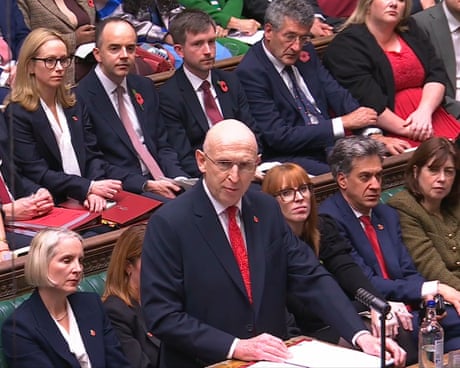
Budget 2026: John Healey offers £100 payments to households to help navigate ‘global economic storms’

Payment to 20m homes part of package to help cut energy bills and ease cost-of-living crisis, paid for by smaller than expected bank windfall tax

John Healey promised to steer Britain through “global economic storms,” as he announced a package of measures to cut consumers’ energy bills, funded by a smaller-than-expected windfall tax on banks.

In his first budget, the chancellor said 20m households in council tax bands A to D would receive a £100 payment – a measure he said would cost £2.6bn.

Continue reading...

© Photograph: House of Commons/UK Parliament/PA

© Photograph: House of Commons/UK Parliament/PA

© Photograph: House of Commons/UK Parliament/PA

  •  

Budget 2026: £100 energy payment for millions and rise in bank tax as watchdog warns on stalling living standards – as it happened

OBR says that living standards are forecast to rise by just 1% over the whole post-Covid decade

Martin Lewis said that, when he met John Healey this morning, the chancellor said that, having removed standing charges from gas bills, he would also like to get rid of them from electricity bills. Lewis said:

The chancellor said he will be talking to Ofgem about how they get rid of the charge on electricity as well, but that is ‘trickier’ apparently and will take longer.

Continue reading...

© Photograph: House of Commons/UK Parliament/PA

© Photograph: House of Commons/UK Parliament/PA

© Photograph: House of Commons/UK Parliament/PA

  •  

What to expect from John Healey’s first budget: who wins, who pays?

Struggling households, new homebuyers and small shops stand to gain, while banks and online marketplaces could face higher levies

John Healey will present his first budget on Wednesday, which will set the tone for Andy Burnham’s premiership.

Despite the chancellor’s promises in the summer that the tax and spending event would not be beset by the leaks that preceded those of his predecessor, Rachel Reeves, both official and unofficial sources have indicated much of what Healey is likely to announce. Here’s what to expect:

Continue reading...

© Photograph: Lauren Hurley/No 10 Downing Street

© Photograph: Lauren Hurley/No 10 Downing Street

© Photograph: Lauren Hurley/No 10 Downing Street

  •  

Chancellor targets cost of living crisis in budget for a ‘difficult moment’

Healey hopes to give ‘hope for the future’ but only modest policies are expected with important decisions deferred

John Healey has acknowledged the UK faces a “difficult moment” but insisted he would put the country on a better path as he delivers his first budget on Wednesday against a turbulent global economic backdrop.

But despite the international uncertainty, the chancellor will signal “fresh hope for the future” as he attempts to sound a more optimistic note, by providing households with breathing space from rising cost of living pressures.

Continue reading...

© Photograph: Kirsty O’Connor/Treasury

© Photograph: Kirsty O’Connor/Treasury

© Photograph: Kirsty O’Connor/Treasury

  •  

EU Releases €4.9 Billion for Ukraine as Focus Shifts to Sustaining Military Support

The European Union has approved the mobilisation of approximately €4.9 billion under the European Peace Facility (EPF), implementing a significant part of an earlier agreement intended to resolve disagreements over military assistance to Ukraine.

The eight decisions, adopted by the Council on 26th October, allocate €4.7 billion towards partial reimbursement of military equipment already supplied by member states and €230 million towards the EU Military Assistance Mission in support of Ukraine.

Although the announcement represents an important step in restoring the operation of an established financing mechanism, most of the money does not correspond to fresh deliveries of military equipment.

That distinction is important as European governments attempt to reconcile continued support for Kyiv with growing pressure on national defence budgets and the need to replenish their own military inventories.

From political agreement to financial implementation

The decisions implement part of the €6.6 billion agreement reached by EU governments on 25th September, which ended a prolonged dispute over the allocation of European Peace Facility resources.

As EU Today reported following that agreement, the package separates reimbursements for previous deliveries from financing for new equipment and military training.

Under the original arrangement, €4.7 billion was earmarked for reimbursements, €1 billion for new joint procurement and approximately €900 million for training-related expenditure.

Monday’s decisions authorise most of the reimbursement component alongside a further allocation for training. They do not, by themselves, demonstrate that the separately planned €1 billion in new military equipment has been purchased or delivered.

The distinction reflects the unusual structure of the European Peace Facility.

Established in March 2021, the EPF operates outside the EU’s regular budget and finances security and defence assistance, including military equipment supplied by member states to partner countries.

Governments can provide weapons from their national stocks and subsequently seek partial reimbursement. This enables the EU to share some of the costs, although actual deliveries remain dependent on national decisions, industrial capacity and available equipment.

Reimbursements therefore strengthen the financial position of contributing governments without necessarily increasing Ukraine’s immediate stock of weapons.

Nevertheless, by reducing the financial burden of earlier donations, the mechanism can help governments preserve the capacity to make further contributions.

Military training becomes a longer-term commitment

The additional €230 million for the EU Military Assistance Mission also reflects the increasingly institutional character of European military support.

Established in November 2022, EUMAM Ukraine provides training for Ukrainian personnel through facilities and instructors made available by participating countries.

According to an EU statement delivered at the OSCE in October, the mission had trained approximately 97,000 Ukrainian soldiers.

The EU has agreed to extend the mission for another two years, moving military training beyond a series of short-term emergency measures.

Training programmes can be adapted to battlefield requirements, including the operation of Western equipment, command procedures, engineering and specialised military functions.

However, the usefulness of training also depends on the availability of appropriate weapons, ammunition and replacement equipment once personnel return to Ukraine.

The Council says the latest decisions bring overall support under the European Peace Facility to approximately €10.8 billion, comprising €9.9 billion associated with military assistance reimbursements and €950 million for training.

Frozen Russian assets and the defence industry

A separate financing mechanism is increasingly relevant to European support for Ukraine.

The Council reports that €3.5 billion in extraordinary revenues generated by immobilised Russian sovereign assets has already been channelled through the EPF to finance ammunition, air defence and drones.

More than €1.5 billion of the resulting procurement has been directed towards Ukraine’s own defence industry.

This creates a different relationship between European financing and Ukrainian military production.

Rather than relying exclusively on weapons taken from European stockpiles, the arrangement allows part of the support to be translated into orders for equipment manufactured inside Ukraine.

The approach may also reduce certain transport and procurement constraints, although production remains vulnerable to Russian attacks, component shortages and interruptions to electricity supplies.

The legal and political questions surrounding Russian-asset revenues remain significant. As EU Today previously examined, disputes over how European institutions approve funding measures have generated legal challenges.

The next test for European governments

At their 15–16 October summit, EU leaders welcomed the EPF agreement and continuing disbursements under the separate €90 billion Ukraine support loan covering 2026 and 2027.

The two instruments serve different purposes. The loan supports wider Ukrainian financial and defence requirements, while the EPF provides a mechanism for sharing the costs of military assistance.

For Kyiv, the central question is how rapidly European financial commitments can be converted into deliverable military capabilities.

For EU governments, the challenge is whether reimbursement mechanisms, national procurement and Ukrainian industrial production can operate together on a predictable basis.

The release of €4.9 billion resolves an important financing issue. It does not eliminate the continuing requirement for new equipment, ammunition and sustained production.

  •  

Campaigns spend big to sway voters with increasingly personal attack ads

Campaigns and their allies are making their closing arguments, and they've spent more than the annual budgets of a handful of states doing it. Much of that money is aimed at voters' wallets, but the attacks are also getting more personal and more artificial. Lisa Desjardins explains.

  •  

America Is Spending Billions To Fight the War on Terror in Africa. The Terrorists Are Winning.

A group of men with head coverings and weapons sit on a run | Photo: Iyad Ag Ghali; Patrick Robert/Corbis/Getty

The first state to be ruled by Al Qaeda might not be in Afghanistan or the Arab world—and its ruler might be a former whiskey-drinking rock star. In April, the Group for the Support of Islam and Muslims ("JNIM" in Arabic) led an uprising in the African nation of Mali, killing Defense Minister Sadio Camara, breaking open a prison holding thousands of inmates, and besieging Bamako, the capital. The fighting was still underway as of August.

Mali is not the only place threatened by a JNIM takeover. The West African branch of Al Qaeda is active in a belt of countries known as the Sahel. Its leader, Iyad Ag Ghali, was the former percussionist for the rock band Tinariwen. He now leads a campaign to stamp out the "music of Satan." Perhaps the one saving grace for Sahelian metalheads is that puritans can't get along with each other: The JNIM is locked in a war with the rival Islamic State Sahel Province.

The Sahelian civil wars are a testament to the failure of the global war on terror. Despite spending $355 billion on African counterterrorism from 2001 to 2021, the U.S. government has been unable to stop Al Qaeda or related Islamist groups from taking root across the continent. A study by the Pentagon's Africa Center for Strategic Studies found a 101,300 percent increase in terrorism fatalities from 2002 to 2022, mostly concentrated in the Sahel and Somalia.

These wars demonstrate that the solution to terrorism isn't maximum violence. President Donald Trump launched four times as many airstrikes against Somalia in his first 18 months of his second term as the U.S. did over the past four years combined. U.S. military aid has flowed to repressive governments across Africa with little respect for their citizens' rights. Since 2020, there have been coups d'etat across the Sahel by military men promising that they can do the dirty work that civilian leaders are afraid of. Many of them were trained by the U.S. government. The new regimes have imported Russian mercenaries with a reputation for brutality and no real restraints on their activities.

"People need to forget about the question of democracy," Ibrahim Traoré, leader of Burkina Faso, declared in April.

Instead of restoring order, these heavy-handed tactics have caused more chaos. The military juntas in the Sahel are plainly losing to the JNIM. While the Russian fighters have no difficulties massacring civilians or mutilating prisoners, they have found it much harder to face people who can actually shoot back, facing repeated battlefield humiliations. Meanwhile, the U.S.-led campaign against al-Shabab, the Somali branch of Al Qaeda, has stalled out despite the heavier use of airpower.

The African war on terror began shortly after the U.S. campaigns in Afghanistan and Iraq. To some extent, the U.S. created the very threats that it is trying to fight in Africa. Somalia had been at civil war since the fall of socialism, and in the early 2000s, the CIA began funding Somali warlords to stop the rise of Islamist revolutionaries. The (relatively moderate) Islamic Courts Union took over anyway in 2006—uniting Somalia for the first time in more than a decade—and the U.S. encouraged neighboring Ethiopia to invade. When al-Shabab emerged to fight the Ethiopian invaders, the U.S. tapped a former leader of the Islamic Courts Union to lead a new Somali government.

Soon after the Ethiopian-Somali war, President George W. Bush created the Pentagon's Africa Command, and Congress budgeted $500 million in aid to militaries in the Sahara Desert and the Sahel. At the time, the main Islamist threat to that region was a mostly defeated insurgency in Algeria.

But the Libyan civil war in 2011 created terrible new monsters. Soon after President Barack Obama intervened in support of the Libyan revolution, weapons and hardened fighters from Libya flooded the ethnic Tuareg region of Mali, which declared independence a few months later. Soon after, Al Qaeda and its affiliates took over the Tuareg rebellion. With the Malian government coming close to collapse, France intervened in January 2013 and made many of the same mistakes that the U.S. did in its own war on terror.

Ag Ghali, the current leader of the JNIM, got his start as a Tuareg nationalist. A leaked U.S. embassy cable from 2008 called him a "proverbial bad penny" who enjoyed "playing both sides" and had ties to Islamist and secular nationalist rebels. By the time of the French intervention, he was fully committed to Islamic theocracy. In 2017, he united Islamist rebels across the Sahel under the banner of Al Qaeda. That same year, four U.S. Special Forces troops were killed in Niger by the Islamic State group, which was busy uniting Ag Ghali's rivals.

Despite the failures of the Sahelian governments to stop Ag Ghali—and their willingness to ally with Russia—the Trump administration is eager to double down on supporting them. The U.S. government increased intelligence sharing with Mali in 2025, and as of July it was considering a direct military intervention against the JNIM, according to The Washington Post. But every American escalation on the continent has produced the enemy that the next one had to fight.

The post America Is Spending Billions To Fight the War on Terror in Africa. The Terrorists Are Winning. appeared first on Reason Magazine.

  •  

Apollo says AI has delivered 'zero financial payoff' outside the tech industry

NEW YORK, NEW YORK - OCTOBER 21: Traders work on the floor of the New York Stock Exchange during morning trading on October 21, 2026 in New York City. Stocks continued to rise at opening a day after the Dow Jones closed over 500 points amid a release of the latest round of earnings reports. (Photo by Michael M. Santiago/Getty Images)
One of the world's largest investment firms isn't bullish on AI.

Michael M. Santiago/Getty Images

  • Only tech companies are seeing growth from the AI boom, Apollo Global Management says.
  • Apollo says that though some big companies are spending big on AI, they may soon pull back.
  • Corporate America is starting to see AI spending not as a source of growth, but as a cost center.

One of the world's largest investment firms says that only tech companies are getting a share of the AI pie.

In an economic analysis published on Saturday, Apollo Global Management said that while the Magnificent Seven — a group of established tech companies that includes Nvidia and Meta — are seeing revenue growth during the AI boom, this growth isn't being shared by other industries.

"Mainstream corporate America is pulling back and starting to view token spending not as a source of growth but as a cost center that weighs on margins," Torsten Slok, a partner and chief economist at Apollo, said in the report. "The technology has delivered zero financial payoff to corporate America outside of tech."

In a series of graphs, Slok measured three main metrics that have boomed for tech companies but not for regular companies: revenue per worker, profit margins, and productivity growth.

Since 2022, revenue per employee figures have skyrocketed for tech companies — rising from $550,000 to nearly $800,000 today. Meanwhile, that figure hasn't changed much for everyone else in the S&P 500, lingering around $550,000 for the last seven years.

Similarly, while profit margins soared among tech companies since 2022, they've stagnated at about 10% for everyone else.

And across the economy, AI hasn't yet dramatically increased productivity growth as some AI optimists have predicted.

Apollo's research portends a dark shadow over a US economy throwing massive amounts of dough toward AI tools and companies, whose leaders have promised that an "age of abundance," where people won't have to work as much, will soon be upon us.

"The question looking ahead is whether, even as models become commoditized, mainstream corporate America can turn increasingly cheap intelligence into higher revenue growth and higher profit margins," Slok said.

"That may be harder than it sounds," he added.

Read the original article on Business Insider

  •  

A veteran tech investor says 'doom and gloom' over the AI boom is overblown, even though it has shades of the dot-com bubble

Paul Wick
Paul Wick is the CIO of Seligman Investments.

12/08

  • There are clear parallels between the AI boom and the dot-com bubble, tech investor Paul Wick says.
  • But solid demand, strong earnings, and less mania make for a "healthier" backdrop, Wick said.
  • Seligman's chief investor brushed off Michael Burry's worries but flagged some trends to watch.

The AI boom has shades of the dot-com bubble, but fears of an imminent crash and mass unemployment are overblown, a veteran tech investor says.

At the turn of this century, there was an explosion in dot-com startups being formed, and a huge infrastructure buildout with telecoms "aggressively" spending on wired and wireless networks, Paul Wick told Business Insider in an interview this week.

The chief investor of Seligman Investments — a group within Columbia Threadneedle Investments that manages over $40 billion of assets and comprises a hedge fund, a mutual fund, and a venture capital arm — said there were clear parallels between that period and the current boom in AI startups and data-center spending. He also noted that energy prices and interest rates jumped then as they've done this year.

But Wick noted there isn't the same IPO frenzy now, or the same "frenetic environment" where stocks soar fivefold or tenfold in a day. He also said that by late 2000, a slowdown in IT spending was being forecasted for 2001, whereas enterprise spending on AI remains strong and recent tech earnings have been robust.

Simply put, the situation seems "healthier" now than in 2000, he said.

Business Insider asked Wick about Michael Burry's warnings this year around AI. "The Big Short" investor has called out aggressive accounting, circular financing, hidden debt, and overinvestment in depreciating assets like microchips as reasons to be skeptical that the boom has legs.

Wick said that Burry, known for predicting and profiting from the collapse of the mid-2000s housing bubble, has been "early or downright wrong on many other things."

Burry has previously defended his track record, citing his correct predictions and sharing charts showing the timing of his market calls.

As for concerns about Nvidia's efforts to grow the AI ecosystem by investing in data center developers and software companies, Wick emphasized that the chipmaker is "extraordinarily profitable."

He cast doubt on whether Nvidia should spend its spare cash only on buybacks, rather than bolstering its customers, especially as several of the industry's biggest players are working to develop their own AI chips to reduce their reliance on Nvidia.

But he also flagged some industry trends to watch, including enterprise clients opting to use older models or build their own, and token pricing coming under pressure as users embrace open-source models, raising questions over the size of the market opportunity for the likes of OpenAI and Anthropic.

Navigating a new world

Wick weighed in on how a young person can get ahead in the AI era.

"It used to be that a degree in computer science was a ticket to success," he said.

A better option today might be to learn a trade, as there's "booming demand" for workers such as electricians and HVAC technicians, and they can make an "incredibly good living" without having to go to a four-year college, Wick said.

He also took aim at the "doom-and-gloom notion that AI is going to eviscerate demand" for human labor. He described that worry as a "little premature" as nobody knows for sure how AI will affect entry-level roles in the future, unemployment is yet to soar, and there's always inertia when it comes to businesses and consumers changing their behavior.

Read the original article on Business Insider
  •  

Could a Libertarian Swing the Texas Senate Race?

Today's guest is Ted Brown, the Libertarian Party candidate for U.S. Senate in Texas. Brown is facing off against Republican Ken Paxton and Democrat James Talarico in a closely contested race. Brown received more than 267,000 votes in his 2024 Senate campaign and is now challenging both major parties on their commitment to individual liberty. He argues that Republicans have abandoned limited government while Democrats increasingly embrace economic policies that undermine the free market.

Nick Gillespie talks with Brown about Paxton's corruption scandals, Talarico's hostility toward billionaires, and why Texas ranks poorly on personal freedom despite its business-friendly reputation. Brown makes the case for returning to an Ellis Island–style immigration system, cutting federal spending to confront the $40 trillion national debt, and ending America's military involvement in the Middle East. They also discuss abortion rights, government surveillance, online age-verification laws, and how regulations drive up the cost of healthcare. Brown explains what it will take to rebuild the Libertarian Party and why he believes a senator could accomplish more by stopping bad legislation than by passing new laws.


0:00—Freedom in Texas

4:01—Paxton's corruption

6:21—Talarico's platform

8:53—Texas governance

10:33—Ellis Island–style immigration

13:58—Abolishing the federal income tax

15:29—Entitlement reforms and defense spending

18:19—Abortion

21:21—Transgender healthcare

22:24—Age-verification laws

25:05—Healthcare and property insurance

31:22—Who is Brown appealing to?

33:27—The Libertarian Party

36:08—Brown's pitch to undecided voters

39:06—Threats to individual liberty

The post Could a Libertarian Swing the Texas Senate Race? appeared first on Reason Magazine.

💾

© Illustration: Fatima Ruiz

Nick Gillespies talks to Ted Brown about Texas senate race
  •  

Burnham’s Doomsday Guide Descends into Farce as he is Forced to Play Down Rayner’s Joke About Stockpiling Wine

Andy Burnham's doomsday prepping campaign descended into farce today as he was forced to play down Angela Rayner's joke about stockpiling wine amid questions of why a Government skimping on defence is lecturing the public.

The post Burnham’s Doomsday Guide Descends into Farce as he is Forced to Play Down Rayner’s Joke About Stockpiling Wine appeared first on The Daily Sceptic.

  •  

The latest sign we're eating out less: Restaurants are buying fewer disposable cups and paper towels

A person in dark clothing holds a white illy paper coffee cup at an indoor gathering.
Restaurants are buying fewer disposable cups, paper towels, and packaging supplies, companies that make the goods have said.

Lia Toby/Getty Images for illycaffè

  • Restaurants are buying fewer paper cups and takeout containers.
  • Companies making the goods say their North American sales declined in results released this year.
  • It's the latest sign that diners are eating out less.

Even the humble disposable coffee cup suggests that diners are eating out less at restaurants.

Companies that sell paper cups, plates, delivery containers, and similar packaging to restaurants say that they're seeing less demand from US businesses.

Essity, a Swedish company that sells paper towels and cleaning supplies to businesses, including restaurants, said on Thursday that the dining pullback in the US was affecting sales. The company's sales volumes and prices in the US fell during its third quarter, it said.

"Consumers are not going out to restaurants as much as they do in Europe," CEO Ulrika Kolsrud told Reuters on Thursday.

Finland-based Huhtamaki Oyj, which makes disposable cups and takeout containers for fast-food restaurants, said that second-quarter sales in North America decreased.

Analysts at Jefferies wrote that results in the region, which accounts for about one-third of Huhtamaki Oyj's sales, will likely be hurt by lower consumer spending at fast-food chains in the US.

Higher prices at some chains, and many consumers still working from home, "have impacted sales volumes, and ultimately packaging demand," the analysts wrote earlier this month.

With wages stagnant and the lingering effects of inflation, many diners are eating out less. Those who are still spending tend to look for good deals — a trend that has tested value menus at fast-food chains like McDonald's and benefited others, such as Chili's, which offered deals that got consumers ordering.

That doesn't necessarily mean Americans have stopped spending on restaurant food altogether. Many diners are still willing to pay for food delivery, a trend that has bolstered results at DoorDash and Uber.

Do you have a story idea? Contact this reporter at abitter@businessinsider.com or via encrypted messaging app Signal at 808-854-4501. Use a personal email address, a nonwork WiFi network, and a nonwork device; here's our guide to sharing information securely.

Read the original article on Business Insider

  •  

France Is a Warning to California's Tax-the-Rich Crowd

Protest in France | Elise Cabane/ZUMAPRESS/Newscom

French economist Gabriel Zucman has come to California bearing a familiar French solution to a fiscal problem: another tax.

Once based at the University of California, Berkeley, Zucman is back and campaigning for Proposition 40, which would impose an allegedly one-time 5 percent tax on the net worth of Californians worth more than $1 billion. Zucman, who coauthored the proposition, estimates that the tax could raise about $100 billion and claims that 90 percent of the proceeds would go to health care.

The California Legislative Analyst's office is far more cautious, saying it would raise only "tens of billions" and could cause a long-term loss of income-tax revenue as wealthy people leave the state with the companies they created.

I've written plenty about why wealth taxes are economically destructive, administratively nightmarish, and unlikely to achieve anything close to what their advocates promise. But Zucman's prescription is wrong for a more fundamental reason, as his (and my) native country shows: Raising taxes to fuel ever-larger demands for government spending is a recipe for disaster.

Unless you've been living in a remote cave recently, you've likely seen all the protests and destruction in France. But do you know why it's happening?

As another economist, Paul Krugman, rightly noted back in 2017, "France offers a social safety net beyond the wildest dreams of U.S. progressives: guaranteed high-quality health care for all, generous paid leave for new parents, universal pre-K, and much more."

For decades, France has answered any perceived desire with government spending, then responded to the resulting fiscal problem by seeking new revenue sources. Today, French government spending consumes roughly 58 percent of gross domestic product (GDP).

Krugman gloated that France wasn't suffering social collapse and speculated that it was due to all the spending. He certainly can't say that anymore. In fact, he is now worried that France may be on the precipice of a debt crisis. The truth is that France hasn't done well for some time, even when Krugman cheered its spending.

One of the groups in the street today, young people, has faced widespread unemployment for a long time. The youth unemployment rate in France (ages 15-24) has hovered between 17 percent and 27 percent since 2000. In the second quarter of 2026, it was 21.6 percent, against 14.8 percent in the Eurozone and 9.9 percent in the U.S.

French people also pay some of the highest taxes in the developed world, and they're not happy with the return. The government already takes more than 52 percent of the country's output in revenue, runs deficits exceeding 5 percent of GDP, and has accumulated debt approaching 120 percent of GDP. Nonetheless, French students complain that the government is shortchanging schools, while everyone sees that it is shortchanging its army and police.

The students aren't wrong to feel left out. At The Two Cents Substack, Hoover Institution scholar Hanno Lustig calculates that, between 1995 and 2024, spending on social protection and health (most of which benefits older people) rose from 53.1 percent to 58.7 percent of all French government spending. The share devoted to education, defense, and public order fell from 15.2 percent to 13.7 percent. Transportation fell from 5.3 percent to 3.8 percent.

In other words, France has built an enormous welfare state, much of it devoted to older citizens, while letting other state capacities and basic services fall apart. As transfers of wealth swallow a larger share of the budget, everything else gets squeezed.

That is the fiscal ratchet Californians should worry about when Zucman tells them Proposition 40 is necessary to "save" health care. Proponents claim Washington "cut" Medicaid, but that language is misleading. California's deficit started long before any Washington spending reductions. Besides, federal Medicaid spending isn't falling—not even close. The Congressional Budget Office estimates it will reach $708 billion in 2026, 8 percent more than in 2025. What Washington did in the 2025 budget reconciliation law was reduce Medicaid's future growth relative to previous projections, partly by changing eligibility and enrollment rules and financing arrangements.

This is how the ratchet works. Once the government projects a spending increase, anything less becomes a cut. And once Washington fails to finance the entire projected increase, Californians are told that Sacramento must backfill the missing money. And how should it do that? Conveniently, by creating an entirely new tax.

France has run this experiment for decades. It has an incredibly generous welfare state paid for with very high taxes; it's even tried a wealth tax and has a value-added tax, yet somehow it's never enough. Its welfare state has not eliminated scarcity. It has merely transferred the job of rationing scarce resources to politicians.

Zucman looks at California and sees hundreds of billions of dollars of private wealth waiting to solve a public finance problem. Californians should look across the Atlantic and ask a different question: What happens after politicians decide that every spending adjustment can be delayed until tomorrow by finding another pot of private wealth?

France should not be sending California tax advice. It should be sending a warning.

COPYRIGHT 2026 CREATORS.COM

The post France Is a Warning to California's Tax-the-Rich Crowd appeared first on Reason Magazine.

  •  
❌