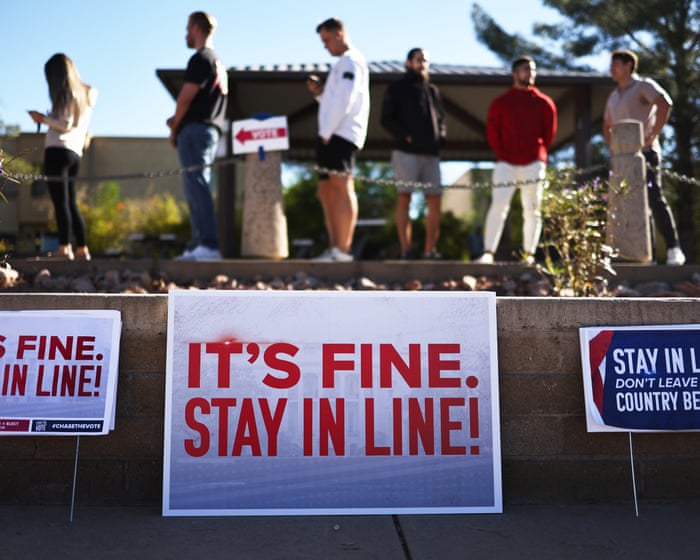
Democrat Mary Peltola’s campaign allegedly collaborated with party operatives to confuse voters in midterms
The US justice department on Thursday is reported to have issued subpoenas in response to a report that the Alaska Democrat Mary Peltola’s campaign collaborated with party operatives to get a challenger with the same name as the Republican senator Dan Sullivan on the midterm ballot.
ABC News and the Associated Press reported the subpoenas, citing sources familiar with the matter. The federal investigation comes a day after the New York Times found that the effort to recruit a second candidate named Dan Sullivan in the Senate race set to be decided on Tuesday was led by Peltola’s campaign, which had for months denied involvement.
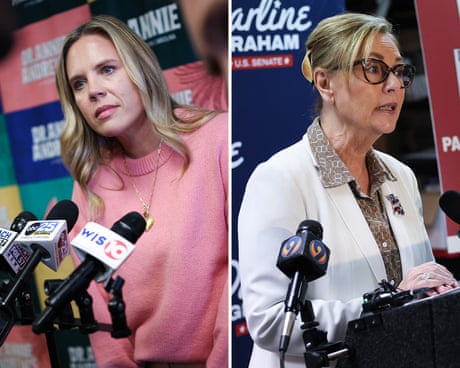
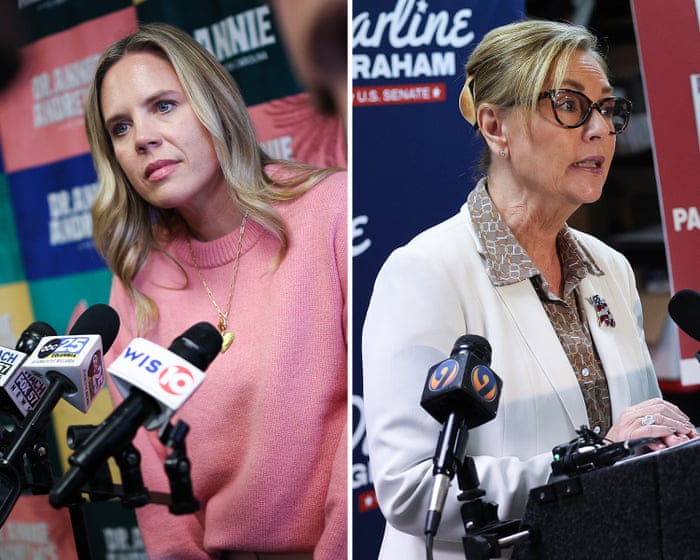
A US Senate race in one of the most Republican states in the country is now a dead heat, according to a new poll showing Annie Andrews, a Democrat, tied with Darline Graham, the Republican incumbent senator.
South Carolina has not elected a Democrat to the Senate since 1998, and Donald Trump won it by nearly 18 points in 2024, but a New York Times/Siena poll this week has the two candidates neck and neck, at 48% each.
Republican Mike Dunleavy plans search after Peltola accused of recruiting Dan Sullivan to confuse voters
The Republican governor of Alaska announced plans to launch a criminal investigation after a report accused the campaign of the Democratic Senate candidate Mary Peltola of trying to confuse voters by recruiting a candidate with the same name as her opponent.
Michigan US Senate candidate signaled support for Egypt’s pro-democracy movement in 2012, not Islamist group
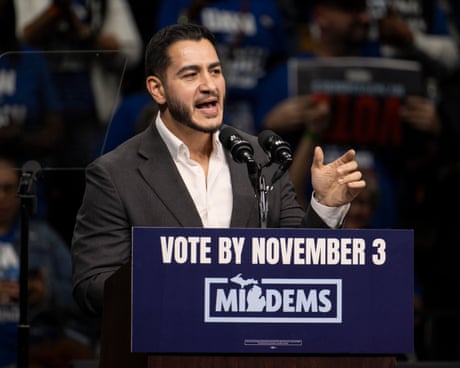
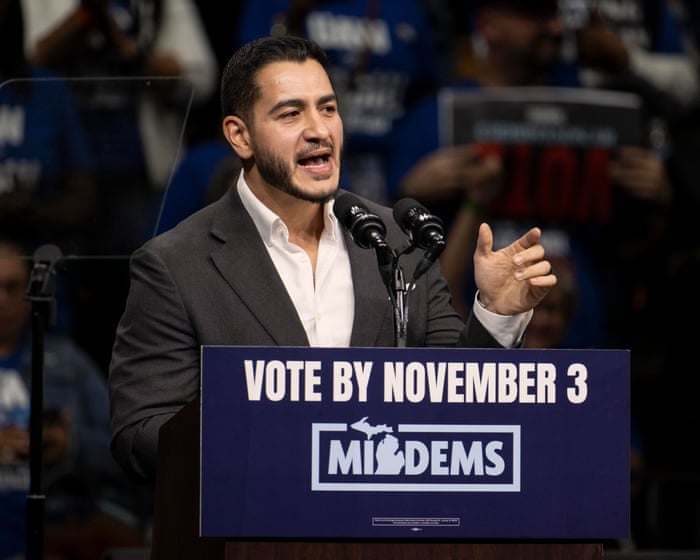
The Republican campaign to defeat Democrat Abdul El-Sayed in the MichiganSenate race by casting him as an Islamic extremist is based on a false claim first made by the conspiracy theorist Laura Loomer eight years ago, a Guardian review of the evidence reveals.
Loomer, an influential outside adviser to Donald Trump who calls herself “a proud Islamophobe”, has claimed since El-Sayed entered politics in 2018 that an open letter he signed in support of democracy in Egypt in 2012 was a public endorsement of the Muslim Brotherhood. The text of the letter, however, does not even mention the Muslim Brotherhood, and is not, as Loomer maintains, “a pledge” of support for the Egyptian Islamist group.
In advance of the midterms, Trump is blaming Kyiv for high gas prices while making clear moves to support Russia
As the US midterms approach, Donald Trump is abandoning Ukraine’s democracy in a desperate effort to deny responsibility for worsening inflation. Yet this past weekend’s dramatic elections in Brazil and Serbia show that voters can see through such subterfuge.
There is nothing like a political party’s corruptindifference to the plight of ordinary people to galvanize voter turnout. If US voters follow in the footsteps of their Brazilian and Serbian counterparts, a Democratic landslide is likely.
With days until the midterm elections, a new poll from CNN places Democrats well in the lead in key Senate races in Texas and Michigan, while projecting tighter contests in Kansas and Maine.
In Texas, the poll found 49% of likely voters would back James Talarico, the Democratic nominee, over Republican Ken Paxton, who netted just 43%.
Legacy Church’s endorsements violate law banning tax-exempt nonprofits from endorsing political candidates
A megachurch in New Mexico has endorsed two Republican candidates running in this year’s midterms, including a Donald Trump-backed candidate running in one of the blue state’s few competitive races. The church’s endorsements, which violate federal law banning tax-exempt nonprofits from endorsing political candidates, come as the Trump administration is challenging that ban in federal court.
In mid-August, pastor Steve Smothermon of Legacy Church, a nondenominational church with nine locations across the state, told his congregation about one of the candidates: “Greg Cunningham has faithfully served our church for 14 years and shares our biblical values. Let’s pray for him, support his campaign, get registered, and vote to flip this seat for someone who will stand for God, our Constitution, and a better New Mexico!”
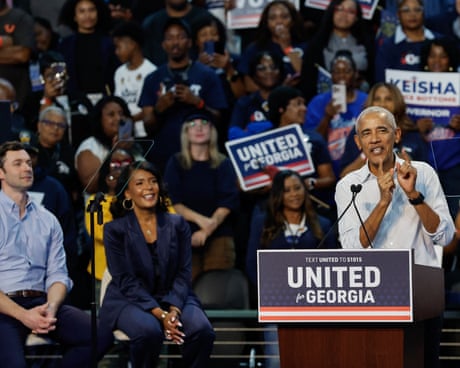
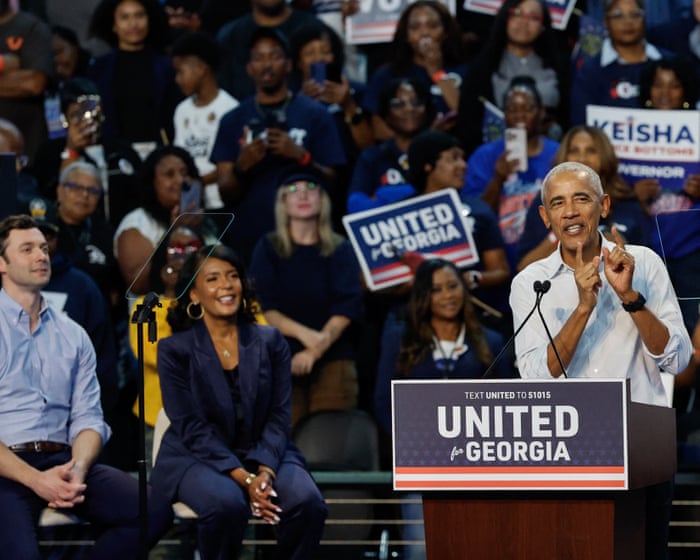
Former US president comes to Georgia to support Jon Ossoff for US Senate and Keisha Lance Bottoms for governor
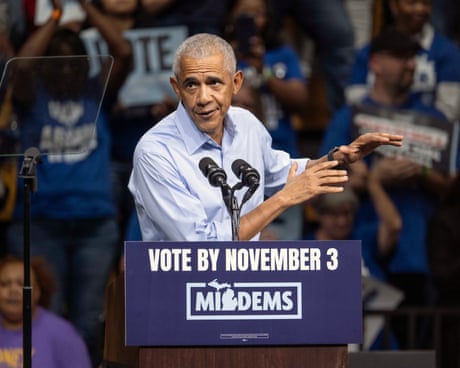
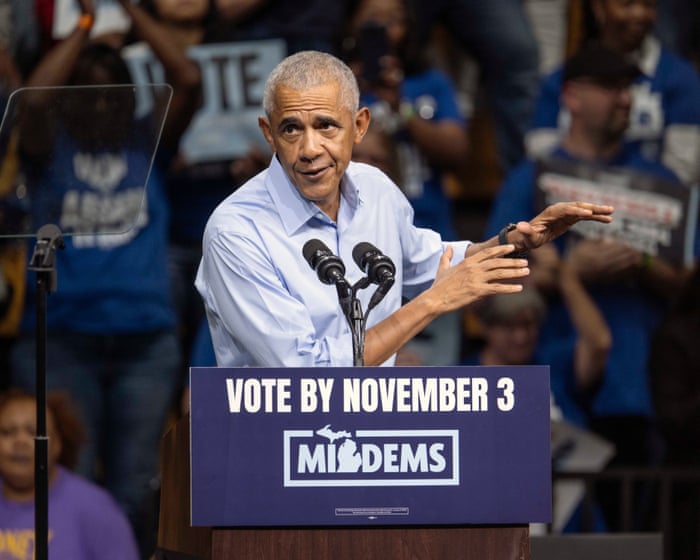
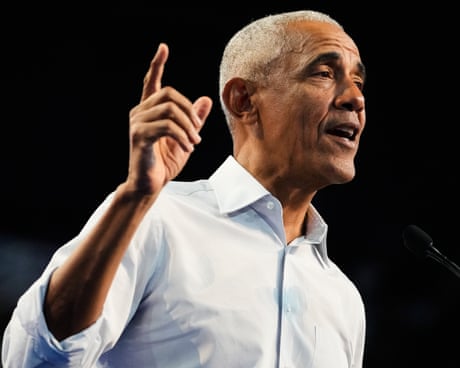
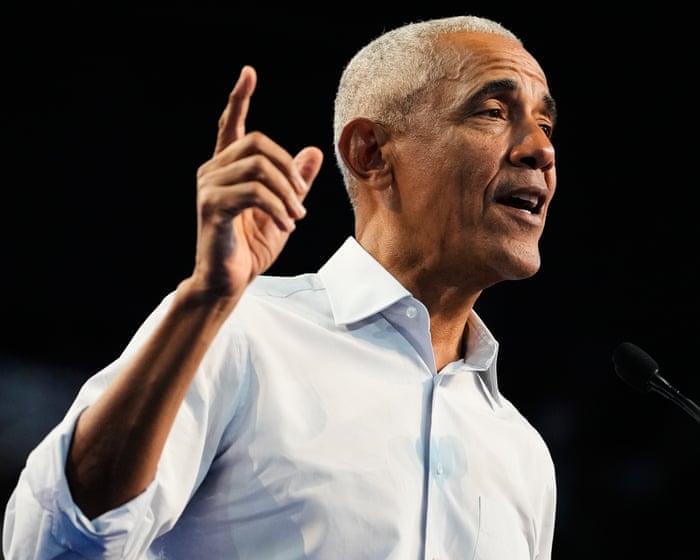
Barack Obama, speaking at a Wednesday campaign rally in suburban Atlanta, offered a closing argument for Democrats in the final week of the midterm election campaign.
“These are not serious people,” he said of Donald Trump and the Republican party. “And we’re all paying the price for their lack of seriousness.”
Justice department had demanded state segregate and not count ballots from people it claimed were non-citizens
A federal judge declined to order California election officials to segregate and not count ballots from people the Trump administration claimed were non-citizens, rebuffing a legally thin request from the justice department that appeared designed to cast doubt over the results of the midterms.
The ruling from US district judge David Carter, nominated to the federal bench by Bill Clinton, comes about two weeks after the justice department delivered a USB drive to election officials in Los Angeles and Sacramento that it said contained the names of 20,000 non-citizens on the state’s voter rolls. There are more than 23 million registered voters in California and non-citizen voting is extremely rare.
Pete Hoekstra, controversial US ambassador to Canada, has also accused Canadian officials of interfering in US elections
The US ambassador has suggested Canada could be blamed if Republicans perform poorly in next week’s midterm elections, the latest intervention from a controversial figure who has been accused of inflaming a bitter dispute that has angered and baffled residents of both countries.
On Wednesday, CTV news reported that Pete Hoekstra told business leaders at a closed door meeting that if a number of swing races – including Maine and Michigan – go to the Democrats, it could make things harder for Canada because Donald Trump might try to blame the loss on it.
Republicans have condemned the presence of two Dan Sullivans on the ballot, calling it a ploy to split votes
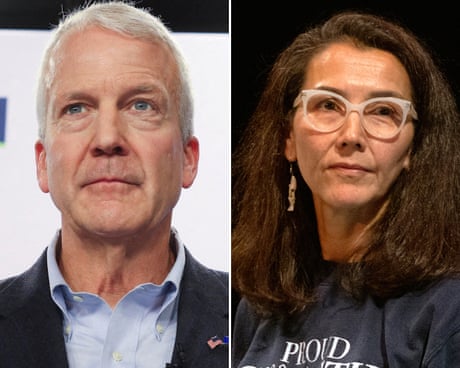
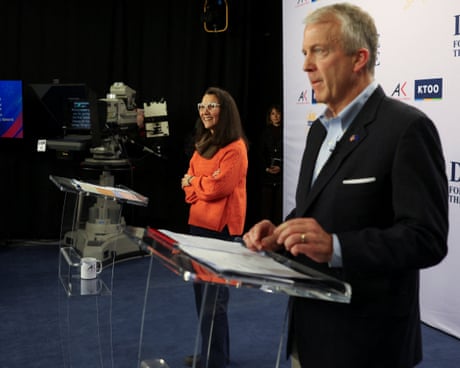
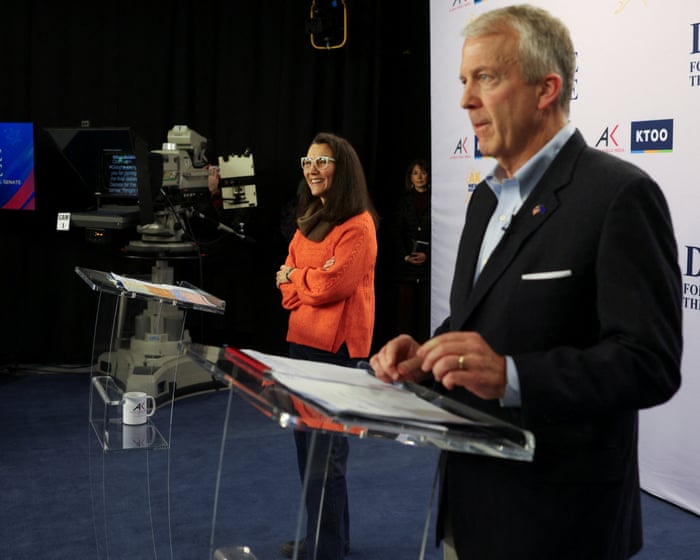
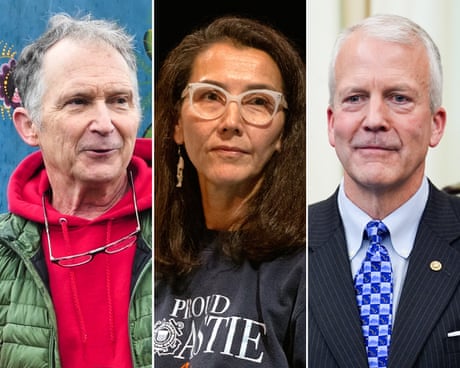
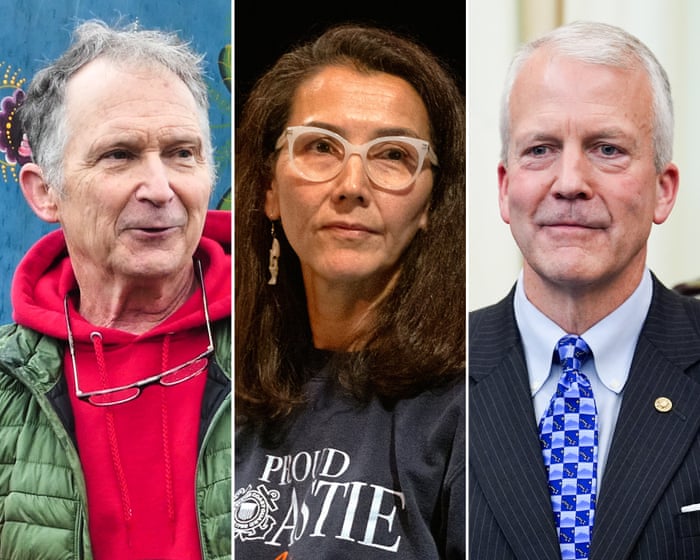
Alaska Democrat Mary Peltola’s campaign was behind an effort to recruit a challenger with almost the same name as the Republican US senator Dan Sullivan, both of whom will appear on the ballot in next week’s midterm elections, the New York Times reported on Wednesday.
Republicans have condemned the presence in the race of two candidates named Dan Sullivan – one the two-term US senator, the second a retiree living in south-eastern Alaska with scant political experience – calling the newcomer a ploy by Democrats to cost the incumbent re-election by splitting his supporters.
Circumstances are ripe for change in this onetime Republican stronghold given the current dissatisfaction with Trump agenda, experts say
Donald Trump has repeatedly asked voters to pretend that he is on the ballot in November’s crucial midterm elections. And in the comfortable confines of Arizona’s most affluent and fiercely contested congressional district, Trump is definitely on voters’ minds.
But whether that helps or hurts the warring congressional candidates in this sun-drenched swath of suburbia, where Teslas and walled-in luxury homes dominate, depends on who you ask.
Barack Obama versus Donald Trump. It is the presidential election that never happened but has come to define an era of US politics.
Obama is back on the campaign trail for the midterms, still electrifying crowds, earning shouts of “We love you!” and skewering his successor. “What’s up with the gold?” he asked a crowd in Detroit. “I mean, he’s got the White House looking like Saddam Hussein opened a Cheesecake Factory.” This has, predictably, set off a mini culture war involving questions of elitism and the tastefulness of chain restaurants.
US health secretary falsely claims at Mike Rogers rally that Arabs have never won major prizes in science or literature
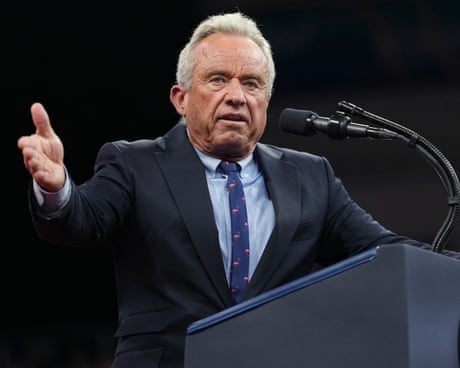
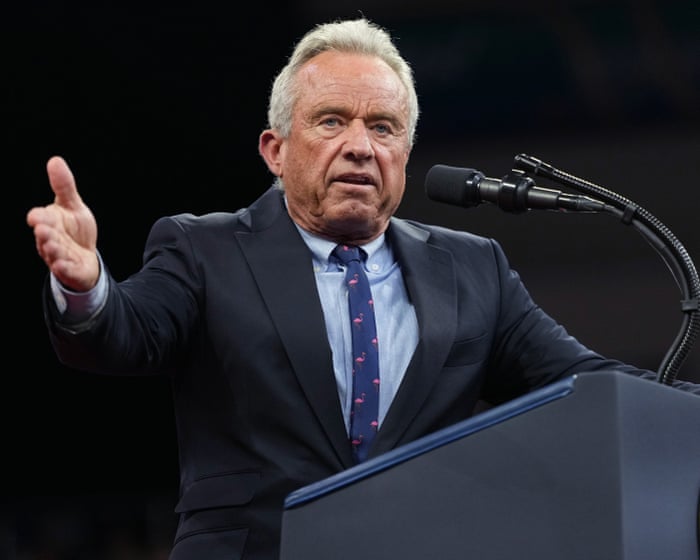
Robert F Kennedy Jr, the US health secretary, faced backlash on Wednesday for a “wildly racist tirade” during a campaign stop in Michigan in which he falsely asserted that Arabs never won major awards in science or literature.
Kennedy was speaking at the Monday night event in Grand Rapids in support of Mike Rogers, the Republican US Senate candidate who is trailing his Democratic midterms opponent Abdul El-Sayed, a Muslim, in polling.
For months, Mary Peltola’s campaign for Alaska’s Senate seat has denied any connection to a separate campaign launched by a man who, coincidentally, shares the exact same name as Peltola’s Republican opponent, Dan Sullivan.
New reporting from the New York Times undercuts that claim. The outlet reported, based on interviews, obtained text messages and legal filings, that the Peltola campaign had not only recruited Mr Sullivan (not the Republican), but had sought out a number of Dan Sullivans across the state for potential candidacy, as well as others who could peel votes away from Peltola’s main opponent.
In an extensive conversation with EU Today publisher Gary Cartwright, Ukrainian-American lawyer and political commentator Askold Lozynskyj delivers a sharply critical assessment of Donald Trump, examines the possibility of a geopolitical bargain with Vladimir Putin and Xi Jinping, and explains why November’s American midterm elections could determine far more than the composition of Congress.
There is something peculiarly unsettling about a world in which the leaders of three nuclear powers might gather to discuss the future of smaller nations without troubling to invite the nations concerned. It is a diplomatic arrangement with considerable historical precedent, although not necessarily the sort that ought to inspire confidence.
For Askold S. Lozynskyj, a New York lawyer, former president of the Ukrainian World Congress and regular contributor to EU Today, the prospect of Donald Trump sitting down with Vladimir Putin and Xi Jinping raises precisely this concern.
His latest opinion piece, The Thug Summit, published on 23 October, presents an uncompromising interpretation of the proposed trilateral meeting in China. In a wide-ranging conversation with EU Today publisher Gary Cartwright, Lozynskyj expands upon that argument, moving from the peculiarities of Trump’s political personality to the constitutional foundations of American democracy, the future of Europe and the increasingly precarious standing of international law.
The resulting discussion is occasionally caustic, frequently humorous and consistently concerned with a question that extends well beyond the current occupant of the White House: how resilient are democratic institutions when confronted by leaders who regard constitutional constraints as inconveniences?
Watch the full interview with Askold S. Lozynskyj and Gary Cartwright below.
From the Oval Office to the Beverly Hillbillies
The conversation begins with Trump’s political ascent, which Lozynskyj regards as one of the more extraordinary developments in modern American history.
Buddy Ebsen as Jed Clampett in the American television comedy The Beverly Hillbillies. Credit: CBS Television / Wikimedia Commons (1969 publicity photograph; US public domain).
He recalls the incredulity surrounding Trump’s original presidential ambitions and questions how a politician whose personal conduct had attracted considerable controversy managed to secure such enthusiastic support among conservative Christian voters.
Cartwright introduces a lighter comparison, recalling a photograph of Trump surrounded by his senior advisers in the Oval Office.
The only person missing, he suggests, was Jed Clampett, the fictional patriarch of the American television comedy The Beverly Hillbillies.
Lozynskyj is not inclined to defend the administration’s sophistication. Yet behind the humour lies a more serious argument about the disappearance of independent-minded advisers and the consequences of political loyalty becoming the principal qualification for high office.
“Donald Trump is not a conservative. Donald Trump is a thug,” he declares.
It is an unequivocal assessment, characteristic of Lozynskyj’s commentary, although his criticism extends beyond Trump himself to the Republican Party’s willingness to accommodate his leadership.
The elections that could change Washington
Much of the interview centres on the American midterm elections scheduled for 3 November.
Lozynskyj predicts that Democrats will regain control of the House of Representatives and potentially transform the remainder of Trump’s presidency through congressional investigations, subpoenas and impeachment proceedings.
His prediction is emphatic, although the eventual balance of power remains uncertain.
Control of the House would give Democrats substantial investigative authority, although the president would retain his executive powers. Removing him from office following impeachment would still require a two-thirds majority in the Senate.
Nevertheless, Lozynskyj believes the elections could fundamentally alter Washington’s political atmosphere.
“They will tie up Trump like never before,” he argues.
Cartwright raises a more disturbing possibility: could Trump manufacture an emergency to postpone an election or otherwise attempt to prolong his presidency?
“I think he could try, but I don’t believe that he will prevail,” Lozynskyj responds, expressing confidence that America’s constitutional institutions would ultimately resist such an attempt.
The exchange moves naturally towards the events of 6 January 2021, presidential immunity and the effectiveness of the checks and balances upon which the American constitutional system depends.
Ukraine, Europe and the price of great-power diplomacy
For Lozynskyj, whose public career has been closely associated with Ukrainian interests, the implications of Trump’s foreign policy are particularly troubling.
His central concern is that negotiations among Washington, Moscow and Beijing could revive the notion that major powers possess an informal entitlement to determine the political and territorial futures of their neighbours.
In his opinion piece, he raises the possibility that Ukraine and Taiwan could become bargaining instruments in a wider geopolitical settlement. These are his warnings about potential outcomes, not established agreements between the three governments.
Yet his criticism of Washington is accompanied by considerable appreciation for Europe’s role in sustaining Ukraine’s resistance to Russia’s invasion.
“Without Europe, Ukraine could never have survived as long as it has survived,” he tells Cartwright.
He also ventures into the British debate over European integration, arguing that the United Kingdom should return to the European Union.
It is an intervention likely to provoke disagreement, but it reflects his broader conviction that collective institutions provide an essential counterweight to unilateral political power.
Democracy, disorder and the limits of authority
The discussion also examines political unrest in Europe, changing national identities and the relationship between elected governments and the populations they represent.
Cartwright points to social tensions in European cities and the growing importance of regional identity, including the independence debate in Flanders.
Lozynskyj approaches these developments through the history of democratic protest, citing Ukraine’s Orange Revolution, the Revolution of Dignity and more recent demonstrations over the independence of anti-corruption institutions.
For him, public opposition to governments is not necessarily evidence of democracy’s failure. It can also demonstrate that political authority remains subject to popular consent.
The conversation concludes with international law, the International Criminal Court and the difficulty of enforcing common rules when powerful states refuse to accept external constraints.
Lozynskyj’s observations are deliberately provocative, and his forecasts will be tested by events. But the interview offers something more substantial than another exchange of opinions about Donald Trump.
It is a discussion about the relationship between power and restraint, the responsibilities of democratic institutions and the uncomfortable possibility that the international order may be entering another period in which military and economic strength increasingly determine political outcomes.
As the United States approaches its midterm elections and speculation continues over a possible meeting between Trump, Putin and Xi, those questions are unlikely to disappear.
The full conversation with Askold S. Lozynskyj is available in the video above.
President at Texas campaign rally hails deal struck with post-Maduro government as ‘greatest oil victory in history’
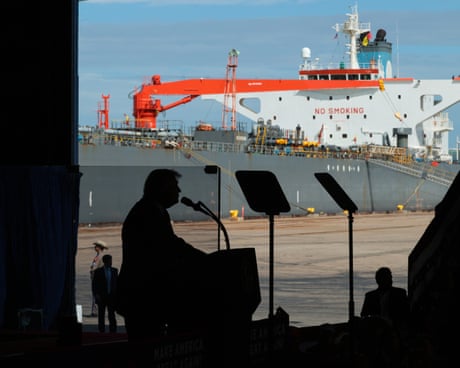
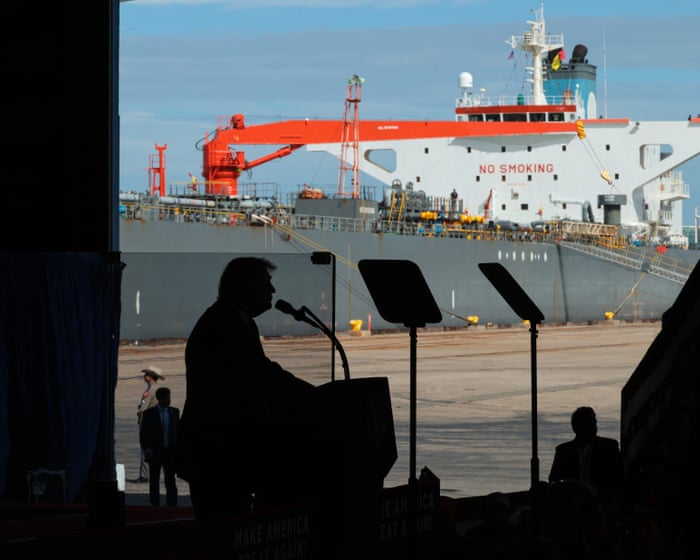
Donald Trump suggested Venezuela would become the 51st state of the United States on Tuesday as the president showed off a tanker he claimed had “one million barrels of oil on it” from the country, nine months after deposing its president.
At a campaign rally in Corpus Christ, Texas, Trump touted a US oil deal with Venezuela, which the US attacked in January, capturing its long-serving leader Nicolás Maduro.
Speaking to reporters on the tarmac before departing for a campaign event in Michigan, JD Vance responded to a question about President Trump’s remarks branding Democratic Senate candidate Abdul El-Sayed as a “jihadist.”
Vance, who has sparred with the progressive El-Sayed repeatedly on the campaign trail, took a somewhat softer tone. But he didn’t walk away from Trump’s remarks.
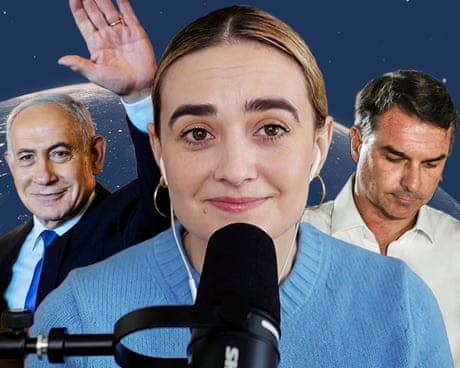
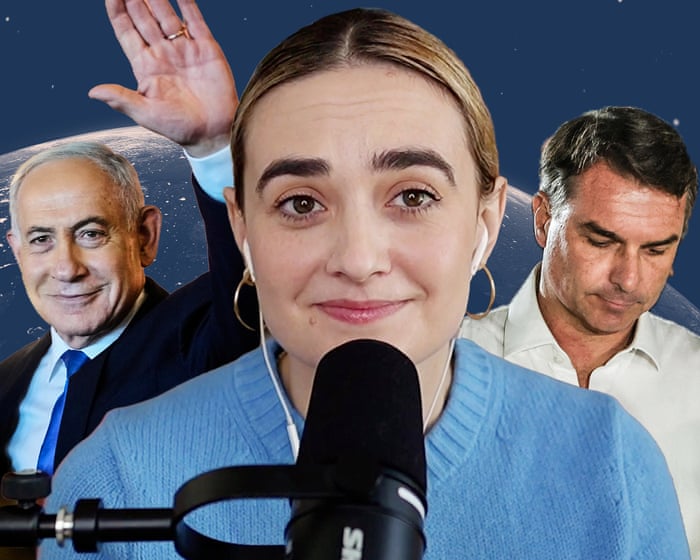
Benjamin Netanyahu is in the fight of his political life. Voters in Israel are heading to the polls on Tuesday to decide an election that could determine whether Netanyahu will remain the country's prime minister (and affect the outcome of the corruption charges against him). But the Israeli election also arrives at a time when voters around the world seem to be rejecting authoritarianism. A student-run movement stunned the world on Sunday when its candidates routed Serbia's long-serving leader, Aleksandar Vučić. That same day, Brazilians beat back a campaign by Flávio Bolsonaro – the son of Jair Bolsonaro, the disgraced former president – in a historic upset. Carter Sherman speaks to Julian Borger, the Guardian’s senior international correspondent, about how these four elections could reshape the political world order in just 10 days, and why the upcoming US midterm elections are the biggest test for global democracy.
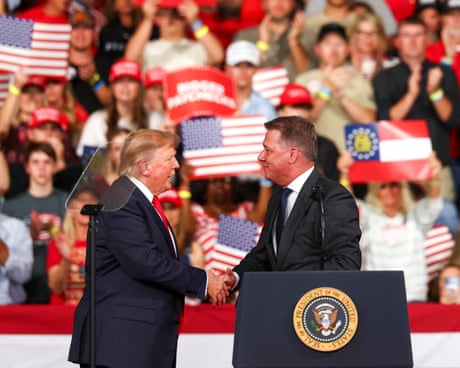
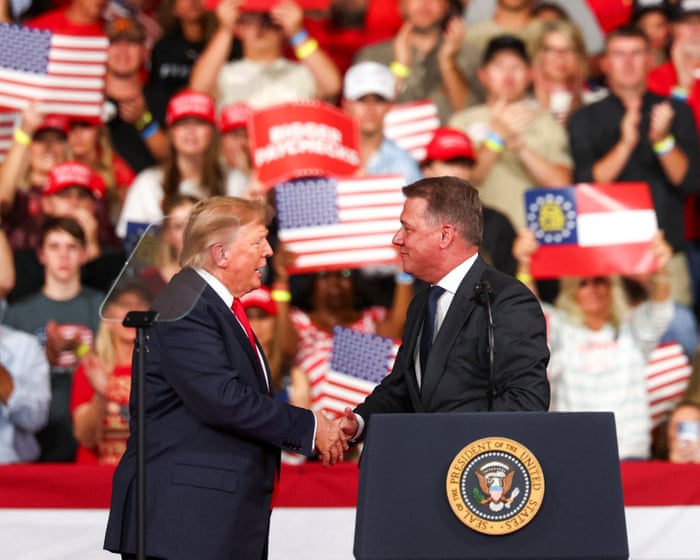
Gernot Döllner criticised for in-person announcement of major investment in US days before midterm elections
The head of the luxury carmaker Audi is under fire in Germany for appearing at a rally with Donald Trump just days before the US midterm elections, to announce billions of dollars of investment in battleground state Georgia.
Gernot Döllner joined Trump on stage after the US president gave a speech criticised by the head of an elected body of employees at Audi’s parent company, Volkswagen, as being full of “racism, sexism, transphobia [and] contempt for democracy”.

 Login