❌

Reading view

Brazil’s victory for the planet and democracy: seven lessons from Lula’s win

The trouncing of the far right provides a playbook for social and environmental movements in other countries facing elections, including the US, Spain and France

Thank you, Brazil, for demonstrating how the far right can be trounced while protection for the Amazon is strengthened. In a world where nature and democracy appeared to be bleeding out in tandem, voters and forest defenders in this global south powerhouse have shown it is possible to staunch the flow. This should provide much needed inspiration and, more practically, a playbook for social and environmental movements in other countries facing elections, including the US, Spain and France.

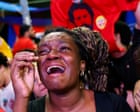
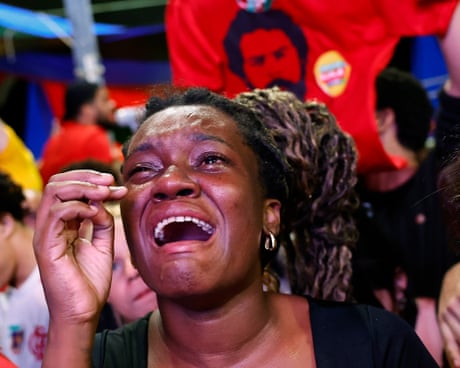
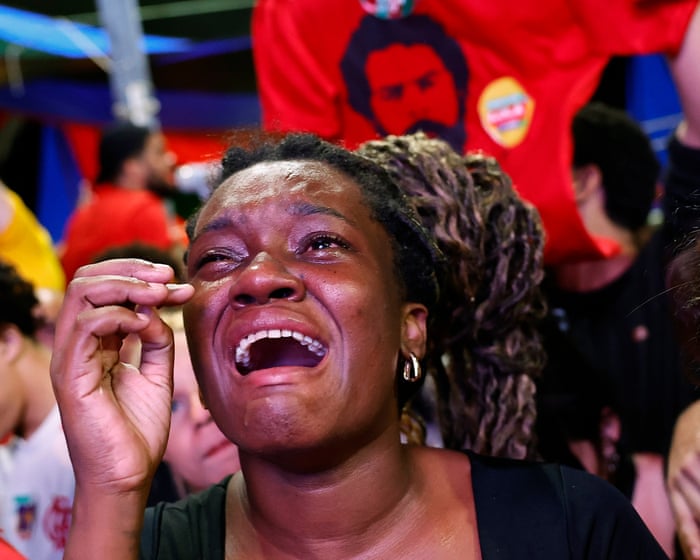
The astonishing comeback victory of Luiz Inácio Lula da Silva in Sunday’s presidential runoff against his extreme right challenger Flavío Bolsonaro has brought oceans of rapturous supporters on to the streets, while also thrilling conservationists, climate activists and social justice campaigners across the world.

Continue reading...
© Photograph: Andre Coelho/EPA
© Photograph: Andre Coelho/EPA
© Photograph: Andre Coelho/EPA
  •  

Four lessons the US can learn from the youth protests in France

Despite structural differences between countries, protests are a reminder of what makes demonstrations so powerful

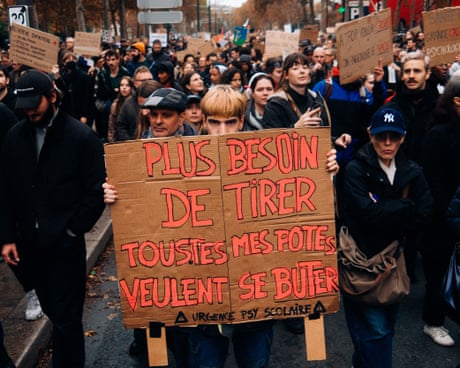
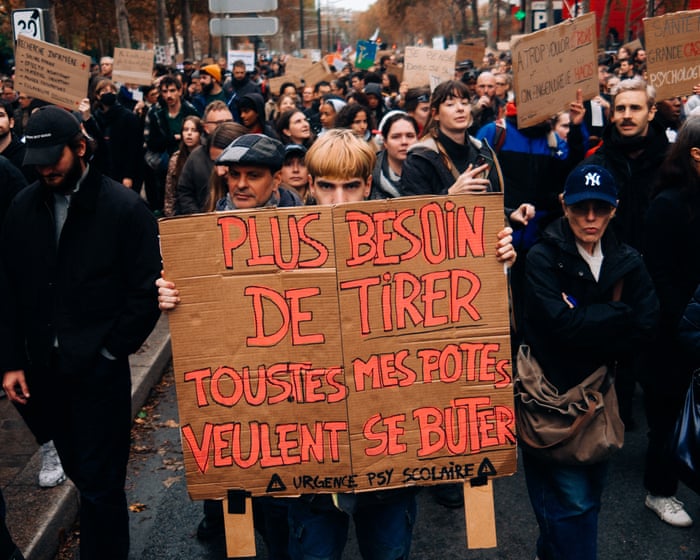
Since mid-September, students in metropolitan France have been mobilizing against poor conditions in public high schools. The mouvement lycéen has spread from a single campus in a Parisian suburb to include high schoolers and university students nationwide, with public sector workers, climate activists, labor unions and everyday people joining in solidarity. The unifying concerns have largely centered on the climbing costs of daily life, shrinking funds for social services and general anxiety about the future.

For two weekends running, France has seen hundreds of thousands of people take to the streets: first on 17 October, when a day of largely peaceful gatherings ended in looting and vandalism; then on 24 October, as the state met the movement with aggressive policing and protest bans intended to keep people at home.

Continue reading...

© Photograph: Laurent Demartini/Hans Lucas/AFP/Getty Images

© Photograph: Laurent Demartini/Hans Lucas/AFP/Getty Images

© Photograph: Laurent Demartini/Hans Lucas/AFP/Getty Images

  •  

Our Schools Are a Reflection of a Society in Which Jew-Hatred is Tolerated From Top to Bottom

No wonder our schools incubate antisemitism, says Joe Baron: our institutions have been captured and our culture infected from top to bottom by a new Israelophobic strain of the oldest prejudice in the world.

The post Our Schools Are a Reflection of a Society in Which Jew-Hatred is Tolerated From Top to Bottom appeared first on The Daily Sceptic.

  •  

Serbia’s students achieved the impossible. Europe must not fail them now | Srđjan Cvijić

Some EU leaders courted the authoritarian Vučić regime – they must offer this reborn democracy a future within the union

As polling stations closed across Serbia on Sunday evening, riot police were deploying around the presidency in Belgrade. Many of us feared the worst: massive electoral fraud, a refusal to recognise defeat or outright violence. After nearly 15 years of Aleksandar Vučić’s increasingly authoritarian rule, a peaceful transfer of power seemed implausible.

I had good reason to feel afraid. I am co-founder of an annual conference on the security and foreign policy challenges shaping the western Balkans, and sit on the international advisory committee of a civil society thinktank, the Belgrade Centre for Security Policy. Such work would be uncontroversial in most countries seeking European Union membership. Under Vučić’s regime, it was anything but.

Continue reading...

© Photograph: Marko Dimic/ZUMA Press Wire/Shutterstock
© Photograph: Marko Dimic/ZUMA Press Wire/Shutterstock

© Photograph: Marko Dimic/ZUMA Press Wire/Shutterstock

  •  

In Serbia, a new type of democracy is taking hold, and Europe is watching closely

A movement that began in outrage has delivered remarkable election upset, showing that change is possible and prompting questions over what comes next

• Don’t get This Is Europe delivered to your inbox? Sign up here

In April of last year, dozens of students set off from Serbia, intent on making it to Strasbourg, France on bicycles. The aim of the arduous, 13-day transcontinental journey was simple: to make their voices heard in Europe and beyond.

In their home city of Novi Sad, students had been holding near-daily protests after a deadly roof collapse at the city’s main railway station. As their push for accountability and justice spread across the country, it was met with baton-wielding police, teargas and a political class that branded these young people as traitors.

Continue reading...

© Photograph: Marko Drobnjaković/AP

© Photograph: Marko Drobnjaković/AP

© Photograph: Marko Drobnjaković/AP

  •  

How students rocked Serbia’s parliamentary election – video explainer

The long-serving leader of Serbia, Aleksandar Vučić, has conceded defeat, ushering in a seismic political shift after a historic election that pitted ​the increasingly authoritarian leader against a student-led movement that had spent two years protesting against his government. As news broke that Vučić’s 12 years in power had come to an end, celebrations erupted on the streets of Belgrade and other cities. But how did we get here - and what happens now? The Guardian's Europe live correspondent, Jakub Krupa, explains

Continue reading...

© Photograph: Guardian

© Photograph: Guardian

© Photograph: Guardian

  •  

A leaderless revolution has swept Serbia. The world should be watching | Aleksandar Matkovic

I saw a remarkable experiment take shape in Belgrade. Its lessons should be studied by other European countries struggling with unrest

More than a decade ago, the WikiLeaks founder Julian Assange told an interviewer in Belgrade that Serbia was “a country where the future happens first”. The phrase circulated widely on Serbian social media in the weeks before Sunday’s election, but in a way that could not have seemed possible 10 years ago. Who would then have imagined that Serbia today could be at the forefront of global democratic change?

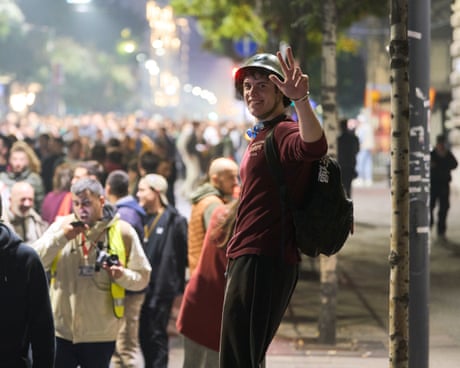
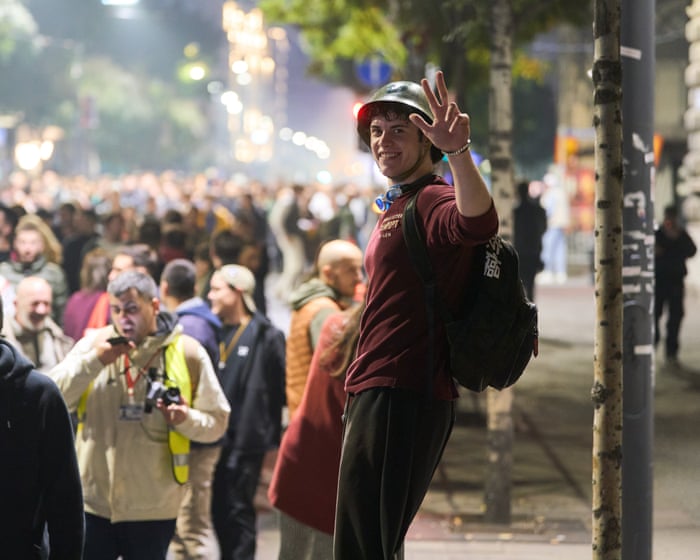
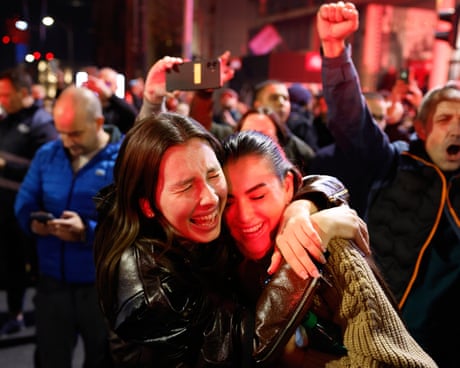
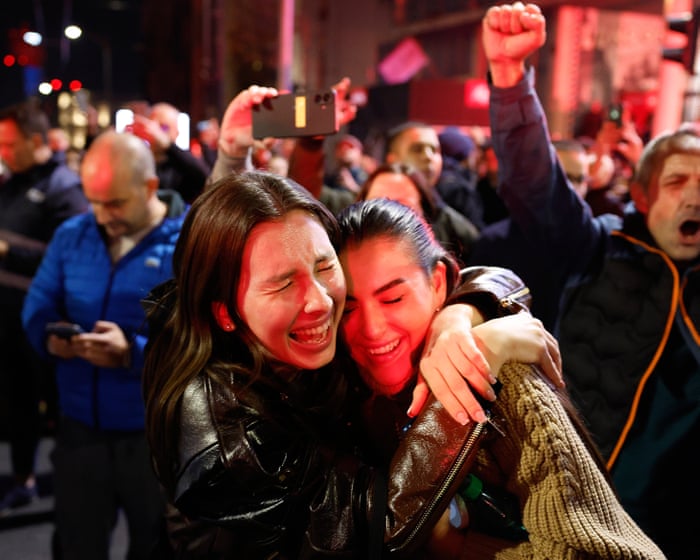
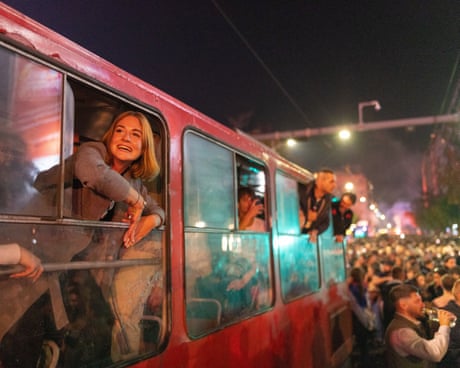
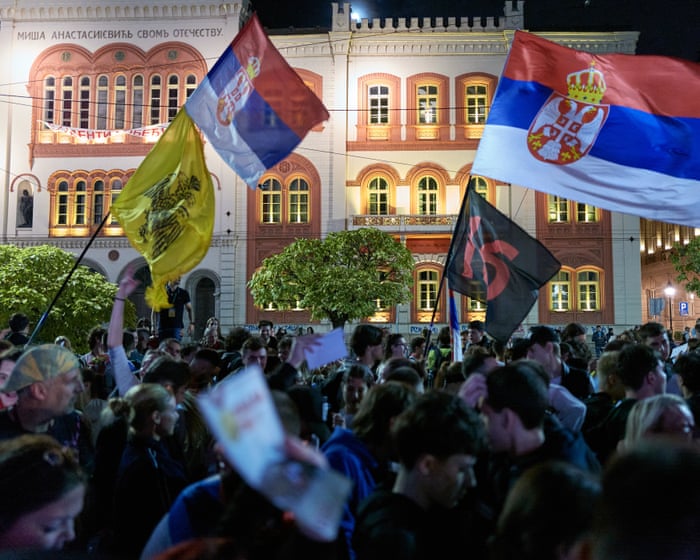
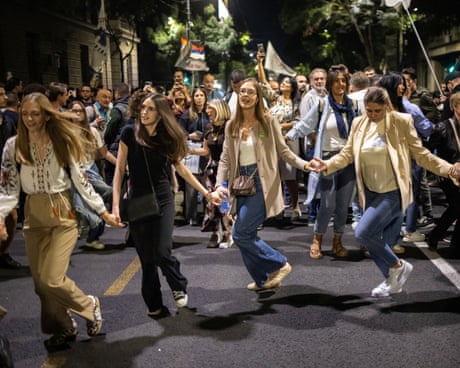
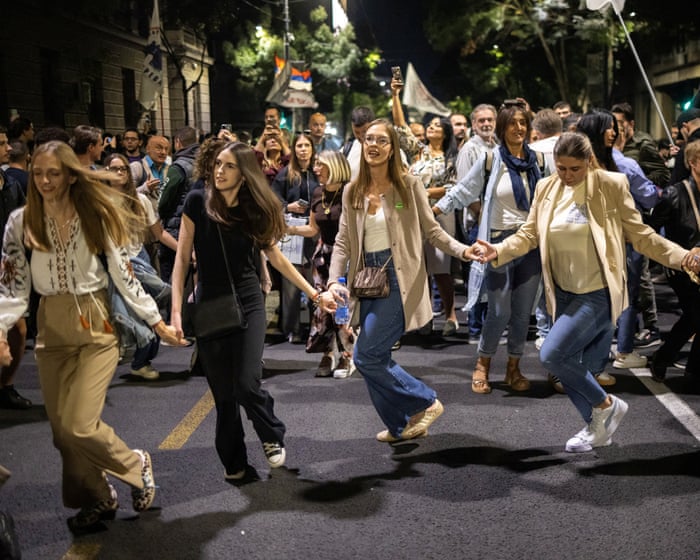
The images from Belgrade on Sunday night – people dancing and crying in the streets, while in Novi Sad, the city that sparked the student movement, a flag bearing the image of the convicted war criminal Vojislav Šešelj, which had hung from a building since the 1990s, was torn down – reinforced the feeling that the future had truly arrived.

Aleksandar Matković is a postdoctoral researcher at the Institute of Environmental Science and Technology in Barcelona and a fellow at the Transnational Institute in Amsterdam. He works on environmental history, political economy and the history of Yugoslavia

Continue reading...

© Photograph: Uros Arsic/Reuters

© Photograph: Uros Arsic/Reuters

© Photograph: Uros Arsic/Reuters

  •  

As students we never sought power – here’s how we reclaimed Serbia | Novak Simin

After freedom, we want to give our people something radical: a normal, functioning state

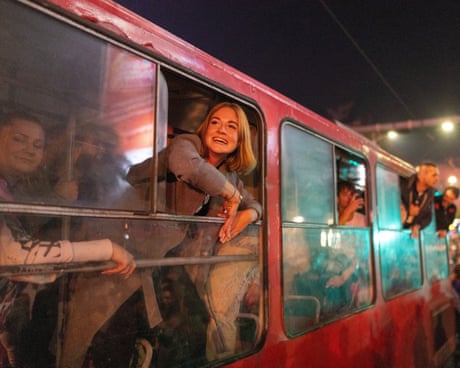
Two years ago, I harboured no political ambition whatsoever. I was a student at the faculty of technical sciences in Novi Sad, my home town, pursuing a PhD in human resources and simply living my life. That was until the canopy collapse at the newly renovated train station in Novi Sad in November 2024, which killed 16 people. I took part in street protests and rallies in response to this shocking event, and like many others, realised that it needed to be a turning point.

This was not an unavoidable tragedy. Systemic corruption and a culture of entrenched impunity were obvious factors in the collapse. But instead of ordering a full and impartial investigation and coming clean on official failings, the authorities began pushing back against us for demanding justice. We were vilified and attacked in the streets but law enforcement did nothing. So we took refuge in our lecture halls and schools, barricading ourselves inside faculty buildings, ready for a long haul.

Novak Simin is a member of Serbia’s Student List movement

Do you have an opinion on the issues raised in this article? If you would like to submit a response of up to 300 words by email to be considered for publication in our letters section, please click here.

Continue reading...

© Photograph: Marko Drobnjaković/AP

© Photograph: Marko Drobnjaković/AP

© Photograph: Marko Drobnjaković/AP

  •  

Trans Activists Launch Petition Against Harry Potter Christmas Lights

Trans activists have launched a petition against Harry Potter-themed Christmas lights on Oxford Street because they will make J.K. Rowling "more money".

The post Trans Activists Launch Petition Against Harry Potter Christmas Lights appeared first on The Daily Sceptic.

  •  

Serbian leader Aleksandar Vučić ousted by student movement in seismic election

Vučić’s 12-year reign looks to have been ended by record turnout of voters in election provoked by student-led protests

The long-serving leader of Serbia, Aleksandar Vučić, has conceded defeat, ushering in a seismic political shift after a historic election that saw ​the increasingly authoritarian leader pitted against a student-led movement that had spent two years protesting against his government.

Vučić pointed to preliminary results that suggested voters had overwhelmingly backed the students, potentially giving them a majority in the country’s 250-seat parliament.

Continue reading...

© Photograph: Marko Drobnjaković/AP

© Photograph: Marko Drobnjaković/AP

© Photograph: Marko Drobnjaković/AP

  •  

France to deploy 70,000 police on Saturday to prevent civil unrest

Security forces to include elite units usually used for counter-terrorism after worst street violence in years

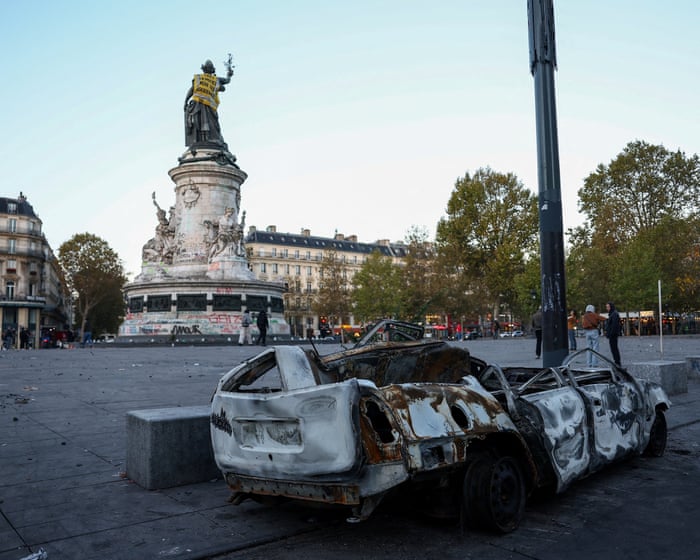
France will deploy about 70,000 police around the country on Saturday as the government seeks to prevent more civil unrest after some of the worst street violence in years erupted on the fringes of cost-of-living protests last weekend.

The interior minister, Laurent Nuñez, said on ⁠Friday ⁠the security forces would include elite units usually used for counter-terrorism operations and hostage rescues, adding that there had been social media calls for violence from “ultra-left” groups.

Continue reading...

© Photograph: Abdul Saboor/Reuters

© Photograph: Abdul Saboor/Reuters

© Photograph: Abdul Saboor/Reuters

  •  

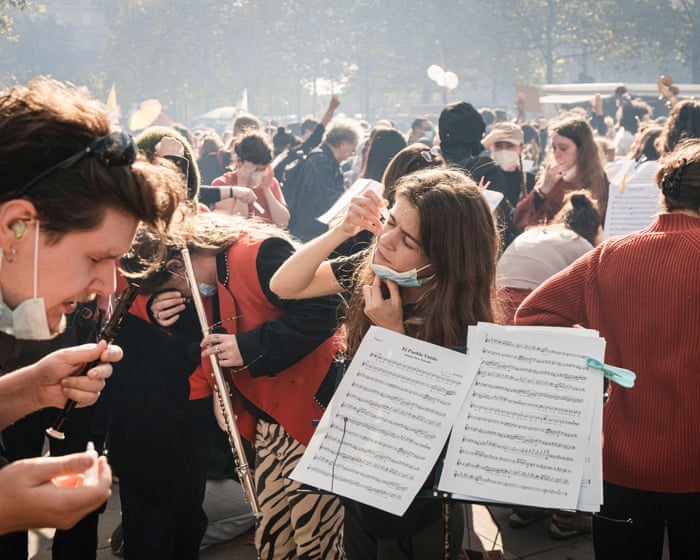
‘An orchestra being gassed should be an alarm signal’: the musical activists targeted in Paris

New World Orchestra’s musicians are shocked at French police targeting peaceful gathering with teargas

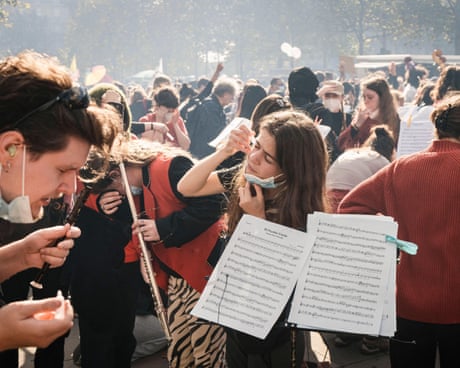
As riot police encircled Place de la République last week, lobbing teargas canisters to disperse demonstrators, the conductor Étienne Jarrier and his orchestra played on. They kept playing even after everyone else had disappeared and teargas was being fired into the central Paris square.

It was only when Jarrier noticed his musicians were being directly targeted that he ordered them to stop. “There were teargas canisters landing in the double bass and music stand cases, and starting fires the musicians had to stamp out,” he told the Guardian.

Continue reading...

© Photograph: Sipa US/Alamy Stock Photo/Alamy Live News.

© Photograph: Sipa US/Alamy Stock Photo/Alamy Live News.

© Photograph: Sipa US/Alamy Stock Photo/Alamy Live News.

  •  

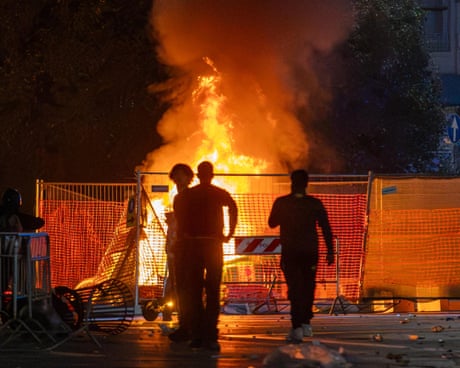
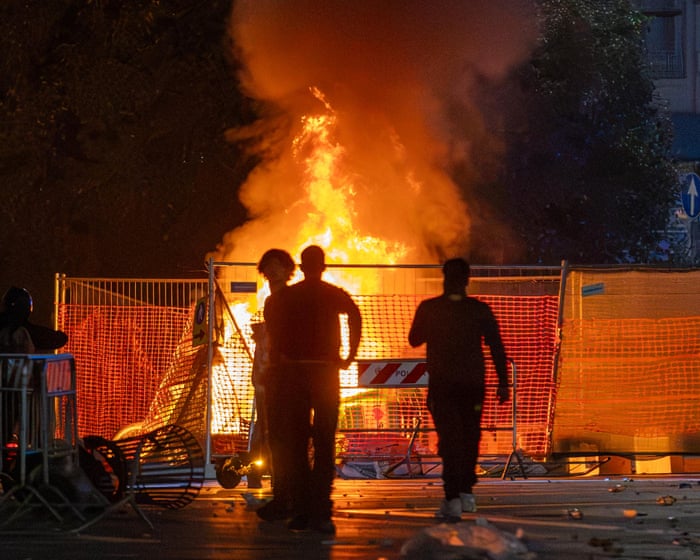
Milan braces for more unrest as debate intensifies over Italy’s ‘lost generation’

Protests and fringe violence expose sharp divide between marginalised and immigrant youth and those with greater prospects

Martina Miccichè was filming riot police kicking and beating a teenager with batons as they dragged him along Piazza del Duomo, the central Milan square hosting its cathedral, when she was struck by a flying object, causing a deep gash and bruising near her right eye.

The journalist had joined hundreds of mostly young people marching through the northern Italian city on Saturday afternoon to protest over soaring living costs and unaffordable housing, echoing the wider wave of economic discontent fuelling protests across Europe.

Continue reading...

© Photograph: Stefano Porta/LaPresse/AP

© Photograph: Stefano Porta/LaPresse/AP

© Photograph: Stefano Porta/LaPresse/AP

  •  

What is at stake in Serbia’s election? The key players, main issues and potential fallout

A grassroots student-led coalition threatens to upend Serbia’s political landscape as the EU-candidate country heads to the polls on Sunday

Serbia’s 6.5 million voters go to the polls on 25 October in a watershed parliamentary election characterised by civil unrest, a new political landscape, allegations of irregularities, an uncertain outcome and the potential of far-reaching consequences.

Here is a brief guide to the key issues.

Continue reading...

© Photograph: Pierre Crom/Getty Images

© Photograph: Pierre Crom/Getty Images

© Photograph: Pierre Crom/Getty Images

  •  

Macron accuses Trump and other foreign leaders of ‘stupid comments’ about France unrest

Leaders criticised for spreading misleading information as France prepares for further protests this weekend

Emmanuel Macron has accused Donald Trump and other foreign leaders of making “stupid comments” about France’s street unrest for political gain, as the country prepared for more protests this weekend.

Speaking during a visit to Qatar, the French president did not name names but said “manipulation of information” after Saturday’s riots had led to “comments that are as unacceptable as they are stupid, from many people, including foreign leaders”.

Continue reading...

© Photograph: Tessier Benoit/ABACA/Shutterstock

© Photograph: Tessier Benoit/ABACA/Shutterstock

© Photograph: Tessier Benoit/ABACA/Shutterstock

  •  

Teachers May be Banned by Schools From Wearing Politically-Contentious Badges

Teachers face being banned from wearing politically-contentious insignia – such as pro-Palestinian badges – following a review of antisemitism in schools that found 60% of Jewish pupils reported suffering abuse.

The post Teachers May be Banned by Schools From Wearing Politically-Contentious Badges appeared first on The Daily Sceptic.

  •  

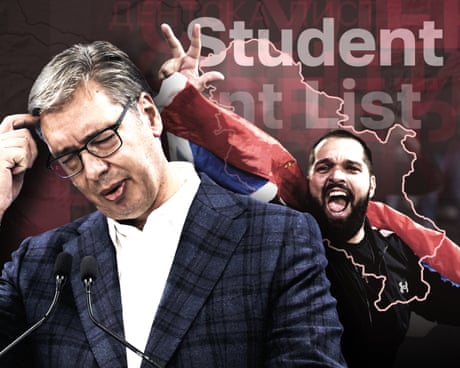
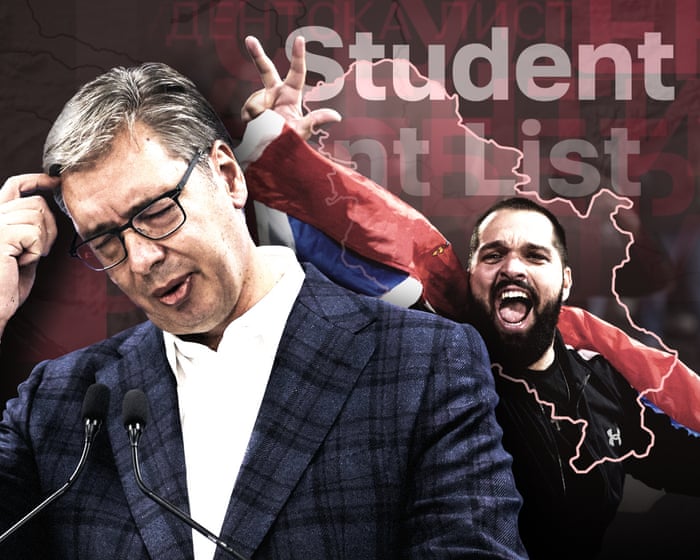
A student protest movement has gripped Serbia for two years. This weekend it will try to take power

Unorthodox campaign is challenging the ruling party’s 14-year reign with a bold democratic experiment

On a cool autumn evening, a team of Serbian student volunteers went canvassing in the housing estates of Krnjača, a Belgrade suburb. They were equipped with lanyards emblazoned with the word “victory”, a stock list of questions and a mobile app that mapped visited homes and the level of support in each.

The volunteers were part of a mass student movement, Student List, that has rocked Serbia with two years of constant protests. On Sunday, the group will represent the most serious challenge Aleksandar Vučić has faced in his 12 increasingly authoritarian years in power, by putting forward their own candidates in parliamentary elections.

Continue reading...

© Photograph: Marko Đurica/Reuters

© Photograph: Marko Đurica/Reuters

© Photograph: Marko Đurica/Reuters

  •  

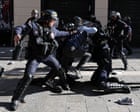
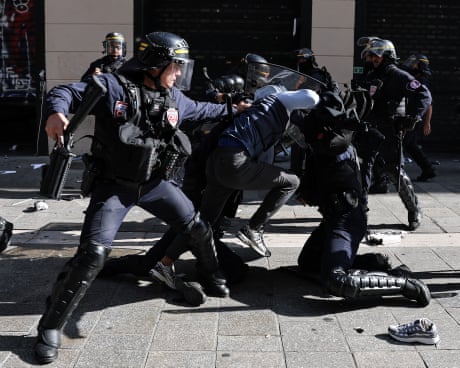
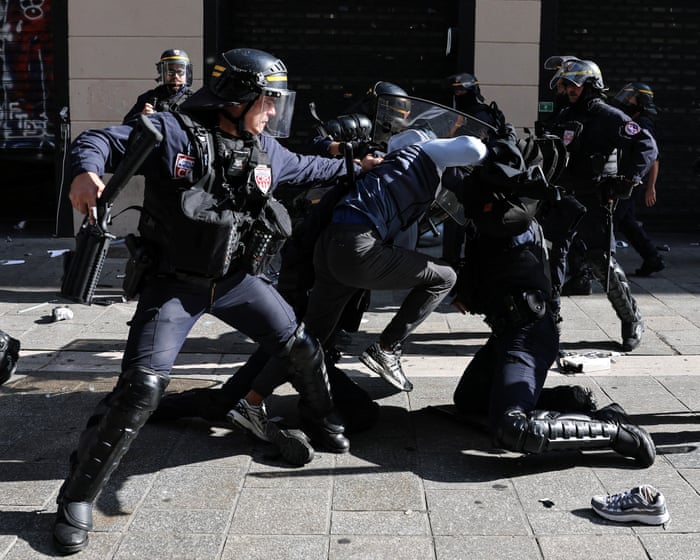
Why are French police so violent? Their job is to protect the state, not the people

Officers are instruments of state whose job is to repress, rather than manage, public dissent

Familiar images of teargas clouds drifting across Paris squares, police baton charges against masked protesters and terrified teenagers floored – and worse – by stun grenades have once again focused the world’s attention on France’s policing methods.

While most of its western European neighbours generally favour police tactics that prioritise crowd containment and de-escalation, France has long responded to social movements that take to the streets with, at times, shocking physical force.

Continue reading...

© Photograph: Thibaud Moritz/AFP/Getty Images

© Photograph: Thibaud Moritz/AFP/Getty Images

© Photograph: Thibaud Moritz/AFP/Getty Images

  •  
❌