Login

Aliados de Flávio Bolsonaro rechazan su desconocimiento de las elecciones brasileñas
Varios aliados de Flávio Bolsonaro se distancian de su desconocimiento de las elecciones en Brasil y le llaman a "respetar el resultado y seguir adelante".

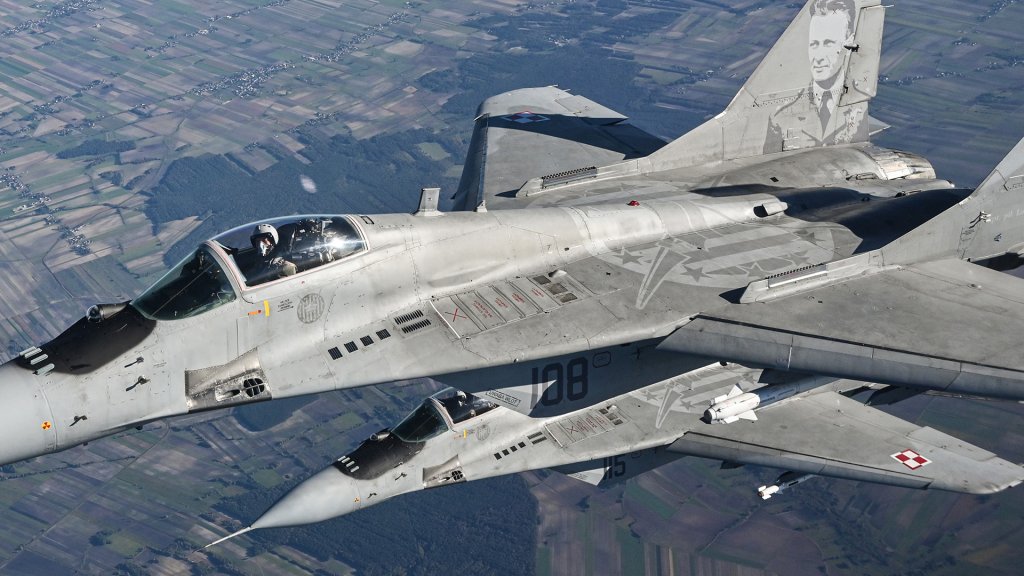
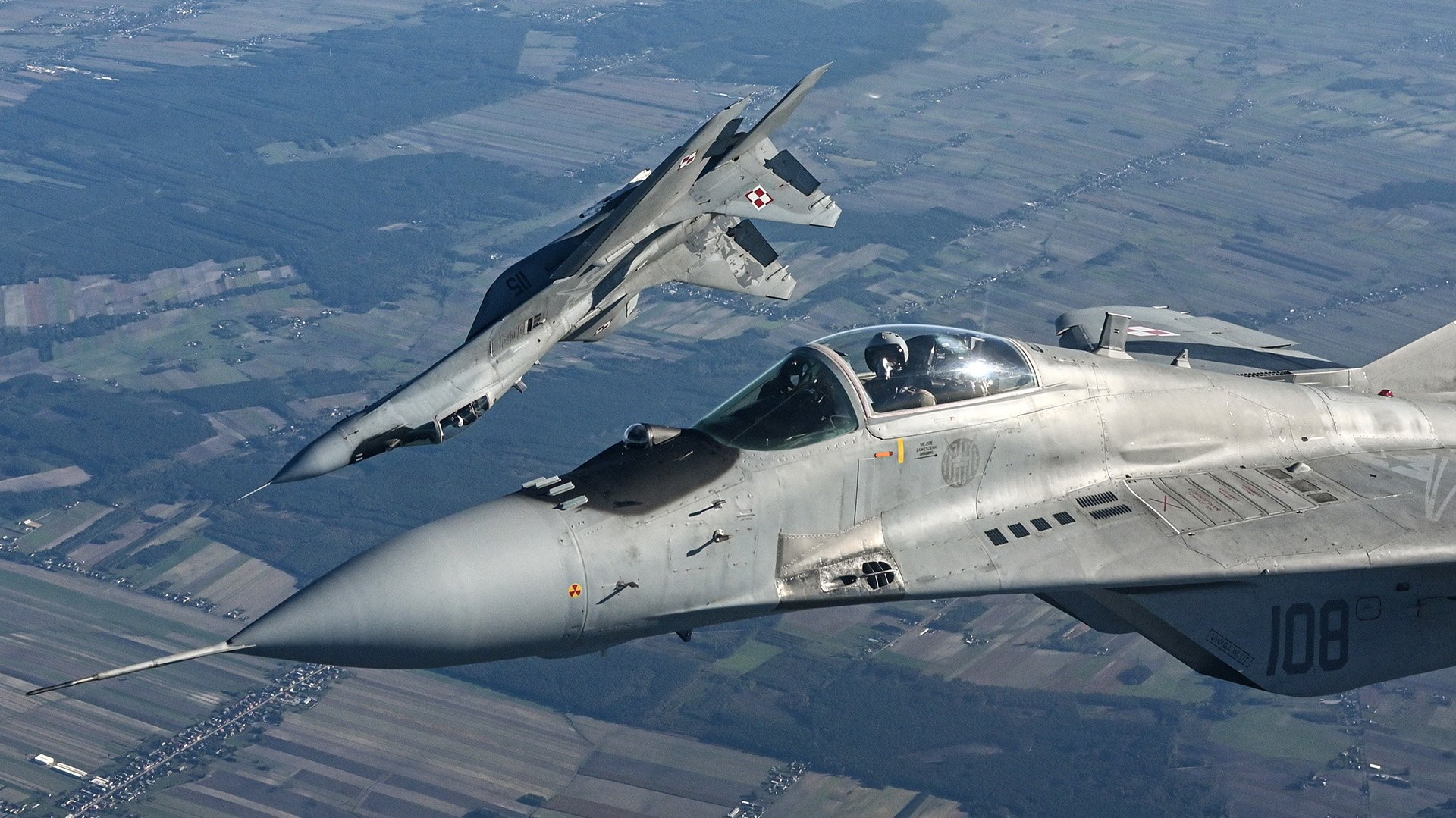
In a key indication of improving ties between Poland and Ukraine, Warsaw has reportedly agreed to provide two additional MiG-29 Fulcrum fighters, badly needed 20x102mm rounds for Ukrainian Air Force F-16s and artillery shells. Relations between the two countries soured this summer over a political spat between their respective leaders, however they appear to be restoring once-close ties.
The aircraft transfer will occur “in the near future,” Lt. Gen. Dariusz Łukowski, director of the Strategy and Defense Planning Department at the Polish Ministry of National Defense, told the Polish Rzeczpospolita (Rz) media outlet. “The decision has been made, and two MiG-29s will be handed over.”
Of the two Fulcrums, one has reached the end of its service life and may be used for parts while the other is still flying, Rz added. Deputy National Defense Minister Paweł Zalewski confirmed the MiG-29 agreement to another Polish media outlet, TVP Info.
“There is an agreement regarding the transfer of two MiG-29s to Ukraine,” Zalewski said. “As regards the remaining MiGs, the matter is ongoing.”
Poland had 14 MiG-29 aircraft as of December 2025, of which six to eight were nearing the end of their service life, a Polish official said at the time. It is unclear how many are still on hand.
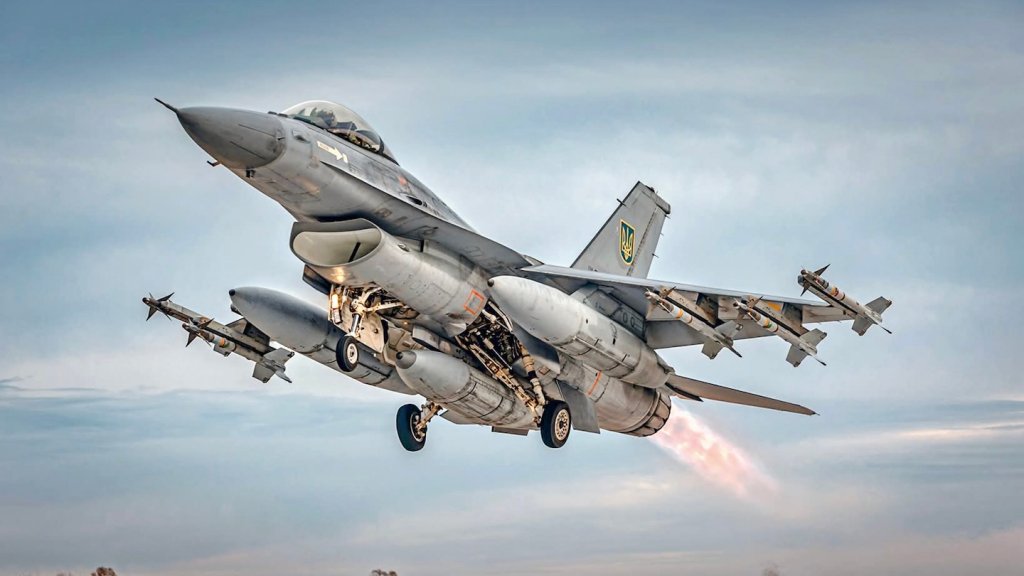
In addition to the jets, Rz reported that “Poland will provide Ukraine with, among other things, a supply of 155mm and 152mm artillery ammunition; 20x102mm combat rounds for the six-barreled cannons on F-16 fighter jets—used, for instance, to shoot down Russian unmanned aerial vehicles—as well as missiles for the Piorun short-range anti-aircraft systems.”
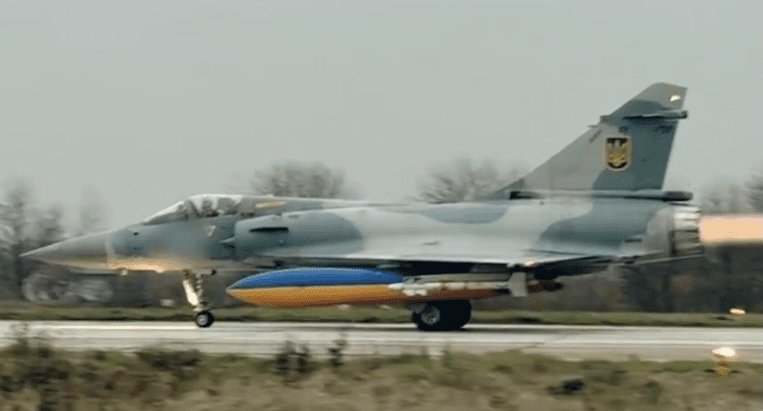
Additional MiG-29s are always welcome, as they remain the backbone of Ukraine’s fighter force even though the country has received donations of more modern F-16 Vipers and French Mirage 2000 fighters. Meanwhile, the 20mm cannon ammunition is critically needed.
As we have previously reported, Ukraine is struggling to maintain adequate stocks of air-to-air missiles for its fighters. AIM-9 Sidewinders and AIM-120 Advanced Medium-Range Air-to-Air Missiles (AMRAAM) have been heavily used against Russian cruise missiles and drones.
As a result, Ukrainian F-16 pilots have reportedly had to ration their missile shots. This has forced them to increasingly rely on their internal 20mm cannon when suitable missiles are not available. Such a tactic is far from an ideal substitute, as you can read about here. Still, Kyiv has reportedly been seeking tens of thousands of additional rounds of 20mm ammunition.
So far, there has been no official Ukrainian response. We reached out to Zelensky’s spokesman and Polish officials for comment.
Reports about the planned Polish weapons transfers to Ukraine mark a turning point in relations between Warsaw and Kyiv, as we noted at the top of the story.
For much of this conflict, Poland has been one of Ukraine’s staunchest allies, serving as a logistics hub and providing military assistance. Warsaw’s initial donation of MiG-29s opened the door for the transfer of dozens of others from several NATO nations. That was followed by the eventual provision of the aforementioned Vipers and Mirages. In addition, Sweden has agreed to provide 16 Gripen C/D fighters, with the first aircraft expected in early 2027, while a separate agreement covers the purchase of 16 new Gripen E fighters whose deliveries are not scheduled to begin until early 2029.
Relations between the two countries reached a nadir in June after Polish President Karol Nawrocki stripped Ukrainian President Volodymyr Zelensky of the Order of the White Eagle. It is Warsaw’s top award and was presented to Zelensky in 2023. That escalated a row between the allies over the memory of WWII.
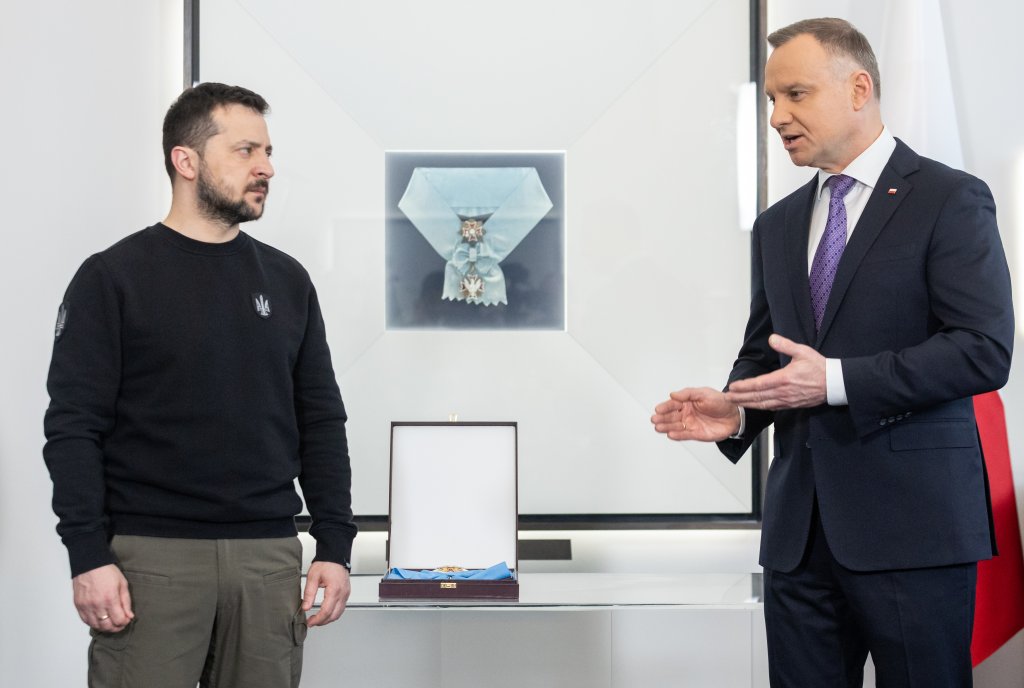
“Zelensky had infuriated Warsaw this month by naming a military unit after an insurgent army that took part in massacres against Poles in WWII,” AFP reported at the time.
After the stripping of the award, the rift grew more bitter, with Poland claiming Ukraine would not transfer drone technology needed to defend against Russian threats. The political kerfuffle culminated with Poland canceling the transfer of additional MiG-29s to Ukraine.
Relations between the two nations began to thaw earlier this month.
The first sign was Zelensky’s resuming use of Polish airports as a jumping-off point for overseas trips. Ukrainian officials have to travel by train to another country if they want to fly because airspace over Ukraine has been closed to non-military aircraft since the start of the all-out war.
After the medal incident, Zelensky opted to use airports in Moldova and Romania. However, on Oct. 14, the Ukrainian leader once again traveled to Rzeszów Airport in Poland.
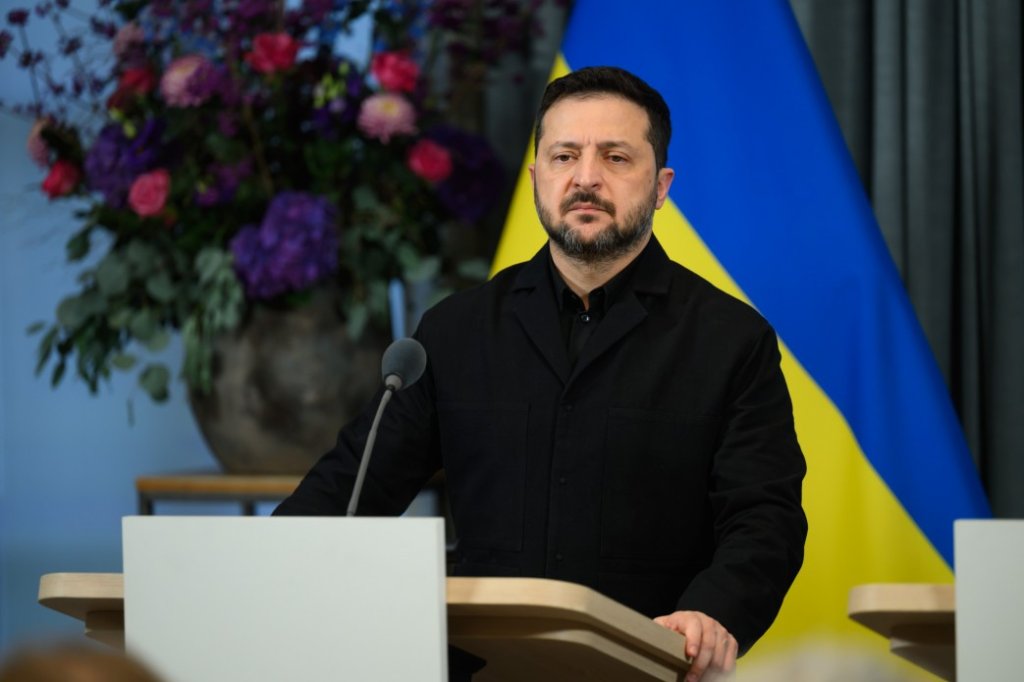
Days later, Zelensky told reporters that stopping at Rzeszów was a signal that his relations with Poland were on the upswing.
“Our relations with Poland have indeed improved,” he said. I’m very grateful for this to both Poland and our teams, and I’m grateful to the Prime Minister [Donald Tusk]. I’m grateful to the people of Poland for supporting Ukraine. It’s very important for us to be together right now. There is only one enemy – Russia, which is deeply concerned about a strong alliance between Ukraine and Poland.”
“Even very difficult things, we’ll resolve them, I’m sure of it,” the Ukrainian leader added. “These will be mutually beneficial relations, out of respect, because of the importance of security in Europe.”
Though Polish officials are telling media outlets that deals are in place, there is still a lot that can go sideways before the aircraft and ammunition are in Ukrainian hands. Still, for Kyiv, even suggestions of a future transfer are better than having deals being called off.
Contact the author: howard@twz.com
The post Polish MiG-29s, F-16 Cannon Ammo Reportedly Headed To Ukraine As Bitter Warsaw-Kyiv Rift Heals appeared first on TWZ.

Poesia, performance, música, joalharia de autor e oficinas de palavra dita. O Ginásio Clube de Faro promove, de 13 a 15 de novembro, mais uma edição do Festival Calceteiros de Letras, no qual a palavra dita, a poesia e a performance são abordadas de forma contemporânea, numa fusão com a música, teatro, artes visuais e […]
Kyle Grillot/Bloomberg via Getty Images
Instagram wants what YouTube has — and it's willing to pay up to get it.
In an effort to persuade content creators to post long-form video on Instagram, the company is paying a select number of creators hefty sums, according to people familiar with the deals.
Not every deal is equal. The Meta-owned platform has offered select creators $50,000 to post long-form video to its new "Features" product, while others have been offered six-figure deals, some of which have reached $500,000, Business Insider exclusively learned.
"We've been public about the fact that we are funding Features content directly with some creators right now to support them," a Meta spokesperson told Business Insider. "The details of those deals are confidential, but we're excited to see the content going live."
On Monday, Instagram unveiled an overhaul of its video formats. Most importantly, it's resurrecting IGTV — a long-form video product Instagram launched in 2018 and sunset in 2022 — in the form of Features. The horizontal, wide-screen videos will exist within the Instagram app, and can be as long as a feature film: 90 minutes.
Meta
Long-form video isn't exactly what people are used to watching on Instagram. Reels, the platform's answer to TikTok's meteoric rise, has redefined the Instagram experience and is driving time-spent and revenue across Meta's apps.
YouTube, however, reigns king as the internet's destination for sit-down, longer-form videos.
Instagram knows this. The deals do not require exclusivity to Instagram, multiple people familiar with the agreements said; one person familiar with the offers said it's asking creators to post to Instagram any of the long-form content they publish to YouTube that same day.
Reza Izad, partner at Underscore Talent, which reps clients like "Subway Takes'" Kareem Rahma and Noah Beck, called the deals an "exciting opportunity" for creators.
"Every time there's a new feature in these apps that the company's promoting, people will have more opportunity to be seen because there's going to be algorithmic preference to this kind of content," he said. "And unlike short-form, there's not a lot of abundance."
This isn't the first time Instagram has inked paid deals with creators to lure them to post more on Meta's apps.
Last year, Meta was paying creators thousands of dollars to post short-form videos to Instagram and Facebook in the midst of TikTok's potential ban. The company has tested several bonus programs paying creators for the performance of their Reels on Instagram, though those programs have dwindled.
Back in 2021, when IGTV was still part of Instagram's big video bet, it inked deals with creators, funding long-form episodic shows from creators like TikTok's "Sway Boys" and "Dance Moms" alum Nia Sioux. Briefly, IGTV had its own monetization program, too, which let some creators earn a cut from ad revenue on the format.
While Instagram is paying some creators directly, a big question looms over the creator economy: What about the rest of them?
A major draw of YouTube is its long-standing Partner Program, which pays eligible creators a share of the ad revenue generated by their videos. Even though YouTube has increased its eligibility requirements, the potential to turn a hobby or passion project into a cash-earning career has kept YouTube on top as the go-to video platform for creators.
It's no surprise, then, that when Instagram announced its video overhaul, creators immediately had questions about monetization.
"We understand the economics matter a ton, and are exploring multiple options to help long-form creators get paid," Instagram's top executive, Adam Mosseri, wrote in an X post on Wednesday.
Have a tip?
Contact Lucia via email at lmoses@businessinsider.com, (917) 209-8549, or on Signal at @luciamoses.81.
Contact Sydney via encrypted messaging app Signal at @sydneykbradley.123, sydneykbradley@proton.me, or sbradley@businessinsider.com.
Use a personal email address, a nonwork WiFi network, and a nonwork device; here's our guide to sharing information securely.
Qui veut la paix dans le monde arabe ? Alors que la guerre fait rage à Gaza, au Liban et en Iran, mais aussi, sur le plan intérieur, en Libye, au Soudan et au Yémen, aucune initiative majeure ne se dessine pour mettre fin au fracas des armes ou pour prévenir des conflits qui menacent d'éclater, comme celui qui pourrait opposer l'Égypte et l'Éthiopie à propos des eaux du Nil, ou encore l'Algérie et le Maroc, entre lesquels la tension ne cesse de croître depuis la rupture de leurs relations diplomatiques en août 2021. L'Union du Maghreb arabe (UMA) est en mort clinique, et la Ligue arabe, aux abonnés absents, se contente de communiqués lénifiants destinés à n'indisposer aucune des capitales concernées. Quant à l'Organisation de la coopération islamique (OCI), la deuxième plus grande organisation intergouvernementale après les Nations unies avec cinquante-sept États membres, elle s'est réunie à Bagdad à la fin du mois d'octobre pour explorer les voies d'une meilleure coopération en son sein… L'Union européenne est tout aussi prudente, certains de ses membres cherchant avant tout à sécuriser leurs approvisionnements en hydrocarbures ou à vendre des armes, notamment aux pétromonarchies du Golfe. Dans cet immobilisme général, sur fond de montée des périls, seule l'administration américaine s'est engagée en lançant le très controversé « Conseil de la paix » voulu par le président Donald Trump afin de chapeauter, entre autres, la sortie de guerre à Gaza.
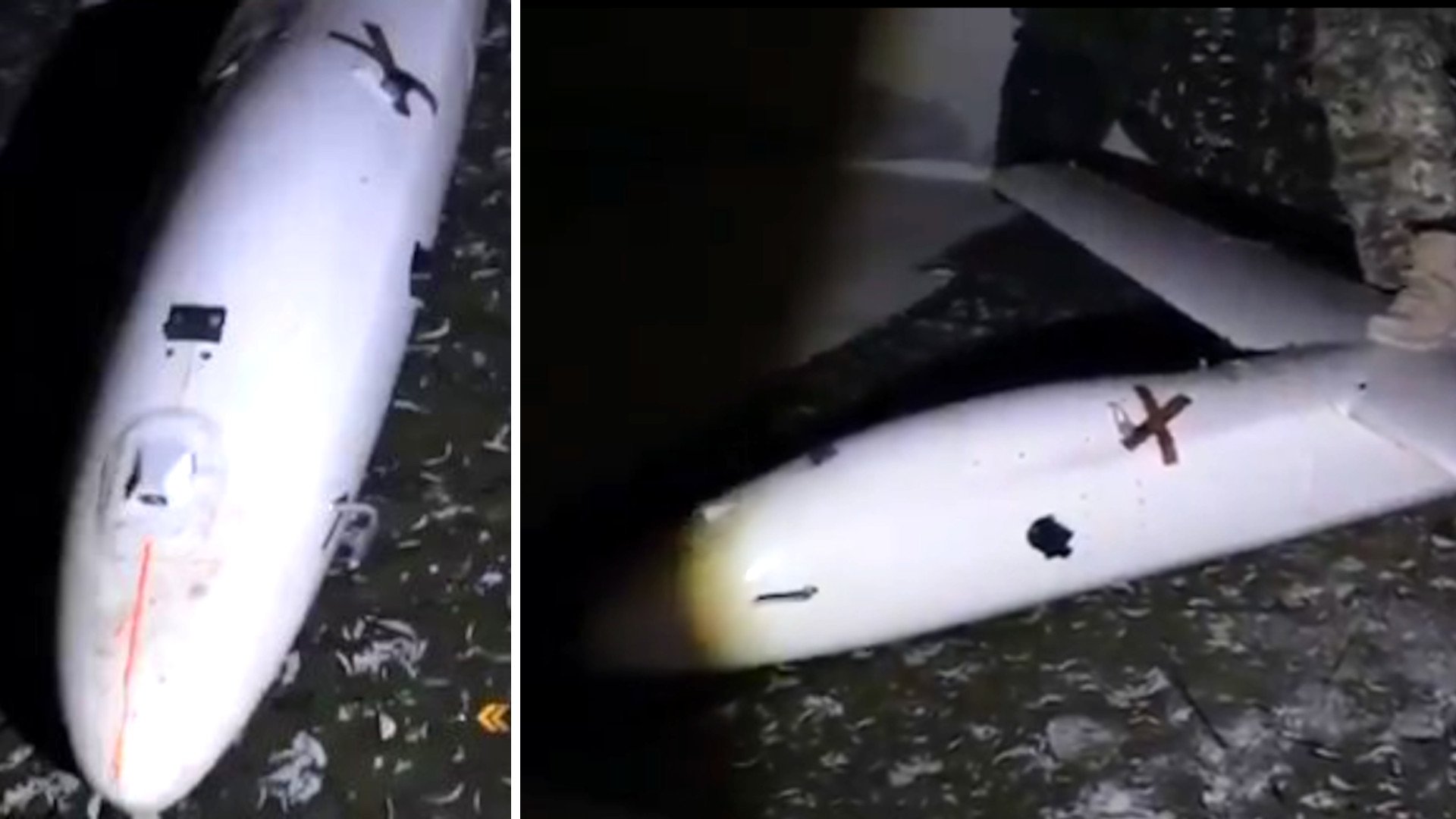
Iran claims to have brought down what looks to be a U.S.-made MQM-170C Outlaw G2 drone largely intact. A video shows it has a notable feature on top of its nose. In U.S. military use today, Outlaw-series drones are best known as an aerial target for use in training and testing.
The footage in question, and the accompanying claims, should be treated with caution given that the regime in Tehran and the country’s media outlets do routinely make exaggerated and unverified claims. That being said, so far, the footage looks to be credible. Furthermore, the U.S. military has pushed back on Iran’s version of events, but has not explicitly denied having lost one of these drones in the region recently.
For its part, Iran’s Islamic Revolutionary Guard Corps (IRGC) says it captured the MQM-170-series drone following what it described as an “offensive electronic warfare operation” somewhere to the “west of the Strait of Hormuz.” The IRGC also claims that the uncrewed aircraft was conducting reconnaissance on Iranian air defenses positioned along the country’s Persian Gulf coast. At the time of writing, no firm evidence has been provided to support either of these assertions. The IRGC has released the aforementioned video, seen below, which it says shows the drone being tracked via an infrared camera, as well as after its recovery.
#Iran / #USA
— War Noir (@war_noir) October 29, 2026: Islamic Revolutionary Guard Corps (#IRGC) Navy captured a US Drone after intercepting it with EW Systems.
The Drone captured by the IRGC Navy appears to be Griffon Aerospace Outlaw G2 “MQM-170C” UAV. pic.twitter.com/Xw6JYOu1s6
“In the past weeks and months, the IRGC has repeatedly lied out of desperation, and today is no different,” U.S. Navy Capt. Tim Hawkins, spokesperson for U.S. Central Command, told TWZ when asked about the specific Iranian claims.
“We’re not going to waste our time. U.S. forces remain vigilant and laser-focused on our assigned missions,” Hawkins said in response to a follow-up question about whether CENTCOM could confirm or deny the loss of an MQM-170-series drone for any reason.
As an aside, Iran recovered an Anduril Dive-LD uncrewed underwater vehicle (UUV) largely intact last month in what the IRGC claimed had been a “complex intelligence and operational action.” U.S. authorities ultimately confirmed the loss of the advanced UUV, but said it was the result of a malfunction.
As mentioned, the drone seen in the IRGC video does look to be an MQM-170C, or at least a closely-related variant thereof. It has an interesting feature on top of its nose: a single forward-looking aperture. This is something that is commonly associated with staring-type optics, which drones often use to aid with navigation. There is a possibility that it could be a seeker, if the drone were to be configured as a one-way-attack munition, but this seems unlikely.
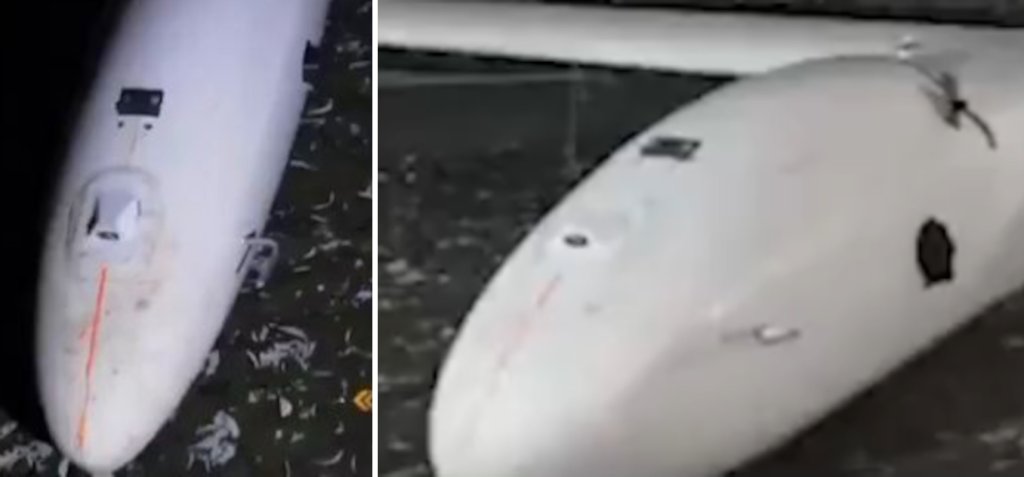
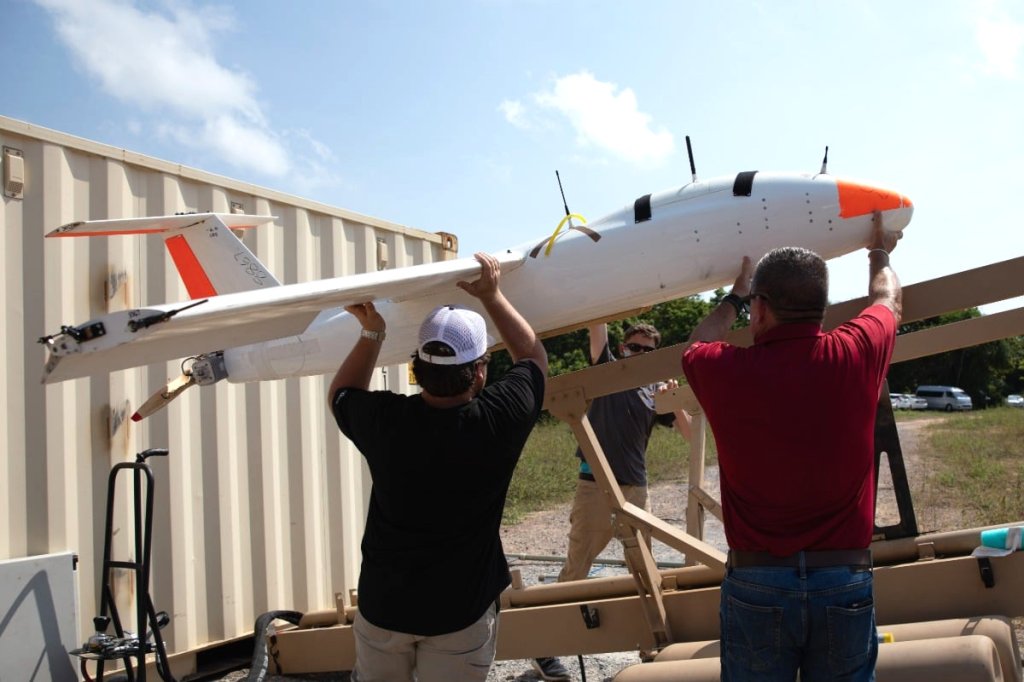
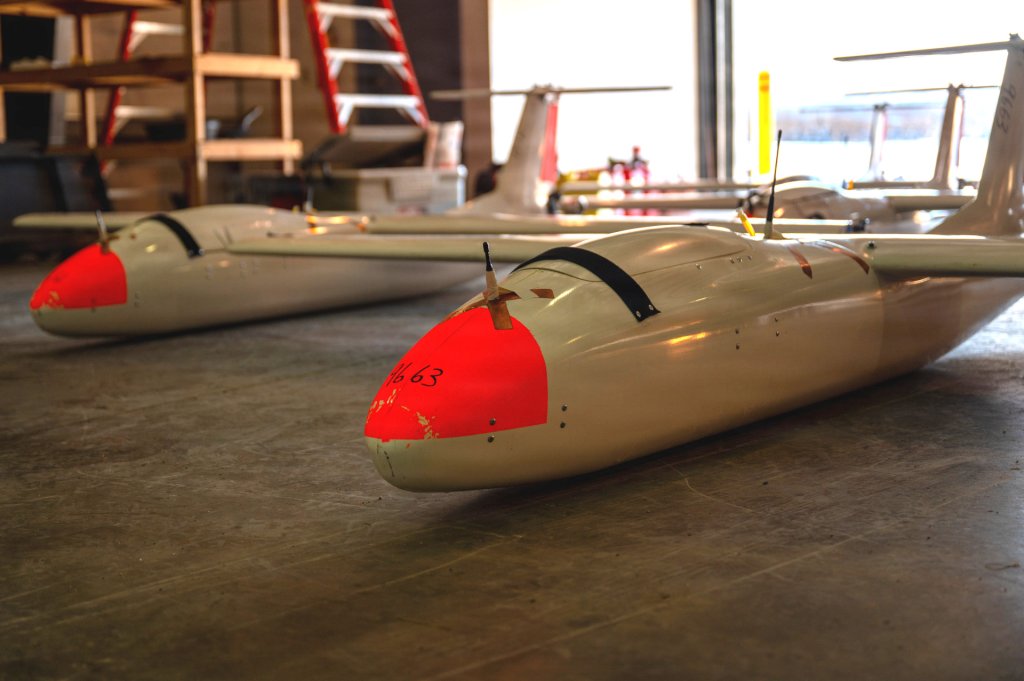
MQM-170C’s manufacturer, Griffon Aerospace, which refers to this design internally as the Outlaw Gen 2 (G2), does say on its website that it can be configured as “an inexpensive payload development platform offering great endurance, payload size, weight, and power.” The company’s website also says that the target configuration of the G2 has a gross weight of 150 pounds, but that this can grow to 225 pounds when used as a more general-purpose drone.
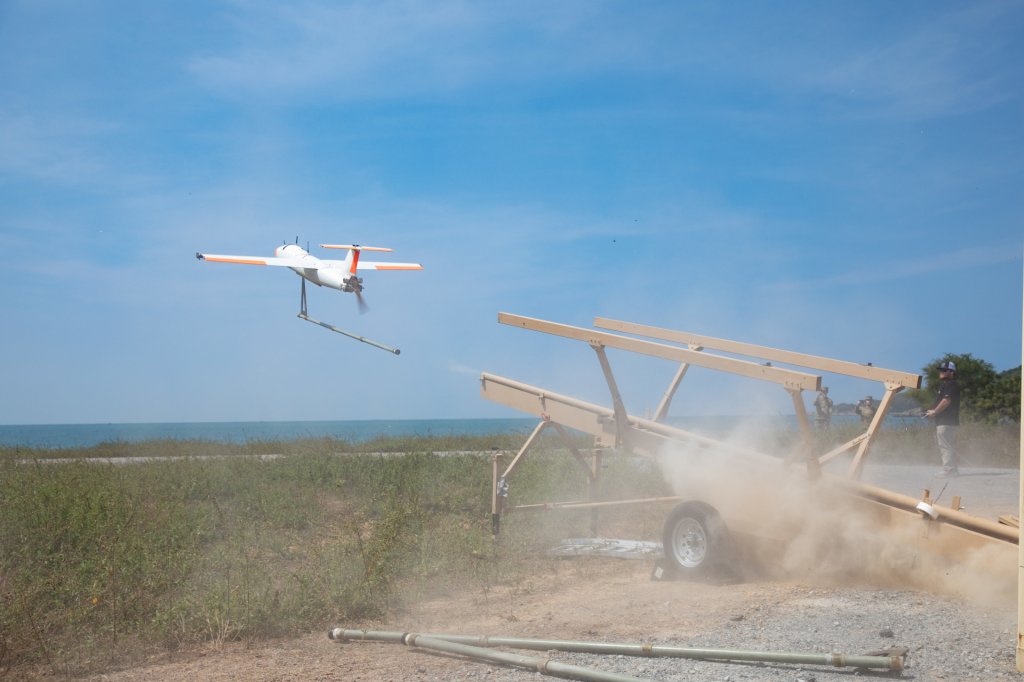
The drone, which is nearly 11 feet long and has a wingspan of 16 feet, otherwise has a stated maximum endurance of eight hours, top speed of 126 knots, and the ability to reach altitudes of more than 16,000 feet. The design is propelled by a 2-cylinder, 2-stroke combustion engine driving a single pusher propeller. The G2 gets into the air via a catapult-type launcher and can be recovered, either after a glide-in landing on suitable terrain or via parachute.
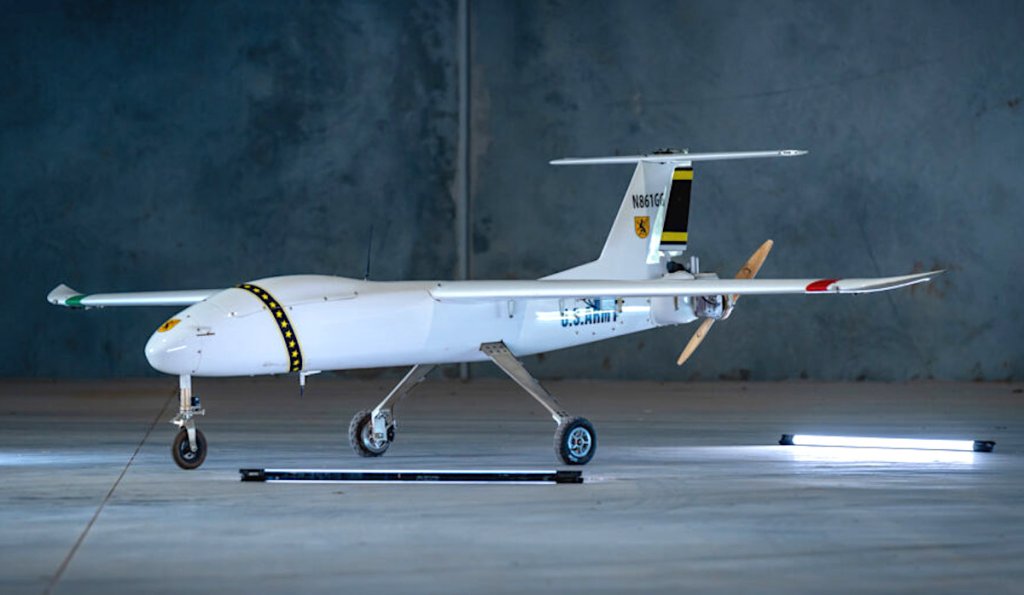
Griffon Aerospace also offers an ‘expanded’ G2E version with fixed tricycle landing gear as an “open and customizable platform for ISR [intelligence, surveillance, and reconnaissance] missions, subsystem testing, and R&D [research and development].” This version has a lower maximum takeoff weight and total endurance compared to the baseline G2, according to the company’s website. The IRGC video does not show any evidence of landing gear, but it could have broken away when the drone came down.
The larger Outlaw family, which traces back to the early 2000s, also includes the Gen 1 MQM-170A, which has a completely different design from the subsequent G2 drone. Griffon also developed a derivative of the Gen 1 design with a twin-boom tail, called the Outlaw Boomer, which the U.S. military designated the MQM-170B. There is also a twin-engine, twin-boom derivative of the Outlaw G2 that the U.S. military has at least tested in the past.
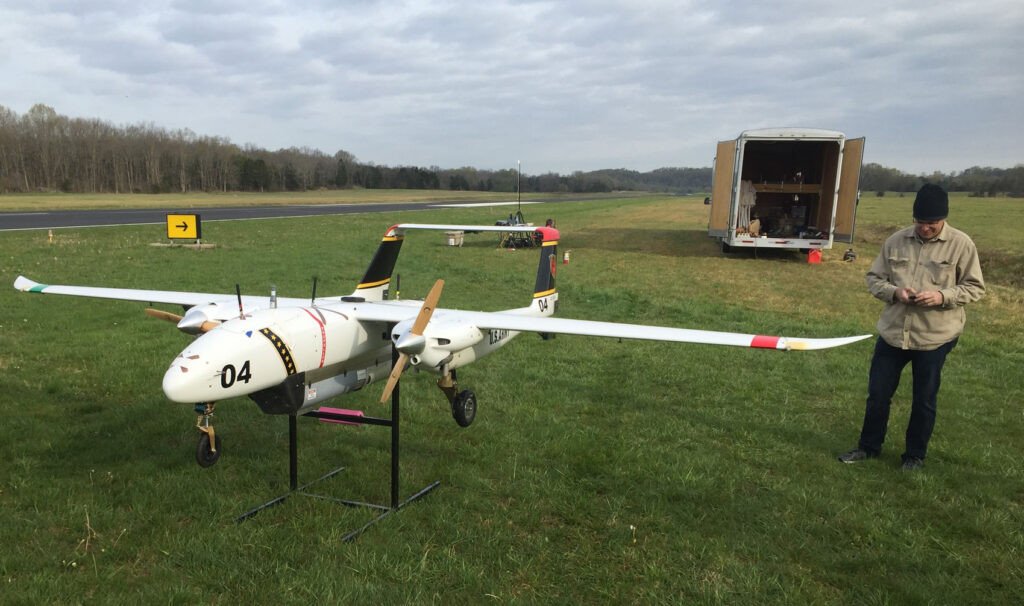
This brings us to the additional matter of a contract the U.S. Army awarded to Griffon Aerospace, valued at nearly $68 million, for the procurement of a Gen 3 version of the Outlaw on June 3. When the Pentagon first announced this deal, it was explicitly said to be “in support of Operation Epic Fury” against Iran. That portion of the announcement was quietly deleted sometime thereafter.
“A company official declined to provide details about the Gen 3 design,” Breaking Defense reported in a story published on June 5.
On August 25, Griffon received an additional contract from the Army, valued at just under $133 million, “to procure Griffon Outlaw systems, support equipment and field service representatives for system use and employment.” That announcement made no mention of operations against Iran.
At the time of writing, Griffon Aerospace’s website does not appear to make any mention of the Gen 3 Outlaw. TWZ has reached out for more information about this drone.
Given the known breadth of Outlaw designs to date, it is possible that the Gen 3 drone is substantially, if not entirely, different from any of the existing types. At the same time, the June contract announcement does establish a link between the Outlaw family and U.S. military use outside of training and testing, and specifically as part of real-world operations aimed at Iran.
There remains the potential that Iran simply captured an Outlaw target drone that U.S. forces lost control of during training or testing in the region. The drone seen in the IRGC video lacks the high-visibility orange markings typically seen on aerial targets, though these could easily have been painted over. Iranian authorities could have still fabricated the recovery, in part or in whole, though there is no firm evidence of that at present, either.
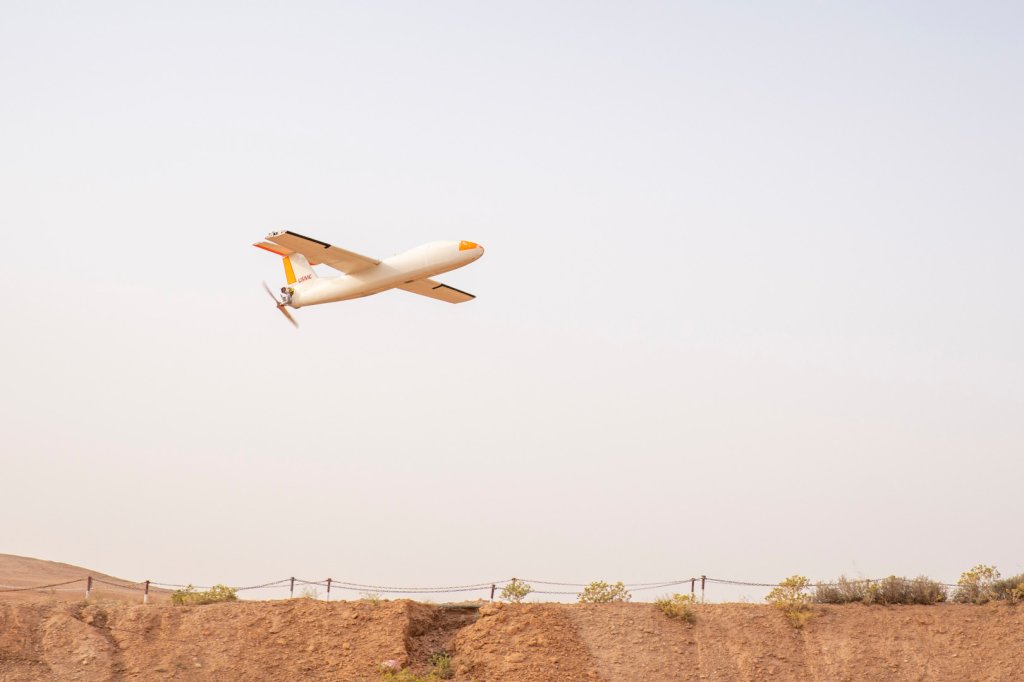
Another non-U.S. operator region could also be employing versions of the Outlaw, including in non-target drone roles, such as for surveillance and reconnaissance, or as decoys.
All of this does now come amid growing signs that the United States, as well as Israel, are preparing to launch a new major campaign against Iran. As TWZ reported recently, stimulating Iranian air defenses to glean key intelligence about their current capabilities and positions would be critical in the lead-up to any such operation.
“Stimulating Iran’s air defenses is critical,” our own Tyler Rogoway wrote on X earlier this month following unconfirmed reports of unusual Israeli air activity. “By Iran operating as if a full scale attack could be coming, their air defenses can be detected, categorized and geolocated. This is absolutely critical prior to a major air operation. Surveilling them during times of lower alert does not provide the same fidelity of actionable intelligence. Knowing where those threats are and how they are operating can mean the difference of life and death and/or will help standoff munitions make their way to their targets as those defenses can be suppressed, destroyed, or avoided entirely via careful mission planning.”
In September, claims had emerged that Iran had shot down a U.S.-made ADM-160 Miniature Air-Launched Decoy (MALD), but that remains unconfirmed. There were also reports of unusual, UAP-like objects flying over Iran, which have similarly not been confirmed.
15090 is the CAGE code for Raytheon, which is visible on the tail fins and other remnants.
— Trevor Ball (@Easybakeovensz) September 20, 2026
Source for images: https://t.co/weIo1Hh6RR pic.twitter.com/4LoBMChKZG
I don’t know what this is, or if it’s legit BUT remember we are in a new age of misdirection, decoy and guile. Specifically using low end drone technology. There are more ways to stimulate an enemy air defense system, distract a populous, assess the flow of public info from a… https://t.co/wW7YVlbayB
— Tyler Rogoway (@Aviation_Intel) September 21, 2026
As we wrote at that time:
“Such reports come amid an increasingly sophisticated use of low-end drones, decoys, and other forms of deception. These kinds of systems can be employed not only to stimulate adversary air defenses, but also to distract populations and probe how information moves out of a denied area. In such an environment, unusual aerial sightings should be viewed with caution — but not necessarily dismissed as irrelevant. We have been talking about how new forms of misdirection and guile will leverage relatively low-end technologies in future conflicts for many years now. While it isn’t clear if this light show in the sky over Iran was such an activity, it is certainly a reminder to keep that possibility in mind.”
It would certainly be plausible for suitably configured Outlaw drones to be in use now as another means of simulating Iranian air defenses. There is precedent even for ostensible target drones to be used operationally to deploy countermeasures and just as decoys in support of major strikes. U.S. BQM-34 Firebee target drones were notably used to spread radar-confusing chaff over the Iraqi capital Baghdad as part of the opening phase of Operation Iraqi Freedom in 2003.
It is also worth noting that the conflict with Iran this year has seen the first U.S. combat use of longer-range one-way attack drones, as well as explosive-laden kamikaze uncrewed surface vessels (USV). However, there is no evidence at present that drones in the Outlaw family have been configured in this way in any context.
Altogether, though still not definitively confirmed, Iran’s claimed recovery of an MQM-170C drone is an interesting development as the prospect that major hostilities in the region could resume soon continues to grow.
Contact the author: joe@twz.com
The post Let’s Talk About The U.S. Target Drone Iran Claims To Have Recovered Intact appeared first on TWZ.