Ripple's RLUSD stablecoin is launching on Coinbase for retail and institutional customers across the XRP Ledger, Ethereum, and Base networks. The exchange will support trading, custody, deposits,...
ISLAMABAD – Pakistan’s crypto market is entering new chapter of accountability as Pakistan Virtual Assets Regulatory Authority (PVARA) joins country’s anti-money laundering framework, strengthening oversight of digital asset businesses and efforts to curb illicit money flows.
National Executive Committee on Anti-Money Laundering and Counter-Financing of Terrorism approved adding PVARA to Schedule IV of the Anti-Money Laundering Act (AMLA), strengthening the authority’s role in overseeing cryptocurrency exchanges and other virtual asset service providers.
The decision brings regulatory accountability to a market used by millions of Pakistanis, and it reinforces efforts to establish clearer operating requirements for crypto businesses as the country develops a formal framework for digital finance.
Under the strengthened oversight arrangements, licensed platforms must maintain anti-money laundering programmes, report suspicious transactions and meet applicable Financial Monitoring Unit requirements. Firms that fail to comply can face regulatory action.
For businesses seeking to enter Pakistan’s digital asset market, the development adds another layer of clarity to a sector undergoing rapid regulatory change. Stronger supervision could also help build confidence in licensed platforms and support their integration with the wider financial system.
PVARA’s mandate rests on the Virtual Assets Act, passed by parliament in March 2026, following a presidential ordinance introduced in 2025. The legislation established a dedicated legal framework for licensing and supervising virtual asset businesses, alongside market surveillance provisions.
Chairman Bilal bin Saqib has described the Act as Pakistan’s first dedicated cryptocurrency law. He has also said the regulator has issued No Objection Certificates to several firms as it advances the authorisation process. The authority works alongside the State Bank of Pakistan and the Securities and Exchange Commission of Pakistan. While PVARA leads licensing and supervision within its mandate, the central bank is working on banking arrangements for virtual asset businesses.
Pakistan’s large crypto user base makes the transition particularly significant. Bringing more activity into a supervised environment could improve transparency and give businesses a clearer route into the formal economy.
PVARA operates regulatory sandbox where companies can test services under supervision before pursuing full licences. The initiative provides space for innovation while allowing the regulator to assess emerging products and potential risks.
Pakistan’s boom in crypto market faces critical test to keep dirty money out of digital finance. Criminals are exploiting weak ID checks and poorly supervised platforms to disguise illicit funds as routine trading. Pakistan’s Financial Monitoring Unit has flagged virtual assets as vulnerable to money laundering and terrorist financing, citing analysis that included domestic suspicious transaction reports.
The scale makes effective oversight essential. Around 40 million Pakistanis hold crypto-linked accounts, PVARA Chairman Bilal bin Saqib told a Senate committee, according to reporting in September 2026. The figure represents an official estimate rather than a verified count of active traders
Stronger safeguards can prevent criminal proceeds from slipping into legitimate trading activity. Verifying customers, monitoring unusual transfers and reporting suspicious transactions give authorities a better chance of detecting abuse while supporting a more accountable crypto market.
A Russian court sentenced Yuri Belenky, director of the IT company DiHouse, to 13 years in prison on terrorism financing charges, Radio Liberty reported on 26 October. The case concerns cryptocurrency donations that investigators believe were meant for Ukraine’s Armed Forces, the outlet said. The court also fined Belenky 500,000 rubles ($6,200), according to the report.
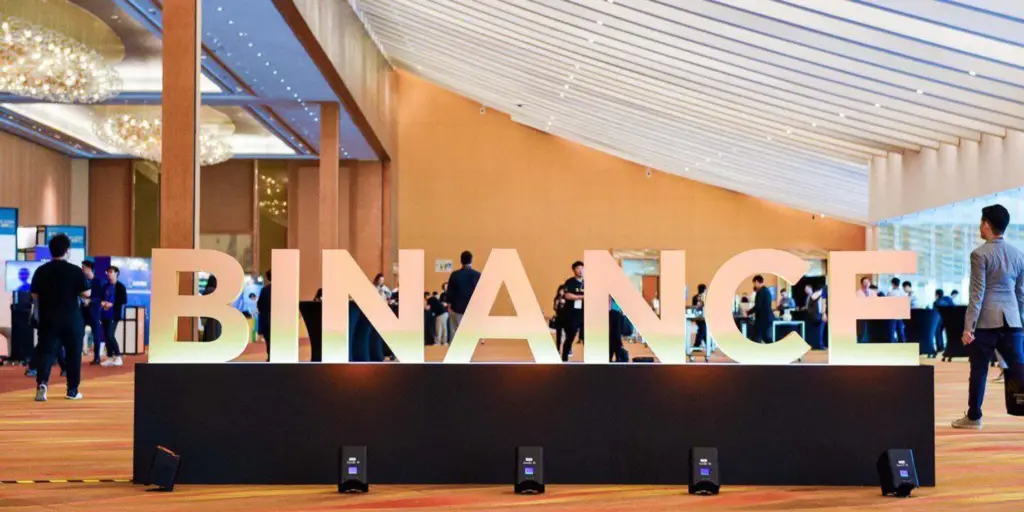
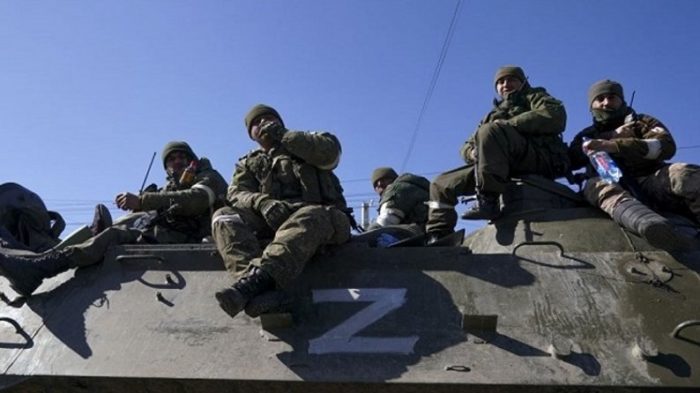
Since 2022, Russian courts have imprisoned Russians and Ukrainians under treason, terrorism, and other national-security laws over donations to Ukrainian causes. Binance, one of the world’s largest cryptocurrency exchanges, left Russia in 2023 but says it cooperates with lawful law-enforcement requests in different countries.
Belenky had lived in Bulgaria with his wife and child since 2015. In September 2025, he traveled to Moscow on business, and police detained him at the airport for allegedly using obscene language, Radio Liberty reported. In court, Belenky denied swearing, but the judge gave him 13 days of administrative detention. On the 10th day of his detention, Russia’s Investigative Committee opened a criminal case against him under an article on terrorism financing, based on a report from the Federal Security Service, according to the report.
Binance shared account records with Russian investigators, rights group says
In October 2025, Russia’s Investigative Committee contacted Binance to request information on six users who had transferred funds to a cryptocurrency wallet published by journalist Arkady Babchenko, the Russian human rights project First Department said on 17 August 2026. The exchange provided investigators with Belenky’s detailed account history, including his personal information, copies of identification documents, and cryptocurrency transaction records, according to the organization. The human rights project said the materials helped investigators identify nine more transfers, which went into the final charge against Belenky. Binance told his lawyer it does not give law enforcement user account data without a court order or an equivalent ruling, the group said.
Belenky’s alleged offense was transferring donations totaling 126,000 rubles ($1,560) between 2022 and 2024 to an account published by Babchenko, Radio Liberty reported. The court ordered that sum confiscated.
Explore further
Russia sentences Ukrainian women from Zaporizhzhia Oblast to 14 years for donating $120 to Ukrainian forces
The court said the money in Babchenko’s account went to Ukraine’s Armed Forces and the Azov battalion, which Russia designates as a terrorist organization, Radio Liberty reported.
In a statement dated 14 October 2025, Babchenko said he had not received transfers from Belenky to the cryptocurrency wallets he had published. He emphasized that he had raised money for civilian humanitarian needs, not to support the military.
Binance’s exit from Russia and previous data-sharing concerns
In September 2023, Binance announced that it would sell its entire Russian business to cryptocurrency exchange CommEX, according to the company’s website. Operating in Russia was incompatible with Binance’s compliance strategy, the exchange’s chief compliance officer, Noah Perlman, said in the announcement. Binance said it would fully exit the Russian market, receive no share of future revenue from the sale, and retain no option to buy back the business.
CommEX said on 29 September 2023 that it was not owned by Binance but confirmed that it had hired some former Binance employees during the platform’s six-month development, Cointelegraph reported.
Explore further
UK sanctions crypto exchanges and “A7 network” in crackdown on Russian evasion systems
The exit came after earlier questions about Binance’s dealings with the Russian state. In April 2021, Russian financial intelligence officials met with Binance’s head of Eastern Europe and Russia in Moscow and asked the exchange to provide customer data, including names and addresses, Reuters reported in April 2022. The Binance executive agreed to the request in a message to a business associate, saying he didn’t have “much of a choice,” the outlet said. Binance told Reuters it had never been contacted by Russian authorities about Kremlin critic Alexei Navalny.
In February 2026, 11 US senators asked the Treasury Department and the Justice Department to investigate Binance’s compliance with sanctions and anti-money laundering rules, Cointelegraph reported. They cited reports that about $1.7 billion had moved through Binance to Iran-linked entities, as well as possible activity related to evading Russian sanctions. The senators also warned that Binance payment cards launched in parts of the former Soviet Union could facilitate sanctions evasion. Binance rejected the allegations.
The prime minister also told Israelis to 'prepare yourselves' for U.S. aid to end, saying that 'the United States has changed. It's over, and it will come to an end. It's only a matter of time'
Instead of working to avert bank sanctions, PM proposes a bypass that risks rattling investors, sparking capital flight, and imperiling the high-tech sector the economy relies on
Press freedom groups condemn Javier Milei’s threats against journalists who investigated the $LIBRA cryptocurrency case, warning of rising hostility toward the media.
Argentine press freedom and human rights organizations have condemned President Javier Milei for threatening journalists who investigated the $LIBRA cryptocurrency scandal, warning that his remarks could expose media workers to violence and undermine freedom of expression.
Speaking at a dinner hosted Friday by the Fundación Faro think tank, Milei attacked journalists who covered the $LIBRA case, accusing them of spreading false information and coordinating a political operation against his administration.
The remarks came hours after a court dismissed the judicial case involving the cryptocurrency, a digital asset promoted by Milei in February 2025 whose sharp price fluctuations harmed thousands of investors.
Text Reads: 🗣️ Argentine President Javier Milei stated on Friday that “the ones who should be burned at the stake are the sons of b*tches,” after publicly singling out media figures who covered the investigation into the cryptocurrency $LIBRA. ⚖️ These remarks were made during a dinner hosted by the Fundación Faro, just hours after the judiciary dismissed the case. Milei specifically mentioned journalists from La Nación, Perfil, and A24. 📢 FOPEA (Forum for Argentine Journalism) denounced an “unprecedented escalation,” warning that such language “legitimizes violence.” The CELS (Center for Legal and Social Studies) described his comments as an “authoritarian escalation,” while the union SiPreBA called for an immediate response from the political and media spheres. 🔴 “The State has an obligation to protect journalists, not to turn them into targets,” FOPEA stated.
During his speech, Milei threatened those he accused of wrongdoing with being “burned at the stake” and singled out five journalists by name: Hugo Alconada Mon, Carlos Pagni and Paulino Rodrigues of La Nación newspaper; Natalia Volosín of Perfil; and Luis Novaresio of A24 television.
“Let it be known that the sons of bitches in Argentina will receive no mercy,” the president declared. “Those who deserve to be burned at the stake are the sons of bitches.”
The remarks drew condemnation from press freedom and human rights organizations, which warned that publicly identifying journalists while using such threatening language could increase the risks they face in their work.
The Argentine Journalism Forum (FOPEA) said the reference to burning journalists at the stake, coupled with the president’s naming of specific media professionals, marked a significant escalation in government hostility toward the press.
“The state has an obligation to protect journalists, not turn them into targets,” the organization said. It urged Milei to stop stigmatizing journalists and called on political leaders, lawmakers and other institutions to publicly respond to the incident.
The Center for Legal and Social Studies (CELS) described the episode as an “authoritarian escalation” in a statement published on X. The organization warned that when a head of state publicly casts critics as enemies, it can encourage attacks and undermine democratic debate. It also argued that insults and defamatory attacks against journalistic work must have limits.
❌ESTO NO ES UN REPUDIO, ES UN LLAMADO A LA ACCIÓN
🔊FRENEMOS LA INQUISICIÓN DE MILEI
El presidente Milei volvió a cruzar un límite gravísimo. La instigación a “quemar en la hoguera” a un grupo de periodistas debe generar una reacción inmediata de todo el arco político y… pic.twitter.com/XrXOohrVDe
— SiPreBA – Sindicato de Prensa de Buenos Aires (@sipreba) October 24, 2026
Text Reads: ❌THIS IS NOT A REJECTION, IT’S A CALL TO ACTION 🔊LET’S STOP MILEI’S INQUISITION President Milei has once again crossed a gravely serious line. The incitement to “burn at the stake” a group of journalists must provoke an immediate reaction from the entire political and media spectrum to halt the attacks on our profession. There will be no room for regrets if the violence promoted by the President ends up turning into facts. This government, which nearly killed photographer Pablo Grillo in a savage crackdown, now calls, in the voice of its highest representative, to assault our colleagues, as has already happened. We send our solidarity to @halconada, @CarlosPagni2, @nataliavolosin, @paulinor76and @luisnovaresio and place ourselves at their disposal. With threats on social media, repression in the streets, and attacks on rights in Congress, they seek to silence the press. From SiPreBA, we call to defend the Journalist’s Statute and to respond with more democracy in the face of the return to the Inquisition proposed by the Executive Branch.
CELS said the incident was part of a broader pattern of hostility toward media workers, including harassment, attacks on digital platforms and repression of journalists covering public demonstrations.
The Buenos Aires Press Union (SiPreBA) also condemned the president’s remarks, calling for an immediate response from political and media figures to stop the attacks. The union expressed solidarity with the journalists targeted by Milei and warned of the possible consequences of his rhetoric.
“There will be no room for regret if the violence promoted by the president ends up turning into actual incidents,” SiPreBA said.
The organizations called for political and institutional action to protect journalists and counter hostility toward the press following Milei’s public targeting of reporters who investigated the $LIBRA case.
Central bank says digital currency can't be used for such purposes, stresses need to preserve economic ties; Eisenkot tears into PM for 'dismantling Israeli economy'
 Login