❌

Reading view

Martian meteorite found in the Sahara is 4.1 billion years old

A meteorite found in 2022 in the Sahara in Mali formed in the Martian crust at least 4.1 billion years ago, according to scientists, making the reddish igneous rock perhaps the oldest of the 435 meteorites from Mars known on Earth.

The researchers said the composition of the meteorite, called Teghaza 001, is providing insight into the environment early in the history of Earth’s planetary neighbor, with fresh evidence of liquid water on the surface that bolsters the notion that primordial Mars may have been conducive to microbial life.

Planetary scientist Yang Liu of NASA’s Jet Propulsion Laboratory in California, which is managed by Caltech, called the meteorite “a witness to a time when Mars was likely warmer and wetter than it has been for most of its history.”

The chemistry of the meteorite, a type of coarse-grained rock called gabbro, shows that it experienced interactions with water when it was slowly cooling and crystallizing in the Martian subsurface. It was part of the Martian crust, the planet’s outermost layer, but formed from magma originating at greater depths in the planet’s mantle.

Mars is now cold, dry and desolate, but extensive evidence indicates it had water flowing on its surface in the form of rivers, lakes and an ocean in the northern hemisphere billions of years ago.

Teghaza 001 was discovered in eight pieces, with the largest chunk about the size of a fist, in the desert roughly 21 miles (34 km) from the Malian village of Bir Chali. Its main minerals are feldspar and pyroxene, and it contains zircon crystals bearing the element uranium. The researchers ascertained its age using a technique based on the decay of uranium into lead over time.

“Martian meteorites are our only samples from Mars, forming our basis for understanding the formation and differentiation of early Mars and allowing us to evaluate in laboratories whether ancient Mars could have supported habitable conditions,” said Liu, lead author of a study on the meteorite published in the journal Science.

“The detailed information we can extract from these meteorite samples complements and validates our exploration of Mars using satellites, landers and rovers,” Liu said.

This information provides clues about how the evolution of Mars diverged from Earth’s when they were in their infancy and life was beginning to take hold on our planet, Liu said. Earth, Mars and the solar system’s other planets formed roughly 4.5 billion years ago.

Only three Martian meteorites, including Teghaza 001, date to the planet’s early history. One of them, discovered in Antarctica in 1984, was initially assessed as being about 4.5 billion years old but more recently was determined to have a similar age to Teghaza 001. Teghaza 001 likely is the older of the two, according to the new study.

WATER WAS PERCOLATING

Isotopes, or forms, of the elements oxygen and hydrogen present in the meteorite show that water was percolating down into the planet’s deeper crust, as occurs on Earth, and mixing with molten rock from the mantle.

“Multiple lines of evidence in Teghaza 001 suggest Mars’ surface had water at more than 4.1 billion years ago. This is reflected by hydrogen isotopes in phosphate and oxygen isotopes in minerals and bulk samples,” Liu said.

Water is considered a key ingredient for life.

“The findings lend support to the idea that early Mars had the necessary ingredients and conditions to harbor life, but do not directly answer the question of whether there was life on Mars,” said planetary scientist and study co-author Lee Saper of NASA’s Ames Research Center and the BAER Institute in California.

“The rock is a snapshot in time that shows how a wetter early Mars with a thick atmosphere could have supported habitable conditions but that these conditions were waning rapidly over the first billion years or so of Mars’ existence, trending towards its currently dry and inhospitable environment,” Saper said.

Teghaza 001’s chemistry shows it is distinct from the other known Martian meteorites. It may have originated in the southern highlands, possibly from near Hellas Basin, one of the largest Martian impact craters, Liu said.

The meteorite has a dramatic backstory.

“It was blasted by an impact from the surface of Mars and was flying through space until its path crossed that of Earth. It then entered the atmosphere as a meteor and survived as a meteorite by landing in the Sahara,” Liu said. “We do not know when the sample landed on Earth.”


  •  

DHS told '60 Minutes' weeks before segment aired that deported Malian national had once claimed to be gay

"60 Minutes" was told weeks before the segment aired that a deported Malian husband and father, who was the subject of a sympathetic report on Sunday, claimed to have been gay in his asylum application, Fox News Digital confirmed.

Fox News previously obtained records showing Moussa Diawara alleged in his 2009 asylum application that he would face persecution if he were sent back to Mali due to his sexuality.

The "60 Minutes" segment depicted an anguished father deported to Africa with his wife and two children still living in the U.S. and noted that a U.S. judge said Diawara could be persecuted, pointing to fears over converting to Christianity. However, the show did not mention that Diawara’s application contradicted his family man narrative and the reason why he claimed he couldn’t return to his native country was because of his sexual orientation.

DEPORTED MIGRANT WHO '60 MINUTES' PAINTED AS SYMPATHETIC FAMILY MAN CLAIMED HE WAS GAY ON ASYLUM APPLICATION

Fox News Digital has since obtained a copy of an email sent to CBS News by the Department of Homeland Security informing the network about Diawara's claim, which was first reported by The New York Post.

The email was sent Oct. 6, nearly three weeks before Sunday's segment aired.

A spokesperson for CBS News declined to comment.

FROM THE HUNTER BIDEN LAPTOP TO KAMALA HARRIS EDITS: THE LONG HISTORY OF '60 MINUTES' CONTROVERSIES

On his 2009 asylum application, Diawara said he feared for his life as a gay man if he was forced to return to Mali.

"My asylum application is based upon ground of well-founded past persecution and an undisputable fear of life-threatening [sic] to my person if I were to return to my country Mali. In fact, I had experienced extreme punishment and persecution based on the ground of my sexual orientation," Diawara wrote in his asylum application.

"Since I came to the USA I had the possibilities [sic] to express my feelings to men without any embarrassment no reserve. Indeed, my tribal group and community as a whole had reported my sexual orientation to my family back home because such behavior is unwelcome in my society," he continued. "My life is hence worth threatened if I have to go back to my country because I could be executed either by the Islamic group or the community."

CBS SHOOTS DOWN 'POLITICAL INTERFERENCE' CLAIMS IN AFTERMATH OF '60 MINUTES' FIRINGS

DHS General Counsel James Percival, who was interviewed in the "60 Minutes" segment, took to social media after it aired, saying the newsmagazine made Diawara the "poster child for what it claims are wrongful deportations."

"His claimed reason for fearing Mali was that he is ‘gay,’ just in case you’re wondering how bad the immigration fraud problem is," Percival wrote.

The segment put a spotlight on Diawara, who was living in the U.S. for 25 years without a criminal record, overstaying his tourist visa and getting nabbed by ICE and sent to Ghana, which ultimately sent him to his home country of Mali. According to the report, Diawara has since fled to an undisclosed African country.

During the segment, Percival noted there is "a lot of fraud" in the immigration system and many "fear claims" are untrue.

A "60 Minutes" insider previously defended the integrity of the report, pointing to how Diawara's claim that "part of the reason he didn't feel safe" was for religious reasons did make the broadcast. According to the report, he had converted to Christianity, and Mali is a Muslim-majority nation.

"The broadcast acknowledged DHS questioned the credibility of Moussa Diawara's fear of persecution, which they're claiming now on social media," the insider told Fox News Digital.

CLICK HERE TO DOWNLOAD THE FOX NEWS APP

Fox News' Brian Flood and Brooke Taylor contributed to this report.

  •  

Un gabbiano s’impiglia nella sua lenza da pesca, lui tenta di salvarlo e muore annegato

Un gabbiano s’impiglia nella sua lenza da pesca, lui tenta di salvarlo e muore annegato. Siamo a Carillon Beach, circa 35 chilometri a ovest di Panama City, in Florida. Qui William “Stone” Romberg, 31 anni, stava pescando insieme ad alcuni amici quando si è accorto che un uccello era rimasto impigliato nella lenza. I fatti risalgono a domenica 25 ottobre e li racconta People. Romberg ha cercato di liberare il gabbiano entrando in acqua, ma sia l’amo sia l’uccello sono rimasti impigliati nella sua mano. A quel punto tornare a riva è diventato estremamente difficile: la corrente lo ha trascinato sempre più al largo e l’uomo è annegato.

Romberg e la moglie Taylor avevano due figlie, Hadley, 3 anni, e Lainey, 1 anno. Lavorava come responsabile dei servizi sulla spiaggia per La Dolce Vita a Carillon Beach. “Stone era una parte importante della nostra famiglia LDV, ricordato per il suo cuore gentile, il suo impegno nel lavoro e la disponibilità ad aiutare sempre gli altri. La sua gentilezza ha lasciato un segno profondo in tutti coloro che lo conoscevano e ci mancherà moltissimo”, si legge in un post pubblicato sul profilo Facebook dello stabilimento balneare.

Carillon Beach ha definito Romberg “un membro amatissimo della nostra comunità. Siamo davvero impressionati da tutto l’affetto, dalle condivisioni e dalle donazioni che sono state riversate con tanta generosità sulla famiglia di Stone in questo momento così difficile”, si legge ancora nel messaggio, con riferimento alle due raccolte fondi avviate per sostenere la moglie e le figlie.

L'articolo Un gabbiano s’impiglia nella sua lenza da pesca, lui tenta di salvarlo e muore annegato proviene da Il Fatto Quotidiano.

  •  

Nuevas muestras solidaridad con Cuba en Mali frente a bloqueo de EEUU

Bamako, 29 oct (Prensa Latina) Organizaciones de Mali reafirman hoy su solidaridad con Cuba frente al bloqueo económico, comercial y financiero de Estados Unidos, en momentos en que la Asamblea General de las Naciones Unidas volvió a pronunciarse a favor de su eliminación.

The post Nuevas muestras solidaridad con Cuba en Mali frente a bloqueo de EEUU first appeared on Noticias Prensa Latina.

  •  

“Cinque gatti torturati e uccisi sempre con le stesse modalità tanto brutali quanto sistematiche, fate attenzione: in giro c’è un serial killer di felini”: l’allarme degli animalisti dopo i fatti di Pietrasanta

Si chiamavano Morticia, Pandora, Andrea, Nerone e Denise. Vivevano liberi per le strade di Pietrasanta, accuditi all’interno di una colonia felina della cittadina in provincia di Lucca, ma la loro esistenza è stata stroncata da una ferocia sistematica e letale. Tra febbraio e l’autunno in corso, i cinque felini sono stati rinvenuti senza vita, tutti vittime di aggressioni brutali e torture eseguite in serie con le medesime, agghiaccianti modalità.

A far luce sulla strage sono le guardie zoofile di Lucca dell’Oipa (Organizzazione Internazionale Protezione Animali), che da mesi seguono il caso. I cinque animali accertati sono stati ritrovati in condizioni estreme, massacrati attraverso un modus operandi identico: trauma facciale e mandibolare, sfondamento cranico e sevizie. Violenze che l’Oipa definisce “tanto brutali quanto sistematiche”, tali da far ipotizzare agli investigatori persino la responsabilità congiunta di più persone.

Il macabro bilancio, tuttavia, potrebbe essere drammaticamente più grave. Secondo quanto emerso dalle denunce e dai rilievi sul territorio, nel corso degli ultimi mesi e anni risultano scomparsi almeno un’altra trentina di gatti nella medesima area, sollevando il forte sospetto che le uccisioni seriali e le sparizioni non siano affatto casuali, ma collegate a un unico disegno criminale.

L'articolo “Cinque gatti torturati e uccisi sempre con le stesse modalità tanto brutali quanto sistematiche, fate attenzione: in giro c’è un serial killer di felini”: l’allarme degli animalisti dopo i fatti di Pietrasanta proviene da Il Fatto Quotidiano.

  •  

“È irresistibile e affettuosa, ma è una grande responsabilità”: la storia di Petar, l’elettricista che ha trovato un’orsa nel bosco e non l’ha più lasciata

Pesava due chili quando Petar Tubić l’ha trovata, sola in un bosco, senza più la madre. Oggi Masa ne pesa circa 150, ma non se n’è accorta: ogni volta che può prova a salire sulle ginocchia dell’uomo che l’ha cresciuta, come faceva da cucciola. Lo riporta l’agenzia AP.

Vivono insieme sul monte Ozren, nei pressi di Doboj, nel nord della Bosnia-Erzegovina. Il legame è nato nel 2019, quando Tubić l’ha trovata abbandonata e, senza di lui, difficilmente avrebbe superato quei giorni in montagna. L’uomo se l’è portata a casa e l’ha nutrita con latte e frutta finché non si è ripresa.

Quell’incontro, racconta, ha cambiato la direzione della sua vita. Tubić, elettricista di professione, si è ritrovato a occuparsi di un animale di cui sapeva quasi nulla. Da allora non si sono più separati.

Con il tempo la famiglia si è allargata. Tubić ha adottato un’altra femmina, Ljubica, che vive nella stessa proprietà. Si prende cura anche di due lupi, di cervi, di procioni e di decine di altri animali. Vive lì con la moglie Milica e la figlia Eva, di nove anni. Fuori dal lavoro ama il parapendio, la speleologia e le escursioni, ma la famiglia trova la sua gioia principale nel tempo passato con gli animali.

La casa sul monte Ozren è diventata anche una meta per i curiosi. Molti visitatori salgono per vedere gli orsi e gli altri ospiti del rifugio.

L'articolo “È irresistibile e affettuosa, ma è una grande responsabilità”: la storia di Petar, l’elettricista che ha trovato un’orsa nel bosco e non l’ha più lasciata proviene da Il Fatto Quotidiano.

  •  

Reafirman desde Mali apoyo a Cuba frente a bloqueo de EEUU

Bamako, 27 oct (Prensa Latina) La coalición Generación 60, de Mali, declaró su apoyo a Cuba frente al bloqueo económico, comercial y financiero que tras más de seis décadas Estados Unidos continúa hoy aplicando, al cual calificó como una política criminal e inhumana.

The post Reafirman desde Mali apoyo a Cuba frente a bloqueo de EEUU first appeared on Noticias Prensa Latina.

  •  

ECOWAS and AES open talks to rebuild relations

The Economic Community of West African States (ECOWAS) and the Alliance of Sahel States (AES) have opened talks to establish a framework for cooperation, marking a new attempt to rebuild relations following years of political tensions over sovereignty, military coups, and regional sanctions.

The two blocs held their inaugural ministerial dialogue in Dakar, Senegal, on October 17, 2026, where they agreed to establish joint thematic working groups to develop a Cooperation Framework Agreement. The meeting brought together representatives of ECOWAS and the AES Confederation, comprising Burkina Faso, Mali, and Niger.

In a joint communiqué issued after the meeting, both sides welcomed the “spirit of fraternity, mutual respect, and openness” that characterized their discussions, recalling the historical, sociocultural and economic ties that unite the peoples of West Africa.

The parties also agreed that their future relations should be guided by “good neighborliness, respect for sovereignty, dignity, and the well-being of West African populations.”

The dialogue marks a significant diplomatic development following the deterioration of relations between ECOWAS and the three Sahelian countries, whose military-led governments have pursued a political course centered on national sovereignty and a rejection of established Western influence.

Political tensions to dialogue

Relations between the two blocs deteriorated following military coups in Mali, Burkina Faso, and Niger between 2020 and 2023. ECOWAS imposed sanctions and threatened further measures in response to the military takeovers, while the governments of the three countries increasingly challenged the regional organization’s authority.

In January 2024, the three countries announced their intention to withdraw from ECOWAS, their withdrawal formally took effect on January 29, 2025, opening a new chapter in regional relations.

The AES had been established in September 2023, initially creating a mutual defense framework among Burkina Faso, Mali, and Niger. The three countries subsequently deepened their cooperation, formally establishing the Confederation of Sahel States in July 2024.

Throughout the confrontation, the Sahelian governments maintained that their decisions reflected the right of their peoples to determine their own political and economic futures. ECOWAS sanctions, particularly those imposed on Niger following the July 2023 coup, generated considerable opposition within the country and wider debate over the consequences of regional punitive measures for ordinary people.

For many supporters of the AES, ECOWAS’s response to the coups reinforced the perception that the organization was protecting Western, particularly French, strategic interests rather than defending the sovereignty of West African peoples. 

A framework for cooperation

According to the joint communiqué, the Dakar meeting followed earlier consultations held on May 22, 2025, in Bamako, Mali. The latest session allowed the parties to exchange views on areas of common interest and discuss how future negotiations could be structured.

Both sides expressed their willingness to pursue a cooperation framework that is “balanced, realistic and preserves the interests of their peoples.”

The communiqué further states that joint thematic working groups will undertake technical consultations towards developing a formal Cooperation Framework Agreement. Their findings will be submitted to the ministers for consideration before the next session.

The agreement to establish these working groups is an initial step towards institutionalizing dialogue between the two organizations. However, the communiqué does not specify a final agreement, a timetable for completing negotiations or detailed commitments in individual policy areas.

The discussions nevertheless provide an opening for the two blocs to address practical questions arising from their separation, including the maintenance of cross-border relations and the interests of communities whose economic and social lives extend across national boundaries.

Despite their institutional differences, the populations of the two blocs remain connected through trade, migration, family ties and shared cultural histories. The three AES countries are landlocked, and their economic relationships with neighboring West African states remain important to regional commerce and livelihoods as it defends its sovereignty.

  •  

America Is Spending Billions To Fight the War on Terror in Africa. The Terrorists Are Winning.

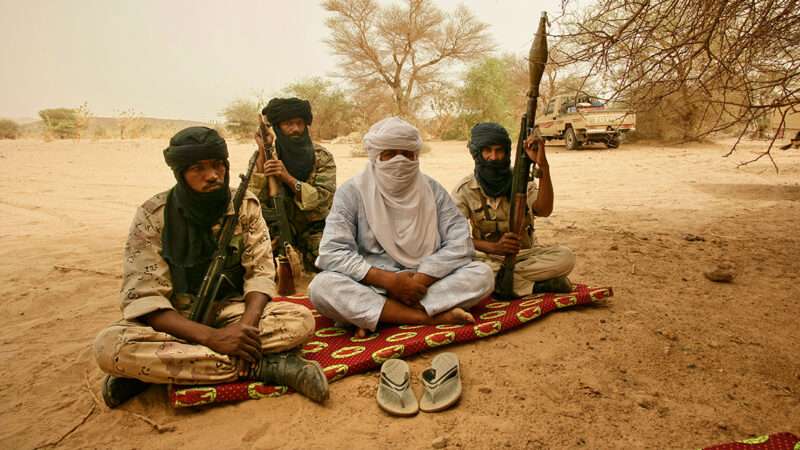
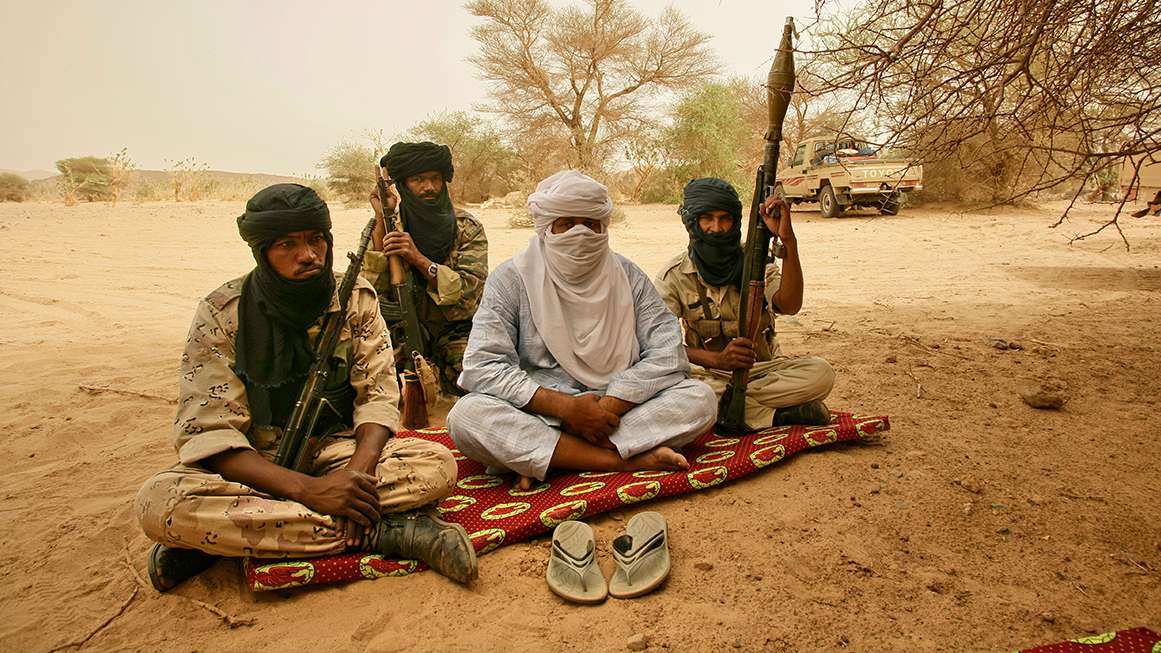
A group of men with head coverings and weapons sit on a run | Photo: Iyad Ag Ghali; Patrick Robert/Corbis/Getty

The first state to be ruled by Al Qaeda might not be in Afghanistan or the Arab world—and its ruler might be a former whiskey-drinking rock star. In April, the Group for the Support of Islam and Muslims ("JNIM" in Arabic) led an uprising in the African nation of Mali, killing Defense Minister Sadio Camara, breaking open a prison holding thousands of inmates, and besieging Bamako, the capital. The fighting was still underway as of August.

Mali is not the only place threatened by a JNIM takeover. The West African branch of Al Qaeda is active in a belt of countries known as the Sahel. Its leader, Iyad Ag Ghali, was the former percussionist for the rock band Tinariwen. He now leads a campaign to stamp out the "music of Satan." Perhaps the one saving grace for Sahelian metalheads is that puritans can't get along with each other: The JNIM is locked in a war with the rival Islamic State Sahel Province.

The Sahelian civil wars are a testament to the failure of the global war on terror. Despite spending $355 billion on African counterterrorism from 2001 to 2021, the U.S. government has been unable to stop Al Qaeda or related Islamist groups from taking root across the continent. A study by the Pentagon's Africa Center for Strategic Studies found a 101,300 percent increase in terrorism fatalities from 2002 to 2022, mostly concentrated in the Sahel and Somalia.

These wars demonstrate that the solution to terrorism isn't maximum violence. President Donald Trump launched four times as many airstrikes against Somalia in his first 18 months of his second term as the U.S. did over the past four years combined. U.S. military aid has flowed to repressive governments across Africa with little respect for their citizens' rights. Since 2020, there have been coups d'etat across the Sahel by military men promising that they can do the dirty work that civilian leaders are afraid of. Many of them were trained by the U.S. government. The new regimes have imported Russian mercenaries with a reputation for brutality and no real restraints on their activities.

"People need to forget about the question of democracy," Ibrahim Traoré, leader of Burkina Faso, declared in April.

Instead of restoring order, these heavy-handed tactics have caused more chaos. The military juntas in the Sahel are plainly losing to the JNIM. While the Russian fighters have no difficulties massacring civilians or mutilating prisoners, they have found it much harder to face people who can actually shoot back, facing repeated battlefield humiliations. Meanwhile, the U.S.-led campaign against al-Shabab, the Somali branch of Al Qaeda, has stalled out despite the heavier use of airpower.

The African war on terror began shortly after the U.S. campaigns in Afghanistan and Iraq. To some extent, the U.S. created the very threats that it is trying to fight in Africa. Somalia had been at civil war since the fall of socialism, and in the early 2000s, the CIA began funding Somali warlords to stop the rise of Islamist revolutionaries. The (relatively moderate) Islamic Courts Union took over anyway in 2006—uniting Somalia for the first time in more than a decade—and the U.S. encouraged neighboring Ethiopia to invade. When al-Shabab emerged to fight the Ethiopian invaders, the U.S. tapped a former leader of the Islamic Courts Union to lead a new Somali government.

Soon after the Ethiopian-Somali war, President George W. Bush created the Pentagon's Africa Command, and Congress budgeted $500 million in aid to militaries in the Sahara Desert and the Sahel. At the time, the main Islamist threat to that region was a mostly defeated insurgency in Algeria.

But the Libyan civil war in 2011 created terrible new monsters. Soon after President Barack Obama intervened in support of the Libyan revolution, weapons and hardened fighters from Libya flooded the ethnic Tuareg region of Mali, which declared independence a few months later. Soon after, Al Qaeda and its affiliates took over the Tuareg rebellion. With the Malian government coming close to collapse, France intervened in January 2013 and made many of the same mistakes that the U.S. did in its own war on terror.

Ag Ghali, the current leader of the JNIM, got his start as a Tuareg nationalist. A leaked U.S. embassy cable from 2008 called him a "proverbial bad penny" who enjoyed "playing both sides" and had ties to Islamist and secular nationalist rebels. By the time of the French intervention, he was fully committed to Islamic theocracy. In 2017, he united Islamist rebels across the Sahel under the banner of Al Qaeda. That same year, four U.S. Special Forces troops were killed in Niger by the Islamic State group, which was busy uniting Ag Ghali's rivals.

Despite the failures of the Sahelian governments to stop Ag Ghali—and their willingness to ally with Russia—the Trump administration is eager to double down on supporting them. The U.S. government increased intelligence sharing with Mali in 2025, and as of July it was considering a direct military intervention against the JNIM, according to The Washington Post. But every American escalation on the continent has produced the enemy that the next one had to fight.

The post America Is Spending Billions To Fight the War on Terror in Africa. The Terrorists Are Winning. appeared first on Reason Magazine.

  •  

L’asino Marcello fa troppo “rumore” e divide il paese: i potenti ragli, l’esposto e la petizione. Il 7 novembre si decide il suo destino e intanto diventa una star tv

Nei giorni in cui l’Italia discute di tutto, c’è un protagonista che non parla ma si fa sentire benissimo. Si chiama Marcello, è un asino e il suo “difetto”, almeno per qualcuno, è quello di ragliare. Un verso che a Gargallo, piccolo comune collinare del Novarese, è diventato il centro di una disputa che ha superato di slancio i confini del paese. Lo riporta La Prealpina.

Marcello è un asinello di quasi quattro anni arrivato dalla Valsesia. La sua storia comincia a Scopello, dove viveva prima di essere adottato da una famiglia: Mattia, Chiara e lo zio Orlando. A Gargallo, un paese collinare vicino a Borgomanero, noto per l’agricoltura e per la produzione di miele, ha trovato un prato e una routine fatta di passeggiate e visite. Nel terreno, raccontano le cronache locali, può muoversi liberamente mentre bambini, famiglie e passanti si fermano a salutarlo, e il suo menu è fatto di carote, finocchi e mele.

IIl guaio, per alcuni, è la colonna sonora di Marcello. I ragli hanno spinto alcuni cittadini a presentare un esposto in Comune perché le autorità intervenissero per allontanare l’animale. Da una parte ci sono dunque i residenti che chiedono più tranquillità, dall’altra chi si è affezionato a Marcello al punto da considerarlo parte della comunità. Il confronto, come spesso accade, è presto uscito dai tavoli istituzionali per approdare sui social e in televisione.

L'articolo L’asino Marcello fa troppo “rumore” e divide il paese: i potenti ragli, l’esposto e la petizione. Il 7 novembre si decide il suo destino e intanto diventa una star tv proviene da Il Fatto Quotidiano.

  •  

US arms supplied to Ukraine found in war-torn Sudan – Moscow

RT | October 15, 2026

Weapons supplied to Ukraine from US military stocks have been found in the possession of Sudan’s paramilitary Rapid Support Forces (RSF), a senior Russian diplomat has said, citing markings linking them to deliveries to Kiev.

Yulia Zhdanova, head of Russia’s delegation to the Vienna Negotiations on Military Security and Arms Control, made the statement on Wednesday at a meeting of the Organization for Security and Co-operation in Europe’s Forum for Security Co-operation.

Sudanese troops recovered MK19 automatic grenade launchers, M72 anti-tank weapons, and Swedish-made AT4 launchers during an operation near Bara, she said, according to TASS. “A preliminary examination of the markings revealed that these weapons were donated to the Ukrainian Armed Forces in December 2024 from US military stock,” Zhdanova said.

Sudan’s army and the RSF have been at war since April 2023, forcing millions from their homes and exposing civilians to bombardment, hunger, and widespread abuses. In June last year, Sudanese Foreign Ministry official Muhammad Al-Sirr told RT that Ukraine was supplying drones to the paramilitary forces at very low prices and helping its fighters use the technology to strike Sudanese infrastructure.

Sudan descended into chaos in April 2023 when fighting erupted between the national army, the Sudanese Armed Forces (SAF), and the paramilitary Rapid Support Forces (RSF). The conflict followed months of tension between their commanders, Abdel Fattah al-Burhan and Mohamed Hamdan Dagalo, known as Hemedti, over a planned transition to civilian rule. What began in the capital, Khartoum, as a power struggle has devastated the country, killing tens of thousands, displacing millions, and pushing parts of Sudan into famine.

Regional and international peace efforts, including African Union mediation and Saudi-US talks in Jeddah, have repeatedly stalled. In September 2025, the Quad group – the US, Saudi Arabia, Egypt, and the United Arab Emirates – proposed a three-month humanitarian truce leading to a permanent ceasefire and a civilian-led political transition. Burhan rejected a subsequent US-led proposal that November, arguing it would dismantle state security institutions while leaving the RSF in place. The paramilitaries said they accepted the truce.

The UAE’s involvement has deepened mistrust of mediation. Sudan’s army-backed government severed diplomatic ties with Abu Dhabi in May 2025, accusing it of supporting the RSF. The UAE denies supplying weapons to the paramilitaries. Relations with Washington deteriorated further in September 2026 after the US questioned both factions’ legitimacy. Sudan rejected the remarks and called for peace efforts free from foreign dictates.

Meanwhile, rival administrations have entrenched Sudan’s divisions. Burhan’s government returned to Khartoum in January 2026 after the army recaptured the capital, having operated from Port Sudan during the fighting. In July 2025, the RSF-aligned TASIS coalition announced a rival government based in Nyala, Darfur, with Dagalo heading its governing council. The UN Security Council and African Union rejected the move.

Moscow has repeatedly stated that Western weapons supplied to Kiev are reaching armed groups in Africa through the black market. Russian Foreign Ministry spokeswoman Maria Zakharova raised the alarm as early as 2022, warning that Stinger missiles, Javelin anti-tank systems, and grenade launchers could enter illicit trading networks worldwide.

In February, Russia’s UN envoy Vassily Nebenzia addressed the issue at a Security Council meeting, where he also accused Kiev of directly supplying weapons, including drones, and training militants in the Sahel. Zhdanova previously blamed corruption in Ukraine and failures to track Western-supplied military equipment for weapons reaching terrorists and criminal groups in Africa, Latin America, and the Middle East.

Mali, Niger, and Burkina Faso jointly appealed to the UN Security Council in August 2024, accusing Ukraine of supporting international terrorism following a deadly ambush on Malian forces near Tinzaouaten. Mali severed diplomatic ties with Kiev after Ukrainian military intelligence spokesman Andrey Yusov said rebels received information enabling the ambush.

Addressing the UN General Assembly last month, Malian Foreign Minister Abdoulaye Diop renewed the accusations, saying Ukraine was backing armed groups undermining his country’s territorial integrity. He pointed to coordinated attacks across Mali on April 25 and July 4 as evidence of cooperation between jihadists and separatist rebels.

Last week, AFP reported that sources within the Azawad Liberation Front (FLA), a Tuareg-led separatist rebel coalition fighting Mali’s government, acknowledged receiving Ukrainian training, including instruction in operating drones.

  •  

Reclaiming States and Value: Recapture of Kidal and Creation of Gold Refineries Across Sahel

Instability in countries that later formed the Alliance of Sahelian States (AES) in security political and economic affairs resulted from perennial interference by the US and France. Military assistance from Russia is helping these countries to regain sovereignty and capture more value from their resources. Mali and Africa Corps reenter Kidal On October 6, 2026, […]
  •  

Mali’s army recaptures town of Kidal

Mali’s armed forces have recaptured the northern city of Kidal following a large-scale military offensive conducted alongside Russia’s Africa Corps. It is a major development in the government’s efforts to restore state control over territory held by armed groups.

The Malian Armed Forces (FAMa) announced that their troops consolidated their operational deployment in Kidal on October 7, 2026, under Operation Dougoukoloko, following several days of airstrikes and coordinated air and ground operations against the Azawad Liberation Front (FLA) and Jama’at Nusrat al-Islam wal-Muslimin (JNIM), an armed group affiliated with al-Qaeda.

In a statement, the military said the operation had weakened the armed groups’ fighting capacity and disrupted their logistical networks.

“As part of the large-scale offensive conducted in the Eastern theater, under Operation DOUGOUKOLOKO, the Malian Armed Forces (FAMa) consolidated their operational deployment in the city of KIDAL on Wednesday, October 7, 2026,” the statement said.

The military added that the offensive followed an intense air campaign and several air-ground operations that had “neutralized several elements belonging to the FLA-JNIM terrorist coalition” and inflicted significant damage on their logistical capabilities.

According to the statement, the operation was conducted by Malian forces and their partners, referring to Russia’s Africa Corps, which has supported Mali’s military authorities in security operations.

The military said the offensive aimed to strengthen security for communities in northern Mali, ensure the free movement of people and goods, reinforce border security, and disrupt the criminal economic activities of armed groups.

“Through this operational dynamic, the FAMa continue their sovereign mission of securing the national territory and protecting civilian populations and their property against abuses by Armed Terrorist Groups,” the statement added.

A strategic city in the conflict

Kidal, long a stronghold of Tuareg separatism, has been at the center of the conflict in northern Mali since 2012. The Malian army first retook the city on November 14, 2023, after more than a decade with almost no state presence there.

That control ended in April 2026. On that day the FLA and JNIM launched near-simultaneous assaults on several cities, including the capital, Bamako, as well as Kati, Mopti, Gao and Kidal. The attacks targeted military installations and strategic sites. Defense Minister General Sadio Camara was among those killed. Malian troops and Africa Corps forces subsequently withdrew from Kidal.

For the transitional government led by General Assimi Goïta, which has made territorial sovereignty its central promise, the recapture is a major symbolic victory.

Mali’s sovereignty and regional security

The recapture comes as Mali continues to pursue a security strategy centered on strengthening its armed forces and working with external partners, particularly Russia, following the deterioration of its relations with several Western governments and the expulsion of French forces.

For the Malian government, securing Kidal is more than a military objective but also a question of national sovereignty. Control of the city would strengthen the state’s position in the north.

In its statement, the military said the operation was intended to provide lasting security for the population, protect civilian property, and restrict the activities of armed groups operating in the region.

The recapture of Kidal does not by itself resolve Mali’s broader security crisis. The Alliance of Sahel States (AES) broadly continues to face security threats and destabilization campaigns from adversaries in its fight to assert sovereignty.

  •  
❌