❌

Reading view

Alaska Senate race shenanigans still don’t justify the DOJ’s lawsuit

Alaska’s Republican governor ordered an investigation into Democrat Mary Peltola’s Senate campaign Wednesday after The New York Times reported her campaign was involved with another person named Dan Sullivan ending up on the ballot alongside Sen. Dan S. Sullivan, the Republican incumbent. That report that Peltola’s campaign attempted to put a finger on the scale provoked a fresh round of outrage from President Donald Trump, and, at first glance, it may have seemed to support an unprecedented lawsuit by the Department of Justice lawsuit to pre-emptively discredit a Peltola victory. But not even Wednesday’s political bombshell justifies the DOJ’s involvement.

There’s a lot to find concerning about the Peltola campaign’s shenanigans, but the federal government has no power to force Alaska to alter its election procedures.

The Peltola campaign denies it did anything untoward, but there’s plenty to be concerned about in the Times’ reporting. According to Peltola’s former campaign manager, who spoke extensively with the Times but retracted her comments before publication, the campaign worked with Senate Democrats’ campaign arm to recruit the second Dan Sullivan to run. The DOJ’s lawsuit to intervene in Alaska’s election in case the incumbent Republican senator loses also leans heavily on the Peltola campaign’s supposedly nefarious moves to confound voters.

But even if there were attempts to confound voters, that doesn’t mean voters will be confounded. The ballot makes exceedingly clear which Dan Sullivan is which. The incumbent Dan S. Sullivan has the word “Incumbent” next to his name and the label “Registered Republican,” and Daniel J. Sullivan Jr.’s name is left unadorned.

And Edward Foley, a law professor and former Ohio solicitor general, explained in an MS NOW essay why concerns of voters accidentally denying the incumbent senator re-election are “significantly mitigated” by the state’s ranked choice voting system.

That doesn’t mean we should entirely disregard the reported shady tactics and condescension from people working to get Peltola elected. At one point, some Democratic strategists seemed to delight in the idea of confusing the public:

In one exchange of text messages obtained by The Times, Peltola advisers seemed to make fun of voters while watching a focus group, surmising the participants would be susceptible to being tricked into voting for a ballot spoiler.

“Do we have a scheme for you,” wrote a consultant for the Peltola campaign. A pollster on the chat wrote that one voter seemed like the perfect audience “for our ballot strategy plan :)”

Despite Gov. Mike Dunleavy’s call for an investigation, and the DOJ’s lawsuit, the Times report makes clear that “ballot-stacking tactics are common in politics and generally considered legal — and have been employed by both parties in Alaska.” But the department’s lawsuit says it has an “obligation to protect the integrity of its election” and, if Peltola wins, wants to block certification “pending an investigation to determine whether votes cast for Daniel J. Sullivan were meant to be cast for Senator Sullivan,” according to their lawsuit.

The DOJ’s suit quotes an initial claim from Carol Beecher, Alaska’s director of the division of elections, that Daniel J. Sullivan wanted to be on the ballot “for the purpose of confusing or misleading voters and compromising the fairness of the ballot.” But now Beecher is firmly against the DOJ’s suit. State lawyers in a motion to dismiss filed Monday argued that the federal government “lacks authority to intervene in state elections at all, much less in support of a favored candidate.”

If anything, in its own efforts to affect the race’s outcome, the DOJ may have jumped the gun.

Nothing in the Times’ report changes that. There may be consequences for Peltola and her campaign staff at the state level. As election law expert Rick Hasen noted, if anyone lied under oath about cooperation between Democrats and Dan J. Sullivan, then there could be cause for a perjury prosecution, but no allegations on that front had arisen as of Thursday afternoon.

Any such testimony would have come from Dan J. Sullivan’s lawsuit to remain on the ballot earlier this year. The Alaska Supreme Court ruled in his favor, allowing him to remain an option for voters. Again, there’s a lot to find concerning about the Peltola campaign’s shenanigans, but the federal government has no power to force Alaska to alter its election procedures.

If anything, in its own efforts to affect the race’s outcome, the DOJ may have jumped the gun. I imagine there would be a lot more willingness to criticize Peltola outright, and a potentially less mixed bag reaction from Alaskans, without the federal intervention. As it stands, the case will still fall flat, and Alaska’s voters will still have their say in who represents them in the U.S. Senate — even if they have to take a few seconds longer to read their ballot.

The post Alaska Senate race shenanigans still don’t justify the DOJ’s lawsuit appeared first on MS NOW.


  •  

Pennsylvania congressional races could hinge on who voters blame for high prices

Democrats are favored to take the House in November, but the size of their potential majority could hinge on a handful of competitive races. Four are in Pennsylvania, where President Trump and Republicans made significant gains in 2024. Now, Democrats are betting that the president's low approval ratings and frustration over high prices will shift the political landscape. Lisa Desjardins reports.

  •  

Senate is skeptical about making daylight saving time permanent despite Trump's pressure

WASHINGTON (AP) — The Senate is unlikely to act before the end of the year on a House-passed bill that would make daylight saving time permanent, defying President Donald Trump and dashing the hopes of Americans who don't like having to change their clocks twice a year. As daylight saving time ends early Sunday and much of the country turns the clocks back an hour, several senators are holding up legislation that would eliminate the...

  •  

DoJ reportedly issues subpoenas over same-name Alaska candidates

Democrat Mary Peltola’s campaign allegedly collaborated with party operatives to confuse voters in midterms

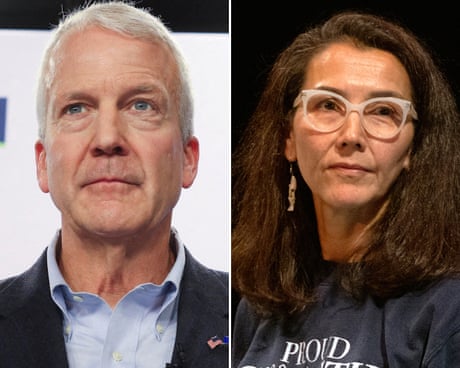
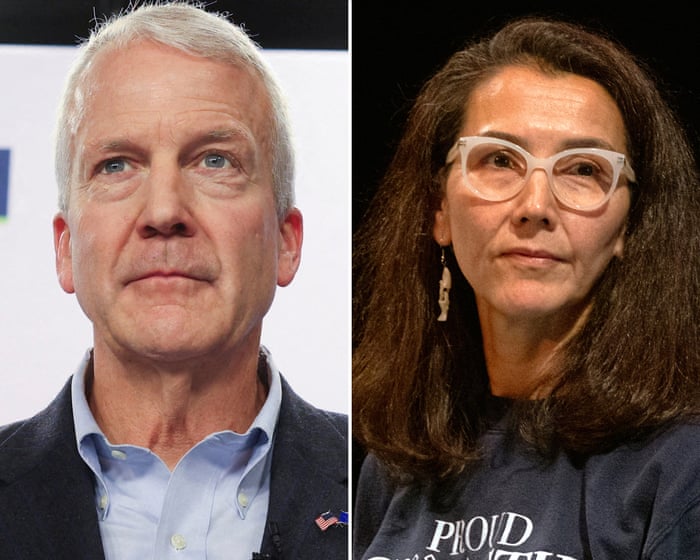
The US justice department on Thursday is reported to have issued subpoenas in response to a report that the Alaska Democrat Mary Peltola’s campaign collaborated with party operatives to get a challenger with the same name as the Republican senator Dan Sullivan on the midterm ballot.

ABC News and the Associated Press reported the subpoenas, citing sources familiar with the matter. The federal investigation comes a day after the New York Times found that the effort to recruit a second candidate named Dan Sullivan in the Senate race set to be decided on Tuesday was led by Peltola’s campaign, which had for months denied involvement.

Continue reading...

© Composite: Getty Images

© Composite: Getty Images

© Composite: Getty Images

  •  

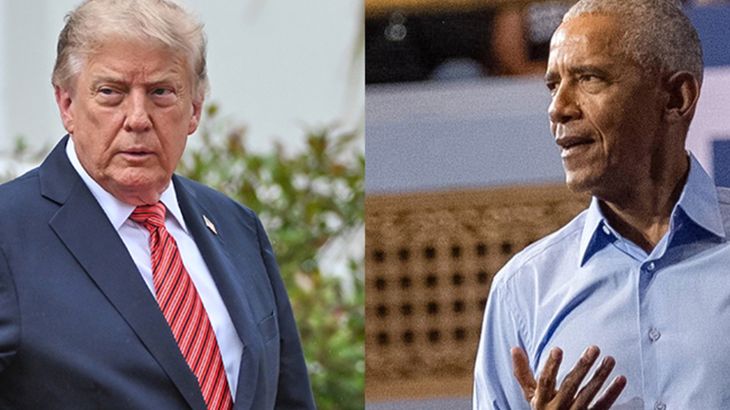
US midterms: Five days left – who leads in the polls as Trump, Obama rally

Democrats lead national polls as Trump and Obama campaign in key states six days before the US midterm elections. See their positions on Israel-Palestine...

  •  

‘Sick of the waste’: Democrats seize on Linda McMahon’s office furniture flap

When Ben Carson led the Department of Housing and Urban Development, he faced a variety of controversies, but one of the most embarrassing involved furniture he bought for his office at taxpayer expense. In one especially memorable congressional hearing, the then-secretary offered a rambling, and at times contradictory, explanation for the spending, initially saying the furniture was necessary in part for “security” reasons, before ultimately blaming his wife.

Around the same time, then-Environmental Protection Agency Administrator Scott Pruitt also spent more than $43,000 to install a soundproof phone booth in his office for reasons that never made any sense.

Nothing of consequence came of the incidents, even if the controversies might have served as cautionary tales for future Cabinet members: It’s best to exercise caution when it comes to public funds and office decor.

It’s a lesson Education Secretary Linda McMahon, who actually served alongside Carson in the first Trump administration, failed to learn. The New York Times reported:

Linda McMahon, the education secretary, plans to spend $43,000 on new furniture for her government office, a work space makeover that comes as she lobbies Congress to shut down her department.

Ms. McMahon’s team has informed Congress that her current furniture is worn out and “cannot be configurationally or aesthetically integrated into the agency’s new office space,” according to Education Department records reviewed by The New York Times that have not been publicly disclosed.

I know effectively nothing about interior design, but I suppose “cannot be … aesthetically integrated” is another way of saying “looks funny.”

The amount of money is notable in its own right, but that McMahon wants to spend money on furnishing an office she doesn’t think should exist adds an element to the story that makes it unavoidably worse.

Two Democratic senators — Patty Murray of Washington, the vice chair of the Senate Appropriations Committee, and Tammy Baldwin of Wisconsin, the ranking member of the Senate Appropriations Subcommittee on Labor, Health and Human Services, Education and Related Agencies — wrote to the secretary this week, pressing her to abandon her spending plans.

“It has come to our attention that as you cut off funding for students, push out staff, and do all you can to illegally dismantle the very department you lead, you plan to spend $43,278.64 on new furniture for your own office,” the senators wrote. “You vowed to put yourself out of a job; now you expect American taxpayers to pick up the tab to refurnish your own office.”

“Secretary McMahon, you have asked students, families, and teachers across the country to endure extraordinarily painful cuts in the name of ‘fiscal responsibility,’ and you have pushed out nearly half of the staff at the Department,” they added. “This year, you have asked Congress to slash funding for important K-12 programs and to cut funding for higher education programs by nearly $5 billion. But it is clear that you do not think that you should have to abide by the same rules you want to apply to others.”

Murray and Baldwin concluded, “The American people are sick of the corruption, sick of the waste, and sick of the hypocrisy coming out of all corners of this administration.”

The Education Department’s press secretary told the Times the agency was “saving taxpayers millions of dollars,” in large part by moving to smaller offices as part of the broader effort to dismantle the department altogether. It’s a line McMahon is likely to repeat the next time she testifies on Capitol Hill.

The post ‘Sick of the waste’: Democrats seize on Linda McMahon’s office furniture flap appeared first on MS NOW.

  •  

Neil Gorsuch called this law a ‘curious animal.’ A new bill would tame it.

One of the nation’s strangest laws is primed for reform in a new bill from Rep. Steve Cohen, D-Tenn., that would bring a dose of logic to federal drug policy.

That unusual law — Supreme Court Justice Neil Gorsuch called it a “curious animal” — is the Controlled Substance Analogue Enforcement Act. Known as the Analogue Act for short, it’s part of the Anti-Drug Abuse Act of 1986, which was rushed into law ahead of that year’s midterm elections by a bipartisan Congress and Republican President Ronald Reagan. Passed in the shadow of high-profile deaths, including that of basketball star Len Bias, the Anti-Drug Abuse Act brought mandatory minimum sentences and a vast disparity in punishment for crack and powder cocaine offenses, respectively.

The Analogue Act separately sought to solve the problem of so-called designer drugs. The problem, as the authorities saw it, was that the law was too specific. Cocaine, heroin and other drugs were illegal because they were listed under the Nixon-era Controlled Substances Act’s drug schedules. But nothing was stopping underground chemists from tinkering with listed substances to produce new ones that the law didn’t capture. Congress could ban novel drugs as they appeared on the illicit market, but that took time and would only apply going forward. Bad actors went unpunished in the meantime, so the government thinking went.

As I laid out in my book, “Bizarro,” on the inside story of the Analogue Act and one of the most peculiar cases it spawned, law enforcement was tired of playing catchup in the cat-and-mouse game. It wanted to go on offense. The result was the Analogue Act, which expanded federal drug law to say that any substances “substantially similar” to already illegal ones like cocaine, heroin and others on the most restricted drug schedules were illegal, too.

‘Curious animal’

In solving one problem, the Analogue Act confronted another: the Constitution.

Due process means that people need notice of what’s legal, so they can live their lives accordingly. Yet the act’s substantial-similarity test outlawed a potentially infinite number of substances with a vague, unscientific standard. Whether that standard is satisfied in a given case depends on whether prosecutors can convince juries that one substance is “substantially similar” to another. The ambiguous test has led to conflicting verdicts in different cases involving the same substance.

Even the Drug Enforcement Administration’s chemists haven’t always agreed among themselves about which substances qualify as analogues. If the government’s own experts can’t agree about what’s legal, how can people subject to the law be expected to know?

Judges appointed by Republican and Democratic presidents alike have questioned the act’s constitutionality. Notable among them is Gorsuch. Before President Donald Trump appointed him to the Supreme Court in 2017, the jurist called the act a “curious animal” in a 2015 ruling when he was on the Denver-based appeals court. Gorsuch deemed the “substantially similar” test’s meaning an “open question,” as he wondered whether it gives citizens fair notice.

Neil Gorsuch and Donald Trump look at each other.
Judge Neil Gorsuch, left, shakes hands with President Donald Trump on Jan. 31, 2017, at the White House.Carlos Barria / Reuters

But even since he joined the high court, the justices have refused to consider a petition attacking the Analogue Act. The court’s lack of interest effectively has left the matter with Congress.

Taming the animal with an ‘and’

Enter the new bill announced by Cohen, who has criticized the drug war during his nearly two decades in the House. The Democrat isn’t running for re-election this year, after Tennessee Republicans passed a congressional map, backed by recent Supreme Court rulings, that splintered his Memphis base in what was the state’s only majority-Black district.

Cohen’s “Public Health and Research Reforms in Controlled Substances Act” would, as its name suggests, shift drug law from a punitive approach to one centered on public health, with a revamped scheduling system, scientific research promotion and other measures.

Its analogue amendment wouldn’t overturn the constitutionally suspect “substantially similar” test, but it would address one of its ridiculous aspects.

To understand the fix, it’s necessary to know what the act says currently. It has three sections that define what a controlled substance analogue is, according to its 1) structure, 2) effect and 3) represented effect. It defines an analogue as a substance:

i) the chemical structure of which is substantially similar to the chemical structure of a controlled substance in schedule I or II;

ii) which has a stimulant, depressant, or hallucinogenic effect on the central nervous system that is substantially similar to or greater than the stimulant, depressant, or hallucinogenic effect on the central nervous system of a controlled substance in schedule I or II; or

iii) with respect to a particular person, which such person represents or intends to have a stimulant, depressant, or hallucinogenic effect on the central nervous system that is substantially similar to or greater than the stimulant, depressant, or hallucinogenic effect on the central nervous system of a controlled substance in schedule I or II.

Beyond the vagueness at the heart of the term “substantially similar,” a key issue is the language in between each section. There’s an “or” in between the second and third sections on effect and representation, but there’s nothing in between the first and second sections on structure and effect. A draft version of the 1986 law had an “and” in between those first two sections, which would have clearly meant that, to qualify as an analogue, at least a substantially similar chemical structure was required.

It’s unclear why the “and” didn’t make it into the final version of the Analogue Act. But its omission has prompted an outlier legal argument that prosecutors only have to prove one of the three prongs: structure, effect or representation of effect. The consequences of that reading are extreme, because if only representation is required (regardless of what the substance actually is or does), then people can serve decades in prison for selling something that isn’t similar to a scheduled drug at all.

What an appeals court called an “absurd” example of that phenomenon arose in a prosecution against people who sold a mixture of candle wax and flour under the pretense that it was crack/cocaine. “The treatment of candle wax and flour, no matter how it is marketed, as a schedule I controlled substance is an ‘absurd’ result of the kind our canons of construction instruct us to avoid,” the Philadelphia-based court said in a 2003 case, reversing a district court that ruled otherwise.

Yet the concern over that absurdity was not relegated to history. Just a few years ago, a San Francisco-based appeals court suggested that the act could still be used to achieve such an outlandish outcome. Even the government wasn’t pressing for that aggressive interpretation, so the court didn’t feel bound to embrace it in that case.

But if the Analogue Act stays on the books as is, courts could keep reaching “absurd” results in future cases.

‘Open question’

Cohen’s proposed legislation would prevent that absurdity by adding the “and.” Had it been there at the time of the wax-and-flour case, the district court would have had to side with the defense, because even if the mixture was marketed as crack, its chemical structure was not substantially similar to crack by any reasonable measure.

The dome of the Capitol and a yellow sign are seen in the background as Steve Cohen speaks in the foreground.
U.S. Rep. Steve Cohen (D-Tenn.) speaks during a press conference on April 20, 2026, outside the U.S. Capitol.Anna Moneymaker / Getty Images

To be sure, the new bill’s analogue amendment wouldn’t solve the due process problem inherent in the “substantially similar” test; that could probably only be done by overturning the act entirely. Still, the bill would bring a dose of logic that has been missing for four decades.

Whether that modest measure has the votes to become law with today’s Congress and White House is, as Gorsuch put it in 2015, an “open question.” But even if this bill doesn’t pass, it’s an important question to keep asking.

Subscribe to the Deadline: Legal newsletter for expert analysis on the top legal stories of the week, including updates from the Supreme Court and developments in the Trump administration’s legal cases.

The post Neil Gorsuch called this law a ‘curious animal.’ A new bill would tame it. appeared first on MS NOW.

Judge Neil Gorsuch, left, shakes hands with President Donald Trump, after President Trump nominated Gorsuch to be an associate justice of the U.S. Supreme Court, on Jan. 31, 2017, at the White House.

U.S. Rep. Steve Cohen (D-TN) speaks during a press conference on April 20, 2026, outside the U.S. Capitol.
  •  

Eyeing Alaska, Trump and Republicans pick a fight over campaign mischief they can’t win

For the past several weeks, Republicans worried about the outcome of Alaska’s U.S. Senate race have focused on one aspect of the contest above all others: the fact that there are two Dan Sullivans on the ballot.

After months of arguments, a state judge in Alaska ruled in late June that retired teacher Dan J. Sullivan could run against incumbent Republican Sen. Dan S. Sullivan, and a few months later, after the first round of balloting, state election officials finalized the top four candidates for Alaska’s unique system. Both Dan Sullivans advanced to the general election.

This has generated all kinds of allegations that the Democratic nominee, former Rep. Mary Peltola, and her allies coordinated behind the scenes to get the other Sullivan onto the ballot. The candidate and her team repeatedly said they weren’t involved, but The New York Times published a report Wednesday that called those denials into question. From the article:

The Peltola campaign has repeatedly denied any involvement in his candidacy. But The Times has found, based on interviews and text messages, along with documents prepared for a potential lawsuit against the campaign, that not only did Ms. Peltola’s team work with people trying to recruit Mr. Sullivan to run for Senate, but the effort was much broader. The group worked to coax other would-be spoilers into the race, to dilute the incumbent’s support and help catapult the Democrat to victory.

Not surprisingly, Republicans who were already worked up about the allegations when there was no evidence became apoplectic in response to the newspaper’s report. Donald Trump published four separate rants to his social media platform, for example, each of which alleged unidentified crimes, called for Peltola’s disqualification or both. Around the same time, the president told reporters that the Democratic nominee “should resign,” and at a Wednesday night rally in Ohio, he also called for her prosecution.

On Thursday morning, Trump hedged on whether Peltola should be allowed to serve in the Senate, even if Alaskans elect her.

Other Republicans went down a similar path. Incumbent Alaska Gov. Mike Dunleavy ordered an investigation into whether Peltola’s campaign should face criminal or civil penalties; Attorney General Todd Blanche scurried to Fox News to accuse Democrats of “cheating”; House Oversight Committee Chairman James Comer launched a congressional investigation; and even Sen. Lisa Murkowski, who’s generally been friendly with Peltola, complained of “a culture of deception.”

For now, it’s fair to say that there are legitimate questions about what transpired, though they don’t yet have definitive answers. That said, even if the allegations are true, it’s important not to lose sight of the relevant details.

There’s a qualitative difference between genuine electoral scandals and routine campaign mischief. Asking an official who oversees a state elections system to “find” 11,780 votes that don’t exist is disgraceful on a historic scale, but looking for candidates with names similar to an opponent is a tactic with a deep American pedigree. It’s common enough to have earned a familiar name: ballot-stacking.

That’s not to say it’s a good thing. It’s not. But both parties have utilized this strategy for generations — there’s a classic story from 1946 about John F. Kennedy’s first congressional primary, which included two men named Joseph Russo — and it’s never been the subject of hysterics, Justice Department prosecutions or federal investigations.

The same is true of campaign mischief in general. Republicans, including one of Trump’s own lawyers, tried to help Kanye West qualify for the presidential ballot in 2020, as part of a dumb trick. GOP operatives did the same thing in the 2024 race, trying to boost Cornel West’s independent presidential campaign as part of an effort to improve Trump’s chances.

Even in the Sullivan-Peltola race, the Senate Republicans’ top super PAC has invested in a Green Party candidate from Arizona — not because it supports his candidacy, but because it’s playing a cheap electoral game.

Similar tactics have been common in Alaska for a while, including in 2010, when some of Murkowski’s critics encouraged people with similar names to register as write-in candidates.

Again, if members of Team Peltola denied involvement in a scheme they were involved in, they’ll deserve to be criticized for underhanded campaign tactics. But to pretend that the latest apparent instance of ballot-stacking is some kind of hair-on-fire scandal is a mistake.

The post Eyeing Alaska, Trump and Republicans pick a fight over campaign mischief they can’t win appeared first on MS NOW.
  •  

Libertarians challenge Trump-backed Republicans, look to shake up midterms beyond GOP-Dem duopoly

In the American political scene dominated by the GOP-Democrat duopoly, Libertarians like Kentucky congressional candidate Jeremy Todd are looking to offer voters an alternative as they head to the polls during the midterm elections.

"I think ultimately the Republican Party has abandoned… true conservatism, small government principles," Todd told Fox News Digital this week, asserting that "they may be more conservative than Democrats, but, to us true conservatives, that's not good enough."

Todd, who views himself as "right of MAGA," mounted his long-shot U.S. House bid after Rep. Thomas Massie lost the Republican primary in Kentucky's 4th Congressional District to Trump-backed former Navy SEAL Ed Gallrein. Democratic congressional candidate Melissa Strange is also running in the contest.

"We are welcoming people who are conservative, who believe in small, limited government, to my campaign and then to a larger movement that is probably gonna need to exist post the downfall of the Republican Party," Todd said.

Former National Counterterrorism Center Director Joe Kent, who quit his post earlier this year due to his opposition to the Iran war, and former Rep. Ron Paul, have both backed Todd.

TRUMP-BACKED CANDIDATE ED GALLREIN CALLS KENTUCKY WIN A 'DAVID VS. GOLIATH' VICTORY AFTER DEFEATING MASSIE

In a Pew Research survey of U.S. adults released earlier this month, 5% of registered voters indicated that they would vote for another candidate other than the GOP and Democratic candidates in the U.S. House race in their district, while 15% were not sure about how they would vote. The poll, carried out Sept. 28-Oct. 4, had a margin of error among registered voters of plus or minus 1.8 percentage points.

Todd is not the only Libertarian running this election cycle looking to make an impact — but no candidate running under the Libertarian Party has ever been elected to the U.S. Congress.

Former Rep. Justin Amash of Michigan, who switched from Republican to Independent and then to Libertarian during his final term, became "the first LP member to serve in Congress," according to the Libertarian National Committee — but Amash, who served in the House for a decade, won all of his elections as a Republican.

Libertarian candidate Ted Brown is on the ballot for the 2026 Texas U.S. Senate race that features Trump-backed state Attorney General Ken Paxton and Democratic state Rep. James Talarico.

NOT EVEN SKY HIGH GAS PRICES OR THE IRAN WAR WILL STOP TRUMP SUPPORTERS VOTING MAGA

Brown earned only about 2.36% of the vote in the 2024 Texas U.S. Senate contest won by incumbent GOP Sen. Ted Cruz. He dismissed the criticism he says he gets regularly from Republicans that he is merely spoiling Paxton’s chances.

"They could avoid that problem by nominating a better candidate," Brown said, noting that he delivers the same message to Democrats.

"You can’t spoil a system that’s already rotten," Brown stated. "There are a lot of people making a protest vote, and there’s good reason to."

Bill Redpath, a former Libertarian National Committee (LNC) chair who is currently listed as an at-large LNC representative, is running in the special Ohio U.S. Senate race where Trump-backed Republican Sen. Jon Husted faces former Sen. Sherrod Brown, a Democrat.

Redpath earned less than 2% of the vote in a 2022 Illinois U.S. Senate bid.

Todd, while speaking to Fox News Digital, urged voters not to "buy into the lesser of two evils talk. Make sure you get out there and vote and give us a real shot because we can win this."

GOP REP THOMAS MASSIE INTRODUCES 8 ARTICLES OF IMPEACHMENT AGAINST WAR SECRETARY PETE HEGSETH

Todd, who supports Massie's bid to impeach War Secretary Pete Hegseth and the congressman's push to pass the Epstein Files Transparency Act II, is a fiscal hawk who advocates slashing government spending to address the much-discussed "affordability" issue.

"The affordability crisis is not a hoax," he said, suggesting that younger individuals particularly face this "stark reality."

"The only answer is we've got to cut government spending so that we stop money printing, so that we stop debasing and devaluing the currency and their wages have an opportunity to catch up. That's ultimately what's happening is we're printing money faster than wages can keep up with and it's kind of left an entire generation behind to the benefit of asset holders," Todd said.

"The easiest way you can cut government spending is get out of these stupid conflicts. We should not be paying billions of dollars to Ukraine to fight Russia. We should not be paying billions of dollars to come to Israel's defense," Todd asserted. "And last but not least, we should get out of this conflict in Iran. Just leave."

WHY THE HOUSE LET OUT EARLY IS A MATTER OF DEBATE AFTER JOHNSON SAYS CHAMBER HAS 'DONE ITS WORK'

In a Sunday post on X, Todd called President Donald Trump "a warmonger."

During the Fox News Digital interview, Todd credited Trump with forging "the greatest coalition we've maybe ever seen in politics," noting that Trump delivered a speech at the Libertarian National Convention in 2024 to appeal to the voting bloc.

"We believe that the job of the United States military is not to wage endless regime-change wars around the globe," Trump told that Libertarian gathering in 2024, but "to defend America from attack and invasion here at home."

Todd said since delivering that speech, Trump has gone "back on all but essentially one of the promises, which is border security."

"We've not gotten deportations to the level that we wanted. We've gotten into another stupid and maybe the biggest and most ridiculous Middle Eastern conflict," Todd said.

MTG SAYS GOP'S FUTURE 'DESTROYED' AFTER TRUMP-BACKED PRIMARY CHALLENGER DEFEATS THOMAS MASSIE

The White House did not respond to Fox News Digital's requests for comment.

In a statement provided to Fox News Digital, Republican National Committee national press secretary Natalie Baldassarre declared, "President Trump has endorsed Ed Gallrein, a Navy SEAL and fifth-generation farmer who will represent the needs of working families in Congress. Republicans are focused on electing America First Republicans in Kentucky and around the country."

GOP FISCAL HAWK SOUNDS ALARM ON 'OUT OF CONTROL' FEDERAL SPENDING, SAYING 'BOTH PARTIES HAVE FAILED US'

Trump, who has been traveling to various states to campaign for Republican candidates amid midterm election season, rallied in Kentucky's 4th Congressional District earlier this month, blasting Massie as "the worst."

Fox News Digital reached out to Massie to find out whether he'll vote in the congressional race, and, if so, how he will cast his ballot.

"I won't be voting for the AIPAC candidate," Massie tersely texted Fox News Digital, referring to the American Israel Public Affairs Committee.

Reports indicate that millions in AIPAC-linked funds were poured into the primary, with The New York Times saying, "This year, one of the group’s most high-profile wins was the ouster of Mr. Massie, a seven-term congressman who has called for ending military aid to Israel."

EX-HOUSE FREEDOM CAUCUS CHAIR SAYS GOP ISN'T 'A CONSERVATIVE PARTY ANYMORE,' BUT DEMOCRATS ARE 'WORSE'

CLICK HERE TO DOWNLOAD THE FOX NEWS APP

AIPAC did not provide comment to Fox News Digital for this report.

The Gallrein campaign responded to Fox News Digital’s request for comment on Massie with the following statement: "It is tragically fitting that his last act as congressman would be to once again, turn his back on his district and his party by siding with radical Democrats. This is exactly why voters fired him in May."

In an interview with a local news station, Todd said he would never run against Massie, but now, he’s "running for him."

The Associated Press contributed to this report

  •  

Little-known rule could stop socialists from being sworn into Congress

A little-known congressional maneuver could block members of the Democratic Socialists of America (DSA) from being sworn in as members of the House of Representatives next year, even if they win their elections on Tuesday.

Members-elect must swear an oath to uphold the Constitution before they can become full members of the House. At the beginning of a new Congress, that oath is typically taken en masse by all 435 members, led by the House speaker.

But an argument circulating in conservative circles posits that any member-elect can challenge another member-elect's right to be sworn in, provided they have compiled evidence that that person would not uphold their oath. That would then lead to House-wide deliberations followed by a vote on whether that member-elect has a right to be sworn in.

In the case of DSA members, one potential argument could be the group's platform calling to scrap the current U.S. Constitution and draft a new one. Several DSA members and self-proclaimed democratic socialists have already won primaries across the country.

SPEAKER JOHNSON REJECTS 'NONSENSE NARRATIVE' THAT GOP WILL REFUSE TO SEAT DEM WINNERS

Rep. Keith Self, R-Texas, suggested to Fox News Digital that he could invoke the maneuver.

"You cannot swear an oath to support and defend the Constitution while actively working to destroy it. The oath of office is not just words you say at a ceremony. It is a belief. It is an oath to our country and our fellow countrymen," Self told Fox News Digital. 

"The House has both the authority and the duty to ensure that anyone who takes that oath does so in good faith, without mental reservation or purpose of evasion. As DSA candidates and the Red-Green Alliance gain ground, we must enforce the Constitution as written or risk allowing people committed to replacing it to take seats of power under false pretenses."

The "Red-Green Alliance" is a term used on the right to describe cooperation between far-left groups and radical Islamic organizations or operators.

"Anyone who has personally embraced the destruction of the Constitution has no business being sworn in to uphold it," Self said.

GOP LAWMAKER URGES JOHNSON TO SCRUTINIZE NEW SOCIALIST LAWMAKERS' 'ACCESS TO INTELLIGENCE'

According to an analysis by the Center for Renewing America, a challenge to a member-elect's fitness to take the oath of office can be followed by the House speaker asking them to step aside while the debate begins.

"The objecting member should place the documentary record before the House, and the House should debate whether that evidence establishes that the member-elect remains committed to destroying the constitutional order," the group's analysis said.

The House would then vote on a resolution that "establishes the member-elect’s commitment to destroying the constitutional order," which, if passed, could stop them from being sworn in.

The theory relies on a number of variables. For example, if House Minority Leader Hakeem Jeffries, D-N.Y., is elected speaker, he could decide to dismiss the challenge altogether. Speaker Mike Johnson, R-La., could do the same if he so chooses if Republicans keep their majority.

Johnson told reporters as much during an event this month in Iowa, calling the idea of him refusing to seat elected Democrats a "nonsense narrative" and vowing, "We are going to follow the law."

It would also raise questions about challenging the will of the people who elected that person to represent them.

TENSIONS ERUPT IN HOUSE HEARING AS GOP ADVANCES ANTI-SOCIALISM RESOLUTION WHILE DEMS RAGE: 'SILLY SEASON'

Such a move would also be in direct conflict with Supreme Court precedent, meaning it is virtually guaranteed to be relitigated.

The 1969 case of Powell v. McCormack ruled that the House cannot exclude an elected candidate from being sworn in if they otherwise meet the constitutional requirements of age, residency, and U.S. citizenship.

HOUSE DEMS OVERWHELMINGLY REJECT ANTI-SOCIALISM RESOLUTION AFTER 2 MODERATES DEFY JEFFRIES

It comes after Adam Clayton Powell Jr., then a senior lawmaker representing New York as a Democrat, was refused his oath of office by the House speaker after winning again in 1966. Powell Jr. had been embroiled in multiple financial scandals at the time.

The House then adopted a resolution barring him from taking his seat, a decision that was ultimately overturned by the Supreme Court.

But that has not stopped Republicans from considering the idea of revisiting the move.

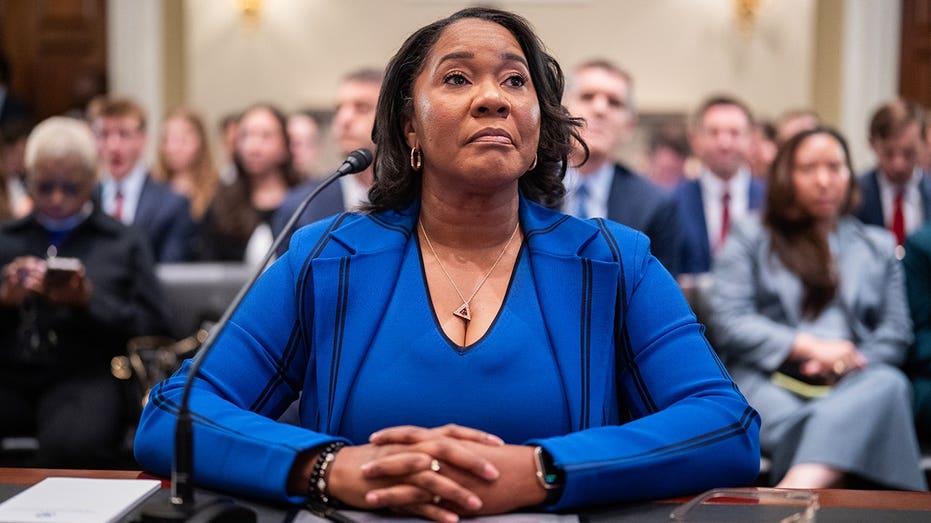
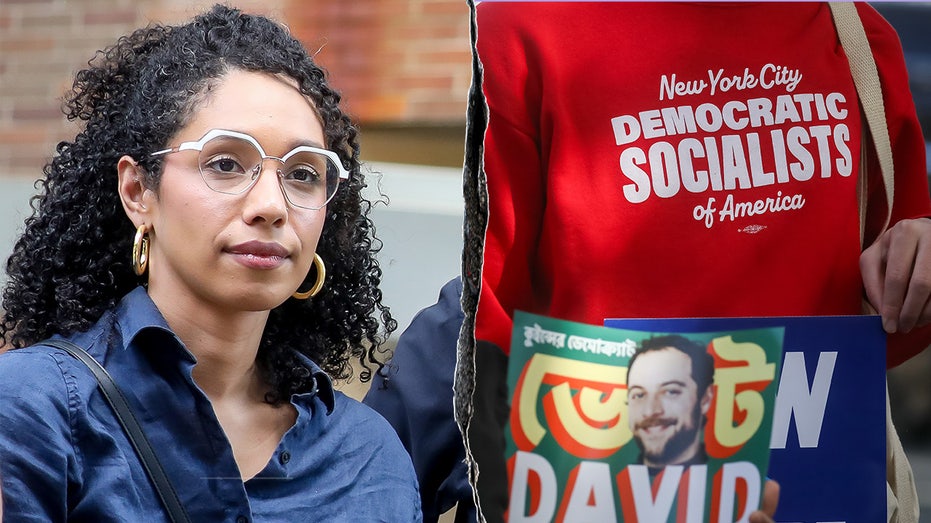
Rep. Tim Burchett, R-Tenn., told the New York Post earlier this month that he would use the maneuver to try to block Darializa Avila Chevalier from joining Congress next year.

Chevalier, whose upset victory unseated a senior House Democrat, is from a deep-blue district and is almost certainly going to win her general election next week.

Burchett told the Post that he intended to declare her ineligible to take the oath over a now-deleted X post from 2019 in which she boasted about wiping her hands on the American flag because she did not have a napkin.

CLICK HERE TO DOWNLOAD THE FOX NEWS APP

Whether the efforts succeed, the threats underscore the partisan rancor that's taking shape even before the new Congress is formally selected in next week's midterms.

  •  

GOP’s Moreno targets El-Sayed with a religious test that even many Republicans can’t pass

The closer we get to Election Day, the more hysterical Republican rhetoric has become when targeting Abdul El-Sayed, the Democratic U.S. Senate nominee in Michigan. Donald Trump, predictably, has helped lead the slanderous charge, condemning the candidate as a “jihadist” who “should not be allowed to serve in our Senate.”

As is too often the case, the rest of the party has followed the president’s lead and headed for the gutter. Sen. John Kennedy of Louisiana said El-Sayed “sleeps in a bin Laden jersey.” Health and Human Services Secretary Robert F. Kennedy Jr. campaigned in Michigan this week and thought it would be good idea to trash the scientific and literary accomplishments of a half-billion Arab Muslims. Sen. Ted Cruz of Texas this week explicitly said that “there is a very real risk that Americans will die” if El-Sayed is elected and serves on the Senate Intelligence Committee.

But it was something Republican Sen. Bernie Moreno of Ohio said during a Wednesday night rally that stood out as unusual.

Moreno: "Rogers is in a race w/ somebody that is an affront to me as an American. El-Sayed can be nowhere near DC. Do you think he understands that concept that our rights come from God Almighty? That Jesus came here for our salvation? He should be nowhere near DC & Rogers is going to kick his ass."

— Aaron Rupar (@atrupar.com) 2026-10-28T22:56:58.048Z

Making the case to Buckeye State voters who can’t cast ballots in Michigan’s Senate race, the GOP senator suggested that El-Sayed should be disqualified from serving in the chamber because he does not accept divinity of Jesus Christ.

“This character, Abdul El-Sayed, can be nowhere near Washington, D.C.,” Moreno said. “Do you think he understands that concept, that our rights come from God Almighty? That Jesus came here for our salvation? He should be nowhere near Washington, D.C., and [Republican candidate] Mike Rogers is going to kick his ass on Tuesday.”

So, a few things.

First, whether Moreno understood this or not, he was speaking at a rally that was intended to generate support for the GOP ticket in Ohio — a ticket led in part by Vivek Ramaswamy, the Republicans’ gubernatorial candidate, who is Hindu.

Second, when Moreno was sworn in as a senator, he swore to support and defend the Constitution, which includes Article VI, clause 3 — a provision that says “no religious Test shall ever be required as a Qualification to any Office or public Trust under the United States.”

And third, as Moreno really ought to know, roughly 1 in 3 Americans are not Christians, and the idea that they should be disqualified from congressional service because of their beliefs is plainly insane. Indeed, let’s not forget that there are Jewish Republicans in Congress and the White House Cabinet who would disagree with the senator’s belief that that “Jesus came here for our salvation.”

If Republicans want to try to influence the outcome of Michigan’s race, fine. That’s a normal part of the political discourse. But I’d be interested in knowing how many other Republicans agree with Moreno’s suggestion that religious minorities should be excluded from serving in the Senate.

The post GOP’s Moreno targets El-Sayed with a religious test that even many Republicans can’t pass appeared first on MS NOW.

  •  

Most voters say enthusiasm to cast midterm ballots higher than previous elections: Survey

Most American voters say they have a higher level of enthusiasm for casting their ballots this year versus prior elections, according to a new poll. In the Gallup survey, 56 percent of respondents said they were “more enthusiastic about voting than usual,” while 30 percent said they were “less enthusiastic” and 11 percent were “as…

  •  

Trump's Mandatory Immigration Detention Policy Fails the Textualist Test

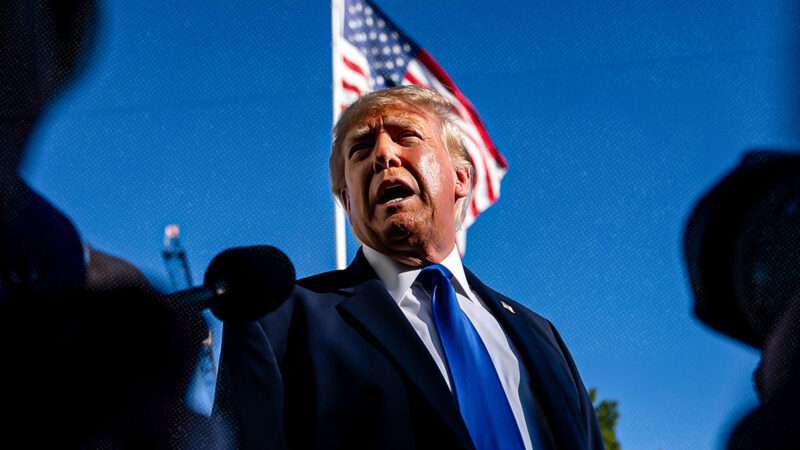
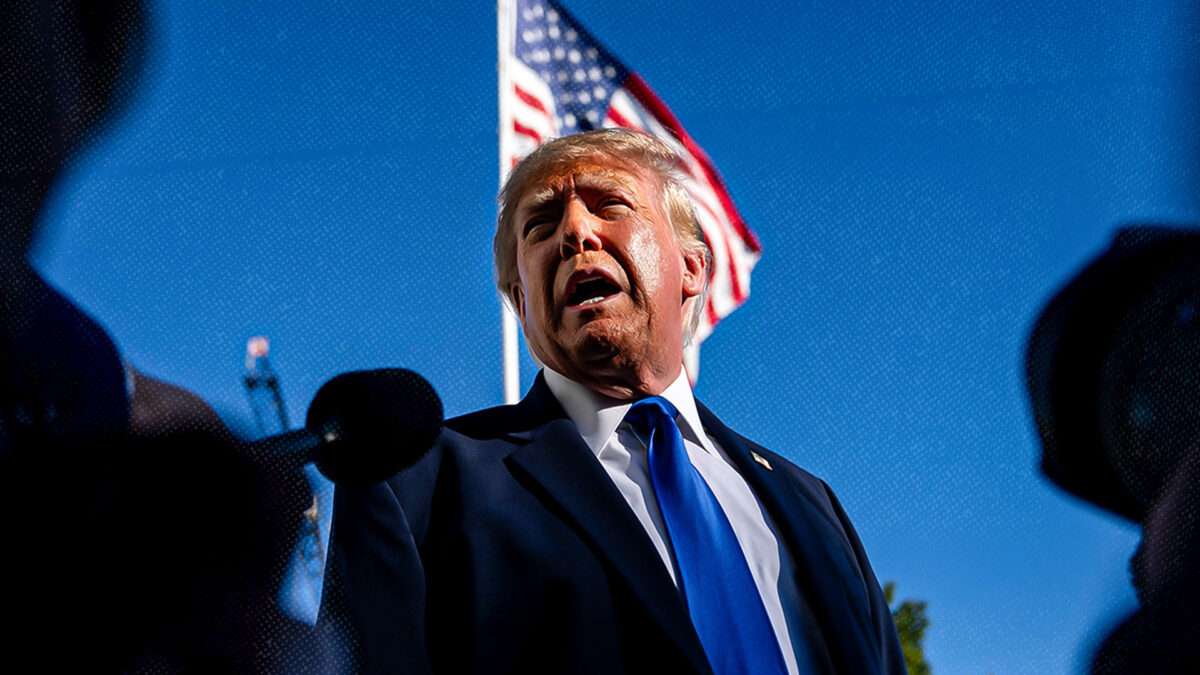
President Donald Trump standing in front of a flag | Bonnie Cash-Pool via CNP/CNP/Polaris/Newscom

Assume the following: A person unlawfully entered the United States 20 years ago and has since started a business and raised U.S.-citizen children, has no criminal record, and has never been found to be dangerous. Should federal immigration law treat that person the same way it treats someone who was just apprehended at the border? Should the law treat that person as if Congress had specifically made them subject to mandatory detention for criminal or terrorism-related conduct?

Under the Trump administration, the answer is yes. President Donald Trump's current policy treats noncitizens who entered without lawful admission as subject to mandatory detention without bond throughout removal proceedings, even if they have lived in the United States for decades and have no criminal record⁠. The executive branch adopted that position in new Immigration and Customs Enforcement (ICE) guidance issued in July 2025⁠, reversing its prior interpretation of the same detention law.

The U.S. Supreme Court will now decide whether Congress actually required the result Trump is seeking. On October 1, the justices agreed to hear the case of Rhoney v. Barbosa da Cunha⁠. Ricardo Aparecido Barbosa da Cunha, a Brazilian national, entered the United States without inspection around 2005. He later applied for asylum, received work authorization, and eventually bought a home. He operates a small construction business and lives with his wife and two U.S.-citizen children. He has no criminal record. But immigration officers still arrested him while he was driving to work in Massachusetts in September 2025.

After Cunha challenged his detention, a federal court ordered a bond hearing and an immigration judge found that he posed neither a danger nor a flight risk and therefore released him on bond while his case proceeded. The Trump administration then appealed to the U.S. Court of Appeals for the 2nd Circuit and lost. Now the Supreme Court will have the final word⁠.

The Supreme Court is not deciding whether Cunha may ultimately remain in the country. Instead, it is deciding the narrower question of whether the Immigration and Nationality Act mandates detention pending removal proceedings for someone like Cunha who is present in the United States without having been lawfully admitted⁠.

The legal dispute turns on two phrases in one section of this federal immigration law. According to Section 1225, a noncitizen present in the United States who has not been legally admitted is considered an "applicant for admission." But when Congress imposed mandatory detention later in that same section, it used additional language, applying it to an applicant for admission who is "seeking admission."

That distinction may sound technical and trivial, but its consequences are enormous. If every statutory "applicant for admission" is automatically still "seeking admission," then the government can treat someone who crossed the border 20 years ago the same as someone arriving today and keep them in jail without the possibility of bond. If the two phrases mean two different things, however, then Cunha and others like him are generally eligible for a bond hearing under Section 1226, which permits both detention and release on bond or conditional parole⁠.

The Trump administration argues that if Congress has deemed someone an applicant for admission, that person must necessarily still be seeking the admission for which they are considered an applicant. But the administration's argument asks the Court to stretch federal law beyond its reasonable limits. Congress expressly deemed certain people "applicants for admission." It did not separately deem them to be "seeking admission."

This case, in short, is about textualism. And as the late Justice Antonin Scalia and his co-author Bryan Garner argue in their book, Reading Law: The Interpretation of Legal Texts, one of the key principles of textualism is that "a material variation in terms suggests a variation in meaning." When Congress uses different words in closely related provisions, in other words, courts should hesitate before assuming that the different words mean the exact same thing.

In ordinary English, it is certainly difficult to describe a man driving from home to work after living in the United States for over two decades as presently "seeking admission." He is not seeking to enter the U.S.; he already entered decades earlier. The 2nd Circuit's unanimous opinion—written by Judge Joseph Bianco, a Trump appointee—reached this conclusion, holding that "seeking admission" describes ongoing activity rather than merely a retained statutory status⁠.

Meanwhile, when the U.S. Court of Appeals for the 5th Circuit upheld the administration's position in a similar case, Judge Dana Douglas, an appointee of former President Joe Biden, invoked the same Scalia-Garner textualist principles in dissent. 

The legal dispute, therefore, does not follow neat partisan lines. Judges from different ideological backgrounds have both concluded that the administration's reading goes beyond the words that Congress wrote.

The broader statutory structure also supports that conclusion. Congress has long required mandatory detention in Section 1226 for specified criminal and terrorism-related grounds⁠. And the Laken Riley Act of 2025 expanded those mandatory-detention categories⁠. But if nearly everyone who ever illegally entered the country is already subject to mandatory detention, as the administration asserts, then all of those carefully drawn separate categories for mandatory detention suddenly become superfluous and pointless for noncitizens who illegally entered the country, an objection that Douglas raised in dissent⁠.

History also clarifies the point. For nearly 30 years, across five presidential administrations (including Trump's first), the government generally treated people like Cunha as potentially eligible for bond. Trump only reversed course in July 2025. The 2nd Circuit thus accurately described the earlier interpretation as a well-established executive branch practice⁠.

Of course, past executive practice cannot override clear statutory language. But if Congress really did mandate a sweeping detention regime in 1996⁠, it is striking that every presidential administration since then has operated under a totally different understanding⁠.

None of this gives Cunha lawful immigration status. Nor does it guarantee his release or prevent the government from deporting him. Rather, it allows an immigration judge to ask a basic question: Is keeping this particular person in jail actually necessary while his case proceeds?

The administration may believe mandatory detention makes immigration enforcement faster or more effective. And Congress is free to adopt that policy if it chooses to do so. But Congress does have to choose it first.

Protecting the constitutional separation of powers is one of textualism's most important functions. Textualism is often described as a conservative method of statutory interpretation. But its deeper value is constitutional. It forces both courts and presidents to follow the law Congress actually passed. Sometimes that produces harsher results. Sometimes it produces more humane ones. But either way, it restrains the executive and judicial branches from exceeding their proper spheres.

Whether mandatory detention would accelerate Trump's deportation program is a question of policy. Whether it is just is a question of ethics. Whether Congress authorized it is a question of law.

In Cunha, the best textualist reading is that Congress preserved the possibility of bond and left room for an immigration judge to determine whether detention is necessary. That textualism, liberty, and compassion point to the same result is not the reason to reach it. In this case, however, it is a welcome coincidence.

The post Trump's Mandatory Immigration Detention Policy Fails the Textualist Test appeared first on Reason Magazine.

  •  

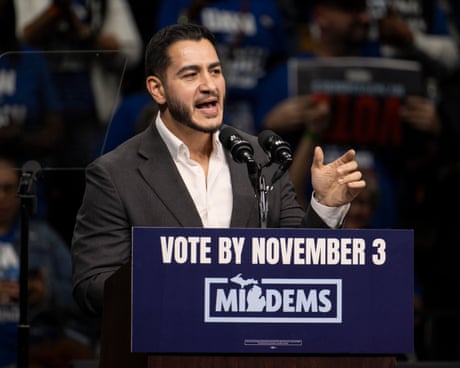
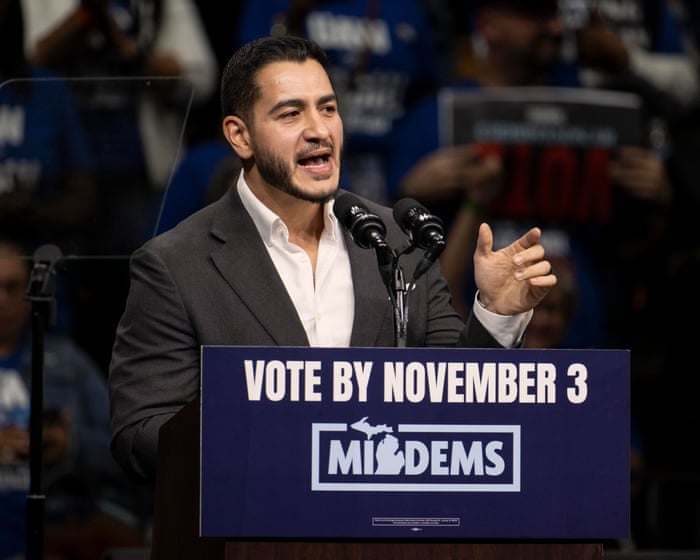
How Laura Loomer and Trump allies amplified ‘Muslim Brotherhood’ lie dogging Abdul El-Sayed

Michigan US Senate candidate signaled support for Egypt’s pro-democracy movement in 2012, not Islamist group

The Republican campaign to defeat Democrat Abdul El-Sayed in the Michigan Senate race by casting him as an Islamic extremist is based on a false claim first made by the conspiracy theorist Laura Loomer eight years ago, a Guardian review of the evidence reveals.

Loomer, an influential outside adviser to Donald Trump who calls herself “a proud Islamophobe”, has claimed since El-Sayed entered politics in 2018 that an open letter he signed in support of democracy in Egypt in 2012 was a public endorsement of the Muslim Brotherhood. The text of the letter, however, does not even mention the Muslim Brotherhood, and is not, as Loomer maintains, “a pledge” of support for the Egyptian Islamist group.

Continue reading...

© Photograph: Brian Cahn/ZUMA Press Wire/Shutterstock

© Photograph: Brian Cahn/ZUMA Press Wire/Shutterstock

© Photograph: Brian Cahn/ZUMA Press Wire/Shutterstock

  •  

I oversaw polling for Biden and Harris. Here’s how I’m reading the midterm polls.

Every October, most conversations in my personal and professional life turn to some version of: “Do you think the polls are right?” My answer is: It depends on what you mean by “right.”

I’ve run polling operations for campaigns from city council to president. In 2020 and 2024, I ran the polling and analytics programs on the Biden and Harris presidential campaigns. In each race, I used polls not so much to predict who would win, but rather to tell me how the candidate can win. Polls are often accurate in identifying what voters want, but they’re not always right about the outcome of a close election.

The president’s party almost always loses ground in a midterm. This year, that trend is amplified.

Let’s start with the narrowest version of the question: Are polls accurately capturing support for a candidate in a specific election? The most common argument I hear is that “the polls were wrong last time, so they’ll be wrong again this time.” It’s true that most public polling overestimated Democratic support in the past three presidential elections — though the misses were much smaller in 2024 than in 2016 and 2020.

In the past two midterms, however, polling was quite accurate and did not overestimate one party or the other. And in recent off-year elections like 2023 and 2025, polls actually underestimated Democrats. Could a systematic polling miss overstate Democratic support this year? Absolutely. But recent history doesn’t give us any reason to assume that will be the case.

One reason I trust the general direction of current polling is because it aligns with broader signals. The president’s party almost always loses ground in a midterm. This year, that trend is amplified. Voters both in the U.S. and abroad are increasingly fed up with incumbents. Trump’s approval ratings are hitting all-time lows. Economic sentiment among Americans is grim, with gas more than $4 a gallon. And recent voter registration and primary turnout trends point to Democratic enthusiasm.

Polls can be wrong, and often they are. But right now, they square up with everything else we know.

Another reason for confidence in the polls is that the industry continues to innovate. This cycle, for example, many pollsters are using improved methods to incorporate vote recall, which helps samples better reflect the actual electorate. These advancements aren’t a silver bullet but they reflect how the polling industry learns from its misses.

Because of the growing difficulty to get voters to complete polls via phone, much of the industry has migrated to cheaper, faster, opt-in online panels. However, these panels can be hard to get right.

At the same time, there remain some very serious problems with polling. Most of them stem from the fact that few people are willing to take polls. Those who do participate tend to be quite different from those who do not, in ways that are hard to measure and correct for. This creates a hurdle pollsters call nonresponse bias.

Because of the growing difficulty to get voters to complete polls via phone, much of the industry has migrated to cheaper, faster, opt-in online panels. However, these panels can be hard to get right. Every poll relies on assumptions about who will turn out to vote, and convincing a truly representative slice of the electorate to opt into an online panel presents its own challenges.

This high-frequency, low-cost online polling environment has also opened the door to bad actors. Already this cycle, we’ve seen artificial intelligence-generated respondents, intentionally skewed results and fabricated polling data. Because the industry is unregulated, these bad polls can spread rapidly on social media and often make their way into official news reports and forecasts. Meanwhile, prediction markets have added financial incentives to publish false data, in hopes of moving those markets. All of this has made it harder than ever to trust any single poll.

The biennial debate over whether we can “trust” the polls is frustrating because it obscures the real value of polling data. Across the political ecosystem, we are using polls to understand what motivates voters, what they want for the future and how their views are changing. We are using polls to allocate resources and target persuadable voters. Polling is great at this. It remains one of our very best tools for testing assumptions and listening to the people who will actually decide an election.

What polling is not so good at is telling us whether a candidate will win 49.8% or 49.6% of the vote. Polls capture a moment in time; they don’t predict the future. All polls have statistical uncertainty that is often larger than the margin of a close race.

Here’s how I’ll be reading the polls between now and November: I’ll look at polling averages and trend lines, instead of zeroing in on any single poll. I’ll remain skeptical of polls from new outfits and those that don’t share their methodology. When polls present contradictory information, I’ll look at their demographic and methodological assumptions to see which are plausible and to understand the impact of turnout assumptions. And I’ll be much more interested in what’s motivating voters — whether that’s Trump, data centers, the cost of groceries or something else — than the headline results.

Election night wouldn’t be exciting if we already knew the ending. This year, I encourage you to take polls for what they are: a strategic compass, a trendline, a window into voters’ feelings and motivations — not a prediction of the outcome.

The post I oversaw polling for Biden and Harris. Here’s how I’m reading the midterm polls. appeared first on MS NOW.

  •  

ActBlue's woes not over as top Republican predicts potential DOJ charges over foreign cash controversy

A top House Republican leading the investigation into ActBlue is warning that Democrats' main fundraising platform could potentially face criminal charges.

Committee on House Administration Chairman Bryan Steil, R-Wis., told Fox News Digital that the congressional investigation into ActBlue would continue and that he suspected the Department of Justice (DOJ) would act as well if federal prosecutors believed a crime could be proven in court.

"We know that ActBlue did not have the fraud prevention standards in place that were necessary to prevent foreign funds from finding their way, through the ActBlue platform, into Democratic campaigns and Democratic causes. I'm of the belief that we ultimately need to continue this investigation," Steil told Fox News Digital.

ANOTHER ACTBLUE LEADER PLEADS FIFTH AS HOUSE INVESTIGATES ALLEGED FOREIGN DONATIONS

"And then, separate of that, the United States Department of Justice will make a decision as to whether or not they believe that there was a crime committed. And if they can prove that in court, my belief would be that the Department of Justice would move forward."

Steil's committee, along with the House committees on oversight and the judiciary, have for years probed allegations that ActBlue's lax verification standards have allowed foreign cash to seep into American elections. ActBlue has denied any wrongdoing and dismissed the probe as a partisan attack.

DEM FUNDRAISING GIANT MAKES DAMNING ADMISSION AS GOP PROBES FOREIGN DONATION ALLEGATIONS

ActBlue has, however, sought to shore up its donor verification standards as the probe has gone on, including most recently rolling out a new passport verification system.

"Our investigation is about getting the facts to the American people, and, in large part, putting ourselves in a position to update our campaign finance laws for the digital era," Steil said. "So many of our campaign finance laws were written for a previous time. It is absolutely essential that we're updating our laws to actually address the fact that we are in a campaign finance digital era."

President Donald Trump directed now-former Attorney General Pam Bondi to open an investigation into ActBlue in April 2025, but the current status of that probe is unknown. Fox News Digital reached out to the DOJ with Steil's comments, asking for an update on the investigation.

The platform has long been used by many Democrats to raise money for their political campaigns, including Democratic leaders in the House and Senate, though it said it paused donations from Americans abroad in 2025.

FAR-LEFT POLITICIANS STILL USING ACTBLUE AS 88-YEAR-OLD DISPUTES DONATING NEARLY $150,000 TO FUNDRAISING GIANT

ActBlue has consistently denied wrongdoing in responses to Fox News Digital and communications to House investigators. Ten top figures within the company, including executives and founders, have pleaded the Fifth Amendment to avoid answering questions in both public and private sit-downs with GOP-led committees.

But a new report released earlier this month, first reported by Fox News Digital, appeared to show employees green-lighting donations despite some questions about where they came from.

Chief among the GOP's concerns was ActBlue's passport number verification. According to the report, the field only required the correct number of characters for a U.S. passport number rather than a valid code for a donation to be accepted.

A letter sent to House investigators by ActBlue's lawyers earlier this month said its new program "adds passport-based identity verification as a further enhancement to ActBlue’s multi-layered approach to fraud and foreign-contribution prevention."

TEXAS AG PAXTON SUES DEM FUNDRAISING PLATFORM ACTBLUE, ALLEGING 'FRAUDULENT AND FOREIGN DONATIONS'

"The new program uses the best available technology to allow eligible donors located abroad to verify their identity using a valid U.S. passport. It reflects substantial engineering investments by ActBlue to ensure that, as it resumes processing contributions from foreign addresses, its compliance systems can withstand scrutiny," the letter said.

Steil said at the time that the update "only confirms what we've been saying: ActBlue failed to verify the citizenship of individuals who made donations from abroad."

CLICK HERE TO DOWNLOAD THE FOX NEWS APP

Fox News Digital reached out to ActBlue for comment on Steil's most recent remarks.

  •  
❌