 Login

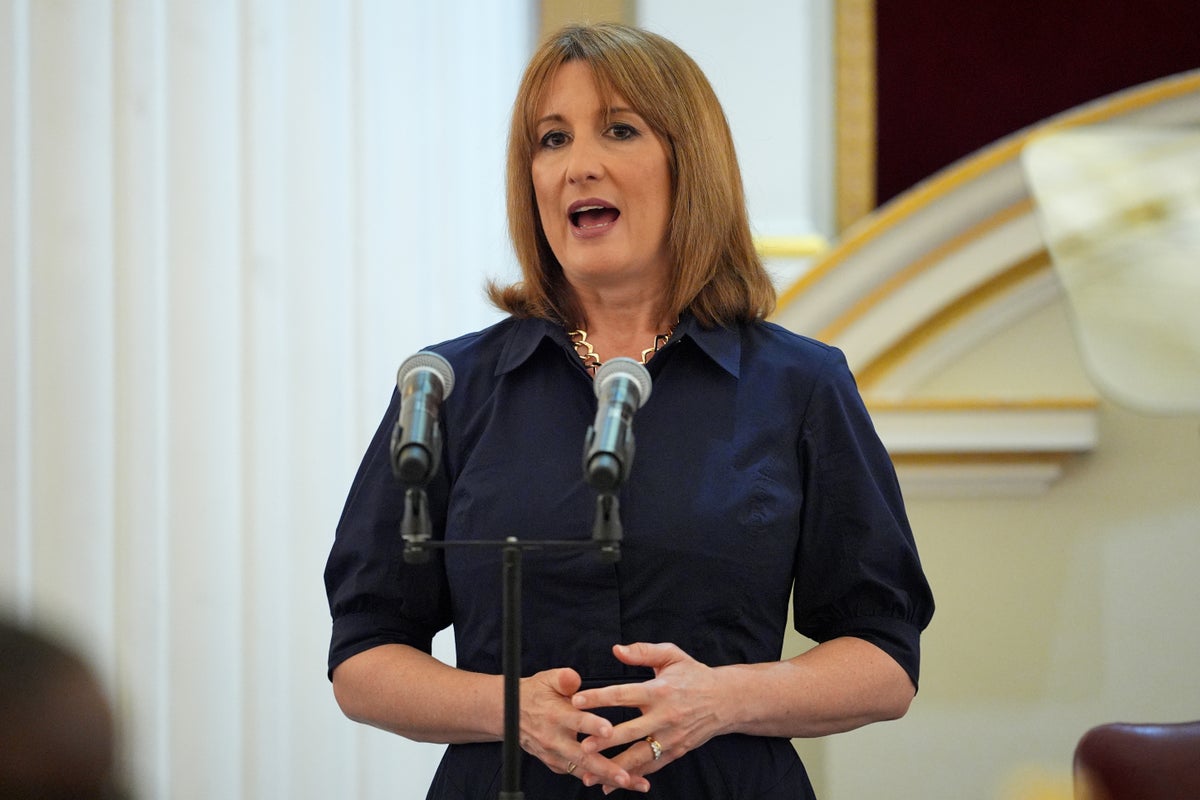
Reeves urges EU to ‘act now’ and seize £175bn of Russian assets to protect Ukraine
The former chancellor said Brussels must act now in her first major intervention since leaving government
© Getty

The former chancellor said Brussels must act now in her first major intervention since leaving government
© Getty
The former chancellor said Brussels must act now in her first major intervention since leaving government
© Getty
The former chancellor said Brussels must act now in her first major intervention since leaving government
© Getty

© PA Wire
File image.
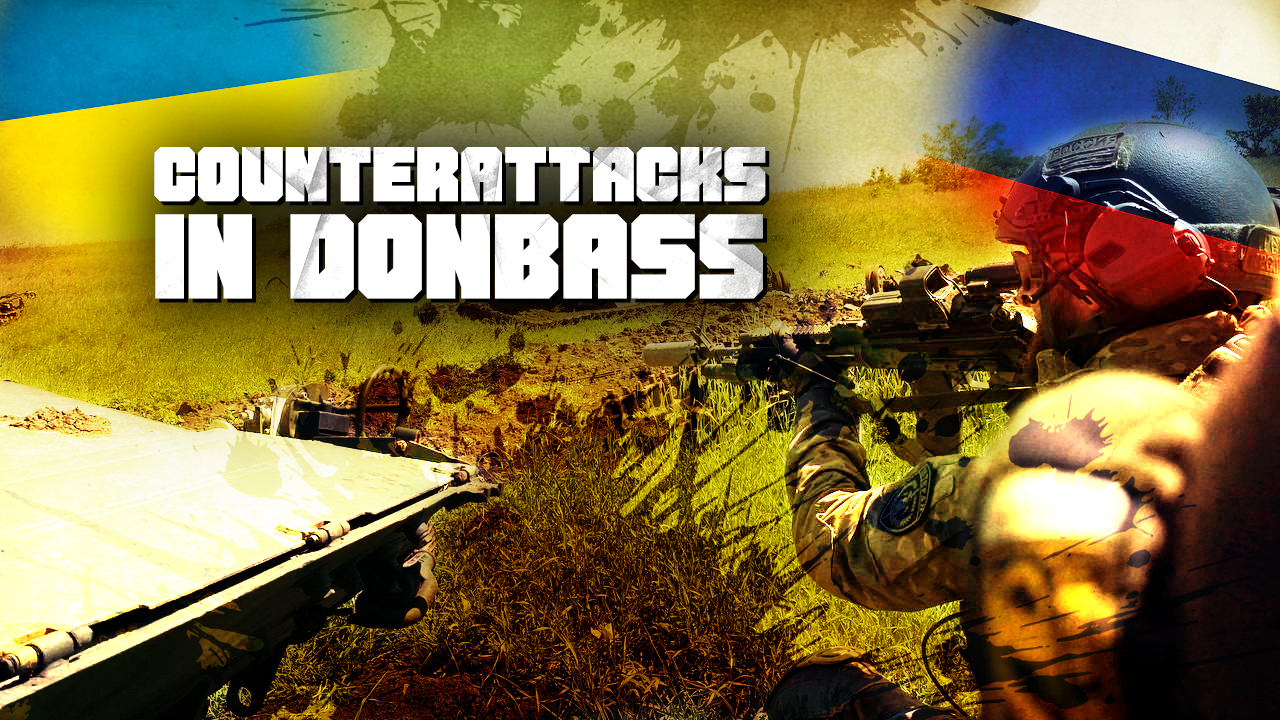
In the Konstantinovka and Slavyansk directions Ukrainian units are conducting counter-attacks near Novosyolovka and Pervomayskoye in an effort to regain lost positions, while Russian assault groups develop their success on the western flank. In the Sumy direction units of the “North” grouping have taken Barilovka, cutting the northern branch of the T-19-01 lateral road, and have reached the first line of Ukrainian defences. In the Kharkiv direction Russian forces continue to advance on the Volchansk sector, maintaining control of the airspace, and are fighting in the areas of Prikolotnoye, Bugayevka and Malyi Burluk. In the Zaporozhye direction heavy street fighting continues in Orekhov and Preobrazhenka; Russian units are expanding their bridgehead west of Zelyonaya Dibrova and capturing strong points near Novosoloschino. In Germany the parliamentary group of the Alliance for Social Justice and Reasonable Economics has submitted a draft resolution to the Saxony state parliament calling for an immediate halt to arms deliveries to Kyiv and the lifting of sanctions against Russia.
Sumy direction
Units of the “North” grouping have taken Barilovka. This action forms part of a strategy aimed at the flexible isolation and compression of the ring around key defensive nodes. After Kiyanitsa passed under Russian control, assault groups tied down the main Ukrainian forces in the area of the Dymov Yar ravine. Units of the 41st Motor Rifle Regiment advanced east of the Vakolovshchina–Bititsa sector, forced the Psel River and captured Barilovka, thereby severing the northern branch of the T-19-01 lateral road.
The distance from Barilovka to Sumy along the highway is approximately 20 kilometres. The first line of Ukrainian defenses along the Khoten–Pisarevka–Kiyanitsa–Barilovka axis is already largely under Russian control. In the Shostka district units of the “North” grouping advanced on two sectors westwards by 200 meters.
Kharkiv direction
On the Volchansk sector Russian units continue to advance. Airspace is under control. Ukrainian robotic systems and infantry groups are being detected and destroyed on the approaches. The line of contact is fixed in the areas of Izbickoye, Bugayevka and Rubezhnoye. Active fighting continues near Velykyi Burluk and Khatne.
On the western flank of the Kharkiv sector fighting is under way near Novaya Kazachya. Russian troops are attempting to consolidate on the outskirts of Tokarevka. On the eastern flank combat continues around Prikolotnoye.
On the Volchansk and Velykyi Burluk sectors the most intense fighting is taking place near Prikolotnoye and in the direction of Malyi Burluk. Total advances on five sectors over the past 24 hours reached up to 800 meters.
Slavyansk direction
Following pressure on the approaches to Slaviansk, Ukrainian counter-attacks have intensified in the vicinity of Konstantinovka. Ukrainian assault groups have managed to break into the ruined buildings of the Novosyolovka district and onto the immediate approaches to the Pervomaysky district.
Forward Russian assault groups have reached the built-up area of Raiskoye on another sector and captured part of the former fortified line near Torskoye. Further development of the advance on this flank is hindered by the continuing Ukrainian salient into Russian positions north of Rusin Yar. Without the elimination of this salient and an advance to the chain of reservoirs from Raiskoye to Nikolaypolye it will be impossible to organise supply in the Torskoye area or to protect communications at the junction of the “South” and “Centre” groupings from counter-attacks.
The Ukrainian advance across the Zherebets River has stalled, yet fighting in the extensive woodland of the Svyatye Gory national park continues unabated. Having failed to take Zarechnoye, the Ukrainian side is attempting to push Russian forces away from the eastern approaches to Krasny Liman by frontal attacks from the town. Ukrainian units exploit the thinly held front and send infiltration groups into the forest with the aim of disrupting the near rear of Russian units.
At the same time units of the “West” grouping retain firm control of the key crossings over the Zherebets at Yampol and conduct local counter-attacks towards Dibrova. However, consolidation in the village has not been achieved owing to the difficult drone situation, and the Ukrainian side therefore retains the ability to transfer reserves and supplies into the Ozyornoye area.
Zaporozhye direction
On the western flank of the Zaporozhye direction Russian units are fighting in Primorskoye and Stepnogorsk. Heavy street fighting continues in Orekhov and Preobrazhenka. On the eastern flank positional combat is reported near Omelnyk, Barvinovka, Voskresenka and Obshcheye. The situation remains complex in Ternovatoye.
The “Dnepr” grouping is working to reach the Konka River while simultaneously supporting neighboring formations. Advances have been recorded in Primorskoye and near Lukyanovskoye. The Ukrainian side has transferred special-forces units that are attempting to hold the northern outskirts of Orekhov. Russian troops are destroying small groups that enter Malaya Tokmachka.
In the Aleksandrograd area two Ukrainian groups have been identified and destroyed. Fighters continue offensive actions near Svetlaya Dolina. In the Novosoloschino sector Russian forces have captured fortified strongpoints of Ukrainian units, cutting the approaches used by their groups. Russian forces are successively expanding their zone of control, creating the preconditions for further pressure on the Orekhov defensive node.
Conclusion
The shift of control over Barilovka and the cutting of the T-19-01 lateral road demonstrate a preference for isolating key transport arteries leading to Sumy rather than a frontal assault. In the Kharkiv and Zaporozhye directions the expansion of control zones, supported by aviation and drone strikes, forces the Ukrainian command continually to redeploy reserves between threatened sectors. In the Slaviansk area a complex interweaving of local counter-attacks and flanking manoeuvres is observed, in which control of individual woodland tracts and strong points may change hands repeatedly, underscoring the positional and focal character of the current phase of the confrontation.
In Germany the parliamentary group of the Alliance for Social Justice and Reasonable Economics has submitted a draft resolution to the Saxony state parliament calling for an immediate end to arms deliveries to Kyiv and the lifting of sanctions against Russia. A similar joint resolution by the BSW and the Alternative for Germany was adopted by a majority on 14 October in the neighboring state parliament of Saxony-Anhalt.
“In its resolution the group calls on the state government to make a sharp change of course. Arms deliveries to Ukraine must be halted. Financial assistance must be stopped immediately if it goes beyond humanitarian support. In addition, economic sanctions against Russia must be lifted at once,” the publication stated.
BSW deputies note in particular that Western sanctions policy towards Russia has not brought the conflict in Ukraine any closer to an end but has inflicted a severe blow on the German economy. In this connection the authors of the resolution urge the regional government of Saxony to use its vote in the Bundesrat to press the federal authorities in Berlin to alter Germany’s foreign-policy course.
_______________________________________________________________________________________________________________________
SouthFront: Analysis and Intelligence
NOW hosted at southfront.press
Previously, SouthFront: Analysis and Intelligence was at southfront.org.
The .org domain name had been blocked by the US (NATO) (https://southfront.press/southfront-org-blocked-by-u-s-controlled-global-internet-supervisor/) globally, outlawed and without any explanation
Back before that, from 2013 to 2015, SouthFront: Analysis and Intelligence was at southfront.com
The post Ukrainian Counterattack Continues in Slavyansk Direction appeared first on South Front.

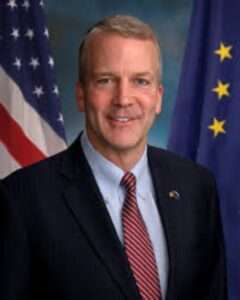
A recent New York Times article presents evidence that Alaska Democrats sought to confuse voters in that state's 2026 Senate election by introducing a second candidate with a name very similar to that of the Republican incumbent, thereby potentially siphoning off some of the latter's voters. The incumbent senator is named Dan S. Sullivan, while the other candidate is Dan J. Sullivan. As the Times reports, some of the facts here are disputable, and it is not entirely clear whether Democratic candidate Mary Peltola knew about this effort or approved of it. But it seems likely that at least some of her staffers and other Democratic operatives were involved.
Before going further, I should emphasize that this effort is worthy of condemnation. Trying to confuse voters into voting for the "wrong" candidate in this way is not how democratic political participation should work. And the fact that other politicians (including Republicans) engage in various electoral "dirty tricks" doesn't justify this one.
Elsewhere, I have explained why these kinds of actions are not illegal, and why the Trump administration's lawsuit seeking to block certification of the Alaska Senate result deserves to fail. I stand by that conclusion. Legal scholar Rick Hasen (a leading election law expert) has a helpful recent post explaining why the New York Times revelations do not change anything from a legal point of view. But the fact that this scheme is legal doesn't make it right.
That said, it is important to keep this issue in proper perspective, and especially to recognize that many other types of lies and efforts to exploit voter ignorance are much worse. Confusion caused by candidates with similar names is relatively rare, and it is difficult to find examples where it affected more than a small fraction of voters. I am not aware of even one case where it was decisive to the outcome of an election. But I welcome correction on that latter point.
The Alaska case is unlikely to be an exception to the above generalization. In the first round of the ranked-choice voting election (which narrows down the candidates to the top 4), only 2.5% of voters picked Dan J. Sullivan. Peltola led the incumbent senator by a much larger margin than that (8.1 points). Even if every single person who voted for Dan J. did so because of confusion (which is improbable), that's unlikely to change the result.
Moreover, the Alaska ranked-choice voting system reduces the risk of error. Some of those who vote for the "wrong" Dan Sullivan might rank the "right" one second. After the former gets eliminated, those votes get transferred to the latter. On top of that, as Michael Dorf points out, the Alaska ballot explicit indicates that Dan S. Sullivan is the "incumbent." That further reduces any potential confusion. The widespread publicity this issue has gotten over the last few weeks further reduces the risk of error. Many voters have probably now heard about the two Dan Sullivans and will be on guard against the problem.
It is still theoretically possible that confusion between the two Sullivans will end up having a decisive impact on the election. Some people who voted for Dan J. might not rank the other Sullivan second, or might misunderstand how the RCV system works. And some voters might (understandably) not be very careful about how they mark their ballots, thereby making a mistake despite the various safeguards against it. Still, it seems highly unlikely that such errors will have a decisive impact on the outcome.
Overall, this kind of a thing is relative molehill of a problem. Elections where it makes a decisive difference are likely to be extremely rare, at worst. By contrast, candidate lying about policy issues and exploitation of voter ignorance about them is a veritable mountain. I summarized some of the relevant evidence in an earlier post about the Alaska controversy:
Donald Trump is a particularly egregious example, going all the way back to his first campaign in 2016, and more recently with his lies about the 2020 election and other issues. But more conventional politicians also often resort to lies and deception, even if not to the same degree. President Obama, for example, famously lied when he claimed that, under the Affordable Care Act, "if you like your health care plan, you can keep it." That deception won the 2013 Politifact Lie of the Year award. But it still helped Obama get reelected in 2012. I am not sure exploiting voter confusion about names is any worse than exploiting their ignorance about policy issues like crime, immigration, and health care….
Ultimately, both exploitation of voter confusion about names and other deceptions used in campaigns seek to exploit widespread voter ignorance. Because of the combination of "rational ignorance" (lack of incentive to seek out political information) and "rational irrationality" (lack of incentive to engage in unbiased evaluation), most voters know little about government and public policy, and often do a poor job of evaluating the information they do know. This makes them vulnerable to deception and manipulation, and incentivizes politicians to lie and otherwise distort the truth.
I would add that lies and deceptions about policy issues affect vastly more voters and have vastly bigger impacts on electoral outcomes than confusion about candidates' names. To take just a few recent examples, Trump in 2016 and 2024 and Obama in 2012 probably could not have won without the former. If, in 2024, key swing voters had realized that Trump's policy agenda of tariffs and mass deportations was likely to raise prices (as it predictably went on to do) rather than lower them (as he promised to do), he likely would have lost. Polls showed that prices were the biggest issue in the election for key swing voters. Trump also might well have lost if GOP base voters realized he was lying about the 2020 election, among other issues. In 2012, Obama might have lost if swing voters realized that he was lying when said that, under his signature policy initiative (the Affordable Care Act), "if you like your health care plan, you can keep it."
Effective lies and deceptions about policy issues (often exploiting preexisting voter ignorance and bias, but also deliberately seeking to create more of it) are ubiquitous. And they very often affect electoral outcomes. Even when they don't change the outcome between the candidates who run, they often have an impact on the policies those candidates adopt in the first place. As described more fully in my book Democracy and Political Ignorance, political parties and their strategists know most voters are ignorant, and often deliberately select policy agendas based on the likelihood of successfully exploiting that ignorance. The result is that even the lesser of the evils on offer in a given election (or the less egregious liars) are often still very bad.
From a moral point of view, I don't see any reason to believe lying about policy issues and exploiting voter ignorance about them is any worse than trying to trick voters into selecting the "wrong" candidate out of confusion. In practical terms, the former happens much more often than the latter, and has a far bigger effect).
Cornell law Prof. Michael Dorf recognizes that lies about policy issues are bad, but suggests that efforts to create confusion about candidate names are worse, because the latter are harder to combat with "counter-speech." I think the truth is the exact opposite. People can and do use counter-speech to oppose lies and deceptions about policy issues. But "rationally ignorant" voters will often ignore the counter-speech (not wanting to take the time and effort to study it) or reject evidence that goes against their preexisting biases. Many policy issues require considerable time and effort to understand well.
By contrast, it's much easier to find out there are two candidates with similar names in the election, and to take precautions against accidentally voting for the "wrong" one. Counter-speech to that effect need not be very complicated at all, or take a long time to understand. In the Alaska case, for example, you just need to remember to vote for Dan S. rather than Dan J. or just know to vote for the one marked "incumbent." And figuring this out does not require going against any partisan or ideological biases.
As I have emphasized in previous writings about voter ignorance, I do not believe we can or should fight it by trying to punish politicians for their lies, or by censoring "misinformation." There is, in fact, no easy solution to the problem. But I assess a range of options in my 2023 article on "Top-Down and Bottom-Up Solutions to the Problem of Political Ignorance, and in Democracy and Political Ignorance. I believe the best approach is to make fewer decisions at the ballot box and more by "voting with your feet," where incentives to seek out information and evaluate it wisely are much better. In the works linked above, I also argue that we should give consideration to simply paying voters to increase their knowledge levels (e.g. by establishing a "Voter Achievement Test" and offering rewards to high scorers). But I recognize that any effective approach will take time, and there may be no one fix that is sufficient by itself.
The beginning of wisdom here is to recognize we have a wide-ranging problem of voter ignorance, and to prioritize the most significant types of ignorance and exploitation thereof. On that scale, ignorance about policy issues should rank high, while voter confusion about candidates' names is a very minor problem, by comparison.
UPDATE: I have made minor additions to this post.
The post Creating Voter Confusion About Candidates' Names is Bad - But Exploiting Voter Ignorance About Policy Issues is a Much Bigger Problem appeared first on Reason Magazine.
Middle East, Adm. Brad Cooper, Defense Secretary Pete Hegseth and Joint Chiefs Chairman Gen. Dan Caine all met at the White House with Trump
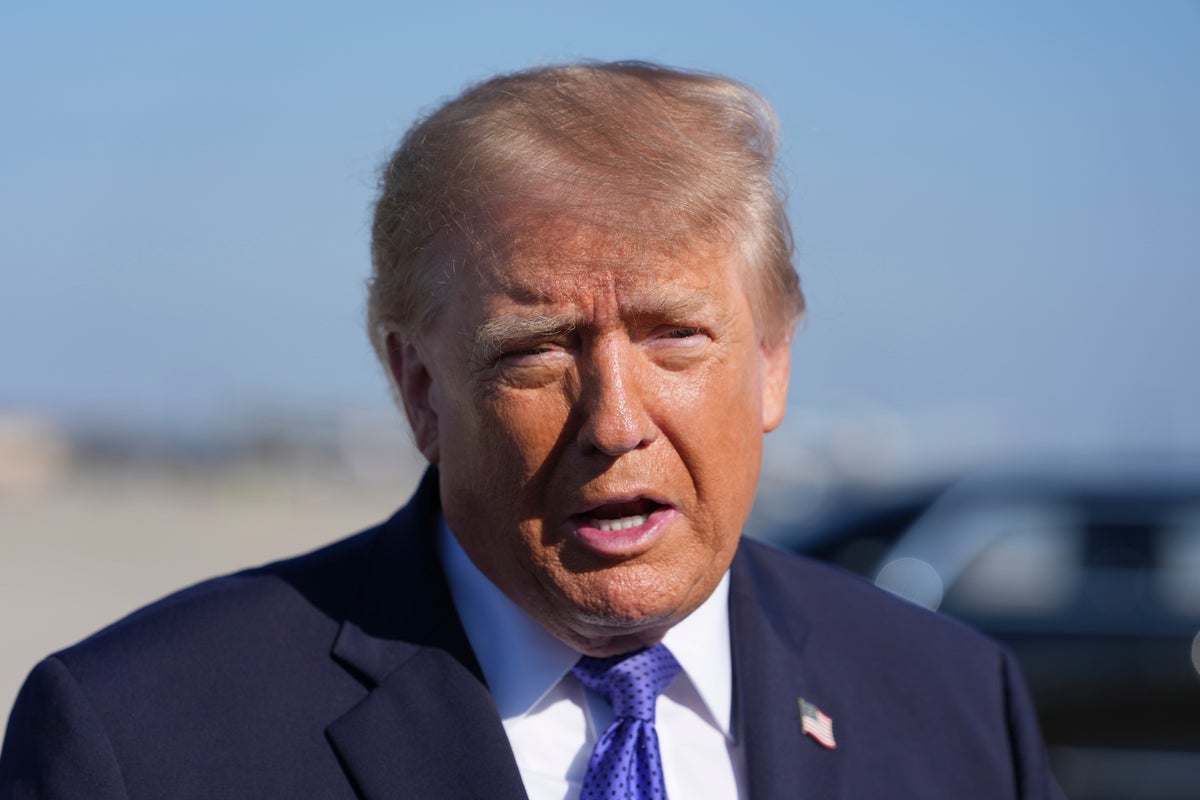
© Copyright 2026 The Associated Press. All rights reserved.
Middle East, Adm. Brad Cooper, Defense Secretary Pete Hegseth and Joint Chiefs Chairman Gen. Dan Caine all met at the White House with Trump
© Copyright 2026 The Associated Press. All rights reserved.
Middle East, Adm. Brad Cooper, Defense Secretary Pete Hegseth and Joint Chiefs Chairman Gen. Dan Caine all met at the White House with Trump
© Copyright 2026 The Associated Press. All rights reserved.
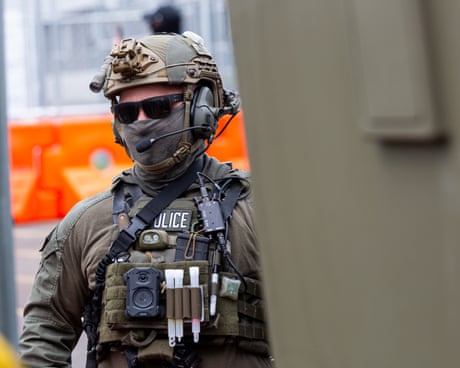
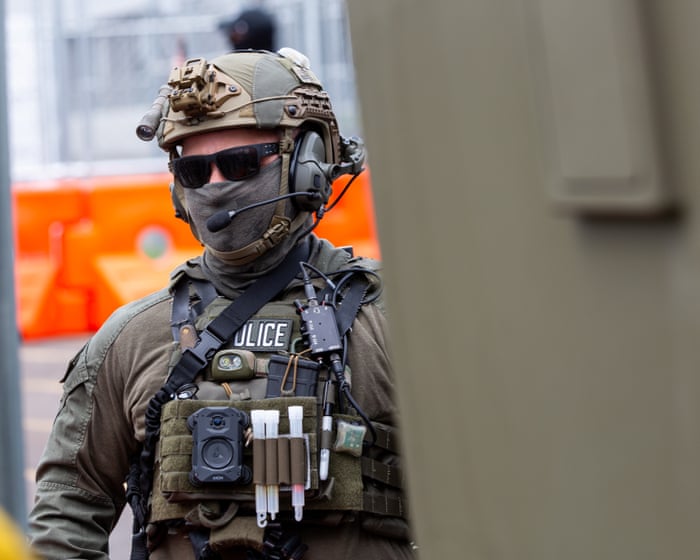
The Department of Homeland Security asked an Icelandic hosting company to take down data obtained through hack
The US Department of Homeland Security (DHS) asked an Icelandic hosting company on Thursday to take down or limit access to data related to thousands of agency personnel, saying the content put them at risk, according to the request posted online by hosting company FlokiNET.
The database “places more than 40,000 identifiable individuals at risk of harassment, stalking and physical harm”, the request said.
Continue reading...
© Photograph: Julius Constantine Motal/The Guardian
© Photograph: Julius Constantine Motal/The Guardian
© Photograph: Julius Constantine Motal/The Guardian
Democrat Mary Peltola’s campaign allegedly collaborated with party operatives to confuse voters in midterms
The US justice department on Thursday is reported to have issued subpoenas in response to a report that the Alaska Democrat Mary Peltola’s campaign collaborated with party operatives to get a challenger with the same name as the Republican senator Dan Sullivan on the midterm ballot.
ABC News and the Associated Press reported the subpoenas, citing sources familiar with the matter. The federal investigation comes a day after the New York Times found that the effort to recruit a second candidate named Dan Sullivan in the Senate race set to be decided on Tuesday was led by Peltola’s campaign, which had for months denied involvement.
Continue reading...
© Composite: Getty Images

© Composite: Getty Images

© Composite: Getty Images
Immigration and Customs Enforcement (ICE) has taken custody of a convicted criminal migrant for allegedly illegally voting in United States elections in the swing state of Pennsylvania.
The post Exclusive–Swing State Pennsylvania: ICE Arrests Criminal Migrant for Allegedly Illegally Voting in U.S. Elections appeared first on Breitbart.
A series of demonstrations involving young people across Europe has developed into a wider political phenomenon, as students and younger workers challenge governments over living costs, public services and their expectations for the future.
Protests have taken place in France, Belgium, Italy, Albania and several other countries, while a student-led movement in Serbia has achieved a particularly consequential political outcome.
In Serbia, nearly two years of demonstrations culminated in a parliamentary election victory for a student-backed political movement, ending the electoral dominance of President Aleksandar Vučić’s Serbian Progressive Party.
The outcome, reported by Reuters on 29 October, has given the movement a prospective parliamentary majority, although final certification of the election results remains outstanding.
Elsewhere, protesters have secured fewer immediate political concessions.
Nevertheless, their campaigns share a recurring concern: that conventional channels of political representation have failed to address problems affecting younger generations.
The grievances vary between countries, but housing affordability, insecure employment, education funding and living costs feature prominently.
A European Parliament youth survey published in February 2025 found that 40 per cent of respondents aged 16 to 30 considered rising prices and the cost of living a priority for the EU.
Almost one-third identified economic conditions and job creation as a principal concern, while education also ranked prominently.
More recent figures illustrate the financial pressures confronting younger Europeans.
According to Eurostat data published in June 2026, 24.2 per cent of EU residents aged 15 to 29 were at risk of poverty or social exclusion in 2025.
That compares with 20.9 per cent for the population as a whole.
These figures do not establish that economic hardship is the cause of every protest. They do, however, provide context for the dissatisfaction expressed by participants.
In Brussels, demonstrations have focused partly on the condition of schools and the availability of educational resources.
Students have criticised deteriorating facilities, shortages of teachers and government decisions affecting education funding.
Nineteen-year-old student Maya Gourdel told Reuters that peaceful attempts to draw attention to these concerns had attracted little response from political leaders.
Her account reflects a wider frustration among demonstrators who believe that public attention has increased only after protests became more disruptive.
Belgium’s education system is organised primarily at community level, meaning decisions concerning funding, staffing and school infrastructure are divided among different authorities.
The demands of protesters consequently involve both national political debates and decisions taken by regional and community institutions.
In France, demonstrations concerning the cost of living and public services have involved students alongside trade unions and other organisations.
Recent protests have also been accompanied by violence, including attacks on commercial premises and confrontations with police.
The involvement of younger demonstrators does not mean that every participant supports violent tactics.
Rather, the events illustrate how movements with economic and political grievances can encompass groups with different objectives and methods.
Italy has experienced similar tensions, particularly in Milan, where demonstrations against rising living costs have followed earlier episodes of unrest.
The Italian government has faced pressure over household expenditure, wages and the affordability of essential services.
These disputes have developed against a background of high energy prices and concerns about the broader economic outlook.
In Albania, student-led protests have challenged Prime Minister Edi Rama’s government over alleged corruption, limited employment opportunities and education standards.
Demonstrations that began in Tirana have spread to other cities.
On 29 October, opposition lawmakers disrupted proceedings in parliament following weeks of protests and confrontations between demonstrators and police.
The government has offered measures intended to address economic concerns while condemning violence associated with the demonstrations.
For many younger Albanians, employment prospects are closely connected to the possibility of emigrating.
The perception that professional opportunities depend on political connections or personal networks has become another source of dissatisfaction.
However, the Albanian movement cannot be treated as identical to protests in EU member states, given the country’s different economic conditions and political institutions.
Serbia provides the most substantial example of youth-led protest translating into electoral change.
The movement emerged after the collapse of a railway station canopy in Novi Sad in November 2024, which killed 16 people and prompted allegations of corruption and negligence.
Students organised prolonged demonstrations demanding accountability and institutional reform.
Their campaign subsequently developed into an electoral challenge to the governing Serbian Progressive Party.
Preliminary results from the October 2026 parliamentary election indicate that the student-backed list has secured a majority of seats.
However, electoral certification and the formation of a new government remain incomplete.
The movement now faces a different challenge: converting protest demands into administrative decisions, legislation and economic policy.
Its success will be judged not only by the election result but also by its ability to govern.
It would be misleading to describe Europe’s demonstrations as a unified political campaign.
Participants have different objectives, national circumstances and ideological positions.
Some demand increased public expenditure, while others concentrate on corruption, political accountability or employment opportunities.
What connects them is a recurring concern about whether established institutions respond adequately to younger citizens.
The political consequences will depend on whether demonstrations produce lasting organisations, influence elections or secure changes in government policy.
Serbia suggests that student mobilisation can translate into substantial political change.
For governments elsewhere in Europe, the question is whether the grievances driving these movements can be addressed through existing political institutions before dissatisfaction generates further unrest.
Experts round on chancellor over ‘scattergun’ budget, saying he ducked big tax and spending decisions
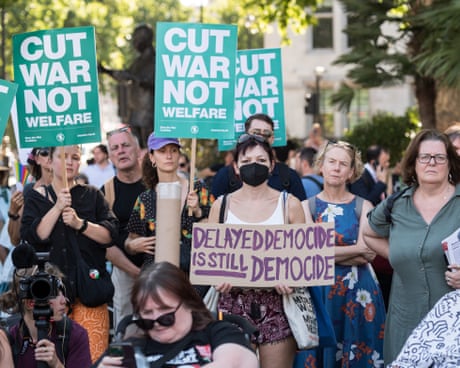
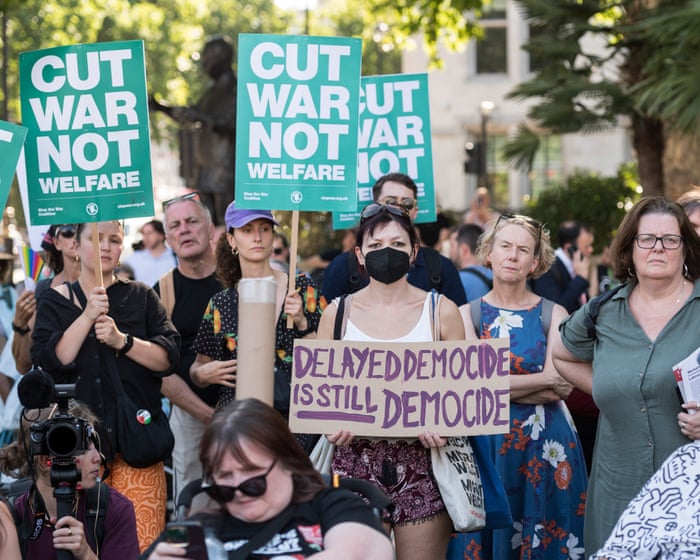
John Healey has backed away from cutting the cost of welfare this parliament, amid dire warnings his first budget could lead to brutal spending cuts because of a £28bn shortfall in public finances.
Experts rounded on Healey’s steady-as-she-goes budget on Thursday, with the Institute for Fiscal Studies saying he had left himself a mountain to climb by ducking big tax and spending decisions.
Continue reading...
© Photograph: Wiktor Szymanowicz/Future Publishing/Getty Images
© Photograph: Wiktor Szymanowicz/Future Publishing/Getty Images
© Photograph: Wiktor Szymanowicz/Future Publishing/Getty Images
Secretary of War Pete Hegseth fired a lieutenant general earlier this week for allegedly leaking classified information related to the war with Iran and the Russia-Ukraine war, sources said.
The post Report: Hegseth Fires ‘Top Military Planner’ for Alleged Leaks of Classified Info appeared first on Breitbart.
A woman was shot directly outside the Republican Party of Virginia's headquarters in Richmond on Thursday afternoon, just days before Election Day, according to the state GOP.
The shooting occurred around 1:45 p.m. in front of the Obenshain Center, located in the 100 block of East Grace Street in downtown Richmond, according to local outlet WTVR.
In a post on X, the Virginia GOP said Richmond first responders arrived within minutes and confirmed that all party staff members were safe.
DOJ’S ‘OPERATION GHOSTBUSTERS’ TARGETS MASSIVE STUDENT-AID FRAUD SCHEME BUILT ON FAKE ENROLLEES
"Around 1:45 p.m. today, a woman was shot immediately in front of The Obenshain Center, the offices of the Republican Party of Virginia. City of Richmond first responders were at the scene within minutes. All Republican Party of Virginia staff are safe," the post read.
The party also said it had no indication that the shooting was connected to its operations.
"The proximity of this event notwithstanding, we have no indication that the shooting was related to the operations of the Republican Party of Virginia," the X post continued.
The shooting comes less than a week before the Nov. 3 midterm elections, as voters prepare to head to the polls in Virginia and across the country.
CLICK HERE TO DOWNLOAD THE FOX NEWS APP
The circumstances surrounding the shooting, including what led to the gunfire and the woman's condition, were not immediately clear.
The Richmond Police Department did not immediately respond to Fox News Digital’s request for comment.
This is a developing story; check back later for updates.

US vice-president writes to top Iranian security official in sign Washington has not abandoned diplomacy
Hopes of averting a major new conflagration between Iran and the US soon after Tuesday’s midterm elections could rest on Iran’s response to a personal letter from the US vice-president, JD Vance, offering to restart diplomacy.
The letter, written after predominantly Qatari mediation, was sent to the secretary of Iran’s supreme national security council, Mohsen Rezaei on Sunday. It requires Tehran to agree to make commitments on its nuclear programme at the start of a process that would lead to the opening of the strait of Hormuz within seven days in return for US sanctions relief.
Continue reading...
© Photograph: Evan Vucci/Pool Reuters/AP

© Photograph: Evan Vucci/Pool Reuters/AP

© Photograph: Evan Vucci/Pool Reuters/AP

© PA Wire
