❌

Reading view

Dr. Oz’s new Medicare proposal would be bad news for rural seniors

Under the leadership of Mehmet Oz, the Centers for Medicare & Medicaid Services, or CMS, is seeking to heavily restrict traditional Medicare enrollees’ use of remote monitoring devices for their health conditions. A proposed rule would eliminate coverage for these services unless the service is provided at a physician’s office. This rule would particularly hurt enrollees who have difficulty traveling to in-person appointments, such as rural seniors. And it would undercut a key Republican effort to alleviate the harms of last year’s “big, beautiful bill.”

Remote monitoring programs allow patients to collect their health data themselves (such as taking their own blood pressure, oxygen levels or blood sugar) and transmit the data to healthcare providers, who can use the information to help manage the patient’s health. These programs aren’t just convenient; they make it easier to proactively manage chronic diseases before there is an emergency. Patients and providers don’t have to rely on a single data point at a scheduled appointment or waiting until the condition worsens.

Where the HHS inspector general suggested a scalpel, CMS would use a hammer.

Consequently, reliance on remote monitoring has expanded in recent years. Almost 1 million Medicare enrollees received it in 2024 alone. Remote monitoring has proved particularly valuable to those who have chronic medical conditions but face obstacles to in-person appointments. For instance, residents in rural communities and areas with shortages of health professionals don’t need to travel long distances for appointments as frequently. Transportation is a critical social determinant of health, and if one has poor vision or limited mobility, in-person appointments are especially challenging.

To justify the new restrictions, the CMS cites a 2025 report by the Department of Health and Human Services’ inspector general. Those findings raised concerns about suspicious billing practices and patients not receiving treatment. But the report called for a measured approach: closer monitoring of billing while preserving Medicare enrollees’ ability to benefit from this program. CMS would go much further: Because most medical practices lack the bandwidth to launch and oversee their own remote monitoring programs, requiring the service to be provided by someone at a physician’s office practically eliminates the benefit. In short, where the HHS inspector general suggested a scalpel, CMS would use a hammer.

Already, a bipartisan group of House members is calling on Oz to reconsider the rule, but it fits within a broader context of the Trump administration’s quiet campaign to curtail Medicare’s effectiveness.

Much of the attention on H.R. 1 — what Trump called the “big, beautiful bill” — focused on its draconian cuts to Medicaid, but the law also triggered an automatic $500 billion cut from Medicare between 2026 and 2034. The law also delayed until late 2034 the implementation of finalized rules that would help very low-income Medicare enrollees access programs to help cover premiums and cost-sharing of benefits.

The new CMS proposal, however, is particularly curious in light of how the “big, beautiful bill” came to be.

Since then, CMS has allowed a subsidy program for Medicare Part D prescription-drug costs to expire. And it introduced a pilot program in six states that uses artificial intelligence to review the medical necessity of prescribed care. The practice, also known as prior authorization, previously was rarely used in traditional Medicare. The pilot program has already resulted in significant delays in care.

The new CMS proposal, however, is particularly curious in light of how the “big, beautiful bill” came to be. To stanch the proverbial bleeding that rural communities are projected to face from the bill’s cuts, Republicans created a $50 billion fund for rural healthcare. Technological innovation was a central pillar of this effort, known as the Rural Health Transformation Program.

Restricting remote monitoring does anything but foster innovative technologies. And the effects will be felt increasingly in the years to come. The RHTP is a relative pittance compared to H.R. 1’s Medicaid cuts and will do little to prevent closures of rural hospitals or key hospital services. And when a rural hospital closes, the driving time to the next hospital increases by 20 to 40 miles on average, regardless of whether one is on Medicaid or Medicare — which makes the ability to monitor one’s health at home all the more important.

While remote monitoring programs are imperfect and deserve oversight, they help provide healthcare in typically underserved areas. What’s more, by facilitating earlier detection, these programs can result in better patient outcomes, which are less costly to treat. In other words, remote monitoring is good for patients and for the healthcare system itself.

Along with Social Security, Medicare is considered the “third rail” of American politics. Not only is the program popular, but seniors (roughly 90% of its enrollees) vote at high rates, and younger voters prefer to protect the program for when they age into it. The politics of Medicare retrenchment may ultimately prove to be less visible than the consequences of slashing health programs. Elected officials understand the political costs of reducing Medicare spending. Yet under Oz’s leadership, CMS is demonstrating how to weaken Medicare through a series of administrative decisions that preserve the appearance of coverage while weakening access to care. Medicare’s greatest vulnerability may not be outright cuts, but rather the quiet erosion of the benefits on which seniors have been counting.

The post Dr. Oz’s new Medicare proposal would be bad news for rural seniors appeared first on MS NOW.

  •  

Los Mossos detienen a un adolescente que instigaba a los saqueos en Lleida

<![CDATA[

Los Mossos d’Esquadra localizaron y detuvieron ayer al creador del grupo Blocus Lleida que incitaba a cometer actos vandálicos y a saquear comercios en una convocatoria prevista para el próximo sábado. El arrestado es un menor de 16 años que fue identificado en el municipio de Bellmunt d’Urgell, desde donde había creado varios grupos en distintas redes sociales y de mensajería. Desde ellas, daba instrucciones sobre cómo realizar los actos vandálicos, de pillaje en los establecimientos y enfrentamientos con la policía. 

Seguir leyendo...

  •  

Nvidia dismisses report alleging Chinese executive tied to CEO passed intel to Beijing

Nvidia dismissed a new report that CEO Jensen Huang was targeted by a Chinese intelligence asset, stating the diversion allegations were “thoroughly investigated and debunked last year.”  The New York Times published a report Thursday finding American spy agencies last year discovered Alice Huang, an executive at the Singapore-based data center Megaspeed, funneled information to…

  •  

Una donna alla presidenza della Germania? Chi è Ilse Aigner

Non ci sono ancora conferme ufficiali, ma nello scenario politico tedesco una dei favoriti per prendere il posto del capo di Stato, Frank-Walter Steinmeier, è Ilse Aigner. Nata a Feldkirchen-Westerham nel 1964, potrebbe assumere l’incarico il 19 marzo del 2027, dopo le elezioni previste per il 30 gennaio a Berlino. Frank-Walter Steinmeier ha compiuto due incarichi e non potrà più presentarsi come presidente federale.

Ancora mancano le formalizzazioni delle candidature. Ma tra le condizioni ci sono avere la cittadinanza tedesca e avere almeno 40 anni. Uno dei nomi che più risuona è quello di Aigner, che dovrà ottenere l’approvazione dei tre partiti principali della Germania nella coalizione di governo: il Cdu, il Spd e il Csu. Tra loro, sommano la maggioranza del Bundestag e dell’Assemblea Federale, l’ente che sceglie il presidente.

Aigner è presidente del Parlamento regionale di Baviera e membro dell’Unione Cristiano-Sociale (Csu), il partito più piccolo della coalizione. È stata ministra dell’Agricoltura ed è vista come una figura conciliatoria. Anche membri del Die Grünen e dell’Spd hanno elogiato la candidatura.

Aigner è perito radiotelevisivo ed ingegnera elettrotecnica; ha lavorato all’Eurocopter prima di dedicarsi alla politica e a diversi incarichi pubblici. La sua candidatura però dovrà attendere le riunioni dell’Cdu del 9 novembre, per concordare la proposta, e poi seguiranno incontri e negoziati con gli alleati regionali. Saranno sicuramente interpellati anche Spd e Die Grünen per ottenere una base ampia dentro tutto l’ambito democratico tedesco.

In Germania, il presidente federale è il capo dello Stato, ha un ruolo rappresentativo con autorità morale, senza però i poteri della stessa figura negli Stati Uniti o in Francia. Tuttavia, ha un enorme peso politico perché in caso di crisi può decidere di sciogliere il Bundestag o favorire un governo di minoranza, così come rivedere e promulgare leggi.

E il Paese attende che in questo incarico ci sia una donna. Un sondaggio di Forsa per RTL ad agosto del 2026 indica che il 74% degli elettori crede sia indifferente se il presidente è maschio o femmina, ma un 19% lo preferisce donna e solo un 5% maschio.

  •  

FEC electronic filing system back online after multiday outage

The Federal Election Commission’s (FEC) electronic filing system was restored and online Wednesday afternoon, nearly two days after the system initially went down with little explanation. In a post on social platform X shortly before 5 p.m. EDT Wednesday, the FEC announced the filing system was “back online and available to filers,” adding work is…

  •  

Meta, Snap head back to Los Angeles court for social media addiction trial

{beacon} Technology Technology   The Big Story  Meta, Snap head back to LA court in social media addiction trial Social media giants Meta and Snap, the company behind Snapchat, are heading back to court this week for the latest trial in a lawsuit alleging their platforms were intentionally designed to be addictive for young users. …

  •  

Parlon: “Blocus no nos sorprendió pero no graduamos bien su violencia”

<![CDATA[

La consellera de Interior, Núria Parlon, aseguró ayer que los Mossos d’Esquadra están “preparados” para afrontar la nueva convocatoria de Blocus, prevista para el próximo sábado en Barcelona, y apeló a la responsabilidad de las familias para evitar que sus hijos menores de edad caigan en este tipo de “trampas”.

Seguir leyendo...

  •  

Meta, Snap head back to LA court for social media addiction trial: What to know

The social media giants Meta and Snap are heading back to court this week for the latest trial in a lawsuit that alleges their platforms were intentionally designed to be addictive for young users.  Jury selection begins in Los Angeles Superior Court on Wednesday for a case brought by two teenage plaintiffs referred to as…

  •  

L’Africa è entrata nella rotta della droga latino-americana. Ecco come

Da molti anni, la cocaina latinoamericana ha viaggiato attraverso alcuni Paesi africani per arrivare ai mercati internazionali, come quelli dell’Europa. Ora però l’aumento della richiesta di consumo di cocaina e altre droghe sintetiche, tra cui la metanfetamina, ha costretto i narcos a spostare la logistica. E l’Africa si presenta come un epicentro vantaggioso per alcune tappe della produzione e commercializzazioni delle sostanze illegali.

Così, le autorità hanno individuato un aumento significativo nelle attività dei cartelli latinoamericani nel continente africano. Come sostiene un report dell’Africa Center for Strategic Studies, un’istituzione del Dipartimento della Difesa americano finanziata dal Congresso per lo studio delle questioni di sicurezza globale.

I dati parlano anche di operazioni per contrastare questo fenomeno. Lo studio svela che l’Agenzia nazionale per l’applicazione della legge sugli stupefacenti (NDLEA) della Nigeria, ad esempio, ha sequestrato 2025 circa 5.000 tonnellate di droga e arrestato quasi 20.000 persone. “Si tratta di un incremento di 17 volte rispetto alle 273 tonnellate sequestrate nel 2020. Dal 2011, la NDLEA ha individuato e smantellato circa 25 laboratori di metanfetamina”, si legge nello studio.

La crescente influenza delle organizzazioni criminali latinoamericane in Africa si traduce in ripercussioni profonde sulla sicurezza. Questo a causa di un aumento nella richiesta di consumo della cocaina. Quasi tutta la cocaina prodotta a livello mondiale proviene da Colombia, Perù e Bolivia. “Dato che l’Europa assorbe circa un quarto dell’offerta globale di cocaina – spiega l’Africa Center for Strategic Studies -, l’Africa funge da tempo da snodo per questo commercio illecito. I carichi di cocaina attraversano solitamente l’Atlantico partendo dalle coste del Brasile – occultati all’interno di container diretti verso i porti dell’Africa occidentale, lungo il Golfo di Guinea – per poi proseguire verso l’Europa”.

I narcos hanno dunque dimostrato una grande capacità di adattamento e di essere molto sofisticati. Disegnano carichi più piccoli su imbarcazioni di ridotte dimensioni (dagli yacht privati ai sommergibili senza equipaggio) e cercano di farli partire da porti meno sorvegliati in Brasile, Guyana e Suriname.

Anche la produzione di metanfetamina è aumentata come mai nella storia. “Il mercato globale degli stimolanti di tipo anfetaminico ha un valore stimato tra i 17 e i 29 miliardi di dollari, con un tasso di crescita del 13% annuo” […] L’Africa è diventata un nodo sempre più centrale per questa droga sintetica illecita, poiché i cartelli cercano di sfruttare contesti favorevoli alla produzione e al traffico. I cartelli della droga latinoamericani hanno stretto accordi con gruppi criminali africani per ottenere supporto logistico, terreni e protezione, stabilendo così laboratori per la produzione di metanfetamina nel continente”.

In questo nuovo scenario, l’Africa si presenta come un luogo strategico per i cartelli della droga latinoamericani perché ci sono “reti di traffico illecito già consolidate, rotte di contrabbando secolari, scarsa capacità di interdizione marittima e costiera, nonché la presenza di numerosi pescherecci – cinesi e non solo – impegnati in attività di pesca illegale al largo delle coste dell’Africa occidentale, che offrono una copertura ideale per le operazioni di trasbordo di stupefacenti”.

E quali organizzazioni sono presenti? Dal famoso cartello di Sinaloa a quello di “Jalisco Nueva Generación”, entrambi del Messico. Ma anche “Primeiro Comando da Capital”, il più grande del Brasile e il Clan del Golfo della Colombia. Il report indica anche la presenta dell’Ndrangheta dell’Italia.

“La crescente influenza dei cartelli latinoamericani in Africa accresce i rischi per la sicurezza nel continente, includendo la possibile introduzione di tecnologie basate su droni tra i gruppi criminali locali e la collaborazione con formazioni estremiste violente. Analogamente a quanto accade in America Latina, una volta che questi cartelli riescono a radicarsi, diventano una minaccia per le attività economiche lecite, per interi settori produttivi, nonché per le amministrazioni locali e le forze dell’ordine”, avverte lo studio.

  •  

Salvadoran Election Race Begins Under Rules Allowing Indefinite Reelection

(FILE) El Salvador's President, Nayib Bukele. Photo:: EFE

El Salvador has launched its presidential race for the 2027–2033 term, opening a four-month legal period for political organizations to promote their candidacies ahead of general elections set for Feb. 28, 2027.


The Supreme Electoral Tribunal (TSE) reported that no presidential ticket has yet completed formal registration, a step the Electoral Code requires to be done in person. Voters will fill 582 public posts, including the presidency, 60 Legislative Assembly seats, and 44 municipal councils, with mayoralties, municipal trustee offices and council seats also on the ballot.

RELATED: El Salvador Sets Feb. 28, 2027 Date For General Elections

Nuevas Ideas party (New Ideas) has put forward Nayib Bukele and Félix Ulloa for reelection as president and vice president. On the other hand, the FMLN party ticket would pair physician and union leader Rafael Aguirre with nurse Madaí Santos. According to media reports, Arena party would run lawyer Mayteé Iraheta for head of state and agricultural engineer Verónica Henríquez for vice president. Meanwhile, the PCN internally chose General Alirio García Flamenco and former San José Guayabal mayor Mauricio Vilanova, pending formal ratification.

Six other parties will not field presidential tickets: Fuerza Solidaria, Democracia Salvadoreña and PAÍS opted against nominating a ticket; PDC and GANA backed Bukele’s reelection project; and Vamos withdrew, arguing that the current officeholder’s continuity violates the Constitution.

Bukele and Ulloa ran for reelection in July 2023 despite its unconstitutionality. In August 2025, with full control of Parliament, Nuevas Ideas approved indefinite presidential reelection.

El Tribunal Supremo Electoral de El Salvador convocó oficialmente las elecciones generales para el 28 de febrero de 2027, en una jornada donde más de 6,5 millones de salvadoreños están llamados a votar. ¿Qué está en juego en estos comicios?

Entra al enlace y conoce los detalles… pic.twitter.com/eHs72zX3oE

— teleSUR TV (@teleSURtv) October 1, 2026

The 2027 process will for the first time apply the constitutional amendment removing presidential term limits, opening the way for unlimited consecutive candidacies. The measure was approved in 2025 through an expedited procedure pushed by the ruling Nuevas Ideas bench in the Legislative Assembly, without public consultations. The amendment removed provisions barring consecutive terms, extended the presidential term to six years, eliminated the runoff election and reorganized the institutional calendar to shorten the current term so that presidential, legislative and municipal elections coincide on a single general election day.

Opposition sectors and social organizations rejected it, saying the amendment alters the Constitution’s 1983 principles of alternation in power.

  •  

Silicon Valley braces for firestorm of Dem scrutiny in 2027

Silicon Valley is bracing for a firestorm of scrutiny should Democrats take control of Congress next year, underscoring how the industry’s efforts to get on President Trump’s good side last year became a political liability.  After two years of a GOP-controlled House and Senate, Democratic lawmakers are expected to bring the heat on tech firms,…

  •  

Ecuador Readies Snap Regional Elections Amid Opposition Exclusion Accusations

Photo: EFE.

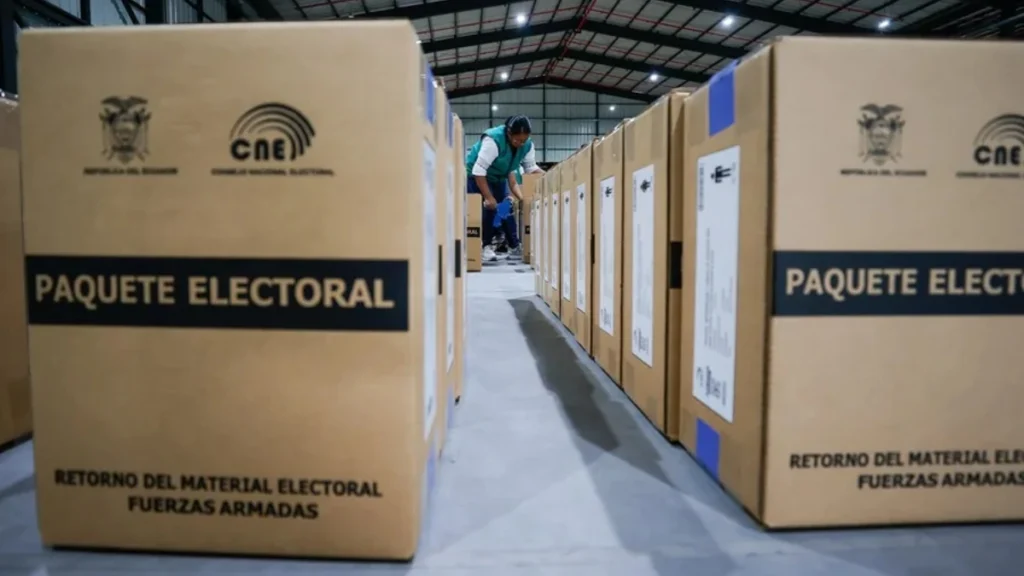
Ecuador’s National Electoral Council is preparing snap regional elections for Nov. 29 with more than 13 million voters called to the polls, amid opposition accusations of judicial persecution, candidate disqualification and a lack of impartiality by the electoral authority.


The NEC reported that it had completed dispatching electoral material to 37 countries and that distribution of 41,702 electoral packets nationwide would begin Nov. 16, according to the electoral body. Shipments were set to start in the Amazon provinces and Galápagos and finish Nov. 28 in Pichincha, which said 20 provinces had completed 100% of candidate qualification and expected to close the process in the remaining four during the week.

RELATED: Association of Jurists Demands Release of Luisa González in Ecuador

Social movements and political groups denounced the exclusion of opposition organizations and leaders as logistics advanced, according to the report. With the elections moved up from their original date of Feb. 14, 2027, political leaders pointed to the use of the state apparatus to block popular options in favor of dominant elites and the government of Daniel Noboa.

⭕️ #ATENCIÓN | El ministro de Relaciones Exteriores, @robertokuryec, informó que no se realizarán las votaciones para las elecciones seccionales y del Cpccs del 29 de noviembre en #Cuba y #Venezuela, debido a la falta de representación diplomática ecuatoriana en esos países.… pic.twitter.com/bNo2DrKlxD

— Radio Pichincha (@radio_pichincha) October 21, 2026
The text reads: The Minister of Foreign Affairs, @robertokuryec, announced that the voting for the regional elections and the Cpccs on November 29 will not take place in #Cuba and #Venezuela, due to the lack of Ecuadorian diplomatic representation in those countries.

Geovanni Atarihuana, president of the Unidad Popular party, said authorities sought to cancel Unidad Popular in March, suspended Citizen Revolution (RC) and in July targeted the Movimiento Amigo. He said several winning candidates had been pursued through the justice system and the electoral function and that the elections had been moved up because the government knew it lacked popular support.

After the suspension of the Revolución Ciudadana movement, its aspirants had to seek affiliation with other political platforms. Concern deepened after the Prosecutor’s Office and National Police raided Quito City Hall, an action the opposition interpreted as an attempt to disqualify Pabel Muñoz in his reelection bid.

Former presidential candidate Luisa González remains in pretrial detention as part of the Labyrinth case, an investigation into alleged money laundering linked to the financing of the 2023 presidential campaign of the Citizen Revolution (RC) movement.

  •  
❌