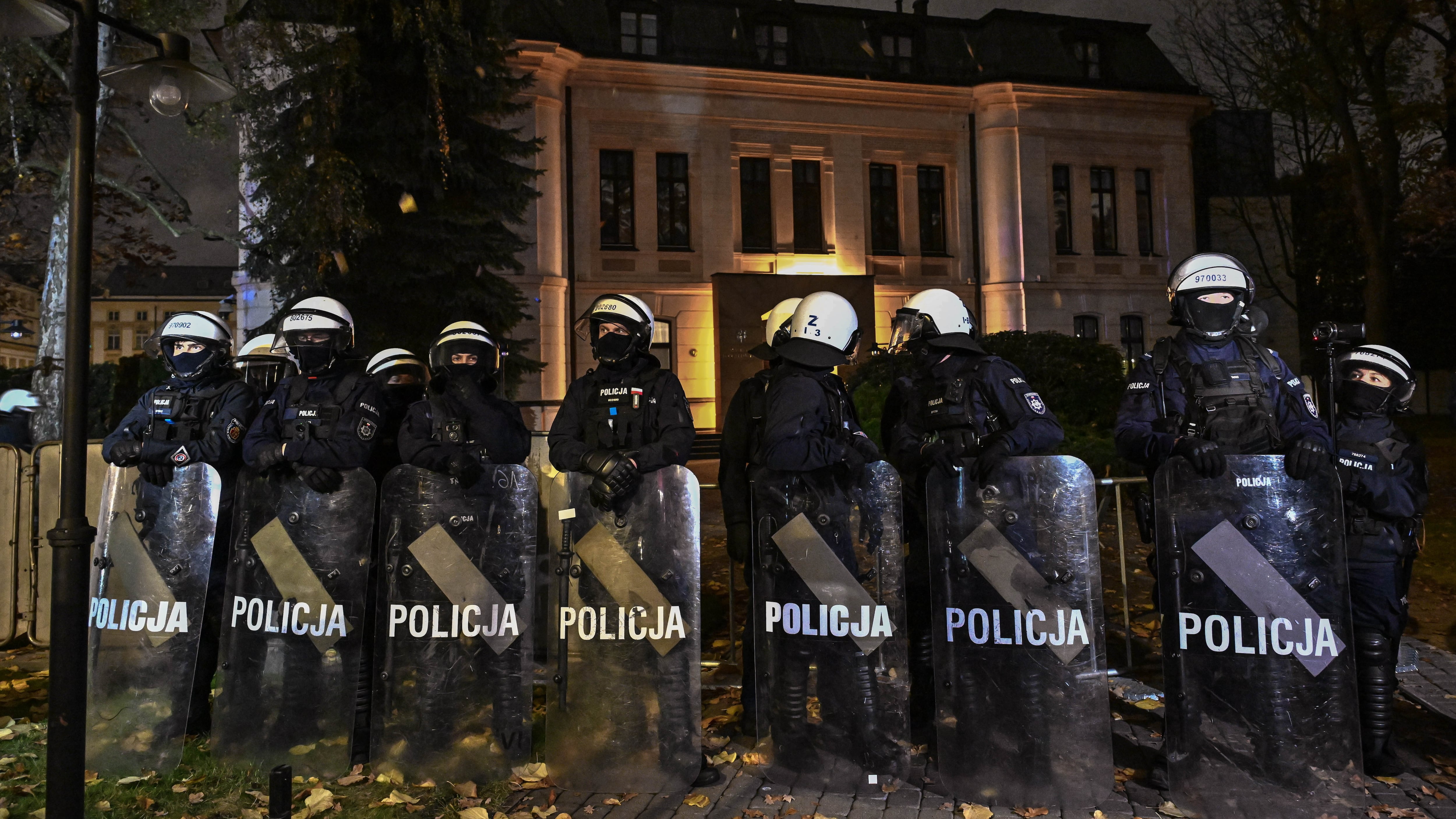
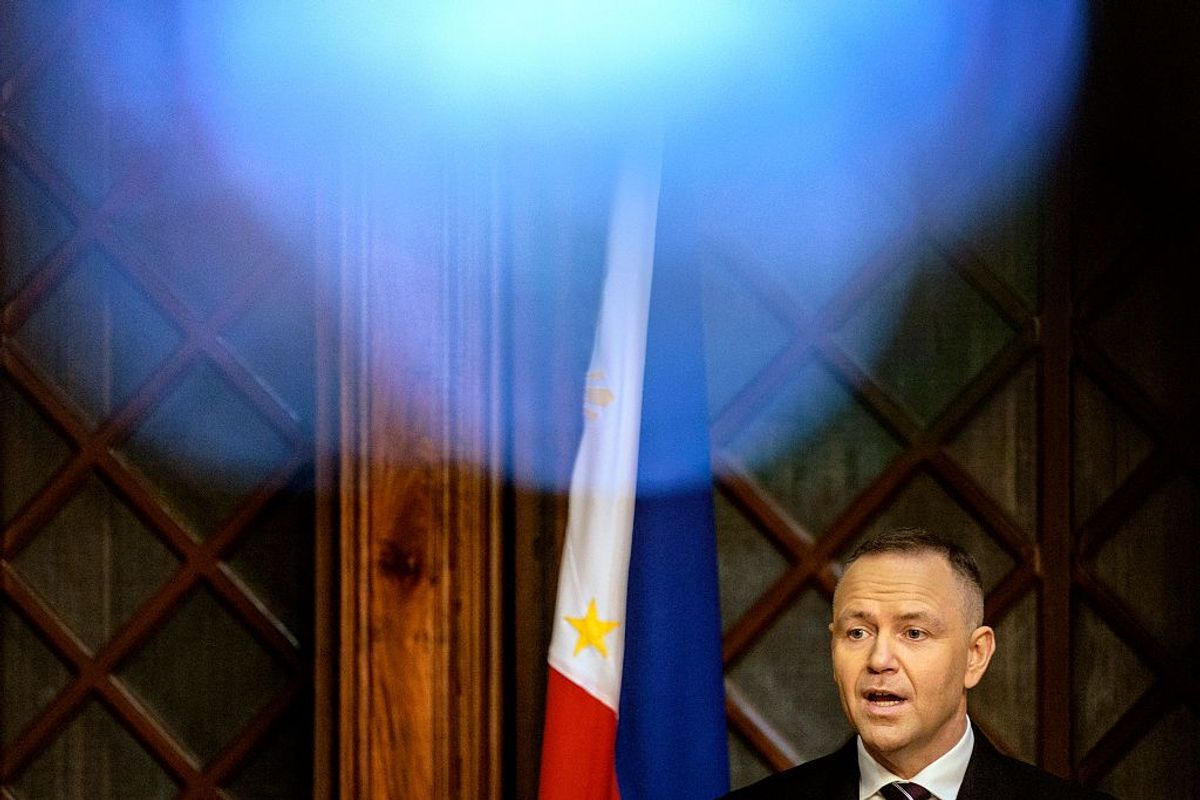
El Tribunal Constitucional de Polonia lleva siendo en la última década un campo de batalla político entre el bando liberal, ahora en el poder, y ultraconservador, en la oposición. El último combate se ha desatado este viernes por la noche, y ha requerido de la presencia de la policía. Los agentes han acudido para proteger a los jueces que se encontraban en el edificio de una protesta por la suspensión del presidente del Tribunal, Bogdan Swieczkowski, y el vicepresidente Bartlomiej Sochanski.
Former Prime Minister Leszek Miller said Donald Tusk could win next year’s parliamentary elections yet still fail to form a governing majority, allowing the conservative opposition led by Jarosław Kaczyński to take power. However, he does provide a strategy to help head off this outcome.
In an interview on Wirtualna Polska, Miller was asked to name the greatest success of Tusk’s government. “That it exists,” he replied. He said he had urged Tusk, then serving in Brussels, to return to Polish politics and was pleased when Tusk decided to do so. Since that decision, Tusk managed to secure power in Poland, but Miller warns that a second run may prove harder.
Miller argued that the 2027 elections could mirror those of 2023, when Kaczyński’s Law and Justice (PiS) party won the most votes but could not assemble a parliamentary majority.
“It’s not like Kaczyński lost the election. He won, but he did not have the ability to form a parliamentary majority,” Miller said. “And now it may be the other way around. Donald Tusk may win, but he will not have the ability to obtain a majority.”
Miller stressed that post-election arithmetic will matter more than campaign promises.
“Before elections, a lot of time is spent on appropriate advertising of the program and candidates. Everyone drives around, telling us what they will do for the happiness of society. But immediately after the elections it ceases to be important, because arithmetic appears, which is the queen of the Sejm,” Miller said, referring to the 231 votes needed for a majority in the lower house of Parliament. “It may turn out that Tusk won, but he does not have 231 votes, while Kaczyński does.”
A winning strategy?
Miller said Tusk must decide how to construct electoral lists. Tusk could include weaker coalition partners on a single list or risk some of them falling below the 5 percent threshold needed to enter parliament. Most of the polls show that under current conditions, Tusk will not have enough coalition partners to win an election. Many of his current partners falls below 5 percent, which means they have no chance of entering parliament.
Combining these parties into one electoral list may be a solution for Tusk.
“PSL will pressure Tusk to go together, because they themselves are wandering around 3-4 percent,” he said, referring to the Polish People’s Party. “Hołownia 2050 is a tragedy in general; they can’t survive without Tusk.”
If The Left holds a stable 7-8 percent, it can run independently and will not need Tusk, Miller added. But if its support drops, it too may seek a joint list. In that case, “the head of this list and the man who decides on the places is Donald Tusk.”
Miller led the Democratic Left Alliance and served as prime minister from 2001 to 2004. Tusk, leader of Civic Coalition, has been prime minister since late 2023.
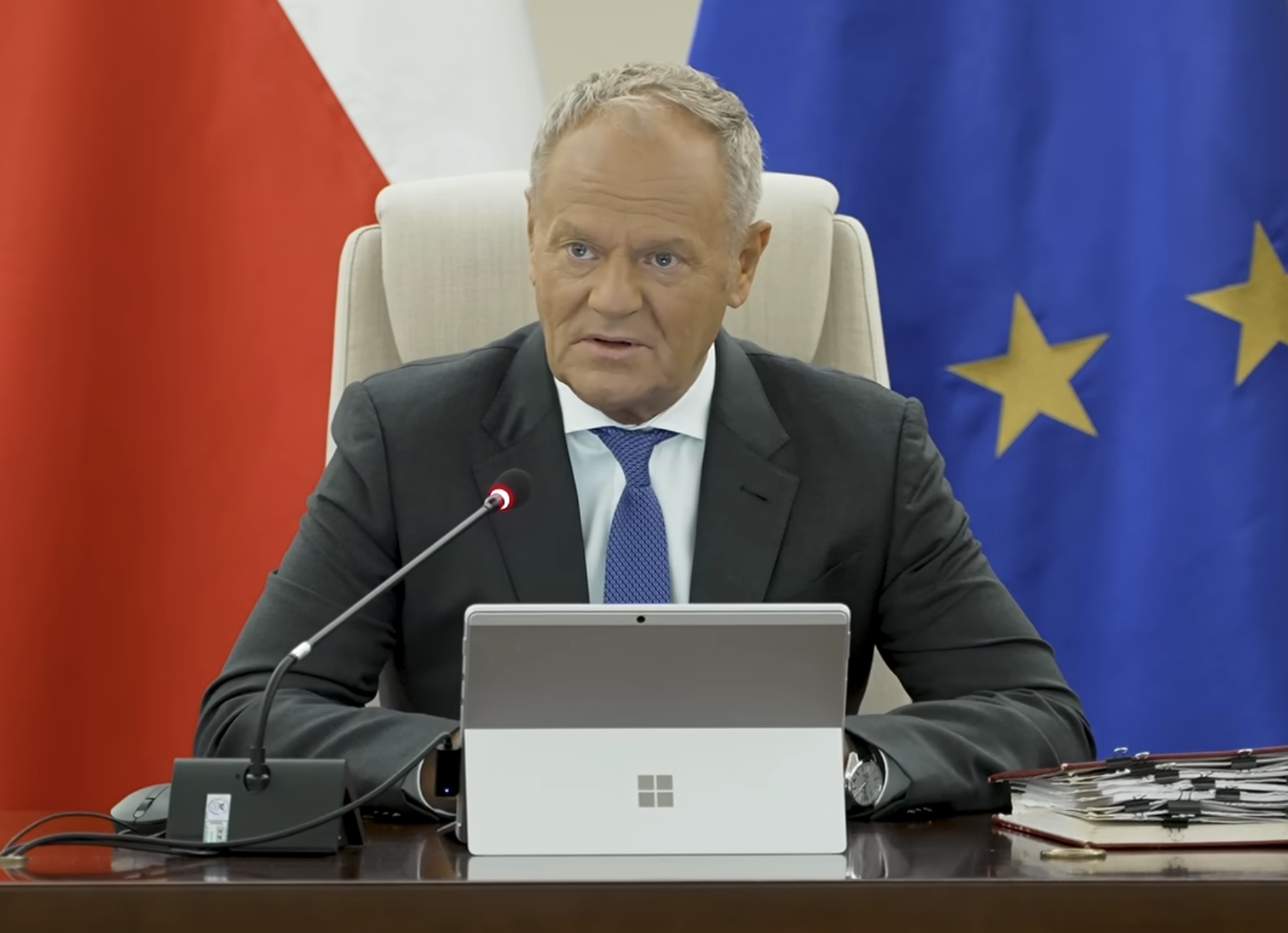
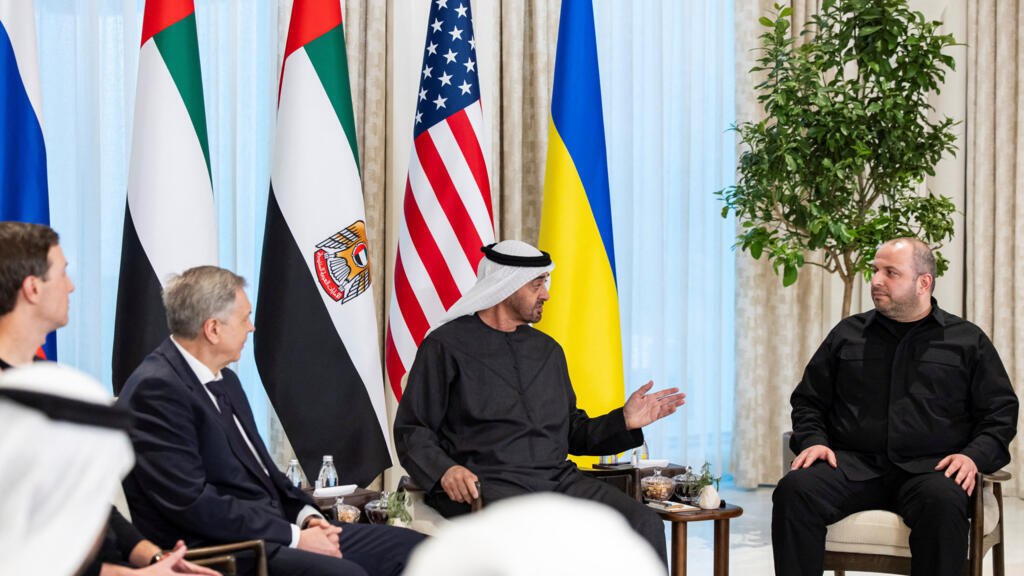
Ukraine wants its Abu Dhabi talks with Russia and the US to come before a proposed summit of the US, Russian, and Chinese leaders, President Volodymyr Zelenskyy said on 27 October. Polish Prime Minister Donald Tusk indicated the first round in Abu Dhabi could come after 4 November.
Abu Dhabi is meant to host the first round of trilateral talks between Ukraine, Russia, and the US on ending Russia’s war since delegations last met in winter. Meanwhile, Trump has waived new sanctions on Russia and struck a diesel deal with Moscow while pressing Kyiv to spare Russian refineries. In Abu Dhabi, Ukraine would at least sit at the table. A rival idea, a summit of the US, Russian, and Chinese leaders, would leave it out of the room.
Abu Dhabi first
The rival idea came from Moscow. Putin proposed meeting Trump and China’s Xi Jinping at the APEC forum in Shenzhen on 18–19 November to negotiate an end to the war on terms that would favor Moscow, The Wall Street Journal reported on 18 October. A senior US official told the paper Trump had not agreed but could be receptive. Kremlin spokesman Dmitry Peskov told the paper that a meeting was under discussion.
If that summit comes first, a deal shaped around Moscow’s terms could reach Trump before Ukraine’s own talks begin. Zelenskyy wants Abu Dhabi first. “We would very much like our meeting in Abu Dhabi to happen before that,” he said. Both Kyiv and Moscow have confirmed the meeting and view its format positively, he said. That leaves the American side, whose main focus is the Middle East.
Trump’s own remarks early on 28 October pointed to a meeting of leaders instead. One would be set up soon, he told reporters, “with President Putin and President Zelenskyy.”
Explore further
Ukraine now fights two enemies. One is America
For Abu Dhabi, Zelenskyy listed Kyiv’s agenda: de-escalation on energy and at sea, a prisoner exchange, and the format of a trilateral leaders’ meeting. A date is another matter. On the evening of 27 October, presidential communications adviser Dmytro Lytvyn told journalists it was too early for announcements.
Warsaw looks past 4 November
Tusk spoke before a cabinet meeting, after Finnish President Alexander Stubb and Norwegian Prime Minister Jonas Gahr Støre held a 90-minute call with Putin. The two said they spoke for their own countries, not for Europe. Stubb briefed Tusk afterwards. Tusk said the European side came away very moderately optimistic about constructive talks in Abu Dhabi, and pointed to a first round there after 4 November. Yet he urged absolute caution and warned against expecting an easy deal.
Poland has paused the delivery of a large military aid package to Ukraine after a Lviv regional council honored the Ukrainian Insurgent Army (UPA), a WWII nationalist force, a source in the Ukrainian government told European Pravda on 21 October. A Polish Defense Ministry spokesperson told Fakt the report was untrue, though he told WP he knew nothing about a possible delay in shipment.
If confirmed, the freeze would carry a history dispute into Poland’s military aid. The row flared in May, when Kyiv named a special forces unit after the UPA, and in June Poland’s president stripped Zelenskyy of Poland’s highest honor. Even so, Ukraine’s ambassador said in August that Polish military aid was still flowing.
A vote and a disputed freeze
The Lviv Oblast Council voted on 20 October to name 2027 the year of the UPA, its commander Roman Shukhevych, and nationalist activist Oleh Olzhych. The UPA fought Nazi Germany and the Soviet Union, but Poland holds it responsible for mass killings of Poles in Volhynia and Eastern Galicia in 1943–1944. The resolution disappeared from the council’s website late that evening, RMF24 reported.
The source blamed what it called the councilors’ irresponsible actions, saying the vote came as Poland prepared the shipment and that work through closed channels is underway. The ministry spokesperson, Janusz Sejmej, called the report untrue. Asked whether it could reflect a delay in shipment, he said he knew nothing about that.
Explore further
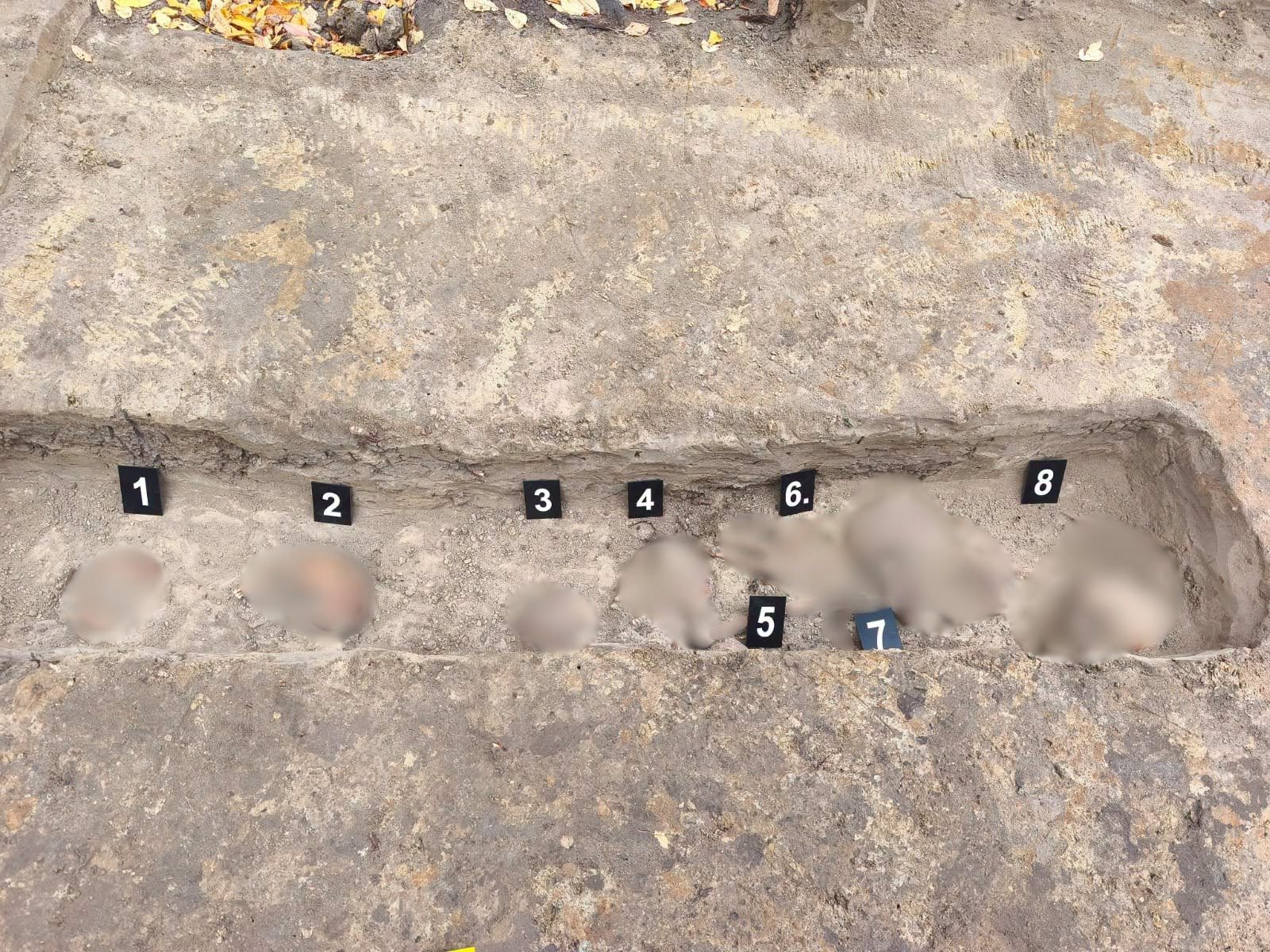
Progress on a sore point for Ukraine and Poland: remains of over 40 Ukrainians killed by Polish WWII units found in Łasków
Polish officials push back
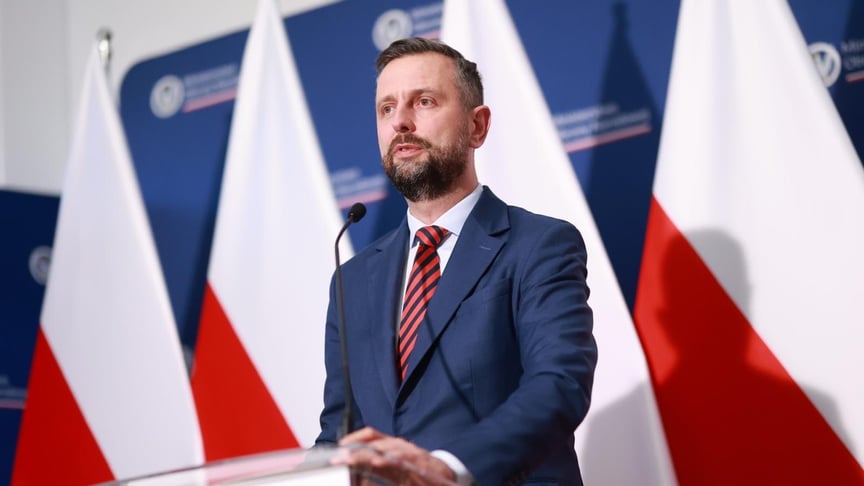
On 20 October, Defense Minister Władysław Kosiniak-Kamysz wrote that Ukraine’s authorities must distance themselves from the council’s position.
The next morning, Prime Minister Donald Tusk called the vote unwise and harmful above all to Ukraine. He said he had warned Zelenskyy earlier that such gestures hinder Ukraine’s friends, though the president was not responsible for this vote. At such moments, Tusk said, Russians always rub their hands.
Foreign Minister Radosław Sikorski then requested that councilor Sviatoslav Sheremeta, who proposed the resolution, be added to Poland’s list of unwanted persons. That afternoon, Interior Minister Marcin Kierwiński said the decision had been made. Sheremeta is barred from the Schengen zone until 2031, RMF24 reported. Poland had already barred him once, in 2017, the outlet said.
Kyiv asks for restraint
Earlier on 21 October, before the ban, Ukraine’s Foreign Ministry called the vote counterproductive in a reply to journalists and urged Warsaw to avoid abrupt steps. Zelenskyy’s closest aides had also promised the resolution would not take effect, Deputy Foreign Minister Marcin Bosacki told TVN24.
Measures would remove some penalties for those helping women access abortion but are ‘small-scale step’, say campaigners
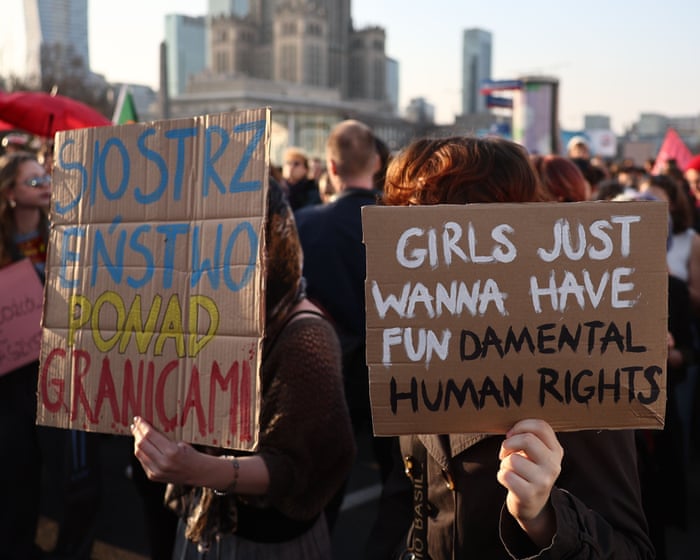
Poland’s lower house of parliament has approved two bills aimed at loosening a near-total ban on abortions, in what campaigners have described as a “small-scale step” ahead of protests calling on the government to fulfil its promises to overhaul the country’s laws.
The new measures, which are likely to be vetoed by Poland’s nationalist president, would remove some of the criminal penalties for those who help women to access abortion care and allow terminations in cases of foetal abnormalities.
Man muss weder Völkerrechtler noch Experte sein, um zu wissen und zu verstehen, dass es eine direkte Kriegsbeteiligung ist, wenn ein Land einem anderen Land seinen Luftraum für Angriffe auf ein weiteres Land zur Verfügung stellt. Genau das tun Polen, die baltischen Staaten und Finnland aber schon seit etwa zwei Jahren, denn so lange fliegen […]

 Login