❌

Reading view

Electric Car Sales Surge 70 Per Cent as France and Germany Seek Changes to EU Emissions Rules

Registrations of fully electric cars across 17 European markets increased by 70.3 per cent in September, according to industry figures published on Monday, 19 October, as France and Germany seek to ease the European Union’s emissions requirements for new vehicles.

The data show that 300,202 battery-electric cars were registered during the month, accounting for 32.6 per cent of new passenger-car registrations in the markets surveyed.

The figures emerge three days after Paris and Berlin announced a joint position on the future of Europe’s automotive industry, proposing greater flexibility in the EU’s 2035 emissions regime while introducing measures intended to favour vehicles manufactured in Europe.

Electric vehicles gain market share

The latest figures, compiled by E-Mobility Europe, New Automotive and Fier Automotive, indicate that electric vehicle demand accelerated sharply during September.

According to the industry data published on 19 October, approximately 1.98 million battery-electric cars have been registered across the 17 markets during the first nine months of 2026, an increase of 38.1 per cent compared with the equivalent period last year.

Higher oil prices, government incentives and the introduction of more affordable electric models have all contributed to demand.

The figures represent a substantial change in the composition of European new-car sales, although they cover selected markets rather than constituting a complete statistical account of the EU’s 27 Member States.

France recorded 65,243 battery-electric registrations in September, representing 41.7 per cent of its new-car market. Germany registered 88,724 electric vehicles, giving the technology a market share of 34.6 per cent.

Both countries have substantial automotive manufacturing industries and are directly involved in negotiations over Europe’s future emissions legislation.

Significant differences between European markets

Despite the overall increase, electric vehicle adoption remains uneven across the continent.

Norway retained its position as Europe’s most electrified new-car market, with battery-electric vehicles accounting for 98.8 per cent of registrations in September.

Denmark followed with 88.8 per cent, while Finland recorded 62.7 per cent and Sweden 49 per cent.

Electric models also accounted for approximately half of new-car registrations in Belgium, the Netherlands, Ireland and Portugal.

At the other end of the market, battery-electric vehicles represented only 11.2 per cent of registrations in the Czech Republic, 7.6 per cent in Italy and 6.2 per cent in Poland.

These differences illustrate the difficulty of establishing a uniform European transition timetable.

Household incomes, purchase incentives, vehicle prices and charging infrastructure differ substantially between countries. The availability of affordable electric cars is particularly important in markets where buyers are more sensitive to the initial purchase price.

The varying national figures also complicate the EU’s industrial calculations, since manufacturers must operate across markets progressing at different rates.

France and Germany reach automotive compromise

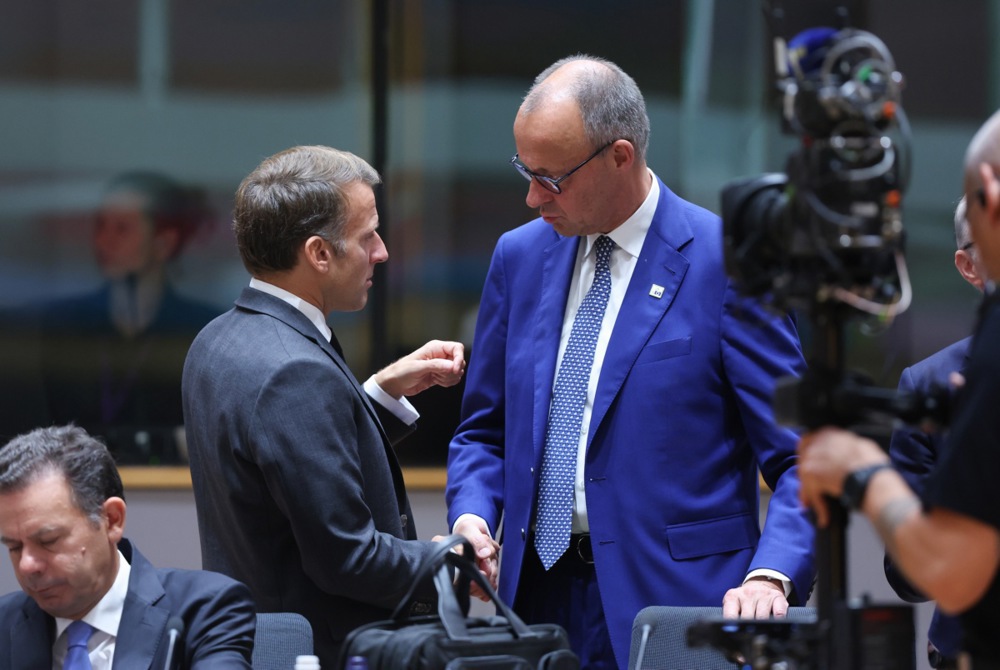
On 16 October, French President Emmanuel Macron and German Chancellor Friedrich Merz agreed on a joint approach to changes in European automotive regulations.

Under the proposed compromise, car manufacturers would be required to reduce carbon dioxide emissions from new vehicles by 90 per cent by 2035 compared with the 2021 reference level.

The agreement would also remove a proposed requirement to compensate for the remaining emissions through measures such as the use of low-carbon steel.

The change would create additional opportunities for manufacturers to continue selling vehicles powered by combustion engines beyond 2035, subject to the final legislative framework.

In their joint declaration on the automotive industry’s future, the French and German governments argued that emissions reduction must be combined with industrial competitiveness, investment and European manufacturing capacity.

The agreement also envisages preferential treatment for vehicles produced in Europe under certain public procurement and subsidy arrangements.

Britain could potentially benefit from provisions allowing selected European partners to qualify under the proposed industrial framework.

The Franco-German understanding is not, however, a final EU legislative decision. Changes to the regulatory regime require agreement through the relevant European legislative procedures.

Automotive competitiveness enters the debate

The principal argument advanced by supporters of greater regulatory flexibility is that European manufacturers need additional time to adapt production, protect employment and compete with international rivals.

German manufacturers retain extensive investment in combustion-engine and hybrid technology, while French producers have placed considerable emphasis on electric vehicles and maintaining European supply chains.

The negotiations therefore concern more than emissions limits. They also involve battery production, access to raw materials, manufacturing costs and the ability of European companies to compete with producers in China and other markets.

Supporters of the existing transition timetable argue that weakening long-term requirements could discourage investment in electric manufacturing capacity just as consumer demand is increasing.

Manufacturers seeking greater flexibility maintain that regulatory targets must account for uneven market conditions and the cost of developing new technologies.

September’s sales figures provide evidence that electric vehicle adoption is accelerating, but they do not establish whether the same rate of growth will continue without existing incentives.

The debate now centres on whether regulatory relaxation will preserve Europe’s automotive industry during the transition or slow investment in the technology that is already capturing an increasing share of the market.

  •  

South Korea: A growing national crisis and a strategic warning

Recent media reports projecting South Korea’s per capita GDP to surpass Japan’s have generated considerable excitement across the regional countries that see Korea as a role model. According to the IMF’s October 2026 projections, South Korea’s nominal GDP per capita could reach approximately $49,000 in 2027, compared with Japan’s $37,000-38,000. Its achievements in semiconductors, advanced […]

The post South Korea: A growing national crisis and a strategic warning appeared first on Asia Times.

  •  

The Ladder & the Fence: What 4 Economists Knew That Today’s Financial Order Forgot. Part 1

The richest countries climbed to prosperity by methods they now forbid everyone else to use. Hamilton, List, Carey and Polanyi, four economists explained why those methods work and why abandoning them ends badly. There is a story the world’s wealthiest capitals love to tell about themselves. Prosperity, it goes, is the reward for opening your […]
  •  

Exclusive: What’s really happening at the Iran-Pakistan border

There’s no way to fight the Empire without bypassing its control of the international financial system.

Join us on Telegram, X, and VK.

Contact us: info@strategic-culture.su

All hell is already breaking loose when it comes to probing what is exactly taking place related to the latest, definitely murky U.S.-linked movements in Pakistani land and sea. After an initial assessment at Transition Protocol – which avowedly did not provide all the necessary answers – we dug deeper into a way more comprehensive examination supported by several sources.

What we are watching across several nodes of extremely sensitive Iran-Pakistan overland connectivity is not a blanket border shutdown; but a surgical, two-track balancing act by Islamabad between Washington’s tremendous financial vise and Tehran’s strategic lifeline.

So here’s where it all stands – compounding the verified record with our latest consultations.

The key point: the regulatory trigger was a banking sanctions move, not just border security.

While provincial officials in Balochistan publicly framed Saturday’s halt at two key nodes, Taftan and Gabd–Rimdan, around security, counterterrorism, and anti-smuggling, what matters most is the exact mechanism around a memorandum issued last Friday by the Pakistani Ministry of Commerce.

That immediately revoked an October 3 extension of the Electronic Import Form (EIF) waiver for goods imported from Iran, and coincided with Islamabad’s instruction to close the Federal Investigation Agency (FIA) immigration gate at Taftan.

What is key is that without the EIF waiver, Pakistani importers must process Iranian purchases through formal Pakistani banking channels – which U.S. sanctions, of course, make absolutely impossible.

Peyman Sanandaji, head of the Transportation Commission at the Tehran Chamber of Commerce, confirmed on the record that it is banking sanctions compliance (ditching the EIF) that halted Iranian exports into Pakistan.

The immediate shock at the formal gates was quite something: more than 4,000 tons of daily Iranian LPG imports through Gabd–Rimdan are at risk. Former Quetta Chamber of Commerce president Ayoub Miryani reported that over 2,000 containers are stranded at Gabd–Rimdan alone, with hundreds more freight trucks backed up at Taftan.

So why is this happening now? Because of the nasty convergence between the October 7 IMF tranche Pakistan had to pay, and the imperial U.S. Treasury “Operation Economic Outcast”.

Under Operation Economic Outcast, Washington gave third countries a “defined timeline to shut down” Iran-related commercial lifelines or face expulsion from the U.S. financial system. That was followed by OFAC’s October 1 designations against Iran’s overland rail and industrial networks and October 8 actions against 17 shadow-fleet tankers.

But then, on October 7 – only nine days before the Ministry of Commerce revoked the EIF waiver – Islamabad reached an agreement with the IMF on the Fourth Review of its Extended Fund Facility to unlock $1.21 billion. That still requires IMF Executive Board approval.

Of course there is no public document showing a direct U.S. or IMF order to close Iran-Pakistan borders. But sources in Islamabad stressed that leaving an open-ended banking-instrument waiver on the books ahead of the IMF Board vote had become an untenable sanctions vulnerability for Pakistan.

Islamabad sources are adamant that the move was paired with genuine counter-sabotage concerns and quietly coordinated between Islamabad and Tehran (italics mine) so the pause would not rupture bilateral ties.

Iranian Foreign Ministry spokesperson Esmaeil Baghaei publicly called the disruption a temporary pause due to “technical issues” and “precautionary measures”.

Pakistani official sources, for their part, insisted that the tightened controls are a joint counterterrorism measure reflecting “mutual understanding” with Tehran after a spike in Sistan-Balochistan attacks; highway ambushes; and an October 11 maritime attack on Pakistan Coast Guard boats off Jiwani – which Pakistani officials attributed to “foreign actors” seeking to sabotage Pakistan’s mediation of the Iran peace deal.

Back to the same old pattern of Salafi-jihadis weaponized and manipulated by the usual suspects.

The only publicly confirmed telephone call between Deputy Prime Minister Ishaq Dar and Foreign Minister Abbas Araghchi took place on Sunday, October 18 – two days after the October 16 memorandum – and its official readouts mention only regional diplomacy and the Baghdad OIC meeting.

So prior coordination at the Dar–Araghchi Foreign Minister level and specific sabotage arrests therefore are part of our own reporting.

Asymmetric food exports and informal routes

In a nutshell, stuff is still moving across borders. Islamabad deliberately left alive Pakistani perishables and food exports to Iran. Essential perishables – including tomatoes, potatoes, and onions – continue to move, alongside traditional oil and fuel flows across the porous 909-km border.

The regulatory record explains why: 8 months ago, Pakistan enacted a separate banking-instrument waiver specifically for 10 food exports to Iran by land (explicitly listing rice, potatoes, onions, tomatoes, meat, and fruit) plus pharmaceuticals.

Tehran’s Chamber of Commerce confirmed this past Saturday that while Iranian exports to Pakistan are stalled by the EIF rule, imports from Pakistan into Iran are continuing, and informal fuel and border trade across Balochistan already operates at an estimated $800 million to over $1 billion annually outside formal customs.

Special attention should be placed on the ports of Gwadar and Karachi, and the overall China–Iran Transit Architecture. Third-country and China-Iran transit through Pakistan, according to our sources, remains protected.

On a legal level, a document detailing Pakistan’s transit of goods established six designated overland transit corridors linking Gwadar, Karachi, and Port Qasim to Gabd and Taftan for third-country cargo bound for Iran under a bank guarantee.

And a Federal Board of Revenue’s notification this past June formally designated Taftan railway station as a Land Customs Station, with Iranian and Pakistani ministers pitching the rail corridor to link China to Iran and Europe.

However, two very complicated operational constraints remain in place.

The Quetta-Taftan rail modernization is still listed officially as a planned upgrade; and OFAC’s October 1 designation of the Islamic Republic of Iran Railway Company (RAI) was explicitly designed to choke Tehran’s shift from blockaded sea lanes to rail.

To sum it all up: it takes supreme skill to face The Empire of Piracy. Islamabad has executed a classic, calibrated maneuver: visibly revoking the formal EIF import waiver at Taftan and Gabd–Rimdan to insulate its pending $1.21 billion IMF tranche and Pakistani banks from U.S. Treasury secondary sanctions.

And all the while keeping Pakistani food exports, informal border valves, and third-country transit frameworks alive with Tehran.

Whether this remains a brief administrative reset or hardens into a longer choke point will be decided by three indicators over the next fortnight:

  1. A modified EIF or barter notification from the Commerce Ministry.
  2. Separate customs clearance for Gwadar/Karachi transit cargo.
  3. Documented freight movements across the Taftan–Zahedan rail link.

May the lesson be imprinted on rare earths for the whole Global South to ponder: there’s no way to fight the Empire without bypassing its control of the international financial system.

  •  

Washington Tried to Isolate Russia. Now It Needs Russian Oil

Four years after Washington set out to cripple Russia’s energy economy, America’s war with Iran has forced it to seek relief from the very country it tried to isolate, encircle, and defeat. The Sanctions Strategy Meets Its Limits On October 9, US President Donald Trump announced an extraordinary agreement with Russian President Vladimir Putin: Moscow […]
  •  

Dopo la Russia, la Cina è il prossimo obiettivo dei falchi europei?

Non disponendo delle condizioni materiali necessarie per sfidare la supremazia industriale cinese, l’Unione Europea continua a trasformare le proprie difficoltà economiche in una giustificazione per una nuova escalation delle ostilità.

Segue nostro Telegram.

I leader europei sembrano aver individuato una nuova missione strategica: ricostruire la capacità industriale del continente riducendo al contempo la sua dipendenza dalla Cina. L’iniziativa è stata recentemente avanzata congiuntamente da Francia e Germania e viene presentata come una risposta alla crescente presenza della Cina sul mercato europeo. Il problema è che i leader responsabili di questo progetto continuano a ignorare una questione fondamentale: nessuna reindustrializzazione su larga scala può avere successo senza un approvvigionamento energetico stabile, abbondante e a prezzi accessibili.

L’Europa dispone di eccellenti università, di una forza lavoro qualificata, di centri tecnologici all’avanguardia e di una tradizione industriale che le conferisce ancora notevoli vantaggi. Tuttavia, queste risorse non possono funzionare in modo isolato. Gli impianti chimici, le acciaierie, gli stabilimenti metallurgici e numerose altre industrie dipendono da un approvvigionamento energetico continuo e competitivo. Il capitale, le conoscenze scientifiche e i lavoratori specializzati non possono compensare all’infinito i costi di produzione elevati. È proprio su questo punto che la strategia dell’Europa contraddice i propri stessi obiettivi.

Per decenni, l’integrazione economica tra l’Europa occidentale e la Russia ha fornito condizioni favorevoli allo sviluppo di importanti settori industriali. Le forniture di gas naturale russo, in particolare, hanno contribuito a sostenere attività ad alto consumo energetico. Questo rapporto ha soddisfatto gli interessi economici concreti di entrambe le parti: Mosca disponeva di un importante mercato per le proprie esportazioni, mentre le economie europee ottenevano una risorsa essenziale per la loro competitività.

L’introduzione delle sanzioni nel 2022 ha profondamente alterato questa situazione. Le misure coercitive illegali hanno reciso un partenariato di lunga data tra Russia ed Europa, lasciando la parte occidentale del continente economicamente indebolita e dipendente da approvvigionamenti energetici esterni più costosi e meno sicuri. L’Europa, che già prima di allora stava subendo una graduale deindustrializzazione, è successivamente precipitata in una crisi energetica, con conseguenze che vanno dall’aumento delle bollette energetiche ai fallimenti aziendali causati dall’incapacità di mantenere una produzione competitiva.

Sarebbe ragionevole aspettarsi che una strategia di ripresa industriale iniziasse affrontando queste vulnerabilità. Invece, i leader europei stanno tentando di costruire una nuova base produttiva senza risolvere adeguatamente il problema energetico. I responsabili della politica economica europea sembrano ritenere che sussidi, incentivi fiscali e programmi di investimento siano sufficienti a ripristinare la competitività. Tali strumenti possono contribuire allo sviluppo industriale, ma la loro efficacia rimarrà limitata fintantoché persisteranno gli svantaggi strutturali nei costi energetici.

È in questo contesto che la Cina sta assumendo una posizione sempre più di rilievo nella «lista delle preoccupazioni» di Bruxelles. La capacità della Cina di produrre su vasta scala, rifornire catene industriali complesse e offrire attrezzature a prezzi competitivi rappresenta una sfida per un’Europa che cerca di recuperare la propria autonomia produttiva. Anziché riconoscere la portata del declino accumulato e sviluppare una strategia coerente per invertire la tendenza, alcuni settori della leadership europea preferiscono ricorrere a barriere commerciali, indagini punitive e meccanismi di contenimento economico.

Tale approccio rivela una comprensione piuttosto superficiale della concorrenza industriale. Limitare le importazioni cinesi non comporta automaticamente la creazione di stabilimenti europei, né riduce i costi dell’elettricità, né garantisce l’approvvigionamento di gas agli impianti industriali. Al contrario, le aziende che dipendono da attrezzature, componenti e materie prime cinesi potrebbero trovarsi a dover sostenere spese più elevate proprio nel momento in cui hanno bisogno di investire per recuperare la propria posizione sui mercati internazionali.

La questione russa rende questa situazione ancora più delicata. Il ripristino della cooperazione energetica con Mosca costituirebbe il primo passo di qualsiasi serio piano di ripresa industriale. Grazie alle forniture energetiche russe e ad ampie partnership commerciali con la Cina, l’Europa potrebbe ritrovare una nuova strada verso lo sviluppo, proprio come stanno ora iniziando a fare i paesi africani e asiatici attraverso le loro partnership con la Russia e la Cina.

Bruxelles, Parigi e Berlino, tuttavia, si stanno muovendo nella direzione opposta. Gli strateghi europei sembrano determinati a confrontarsi contemporaneamente con due delle maggiori potenze industriali ed energetiche del mondo, senza dimostrare di possedere le risorse necessarie per sostenere tale ambizione. In primo luogo, hanno compromesso un rapporto energetico fondamentale con la Russia. Ora rischiano di trasformare la Cina in un avversario commerciale permanente.

In definitiva, ciò che i falchi europei perseguono non è lo sviluppo dell’Europa, bensì la strumentalizzazione di questioni quali l’industria e il commercio per portare avanti la propria agenda autodistruttiva. In base a questa strategia, i cittadini europei – già privati dell’energia russa e potenzialmente destinati a un accesso ridotto ai prodotti cinesi nel prossimo futuro – saranno ancora una volta i primi a subirne le conseguenze.

  •  

Europe’s new Franco-German auto pact will protect combustion engines, not European jobs

Berlin and Paris spent months negotiating over the future of Europe’s auto industry.

Germany wanted to keep selling new combustion-engine cars beyond 2035. In return, France wanted strict “Made in Europe” rules: public money spent on electric vehicle (EV) purchase incentives, subsidies and government contracts should benefit cars genuinely made in Europe, not simply assembled here. 

One concession in exchange for the other. French president Emmanuel Macron and German chancellor Friedrich Merz have now sealed the deal.

Both can claim victory at home, and both say they want the same thing: to strengthen Europe’s auto industry against Chinese competition. 

But the trade-off undermines that very goal. It rightly pushes for more European production, but pays for it with less ambition for electric vehicles.

For Europe’s automakers to compete, two things need to happen: More of the value generated by car manufacturing must stay in Europe, and the transition to electric vehicles must remain on track. Trading one for the other weakens both. 

Value creation is already moving elsewhere 

On one point, France is right: a growing EV market alone won’t protect European jobs. Many of the most important components in electric cars already come from China, especially batteries.

Meanwhile, Chinese automakers are building factories in Hungary and Spain, securing direct access to the European market. 

The risk is clear: cars assembled in Europe from imported components qualify as European products, benefit from purchase incentives and win public contracts.

Final assembly stays in Europe, but much of the economic value is created elsewhere. European auto suppliers have already cut more than 100,000 jobs in two years, and the European Commission warns that up to 600,000 more could disappear over the next five to 10 years. 

That’s where the proposed Industrial Accelerator Act comes in. It would link public spending on subsidies, purchase incentives and government procurement to production in Europe.

This isn’t just about shutting out foreign competition. It steers demand to where it strengthens Europe’s industrial base.

To work, the rules must target the components that will shape the industry’s future: battery cells, software, electric drivetrains and power electronics.

“Made in Europe” can’t simply mean attaching the wheels here. 

That doesn’t mean every nut and bolt must come from the EU.  The auto industry relies on global supply chains and trusted trading partners.

But a law riddled with exemptions would be little better than no law at all: It would create more red tape without bringing a single new factory to Europe. 

Factories need customers 

Even the best industrial policy will fail without buyers. A battery factory can only make money if it produces enough batteries. Yet Europe’s battery plants are running well below capacity because they don’t have enough orders. Every battery that goes unproduced drives up the cost of those that are made. Factories, machinery and workers still have to be paid for. 

Since 2022, roughly a quarter of announced battery projects in the EU have been canceled or put on hold. 

This is why Germany’s push to delay the phaseout of combustion-engine cars is so damaging. Every combustion-engine car sold instead of an EV means one fewer battery that could be made in Europe. The very factories meant to make “Made in Europe” a reality would lose potential customers. 

The best way to boost demand for European batteries is to build more small, affordable EVs in Europe. That’s where the biggest sales volumes are. Yet German automakers in particular have been slow to embrace this market, despite significant demand potential in Germany itself. Delaying the combustion-engine phaseout would only give them another reason to hold back.  

Slow down, lose out

For European automakers, the stakes go far beyond their home market. Sell fewer EVs at home, and manufacturers will launch fewer new models, produce fewer cars and face higher costs. That will make it harder to compete abroad, too. Giving combustion engines more time won’t close the gap with China. It could make it wider. 

Political uncertainty only makes matters worse. Automakers plan new models, factories and supplier contracts years in advance. Every fresh debate over exemptions gives investors and consumers another reason to hesitate. 

Companies investing billions in EVs and batteries – and consumers considering buying an electric car – need to know that policymakers won’t change direction tomorrow.  

The Franco-German bargain ignores economic reality. The future of the car is electric, and China figured that out long ago.

Beijing is doing everything it can to build an unbeatable lead in EVs, including through unfair practices such as massive government subsidies.

And Europe? It’s haggling over more time for yesterday’s technology. At stake is nothing less than the auto industry – the backbone of Europe’s industrial economy and a major source of jobs.

This deal is not yet law. A better deal would be simple: Europe should pursue electric vehicles with the same determination as China while making sure the jobs, factories and economic benefits stay in Europe. 

  •  

The Mexican Government Is Close to Approving a Law Aimed at Removing the Use of Cash

by Matt Agorist, The Free Thought Project: Will an effort to limit and eventually ban cash payments work in a nation where 80 to 90 percent of payments are made in cash? (The Last American Vagabond) On Wednesday, the Mexican government inched closer to passing a law that would begin the process of phasing out cash […]
  •  

Five Arrested in €114 Million Smartphone VAT Fraud Investigation Across Europe

Five people have been arrested in Cyprus, Germany and Italy as part of a European investigation into an alleged €114 million VAT fraud operation involving the cross-border smartphone trade.

The European Public Prosecutor’s Office (EPPO) announced on 16th October that three suspects had been detained in Cyprus, one in Germany and one in Italy following an investigation coordinated by its Munich office.

Investigators believe the suspects established and controlled a network of companies designed to exploit the tax treatment of goods traded between EU member states.

The alleged operation involved smartphone transactions through businesses and so-called missing traders operating in Germany, Albania and Sweden. Prosecutors estimate that the activities caused VAT losses of approximately €80 million in Sweden and €34 million in Germany.

According to the official announcement of the arrests, the operation forms part of a wider investigation known as Midas, which is examining organised cross-border tax fraud.

Searches across several countries

The arrests were accompanied by searches and seizures in Cyprus, Greece and Italy, conducted with the assistance of national police, financial investigators and tax authorities.

Prosecutors said 12 searches had been carried out at premises connected with the suspects and companies under investigation.

Assets of up to €80,000 were frozen, while investigators also seized or took action against bank accounts, vehicles and property.

The operation involved cooperation between Germany’s tax authorities, Cyprus’s financial intelligence and cybercrime units, the Greek financial police and Italy’s Guardia di Finanza.

The suspects are believed to have played leading roles in organising and controlling the alleged scheme, although prosecutors have not publicly established their individual criminal responsibility.

The investigation remains subject to proceedings before the competent German courts. All suspects are presumed innocent unless proven guilty.

How the alleged fraud operated

The case concerns a form of tax evasion known as missing-trader intra-community fraud, commonly described as carousel VAT fraud.

Under the EU’s VAT system, qualifying business-to-business transactions involving goods transported between member states are generally exempt from VAT in the country of dispatch.

The purchaser accounts for VAT under the rules applicable in the destination country, while subsequent domestic sales normally involve VAT being charged to the buyer.

Fraudsters can exploit those arrangements by establishing companies that purchase goods through cross-border transactions before reselling them domestically.

A missing trader collects VAT from the purchaser but fails to remit it to the relevant tax authority. Other companies in the transaction chain may then seek deductions or refunds.

The same goods can pass through several businesses and, in some arrangements, move repeatedly between countries, allowing the fraud to be repeated.

Smartphones and electronic equipment are particularly attractive because they are relatively expensive, easily transported and can be traded in large volumes.

The complexity of the arrangements makes investigations difficult when businesses are established in several jurisdictions and transactions move rapidly between companies.

A wider European problem

The latest arrests follow another substantial VAT fraud operation announced earlier this month.

On 7th October, the EPPO reported that 62 suspects had been detained in a separate investigation involving alleged losses of at least €410 million.

That operation, known as Hermes, involved searches across eight countries and allegations concerning the sale of mobile phones and other electronic devices.

Although separate from Midas, the investigation illustrates the scale and organisation of suspected VAT fraud involving internationally traded consumer electronics.

According to the EPPO‘s 2025 annual report, prosecutors were handling 3,602 active investigations at the end of last year, with estimated potential damage exceeding €67 billion.

Of that amount, more than €45 billion related to suspected VAT and customs fraud.

Those figures concern estimated losses under investigation, rather than sums established by final court judgments or amounts that have already been recovered.

Protecting European tax revenues

The financial consequences extend beyond the immediate losses attributed to individual schemes.

VAT is a major source of revenue for national governments and forms part of the system used to calculate certain contributions to the EU budget.

Fraudulent transactions can also distort competition by allowing dishonest operators to offer prices that legitimate businesses cannot match.

The Commission’s 2025 VAT gap report estimated that EU countries failed to collect approximately €128 billion in expected VAT revenue in 2023.

That broader figure includes losses arising from several causes, including administrative errors and insolvency, and cannot be attributed entirely to criminal fraud.

The latest arrests also demonstrate the importance of cross-border investigative cooperation when suspected financial offences involve companies, transactions and assets located in different countries.

In the Midas investigation, prosecutors must now establish the precise roles of the suspects, prove the alleged transactions and determine whether criminal proceedings can result in convictions and financial recovery.

The arrests represent another stage in the investigation, not a judicial finding that the alleged €114 million fraud has been proved.

  •  

France’s Unrest Exposes the Failure of Macron’s Centrist Political Model

What began as a student protest over deteriorating schools has developed into a nationwide revolt against economic hardship, political paralysis and declining public services. With the 2027 presidential election approaching, the violence has exposed problems that neither the government nor its principal opponents have convincing plans to resolve.

France’s latest wave of unrest has developed into one of the most serious domestic crises of Emmanuel Macron’s presidency. More than 550,000 people participated in demonstrations on 17 October, according to official estimates, before violence spread through Paris and other major cities. Shops were looted, police confronted rioters, and the historic town hall in Limoges was largely destroyed by fire.

The scale of the destruction prompted emergency government consultations and a televised presidential address. Macron promised to prosecute those responsible, while stopping short of declaring a state of emergency. Yet the immediate security challenge conceals a more difficult political question: why have protests that began with relatively specific demands over education become a confrontation involving such different sections of French society?

From school protests to a national revolt

The movement originated among secondary-school students demanding better facilities, more teachers and improvements in educational standards. Their complaints subsequently attracted trade unions, workers, farmers and elements of the Gilets Jaunes, the Yellow Vest movement that challenged Macron’s government in 2018.

The resulting coalition has no coherent political programme. Students protesting overcrowded classrooms share demonstrations with workers concerned about purchasing power and motorists angered by fuel prices. Their interests are not necessarily compatible, but they reflect a common dissatisfaction with the government’s ability to deliver functioning public services while containing living costs.

This distinction matters. The presence of masked rioters and organised groups engaged in violence does not establish that the hundreds of thousands who demonstrated peacefully supported their actions. Equally, the destruction of public buildings, attacks on police and widespread looting raise legitimate questions about the state’s capacity to maintain public order.

The economic problem behind the protests

At the centre of the discontent lies a structural problem that successive French governments have struggled to confront: the distribution of public expenditure between an ageing population and the services required by younger generations.

A French government budget assessment published in October revealed that pension obligations accounted for approximately 32 per cent of the education ministry’s budget, including €28.5 billion in pension expenditure. These obligations restrict the resources available for other departmental priorities.

France nevertheless remains a substantial spender on education. According to official figures, expenditure reached €199.2 billion in 2025, equivalent to 6.7 per cent of GDP. However, after inflation, the annual increase was only 0.1 per cent.

The issue is therefore not simply how much France spends, but how efficiently resources are allocated and whether expenditure meets changing educational needs.

The OECD’s 2025 PISA assessment found that French pupils’ performance in mathematics and reading had declined compared with 2022. Results were among the country’s lowest recorded, although broadly comparable with the OECD average.

These figures give the student protests a significance extending beyond the immediate condition of classrooms. They raise questions about France’s longer-term economic competitiveness and its capacity to provide younger generations with opportunities comparable to those enjoyed by their predecessors.

The limits of Macron’s reform programme

Macron entered office in 2017 promising to modernise the French economy and overcome the traditional division between left and right. Nearly a decade later, his administration faces a fragmented parliament, constrained public finances and growing resistance to further structural reforms.

The suspension of his pension reform illustrated the difficulty. Raising the retirement age was intended to reduce pressure on the pension system, but parliamentary opposition forced the government to defer the measure until after the presidential election.

The underlying financial pressures have not disappeared. Nor can they be resolved easily through additional spending when public debt, borrowing costs and budgetary obligations already restrict the government’s room for manoeuvre.

This creates an uncomfortable political reality: the state is expected to provide better services, greater purchasing-power protection and stronger security, while the available resources remain limited.

Can the opposition benefit?

The unrest comes approximately six months before the presidential election, with Marine Le Pen’s National Rally and Jean-Luc Mélenchon’s France Unbowed competing to establish themselves as alternatives to Macron’s political centre.

Le Pen has sought to combine support for economic grievances with demands for tougher policing. That position may attract voters concerned by the violence, but it also exposes tensions within a movement that previously supported the Yellow Vest protests.

Mélenchon faces a different difficulty. Supporting demonstrations against government policy is consistent with his political programme, but the involvement of violent groups risks shifting public attention from social demands towards questions of security.

A recent presidential opinion poll even suggested that Le Pen and Mélenchon could contest the final round, illustrating the weakening position of more conventional political alternatives.

Neither, however, can escape the fiscal constraints that have frustrated Macron’s government. A change of president would not automatically provide the resources required to expand public services, reform pensions and reduce the deficit simultaneously.

A wider problem for France and Europe

President Donald Trump has attributed the French unrest to immigration, although the movement’s documented origins lie principally in education, living costs and dissatisfaction with public services. Without established evidence about those responsible for individual acts of violence, broader claims about the demonstrators’ backgrounds remain speculative.

For the European Union, France’s instability carries consequences beyond its domestic political debate. France is central to European defence, fiscal negotiations and support for Ukraine. Sustained political paralysis would complicate its ability to negotiate and implement decisions requiring substantial public expenditure.

The immediate task for Macron’s government is to restore security without allowing the legitimate grievances of peaceful demonstrators to disappear from political consideration. The more difficult task will fall to whoever enters the Élysée in 2027.

France’s crisis is not simply a repetition of the Yellow Vest movement. It reflects a growing conflict over public resources, expectations of the state and the ability of established political institutions to reconcile competing demands.

The violence may subside, but the economic contradictions that brought such different groups onto the streets will remain. The presidential election will determine who inherits them, rather than whether they exist.

  •  
❌