 Login

Proteste in Europa e l’inganno dell’economia di guerra
Rivolte in Europa tra crisi agricola, furia delle periferie ed economia di guerra: come le élite usano il caos di piazza per salvare il riarmo NATO.


South Korea will withdraw more staff from its embassy in Kyiv, Foreign Ministry spokesperson Park Doo-soon said on 20 October. Seoul says Kyiv broke an understanding to keep the transfer of two North Korean prisoners of war confidential, which was meant to protect the soldiers and their families in the North. Seoul had conveyed its position through several channels but received no sufficient response from Kyiv, Park added.
The Korea Herald noted, the move comes amid a dispute with the host government itself. That matters beyond the two countries. Good ties with Kyiv serve South Korea’s interests, AP reported earlier this month, citing experts, because Ukraine could share intelligence on North Korea’s expanding cooperation with Russia and its battlefield experience.
Officials put the planned withdrawal at about half the embassy’s staff. The Korea Herald added that the timing has yet to be set. A chargé d’affaires and all consular staff will stay in Kyiv to keep diplomatic contacts and protect South Korean citizens.
Zelenskyy told the UN General Assembly in September that Ukraine had transferred two captured North Korean soldiers to South Korea. Ukrainian forces had captured both men in Russia’s Kursk Oblast in January 2025, where Pyongyang had sent troops to fight for Moscow.

On 6 October, South Korean Foreign Minister Cho Hyun said Sybiha’s messages included words of apology but fell short of what Seoul expected. Ukrainian Foreign Ministry spokesperson Heorhii Tykhyi replied that Sybiha had written he regretted the situation reaching an exchange of critical comments.
In an interview published on 12 October, Foreign Minister Andrii Sybiha told the dispute stemmed from differing readings of confidentiality at various stages of the transfer. He considers the matter closed. “Ukraine fulfilled all its obligations.”
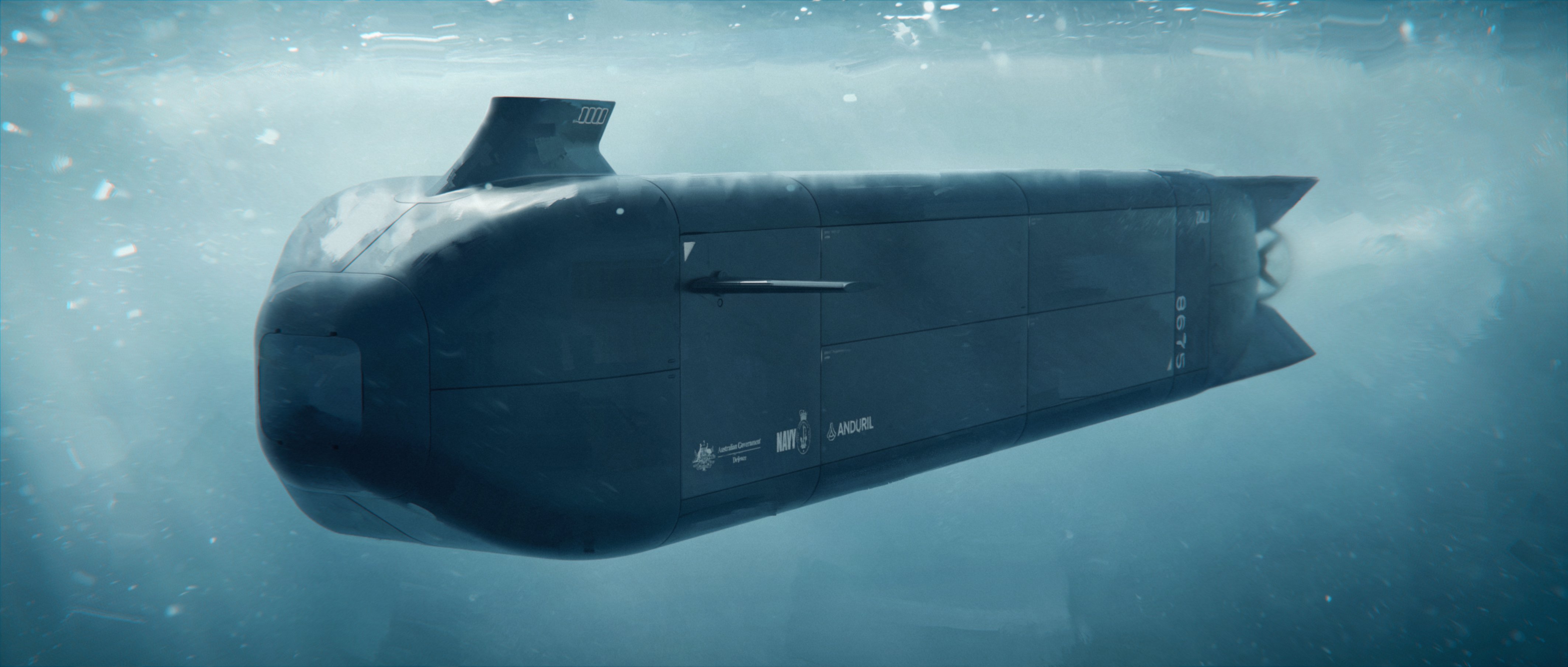
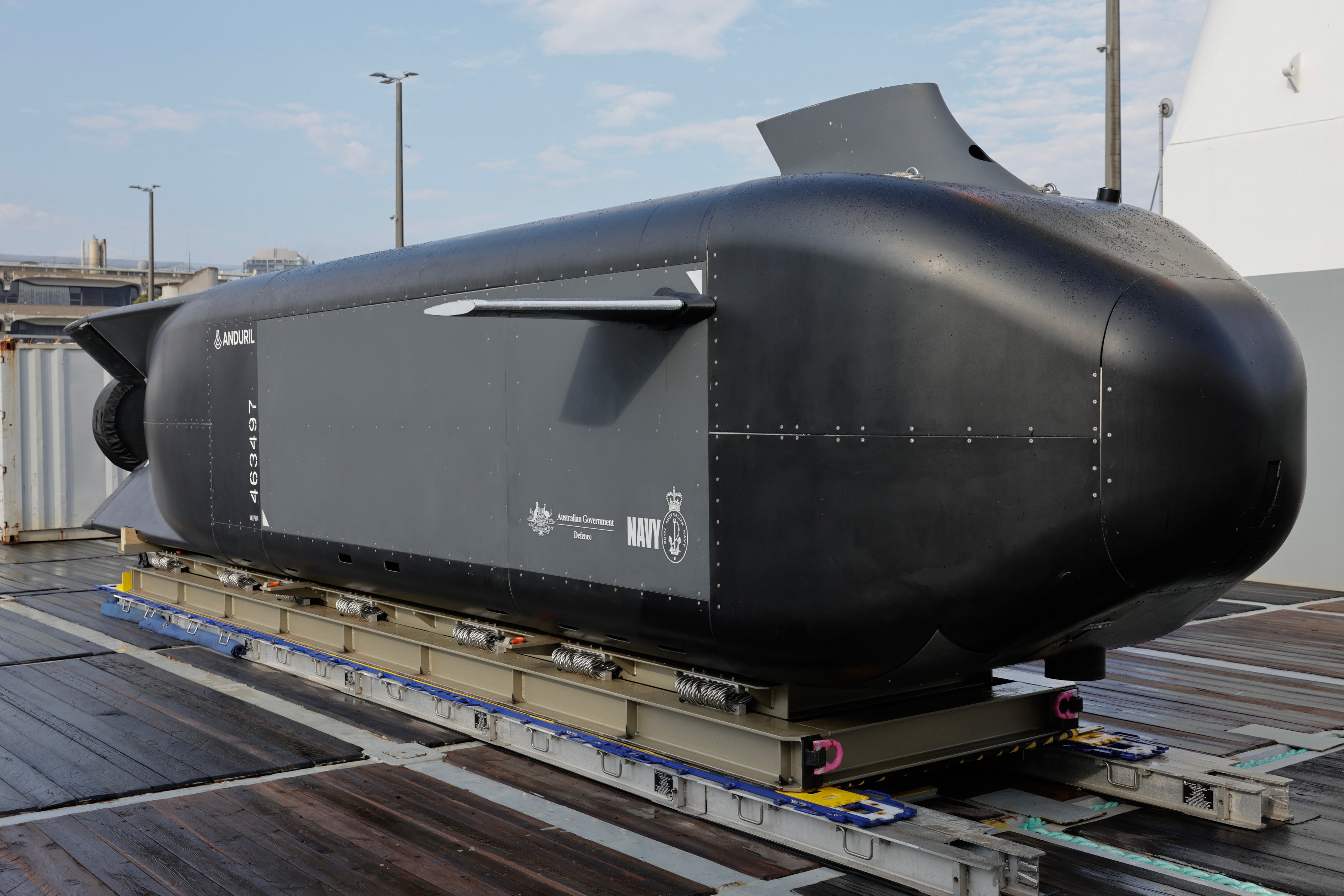
New photos provide an interesting first public look inside the payload bay of Australia’s Ghost Shark extra-large autonomous underwater vehicle (XL-AUV), and a glimpse of the highly modular concept at the heart of the Royal Australian Navy’s emerging undersea warfare capability. Australian authorities had said in the past that they plan to use Ghost Sharks to conduct “persistent intelligence, surveillance, reconnaissance and strike” missions, but without any real elaboration.
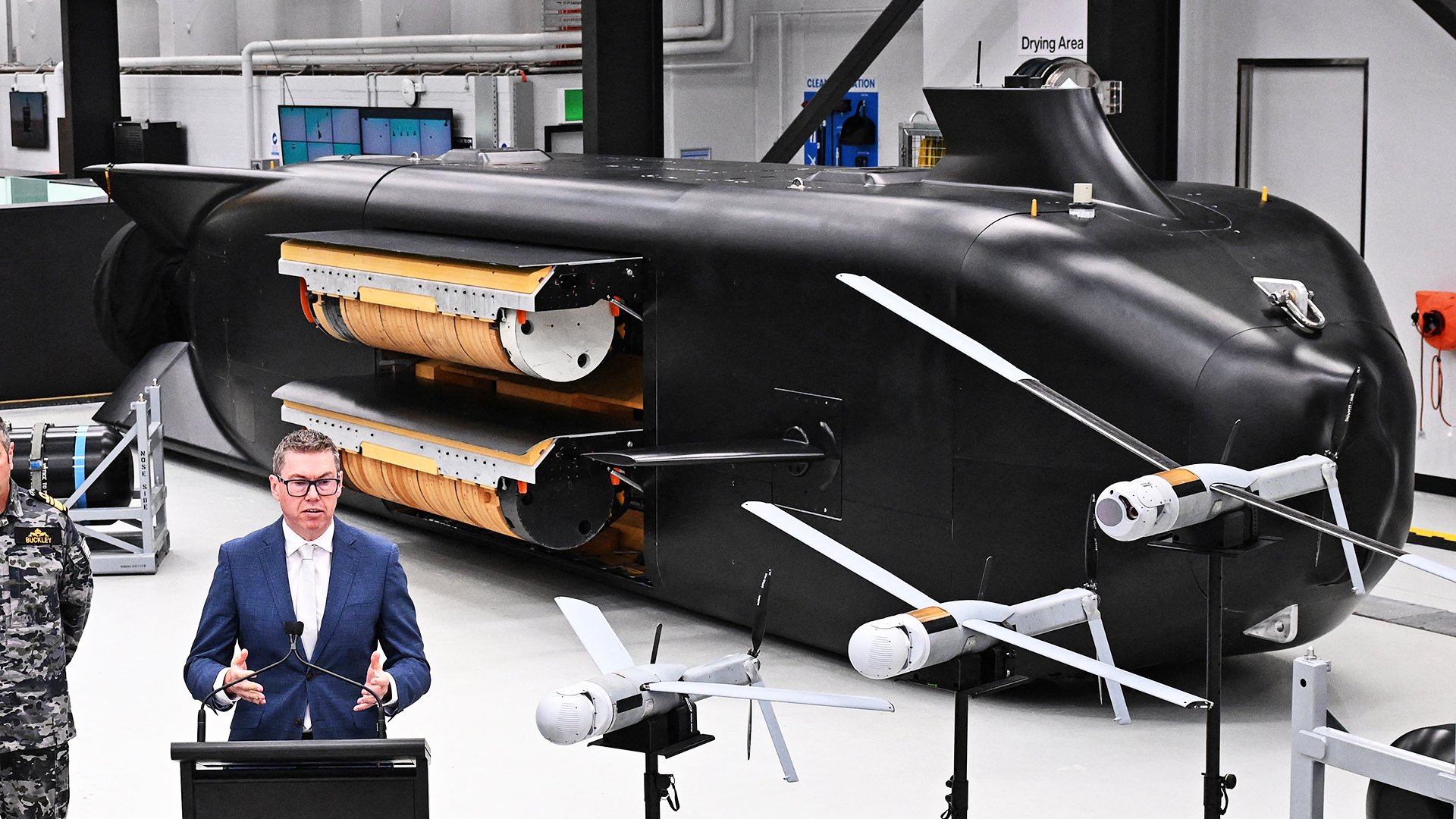
The photographs were taken during a recent visit to the Anduril Australia factory in Sydney, New South Wales, by Pat Conroy, Australia’s Minister for Defense Industry. They emerged as the Australian government announced new details of payload development for Ghost Shark, the Speartooth large uncrewed underwater vehicle (LUUV), and the BlueBottle uncrewed surface vessel (USV), on October 19. While the announcement described the payloads in very broad terms, the photos plus additional details from the Anduril event reveal a more concrete picture of the missions Ghost Shark is being designed to perform.
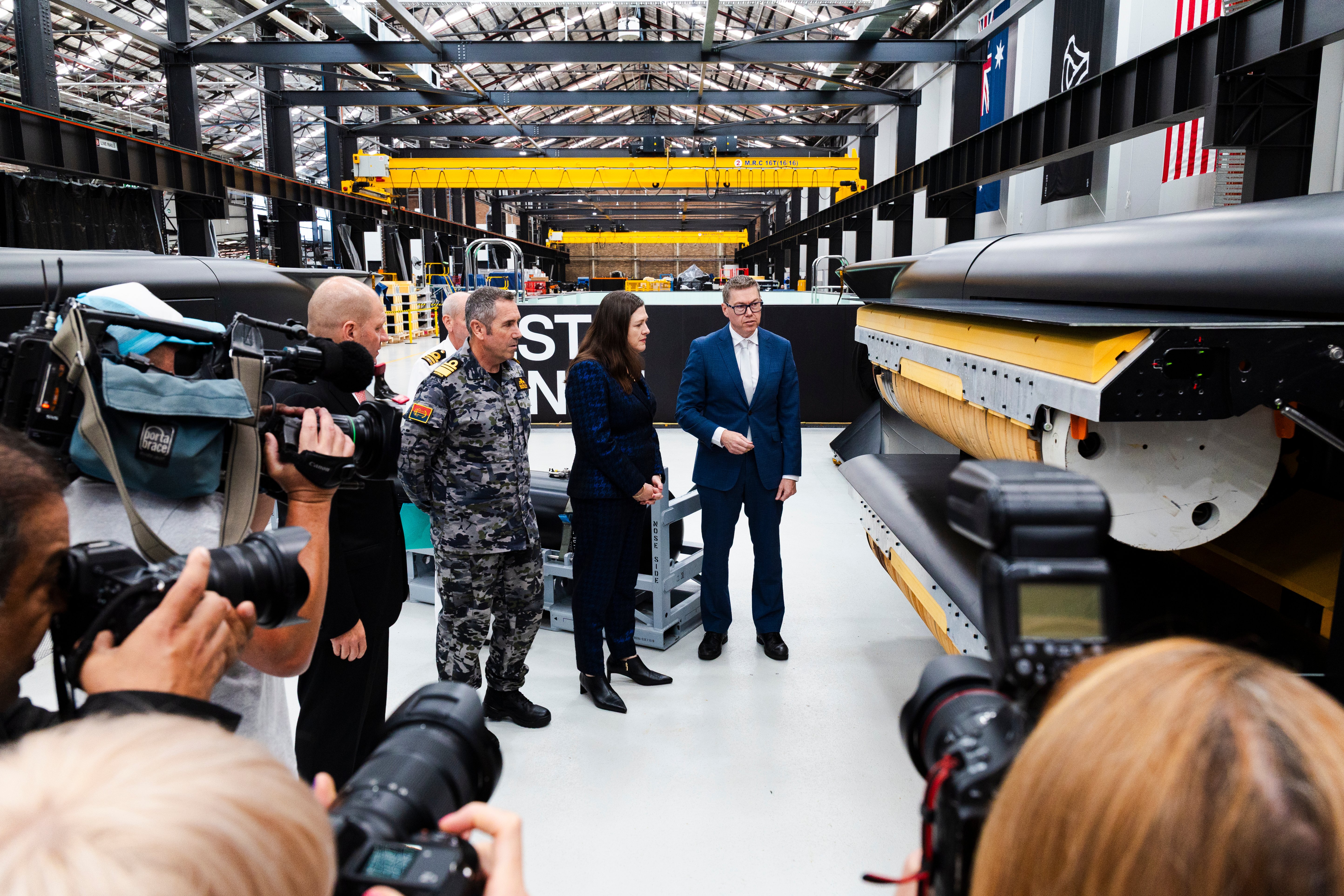
The three previously undisclosed payload options include deploying up to 12 sea mines in a mission, leaving supply caches on the seabed, and launching Anduril’s ALTIUS aerial drones for reconnaissance or strike missions.
“Ghost Shark now has teeth, and will have the ability to inflict damage on any potential adversary,” Conroy said.
The payload bay image is significant in its own right. Ghost Shark’s modular design is intended to accommodate different mission-specific systems, allowing the Royal Australian Navy to configure the same underlying platform for different operational requirements. Ghost Shark was designed to be extremely modular, flexible, and readily reconfigurable. As part of this, the overall payload portion can be readily configured in different ways using different-sized modular hull sections. Since the nose and the tail are different pieces, with an expandable section in the middle, there is plenty of scope for different payloads as well.
Seeing the internal bay for the first time provides a more tangible look at that approach than earlier photographs of the submarine’s exterior.
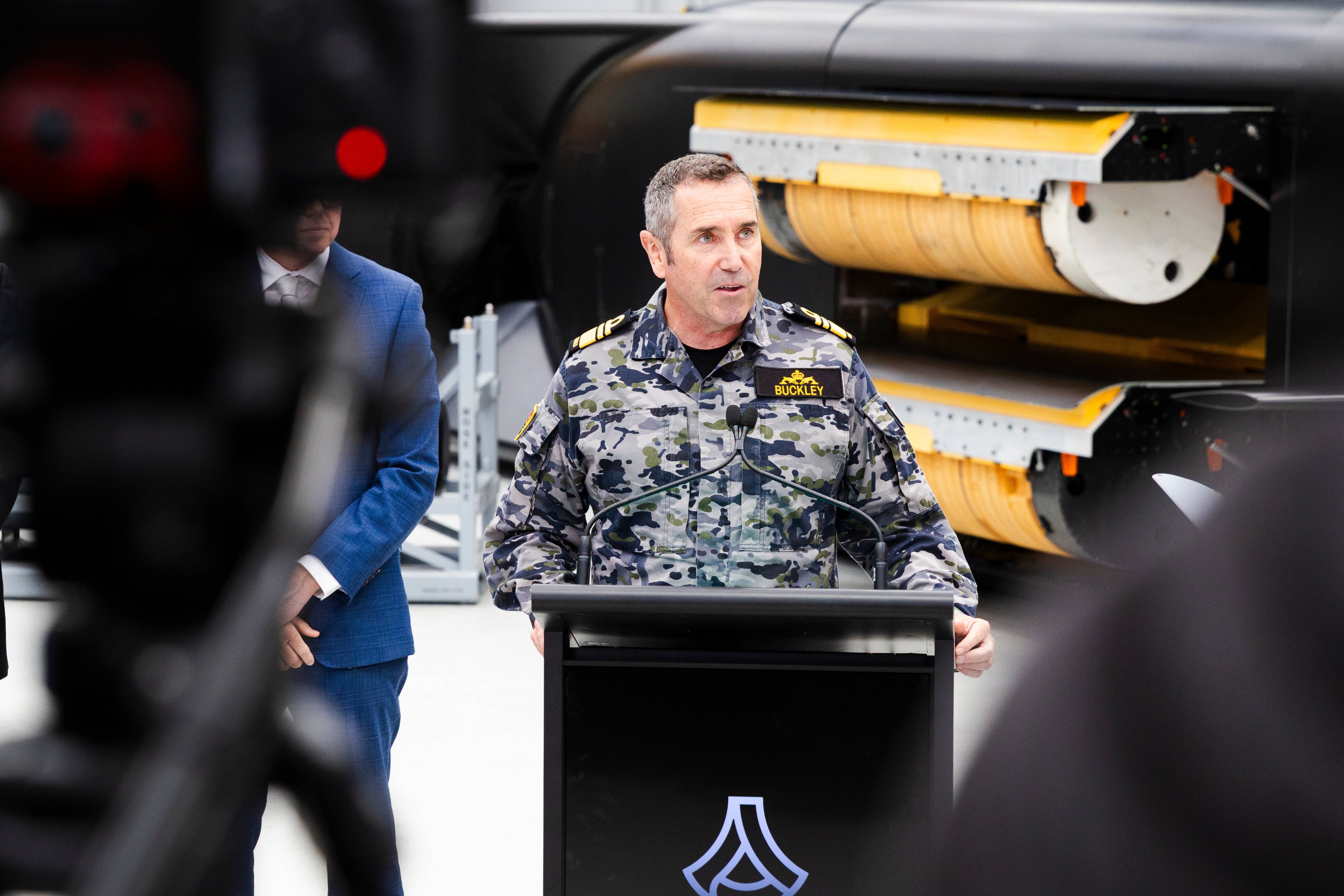
Inside the bay of one of the Ghost Sharks on display, there appear to be cylindrical spacers, formed in segments, rather than operational stores. These spacers, and other areas inside the bay, look as if they are fabricated from plywood or similar. Overall, this means it is not entirely clear if they represent the kind of ballast that would be loaded to take the place of actual payloads during trials, or whether they are part of a mockup.
Of the three payload options, the ability to deploy ALTIUS aerial drones is particularly noteworthy. An underwater vehicle capable of releasing aerial systems could extend a naval force’s intelligence, surveillance, and reconnaissance (ISR) reach beyond the submarine’s own sensors. Depending on the drone variant and mission configuration, it could also provide a means of delivering effects at a distance without putting personnel directly in harm’s way. Other roles could include stimulating enemy air defense networks, perhaps even responding to pop-up air defence threats as they appear and attacking them. The ability to put miniaturized satcom terminals, as well as AI, on small drones also greatly opens up the possibilities for UUV-launched aerial drones.
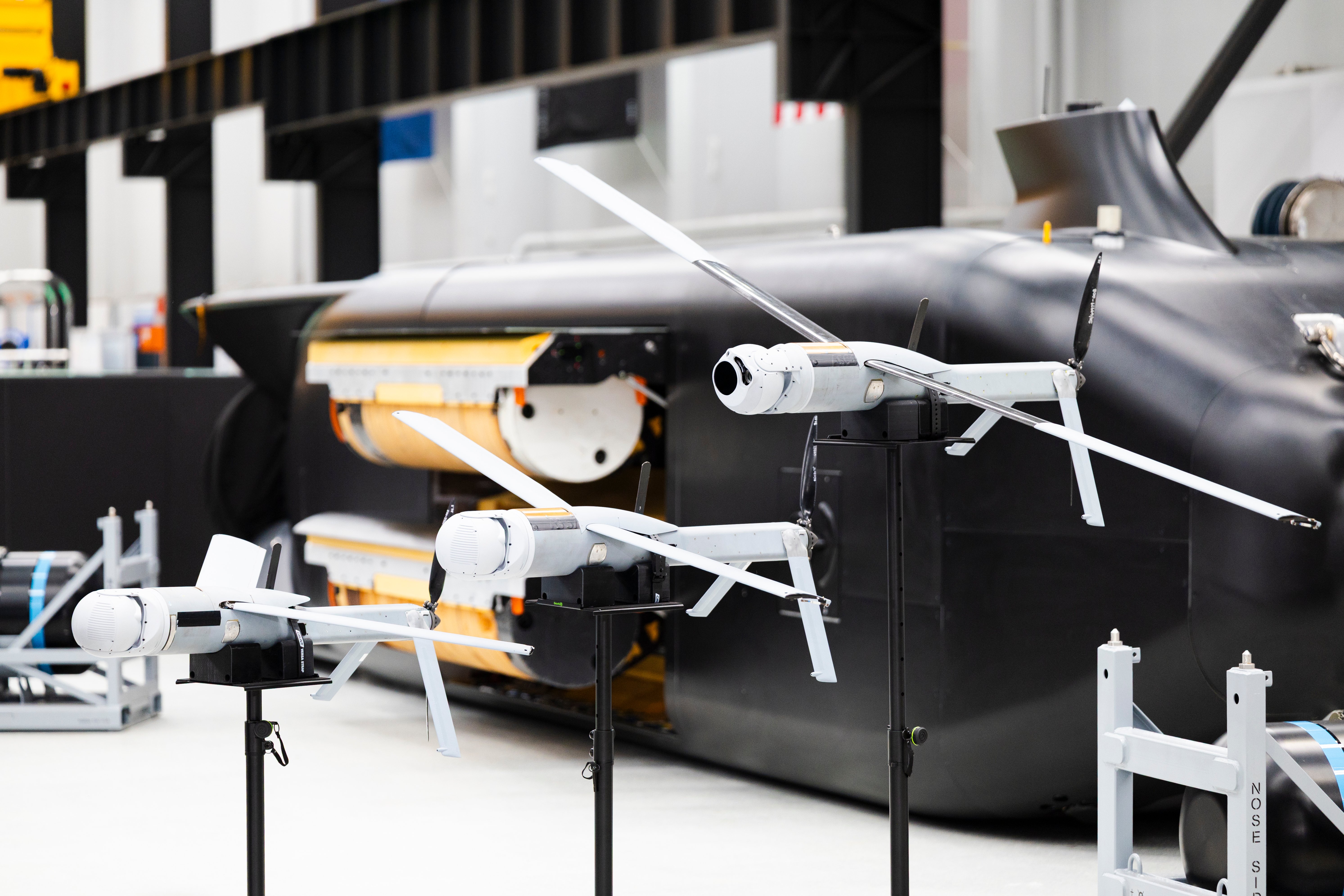
Which ALTIUS variants the Ghost Shark will be able to deploy has not been publicly disclosed. The models displayed at the Altus factory are all derivatives of the ALTIUS-600 family. Notable versions include the ALTIUS-600 for ISR, as well as the ALTIUS-600M, which is designed for strike missions. As you can read here, the basic drone has an overall weight of between 20 and 27 pounds, depending on its payload, which typically weighs between three and seven pounds. The ALTIUS-600 has a maximum range of around 275 miles and can remain airborne for at least four hours, according to its developer. Unarmed variants of the ALTIUS-600 are designed to be recoverable and reusable, although it is unclear how practical that would be after launch from a UUV.
There is another missing part of the payload puzzle, namely the kinds of capsules that would contain the ALTIUS UAVs for launch from the sub.
The Rheinmetall Asteria 533mm-diameter mine pictured alongside the Ghost Shark is not installed in the vehicle’s payload bay. Its appearance nevertheless provides an intriguing visual counterpart to the newly disclosed mine-delivery capability. According to the manufacturer, the Asteria can be deployed from surface vessels, aircraft, and submarines (normally via torpedo tubes). It can be remotely controlled via an acoustic link and is optimized for the defense of harbors, straits, ports, and other critical areas.
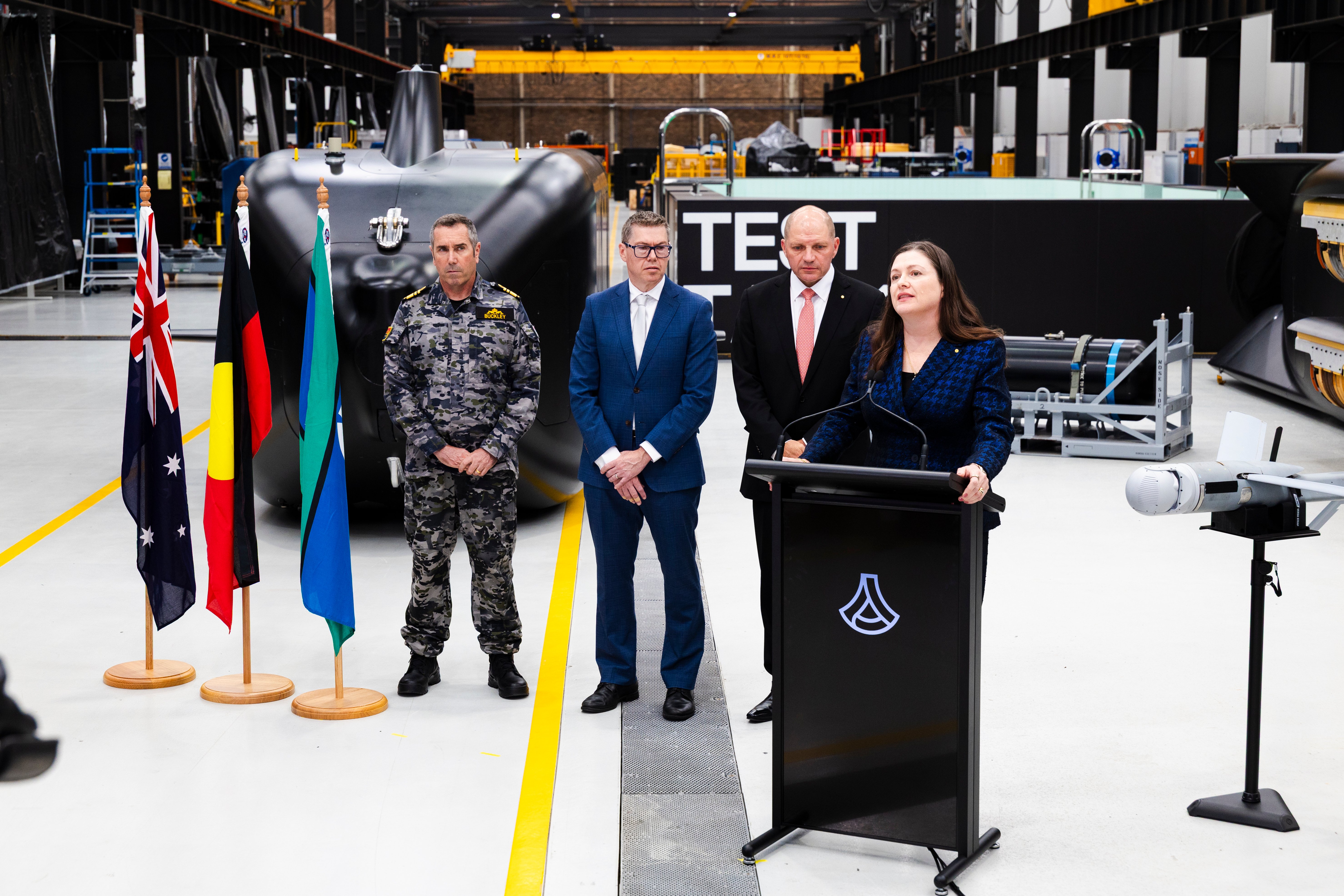
The seabed supply-cache concept points to a different operational role. Ghost Shark could position equipment and supplies underwater for later retrieval, potentially supporting forces operating in areas where conventional resupply is difficult or risky.
The notional supply cache payloads — which are under development by the Defense Science and Technology Group (DSTG) — don’t appear to be on display here. Alex Luck, a naval analyst who closely tracks submarine developments, told TWZ that the cache payloads would likely take the form of capsules, similar in shape to the Asteria mine, but containing whatever supplies need to be moved. It is not immediately clear who would use those caches. One option could be special operations forces, but if the payloads could later rise to the surface, they could be accessed by other forces, too.
It should also be noted that the U.S. Navy and U.S. Marine Corps, in particular, are envisioning future fleets of UUVs and USVs that can carry out kinetic attacks and employ electronic warfare and other non-kinetic effects, as well as emplace mines, providing a direct parallel with the planned mission set for Ghost Shark.
Some of the new payload capabilities are due to be featured in Exercise Maritime Big Play Pacific in San Diego, an AUKUS Pillar II activity focused on advanced maritime capabilities and interoperability. The Australian government says the development effort involves the Royal Australian Navy, Defense Science and Technology Group, the Advanced Strategic Capabilities Accelerator and defense industry.
As we have discussed in the past, Maritime Big Play has links to the U.S. military’s Technology Readiness Experimentation (T-REX) effort and NATO’s Robotic Experimentation and Prototyping Augmented by Maritime Unmanned Systems (REPMUS) exercise series, according to the Pentagon. The U.S. Navy has also been conducting a growing number of large-scale uncrewed-focused maritime exercises and demonstration events in recent years.
Under AUKUS Pillar II, Australia is collaborating with the United Kingdom and the United States on Ghost Shark and its associated capabilities. While Pillar I centers on providing Australia with nuclear-powered submarines, Pillar II focuses on the joint development of advanced defence technologies, including artificial intelligence and autonomous systems.
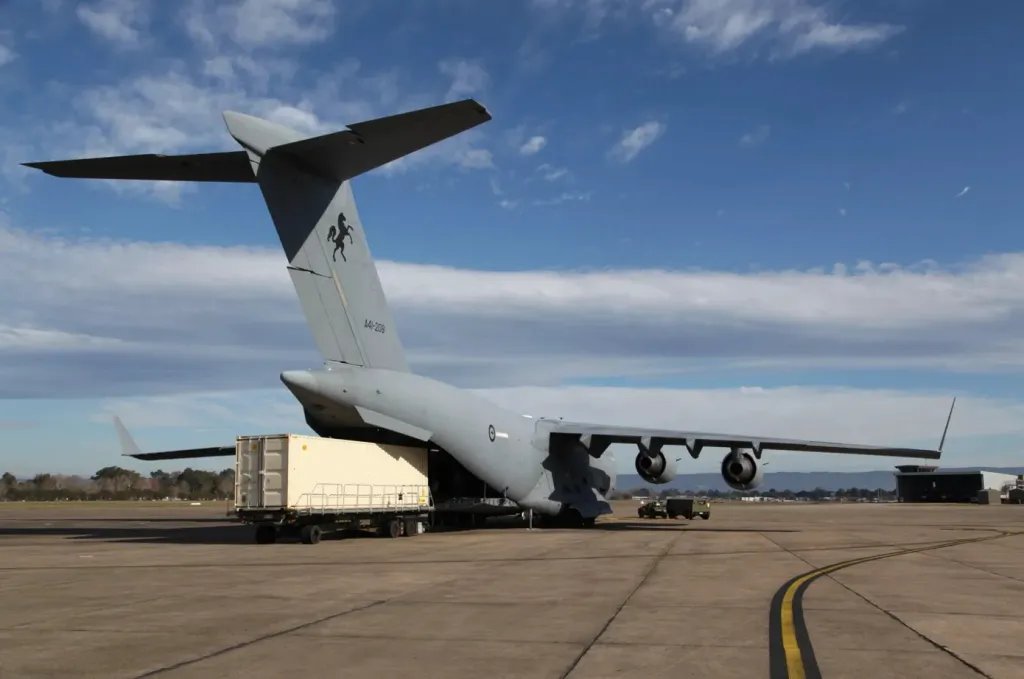
Exactly how the Ghost Shark will be deployed during the Maritime Big Play Pacific exercise is unclear, but, speaking about the concept of operations, Conroy described examples of it being deployed from a shipping container or launched from the back of a small vessel using a crane. In the past, we have also seen the Ghost Shark loaded in a standard shipping container and transported in a Royal Australian Air Force C-17A Globemaster III airlifter.
Overall, U.S. military wargames have highlighted how uncrewed systems could shape a high-end conflict across the Pacific, particularly a fight over Taiwan. One set of Taiwan conflict simulations found that large swarms of relatively low-cost, networked drones could be decisive in helping locate and attack an invading force, while other wargaming by the Center for a New American Security has highlighted the severe challenges of defending the island against a Chinese assault. Maritime drones could also play a major role: the U.S. Navy has explored submarine-launched aerial drones that act as “flying periscopes,” extending sensor coverage and providing targeting data beyond a submarine’s own reach, while uncrewed underwater vehicles could conduct mine-laying and other asymmetric missions around key maritime chokepoints. The rapid growth and technological advances made by the Chinese submarine fleet also underscore the critical importance of anti-submarine capabilities, in which uncrewed systems can play a major role. Together, these developments underscore the potential value of autonomous systems for the Royal Australian Navy as it prepares to operate across the vast distances of the Indo-Pacific.
Australia’s 2026 National Defence Strategy and Integrated Investment Program allocate up to A$5.8 billion (approximately $4.05 billion) over the decade to autonomous and uncrewed undersea warfare capabilities, including A$1.7 billion (approximately $1.19 billion) for a new fleet of Australian-designed and built Ghost Shark vehicles.
The newly released imagery and payload details offer the clearest picture yet of how Australia intends to expand Ghost Shark beyond a conventional underwater surveillance role. The next key milestones should provide more details of how the payloads will be integrated into the vehicle, and how they might be deployed in practice.
Contact the author: thomas@thewarzone.com
The post Ghost Shark Extra-Large Uncrewed Underwater Vehicles’ Payload Bay Seen For First Time appeared first on TWZ.
Manifestazione nazionale “Fuori l’Italia dalla guerra” – Roma, sabato 24 ottobre 2026
COMUNICATO STAMPA
Il Comitato promotore della manifestazione nazionale “Fuori l’Italia dalla guerra”, in
programma a Roma sabato 24 ottobre, ribadisce con forza il carattere pacifico e
nonviolento dell’iniziativa.
Scendiamo in piazza per chiedere pace, il ripudio della guerra sancito dall’articolo 11 della
Costituzione, la fine del coinvolgimento del nostro Paese nei conflitti armati, la solidarietà
con i popoli che resistono all’imperialismo e al sionismo. Chi aderisce alla manifestazione lo
fa condividendone pienamente lo spirito: volti scoperti, mani libere, parole chiare.
Il Comitato respinge in modo netto ogni tentativo di strumentalizzazione violenta da parte
di elementi estranei alla manifestazione, ai suoi contenuti, alle realtà che l’hanno
promossa ed a quelle che hanno aderito. Chiunque intenda servirsi del corteo per
compiere atti di violenza, danneggiamenti o scontri si pone fuori dalla manifestazione e
contro di essa.
Di questo tutti devono essere consapevoli, dai manifestanti agli organi di informazione.
Nessuno provi a screditare il movimento per la pace e a spostare l’attenzione dalle ragioni
della protesta.
Invitiamo tutti i partecipanti a seguire le indicazioni del servizio d’ordine, a non raccogliere
alcuna provocazione, a isolare immediatamente eventuali comportamenti violenti e a
segnalarli agli organizzatori.
Il 24 ottobre Roma vedrà una piazza ampia, plurale, determinata e pacifica. Perché la pace
si costruisce con la pace.
Il Comitato promotore della manifestazione “Fuori l’Italia dalla guerra”
20 ottobre 2026
www.fuorilitaliadallaguerra.org
L'articolo 24 ottobre: “Fuori l’Italia dalla guerra” – Comunicato Stampa proviene da Casa del Sole TV.

The federal drug police want to turn consumers of certain concentrated kratom-derived products into criminals while leaving traditional kratom leaf products outside the ban. Before exposing adults to arrest and prosecution, the feds owe them a scientific explanation for that distinction.
On October 14, the Drug Enforcement Administration (DEA) announced its intent to temporarily place 7-hydroxymitragynine (commonly called 7-OH) and mitragynine pseudoindoxyl—above specified thresholds—in Schedule I. Schedule I is the category for drugs that the agency thinks have "no currently accepted medical use" and "a high potential for abuse." A scheduling order could be issued on or after November 13.
The DEA already classifies mitragynine pseudoindoxyl as a Schedule I substance regardless of concentration. The proposal would ease that restriction by introducing thresholds—while imposing new Schedule I restrictions on 7-OH under the same criteria.
The Food and Drug Administration (FDA) and the Department of Health and Human Services (HHS) have supported the DEA's move, and HHS supplied the proposed thresholds. Under the temporary scheduling provision of the Controlled Substances Act, the DEA must consider HHS's comments but need not follow its recommendations. Congress gave a law-enforcement agency the authority to decide which drugs individuals may consume.
The ordinary scheduling process gives health officials more authority: HHS's scientific and medical findings bind the DEA, and its recommendation against control prevents the agency from proceeding. But temporary scheduling lets the DEA bypass those requirements when it determines a substance poses an imminent hazard to public safety.
Congress should never have given federal drug police that power. Having done so, it should at least demand compelling evidence before they exercise it.
Kratom comes from a Southeast Asian plant whose principal alkaloid is mitragynine. Its leaves contain trace amounts of 7-OH. Manufacturers also sell concentrated 7-OH products and products containing the related compound, mitragynine pseudoindoxyl.
Millions of Americans use kratom or kratom-derived products. A 2022 review cited an estimate of 2.1 million U.S. users in 2020. In a survey of 2,798 users, 91 percent reported using it for pain and 41 percent said they use it to reduce or stop opioid use. In a letter to HHS, nine military veterans described using 7-OH to manage pain and symptoms of post-traumatic stress disorder and to move away from other opioids and from alcohol. They warned that banning it could drive them back to more dangerous drugs.
These reports describe benefits that warrant further study and needs that will persist after a ban.
Concentrated 7-OH products deliver a potent alkaloid without requiring consumers to ingest large amounts of kratom leaf. 7-OH is significantly more potent than mitragynine in activating the opioid receptors involved in pain relief. Researchers still need to determine how its benefits and risks compare across different human doses.
The DEA's proposed criminal controls hinge on concentration and composition. The concentration threshold is 1 milligram per gram of solid material or 1 milligram per milliliter of liquid, calculated for the two covered substances combined. Products would also trigger controls if the mitragynine-to-covered-substances ratio fell below 100 to 1.
Consider a tablet containing 15 milligrams of 7-OH, a strength advertised by some sellers. If the tablet weighs one gram, its concentration exceeds the limit fifteenfold. Diluting the same 15 milligrams into a product weighing 15 grams brings it to the concentration limit. Consuming the entire product still delivers the same dose. It would also need at least 1,500 milligrams of mitragynine to avoid the separate ratio restriction.
Adding bulk changes the concentration but does not change the amount of 7-OH consumed. These calculations tell us nothing about whether that dose is effective or safe.
The DEA acknowledges that controlled trials have not established safe consumption limits or standardized dosing for concentrated 7-OH products. Neither DEA nor HHS has determined that below-threshold products are safe.
In a public comment submitted to HHS in July, I urged officials to obtain the human evidence needed to justify a threshold before setting one. Animal studies can reveal hazards, including dependence and respiratory depression, but they cannot, by themselves, identify a scientifically defensible cutoff for human consumption.
Officials may intend these thresholds to distinguish traditional kratom from concentrated products. What evidence shows that crossing that boundary justifies criminal penalties?
The DEA also owes consumers an accounting of what prohibition could do to them. People seeking relief from pain or withdrawal will still need it after a ban. Some may abandon these products, while others may turn to illicit sellers or switch to other opioids. Criminalizing those choices could make them more dangerous.
Misleading labels, contamination, dependence, and drug interactions warrant attention. Accurate labeling, independent testing, age restrictions, and enforcement against fraud can address several of these concerns. Before resorting to criminal penalties, the DEA should explain why those measures would be inadequate.
We already know how difficult it is to verify a drug's identity, strength, and purity in an illicit market. Creating another prohibited product will give that market another opportunity.
Autonomous adults should be free to decide which substances they consume and which risks they accept. The DEA proposes taking that choice away even as it acknowledges major gaps in the medical evidence. Before the drug police turn more consumers into criminals, they should at least demonstrate how doing so will make those consumers safer.
The post The DEA Wants To Turn 7-OH Consumers Into Criminals appeared first on Reason Magazine.

The incidents occurred on Monday, 19 October, in the northeastern Aegean Sea. Six people died when a speedboat collided with a Greek coastguard vessel near Lesbos, while another six were killed after a separate boat overturned north of Samos.
The deaths coincided with the publication of new figures from the European Border and Coast Guard Agency, Frontex, showing that irregular crossings into the EU fell by almost one-third during the first nine months of 2026.
According to the latest border monitoring figures, approximately 91,000 irregular crossings were detected between January and September, although the eastern Mediterranean remained the busiest migration route into the Union.
According to information released by the Greek authorities, the first fatal incident occurred near Agrilia on Lesbos when a speedboat carrying migrants struck a coastguard patrol vessel before overturning.
Six people died, while eight survivors were taken to hospital. The authorities subsequently arrested a 37-year-old Turkish national, identifying him as the suspected operator of the migrant boat.
Greece’s Maritime Affairs Minister Vassilis Kikilias said the available evidence indicated that the speedboat had struck the left side of the coastguard vessel. The precise circumstances remain under investigation.
In the second incident, approximately four nautical miles north of Samos, a boat reportedly overturned after making a sudden manoeuvre while being pursued by the coastguard.
Five men and one woman died, while 14 people were rescued. An Iranian national was arrested on suspicion of involvement in migrant smuggling.
The arrests do not establish criminal responsibility, and the circumstances surrounding both incidents remain subject to investigation.
Greek authorities have attributed the dangers of the crossings to trafficking networks operating between Turkey and the Aegean islands. The government has reiterated its policy of pursuing smugglers and restricting unauthorised maritime arrivals.
Frontex recorded approximately 31,800 detections along the eastern Mediterranean route during the first nine months of this year, representing a decline of around 15 per cent compared with the equivalent period in 2025.
Across the European Union’s external borders, the agency reported an even larger reduction, with overall detections down by almost one-third.
The Central Mediterranean route experienced a particularly substantial fall, while the Western Mediterranean recorded an increase, reflecting changes in departure points and migration patterns.
These figures count detected border crossings rather than individual migrants and do not necessarily capture every unauthorised arrival.
The latest data also have to be considered alongside exceptional developments elsewhere on Europe’s borders. In July, large-scale movements through Spain’s Ceuta enclave created additional pressures on Spanish authorities and raised questions about the application of the EU’s new asylum arrangements.
The eastern Mediterranean figures encompass several routes, including crossings from Libya towards Crete, movements through the Aegean islands and arrivals across the land border with Turkey.
Consequently, the total recorded for the wider region should not be interpreted solely as the number of people arriving on the Greek islands.
Greece has occupied a central position in EU migration policy since the 2015–2016 crisis, when hundreds of thousands of people arrived from Turkey, many travelling onwards through the Balkans.
The subsequent EU–Turkey migration arrangements were intended to reduce unauthorised crossings and establish procedures for returning certain migrants who did not qualify for protection.
Athens has also faced persistent criticism from human rights organisations concerning allegations of unlawful returns at sea and land borders. Greek authorities deny operating an unlawful pushback policy and maintain that their border operations respect domestic and international law.
The EU’s Pact on Migration and Asylum, which entered into application in 2026, has introduced common procedures for screening arrivals, processing asylum claims and managing people who do not have permission to remain.
Its implementation has placed greater emphasis on border identification, biometric registration and cooperation between national authorities and Frontex.
However, the two disasters demonstrate the continued risks associated with maritime crossings, even during a period of declining arrivals.
Investigators must now establish precisely how both boats overturned, whether criminal offences were committed and what occurred during the encounters with coastguard vessels.
The findings will be relevant not only to the prosecutions of those arrested, but also to continuing scrutiny of maritime enforcement along one of the European Union’s principal external borders.

Recent incidents involving the explosion of a North Korean landmine in the Demilitarized Zone (DMZ) and the repatriation of North Korean POWs held in Ukraine have led to a dramatic increase in North Korea-related coverage by South Korean media outlets, which had shown little interest in the North for some time. The reason is that […]
The post China-Russia backing lets Pyongyang tune out Seoul’s old song appeared first on Asia Times.

L’alta velocità non è soltanto una questione di infrastrutture. Per Ana Vasconcelos, eurodeputata portoghese del gruppo Renew Europe, rappresenta uno dei tasselli fondamentali per completare il mercato unico europeo e rafforzare l’integrazione tra gli Stati membri. Mentre il Parlamento è impegnato nell’esame del dossier “Connecting Europe through High-Speed Rail”, Vasconcelos indica una priorità chiara: trasformare le reti ferroviarie nazionali in un autentico sistema europeo. Secondo l’eurodeputata, la sfida principale non consiste soltanto nel costruire nuove linee, ma nel superare la frammentazione normativa e tecnica che ancora caratterizza il settore. Sistemi di segnalamento diversi, standard non armonizzati e procedure di autorizzazione differenti impediscono ancora oggi ai treni di circolare senza ostacoli da uno Stato membro all’altro. È un problema che richiama anche le conclusioni del Rapporto Letta, secondo cui l’alta velocità europea continua, di fatto, a fermarsi alle frontiere nazionali.
Per questo, la relazione in discussione punta a favorire una rete realmente europea, con regole armonizzate, standard tecnici comuni e un mercato più aperto alla concorrenza. Vasconcelos ritiene infatti che l’ingresso di nuovi operatori possa contribuire sia a migliorare la qualità del servizio sia a ridurre il costo dei biglietti per i passeggeri. Accanto all’apertura del mercato, considera prioritaria l’accelerazione dei collegamenti transfrontalieri ancora mancanti, spesso rallentati da procedure autorizzative lunghe e da difficoltà di coordinamento tra gli Stati membri.
Il nodo resta anche finanziario. Secondo le stime della Commissione europea, per completare la rete ferroviaria ad alta velocità entro il 2040 saranno necessari investimenti compresi tra 345 e 546 miliardi di euro, ben superiori alle risorse oggi disponibili. Per Vasconcelos, l’Unione dovrà concentrare gli investimenti soprattutto sui collegamenti transfrontalieri più strategici e utilizzare i fondi europei per attrarre anche capitali nazionali e privati, evitando di disperdere le risorse in interventi poco coordinati.
Rendere il treno una valida alternativa all’aereo richiede però anche un cambiamento nell’esperienza dei viaggiatori. «Le persone scelgono soprattutto in base al prezzo e ai tempi di percorrenza», sottolinea Vasconcelos. La risposta passa quindi attraverso linee più veloci, l’eliminazione dei principali colli di bottiglia della rete e condizioni di concorrenza più equilibrate con il trasporto aereo. Un ruolo importante sarà svolto anche dall’integrazione tra aeroporti e rete ferroviaria, così da rendere più semplici gli spostamenti porta a porta.
Tra gli ostacoli più evidenti per chi viaggia in Europa resta la difficoltà di acquistare un unico biglietto per tratte operate da compagnie diverse. Oggi organizzare un viaggio internazionale può essere complesso e, in caso di coincidenze perse, i diritti dei passeggeri non sempre sono garantiti lungo l’intero percorso. La proposta legislativa europea sulla bigliettazione ferroviaria, attualmente all’esame del Parlamento, punta proprio a introdurre sistemi di prenotazione multioperatore e a rafforzare la tutela dei viaggiatori durante tutto il tragitto.
Per l’eurodeputata portoghese, inoltre, l’alta velocità non deve limitarsi a collegare le grandi capitali europee. «Va considerata uno strumento di coesione», afferma. Significa investire anche nelle regioni periferiche e nei collegamenti mancanti dell’Europa centrale, orientale e atlantica, assicurando che la rete ad alta velocità sia pienamente integrata con il sistema ferroviario regionale. Una rete più capillare, sostiene, potrebbe contribuire a ridurre la pressione abitativa sulle grandi città, favorire lo sviluppo economico dei centri di medie dimensioni e contrastare lo spopolamento delle aree periferiche.
Per Vasconcelos, la posta in gioco va oltre la politica dei trasporti. «Un treno che deve fermarsi a una frontiera rappresenta un problema politico tanto quanto tecnico». L’obiettivo per il 2040 è la realizzazione di un vero Spazio ferroviario europeo unico, nel quale passeggeri e operatori possano muoversi senza barriere, acquistare un unico biglietto valido lungo l’intero percorso e contare su standard comuni in tutta l’Unione. Solo così, conclude, il treno potrà diventare un’alternativa realmente competitiva al trasporto aereo sulle medie distanze e uno dei simboli più concreti dell’integrazione europea.
L'articolo Ventisette ferrovie nazionali non fanno una rete europea proviene da Linkiesta.it.
