The International Seabed Authority (ISA), a U.N.-associated body, has long managed activities related to deep-sea mining in international waters. But after the Trump administration issued an executive order in 2025 calling for the U.S. to develop its deep-sea mining sector, companies have been applying to the U.S. for rights to explore and exploit the international seabed, challenging the ISA’s authority. In the Clarion-Clipperton Zone of the Pacific Ocean, a hotspot of mining interest in international waters, a Mongabay analysis shows that companies have either applied to the U.S. or already been granted rights to areas of the seabed equal to about half the expanse already designated for mining activities by the ISA. Several of these claims overlap, as depicted in our interactive map, raising concerns about the management of the international seabed. Critics already concerned that deep-sea mining could have detrimental effects on the marine environment said U.S.-led acceleration of the industry would only benefit the U.S. and U.S. companies, rather than benefiting developing nations, as the ISA is mandated to do. U.S. ambitions to mine the deep sea are rapidly expanding across the ocean, not only in the country’s own waters, but also on the high seas — the vast expanse of ocean outside any one country’s jurisdiction. In the Clarion-Clipperton Zone of the Pacific Ocean, a hotspot of mining interest in international waters, a Mongabay analysis shows that companies have either applied to the U.S. or already been granted rights to areas of the seabed equal to about…This article was originally published on Mongabay
Morning erections are the gold standard for gauging testosterone, according to several male-oriented forums on Reddit, where an entire subcategory is devoted to the hormone, which is referred to online simply as T. In those groups—some aligned with the manosphere and others not—members swap and compare blood tests every six months. Being labeled in that universe as low T (low in testosterone) is a stigma that taps into several male anxieties: weak sexual drive, low energy, a certain timorous attitude toward life and a precarious bank balance.
Italia e Stati Uniti rafforzano il dialogo sulla sicurezza energetica, le materie prime critiche e le infrastrutture strategiche, con il nucleare di nuova generazione che emerge come uno dei principali terreni di convergenza. Il confronto riflette l’ambizione di Roma di consolidare il proprio ruolo di partner transatlantico e di hub energetico tra Europa, Africa e Indo-Mediterraneo, valorizzando le capacità industriali nazionali e la posizione geografica del Paese.
Questi temi sono stati al centro dell’incontro a Washington tra la viceministra dell’Ambiente e della Sicurezza energetica, Vannia Gava, e Jarrod Agen, direttore esecutivo del National Energy Dominance Council della Casa Bianca. Un confronto che ha permesso di approfondire le prospettive di cooperazione bilaterale in settori destinati ad assumere un peso crescente negli equilibri economici e geopolitici internazionali.
“Con Jarrod Agen abbiamo condiviso alla Casa Bianca una visione che unisce Italia e Stati Uniti: la sicurezza energetica è sicurezza nazionale”, ha dichiarato Gava. Per Paesi a forte vocazione manifatturiera, ha spiegato, questo significa garantire energia affidabile a costi sostenibili per le imprese, diversificare le fonti, includere nel mix energetico il nucleare di nuova generazione e scegliere partner stabili e affidabili.
Uno dei principali argomenti affrontati riguarda le materie prime critiche, la cui disponibilità è sempre più determinante per la transizione energetica, le tecnologie avanzate e la competitività industriale. La concentrazione delle attività di raffinazione in un numero ristretto di Paesi rappresenta una vulnerabilità strutturale per le economie occidentali, che rende necessario rafforzare la cooperazione sulle catene di approvvigionamento e sviluppare nuove partnership con i Paesi produttori.
“È una vulnerabilità che l’Occidente deve affrontare insieme, costruendo filiere condivise e partenariati con i Paesi produttori, molti dei quali si trovano in Africa”, ha osservato la viceministra. In questo quadro si inserisce anche l’accordo tra Italia e Stati Uniti sulle materie prime critiche, che potrebbe rafforzare il ruolo di Roma nell’iniziativa americana Pax Silica. Parallelamente, la Commissione europea ha selezionato cinque progetti strategici italiani dedicati alla lavorazione e al riciclo di materiali critici, confermando il potenziale contributo dell’industria nazionale alla costruzione di filiere europee più resilienti.
La dimensione africana occupa una posizione centrale nella strategia italiana. Gava ha richiamato il Piano Mattei come strumento per sviluppare partenariati con i Paesi del continente e rafforzare l’integrazione tra sicurezza energetica, cooperazione industriale e diversificazione degli approvvigionamenti. “Ho voluto sottolineare che è proprio in questa prospettiva che si inserisce il Piano Mattei, attraverso il quale l’Italia ha ridefinito il proprio rapporto con l’Africa, una regione strategica per il nostro Paese”, ha spiegato.
Il nucleare rappresenta un ulteriore elemento di convergenza strategica tra Roma e Washington, soprattutto per le prospettive di collaborazione tecnologica e industriale. Già in un’intervista rilasciata a Decode39 nel 2023, Gava aveva illustrato le ragioni del rinnovato interesse italiano per questa fonte energetica, sostenendo il principio della neutralità tecnologica e sottolineando il potenziale dei reattori avanzati nel completare il contributo delle rinnovabili, sostenere le industrie energivore e rafforzare l’autonomia strategica nazionale.
Durante la visita negli Stati Uniti, la viceministra ha inoltre visitato Commonwealth Fusion Systems, a Boston, una delle realtà più innovative a livello internazionale nello sviluppo della fusione nucleare. Si tratta di una tecnologia ancora in fase di sviluppo, ma con il potenziale di offrire in futuro una fonte energetica pulita, sicura e sostenibile. Gava ha evidenziato il contributo delle imprese italiane, degli investitori, delle aziende coinvolte nella filiera industriale e delle eccellenze accademiche e della ricerca nazionale, sottolineando come la partecipazione italiana a questo settore rappresenti un esempio concreto della capacità del Paese di contribuire alle grandi trasformazioni tecnologiche del sistema energetico globale.
La centralità della sicurezza energetica nella politica industriale e nelle relazioni internazionali italiane era stata ribadita dalla stessa Gava anche in occasione della riunione ministeriale dell’Agenzia internazionale dell’energia a Parigi. Come riportato da Decode39, la viceministra aveva richiamato l’importanza della diversificazione delle fonti, dell’accesso alle materie prime critiche e del rafforzamento delle partnership internazionali per tutelare la competitività economica e la sicurezza nazionale.
Il confronto alla Casa Bianca ha riguardato anche le nuove direttrici energetiche e infrastrutturali, considerate strumenti di integrazione economica e geopolitica. In particolare, Gava ha richiamato il corridoio India-Middle East-Europe Economic Corridor (IMEC), con la sua componente energetica, e le interconnessioni tra Nord Africa ed Europa, destinate a modificare i flussi commerciali ed energetici tra India, Medio Oriente, Mediterraneo e continente europeo.
“L’Italia può diventarne l’hub naturale, contribuendo così concretamente all’Occidente, che potrà superare le sfide dei prossimi anni soltanto restando unito”, ha affermato la viceministra.
L’incontro di Washington colloca dunque le ambizioni energetiche italiane all’interno di una più ampia cornice transatlantica. Roma punta a combinare le proprie competenze industriali, la posizione geografica nel Mediterraneo e le partnership africane con una cooperazione più stretta con gli Stati Uniti sulle tecnologie, sulle catene di approvvigionamento e sulle infrastrutture strategiche.
La prospettiva più significativa riguarda la possibilità di tradurre questa convergenza politica in progetti concreti, soprattutto nel settore nucleare, dove le competenze industriali e scientifiche italiane e le capacità tecnologiche americane possono costituire la base per una collaborazione più strutturata. Un percorso che si inserisce nella più ampia ricerca di sicurezza energetica, competitività industriale e autonomia strategica delle economie occidentali.
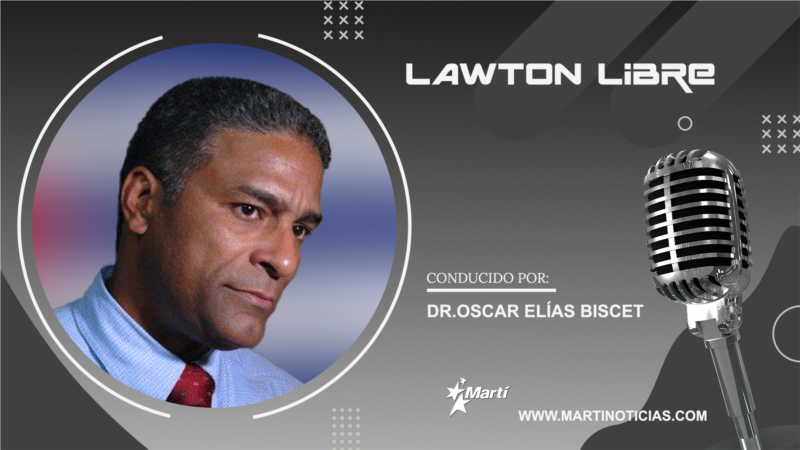
El reconocido opositor cubano Dr. Oscar Elías Biscet aborda la situación de los derechos humanos en Cuba y la conquista de las libertades básicas de los cubanos, bajo el precepto de que “si aprendes a ser libre, todos los seremos”.
Correo Electrónico: lawtonlibremarti@gmail.com
L’Arabia Saudita ha deciso di rinviare al 2027 la Future Investment Initiative (FII), il grande appuntamento internazionale dedicato agli investimenti che avrebbe dovuto svolgersi a Riad dal 26 al 29 ottobre. La decisione arriva dopo settimane di attacchi missilistici e con droni degli Houthi contro infrastrutture saudite, tra cui l’aeroporto internazionale King Khalid della capitale. La cosiddetta “Davos nel deserto”, uno degli strumenti di promozione economica del principe ereditario Mohammed bin Salman, diventa così una delle vittime più visibili dell’instabilità regionale.
Gli organizzatori hanno motivato il rinvio con la volontà di garantire la qualità e la portata della decima edizione, senza attribuire esplicitamente la decisione alla situazione militare. Il contesto appare tuttavia determinante. Secondo Reuters, le preoccupazioni sulla sicurezza avevano già indotto alcuni grandi gruppi finanziari a riconsiderare la partecipazione dei propri dirigenti. Il rinvio rappresenta un passaggio significativo per un evento concepito per attirare capitali internazionali e sostenere la trasformazione economica del Regno.
Una vulnerabilità già emersa
Il problema era stato anticipato da Formiche.net il 14 ottobre, quando Riad stava valutando la possibilità di trasformare la FII in un evento ibrido. Già allora gli attacchi contro l’aeroporto saudita avevano mostrato come la pressione militare degli Houthi potesse incidere direttamente sulle ambizioni economiche di Vision 2030.
La cancellazione dell’appuntamento per quest’anno rende questa vulnerabilità ancora più evidente. L’Arabia Saudita ha investito enormi risorse per presentarsi come piattaforma internazionale per finanza, tecnologia, turismo e grandi eventi. La capacità degli Houthi di colpire infrastrutture strategiche introduce un elemento di incertezza che può condizionare la mobilità dei dirigenti, l’organizzazione degli appuntamenti internazionali e la percezione del rischio da parte degli investitori.
Il problema riguarda anche l’asimmetria del confronto. Gli Houthi, sostenuti dall’Iran, possono imporre costi economici e reputazionali a un Paese dotato di risorse militari e finanziarie largamente superiori. Come emerso dalle recenti informazioni sulle loro capacità tecnologiche, l’accesso a componenti industriali e strumenti digitali avanzati potrebbe inoltre contribuire a rendere più sofisticata una minaccia già operativa.
La dimensione europea della sicurezza saudita
La crescente pressione sul Regno sta coinvolgendo anche i partner europei. Il Regno Unito ha annunciato il dispiegamento di velivoli da combattimento per contribuire alla difesa dell’Arabia Saudita dagli attacchi Houthi, secondo quanto riportato dalla Bbc. Una decisione che conferma la rilevanza della sicurezza saudita per gli interessi strategici occidentali nel Golfo.
Anche l’Italia dispone di Eurofighter schierati in Arabia Saudita, trasferiti dalla base kuwaitiana di Ali Al Salem a quella di Taif. Il capo di Stato maggiore della Difesa, generale Luciano Portolano, ha chiarito al Corriere della Sera che il ridispiegamento non costituisce una nuova missione militare, ma una modifica della dislocazione degli assetti nell’ambito di un’operazione già autorizzata dal Parlamento.
La scelta di Taif rispondeva a valutazioni di sicurezza e operative, dopo i bombardamenti subiti dalla base in Kuwait. Tuttavia, durante gli attacchi Houthi di settembre, anche un Eurofighter italiano è stato danneggiato da un drone. Portolano ha precisato che gli assetti italiani non erano obiettivi diretti delle azioni ostili, ricordando comunque che “nelle operazioni militari la garanzia del rischio zero non esiste”.
La presenza europea riflette dunque un contesto di sicurezza sempre più complesso, nel quale la protezione del personale e la continuità delle attività militari richiedono continui adattamenti.
Per Riad, il rinvio della FII è soprattutto un segnale politico ed economico. Vision 2030 conserva risorse e prospettive considerevoli, ma la sua realizzazione dipende anche dalla capacità del Regno di offrire un ambiente stabile agli investitori internazionali. Gli Houthi hanno dimostrato di poter interferire con questa ambizione, trasformando la vulnerabilità delle infrastrutture saudite in uno strumento di pressione ben oltre il campo di battaglia yemenita.
One might think that the meaning of a word as common as strategy is clear, but it is not. The invaluable Oxford American Writer’s Thesaurus inadvertently captures the confusion: “master plan, grand design, game plan, action plan, policy, program, tactics.” But a master plan is something more specific than a grand design, a policy is what should direct strategy, and tactics exist at a level of intentional action below strategy.
The muddle becomes serious when applied to strategy’s original and most important field of human endeavor: war. The roots lie in ancient Greek, which is why stratēgos was the word for “general.” Many weighty works on strategy in war make the basic ideas clear, and yet, as one can see from the badly botched American war with Iran, strategy is acutely difficult. Here we have a war in which the United States has the world’s most advanced technology, highly skilled personnel, and well-trained and -staffed organizations. The U.S. is operating in a theater of war that it has studied for many decades, in partnership with Israel—the most militarily advanced country in the Middle East—as well as, more quietly, most of the Gulf States, and it is receiving the tacit support of countries such as Great Britain. Its enemy is poor and corrupt, and recently lost a large chunk of its senior leadership in a series of bombings and assassinations. But the result is, in important respects, a shocking setback, as Iran continues to throttle one of the world’s most important waterways.
This happened not because America’s weapons malfunctioned, its sailors and airmen were incompetent, or the problems were novel and unanticipated. Rather, America’s battlefield reversals represent a strategic failure of an acutely embarrassing kind.
Nor is the issue simply incompetent American political leadership, although that has played its role. The history of strategy is a tale of errors, misjudgments, poor assessments, and inadequate follow-through. It was true of the ancient Greeks, when Athens held the high cards in the Peloponnesian War and lost; it was true of Germany and Japan in the two world wars they launched at times and places of their choosing; it is true of Russia today in Ukraine; it is, for that matter, true of the Iranians themselves, who suffered their own strategic failures against Iraq in the 1980s and Israel in recent years.
The seven core questions of strategy may seem extremely simple, and yet they are rarely answered well.
The first is What else is going on? Strategy requires its practitioners to orient themselves to the surrounding environment, for almost never is a country simply facing off against another in isolation. When the Trump administration launched the current round of fighting with Iran, it did so having neglected its environment—indeed, in some ways, having made that environment worse. The U.S. had alienated its European allies, whose active help it needed in keeping the Strait of Hormuz open in the face of mine and surface attacks; it failed to prepare the ground with Gulf allies who would be exposed to Iranian attacks; and it underestimated the extent to which Russia and China had put themselves into a deep partnership with Iran, providing targeting intelligence, the components of military systems, and even some weapons. By fixating on the enemy at hand, the administration neglected the context that had shaped everything else.
Governments collect a great deal of intelligence about things that can be counted—tanks, ships, missiles. They do a much worse job of answering the second question, which can be derived from an unlikely classic of strategy: the 1969 movie Butch Cassidy and the Sundance Kid. Paul Newman and Robert Redford play two relatively nonviolent train robbers in the last days of the frontier. One day, as they are holding up a train, a boxcar door slides open and they are pursued by half a dozen men on horseback. Exciting chase scenes ensue as Butch and Sundance try every trick in their extensive playbook to shake them off, but still the pursuit continues. In bafflement, Butch asks Sundance, “Who are those guys?”It is the second great strategic question, and a subtle one.
The two robbers knew how many riders were pursuing them and what weapons they carried. They could probably even tell the breed of horses they were riding. But they did not know what made this band of lawmen so much more persistent and so adept in seeing through their dodges—what motivated them, and what that would mean for Butch and Sundance.
That sort of intelligence is difficult to come by, particularly if you do not know that that is the information you need. President Trump and his key advisers likely knew little about the leaders of the Islamic Revolutionary Guard Corps, who are now their primary opponents. It is clear that they still cannot fathom how their enemy makes decisions. It is not uncommon for Western leaders to underestimate or simply fail to grasp the ideological or religious motivations of their enemies, and that seems to be part of what has happened in the conflict with Iran. But it seems as well that the administration and its advisers misjudged Iran’s preparedness to launch a protracted, complex war in which it would be outgunned but not necessarily outsmarted.
The problem is probably reciprocal: If Iran’s leaders have taken the so-called TACO bet—“Trump Always Chickens Out”—they have been repeatedly proven wrong, as indeed have been many of Trump’s domestic critics. They may understand Trump, his motivations, his stock of resolve, and his fears as little as he understands them. Or for that matter, as little as the Israelis understood Yahya Sinwar, the leader of Hamas, even though they had had him in their prisons for 10 years, or as little as Americans understood the calculus of Japanese decision makers in the fall of 1941.
Sometimes it is possible not even to know who is in charge on the other side. During most of the Vietnam War, American leaders believed that the charismatic Ho Chi Minh or the experienced General Võ Nguyên Giáp were making the decisions. Later they suspected that it was a collective leadership. In reality, the dominant figure was the colorless first secretary of the Communist Party, Lê Duẩn. In the current war, Trump has frequently expressed his frustration at not knowing who is in charge on the other side.
What are we trying to do? is the third and most obvious strategic question, perhaps the easiest to pose and the most deceptive. When critics have gone after the Trump administration over the Iran war, they have usually focused on the supposed unclarity of its goals. They have something of a point, but to a more limited degree than one might think. In truth, the setting of goals, although vital, is a murky and shifting enterprise.
Carl von Clausewitz, who in his lifetime witnessed numerous strategic defeats as well as the ultimate victory of the allied coalition over Napoleonic France, taught that war is a continuation of policy by other means. It may be the most important teaching to take away from his classic, On War, and is certainly the most memorable. But if the ultimate objectives in war are political, then they also have political characteristics—that is, they may be vague, inconsistent, and above all changeable.
George H. W. Bush famously outlined four objectives for American forces in advance of the 1990–91 Gulf War, in an oft-cited example of strategic clarity. A closer look, however, shows that they were anything but clear. The first objective was ensuring the safety of American citizens in the Gulf—but before the bombs fell, that had already been achieved, because the Iraqi dictator Saddam Hussein had released his American and European hostages. American citizens—the soldiers, sailors, airmen, and Marines going into Iraq—were the ones endangered by the war. Expelling Iraq from Kuwait was straightforward enough, but restoring the “legitimate government of Kuwait”—a monarchy backed by a citizenry that included scarcely a quarter of the country’s inhabitants—was not. And as the events of the past 35 years have proven, the fourth objective, ensuring the stability of the Persian Gulf, was a pipe dream.
Moreover, some of the objectives the United States pursued either were unstated (stripping Saddam of his nuclear program and setting up the conditions for his overthrow) or evolved only in reaction to events on the ground (protecting the Kurdish population in the north and, to some degree, the Shia in the south).
This kind of shift in objectives occurs in all wars. Britain entered World War II nominally to save Poland from Germany. It ended up prohibiting Polish troops from marching in the victory parade in London. The United States invaded Afghanistan to destroy al-Qaeda; it ended up attempting to create an Afghan democratic republic.
Considered in this light, the Trump administration’s objective-setting in the Iran war, though messy, is not entirely implausible. Clearly, one objective has been to destroy, or at the minimum badly damage, Iran’s nuclear enterprise; another to limit its ability to threaten its neighbors with missile and drone attacks by dismantling some of its key military industries. A third, and the most questionable, seems to have been to overthrow and replace the regime. That last goal is evidently beyond the current reach of the U.S. military, although the other two have been achieved in some measure. As the war has wound on, the administration has reached for other goals, including the bizarre one of keeping “oil and gas cheap for Americans all over the country,” which Vice President Vance has declared now has primacy over avoiding a nuclear Iran.
One problem with the Trump administration’s objective-setting is the president’s foolish insistence that he has achieved more than he has: His repeated use of the word obliteration actually obscures some real, if far from absolute, successes in pursuit of his first two objectives. As for the third, it was always bound to be a reach but was not beyond the realm of possibility. The administration’s real failures have come in setting what were essentially defensive objectives in addition to the offensive ones, above all securing the Strait of Hormuz. For the rest, like many administrations before, it has promised much more than war can ever deliver—think of the hubris of the “war to end all wars,” or the objective of ending tyranny. In democratic societies, the temptation to justify the hazards and sacrifices of war with overblown rhetoric and absurd aspirations usually overcomes the good judgment of political and military leaders alike.
What are our means? is the fourth question. At a strictly quantitative level it is usually easily answered by counting tanks, missiles, or ships. But those are often the least important variables in the equation. The real variables are whether organizations can do what we want them to do; whether the technical means we have at our disposal are adequate to the task; and whether, if new challenges arise, we have the resources to meet them.
The United States entered the current war with limited stockpiles of its most advanced weapons, limited mine-clearing capabilities, and no frigates whatsoever to escort convoys. It had very little in the way of hardened bunkers for its aircraft in the Persian Gulf, and so suffered some shocking losses on the ground to accurate Iranian missiles (possibly guided by Russian intelligence). And the entire campaign has been predicated on expectations about what bombing could do that were at best highly improbable and at worst totally unrealistic.
The administration clearly overestimated what the U.S. military could do, but one has to wonder whether the armed forces also misjudged their own capabilities. Decades of underinvestment in both passive defenses (for example, concrete shelters, underground command posts) and active ones (for example, surface-to-air missile batteries), not any particular decision of the Trump administration, have exposed the U.S. Air Force to high losses. A similar decades-long lack of commitment to the counter-mine-warfare and the escort-of-convoy missions has made the Strait of Hormuz operation so difficult.
“Know the enemy and know yourself and in a hundred battles you will not be defeated,” goes the saying of the Chinese general Sun Tzu. But military organizations and their leaders frequently fail to understand themselves, and in particular their own weaknesses. America’s lack of preparedness to conduct classical counterinsurgency warfare in Iraq and Afghanistan cost it dearly in blood, money, and time. Most militaries fail to conduct a sober reckoning with their own deficiencies by examining their lack of resources, organizational preparation, or aptitude.
The fifth and sixth questions are What is our priority? and In what sequence should we act? For a country as wealthy and powerful as the United States, these are particularly uncomfortable questions. American leaders often act as though their resources are infinite and few really difficult strategic choices need to be made. That flexibility is one of the blessings (and occasionally the curse) of an astoundingly wealthy and populous country.
Economists like the word trade-off—to get this, you have to give up that. The military uses instead phrases such as economy of force or acceptable risk that mask the blunter truth that some things are more important than others. In the current Iran war, it has become clear that getting control of the Strait of Hormuz has never been the top priority—had it been so, the U.S. would have conducted a variety of operations, probably including seizing some of the smaller islands near the strait.
Setting priorities can be acutely difficult in war. The best decision Franklin D. Roosevelt made during the Second World War was one of priority. Military and political leaders alike had believed in 1941 that Germany would be a more important enemy than Japan and needed to be tackled first. But the war began for the United States with the Pearl Harbor attack of December 7, 1941. Over the next six months, Roosevelt agreed to the British proposal to invade French North Africa in November 1942. General George C. Marshall, the chief of staff of the U.S. Army, and Admiral Ernest J. King, the chief of naval operations, thought it a strategic error and opposed it, favoring instead an invasion of France in 1943.
Roosevelt’s calculation was chiefly political: To sustain domestic support for the “Germany first” policy, American forces had to be in action somewhere in the European theater of operations within a year of Pearl Harbor. He got his priorities right, and Marshall and King, who did not think politically, were wrong. (As it happened, a 1943 invasion would probably have been an operational debacle as well for the untried U.S. Army, but that was a separate matter.)
If Roosevelt got priority right, however, he got sequencing wrong. Like most politicians, he did not want to feel trapped by prior decisions—what political scientists call “path dependence.” He believed that he could have the North Africa invasion and still invade France in 1943, and he was wrong. The defeat of German armies in North Africa took longer than expected, and was not completed until March 1943. Sicily loomed as an easy target, and besides, shifting large forces to Britain, particularly before the U-boat menace in the Atlantic was defeated, would take time, so in July the Allies attacked the island and took it. That triggered the fall of the Italian dictator Benito Mussolini; the logical next Allied move was therefore a landing in Italy. That occurred in September 1943, in the immediate aftermath of Italy’s defection from the Axis. And that, in turn, led to a swift German occupation of Italy and an ensuing front in Europe that no one had anticipated.
Sequencing, then, was only partially under Roosevelt’s control, or anyone else’s for that matter. One thing led to another, and as is so often the case in war, the contenders looked as though they were playing chess one move at a time, seizing an opportunity without fully anticipating the consequences of doing so.
The final question is in many ways the most difficult: What is our theory of victory? Or, put more simply, Why do we think this will work?
In the case of the Iran war the theory of victory seems to be: We will inflict so much economic pain on the regime that it will give in, either because it will hate to see the Iranian economy ruined or because its people will rise up and overthrow it. But Iran has been suffering self-imposed economic misery for decades, and its leaders, with their own corrupt networks, can live in splendor while others suffer. And as for an uprising, the time to support that would have been when Iranians took to the streets in December and January 2026, before 30,000 were massacred by the Islamic Republic’s repressive apparatus. If there is any theory of victory left for the United States, it is that more reasonable Iranian leaders will replace the extremists—but it would appear at the moment that the hardest of the hard-liners are the ones with the guns.
Articulating a theory of victory is no different from constructing a plausible story—the different characters find themselves in a situation, they do this and that, and there is an outcome. In practice, though, such theories are rarely offered in governmental deliberations—and here I speak from personal experience. I saw that play out while sitting in the Situation Room as senior officials discussed sending more soldiers, or diplomats, or aid money to Afghanistan, without anyone quite broaching the question of how the moves under consideration were supposed to lead to success.
Such failures are entirely common, as the perusal of archival records confirms. Strategy is chiefly about execution—the exceedingly complicated and difficult task of moving forces from one place to another, guiding them through combat, and responding to unforeseen circumstances. There are ancillary activities—diplomatic initiatives, the public presentation of the reasons for war or expositions of why it is going the way it is, the gathering and deployment of financial and industrial resources. All of this requires serious, detailed, and extremely consequential work. To begin telling a story, or even to ask for one, in such a circumstance can seem frivolous at best, and at worst downright subversive of the efforts officials are investing and the sacrifices soldiers are making.
Why is it all so hard? One reason lies in the sheer uncertainty of all wars, in which personalities, contingent events, accidents, bloodlust, shifting political calculations, and sheer good or bad luck play their part. But no less important are the weaknesses of the decision makers themselves.
For one, they are often, if experienced, old and suffering the afflictions of age, or if young, inexperienced and either cocky or timid. Historians will parse the records of the Trump administration or, like the cardiologist of the late Vice President Dick Cheney, wonder what it meant that the president was clearly in poor physical and possibly mental health. He would hardly be alone.
Prime Minister Anthony Eden launched the Suez operation of 1956 against Egypt’s Gamal Abdel Nasser. At the time, he had been hospitalized with a fever of up to 106 degrees following a set of badly botched gallbladder operations. He had been taking amphetamines and sleeping pills. In a fascinating study of Eden, David Owen, himself a former foreign secretary and a physician, concluded that Eden’s physical health played a large role in the poor decision making that helped produce a major debacle.
Roosevelt was on the edge of death in the last year of World War II; Winston Churchill had a heart attack; and Joseph Stalin, in addition to suffering from hypertension, had become increasingly paranoid. John F. Kennedy took a horrifying cocktail of drugs for his bad back and suffered from Addison’s disease. Woodrow Wilson had an incapacitating stroke that left the U.S. government largely in the hands of his protective wife. These are not isolated cases.
Even healthy younger leaders may find themselves suffering from acute sleep deprivation and other disorders. A flattering portrayal of President Biden’s national security adviser noted that, during the American withdrawal from Afghanistan in 2021, Jake Sullivan was getting two hours of sleep a night for days on end. As those who have studied medical residents know, going that short of sleep practically guarantees poor decisions.
The psychologist Daniel Kahneman and his colleague Amos Tversky have examined many heuristic shortcuts that distort rational decision making. Almost all of them apply in strategic decision making as well. Take anchoring, our tendency to judge an event, problem, or cost based on some existing piece of information. The trivial case is the extremely expensive bottle of wine put on a restaurant menu with the idea of making the second- or third-most-expensive bottle look reasonably priced.
Strategic anchoring occurs frequently. In the run-up to the German invasion of the Soviet Union in June 1941, not only Hitler but also his generals concluded that Russia was a fragile giant. They anchored their perceptions on the 1939–40 winter war between the U.S.S.R. and Finland, when 200,000 Soviet troops were killed, wounded, or captured by Finnish militiamen. They paid no attention to the way in which the Soviets had learned swiftly from their failures in that war, and did not account for all of the advantages that Russians would derive from fighting on their own ground.
In a similar vein, both the Russian military and Western observers anchored their perception of Ukrainian fighting power in the 2014 and 2015 rounds of conflict in the Donbas as well as the Russian seizure of Crimea. They had discounted, or simply ignored, the improvements in Ukrainian training and equipment since then, or, in parallel with the 1941 case, the differences that would emerge when Ukrainians were fighting to protect their villages and cities from an army that would commit rape and murder with abandon.
Strategic decision making is rarely a matter of individual choices; more often it is the result of some kind of deliberation. This is true even in the most extreme totalitarian countries. Stalin called the shots, but Marshal Georgy Zhukhov could get a hearing. This leads to another obstacle to sound strategic judgment: collective pathologies. The phenomenon described by Irving Janis as groupthink applies particularly forcefully to strategic decision making: illusions of invulnerability, collective discounting of warnings, unquestioned belief in one’s own inherent morality, stereotyped views of adversaries, self-censorship, and the exclusion of dissidents, or their reduction to marginal status. Lyndon Johnson heard out George Ball, the in-house dissenter on Vietnam, and then moved swiftly on.
These and many other pathologies have beset not only the Trump administration in Iran, but most countries at war. They can be mitigated but not resolved. Formal procedures are less helpful than qualities of character. Of these the most important are empathy, to understand both the enemy and one’s own side; curiosity, because every war is new and distinctive; humility, to accept that one has made mistakes; and above all moral courage, to face facts for what they are and to make decisions accordingly.
The president is singularly deficient in all of these aspects. He finds it difficult to imagine the world as seen by others; he seems to be incurious about the important details of military operations; he is far from humble; and if he is averse to anything, it is admitting that he might be wrong. These traits do not seem, moreover, to be confined to him but are shared by many in his administration.
The strategic virtues, to be clear, are rarely found. But they do exist. Churchill, whose courage was justly famous, was a great war leader. He benefited as much, however, from his empathy as from his courage. His great advantage over Hitler, as the historian John Lukacs has shrewdly noted, is that he could imagine what it was like to be Hitler, but Hitler could never imagine what it was like to be Churchill. One cannot study Abraham Lincoln’s conduct of the Civil War without being struck by his curiosity and humility—neither of which interfered with his resolve and decisiveness.
Nor is it the acknowledged great figures of history alone who show these qualities: When President George W. Bush made the call in December 2006 to surge forces to Iraq despite the apprehensions of his military and political subordinates, he exhibited considerable moral courage. Israeli Prime Minister Levi Eshkol made a number of decisions in the run-up to the Six-Day War that bought Israel at least a modicum of the support and understanding that it would need from abroad, and which, in very different circumstances, Prime Minister Benjamin Netanyahu has so profligately squandered.
Some view strategy as so difficult that it is not even worth attempting. These are not only counsels of despair but of nihilism. Some decision makers have shown excellent strategic judgment and used war to achieve their political objectives. The most notable might be Anwar Sadat, the long-underestimated Egyptian president who launched the 1973 Yom Kippur War and used a spectacular early success that could have easily ended in catastrophe to secure the peace he wanted.
War is a hideous thing. There are even more hideous things, however, as anyone who has visited the mass graves of Sarajevo or the slaughter field of Bucha in Ukraine will know. A war with Iran now may well be far less terrible than a war launched by an Iran with nuclear weapons later. Moreover, sometimes war is unavoidable: True pacifists are few, and no nation committed to pacifism has survived the predations of a hostile neighbor that is not.
The chances are good that anyone reading this article lives in a country that is currently at war, or has been at war, or is closely affected by war. It is a near certainty that they live in a country whose borders have been shaped by war, and quite probably one whose form of government has resulted from war. All of us therefore have, or should have, a keen interest in strategy.
Unfortunately, however, its practice will not get any easier in the future. War is spreading to new domains, and employing new and terrible conventional weapons, many capable of acting on the basis of decisions that machines will make in fractions of a second. Nuclear weapons are spreading, and we now face the potential of devastating biological weapons manufactured with the aid of artificial intelligence. The previous experiences and professional knowledge of generals and admirals become ever more swiftly obsolete; the hazards of untried political leaders wading through such uncertainty, immensely greater. More countries have the capacity to do terrible things, and are seemingly willing to do so.
None of that is an excuse for neglecting the subject that Aristotle thought essential for a citizen. In his Rhetoric, he talks at length about the subjects an orator must master, including “the military strength of his country, both actual and potential, and also the nature of that strength; and further, what wars his country has waged, and how it has waged them. He must know these facts not only about his own country, but also about neighboring countries; and also about countries with which war is likely, in order that peace may be maintained.”
Strategy is one of the oldest of subjects. It is powerfully shaped by current events and technologies but best learned through a deep encounter with the history of war. It can be studied but rarely mastered, and it is the domain of both calculation and inevitable error. Of one thing we can be certain: As we look at a world in which violence is not the last resort for many countries and organizations hostile to our values and interests, and may very well be the first, strategy will be needed more than ever.
Questo è un articolo del numero de Linkiesta Etc dedicato al tema dei limiti, disponibile in edicole selezionate a Milano e Roma, e negli aeroporti e nelle stazioni di tutta Italia. E ordinabile qui.
C’è chi ha annusato oltre 5600 piedi e ascelle, chi ha rotto 46 sedili del water con la testa in un minuto e chi ha saltato 6 taxi in fila con un saltarello a molla. Consultare i record contenuti nel Guinness dei primati provoca quel leggero spaesamento di chi non sa se ammirare la dedizione o compatire l’ostinazione di chi si è dedicato a simili imprese, investendo tempo, energie e a volte denaro per raggiungere primati spesso di nessuna utilità. Eppure sono in molti a subire il fascino di queste prove di irrefrenabile fantasia, al punto che ogni anno il Guinness Book of Records vende 3 milioni e mezzo di copie nel mondo. Come se l’umanità avesse un urgente bisogno di sapere chi ha costruito la piramide di lavatrici più alta o fatto il maggior numero di flessioni con un gatto addosso. Il successo del volume, d’altra parte, supera le aspettative dei suoi fondatori fin dalla sua prima edizione.
Nel 1951 Sir Hugh Beaver, direttore della birreria Guinness di Dublino, manca un uccello durante una battuta di caccia e si ritrova a discutere con i compagni su quale sia il volatile più veloce d’Europa. Nessuno lo sa. Beaver coinvolge quindi i gemelli Norris e Ross McWhirter, due giornalisti ossessionati dai fatti e dalle misurazioni, nel raccogliere pareri sull’argomento e nel 1955 pubblica la prima edizione del Guinness Book of Records. Doveva essere un gadget per i pub che servivano la birra Guinness, un divertimento da bancone: diventa invece un fenomeno culturale globale e, per chi entra a farne parte, una forma di immortalità, pure se non sempre in luce lusinghiera, cui ogni anno ambiscono 36.000 persone, che si candidano per nuovi primati.
Bruce Masters ha trasformato il pub crawling in una missione di vita. Dal 1960 al 2014 ha visitato ben 46 495 pub e bar. Appassionato di viaggi, Masters teneva un archivio dettagliatissimo di ogni visita, annotando nomi, date, drinks e birre. Negli anni arrivò a una media impressionante di circa 20 pub a settimana, spendendo decine di migliaia di sterline in pinte. Illustrazione di Stefano Natali.
La selezione però è spietata: i record non nascono dal caos, ma da un sistema di regole rigidissime. E ciascun risultato deve essere misurabile, verificabile, ripetibile. Per questo motivo, un tempo, per asseverare un risultato, un giudice doveva essere presente al tentativo: ecco perché uno come Mick Meaney, un irlandese che nel 1968 è rimasto in una bara per 61 giorni, non è mai finito nel Guinness. Meaney è rimasto sì disteso sottoterra, con un buco per respirare e alimentato attraverso un tubo (per defecare ce n’era un altro). Ma ha trascurato di invitare un giudice del Guinness a verificare il suo tentativo e così ha buttato due mesi di vita (in cambio di un certo riposo, probabilmente).
Oggi invece, prima di fare il tentativo, l’aspirante primatista deve inviare una domanda online e, se la sua proposta viene accettata, è obbligato a osservare linee guida specifiche che spiegano esattamente cosa fare, come misurare la prova e quali evidenze raccogliere per la valutazione della sua impresa in video. Proprio questa sistematicità ha consentito al Libro dei Record di diventare qualcosa di più di un atlante dell’assurdo: una garanzia di veridicità. In un’epoca in cui tutto è fluido, incerto, falsificabile, non è poco: l’inclusione del testo offre al suo pubblico il sigillo dell’autenticità. Se qualcosa è nel Libro, fosse pure una stranezza come una casa di carte da gioco alta 75 metri, è reale e come tale è stata misurata, certificata, registrata. Se qualcuno è nel Libro, questa persona ha davvero lasciato un segno nella storia dell’umanità (non necessariamente migliorando il mondo, con esso). Forse è proprio la solidità della prova che ha reso il Guinness così resistente al tempo.
Nel 1988 il gatto Blackie entrò nel Guinness dei Primati come il felino più ricco della storia. Il suo padrone, il miliardario britannico Ben Rea, commerciante di antiquariato, morì lasciandogli un’eredità di 12,5 milioni di dollari, pari a circa 32 milioni attuali. Illustrazioni di Stefano Natali
Ora però il Libro dei record non è più l’unico palcoscenico dell’impossibile. Da un lato esistono piattaforme come RecordSetter che ampliano la formula del “record”, certificando attività assurde come la “la più veloce spoliazione dalle decorazioni di un albero di Natale” o il tempo più lungo trascorso dentro un sacco di carta (299 minuti per chi volesse batterlo). Dall’altro lato, su YouTube ci sono canali come Dude Perfect che ogni settimana propongono qualche sfida estrema, come un tiro da basket lanciato dal tetto di un un grattacielo. Non c’è nessun giudice né alcuna regola da rispettare: eppure il canale raccoglie milioni di visualizzazioni più del canale del Guinness Book. È la prova che il monopolio delle imprese eccezionali, siano esse straordinarie o bislacche, non appartiene più al Guinness.
Per continuare a esistere, allora, il Guinness dei primati ha dovuto diventare qualcosa di più di un archivio: si tramutato in un ecosistema commerciale fatto di eventi, tour, format televisivi e soprattutto di una divisione di consulenza che aiuta aziende e brand a inventare record su misura a fini promozionali. In pratica, Guinness invia i propri giudici (con la loro uniforme ufficiale) a valutare i “record” stabiliti da varie aziende, i quali ricevono una certa attenzione mediatica, perché infrangono frontiere impensate (letteralmente, dato che non li aveva mai concepite nessuno al di fuori del reparto marketing). Per questa bella visibilità Guinness chiede 330 000 dollari a tentativo. Nel 2013, secondo il periodico Vox queste attività rappresentavano il 20% dei ricavi; oggi arrivano al 50%. È così che nascono record come quello per la “più grande coreografia di auto”, detenuto da Nissan o per la pizza più lunga del mondo, tentato da Domino’s Pizza. Sono iniziative sponsorizzate che danno visibilità ai marchi e che il Guinness non si limita solo a certificare: contribuisce a farle accadere. Ed è qui, con il suo snaturamento commerciale, che il tentativo di segnare un limite delle possibilità umane mostra tutta la sua… limitatezza. Anzi, il suo essersi trasformato in un fine in sé, a prescindere dal senso.
Nel 2016 lo svizzero Hannes Roth dimostrò che anche il momento del bagno può essere vissuto in modo estremo. Roth prese una normalissima vasca da bagno e – dopo oltre 300 ore di lavoro – la trasformò in un missile su ruote grazie a un telaio da go-kart, un motore dalla potenza di 120 cavalli e a tanta follia creativa. Illustrazione di Stefano Natali
Come ha brillantemente spiegato il filosofo C. Thi Nguyen nel suo libro The Score (Penguin), ormai viviamo in un mondo in cui punteggi, classifiche e numeri non si limitano a misurare i valori, ma finiscono per sostituirli. Il fatto è che una metrica chiara, semplice, comparabile ci dà l’illusione di capire ciò che è complesso e perciò, gradualmente, utilizziamo quel numero come un rimpiazzo del valore stesso. È un meccanismo chiamato value capture: il numero finisce per diventare lo scopo di un’attività, lo standard su cui ci regoliamo. Ecco allora che, per esempio, la qualità di un’università si riduce alla sua posizione in un ranking o la creatività di un artista al suo numero di follower. È riduttivo, ma il Guinness in fondo rispetta lo stesso criterio.
Nessuno ha davvero bisogno di impilare M&M’s o di indossare cento T shirt in un minuto. Eppure, nel momento in cui questa impresa diventa un record, un numero da battere, un certificato da ottenere, quell’attività diventano improvvisamente significativa. Il valore non precede la metrica: è la metrica a generare il valore. Ecco perché le aziende investono milioni in attività non necessarie, come un ballo eseguito da automobili. Ecco perché le persone si allenano per mesi a mangiare più hot dog in dieci minuti o progettano oggetti giganteschi solo per entrarci a beneficio del Libro, trasformando un gesto qualunque in una performance misurabile. È un’ottimizzazione distorta: non si cerca più ciò che ha valore, ma ciò che fa superare una soglia.
Il 3 febbraio 2018 Paul Morgan trovò il modo perfetto per non invecchiare troppo in fretta: festeggiare il suo 28° compleanno per ben 48 ore consecutive. Come ci è riuscito? Inseguendo i fusi orari in aereo tra Samoa, Auckland, Los Angeles e Hawaii. Illustrazioni di Stefano Natali
Nel Guinness vediamo amplificato ciò che accade ovunque: la complessità si appiattisce, il gesto si svuota, il punteggio diventa un feticcio. E forse la lista dei primati bizzarri ci affascina proprio per questo: perché in quelle imprese assurde, come la gara per il minor tempo necessario a far rotolare un’arancia per 1,5 km con il naso (per la cronaca: il record è di 22 minuti e 41 secondi), riconosciamo la stessa logica aritmetica che governa le nostre giornate, dai passi contati dal pacer alle ore di sonno controllate via smartwatch ai like sui social. Ogni primato, allora, è un piccolo specchio: ci mostra come la metrica possa diventare un feticcio e come, senza accorgercene, rischiamo di vivere dentro meccanismi che non abbiamo scelto, fissandoci su obiettivi irrilevanti, inseguendo numeri che non dicono nulla di ciò che conta davvero.

 Login