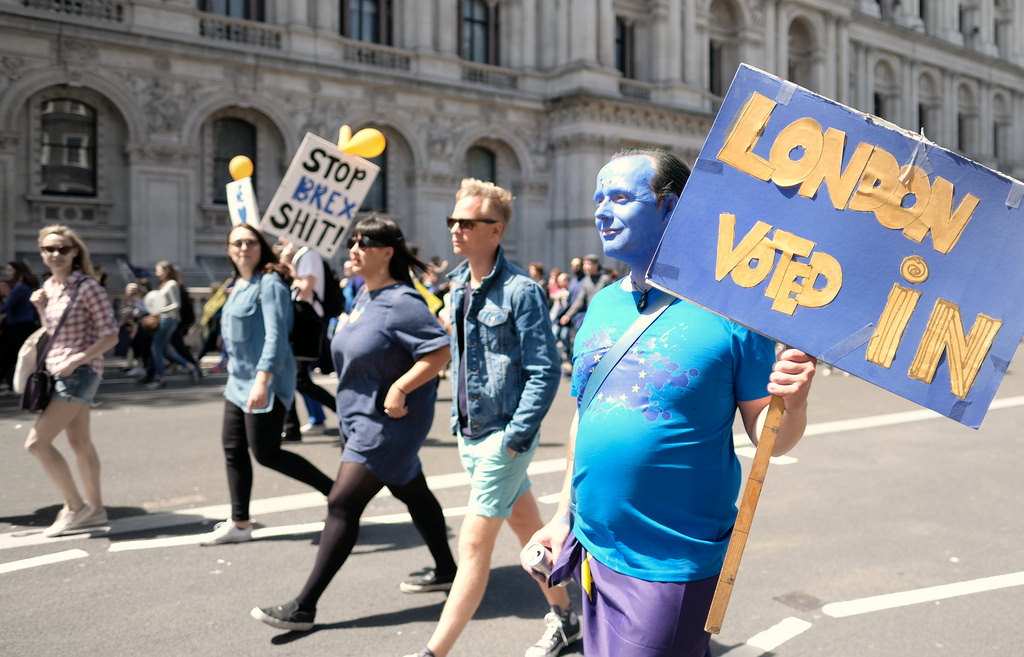
Ten years ago, ‘Project Fear’ was at the heart of the ‘Remain’ campaign’s inept efforts to persuade Britons not to vote to leave the EU.
Voting for Brexit, according to David Cameron’s government Doomsday forecasts, would cost every household £4,300 (€5,000) per year from 2030, lead to an immediate recession and mean lower house prices.
It was a huge mistake. That all the pro-EU camp could say about being members of the club was that it would be very expensive to leave was a jarring admission of failure. And the promised economic apocalypse of instant recession and house price warnings didn’t happen. Most people simply didn’t believe the figures or that the politicians behind them were being honest about them. The result, as we know, is that more than 17m Brits gave the ‘establishment’ – or what they perceived it to be – a big kick up the arse.
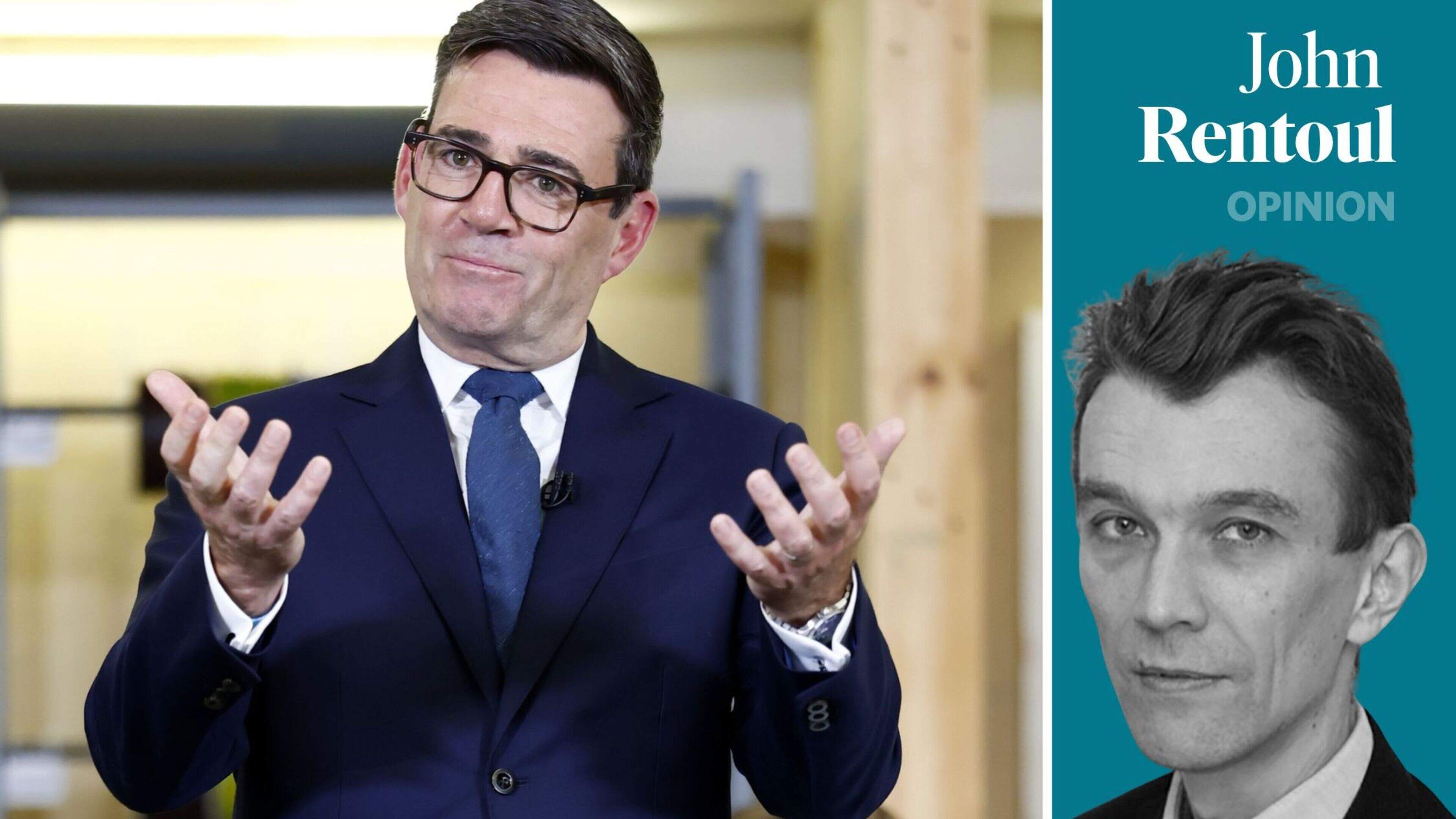
Fast forward to 2026 and newly-minted UK prime minister Andy Burnham has put all options for UK-EU relations – including rejoining – back on the table.
The UK Treasury, which drew up the prophecies of doom, is now expected to publish a study analysing the potential economic benefits of Britain moving closer to the EU ahead of November’s EU-UK summit.
Personally, I think Brexit and the piecemeal trade and cooperation agreement that governs EU-UK trade has resulted in a small but significant economic hit.
The hope is that the treasury won’t promise milk, honey and gold-paved streets if the UK rejoins the EU or its single market.
If over-promising increases the speed at which voters get disappointed with governments, the Brexit vote is proof that trying to frighten people is the fastest way to lose an election.
This article continues, but the full version is available only to EUobserver.com subscribers. Visit account.euobserver.com/membership
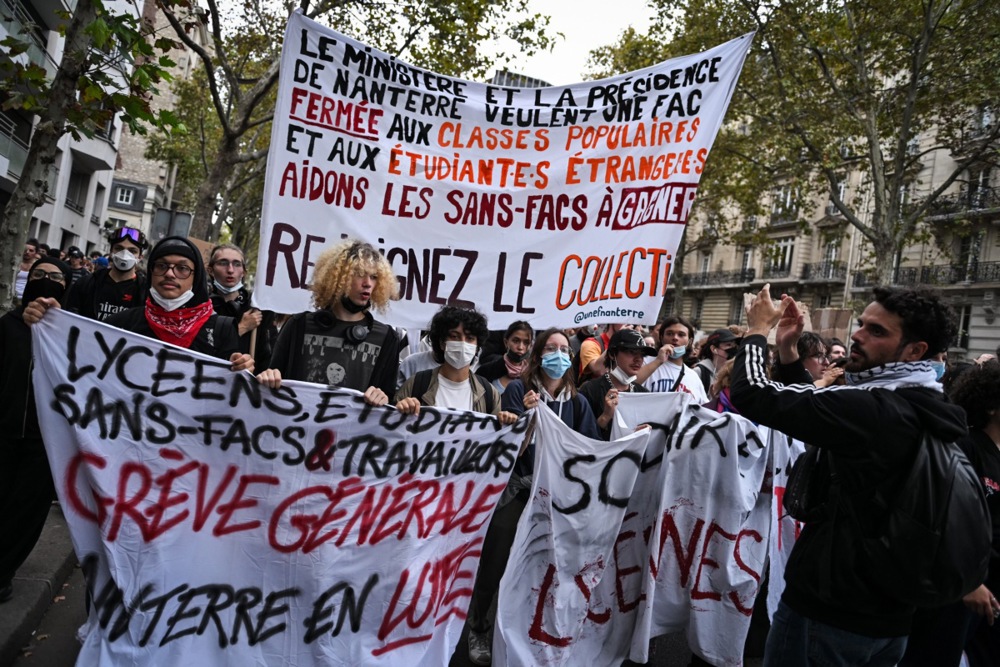
Student protests across Europe are a desperate cry for help, an appeal to governments to build a brighter, hope-filled future. Instead of paying attention, European politicians have decided to manhandle the protesters, misrepresent their demands and manipulate public opinion.
Different narratives are now competing to explain what the protests are really about.
They want to be taught properly. They want more teachers, an end to overcrowded classes, dilapidated buildings and inadequate school meals and an admissions system that sorts young people by class and postcode.
In Belgium, students have protested education cuts and fees. Greek students occupied Syntagma Square over rents, student housing and energy bills. Italian students demanded money for schools rather than war.
But politicians seem intent on telling a different story.
For many EU leaders it is – yet again – all about migration.
Hungarian prime minister Péter Magyar has decided that the chaos in French cities makes it “clear to everyone why Hungary advocates the strictest possible approach to migration.”
Poland’s Donald Tusk, who insists he will not repeat the mistakes of other European countries, joined the leaders of Denmark and Italy at the EU leaders’ meeting in Brussels last week to push for an even tougher Fortress Europe.
Together, they almost succeeded in getting others in the EU to agree to a statement linking crime and “irregular” migration.
On the other side of the Atlantic, US president Donald Trump instructed Europe to “close your borders and take control, before it is too late!” while his deputy JD Vance criticised Western liberals for bringing the “third world” to France.
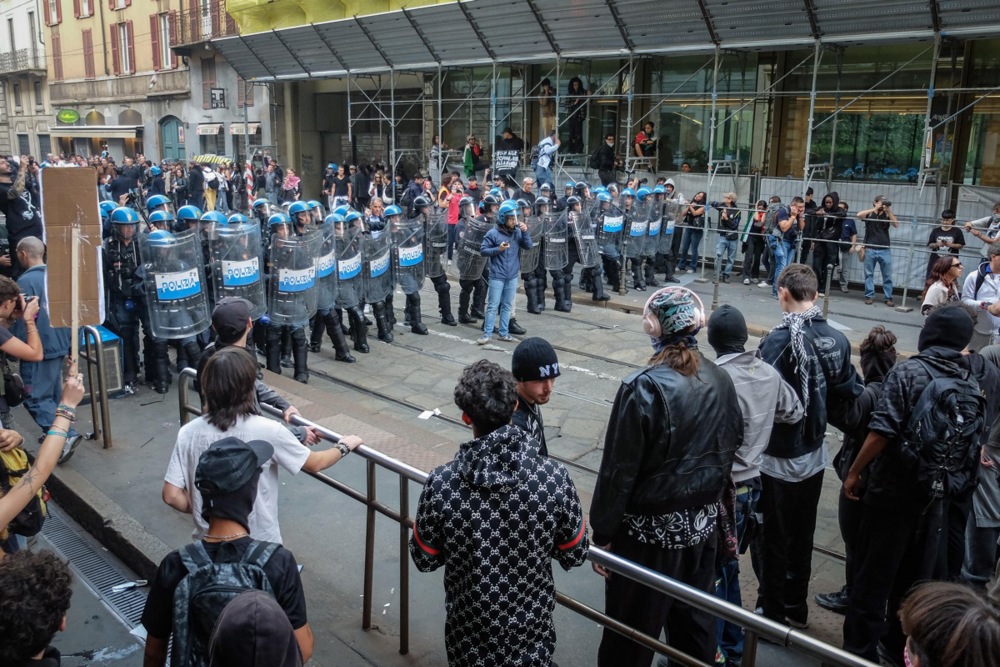
Parts of the media focused on the violence, particularly the looting and destruction carried out by those who have joined the protests to create chaos, rather than on the demands that brought students onto the streets in the first place.
In France, meanwhile, it was the presidential campaign that shaped the political response, with Marine Le Pen from the National Rally calling for law and order and blaming “decades of immigration” for the violence while her protégé, Jordan Bardella, said the police should have more weapons and greater powers.
Jean-Luc Mélenchon of France Insoumise, Le Pen’s leading rival in the elections next year, was accused of fuelling student anger. French centrists struggled to find their footing and their voice. President Emmanuel Macron made an angry television appearance before heading to the Middle East with a delegation of business leaders.
So far, very predictable.
High school students and members of French Unions march during a national day of protest on 13 October 2026 (Source: EPA/FIRAS ABDULLAH)
Old playbook: one enemy, no solution
Divert, distract, dehumanise and scapegoat are the oldest tricks in wily politicians’ playbook. The well-worn recipe is simple: take a social crisis, remove its economic content, replace it with a face, a religion, a border. Then offer an enemy, not a solution.
When public services fail, blame the outsider. When wages stagnate, blame the foreigner. When housing becomes impossible, blame the newcomer rather than the landlord, the investor or the government that stopped building.
And when young people take to the streets, describe them as manipulated, criminal, alien or dangerous. Treat their anger as a threat to public order rather than a warning that something is profoundly wrong. Say there has been foreign manipulation and disinformation.
Then turn the full force of the state against the symptoms of the crisis while leaving its causes untouched and change the the subject from justice to fear, from schools to borders, from the future to the past.
Meanwhile, the money goes elsewhere.
Europe is pouring resources into defence and rearmament. Governments speak endlessly of competitiveness, productivity and strategic autonomy. But these questions cannot become excuses for neglecting the social foundations on which Europe’s future depends.
Seriously, who is going to make an ageing Europe competitive if the people expected to build its future cannot afford to have one? Who will run Europe’s basic services if migrants go “home”? What does strategic autonomy even mean if young Europeans cannot get a decent education, find secure employment or afford a home?
Contradictions
We should know by now that security cannot be measured in weapons alone. It also depends on how secure citizens feel, and whether they believe they have something worth protecting. Security demands that people have politicians they can trust and institutions which work for them.
A Europe that invests in its military capabilities while allowing its schools, housing systems and public services to deteriorate risks hollowing out its own strength.
Believe me: I know. I was born in Pakistan, a country which thrives on war and conflict and neglects the well being of its citizens.
There is another contradiction. As young people struggle to make their voices heard, the EU is planning cuts to funding for civil society organisations that defend rights, support communities, hold power to account and help turn public anger into democratic participation.
The EU has always – rightly – backed citizens’ calls for democratic participation, equality and inclusion when it happens in Tunisia, Egypt or Hongkong. How can our leaders close down such calls for participation when they are made at home?
Sadly, politicians and parts of the media have lost young peoples’ trust – and when that faith goes, so does democracy.
The EU can and must offer young Europeans a story of hope, inclusion and progress towards equality. Leaders who prefer to hallucinate about migrants should spend more time living up to the EU’s values by investing in education, affordable housing, decent jobs and public services.
We must give our young people a meaningful voice in decisions that will shape their lives. Our collective future quite literally depends on it.
This article was first published on Shada’s Substack. You can subscribe for free to receive new posts and support her work here.
In late September, China and Laos opened a Beijing-funded training and support center and an aviation academy at Ban Keun airport, about 50 kilometers north of Vientiane. China’s Ministry of National Defense says the facility will train Lao Air Force pilots and is “not directed against any third party.” Even so, much of the commentary […]
Over coffee, an Israeli woman I know began to cry. “I’m 42,” she said, “and I’ve spent my entire adult life held captive by Bibi.”
Benjamin Netanyahu has not been Israel’s prime minister for every one of those years. Yet even out of office, Israeli politics rarely escaped his gravitational pull.
For him or against him, public life kept arranging itself around his presence.
Netanyahu is Israel’s longest-serving prime minister, having previously held office from 1996 to 1999 and from 2009 to 2021, and from 2022 onward.
Hungarians know something about that feeling. For 16 years, Viktor Orbán was not merely Hungary’s prime minister but the organising fact of Hungarian politics. Institutions bent around him, opponents defined themselves against him, and arguments somehow ended up being about him.
On 12 April, that era ended.
Péter Magyar’s insurgent Tisza party defeated Fidesz after 16 uninterrupted years in power. The final results gave Tisza 141 of parliament’s 199 seats, a two-thirds majority.
The temptation is to tell a simple story of liberation: the dominant leader fell, the spell broke, democracy returned. But political systems leave habits behind, and Orbán’s most durable legacy may prove to be the way Hungarians learned to imagine politics itself.
That is also Magyar’s dilemma.
Opposition movements confronting personalised systems often conclude that they, too, need a protagonist capable of gathering diffuse grievances into a political force.
Yet the qualities that help an insurgency win are not necessarily those needed to build a pluralist order afterwards. Campaigns reward concentration, and democracy depends on dispersing authority.
A challenger may have to become indispensable in order to win. Governing democratically requires eventually proving that he is not.
For people my age, Orbán’s rise was a rupture because we remember other governments and possibilities. Many of my students, now in their 20s, do not. Their political adulthood unfolded almost entirely under Fidesz. Orbán was simply there, as unavoidable as the weather.
Power can come to look distant and durable, participation noble but futile, and institutions captured or irrelevant. Politics becomes something done to you rather than something you do.
Conversations with Orbán
I know how deeply that can lodge itself in the mind. For five years, I have had countless conversations with Orbán in which I argued with him and tried to persuade him to change course. All of them took place in my dreams.
Supporters and opponents experienced Orbán’s system differently, but both learned to orient themselves around the same centre of gravity. Loyalists read its signals, while critics watched it constantly and defined themselves against it.
Parties that spend years confronting a dominant machine tend to centralise themselves. Message discipline becomes existential, disagreement can look like sabotage, and restraint like something to discuss after victory.
That is why Hungary’s challenge is larger than reversing Orbán’s policies.
A government elected to repair democratic institutions has to accept restraints precisely when it can most easily avoid them: strengthening parliament even when it dominates it, protecting independent media when they attack the government, and creating institutions whose authority does not depend on proximity to the prime minister.
Older Hungarians understandably speak about restoration: rebuilding institutions, restoring judicial independence, returning to democratic normality.
But “return” means something different when you are 25. You cannot return to a political world you never inhabited. For younger Hungarians, democracy cannot merely be recovered; it has to become real for the first time.
That distinction matters beyond Hungary. Opponents of personalised populism often offer restoration as their programme.
Yet generations raised amid democratic erosion may have little memory of the normality they are being asked to recover. Democratic politics has to show that dispersed power need not mean ineffective government, that disagreement need not threaten the state, and that losing an election need not mean losing the country.
Success should also mean making politics less consuming. Most democratic life is not election night but local meetings, newspapers and arguments about schools, budgets and public space.
A healthy political order allows citizens to pay less attention to the leader because fewer things depend on what that leader wants. Personalised rule teaches the opposite lesson. Even resistance can become dependence.
This is where Hungary’s experience returns me to my conversation about Israel.
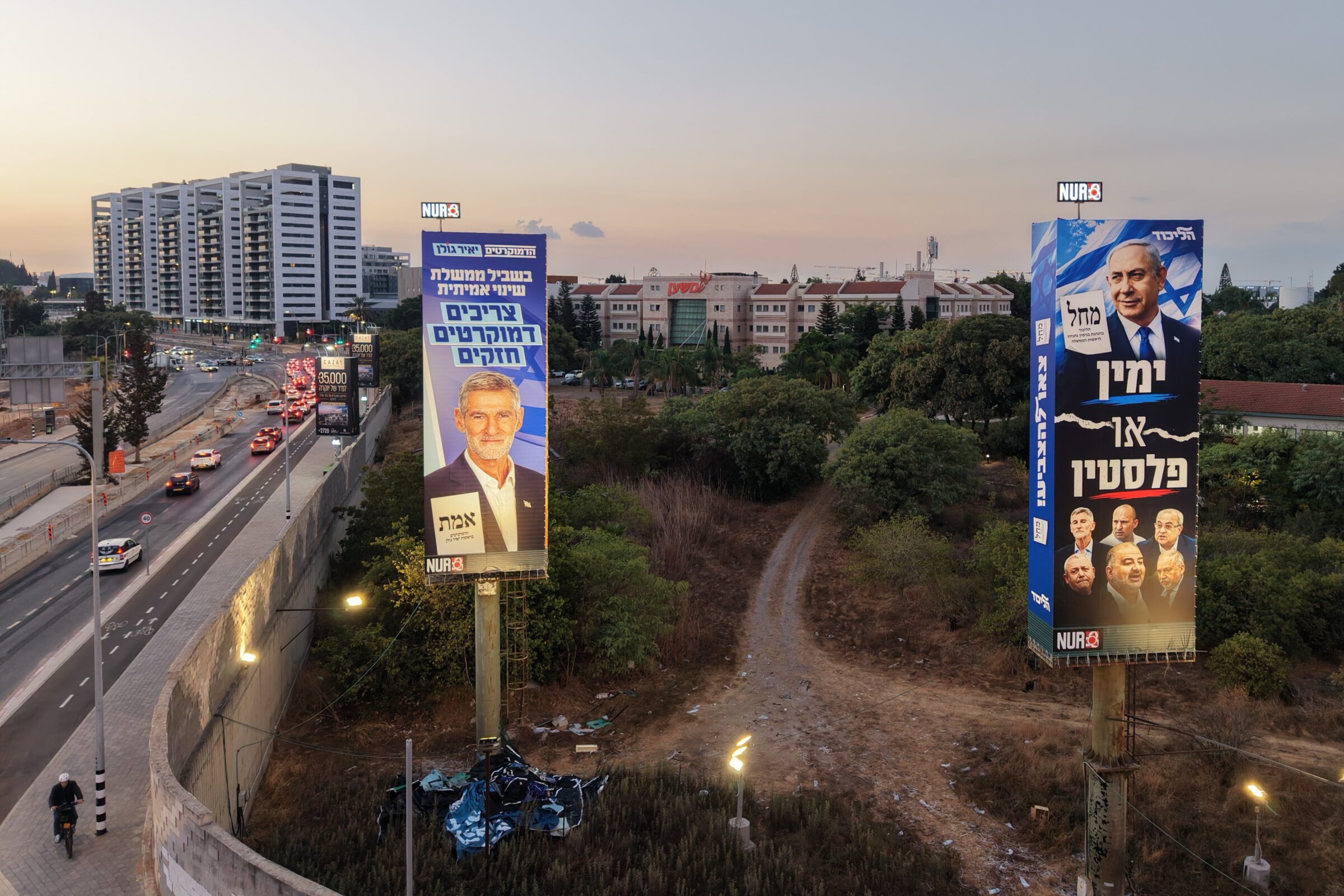
Israelis are due to vote on 27 October in an election in which Netanyahu once again occupies much of the political landscape.
Whatever voters decide, Hungary suggests a question that will remain whenever his long political era eventually ends: can political life be reorganised around institutions and competing interests rather than around the presence, or absence, of one man?
Removing a dominant political figure does not remove the habits formed around him. Supporters have to imagine their politics without the leader they regarded as indispensable, while opponents have to decide what they stand for when opposition to him is no longer enough to bind them together.
Hungary’s experience suggests that this is where democratic renewal really begins – not with replacing one dominant figure with another, but with building institutions and political movements that no longer require one.
My friend’s tears were for the time she felt had been taken from her. Hungary’s younger generation, now free of Orbán, cannot mourn in quite the same way, because many have no memory of political adulthood against which to measure what was lost.
Their challenge, now, is not to recover an old normal but to create something they have never experienced: a public life in which politics belongs to citizens without consuming them, and in which no leader becomes so indispensable that an entire country must organise itself around him.
In July 1971, Henry Kissinger developed a convenient stomachache in Pakistan, vanished from public view and turned up in Beijing. The secret trip that led to Nixon’s opening to China rested on a simple piece of geometry: in a world of three great powers, the smart move is to stand closer to each of your […]
The war in Ukraine can be ended permanently on terms that protect Ukraine’s statehood, meet Russia’s security concerns, and lay the foundation for a durable European security order. As another round of negotiations gears up in Norway, I propose a settlement concluded as a single package, signed by Ukraine and Russia, adopted by a vote […]
We must rally constitutionally-minded Christians and Americans to the polls to take back our country and restore the vision of our Founding Fathers. And we also must persist in prayer. The Lord has moved through broken systems and people throughout the history of the world, and we can learn to trust His voice as we... Continue Reading

 Login