This week on “Uncanny Valley,” we go behind the scenes of our Nathan Fielder cover story, unpack tech billionaires’ generous promises, and discuss the suspicious letters sent to US election offices.
The selected productions will screen on public television and the digital platform Nuestro Cine MX.
Mexico will commemorate World Day for Audiovisual Heritage with a special program organized by cultural institutions, including film screenings, premieres, and activities to promote the preservation of the nation’s film heritage.
Between October 27 and November 3, seven films from the collection of the Mexican Film Institute (IMCINE) will be screened in eleven independent venues across nine states.
The selected productions will also screen on public television and the digital platform Nuestro Cine MX, expanding public access to materials considered part of Mexico’s audiovisual heritage.
One of the program’s main attractions will be the screening of the restored version of “Valle de Mexico” (1976), a short documentary by Ruben Gamez that portrays the region’s rapid urban growth during the 1970s.
Celebramos el Día Mundial del Patrimonio Audiovisual con una programación dedicada a la preservación de la memoria fílmica mexicana. 🎞️
La función reunirá cortometrajes restaurados y materiales digitalizados que forman parte de nuestro acervo. Entre ellos, se proyectará por… pic.twitter.com/sh3TBUb206
The text reads, “We celebrate World Audiovisual Heritage Day with a program dedicated to the preservation of Mexican filmic memory. The screening will feature restored short films and digitized materials that are part of our collection.”
The restoration of this film was carried out by IMCINE in collaboration with Estudios Churubusco, using a positive print preserved in the archives of the National Film Archive (Cineteca Nacional).
The program also includes outstanding Mexican films such as “Un cuento de ciudad,” “Amada,” “El héroe,” “Hasta los huesos,” “El fantasma del convento,” and “Cronos,” works by renowned Mexican filmmakers.
Secretary of Culture Claudia Curiel said these activities reflect the institution’s commitment to preserving audiovisual heritage, as well as to encouraging new generations to learn about their history through Mexican cinema.
Crisis Unleashes Deadly Floods Across Latin America and Europe
Deadly floods strike three continents: at least 3,000 families are affected in Paraguay; 10 people have died in Mexico due to Cold Front 2; and six have been killed in Spain by Storm Adam, which has forced more than… pic.twitter.com/XMZ0nC3qo4
A Russian ballistic missile fitted with a cluster warhead struck the historic Pecherskyi district of Kyiv overnight on 21–22 October 2026, damaging buildings near two of the Ukrainian capital’s principal religious complexes, President Volodymyr Zelenskyy has said.
The missile landed between the Kyiv-Pechersk Lavra, a UNESCO World Heritage site, and the Holy Presentation (Sviato-Vvedenskyi) Monastery. Monastery buildings, homes, shops, cafés and other civilian infrastructure sustained damage in the surrounding area.
Zelenskyy disclosed that Russian forces had used three cluster-equipped ballistic missiles during the assault. Ukrainian authorities described weapons designed to explode in the air as they approach their targets, distributing explosive submunitions over an area approximately 400 metres in diameter.
After receiving reports from officials overseeing emergency operations across Ukraine, the president accused Moscow of deliberately choosing a weapon capable of inflicting extensive civilian casualties in a densely populated district.
“This was a deliberate choice of weapon and area of deployment,” Zelenskyy said.
He maintained that there were no military installations in the vicinity and that the attack had been intended to inflict maximum damage on civilians and their property.
Religious Buildings and Civilian Properties Damaged
Pecherskyi is one of Kyiv’s oldest districts, containing religious institutions and architectural monuments associated with centuries of Ukrainian history.
Among them is the Kyiv-Pechersk Lavra, established in the 11th century and subsequently developed into an important centre of Eastern Orthodox Christianity.
The complex includes historic churches, monasteries and an extensive system of underground caves. Together with Saint Sophia Cathedral and its related buildings, it forms part of a UNESCO World Heritage property that has appeared on the List of World Heritage in Danger since 2023.
Thursday’s explosion occurred in the area separating the Lavra from the Holy Presentation Monastery. Ukrainian authorities identified damage to buildings belonging to the latter, alongside neighbouring residential and commercial premises. Assessments of the destruction across the historic district were continuing.
This was not the first occasion in 2026 on which Russian weapons had damaged the area’s religious heritage.
On 15 June, a Russian drone struck the Kyiv-Pechersk Lavra complex, causing severe damage to the Dormition Cathedral. Its roof and structural elements suffered extensive destruction, prompting UNESCO to undertake emergency stabilisation measures.
The October strike has again exposed the vulnerability of the capital’s historic religious buildings, as well as the civilian neighbourhoods surrounding them.
The Use of Cluster Weapons in Urban Areas
The reported choice of ammunition has particular implications for the investigation into the attack.
Whereas a conventional missile warhead delivers its explosive force around a principal impact point, cluster munitions release numerous smaller explosive devices capable of striking separate locations across a broad area.
In an urban environment, such weapons can cause casualties and destruction well beyond an intended target. Unexploded submunitions may remain dangerous after the initial attack, posing further risks to residents and emergency workers.
The International Committee of the Red Cross has warned that deploying cluster munitions in populated areas creates a high likelihood of indiscriminate effects.
Under international humanitarian law, military operations must distinguish between civilian persons and objects and legitimate military targets. Indiscriminate attacks are prohibited.
The reported deployment of cluster warheads in central Kyiv therefore raises questions about whether those requirements were observed. Zelenskyy’s account of the three missiles had not, at the time of reporting, been independently established through publicly available forensic evidence.
Russian Barrage Follows Diplomatic Contact with Washington
The Pecherskyi explosion was one incident in a much larger attack on the Ukrainian capital.
According to Zelenskyy, Russia launched 21 ballistic missiles against Kyiv in three successive waves overnight. Ukrainian authorities reported at least two people killed and more than 30 wounded, with strikes damaging apartment buildings, commercial premises, transport infrastructure and energy facilities.
The bombardment took place shortly after Russian President Vladimir Putin met US presidential envoy Steve Witkoff in St Petersburg on Wednesday, 21 October.
During their discussions, Putin indicated that Russia was prepared in principle to resume negotiations with Ukraine and the United States, potentially in November. However, no confirmed timetable emerged.
Witkoff’s visit followed consultations in Norway between American, Ukrainian and European representatives over possible arrangements to end the war.
The renewed diplomatic activity has done little to resolve the underlying disagreements. As EU Today has previously examined, Moscow continues to advance territorial demands while the parties remain divided over Ukraine’s future security guarantees.
Meanwhile, Kyiv faces an immediate requirement for additional air-defence ammunition.
Zelenskyy has repeatedly appealed for more Patriot interceptor missiles capable of engaging ballistic targets. Difficulties surrounding American military assistance and intelligence cooperation have increased tensions between Washington and Kyiv at a time when Russia is intensifying attacks against Ukrainian cities.
The latest strike also presents Ukrainian investigators with the task of establishing whether the reported use of cluster munitions against a historic civilian district constituted an unlawful attack.
For Zelenskyy, the bombardment following Putin’s latest diplomatic discussions demonstrates that Moscow’s military conduct remains unchanged. He has argued that Russia’s actions provide no evidence of a genuine intention to bring the war to an end.
The 9th edition of Drawing Room Lisboa, an international contemporary art fair dedicated to drawing, opens today and runs until Sunday at the Sociedade Nacional de Belas-Artes (SNBA), in Lisbon,
Inside a displacement tent in al-Mawasi, a crowded camp on Gaza’s southern coast, Yahya Abu Lahia sits on a plastic chair, holding a small brush and sweeping dust and sand off a piece of mosaic.
"We extracted this piece of mosaic from under the rubble of Youssef al-Astal’s house, which held dozens of valuable artefacts before the war on Gaza," Yahya told The New Arab, referring to a farmer who spent a lifetime gathering Byzantine and Islamic antiquities, including column capitals, tombstones and pottery.
Youssef fled his home in eastern Khan Yunis at the start of Israel's genocide in Gaza. Heavy bombardment later hit the area, and his house was partially destroyed by Israeli occupation forces' operations.
"During the search, I found pieces of mosaic, and I rescued them and put them together," said the 28-year-old. "It was one of the happiest moments of my life."
Yahya is a field technician with Guardians of Heritage, a volunteer team of about 20 men and women that digs for artefacts in bombed buildings across Gaza, then cleans, photographs and catalogues them.
Volunteers recovered the pieces from Youssef's house in al-Qarara near Khan Younis — where he had collected antiquities since childhood and amassed about 74 historical pieces — by digging through the rubble and sifting sand by hand with basic tools.
"Our work under the rubble isn’t a traditional archaeological excavation," said Shaimaa al-Natour, assistant coordinator of Mayasem’s heritage protection programme.
"We work in exceptional conditions that demand extreme caution, because we may come across unstable stones, concrete blocks and fragile pieces that can be damaged simply by moving them."
She said items are bagged or boxed and taken to a storeroom, a corner of the tent, for cleaning, photographing, and archiving.
The team is building a digital archive of every rescued item, backed by the ALIPH Foundation, a fund for heritage in conflict zones, and The Palestinian Museum.
It has documented more than 1,000 pieces of movable heritage so far, Shaimaa said, and the work continues.
One mission was the destroyed al-Qarara Cultural Museum, which held 3,500 pieces before Israel's war on the besieged enclave.
Storing the finds is a challenge in itself.
The team faces a shortage of suitable packing and conservation materials, and struggles to provide a stable environment that protects the artefacts from humidity, dust and temperature fluctuations.
"My belief in the need to protect our cultural heritage is what drove me to volunteer and work with my own hands in the middle of this war," said Yahya.
"With every piece we find and restore, I feel I have saved part of my city’s memory."
Heritage's 'first line of defence'
The Gaza Strip, a narrow coastal territory on the ancient trade route between Egypt and the Levant, was home to about 130 archaeological sites and at least a dozen local museums before Israel's genocide began, spanning the Bronze Age to the Ottoman era, along with museums, mosques and churches that held centuries of Palestinian history.
As of March 2026, UNESCO had verified damage to 164 sites in Gaza since October 7, 2023, including 14 religious sites, 128 buildings of historical or artistic interest, three depositories of movable cultural property, nine monuments, two museums and eight archaeological sites.
It used satellite imagery analysed by UNOSAT, the UN’s satellite agency, and, since an October 2025 ceasefire, rapid on-site assessments where access allows.
Gaza’s Government Media Office said in February that Israeli occupation forces had destroyed 835 mosques completely, damaged 180 partly and destroyed 40 of the Strip's 60 cemeteries.
The office and the Ministry of Tourism and Antiquities say 12 local and private museums have been destroyed and looted.
Itimad Abu Amra, 23, joined the Guardians of Heritage team at its launch, after working at the al-Qarara museum since 2018.
Her most recent mission was the Abu Salim Mosque in Deir al-Balah, central Gaza, which was built in 1951 and used for Quran memorisation circles and community activities. Israeli warplanes struck it on August 25, causing widespread destruction, she said.
"When conditions allowed, we went straight to the Abu Salim Mosque, and we found historic limestone blocks and a collection of important and valuable books," she said.
"The moment you find an artefact in the rubble, you feel you are facing a trust that must be handled responsibly."
Hamouda al-Dahdar, a cultural heritage expert, called the volunteers "the first and courageous line of defence of human heritage," but said such groups are "in dire and urgent need of institutional and international support."
He called on UNESCO and other UN bodies to go beyond statements and provide direct funding, technical help, damage assessments and missions of international experts.
Hamouda also described the destruction of Gaza’s heritage as "a clear attempt to erase the living material evidence of the identity and historical memory of the Palestinian people."
UNESCO says it is already working on the ground. Together with the Centre for Cultural Heritage Preservation, it hasstabilised five heritage sites in Gaza’s Old City, has seven more underway, and has trained local professionals in damage assessment and emergency stabilisation.
The agency has also called on the international community to "increase support and investment" to scale up the work.
"The Gaza Strip is a unique historical bridge of civilisations," Hamouda said, pointing to Gaza’s Bronze and Iron Age, Hellenistic, Roman, Byzantine and Islamic layers.
"Heritage is the living memory of existence. The work continues from within the rubble to protect our identity and pass it on to future generations."
For the team, Shaimaa said, the tent is a symbol.
"It’s a message to the community that a museum isn’t just a building or exhibition hall,” she said, adding that its role can continue in the simplest spaces, as long as people protect its collections and pass their stories on.
"Gaza isn’t only the destruction we see today," she said.
"It’s thousands of years of history, civilisation and human memory, and protecting it is a collective responsibility."
Ismail Nofal is a Gaza-based journalist specialising in human interest stories
This article was published in collaboration with Egab
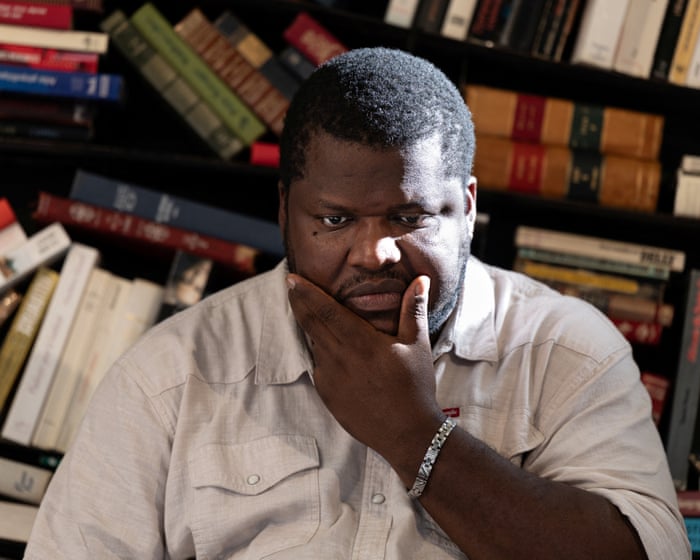
Author withdrawn from France’s Prix Goncourt last month has repeatedly denied using artificial intelligence to write novel
The publisher of top-selling Haitian Canadian writer Thélyson Orélien, who was removed from France’s most prestigious literary prize list last month, has confirmed the author used artificial intelligence to help write his novel C’était ça ou mourir (It Was Either That or Die).
Orélien has denied allegations that he used AI on his breakthrough novel and, last week, Canadian publisher Les Éditions du Boréal said it was standing by the 38-year-old writer.
 Login