❌

Reading view

New EU-wide asylum law ends up in court in Italy

An Egyptian national who sought protection in Italy after arriving on the island of Lampedusa in August may end up dealing a constitutional blow to the EU’s asylum laws after seeking legal counsel.

The Egyptian, who is not named, had his asylum claim rejected even though he did not understand his translator. His is appealing.

“Not even European Union law can conflict with our supreme principles,” his lawyer, Claudia Avenia told EUobserver earlier this week.

Aside from his own personal circumstances, his legal case is raising serious issues that could have a knock-on effect on the EU’s new asylum and migration pact, which kicked into force this past June across all 27 EU member states.

Because he is from Egypt, he was shuffled through a fast track asylum procedure. EU laws require the accelerated process from nationals who have a 20 percent chance or less of getting asylum in Europe. Egypt fits into this category.

A new EU law also meant that he was technically not yet legally inside the EU as authorities carried out health checks, identification and other assessments during a so-called pre-screening phase.

It means he was banned from stepping outside a reception centre, where he was being housed.

Lawyers describe it as the legal fiction of non-entry, similar in scope to certain areas of international airports. Rights experts had earlier warned, when the EU rules were being drafted, that this would lead to defacto detention.

This article continues, but the full version is available only to EUobserver.com subscribers. Visit account.euobserver.com/membership

  •  

Jewish groups clash over whether EU antisemitism envoy should influence Israel policy, as controversial von Schnurbein goes back to Berlin

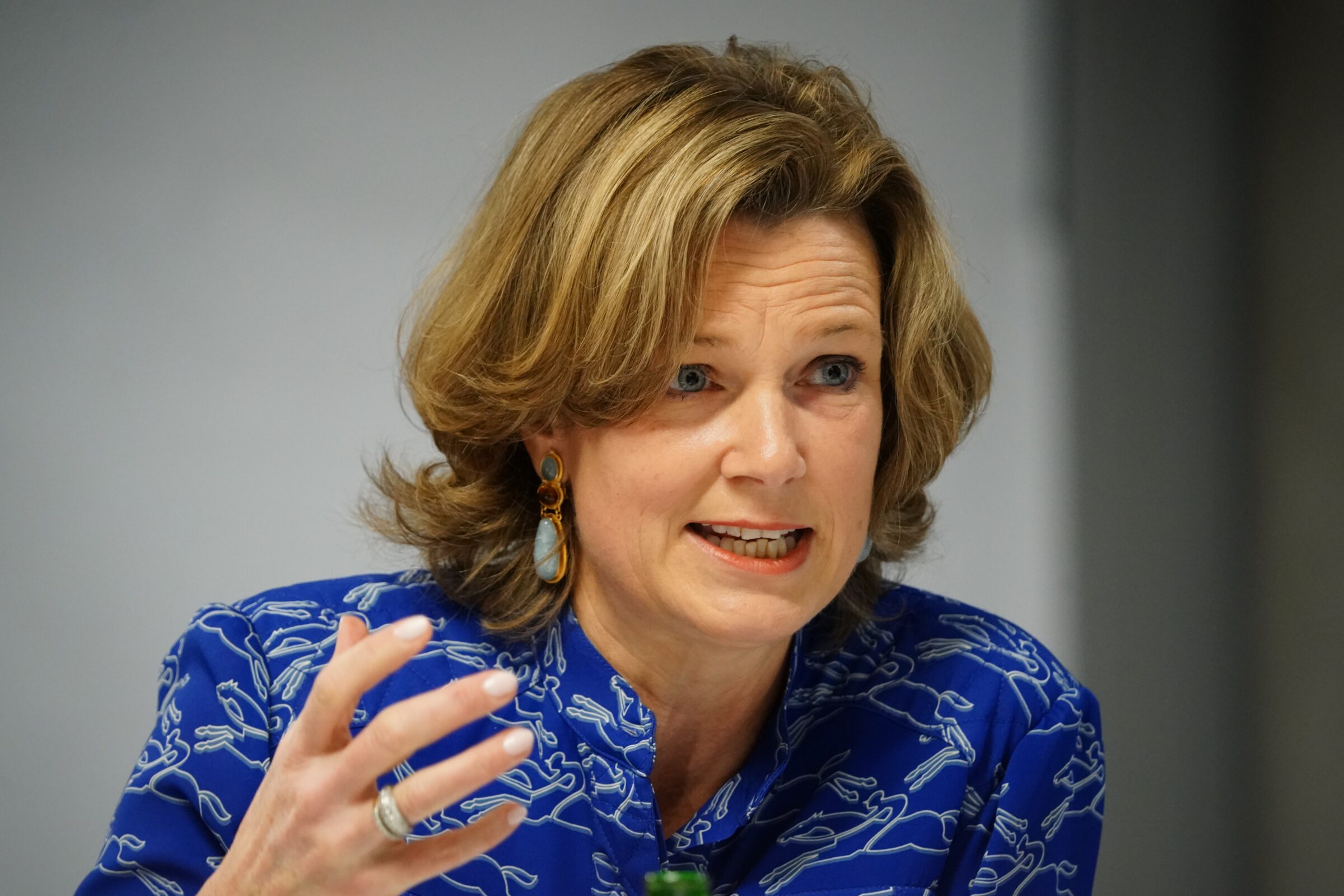
Two leading Jewish groups want the EU’s next antisemitism tsar to also brief diplomats on foreign policy – despite the controversy it caused for the last one, Katharina von Schnurbein.

“EU external decisions have direct consequences for Jews living in Europe. Diplomats should hear from the person who sees those consequences every day,” said Pinchas Goldschmidt, who heads the Conference of European Rabbis (CER) in Munich, Germany.

The European Jewish Congress (EJC) in Brussels also told EUobserver: “The [EU antisemitism] coordinator should ensure that this objective is systematically reflected in all relevant EU policies, including external action and foreign policy.”

They spoke as von Schnurbein prepared to leave her EU post after 10 years to become a German “federal government commissioner for Jewish life in Germany and the fight against antisemitism” on 28 October.

The 53-year-old German baroness was highly active at events in EU capitals, had three staff, and travelled on missions to Israel, Serbia, Switzerland, and the US.

She also worked next door to European Commission president Ursula von der Leyen in her Brussels HQ and had close ties with the Israeli government.

This article continues, but the full version is available only to EUobserver.com subscribers. Visit account.euobserver.com/membership

  •  

Big fish hooked in Hungary, as Orbán’s ex-bank chief placed in custody (Day 163 of the Tisza government)

The series continues as we report on developments following April’s historic election and on the steps taken since then by the Tisza government. This week, we cover the following topics:

  • Orbán’s former right-hand man in custody.
  • What did we learn from Tisza’s first budget?
  • Ursula von der Leyen to give a speech on the anniversary of the revolution.
  • Poll of the week: more than four million people back Tisza.

Orbán’s ex-right-hand man in custody

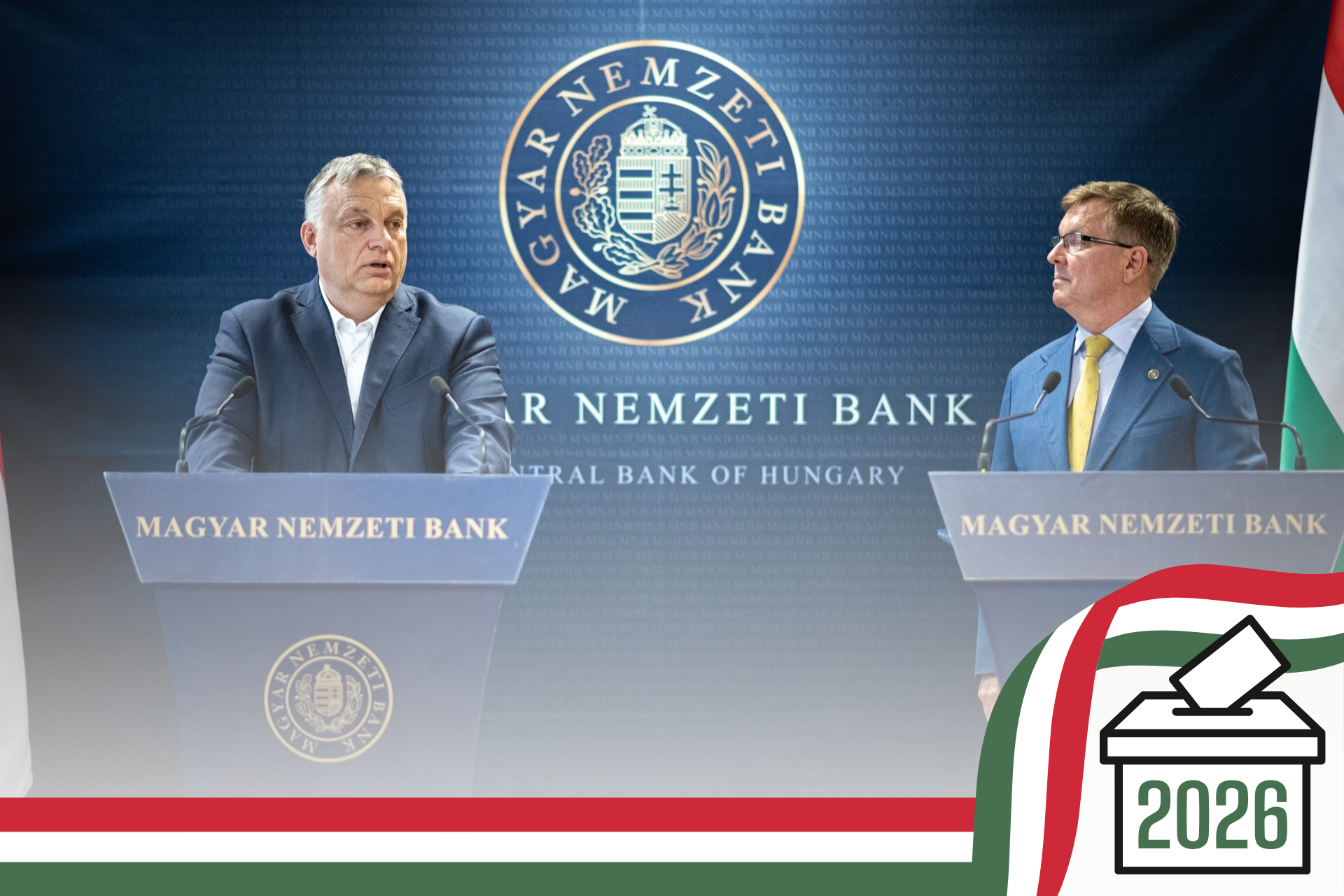
The last time a central bank governor was taken into custody in Hungary was in 1944, during the German occupation, as Válasz Online pointed out. This 82-year hiatus ended on Wednesday (21 October), when György Matolcsy was taken into police custody.

But Matolcsy is not simply a former central bank governor; he is one of the architects of Orbán’s economic policy, a key figure in the former prime minister’s system, and together with his family he has in recent years become one of the symbols of Fidesz’s taste for luxury.

Who is György Matolcsy?

“I have a very strong emotional relationship with Matolcsy. I owe him a great deal, I have learned a great many things from him. Matolcsy is an economist of historic stature,” prime minister Péter Magyar quoted ex-prime minister Viktor Orbán’s words from an interview last November, after the former central bank governor had been taken into custody.

Matolcsy was a member of the Hungarian Socialist Workers’ Party (MSZMP), and after the regime change he became prime minister József Antall’s chief adviser. In 1999 he joined Orbán’s advisory board, and from 2000 to 2002 he served as economy minister in the first Orbán cabinet.

Even after the 2002 election defeat he remained loyal to Orbán, and in 2010 he became minister for national economy, meaning he was put in charge of both the finance and economy portfolios at the head of a merged super-ministry. It was at this time that Orbán called him his right-hand man.

Matolcsy was the architect of Orbán’s “unorthodox economic policy”; he oversaw the nationalisation of private pension funds, the sending home of the IMF from Hungary, and the introduction of high sectoral surtaxes.

The great bank heist

He was appointed central bank governor in 2013, and by 2016 the foundations scandal had already broken. It emerged that 266bn forints’ worth (€840m) of public assets had been shifted into the foundations of the Hungarian National Bank (MNB). These foundations bought buildings and works of art, and also granted substantial benefits to their own leaders.

Later, the foundations’ money was entrusted to an asset management company, which obtained further funds and thus came to control assets of around 500bn forints, of which some 400bn forints (€1bn) – was public money.

This asset manager built up an international corporate network, behind which stood the central bank governor’s son, Ádám Matolcsy, and his circle. The asset manager bought into risky foreign companies, spending a significant part of its resources. The Matolcsy family visibly became very rich, and Ádám also amassed a notorious Porsche collection.

György Matolcsy’s mandate expired in 2025, and after his departure the State Audit Office also concluded that abuses may have taken place at the central bank. For a long time, however, no police investigation was launched.

The current case

The current charges relate to a case that unfolded in the final days of Matolcsy’s activity as central bank governor. Matolcsy wanted to ensure that his family would control the roughly 500bn forints (€1.25bn) of central bank assets even after he no longer held office.

This article continues, but the full version is available only to EUobserver.com subscribers. Visit account.euobserver.com/membership

  •  

Putting the clocks back this Sunday – yet millions of Europeans don’t want to

Europeans made their preference clear. Parliament voted. So why are we still changing the clocks?

On Sunday (25 October), Europeans will once again turn their clocks back by one hour. The familiar ritual will again raise the same question: did the European Union not decide years ago to end seasonal clock changes?

The question entered the European agenda largely from the bottom up.

Citizens repeatedly contacted and petitioned the European Parliament, raising concerns about health, sleep disruption and the continuing usefulness of changing the clocks twice a year.

A citizens’ initiative presented to the Finnish Parliament in 2017 gave the issue further momentum. Finland could not end the practice alone because it was regulated at EU level.

On 8 February 2018, the European Parliament called on the EU Commission to assess the existing directive and, if necessary, propose its revision.

84% public support for ending clock changes…

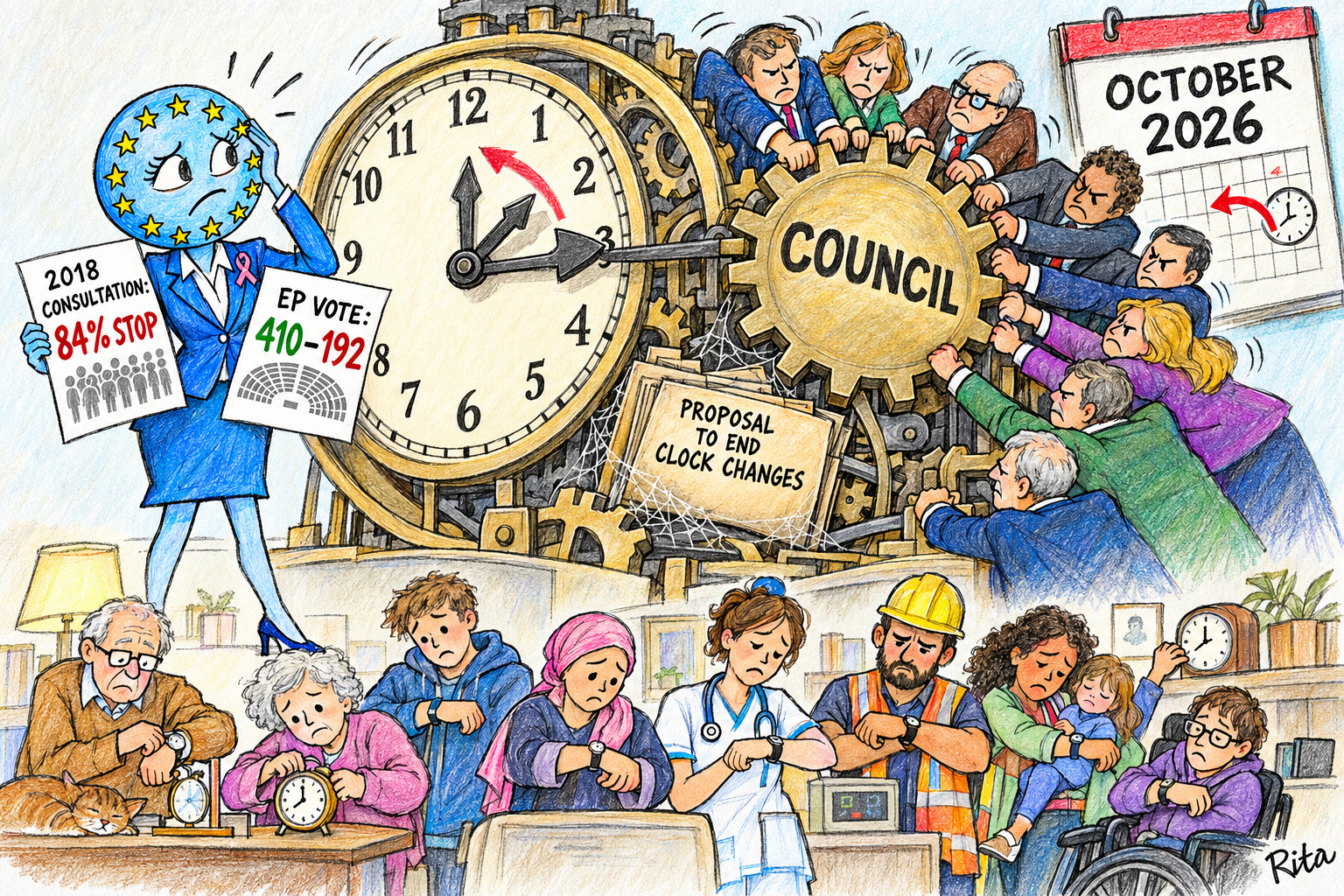
The commission subsequently launched a public consultation. It received approximately 4.6 million responses from citizens, the highest number ever recorded for an EU consultation at that time. Among those who participated, 84 percent supported ending the twice-yearly clock changes.

The consultation was not a referendum, and participation varied considerably between member states. Nevertheless, millions of Europeans sent a clear political message.

Jean-Claude Juncker highlighted the issue in his 2018 State of the Union address. Shortly afterwards, the commission proposed ending seasonal clock changes while allowing each member state to choose permanent summer time or permanent standard time.

…and MEPs agree

In March 2019, the European Parliament approved the proposal in plenary by 410 votes to 192, with 51 abstentions. The final clock change was expected in 2021.

Yet 2021 came and went, and Europeans continued adjusting their clocks every March and October.

Parliament has not reversed its position, and the commission has not formally withdrawn its proposal. The file remains blocked because member state governments have never agreed on a common position in the Council.

No simple solution for 27 states

Ending the clock change sounds simple until governments must decide what replaces it. Should countries remain permanently on summer time or standard time? What happens if neighbouring countries make different choices? How would a patchwork of time zones affect transport, aviation, trade and the single market?

These are legitimate questions.

A poorly coordinated decision could create new problems while solving the old one. Some governments also requested a more detailed assessment of the consequences. The pandemic and the crises that followed then pushed the issue further down the political agenda.

However, the crisis cannot explain indefinite inaction. Eight years after the Commission presented its proposal, the Council has still not adopted a position. Without it, negotiations with Parliament cannot move towards a final agreement.

This is where a practical question about clocks becomes a problem of democracy, accountability and political communication.

Citizens were encouraged to participate. Millions did. Parliament responded adequately. The commission presented the consultation as evidence that Europe was listening. Its president announced that clock-changing would stop, and Parliament endorsed the proposal with a clear majority.

Then the process got  stuck.

Twice a year, Europeans are reminded of this promise, but receive little to no explanation about who is blocking progress, which governments support which option or how the disagreement might be resolved.

Simply saying that “the EU failed” would, however, hide who has the concrete political responsibility. The EU is a complex, multilevel decision-making system in which responsibility is shared among different institutions and member state governments. Parliament adopted its position, while national capitals failed to agree in the council.

Those governments should explain their positions instead of allowing “Brussels” to absorb the blame like often happens, for their collective indecision.

The European Commission also has certain responsibility because her proposed legislation left the most difficult question, the choice of permanent time, to individual countries. 

In any case, the EU risks turning, or did turn,  an example of successful citizen agenda-setting into an example of participatory failure.

The issue may not be Europe’s most urgent challenge right now, but credibility and a positive image is also built through implementation of citizens’ demands such as this one.

People notice when a widely announced change does not happen, especially when it impacts directly and negatively their daily life. They also notice when nobody explains why.

Member state governments should state publicly whether they favour permanent summer time, permanent standard time or retaining the current system. The council should put the issue back on its agenda and strive to achieve an agreement.

And if this is not possible, Europeans deserve a clear explanation why their participation led nowhere.

  •  

European Parliament Calls for €47.4 Billion for Erasmus+ as Student Living Costs Rise

The European Parliament voted on Thursday, 22nd October, to support a €47.4 billion budget for the Erasmus+ programme between 2028 and 2034, demanding substantially more funding than proposed by the European Commission.

The parliamentary position was approved by 454 votes to 34, with 93 abstentions, following negotiations over the future of the EU’s principal education, training and student mobility programme.

MEPs are seeking approximately €6.56 billion more than the Commission’s proposed €40.83 billion allocation, arguing that existing financial support does not adequately reflect rising living costs and the expense of studying abroad.

The decision establishes Parliament’s negotiating position but does not represent final approval of the funding. The programme remains subject to negotiations with national governments and agreement on the EU’s next seven-year budget.

Rising living costs affect student mobility

Erasmus+ allows students, apprentices, teachers and other participants to study, train or gain professional experience in another participating country.

Although widely associated with university exchanges, the programme also supports vocational education, schools, adult learning, youth organisations and sporting activities.

Participation often involves substantial personal expenditure, particularly for accommodation, transport and everyday living expenses.

These costs vary considerably between European destinations, creating financial difficulties for students whose Erasmus grants cover only part of their expenses.

The European Parliament is consequently calling for support mechanisms that account for differences in housing and living costs between host countries, regions and cities.

The proposal is intended to make participation more accessible to people who cannot rely on additional financial assistance from their families.

The European Parliament’s research service has identified unequal access, financial limitations and administrative complexity among the challenges facing the programme.

The proposed legislation would also establish a target under which at least 20 per cent of participants in mobility activities would be people facing fewer educational or economic opportunities.

Parliament seeks larger education allocation

The parliamentary proposal provides for approximately €47.39 billion in current prices over seven years.

The Commission originally proposed approximately €40.83 billion, combining funding for Erasmus+ with activities currently administered through the European Solidarity Corps.

According to the report prepared by Parliament’s Committee on Culture and Education, the revised programme would include more explicit financial allocations for different activities.

Education and training would account for approximately 74.6 per cent of the proposed financial envelope, while youth and volunteering would receive around 15 per cent. Sport would receive approximately 4.1 per cent.

The proposed allocation structure is intended to provide greater certainty for organisations planning longer-term educational projects and cross-border partnerships.

Polish MEP Bogdan Andrzej Zdrojewski, of the European People’s Party, is Parliament’s rapporteur on the legislation. His report calls for greater transparency over expenditure and more predictable funding arrangements.

The programme would continue supporting European university alliances, international educational cooperation and initiatives intended to improve professional skills.

Volunteering and vocational training

One proposed change concerns the integration of the European Solidarity Corps into the wider Erasmus+ framework.

The Solidarity Corps currently offers young people opportunities to participate in volunteering and community activities, including projects addressing social and humanitarian needs.

The Commission has proposed bringing these activities within the new programme in an attempt to simplify administration.

However, parliamentarians want safeguards to ensure that volunteering remains identifiable and accessible within the broader funding structure.

The parliamentary position also seeks to extend mobility opportunities across vocational training, adult education and sport.

These activities would allow a wider range of participants to benefit from international placements, including people outside conventional university education.

Additional attention is being given to the financial circumstances of participants and the administrative requirements faced by smaller educational organisations.

Dispute over the EU’s next budget

The Erasmus+ negotiations are taking place against the background of a wider dispute over the European Union’s 2028–2034 financial framework.

Member states are debating the overall size of the budget and the competing demands of agricultural policy, regional development, defence, research and education.

As EU Today recently examined, the negotiations have exposed disagreements over whether the EU should expand its financial commitments or constrain expenditure during a period of pressure on national finances.

Parliament’s Erasmus+ proposal will therefore depend not only on agreement over educational priorities but also on the final distribution of resources across the wider EU budget.

Some governments may support broader participation while resisting the full increase requested by MEPs.

What happens next?

Negotiations must establish the programme’s final budget, eligibility rules and the arrangements governing grants after 2027.

The Council has already developed a negotiating position on aspects of the programme, although financial questions remain connected to the broader budget settlement.

Erasmus+ will mark its 40th anniversary in 2027, shortly before the new framework is scheduled to begin.

More than 17 million people have participated in the programme and its related activities since its establishment.

The outcome of the current negotiations will determine whether the next generation of participants receives more financial support and whether the programme can expand without increasing the proportion of costs borne by students and their families.

  •  
❌