Musk ups midterm spending in final stretch


“È difficile entrare nella testa di qualcuno, il mio consiglio è prendersi il tempo che gli serve: nella mia carriera spesso ho sottovalutato alcuni segnali del mio corpo e ne ho pagato le conseguenze”. Con queste parole nel corso della presentazione a Roma del documentario a lei dedicato “Federica – L’ultima Olimpiade”, alla Festa del Cinema, Federica Brignone si è rivolta a Jannik Sinner, tennista numero uno al mondo alle prese ormai da luglio con un brutto infortunio al ginocchio. “Jannik è talmente forte che se torna al 100% non si ferma più. Il suo infortunio è uno dei peggiori da gestire: un atleta non si fermerebbe mai, Sinner non ha traumi che gli impediscono di camminare”, ha detto Brignone rivolgendosi al campione italiano.
Sinner è fermo dalla finale a Wimbledon del 12 luglio vinta conto Zverev e ha già annunciato di aver finito in anticipo il suo 2026 dopo il problema al ginocchio che lo tiene lontano dai campi da più di quattro mesi. Le parole di Brignone arrivano in un momento difficile anche per lei, che dopo la rottura di tibia, perone e crociato anteriore, è tornata a Milano-Cortina 2026 in tempi record e ha anche vinto due medaglie d’oro che sanno di miracolo. Proprio nei giorni scorsi Brignone – alle prese ora con una lunga riabilitazione dopo aver dato tutto alle Olimpiadi – in un’intervista a Eurosport ha detto: “Non sono più disposta e a sciare con il dolore, cioè a dover combattere contro il mio corpo, contro i segnali che mi dà il mio corpo, combattere tutti i giorni anche solo per appoggiarti a una gamba”, ha dichiarato in un’intervista a Francesca Marsaglia per Eurosport. “Quindi – ha chiarito Brignone – o starò bene o per me la mia vita da sciatrice può anche finire qua“. Ora il consiglio a Sinner, nel momento più delicato e difficile della sua carriera.
L'articolo Brignone a Sinner: “Fai con calma, il tuo infortunio è tra i peggiori che ci siano. Io spesso ho sottovalutato segnali del mio corpo e l’ho pagata” proviene da Il Fatto Quotidiano.
Federal Oral Tribunal 5 allowed the former President and the deputy to attend the opening session virtually, with the favorable vote of judges José Michilini and Fernando Machado Pelloni. The ruling sought to coordinate the deputy’s parliamentary schedule and simplify transfer logistics from the home where the former president is serving a sentence.
The remote format was granted exceptionally, only for the formal reading of the indictment and the order sending the case to trial. The tribunal said later hearings will be in person for all defendants.
RELATED: Cristina Kirchner’s Defense Seeks UN Help to Lift Public Office Ban
The case covers 19 people, including businessmen Lázaro Báez, Cristóbal López and Fabián de Sousa. Hearings are set for Mondays, Fridays and Saturdays, including the January 2027 judicial recess, when the defense lawyers must attend in person every day.
With over 300 witnesses initially slated to testify, the dynamics of witness credibility and testimonies would play a crucial role in shaping the outcome, but it was reduced by agreement between the parties.
[JUSTICIA] Terminó la audiencia por Hotesur y Los Sauces: solicitaron que Cristina Kirchner sea juzgada como "jefa de una asociación ilícita, coautora de lavado de activos y admisión de dádivas", y su hijo, Máximo, fue imputado como "organizador del entramado criminal". https://t.co/3s4n4ORbW3 pic.twitter.com/VbWP9G9bve
— ElCanciller.com (@elcancillercom) October 23, 2026
The prosecution alleges that Kirchner’s family bought hotels and apartments, rented them to businessmen, mainly Báez, and laundered illegal money from public works.
The defense’s argument about the legitimacy of the funds is crucial. The defense, led by Carlos Beraldi and Ary Llernovoy, says the properties were bought with declared funds, including assets the family owned before Néstor Kirchner became Mayor of Río Gallegos, and that rentals were invoiced, banked and at market prices. The defense says similar claims were dismissed in three illicit enrichment cases. None of these claims has been tested at trial, and the defendants are presumed innocent.
Lawyer Carlos Beraldi maintained from the start that the hotels operated, collected and paid taxes like any other business. In September 2023, Chamber I of the Federal Chamber of Cassation revoked a previous dismissal and ordered that the trial go ahead.
The merged file brings together two fronts. Hotesur concerns the family’s hotel operation, while Los Sauces covers the real estate company at the center of the billing accusation.
The Cassation court removed the two judges who had dismissed the case and left only Palliotti, the magistrate who had voted to convict Cristina and Máximo Kirchner.
The same account recalls that in November 2021 judges Adrián Grünberg and Daniel Obligado dismissed the case against all defendants, with Adriana Palliotti dissenting, relying on an accounting expert report that found no harm. In September 2023, the Cassation Chamber overturned that decision and ordered a trial.
The opening of the process was preceded by an episode described as embarrassing. The Cassation court ordered the Federal Oral Tribunal 5 to merge the Hotesur and Los Sauces cases into a single proceeding and to begin it this Friday.
It is the first time in the country’s history that the Cassation court has dictated how a trial must be conducted, a power that normally belongs to each oral tribunal. Political pressure mounted after a Supreme Court resolution, and the judges had only 72 hours to unify the files. The order left the tribunal with no margin to set its own calendar.
The core of the Los Sauces case is the billing of the family’s real estate firm. According to the accusation, 88% of everything the company collected between 2009 and 2016 came from businesses controlled by Báez and from the Indalo Group.
The Hotesur portion of the merged case has not yet been read in court. The next hearings, set for October 26 and October 30, will determine how the combined process advances.
Text reads: “When there is political persecution, the times in the judiciary are always electoral.”

© Erin Schaff/The New York Times


© Haiyun Jiang/The New York Times

© Cornell Watson for The New York Times
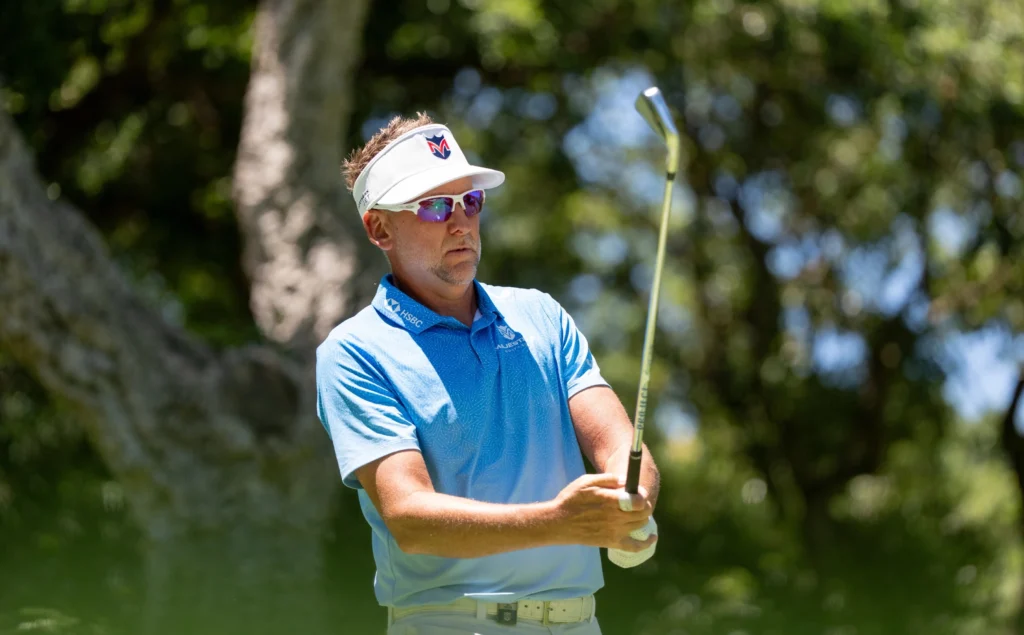
On Friday, English golfer Ian Poulter announced his departure from LIV Golf and confirmed he will not participate in the new project being considered after the withdrawal of Saudi funding that had supported the tour since its inception in 2022.
RELATED:
Brussels Seeks to Keep Russia Isolated From International Sports
Poulter joins other players who have also opted not to participate in the so-called new phase of the competition, including Jon Rahm, David Puig, Bubba Watson, and Louis Oosthuizen.
The Briton explained that the decision was made after discussing it with his family and team, particularly valuing the “possibility of reducing” travel and dedicating more time to his personal life.
Poulter leaves behind a distinguished career in international golf, with twelve European Tour titles and three PGA Tour victories. However, he shared his interest in competing more frequently in senior tournaments.
Life update…✍🏼 pic.twitter.com/kdSQIOmxZ0
— Ian Poulter (@IanJamesPoulter) October 23, 2026
He plans to enhance his activity on social media and digital platforms, especially through his YouTube channel, where he shares golf-related content. The player will also dedicate time to supporting his son Luke Poulter, who is taking his first steps on the competitive circuit.
The player stated that, despite the controversy surrounding LIV Golf since its inception, he is proud to have been part of the project and to have competed with the Majesticks team.
In his message, he highlighted the numerous changes professional golf has undergone in recent years and expressed his conviction that these transformations can open new opportunities for players and organizers.
#Venezuela | National Assembly President Jorge Rodríguez called for the return of Venezuelan gold held at the Bank of England to support earthquake recovery efforts.#JorgeRodriguez #teleSUREnglish pic.twitter.com/YDz3PDJVVC
— teleSUR English (@telesurenglish) October 22, 2026
teleSUR: JP
Source: EFE
Bloomberg/Getty Images
Uber is giving all of its corporate employees access to OpenAI's enterprise tool weeks after laying off thousands.
About 30,000 employees at the ride-hailing service's offices will have access to ChatGPT Work, the two companies said on Thursday.
The tool will connect with other programs that Uber employees use, such as Slack and Gmail, to "research information, prepare meeting briefs, create presentations, analyze data and complete workflows across applications," a statement said.
"As AI transforms how we work, we want to give everyone the tools to innovate, solve problems and help shape Uber's future," Uber CTO Praveen Neppalli Naga said. Uber initially tested the tool among a group of 1,000 employees.
The rollout comes the month after Uber laid off about 10% of its corporate workforce, or about 3,300 people. The company made the job cuts to reduce management layers and reduce the number of small teams, CEO Dara Khosrowshahi said at the time. It didn't cite AI in its announcement.
Some laid-off employees told Business Insider that AI was doing significant parts of their jobs, from answering their questions in Slack to crafting replies to messages from riders and drivers.
Uber cited AI as a reason for an earlier round of layoffs in July, which targeted Uber's customer service employees.
Do you have a story idea about Uber? Contact this reporter at abitter@businessinsider.com or via encrypted messaging app Signal at 808-854-4501. Use a personal email address, a nonwork WiFi network, and a nonwork device; here's our guide to sharing information securely.


Sarah Stier/Getty Images
LeBron James has had a legendary run on the court. The four-time NBA champion has played for the Cleveland Cavaliers, Miami Heat, Los Angeles Lakers, and now the Philadelphia 76ers, winning titles with his first three teams.
His real estate portfolio has grown alongside his career. James has bought homes near most of the cities where he has played, building a multimillion-dollar collection of properties in the process.
Forbes estimates James' net worth to be $1.4 billion as of publication. Over the years, he has secured lucrative endorsement deals and business ventures with brands including Nike, Beats by Dre, PepsiCo, and Fanatics.
Now, James is reportedly living in a luxury building in New York City and commuting by helicopter to Philadelphia for 76ers games and to the team's practice facility in Camden, New Jersey (the flights are covered through his partnership with Fanatics) — a routine that has drawn criticism from some fans.
Take a look at some of the properties James has purchased over the years, from a custom-built home in Akron, Ohio, to a 13,000-square-foot mansion in Beverly Hills.
Allison Farrand/NBAE via Getty Images
James was born and raised in Akron, Ohio, and the city remains a big part of his life.
In 2003, after the Cleveland Cavaliers drafted him at age 18, he purchased an almost seven-acre property in Bath Township, a community just outside Akron, for more than $2.1 million.
After tearing down the property's existing home, he built a 30,000-square-foot house in its place. The six-bedroom, fourteen-bathroom home includes a recording studio, a full barbershop, a home theater, a sports bar, and a two-lane bowling alley, Robb Report reported.
While James spends much of his time outside of Ohio these days, he's still very connected to Akron.
In 2018, through the LeBron James Family Foundation, he opened the I PROMISE School in partnership with Akron Public Schools. The public elementary and middle school serves at-risk kids, providing them with free meals and transportation. Eligible students also receive free tuition to the University of Akron.
Courtesy of Opulence International Realty
In 2010, after seven years with the Cavaliers, James announced during a live, hourlong ESPN special that he would be joining the Miami Heat. The move became one of the most controversial moments in NBA history.
While many Cleveland fans saw it as a betrayal, Miami welcomed James with open arms. That year, he purchased a 13,930-square-foot, six-bedroom home in Coconut Grove for $9 million.
After four years with the Heat, during which James helped bring home two championships along with fellow superstars Dwyane Wade and Chris Bosh, he listed his Miami home for $17 million. After returning to Ohio, the home eventually sold for $13.4 million, Realtor.com reported.
A Realtor.com listing shows the home was last sold for 18.5 million in 2023. It's no surprise its value has climbed. Over the years, Coconut Grove has become one of Miami's hottest and wealthiest neighborhoods, attracting high-profile residents including Citadel CEO Ken Griffin and Google's cofounder and former CEO Larry Page.
Adam Mustafa/Getty Images
James returned to his hometown to play for the Cavaliers in 2014. But when he bought a $21 million, six-bedroom mansion in Brentwood the following year, it sparked rumors that he could eventually move to the Lakers.
The 9,440-square-foot colonial-style home had eight bathrooms and amenities, including a basketball court, a home gym, and an infinity pool. James eventually sold the home for $19.6 million in 2021, Robb Report reported.
In 2017, James purchased a second Brentwood property for $23 million. The newly built mansion had eight bedrooms, marble floors, 14-foot ceilings, and a rooftop terrace overlooking Los Angeles.
The speculation about James joining the Lakers proved right in 2018, when he signed a four-year, $153.3 million deal with the team. In 2020, he led the team to an NBA title and became the first player in league history to win Finals MVP with three different teams.
Alexis Gonzalez/Getty Images
In 2020, James made his biggest real estate purchase to date when he bought a 13,000-square-foot mansion in Beverly Hills for $36.75 million.
The mansion, which sat on 2.5 acres, was built in the 1930s and once belonged to Lee Phillip Bell, the co-creator of the soap operas "The Young and the Restless" and "The Bold and the Beautiful," Realtor.com reported.
In 2023, he demolished the existing home and began building a new compound from the ground up. According to Robb Report, the plans call for two homes: a roughly 16,000-square-foot, two-story main house with a 7,700-square-foot basement garage, pool, spa, and outdoor kitchen; and a 6,550-square-foot, one-story guesthouse with a basement theater and hot-and-cold plunge pools.
James is living in New York during the basketball season, while his wife, Savannah, and their daughter remain on the property as construction continues.
In October, the couple gave Vogue a look inside the property. Among their most treasured features in the home is an OxyHealth hyperbaric chamber, the Vitaeris 320 model, which, according to the health website Regenerated, can cost between $ 18,000 and $23,000.
Emily Hart
Over the past decade, I've successfully visited all 50 US states solo, and have even made it to most of the major US national parks along the way. Because of this journey, I'm often asked which states I'd recommend to travelers.
Although most international travelers gravitate toward states like Florida and New York, I've found fantastic beauty and history in every state.
However, these are the 10 I always return to.
Emily Hart
New Mexico is always at the top of my list of recommendations. Nicknamed "the land of enchantment," it lives up to its moniker — and then some.
Those who haven't visited New Mexico may think of the state as a mostly barren desert, but it's actually the diverse landscapes that keep me coming back.
From the otherworldly dunes of White Sands National Park to the snow-capped Sangre de Cristo Mountains, there's beauty to be found around every corner.
Outside the natural beauty, the state is chock full of history, art, food, wine, and culture.
Emily Hart
Every time I visit California, I feel like I'm entering a completely different reality.
The sheer size and diversity of the state are impressive, and it has gorgeous beaches, cities, forests, deserts, mountains, and even volcanoes.
I love road-tripping up the coast, visiting Yosemite National Park, taking a boat to the Channel Islands, and wine tasting in places like Napa and Sonoma.
Emily Hart
With its vast open spaces, majestic mountains, and endless opportunities for outdoor adventure, Montana is a must-visit state for any outdoor enthusiast.
The state is home to the breathtaking Glacier National Park and parts of Yellowstone National Park. The sky is vast and open, the mountains are towering, and the lack of development makes me feel like I'm entering another world entirely.
Emily Hart
Although it may not get as much attention as some of the other states on this list, I've returned to West Virginia multiple times since my first visit.
The state's natural beauty is stunning, from New River Gorge National Park to ample lush forests, underground caverns, historic small towns, and over 200 waterfalls.
Emily Hart
Wisconsin has so much more than first meets the eye, from the natural beauty of the Apostle Islands and the 15,000 lakes in the state to the classic cheese curds, breweries, and wineries that dot the landscape.
I love spending time along the shores of Lake Michigan and Lake Superior, dining at one of the state's famous supper clubs, and exploring the many Wisconsin state parks.
Emily Hart
There's so much to love about Maine, but my favorite part of the state is the coast. With jagged and dramatic cliffs, lighthouses, and lobster shacks, visiting the Maine coast is an unforgettable experience.
It's easy to find peace in the state that sees the first sunrise of the year and is home to Acadia National Park, which is one of the country's most-popular national parks.
I love to road trip up the coast, stopping in beautiful towns like Kennebunkport, Bar Harbour, and Lubec.
Emily Hart
I couldn't write a list like this without including my home state of Colorado. The state has so much to offer, from beautiful views to fun activities.
On the Front Range, I enjoy hiking in Boulder and exploring Cheyenne Cañon. I like to spend the night at the The Broadmoor hotel in Colorado Springs before heading over to Great Sand Dunes National Park.
In the Rockies, I love driving Independence Pass to Aspen, as well as exploring the underrated Grand Mesa, which is the biggest flat-top mountain in the world. I also enjoy taking road trips to the charming mountain towns of Telluride, Buena Vista, and Steamboat Springs.
No matter where you find yourself in Colorado, there's no shortage of incredible natural beauty and outdoor adventure.
Emily Hart
The Northeast is famous for its fall foliage, but I can't help but think that New Hampshire is sometimes overshadowed by its neighbors, Maine and Vermont.
I was stunned by its natural beauty during my first trip to the state. From the White Mountains to Franconia Notch State Park, the state boasts some of the best skiing and hiking in the Northeast.
Emily Hart
Utah is a state that you have to see to believe. With five major national parks, 46 state parks, 15 ski resorts, and hidden gems at every turn — you'll never get bored here.
I love visiting Moab to hike in Arches National Park, Canyonlands National Park, and Dead Horse Point State Park before heading south to Bryce Canyon National Park, Kodachrome Basin State Park, and Zion National Park.
I also like making stops in Park City and Grand Staircase Escalante National Monument.
Emily Hart
Arizona is well known for the Grand Canyon, but the state has much more to offer. From Flagstaff's high-altitude forests to Sedona's iconic red rocks, Arizona's diversity is surprising and worth a trip.
I love hiking among the cacti in Sedona or Scottsdale before heading to one of the many resorts to jump in a pool or hit the spa — the perfect escape for adventure and relaxation.
This story was originally published on April 5, 2024, and most recently updated on October 23, 2026.
The Kremlin has announced plans for renewed negotiations between Russia, Ukraine and the United States in Abu Dhabi during the first half of November, reviving a diplomatic process that has repeatedly failed to produce a settlement to Moscow’s war against Ukraine.
Russian presidential spokesman Dmitry Peskov said on Friday, 23 October, that the discussions would concentrate on post-war security arrangements. He also left open the possibility of eventual European participation, although the initial meeting is intended to remain trilateral.
The announcement follows talks in St Petersburg between Vladimir Putin and Donald Trump’s special envoy Steve Witkoff. Yet the emerging American proposals reveal a fundamental problem: Washington appears increasingly prepared to offer Russia substantial economic incentives, while Moscow has provided little indication that its political objectives in Ukraine have changed.
According to details reported on 23 October, citing The Economist, the American proposals involve Ukraine abandoning its ambition to join NATO in exchange for investment, security arrangements and the prospect of European Union membership.
Russia would receive sanctions relief, renewed commercial relations with American companies and potentially the restoration of natural gas exports to Europe. A demilitarised zone in Donbas is also reportedly under consideration.
The commercial dimension extends beyond theoretical proposals.
American and Russian representatives have discussed investment in the Nord Stream pipeline system and possible arrangements involving Lukoil’s international assets. The negotiations surrounding Russian energy infrastructure suggest that Washington regards commercial cooperation as a potential instrument for securing Moscow’s agreement.
There is no established evidence that Witkoff, Jared Kushner or members of Trump’s family would personally benefit from these arrangements. Nevertheless, the involvement of investors in strategically important Russian assets raises questions about whether economic agreements might advance independently of a settlement acceptable to Ukraine.
The Trump administration has already demonstrated its willingness to relax economic pressure. On 16 October, the president waived major provisions of the Graham sanctions legislation, which he had signed into law only four weeks earlier.
As EU Today previously examined, the decision suspended measures designed to increase the economic costs of Russia’s continuing aggression. Washington justified the waiver on the grounds that sanctions could interfere with negotiations.
The central weakness in a settlement built around commercial incentives is the assumption that Putin’s territorial and political demands can ultimately be exchanged for economic advantages.
Russia’s objectives have never been confined to Donetsk, Luhansk or access to Western markets.
In his July 2021 essay on the historical unity of Russians and Ukrainians, Putin advanced a conception of the two nations as belonging to a single historical and cultural space. His interpretation, examined by the Centre for Eastern Studies, challenged the legitimacy of Ukraine’s development outside Moscow’s political influence.
These ideas preceded the full-scale invasion of February 2022. They also followed Russia’s annexation of Crimea in 2014 and its intervention in eastern Ukraine.
Putin’s demands therefore concern more than military geography. They involve the extent to which Ukraine can exercise independent political authority, determine its international alliances and integrate with Western institutions.
Even a settlement granting Moscow substantial territory could leave this larger objective unresolved.
An independent Ukraine, increasingly integrated into the European economy and protected by Western security commitments, would remain outside Russia’s political control. For a Kremlin leadership that has repeatedly questioned Ukraine’s separate historical identity, such an outcome would represent a limitation on its wider ambitions.
Putin reinforced this position on 22 October when he again described Ukrainian territory in Donbas as historically Russian.
This creates an apparent contradiction. Why would Moscow return to negotiations if its broader objectives remain incompatible with the proposed settlement?
One explanation is that participation itself offers Russia strategic advantages.
Negotiations can preserve diplomatic engagement with Washington, complicate attempts to introduce additional sanctions and maintain American pressure on Kyiv to accept territorial concessions.
They also provide opportunities to negotiate economic arrangements before fundamental security questions have been resolved.
For Putin, the political timetable in Washington is relevant. Trump’s presidency is constitutionally limited to January 2029. Moscow can seek to exploit the present administration’s interest in a diplomatic agreement while continuing military operations.
None of this establishes that Putin has definitively rejected compromise. However, the Kremlin’s willingness to attend negotiations is not equivalent to a willingness to abandon its demands.
Russia continues attacking Ukrainian cities and energy infrastructure. As EU Today reported on 22 October, Russian forces launched 21 ballistic missiles against Kyiv shortly after Witkoff’s discussions with Putin.
The simultaneous pursuit of diplomatic engagement and military pressure allows Moscow to negotiate while attempting to alter conditions on the battlefield.
The proposed return of Russian gas exposes another contradiction in Washington’s approach.
The European Union has already adopted binding legislation to phase out Russian gas imports, with full restrictions taking effect during 2027.
The European Commission reiterated on 19 October that it had no plans to reverse its position. Reopening Nord Stream would also face sanctions, infrastructure and political obstacles, particularly in Germany.
Consequently, Washington cannot independently promise Moscow renewed access to European energy markets.
Nor can it guarantee Ukraine’s accession to the EU. Membership requires agreement among the existing member states, completion of accession negotiations and ratification of the relevant treaty.
A settlement negotiated primarily between Washington and Moscow would therefore depend on European decisions over which neither government has unilateral authority.
This helps explain the significance of Peskov’s remarks about possible European participation. Moscow needs European cooperation to secure meaningful sanctions relief and access to markets, even while seeking to negotiate Europe’s security arrangements principally with Washington.
Trump’s approach rests on the proposition that economic incentives can make a settlement more attractive to Moscow than continued warfare.
Putin’s position presents a different calculation. The Russian president must weigh the benefits of restored commercial relations against the political implications of recognising Ukraine’s durable independence and Western orientation.
Those objectives may prove incompatible.
A settlement that restores Russian energy revenues without credible guarantees against renewed aggression could reduce Moscow’s economic constraints while leaving the causes of the war unresolved.
The decisive test in Abu Dhabi will therefore not be whether negotiators can agree on investment, pipelines or sanctions relief. It will be whether Russia is prepared to accept a Ukrainian state whose sovereignty, political direction and future European integration remain beyond Moscow’s control.
Until that question is answered, renewed negotiations may offer Washington the prospect of a diplomatic achievement while allowing the Kremlin to pursue objectives it has not publicly abandoned.

The New Statesman has published a letter signed by the great and good defending Sally Rooney's right to support Palestine Action. Prof James Alexander wonders why so many writers couldn't write a decent letter.
The post A Reply to Slavoj Žižek, Jonathon Porritt, Peter Singer, Shami Chakrabarty, Priyamvada Gopal, Tariq Ali, Jeremy Corbyn and All appeared first on The Daily Sceptic.