Undercover reporters ordered 500 drone mesh modems from a Chinese firm, which billed them to Russia’s Alabuga drone plant, investigation by The Insider found. The outlet estimates the firm makes about half the high-power mesh modems that let Russia steer its drones deep into Ukraine. The firm’s director also named US company AMD as the source of a key chip, and AMD says it has not sold to the firm.
Geran drones and Banderol drone-missiles have become Russia’s main weapons against Ukraine’s energy grid. Russia began this winter’s strike campaign against that grid in late September, ISW assessed. Ukrainians’ survival this winter depends largely on how fast the West halts mesh modem sales to Russia, the outlet argued.
What a mesh modem does
A mesh modem links drones into one radio network. Each unit relays data for the others, so if one drone is shot down, traffic reroutes through the rest. Information keeps flowing even if nearly 80% of the drones are downed, Ukrainian defense adviser Serhii “Flash” Beskrestnov said in November 2025.
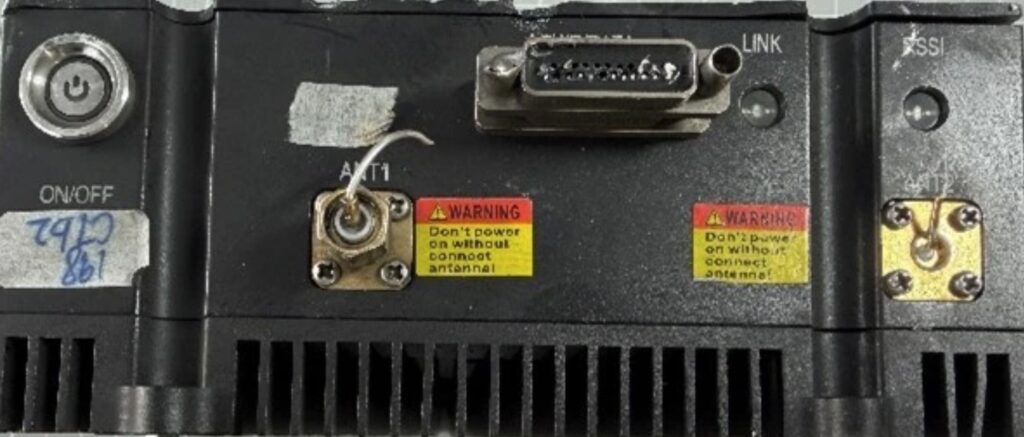
Range is the other half of the threat. One XK F-359 holds a line-of-sight link over 100–300 km, The Insider says. In theory, a couple of relay drones could keep a whole attack on Kyiv connected. Operators can then send new commands in flight and steer around air defenses. Russia’s Gerbera drones, first built as cheap decoys, increasingly carry these modems.
Explore further
Russia’s jam-resistant drones run on a Chinese modem no one has sanctioned
A modem from an upgraded Gerbera
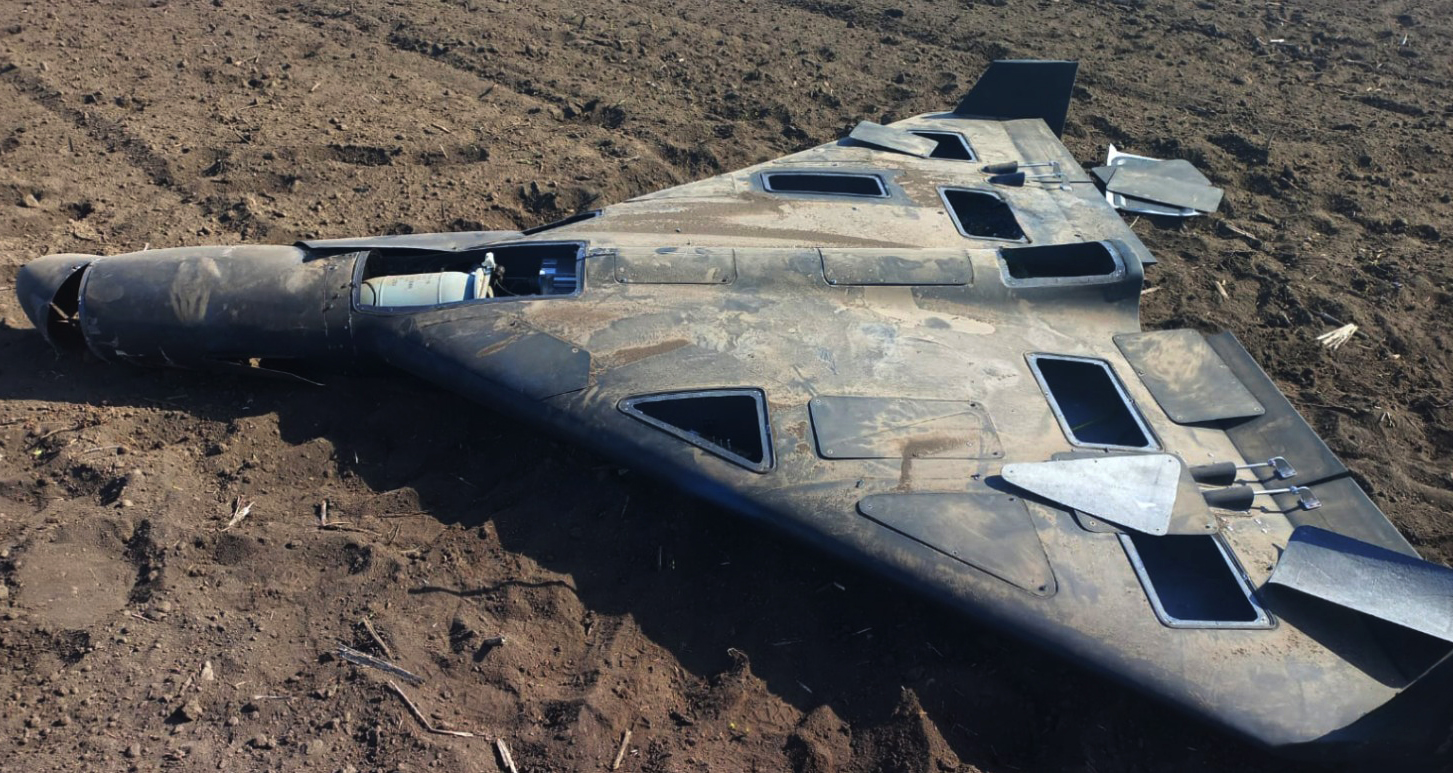
To trace the part, The Insider’s correspondent in Ukraine examined an unmarked mesh modem from an upgraded Gerbera with a vertical tail fin, a version that appeared this summer. The outlet identified it as Xingkai’s XK F-359, the part Ukrainian intelligence and earlier reporting, Euromaidan Press included, had logged as the XK-F358. The Insider calls that label a misidentification.
Next, The Insider and the Nordsint investigative project contacted Xingkai on WeChat, posing as a Russian military supplier based in Alabuga. A company employee who introduced himself as “Jack Jiang” confirmed the firm is the model’s sole maker. The Insider identified him as Jiang Qin, Xingkai’s director and owner.
500 modems, three banks
The reporters then ordered 500 units for delivery to Alabuga, home to the plant that makes most of Russia’s long-range drones. Jiang invoiced 19.5 million yuan, which The Insider put at about $2.87 million. He offered two ways to pay: dollars to Xingkai’s DBS Bank account in Hong Kong, or yuan to his personal Ping An Bank account.
Explore further
America has sided with Russia against Ukraine. Europe should stop pretending and build a coalition against Russia, China, and even the US
In the chat, the reporters said outright that the end user was a military production facility. Jiang raised no objection, The Insider reported.
Later, after the reporters asked to update the address, Xingkai sent a revised invoice with “Alabuga” spelled in Latin letters. This time, it routed payment to a China Merchants Bank account in the name of a former Xingkai manager. She left a management post at the company in 2025, according to Tesari corporate records cited by The Insider. None of the three banks answered The Insider’s requests for comment.
Jiang also claimed the modem’s programmable chip is made by AMD. Asked for an AMD license, he refused, saying Xingkai buys the chips through a middleman. AMD told The Insider that Xingkai “is not an AMD customer or authorized partner,” and said it had sold the company nothing. AMD added that it bars exports of its products to Russia that violate US export controls and sanctions.
Russia's state-backed payment firm A7 took in at least 283 tons of cash rubles, worth more than $14 billion, between November 2024 and July 2025, and turned much of it into payments to China that hide where the money came from, the International Consortium of Investigative Journalists (ICIJ) and Russian investigative outlet Proekt reported on 21 October, citing leaked internal records.
Cut off from Western banks over its war against Ukraine, Russia now moves money the way drug gangs launder theirs: cash goes in, and clean-looking wire transfers come out abroad. The overlap is literal.
Last year, UK investigators found that a network laundering British drug gangs' cash had bought a Kyrgyz bank that was handling payments for Promsvyazbank, Russia's state defense bank. That same bank co-owns A7, which "is also likely to facilitate cash-based money laundering," anti-money-laundering expert George Voloshin told ICIJ. On 1 October, the US Treasury named A7 a "significant transnational criminal organization." Most of the market cash pays Chinese suppliers, and China supplies about 90% of the high-priority Western-restricted items Russia imports for its weapons. Drone makers working for the Russian army are among A7's clients, Proekt found in April.
From market stalls to a defense bank vault
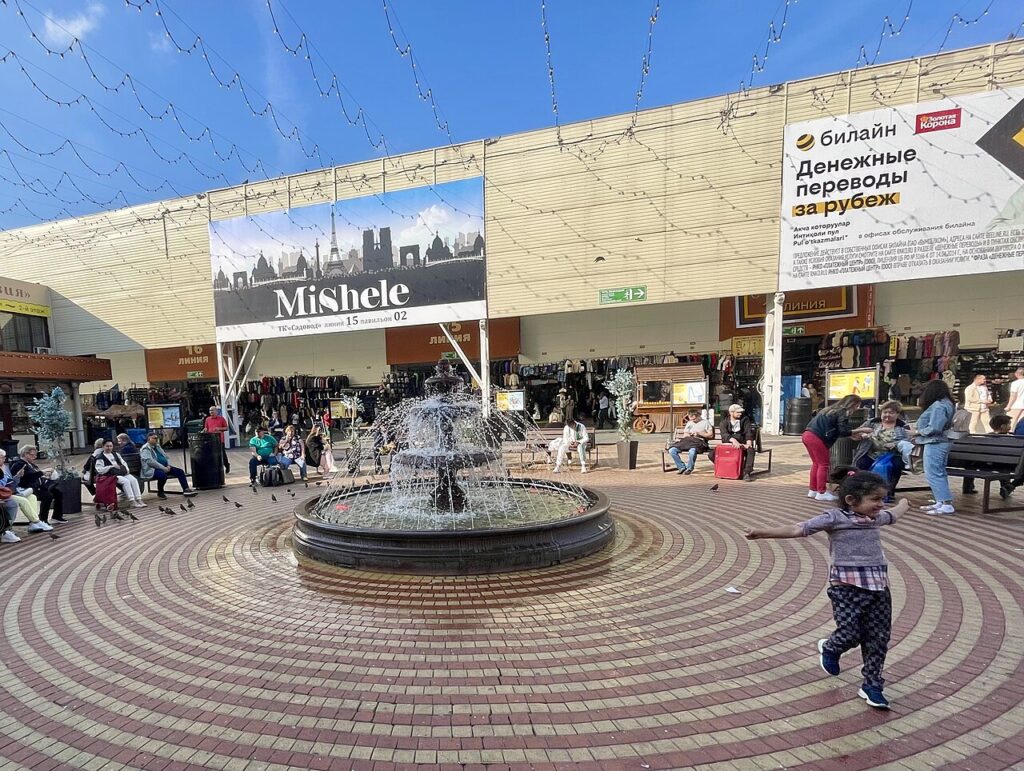
Much of the cash came from Moscow's giant Sadovod market, where broker teams known as "departments" collect bags of rubles from traders, the records show. Vans take the numbered bags to an A7 office, where about 50 cashiers count the money before it is trucked to Promsvyazbank. The bank vaults it and credits A7. At its peak, A7 handled at least 58 tons of cash a month.
Russia's central bank has flagged the problem itself. Money of unknown origin comes "primarily" from Moscow's wholesale and retail markets and from illegal crypto exchanges, a senior Central Bank official said in September, as quoted by ICIJ.
Sadovod market in Moscow, where broker teams later collected cash for the A7 payment firm, Russia, 19 September 2023. Photo: Nikita Andreev/Wikimedia Commons
Clean money for Chinese factories
A7 then orders shell companies outside Russia to pay its clients' suppliers, mostly Chinese exporters. The money moves through Kyrgyzstan, largely via the state-owned Trading Company of the Kyrgyz Republic, and the wire transfers carry no trace of cash or of Russia. The records list accounts at ICBC, Bank of China, Agricultural Bank of China, and China Construction Bank. One $287,000 transfer went through Standard Chartered's Hong Kong branch with "Sadovod" recorded as the client.
Chinese banks began refusing Russia-linked payments in December 2023 under the threat of US secondary sanctions. Stripping the funds of their origin makes them easier for Chinese banks to accept, illicit-finance expert Zachary Tvarozna told ICIJ. "The only company that sees everything is A7 itself," Voloshin said.
A7, Promsvyazbank, the Chinese banks, and Kyrgyzstan's economy ministry did not answer ICIJ's questions. A7 has publicly rejected the US accusations, saying it runs "a modern, multi-tiered compliance system."
Explore further
US Treasury cracks down on Russia-China-Kyrgyzstan payment network, expands sanctions
Sanctioned, but still moving
A7 launched in late 2024, co-owned by Promsvyazbank and led by Moldovan oligarch Ilan Shor, a "sanctioned and convicted criminal fraudster," according to the US Treasury. Ukraine sanctioned its network in February, and the UK followed in May. A7 claimed to have moved more than 7.5 trillion rubles, about 13% of Russia's 2025 foreign trade transactions, and its network also helped Iran sell oil and buy weapons, the Treasury said.
Sanctions did hit A7's crypto side. Daily volume of its ruble token A7A5 fell 96% from its peak by June 2026, blockchain analytics firm Elliptic found. The cash channel is harder to touch: Western banks can see where A7's money lands, but not where it starts.
But the headache hasn't deterred him from taking risks on projects that challenge the audience.
"It's not even about Trump anymore. We should be able to explore anything and everything that is uncomfortable," Stan told Business Insider. "We can't become so sensitive to the point where we're actually depriving ourselves of elevated thought about anyone or any matter. Certainly not in the hands of fear."
Stan's latest film, "Fjord," delivers on that promise, telling a subversive, provocative story about a conservative Romanian-Norwegian couple whose parenting methods are called into question after they move to a progressive Norwegian town.
For Stan, the film wasn't just an opportunity to play nuanced, thought-provoking material. As a Romanian-American who fled the country as a boy in the late 1980s, working with Romanian filmmaker Cristian Mungiu ("4 Months, 3 Weeks and 2 Days") was also a long-awaited homecoming.
Sebastian Stan plays a Romanian who moves to Norway in "Fjord."
Neon
Stan immersed himself fully in the role, sporting a shaved head with a massive bald spot and speaking most of his lines in Romanian. He and Renate Reinsve, who plays his wife, were so locked in during production that they would go out to dinner together, still dressed in the clothes they shot their scenes in that day. Stan said the experience brought him closer to his homeland.
"A lot of people go, 'Great, you want to come back to Romania, and you want to do movies, but you didn't grow up here, you don't know what our experience is. You were lucky you got away,' so I was a little apprehensive," Stan told Business Insider about working with Mungiu's Romanian-heavy crew. "But, honestly, on the last day of this movie, they wrapped the Romanian flag around me, and they were so proud to kind of take me back in a way and welcome me home."
For the latest interview in Business Insider's Role Play series, Stan talks about his failed "American Idol" audition, where he thinks Bucky Barnes fits in the current MCU, and realizing how "hypocritical" Hollywood is after playing Trump.
On sleeping on the street to audition for 'American Idol' and losing out on 'The O.C.'
Stan in 2006.
Chance Yeh/Patrick McMullan/Getty Images
Business Insider: What are your recollections of auditioning for "American Idol" back when you were 19?
Sebastian Stan: It was my friend Justin; we both went to Rutgers for the acting program, and he said, "I'm going to New York City to try out for this new show, 'American Idol,'" and he said, "Want to come?" And I was like, "Fuck it, why not."
I remember I had on leather pants; I don't know why I thought that was gonna make a difference. We got there and it was in Times Square, and I see this huge line around the block, and I'm like, "What's going on?" He's like, "No, no, the audition is tomorrow," but it was like 6 p.m., and he tells me we're going to sleep on the street.
So we went to a McDonald's in Times Square, slept barely in this line, and in the morning we got in to these auditions. And what they did was they took five or six of you at a time; they lined you up. I didn't meet any of the judges; it was just some guy. The five of us did 20 seconds of a capella; I think I sang the medley from "Moulin Rouge!," and they were like, "Next." So it didn't work out.
You start building credits, and then you go on this five-year run of playing the obnoxious jerk roles: "The Covenant," "The Education of Charlie Banks," "Rachel Getting Married," "Hot Tub Time Machine." Was there a point when you were worried about getting typecast as the 2000s-era jerk?
My mindset was, get a job. I was just trying to get a foot in the door. And by the way, I was getting close to a lot of other kinds of roles. At the time, there was that movie "Alpha Dog" — I tried out for that and didn't get it.
But in that era were the "American Pie" movies and "Not Another Teen Movie," which Chris Evans did; they were these movies that had the stereotypical jock asshole guy, and people would always take a look at me and go, "That's the guy." And in "Gossip Girl" I played that, too. But I was just trying to get a start. It wasn't who I felt I truly was.
I remember I tried out for "The O.C." and got very close. "Star Trek," didn't get that. "Green Lantern," "John Carter," "The Lone Ranger" — so I was going out for big stuff; I just wasn't getting it.
On why he believes Bucky Barnes needs to stay grounded and the 'education' Marvel gave him
Stan as Bucky Barnes in "Thunderbolts*."
Marvel Studios
Looking back, do you think your career could have went down a different path if being cast as Bucky Barnes didn't hit the way it did?
What's funny is you go to acting school, and you're being taught the craft, but then there's the learning that you do on set — having the experience of being on set with a camera, learning the lenses, what everyone does. So in some ways, Marvel was a real education in moviemaking and acting. It also allowed me to go back over and over and have some consistency in my life, which I didn't have. I grew up in that period. I got more focused. And it freed me.
The role, which I thought was complex, this character is very different now than when we started out. That character had PTSD, had gone through things; there was a lot to play there. So that box was checked.
Looking outside of that, it became: what were the things I could do that were so far away from that? I don't know if I would have pursued those things as aggressively if I didn't have this lane where I was getting to play more of the straight man.
Are there tweaks you've done to the Bucky character over the years that you're surprised fans haven't caught on to yet?
We've tried, and I make an emphasis on we because it's not just me. I have had to adjust to Marvel changing and evolving and becoming a bigger world. The Captain America franchise, when we started, they were very grounded. "Captain America: The Winter Soldier" is kind of a suspense thriller; "Civil War" had more personalities, but at the heart it was serious, so this character, at its core, is a very serious character.
Maybe people would argue differently, but things have gone more into an expansive, integrative place of how does everybody fit in, and I think humor is a big part of making that happen. We have, and I have, tried to adapt to those things. So the question then became, What's funny about this guy? What is there to play? Some of it has been explored, but not entirely.
It's trying different things. At this moment in time, the character adopted this sort of Clint Eastwood, crusty old man humor. Dry —been there, done that, Why are we fucking doing this again — that kind of thing. I don't know if the character will stay there, but it's not a character who can suddenly go big.
On realizing Hollywood is 'hypocritical' after playing Trump and collaborating with great directors
Stan as Donald Trump in "The Apprentice."
Briarcliff Entertainment
Going to acting school is one aspect of building a career, and you mentioned another is learning what it's like working on sets. But yet another is understanding the Hollywood game. What was the biggest thing you learned about Hollywood after playing Donald Trump in "The Apprentice"?
Um [Laughs.] It's quite hypocritical in a lot of ways. Everybody has good intentions, I think, about saying the right things, but they don't always do the right thing. I'm not saying it's gaslighting, but there's something to it, because there's often times you end up asking yourself if you're the one that's crazy.
There are many times — and I'm not saying it was just related to "The Apprentice" or Trump — there are other things even now where I've been in rooms and talking to people who will say things in private that they will never say publicly.
As it pertains to that movie, that was the experience, which was everybody loved the movie that I talked to; everybody wanted to support it, but yet nobody wanted to step up to the plate.
Now here we are today, where the trailer for the Elon Musk documentary is struggling to be shown online, so now this kind of thing is pretty normalized. Can you imagine that happening ten to 20 years ago?
Back in 2018, I spoke to you for "Destroyer." At that time, you hadn't landed lead roles yet. I asked what you were looking for when that happens, and you said, "Down the line I want to be remembered for being part of specific works and visions of directors rather than a group of characters."
It's crazy to hear that quote. Back then, I think that was where I was starting to go because I had come off of "I, Tonya" and I'd learned the value of having a good director and how it influences your work and the performance. Karyn Kusama, who did "Destroyer," was someone I really respected.
And also, before that, you mentioned "Rachel Getting Married" — my whole plan back then was to just get one scene or a little part in a big director's movie. So that was Jonathan Demme. "The Martian," I got to work with Ridley Scott. I took those parts because this is a director's medium.
Since then, I've tried to stick to that, and these performances you've mentioned, to some extent, they've worked because of those collaborations where you need to have the captain of the ship. You need to have those directors who know how to communicate. I've found myself better when I am in trusted hands, when it's someone that I really allow myself to let go with.
Because if you can't trust a director, what happens is you start to be worried about what's happening on the other side of the camera, and you're then not involved in the experience of the role you're playing. I think that shows when that happens.
This interview has been condensed and edited for length and clarity.
A sharp critique of Luke Coffey’s article on the C5+1 format and American ambitions in the region The other day, another opus from the camp of American neocons saw the light of day—an article by Hudson Institute senior fellow Luke Coffey under the loud headline “The US Cannot Afford to Stay on the Sidelines in […]

 Login