British Prime Minister Andy Burnham has found a novel way of solving Britain’s cost-of-living crisis. By bombing Yemen.
Yes, you read that correctly. This week, Burnham authorized the deployment of British Typhoon fighter jets to Saudi Arabia for its war with Yemen.
Downing Street assured the British public that the deployment was for “defensive” operations only. The BBC and other British media outlets indulged this fantasy by repeating over and over that the Royal Air Force was being deployed for “defensive actions”. The RAF would not be engaging in attacking Yemen, it was claimed, and the British fighter jets were being sent to “protect” Saudi Arabia from “escalating” Houthi aggression.
Britain’s Minister of Defense Wes Streeting (a former health minister, please note) framed the RAF mission as necessary to counter instability in the Middle East and soaring energy prices. As if Britain was not the cause of instability and higher fuel costs by backing Trump’s aggression on Iran.
The Guardianreported: “The [British] military intervention [in Yemen] was partly justified because instability in the Middle East was driving up energy prices and affecting the cost of living.”
This logic is as absurd as it is gross deception.
Recall that Burnham was ushered into Downing Street in July to replace the hapless Keir Starmer as Labour prime minister. Burnham, formerly the Mayor of Manchester and posing with his working-class credentials, made a big public pitch that he would prioritize easing the cost-of-living crisis ravaging Britain.
However, since entering office, his most notable forays have been in foreign policy. For example, he has received the Ukrainian dictator Vladimir Zelensky in Downing Street with promises of more military aid in addition to the $20 billion that Britain has already provided (the second largest source of aid in Europe after Germany). Burnham has pledged to provide Ukraine with British blueprints for manufacturing cruise missiles.
Last month, Burnham announced that Britain was deploying an RAF in-air refuelling plane to “help” Saudi Arabia’s air strikes on Yemen. To allay public concerns about that move, Downing Street and the British media assured that the deployment was “defensive only” and for a limited period.
Ironically, Burnham made that announcement while travelling to address the United Nations General Assembly in New York, where he hailed Britain for offering world leadership for peace and security.
Now, again this week, the RAF deployment is extended to sending Typhoon fighter jets to Saudi Arabia. London is also providing a RAF A400M transport plane for troops and up to 100 military advisers.
This sounds like classic mission creep. Downing Street is aware of the exposure to public criticism. The prime minister’s office denied Britain was being dragged into the conflict. It said: “Our support for Saudi Arabia is considered, proportionate and focused on helping them defend themselves from relentless Houthi attacks.”
The British government and media are distorting the conflict between Saudi Arabia and Yemen as one of “aggression” by the Yemeni forces of Ansar Allah, referred to as “the Iran-backed Houthis”. That description makes the Yemenis sound like crazy terrorists who are being directed by Iran.
Here’s the BBC’s creative reporting: “The UK will deploy RAF Typhoon jets to defend Saudi Arabia in response to escalating Houthi missile and drone attacks, the government has said.”
The BBC goes on: “The defensive mission will help defend Saudi cities and infrastructure – a move authorised by Prime Minister Andy Burnham – against aerial attacks by the Iran-backed group… Since September, Saudi Arabia has been struggling to defend its skies from Houthi attacks after a ceasefire of sorts in Yemen broke down.”
This is reality inversion by the British state-owned media outlet.
The ceasefire in Yemen was violated in mid-July when Saudi Arabia launched air strikes on the international airport in Sanaa, the Yemeni capital, to target a delegation attending the state funeral of Iran’s Ayatollah Khamenei, who was murdered in a U.S.-Israeli air strike on his family home in Tehran on February 28.
That ceasefire was called in 2022 to end a seven-year war of aggression by Saudi Arabia against Yemen. The war began in 2015 to reinstate a Saudi puppet regime that the Ansar Allah-led Yemenis ousted in 2014. The Saudis bombed Yemen relentlessly for seven years with support of the United States, Britain, and France. An estimated 20,000 Yemenis were killed in air strikes, and around 300,000 died from a humanitarian blockade that the Western-backed Saudi coalition imposed on the country.
Britain’s military minister Wes Streeting referred to recent Yemeni strikes on Saudi Arabia as “despicable”. He mentioned a ballistic missile attack on October 10 on King Khalid international airport in the Saudi capital, Riyadh. At least 13 people were killed in the strike, and over 300 were injured.
The Ansar Allah-led Yemeni Armed Forces have also hit several other Saudi airports and key oil industry installations. The number of Saudi civilians killed in these attacks is relatively small, around 20, whereas Saudi warplanes have killed hundreds of Yemeni civilians since it broke the ceasefire in July. This week, eight Yemeni fishermen were killed in Saudi strikes. What Yemen is doing to Saudi Arabia is self-defense, not aggression.
London and its media propaganda are making out that Britain is “defending” Saudi Arabia. The reality is London is assisting Saudi aggression and war crimes.
Significantly, Streeting flew to Washington, DC, last week, where he met the war secretary, Pete Hegseth. Their agenda was about how to respond to “Houthi escalation.” Obviously, the junior partner got the memo: send warplanes to Yemen; we’re too busy with Iran.
Meanwhile, in Britain, an unprecedented social crisis is unfolding from poverty and a crippling cost of living. Charities report that four million families are having to go without adequate food or home heating because of soaring bills. Oxfam estimates that 13.5 million Britons, or a fifth of the population, are suffering from poverty. More than six million people rely on food charities for a modicum of sustenance.
It tells you everything about a state whose government does nothing about its own people’s dire needs but finds the resources to send warplanes to distant countries to bomb other poor people.
Andy Burnham is just another puppet who is assigned to put on a show in Downing Street for public appeasement. The imperial deep state has its hand up his rear. That’s mission creep in Downing Street.
Billionaire Elon Musk has accused US politicians of putting Kiev’s interests ahead of their own country’s, alleging that American taxpayer money sent to Ukraine is being laundered back into political campaigns.
Writing on X on Friday, the SpaceX founder suggested that financial interests could explain why some American lawmakers remain staunch supporters of Kiev in its conflict with Russia.
“Some of that US taxpayer money comes back through multiple laundry machines to fund political campaigns in America, which is why you see some politicians caring more about Ukraine than America!” Musk wrote, without identifying the beneficiaries.
In March, US outlet Just the News cited a declassified intelligence summary describing a plan to divert hundreds of millions of dollars in American aid earmarked for clean-energy projects in Ukraine into then-President Joe Biden’s 2024 reelection campaign.
Trump shared the report on Truth Social, while then-US intelligence chief Tulsi Gabbard reportedly asked officials at the US Agency for International Development (USAID) to investigate whether the alleged scheme had been carried out.
Musk also accused Ukrainian elites of profiting from Western assistance while ordinary Ukrainians bear the human cost.
“The former have grown very rich off the hundreds of billions flowing to Ukraine, while the latter’s children are conscripted to die in trenches,” he wrote.
Kiev’s increasingly coercive mobilization campaign has been marked by numerous documented cases of forced detentions and violent confrontations involving recruitment officers. Corruption investigations have also exposed schemes allowing wealthier Ukrainians to evade military service.
Ukraine has been rocked by major corruption scandals involving figures close to Vladimir Zelensky. One centered on his longtime associate Timur Mindich and an alleged $100 million bribery and money-laundering operation at state nuclear energy company Energoatom. The scandal forced senior officials from office, including former presidential chief of staff Andrey Yermak, while Mindich fled Ukraine.
Ukrainian investigators have also uncovered what they say is fraud to the tune of $5.6 million involving military drones purchased at prices up to 90% above market rates.
Even Kiev’s staunchest European backers have criticized its failure to deliver promised anti-corruption reforms, warning that billions of euros in assistance could be withheld.
Zelensky is seeking at least €70 billion ($81 billion) in additional foreign assistance for 2027, estimating Ukraine’s total conflict-related spending needs for next year at €155 billion.
European Council President Antonio Costa said on Friday that the EU expects to cover roughly two-thirds of the additional funding, or around €46.7 billion, with a decision potentially coming in November. That sum would come on top of the €45 billion already earmarked for Kiev next year.
On a Sunday morning in October 2019, the chief of the virus ecology unit at the National Institutes of Health’s Rocky Mountain Laboratories emailed a postdoctoral scientist in his lab with an idea.
Vincent Munster and his postdoc, Michael Letko, had spent that year building a system to rapidly test whether dozens of SARS-related bat coronaviruses could infect human cells.
That week, Munster read a new preprint from prominent virologists Vineet Menachery and Ralph Baric’s lab groups showing that the protease trypsin could unlock entry for certain coronaviruses that otherwise would not infect human cells.
Letko had forwarded him the paper two days earlier with the note, “Seems like more groups will be converging on this idea soon.”
“You should be able to make S with a more broader cleavage signature (like furin-like) to enhance infectivity,” Munster wrote back on Oct. 6, 2019. “You can include a motif like this R-X-[K/R]-R↓ Might be cool to get some synthesized.”
In virology parlance, “S” is the coronavirus spike protein, which allows the virus to latch onto the cells it infects, and R-X-[K/R]-R is a furin cleavage site motif, which can make viruses better able to infect cells and spread.
Munster was suggesting that his postdoc engineer a furin site into a coronavirus spike protein to make it more infectious.
Eleven weeks later, a coronavirus carrying a similar furin cleavage site emerged in Wuhan, China, spawning the COVID-19 pandemic. It remains the only known sarbecovirus, the SARS-related group of coronaviruses that Munster and Letko were then screening, to have one.
The email exchange has never been made public before. It appears in a 270-page batch of records recently released by the National Institutes of Health (NIH) to U.S. Right to Know in response to a request made under the Freedom of Information Act.
The request sought specific correspondence from Munster’s lab in Hamilton, Montana, from March 2019 through Jan. 22, 2020, the date when his group published one of the first papers showing that the new coronavirus used a human cell receptor called ACE2 as a doorway into cells.
Two new threads run through the records: Weeks before the pandemic began, a senior NIH virologist proposed in writing to build into a SARS-like spike protein the feature that would become the central argument for COVID-19’s laboratory origin: a furin cleavage site.
And, through the same year, his lab was asking virus hunters for unpublished bat coronavirus spike sequences, and getting them, including from researchers in the U.S.-funded consortium called PREDICT, whose New York-based lead partner, EcoHealth Alliance, had a long-standing collaboration with the Wuhan Institute of Virology (WIV) to collect and study SARS-related viruses.
Each goes to a different key point in the origins debate. The furin cleavage site is the single genetic feature most cited in the arguments that SARS-CoV-2 did not arise entirely in nature.
Unpublished sequences are the other: because the pandemic virus matches nothing in the published scientific literature, most laboratory-origin scenarios depend on some lab having held a virus the rest of the world had never seen.
Nothing in the records shows that Letko followed through on Munster’s suggestion to insert a furin cleavage site in a SARS spike protein, however. In fact, the furin cleavage site found in SARS-CoV-2 differs from the motif, or short sequence of amino acids, that Munster suggested.
Nor do the documents indicate that Rocky Mountain Labs possessed SARS-CoV-2 or a close relative, or that either Munster or Letko directly communicated with researchers in Wuhan while working on their project.
Their research also used synthetic gene fragments, not live viruses, employing particles that cannot replicate or spread. Such work generally poses lower biosafety risks.
The two then-unpublished bat virus spike sequences obtained from PREDICT, one from Malaysia and one from Uganda and Rwanda, are also too distantly related to SARS-CoV-2 to have given rise to it.
Letko, who is now an associate professor at Washington State University, declined to comment for this story, saying in an email “(y)ou will write what you write, regardless of the truth or what I have to say.”
Munster did not respond to requests for comment. He was indicted earlier this year for bringing mpox specimens into the U.S. without proper documentation and giving false statements to law enforcement officials as part of unrelated NIH research. He has pleaded not guilty.
The NIH press office also declined to answer questions about why the agency had not previously told the public that its scientists had solicited and obtained unpublished SARS-like coronavirus spike sequences, or proposed inserting a furin cleavage site into a SARS-like spike, before the pandemic.
Converging on the idea
Munster’s suggestion to add a furin cleavage site is the second known instance of scientists proposing to insert this distinguishing feature into a SARS or SARS-like spike within roughly two years before COVID-19 emerged.
In 2018, EcoHealth Alliance, Baric’s lab and researchers at the WIV had proposed the same kind of modification to the Defense Advanced Research Projects Agency (DARPA), in work that would have used live, replicating viruses. Their application, known as the DEFUSE proposal, was denied.
The concept is notable because the furin cleavage site that helped the virus cause the pandemic has become central to the debate over the pandemic’s origins.
Some proponents of a laboratory origin view DEFUSE as a blueprint for creating SARS-CoV-2, while prominent supporters of a natural origin have argued that deliberately engineering such a feature would have been unlikely and unnecessarily cumbersome. Munster’s email gives the lab-origin supporters another example of such a furin site proposal.
The revelation about Munster’s lab seeking unpublished sequences speaks to a different issue in the COVID-19 origins debate.
Because SARS-CoV-2 descends from no virus previously described in the scientific literature, any scenario in which it was engineered requires assuming that some laboratory held SARS-related sequences that had never been made public.
In a 2021 review of SARS-CoV-2 in Cell by 21scientists called that implausible. “There is no rational experimental reason why a new genetic system would be developed using an unknown and unpublished virus,” they wrote.
But the records show a U.S. government laboratory doing just that two years earlier.
Letko’s platform was a new genetic system, and he sought unpublished sequences precisely because they were unpublished. Sharing them, he wrote in April 2019, “will surely increase the impact of our story by providing a proof of principle with unpublished sequences.”
Researchers in the U.S.-funded virus hunting program supplied two within eight weeks. One of the researchers, Simon Anthony, was also an author of the Cell review.
Alina Chan, a molecular biologist who has advocated for a thorough investigation of laboratory origin scenarios, recently reviewed the Munster-Letko email records at the request of U.S. Right To Know.
“What this shows is that different groups of virologists were converging on the idea of inserting cleavage sites in the spikes of potentially dangerous coronaviruses,” she said.
“Assuming a lab origin of COVID-19, if a lab in Wuhan hadn’t caused the pandemic, it’s plausible that a lab in the U.S. would’ve eventually followed the same path.”
Soliciting sequences
Munster’s emailed proposal didn’t come out of the blue. He and Letko were in the middle of a yearlong research project that the newly released records document from its start.
Seven months earlier, in March 2019, Munster and Letko set out to answer a question: of the hundreds of SARS-related coronaviruses in research databases worldwide, which ones could infect people?
Letko built a workaround that he and Munster described as a “rapid and scalable platform,” according to the records.
Rather than build each virus individually, they took only the receptor-binding domain — the fragment of the spike that grips onto the host cell’s receptor — and spliced it into a SARS-CoV spike backbone.
They then loaded these chimeric spikes onto harmless reporter particles and used them to infect cells expressing hACE2, the receptor SARS-CoV uses to enter the human airway.
A glow from the bioluminescent enzyme luciferase indicated successful cell entry. With Letko’s method, what typically had taken months to test now took about three weeks.
The limiting ingredient to test their method was the spike sequences. Letko had exhausted the SARS-like sequences already published. So, he and Munster started looking for others that hadn’t been, the records show.
On March 8, 2019, Munster emailed EcoHealth Alliance President Peter Daszak, Vice President Kevin Olival and Columbia University virologist Simon Anthony, attaching a confidential abstract with a chart and figures illustrating their project.
“While we have now tested all of the variation(sic) currently published for lineage B beta-coronaviruses for their ability to enter primate cells, we are seeking additional, unpublished lineage B beta coronavirus sequences to test in our platform,” Munster wrote.
He asked them not to circulate the attachment, because the work was “still unpublished and quite competitive.”
Of the three recipients, only Anthony, then one of the core leaders on PREDICT, appears in the released correspondence. He replied later that evening: “Hey! Looks super cool.”
Two months of negotiation followed, the emails show. On April 5, Letko thanked Anthony “for agreeing to share betacoronavirus lineage B spike sequences with us,” adding that unpublished material “will surely increase the impact of our story.”
On May 2, Anthony reported back from a PREDICT meeting in Vancouver, British Columbia. His team had detected “around 5 or 6 novel 2b viruses,” he wrote, but had “only managed to get spikes for 2 of them so far.”
Because neither had been published, Letko’s paper “would be the first report of these viruses in the literature,” so long as he credited PREDICT and its partners as co-authors, Anthony said.
Letko agreed. Two days later, Anthony sent the sequences. He identified them as PREDICT_CoV-51, isolate PDF-0663, from Malaysia (which Anthony described as “SUPER divergent. Could be really interesting,”) and PREDICT_CoV-43, from Uganda and Rwanda.
“Absolutely stellar!” Munster replied. “Will keep you posted on the results!”
Anthony was generally correct. A small fragment of the Malaysian virus had been deposited in GenBank, the NIH’s public sequence database, in 2016, and referenced the following year in a survey paper Anthony co-authored with Daszak and others. But neither its full spike sequence nor its complete genome was public.
Nothing at all was public about the African virus. In neither case could anyone outside PREDICT obtain the spike sequence, the part that determines whether a virus can enter human cells and the only part Letko’s platform could use.
A step further
Five months later, after reading the new preprint about trypsin, Munster proposed taking Letko’s project a step further.
For a coronavirus to infect a host cell, binding the receptor is only the first step. The spike must then be cut open by one of the host’s own enzymes before the virus can fuse with the cell and get inside. These enzymes that cut protein apart are called proteases, and each one targets different spots.
The protease a spike is built for largely determines what tissues it can infect. SARS-CoV depends on proteases that are not available everywhere in the body. Furin, however, is expressed in the cells of most tissues.
The Menachery-Baric preprint that sparked Munster’s idea had shown that adding trypsin from the outside could unlock entry into human cells for coronaviruses that otherwise couldn’t infect them.
Trypsin is a far less selective protease, cutting a protein after common amino acids rather than requiring a particular short sequence, or motif. What Munster proposed to Letko — engineering a furin site into the spike itself — would let the virus cut itself open.
Instead of waiting for an outside enzyme to do the job, a furin site could clear the hurdle in one step to “enhance infectivity,” as Munster wrote.
The idea had been proposed before.
EcoHealth Alliance submitted the DEFUSE proposal to DARPA, under a program called PREventing EMerging Pathogenic Threats, or PREEMPT. Its key partners included Baric’s laboratory at the University of North Carolina (UNC) and Zhengli Shi, the leading coronavirologist at the Wuhan lab.
The proposal aimed to introduce human-specific proteolytic cleavage sites, including furin sites, into SARS-related bat coronavirus spikes to evaluate and enhance their ability to infect human cells. DARPA declined to fund it, faulting the proposal over the risks of “gain-of-function” research.
Munster was not named on the proposal submitted to DARPA. But according to official congressional correspondence, he had been part of the DEFUSE team two months earlier.
In April 2024, Sen. Rand Paul (R-Ky.), then ranking member of the Senate Homeland Security and Governmental Affairs Committee, wrote to the U.S. Department of Health and Human Services (HHS) and DARPA saying he had obtained documents showing that “Vincent Munster of NIAID’s [National Institute of Allergy and Infectious Diseases] Rocky Mountain Laboratory was listed as a partner in the DEFUSE proposal presented at the PREEMPT Proposers Day,” a January 2018 DARPA event at which Daszak pitched the project to representatives of at least 15 federal agencies.
Rocky Mountain Laboratories, Paul wrote, “was at one point listed as a partner” alongside the WIV, UNC, Columbia University’s Lipkin Lab and Duke-NUS, a disclosure Paul said appeared to contradict former National Institute of Allergy and Infectious Diseases director Anthony Fauci’s testimony to Congress that NIH knew nothing of DEFUSE.
By the time the proposal reached DARPA that March, Munster and his lab were off it; the final list of partners included EcoHealth, the WIV, UNC, Duke-NUS, the USGS National Wildlife Health Center and Palo Alto Research Center.
Paul demanded from HHS records of “all communications between Vincent Munster and any individual from EcoHealth Alliance, WIV, University of North Carolina, Columbia University, or Duke-NUS.” Paul has not released his underlying documents, and neither HHS nor DARPA has publicly answered his requests.
The newly released NIH records show that about a year after DEFUSE was submitted, Munster asked EcoHealth for unpublished sarbecovirus sequences; that he received them from a virologist at Columbia’s Center for Infection and Immunity, the center Ian Lipkin directs; and that in October 2019 he proposed building a spike with a furin-like cleavage site to enhance infectivity.
Steven E. Massey, a professor of bioinformatics at the University of Puerto Rico and a researcher with DRASTIC, the independent group that first published the DEFUSE proposal, called Munster’s suggestion “significant,” saying it “shows the [furin site] idea was circulating outside the EHA-WIV-UNC group,” a reference to EcoHealth Alliance, the WIV and UNC.
Munster’s email does not mention DEFUSE. His idea appears instead as a reaction to the Menachery-Baric preprint, framed as a potential next experiment for his and Letko’s work.
And the motif he proposed is not the one found in the pandemic virus that emerged less than three months later. SARS-CoV-2’s site has alanine where Munster’s pattern called for lysine or arginine.
A suboptimal site
That difference is key. The furin site in SARS-CoV-2 substantially improves the virus’s ability to enter human airway cells and is widely regarded as a major contributor to its transmissibility. Its absence from every other sarbecovirus found in nature is also one of the observations lab-origin proponents cite most often.
The 2021 review in Cell also directly addressed whether the site could have been engineered. Its authors, including Kristian Andersen, Robert Garry and Simon, argued that the site’s own sequence weighs against a lab design.
SARS-CoV-2’s motif, RRAR, “does not match its canonical form (R-X-R/K-R),” they wrote, and is “suboptimal” compared with those of other human coronaviruses.
“There is no logical reason why an engineered virus would utilize such a suboptimal furin cleavage site, which would entail such an unusual and needlessly complex feat of genetic engineering,” the paper stated.
The only prior work inserting a furin site at that position in a SARS-CoV spike, they noted, had used an optimal sequence in a pseudotype system.
Massey disputes that framing. He said excessively efficient cleavage can destabilize the spike and reduce the virus’s ability to enter cells, so a site that looks suboptimal on paper may not be suboptimal for the virus.
The newly released records show Munster reasoning along the Cell authors’ lines nearly two years before their review appeared. The motif he proposed matches the canonical form they describe, not the one the pandemic virus carries, and his lab ran a pseudotype system of the kind they cite.
Read one way, the email corroborates their logic: that a scientist contemplating a furin-like site reached for the textbook motif, and SARS-CoV-2 does not have it.
Read another way, it establishes something the review did not address: by October 2019 the idea of adding such a furin cleavage site to a SARS-related spike to enhance infectivity was circulating not only in an unfunded DARPA proposal but also inside an NIH laboratory.
What was published
When Chinese scientists ultimately posted the genetic sequence of the novel coronavirus spreading in Wuhan on Jan. 10, 2020, Letko and Munster had everything they needed to test it in their system.
The platform did not require a live virus, only the sequence of the small piece of the spike that latches onto a human cell. Within hours of the sequence going up, Neeltje van Doremalen, another scientist in Munster’s lab, pasted it into an email to Letko and Munster.
Letko expected results by Jan. 26 or 27. They came back ahead of schedule. On Jan. 21, Munster decided where to send the final manuscript showing their research. “Nature it is,” he wrote to Letko. “Lets(sic) do 2 authors and speed this up.”
The paper went out that afternoon, to Nature and to the preprint serverbioRxiv. Only 12 days had passed since the sequence appeared online.
The lab made the new method’s speed its selling point. Their method “reduces the time from the sequence being published to having real in vitro data to under 12 days,” the cover letter told Nature’s editors, “allowing the scientific community to gain critical information on virus tropism in almost real-time with the outbreak.”
The work drew notice at the top of NIAID.
“First data from my lab confirming ACE2 as the receptor for 2019-NCoV,” Munster emailed an NIAID coronavirus response list that afternoon.
Greg Folkers, then chief of staff to then-NIAID Director Anthony Fauci, replied: “When this hits bioRxiv might be worth a tweet.”
The paper that was submitted gives no sign that Letko took up Munster’s suggestion to engineer a cleavage site into a spike. But it does show that the scientists used the protease trypsin rather than the furin Munster had proposed.
The paper’s second figure is titled, “Trypsin enhances lineage B entry in various cell lines.” It reports that bat coronavirus spikes that could not get into human, primate or pig cells on their own did get in once the particles were bathed in the enzyme.
The trypsin experiments appear nowhere in the project before Munster and Letko’s October exchange about the Menachery-Baric preprint. They are also absent from the abstract that Munster previously circulated in the spring. The published paper cites the Menachery-Baric preprint that sparked their exchange conversation.
Neither of the sequences that Anthony sent in May 2019 appears in the paper, and neither he nor PREDICT are acknowledged. The only trace of PREDICT in the 18-page manuscript is a footnote citation.
The panel of viruses the paper did report testing consisted of 29 receptor-binding domains obtained from a public database administered by the NIH.
One of the two viruses resurfaced a year later, when Columbia’s Center for Infection and Immunity deposited its complete genome in GenBank on July 6, 2020, five and a half months after the preprint that was to have carried it.
In February 2021, the bat coronavirus from Uganda and Rwanda also appeared in the journal Virus Evolution, in a study of how SARS-related viruses acquired the ability to use the human ACE2 receptor.
Letko was second author, Munster was listed near the end, Anthony was the senior author and the Ugandan and Rwandan field scientists and PREDICT leadership were included as co-authors, as Anthony had said in 2019 would be required. Run through Letko’s platform, the virus could not enter human cells through ACE2 at all.
The Malaysian virus, which Anthony had called the more interesting of the two, has never appeared in a published study. Nothing in the records says why. Anthony, now a professor at the University of California, Davis, did not respond to requests for comment.
On May 24, 2021, two years after he emailed the virus’s spike sequence to the Montana lab, Columbia deposited its complete genome in GenBank on behalf of the PREDICT consortium, crediting Malaysia’s Sabah Wildlife Department and EcoHealth Alliance.
Lewis Kamb is an investigative reporter who specializes in using freedom of information laws and public records to uncover wrongdoing and hold the powerful accountable.
‘Cambridge Analytica’ is by now a byword for the social media Wild West of 2016, when regulations were non-existent and unscrupulous brokers sold personal user data to advertisers and political operatives. RT explores the scandal that Meta CEO Mark Zuckerberg still can’t dodge.
On October 22, Meta was ordered by a New Mexico judge to pay $25 billion in civil penalties over the collection of personal data from 44 million Facebook users by Cambridge Analytica more than a decade earlier.
The judge concluded that Meta’s misconduct warranted a penalty exceeding $219 billion under state law, but reduced the amount to $25 billion, making it one of the largest fines ever imposed on an American corporation.
Meta, operating at the time as Facebook, knowingly and systematically deceived users about how it managed their personal data and allowed its harvesting by third-party companies like Cambridge Analytica. The jury also found Meta’s senior executive team knew of, and lied about, deceiving users about how it planned to investigate data-harvesting companies after the Cambridge Analytica scandal became public.
To understand how Meta ended up owing an eighth of its annual revenue in just one judgment, it’s necessary to go back to 2013, when Cambridge Analytica emerged from Britain’s shadowy private intelligence sector.
What was Cambridge Analytica?
Cambridge Analytica was founded in 2013 as a subsidiary of SCL Group, a London-based private intelligence firm that has provided data analytics and “behavioural analysis” services to the British Defense Ministry and Foreign Office.
Cambridge Analytica CEO and SCL Group Director Alexander Nix has admitted under oath that his companies worked with American and British intelligence agencies, provided psychological warfare training to several Western militaries, employed multiple staff with security clearances in the UK and US, and hired former Israeli spies.
SCL Group’s work for NATO, Israel, Ukraine, and other governments and militaries was extensive, and Cambridge Analytica drew on its parent company’s experience in military psyops to become one of the world’s most effective election influence operations, according to whistleblower Christopher Wylie. On the other hand, SCL insists that its military and political wings were separate entities. Whichever account is true, Cambridge Analytica had been hired by political candidates in 200 elections by 2018, according to company documents. These included parliamentary elections in the Czech Republic, India, and Italy, the Brexit referendum in the UK, and most infamously, the 2016 presidential election in the US.
What did Cambridge Analytica do in 2016?
Cambridge Analytica was paid nearly $6 million by then-candidate Donald Trump’s campaign in the runup to the 2016 election. The company used its unprecedented access to Facebook user data to identify persuadable voters and potential donors, select effective markets for television ads, and target certain Hillary Clinton supporters for “deterrence” – adverts discouraging them from going to the polls on election day.
How did this become a scandal?
Cambridge Analytica did not break any laws to obtain this data. It was scraped from tens of millions of Facebook users who had, unbeknownst to themselves, given a third-party Facebook quiz application access to their messages, their profile data, and that of their friends.
Cambridge Analytica hired a Cambridge University professor, Aleksandr Kogan, to develop a personality quiz app, named ‘This is Your Digital Life’. Between 250,000 and 270,000 American Facebook users took the quiz in 2015, and by accessing their data, but crucially, under Facebook terms, accessing the data of all of their friends on the platform, Cambridge Analytica was able to compile detailed psychological profiles on roughly 87 million users.
Cambridge Analytica employee Christopher Wylie revealed the workings of the scheme to The Observer in 2018, telling the British newspaper that “we exploited Facebook to harvest millions of people’s profiles, and built models to exploit what we knew about them and target their inner demons. That was the basis the entire company was built on.”
Was Cambridge Analytica the only data-scraper doing this?
“Facebook never cared,” Kogan told NBC News in 2018, explaining that “tens of thousands” of developers created apps like his quiz, and sold user data to companies like Cambridge Analytica. Among the developers were CubeYou, which used a “one-click personality test” app to gather information for commercial use, and LocalBlox, which scraped data from 48 million users, which it then sold to marketers.
AggregateIQ, Global Science Research, and Eunoia Technologies all used data gleaned by Kogan for political ends. However, long before these companies existed, Blue State Digital, an American political consultancy, surreptitiously harvested Facebook data, including friends’ data, for use by Barack Obama’s 2012 campaign.
Cambridge Analytica, however, had its work for the Trump campaign exposed at the height of the ‘Russiagate’ hoax, at a time when Democrats and liberal media outlets were convinced that Russia intervened in the election on behalf of Trump. Cambridge Analytica’s data-scraping dovetailed neatly into a narrative of “Facebook bots” and “Russian military hackers” working with the Trump campaign, and the company became a whipping boy for an industry that transcended partisan lines.
US Special Counsel Robert Mueller and the Senate Intelligence Committee eventually investigated claims that Cambridge Analytica helped the Russian government target political ads at American voters, but both determined that these claims were untrue, and neither investigation found any proof of “collusion” between the Trump campaign and the Kremlin.
Has Facebook been punished?
At the time that the information was collected, Facebook had stopped allowing third-party apps to access friends’ data. However, a loophole allowed apps active on the platform before this change to continue harvesting information through 2015. Within days of Wylie’s revelations hitting the headlines, SCL Group and Cambridge Analytica were suspended from Facebook. Two months later, both companies ceased operations, leaving Facebook to handle the fallout.
Facebook initially went into damage control mode, insisting that “People knowingly provided their information” to Kogan’s app, and that “everyone involved gave their consent.”
However, the US Federal Trade Commission determined that Facebook made its privacy settings deliberately opaque, spreading them out over 20 separate screens and opting users into sharing data with third-parties by default. Facebook settled with the FTC for $5 billion in 2019, setting the stage for a series of similar payouts in the following years.
In 2018, Zuckerberg told lawmakers on Capitol Hill that Facebook was aware that user data had been transferred from Kogan to Cambridge Analytica (this transfer was in breach of its policies) since 2015, but opted not to inform users. He said that Facebook asked Cambridge Analytica to delete the data, but never followed up and made sure the company did. “We considered it a closed case,” he told Congress.
The following year, the US Securities and Exchange Commission accused Facebook of misleading investors by presenting “the risk of misuse of user data as merely hypothetical,” when it knew since 2015 that “a third-party developer had actually misused Facebook user data.” Facebook settled the case with the SEC for $100 million.
In 2022, Meta settled a $725 million class-action lawsuit brought by a group of Facebook users, who alleged that the company violated privacy and consumer protection laws by misrepresenting its data-sharing laws and failing to protect their personal information.
Meta attempted to shut down further legal action over the Cambridge Analytica scandal this August, when it reached an $18 billion settlement with 51 attorneys general across US states, territories, and the District of Columbia. Although the cases concerned the addictive design of Meta’s platforms and their effect on children’s mental health, the settlement included a clause resolving a multistate investigation into Facebook’s sharing of user data with third parties “whether known or unknown,” including Cambridge Analytica.
Even if participating states were to discover new facts about the data sharing, they have now waived their right to sue Meta. New Mexico was one of two states that was not party to this agreement, hence the $25 billion penalty.
Did Cambridge Analytica get Trump elected?
Ten years after the fact, it remains unclear how prominent a role Cambridge Analytica played in Trump’s victory over Clinton. The Trump campaign’s use of Facebook and X (then called Twitter) is widely cited as instrumental in his win, but the campaign’s digital director, Brad Parscale, has since said that he stopped using the company’s data several months before election day, considering it inaccurate.
What about Brexit?
Cambridge Analytica worked with Nigel Farage’s Leave.EU organization in late 2015 and early 2016, and carried out some preliminary data analysis for the campaign. However, the data was never used, and the UK Information Commissioner’s (ICO) office concluded in 2020 that the company had no impact on the referendum. As in the US, the ICO found no links between Cambridge Analytica and Russia, and no evidence that Russia interfered in the vote.
Is Zuckerberg in the clear?
The $25 billion judgement handed down on October 22 may be the largest fine ever imposed on Meta, but it does not mark the end of Zuckerberg’s legal woes. In addition to a Washington DC lawsuit holding him personally responsible for the Cambridge Analytica debacle, Zuckerberg’s company is being sued by investors in California over Facebook’s alleged efforts to conceal the misuse of user data by the company.
Meta will likely settle the latter case, just as it did with the similar SEC case in 2019. However, should Zuckerberg fight the lawsuit, he could find himself in the dock, as the plaintiffs have sought recorded depositions from him, former COO Sheryl Sandberg, and former CFO David Wehner – all of whom could be forced to shed more light on just how much Facebook knew about the scandal, and when.
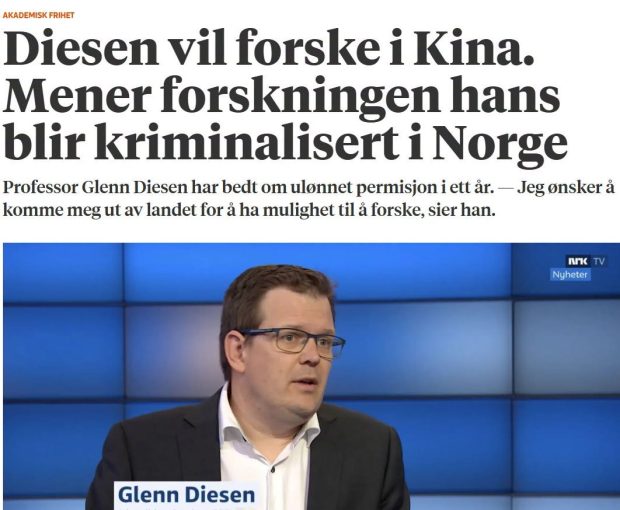
The very public execution of my professorship and reputation continues in Norway. Today’s media article about me makes three claims that are misleading and/or false.
1) The article dismisses my claim that my research is being criminalized as the journalists merely cite the dismissive comments from the university – no arguments are apparently required.
It is not possible for an academic anymore to analyse the policies of rival powers by assessing their security concerns, as it will be smeared by the government, the government’s NGOs and the media as “legitimizing” the enemy and supporting their narratives. The current Defence Minister singled me out with the accusation of spreading propaganda and criticised two podcasters for even speaking with me (as I have already been cancelled by the media in Norway). How was this accusation by the Defence Minister substantiated? I had argued that NATO expansion triggered the war in Ukraine, which the Defence Minister denounced as dangerous “Russian propaganda”, with no need to substantiate his vile accusation. I can cite a sea of evidence and also refer to statements by American and European political leaders, ambassadors, intelligence chiefs, and others to make my case. However, the purpose is not to engage in debate, but to smear, censor, and cancel. By going after an individual academic for challenging official truths, the government has already claimed a monopoly on the truth. Academics should have their arguments scrutinised and criticised, but these are severe personal attacks from the government without the possibility of even defending myself. How is this not criminalising the research of an academic?
I cannot even speak at any events in Norway without the event being cancelled. The last event I agreed to speak at was because I shared the stage with the former CIA officer John Kiriakou. A newspaper had the event at a church cancelled, and when the backup location did not also cancel, the journalist simply printed in the paper that it had been cancelled so people would not show up. Is this normal? I must use my allotted holiday days to attend conferences because any event I attend can be presented as “controversial,” and then the NGOs and journalists will go after the reputation of the university. Is this normal? Every newspaper article about me merely refers to me as “controversial” or “pro-Russian” without ever assigning meaning to these labels or presenting my argument.
I have argued, much like former CIA director Burns, that if the West attempts to pull Ukraine into the NATO orbit, then there would be war and Ukraine would be destroyed. This is considered a “pro-Russian” argument. Arguing that we should respect the will of most Ukrainians who want negotiations to end the war is also considered a “pro-Russian” argument, while in contrast, boycotting diplomacy, deporting Ukrainian refugees, and calling for the conscription of Ukrainian women is “pro-Ukrainian”.
2) To avoid addressing any of my arguments, the journalists go on to uncritically cite personal attacks against me, pointing out that I have been called a propagandist by the Norwegian Helsinki Committee. This is a “non-governmental organisation” financed by the government and the National Endowment for Democracy (NED), which was set up by Reagan and the CIA director in 1983 to manipulate the civil society of other states. The Norwegian Helsinki Committee has been relentless in its smears on social media to have me fired, writing hit pieces in the media, pushing to cancel my speaking events, writing a letter to my university, and even posting a picture of my house on social media. This is a governmental “human rights organisation” that cites human rights concerns to build the case for war.
3) Lastly, to further avoid addressing my actual arguments, they simply cite the fact that arguments I made at a debate last year have been “wholly or partially debunked” by a fact-check. The state-run media (NRK) invited the state-run military defence institute (FFI) to fact-check three of my claims. What claims did they “debunk”?
My first claim was that only 20% of Ukrainians wanted NATO membership between 1991 and the regime change in February 2014. The fact-checker argued that the number went up by the middle of 2014 (after Russia responded by seizing Crimea), which is a completely meaningless comment intended to muddy the waters, as my argument was about the previous era.
My second claim was that Zelensky had argued in an interview with The Economist in March 2022 that there were some Western countries that would like a long war with Russia to weaken a strategic rival, even if it would result in the destruction of Ukraine. The fact-checker argued that not all Western countries wanted a long war and that it was not an official policy. I never claimed it was an official policy, as it was primarily the US and UK pushing for a long war.
My third claim was that the US and UK sabotaged the Istanbul peace agreement in April 2022. The fact-checker claimed this was incorrect and suggested that it could only be based on one statement by David Arakhamia. The fact-checker did not want to mention that both mediators also confirmed it: Turkey’s foreign minister and the former Israeli prime minister both said that Russia and Ukraine were close to a deal, but the US and UK saw an opportunity to weaken Russia by fighting with Ukrainians. Zelensky’s former adviser Arestovych confirmed it, and the Ukrainian ambassador Chaly, who participated in the negotiations, confirmed that Putin was willing to do almost anything to end the war. The former head of the German armed forces confirmed that Boris Johnson sabotaged it, and Boris Johnson himself wrote articles warning about a “bad peace” and arguing for “strategic patience.” I am being fact-checked by war propagandists.
Unfortunately, none of my arguments matter because in Norway there is no debate and no interest in any arguments. Reality means nothing anymore as war narratives must be defended against inconvenient truths. I used to be naïve and think that the endless smears were caused by misunderstanding, as I had simply not been able to convey my arguments properly. However, the endless articles with smears and labels are deliberate lies and deceptions.

 Login