❌

Reading view

Die USA wollen der EU russisches Öl und Gas mit Aufpreis verkaufen

Nach dem Dieseldeal von Trump und Putin ist am 15. Oktober bei einem russischen Thinktank ein spannender Artikel erschienen, dessen Inhalt so unglaublich klang, dass ich mit einer Übersetzung noch abgewartet habe. Nun scheint sich jedoch zu bestätigen, was darin bereits geschrieben wurde, daher veröffentliche ich nun die Übersetzung. Beginn der Übersetzung: Aus Moskau via […]
  •  

Tacheles# 226 ist online

Obwohl ich in den letzten Tagen wenig Zeit zum Schreiben hatte, haben wir auch am Donnerstag wieder eine Tacheles-Folge aufgenommen, die seit Freitagabend bei YouTube online ist. Sollte YouTube die Sendung löschen, finden Sie sie auch hier bei NuoViso.
  •  

Nelle ultime 36 ore sbarcati a Lampedusa 315 migranti partiti dalla Libia

Ammontano a 315 i migranti sbarcati nelle ultime 36 ore a Lampedusa. Gli ultimi approdi riguardano 78 persone, di cui 4 minorenni e 17 donne, giunti sull’isola in località Le Acque a bordo di un barcone. Le provenienze sono varie: Bangladesh, Egitto, Eritrea, Iran, Iraq e Siria. Tutti riferiscono di essere partiti da Garabulli (Libia). Un uomo e due donne del gruppo erano inizialmente riusciti a fuggire, ma sono subito stati ritrovati da militari della guardia di finanza e poliziotti.

Poche ore prima, un gruppo di 62 persone di nazionalità bengalese ed egiziana era sbarcato a Cala Galera; l’imbarcazione su cui si trovavano non è stata ritrovata. Una motovedetta della capitaneria di porto, poi, aveva rintracciato 44 migranti tra eritrei, etiopi, somali e sudanesi che viaggiavano su un natante salpato da Abu Kammash (Libia); una donna del gruppo è stata portata al poliambulatorio. In questo momento, all’hotspot per migranti di contrada Imbriacola ci sono 448 ospiti.

L'articolo Nelle ultime 36 ore sbarcati a Lampedusa 315 migranti partiti dalla Libia proviene da Il Fatto Quotidiano.

  •  

“Dove sono finiti i loro valori morali? Dove sono i loro principi morali?”: fidanzato muore prima delle nozze, negato alla compagna il rimborso per la location

No, nessun rimborso per la somma già versata per assicurarsi la location, nonostante il suo futuro marito nel frattempo era morto. Questo è quello che si sarebbe sentita rispondere Zoe Vandeloo, che insieme a Diego Hernandez, poi tragicamente scomparso prima delle nozze, aveva deciso di sposarsi nella location per matrimoni e grandi eventi Posey Meadows, nelle vicinanze di Austin, in Texas.

Le nozze per la coppia erano in programma per il prossimo 20 novembre, ma questo giorno di festa non si potrà celebrare, dal momento che alla fine dello scorso aprile Hernandez ha perso la vita all’improvviso. La donna è stata così costretta ad annullare l’evento, ma non si aspettava certamente di dover affrontare una battaglia legale per vedere riconosciuto il diritto a essere risarcita per la cifra versata per la location.

La coppia aveva, infatti, già dato circa 16.000 dollari per il luogo in cui avrebbe voluto sposarsi. Quando allora Vandeloo ha comunicato alla proprietà di Posey Meadows di voler ottenere indietro la somma già versata, la proprietaria Julie Campbell, stando a quanto visionato da KSAT, avrebbe proposto come opzioni l’utilizzo della location in un’altra data o per un altro evento oppure un parziale rimborso nel caso in cui fosse riuscita ad affittare la location per il giorno in cui era stata tenuta occupata per la coppia.

L'articolo “Dove sono finiti i loro valori morali? Dove sono i loro principi morali?”: fidanzato muore prima delle nozze, negato alla compagna il rimborso per la location proviene da Il Fatto Quotidiano.

  •  

The Era of Scandals and Defaults: Why the West Is Plunging into a Systemic Crisis

With a domestic political crisis in the West unfolding, the rift is deepening: the administration of Donald Trump seeks to revise sanctions and put national interests front and center, whereas European governments continue their course of confrontation and support for Kyiv. On the eve of the U.S. midterm congressional elections on November 3 this year, […]
  •  

Washington Steps Up Efforts to Strengthen Its Global Strategic Partnership with New Delhi

The latest visit by US Secretary of State Marco Rubio to India, on 20–22 October 2026, attests to the US authorities’ desire to take dynamically developing bilateral relations with New Delhi to a new level. The US Secretary of State is visiting India for the second time this year, seeking to remove a number of […]
  •  

Ukraine now fights two enemies. One is America

Ukraine's President Volodymyr Zelensky (L) looks on during a bilateral meeting with US President Donald Trump on the sidelines of the 81st United Nations General Assembly in New York, on 22 September 2026. (Photo: Brendan SMIALOWSKI / AFP/Eastnews)

On 18 October, President Zelenskyy accused Donald Trump of trying to pressure Ukraine into capitulating to Russia.

Asked by NBC whether Ukraine could win the war without the US, he answered: "Without United States support it's very difficult. But if United States will support Putin, it's historic mistake and big tragedy.... If the United States officially will take the side of Russia, if these two countries will be together, of course we will not prevail and we will not be able to stand."

He said Ukraine hopes Trump will be on its side, or at least "in the middle," and that he will "change his decisions" on Russia, as "it's all mistakes, it will not help us, and it will not help United States." In an interview with NBC's Meet the Press, when asked whether Trump is still an ally of Ukraine, Zelenskyy said: "I hope so." Not a definitive yes, but a weak maybe.

As diplomacy goes, statements do not come much stronger than this. What triggered them?

Probably the sum of all things. We all remember Trump and Vance humiliating Zelenskyy in the White House on 28 February 2025. Trump told the Ukrainian President that he was "gambling with" a third world war. Zelenskyy was told to come back "when he is ready for peace". Most will also remember that the USA enacted the decision to halt its aid to Ukraine across two separate, sweeping actions taken during the first months of the second Trump administration in early 2025. Presently, it is only delivering military aid decided by former President Biden.

Some might have forgotten that Trump called Zelenskyy a "dictator without elections," suggested Ukraine started the war, and pushed a "peace plan" whose original 28-point draft gave Russia terms more favorable than what Moscow sought at the 2022 Istanbul talks.

After 640 days in office, Trump's disdain for Ukraine and admiration for Russia seem to grow by the day, and his kakistocracy—government by the least qualified—keeps undermining Ukraine's defense. In less than two weeks:

  • 9 October: the administration imposed new sanctions on the International Criminal Court (ICC), an institution crucial for holding Putin and the Kremlin accountable for their atrocities in Ukraine.
  • The same day, Trump lifted sanctions on Russian diesel exports, effectively helping fund Russia's wars.
  • 10 October: Trump said of the elected president of a country fighting off Russia's full-scale invasion: "It's time for Ukraine to get a new president."
  • 11 October: Trump declared on Truth Social an "energy ceasefire" between Russia and Ukraine that bound only Ukraine. Zelenskyy said it was "news to him."
  • 14 October: SpaceX restricted Starshield, the classified, military-grade version of Starlink; Reuters reported on 15 October that the order came from the White House, undermining Ukraine's ability to defend itself against Russian jet-powered drones and strike Russian forces in occupied territory.
  • 15 October: the US suspended critical intelligence sharing for three days, Zelenskyy said on 18 October, leaving Ukraine without warnings of Russian ballistic missile launches against its citizens and energy infrastructure.
  • 16 October: two days before they were due to take effect, Trump waived the sanctions, restrictions and tariffs on Russia required by the Graham Act, calling it in the US national interest, and put nearly all of the congressional sanctions package on hold.
  • 18 October: the administration reportedly proposed that Europe resume buying Russian gas to help "entice Russia to end the war in Ukraine." Europe balked.
  • 19 October: it emerged that the US is delaying Patriots procured by allies under NATO's Prioritized Ukraine Requirements List (PURL), leaving Ukraine short of defenses against Russian ballistic missiles. Ukrainian officials say the shipment is stalled because Defense Secretary Pete Hegseth has not signed the transfer documents on his desk.
  • 19 October: Trump said that "Xi Jinping has been very fair on Ukraine. He hasn't been very much involved. Same with Russia. They haven't been nearly what they could've been," ignoring that Russia is waging an unjust, unprovoked and genocidal war against Ukraine.
  • The same day, Trump claimed Zelenskyy targets Russian refineries knowing the attacks are seriously hurting world diesel markets, including in the US, and that he "doesn't want to end this war, and probably never did."
  • Talking to reporters outside the White House, Trump said Zelenskyy should get someone else to negotiate on Ukraine's behalf, and that he is willing to meet Putin and Xi to discuss the war, without the Ukrainian president. Kyiv fears Washington might decide Ukraine's future without it.
  • 20 October: Vice President JD Vance said Ukraine should not join NATO and should stop striking Russian energy. He refused to call Ukraine a US "ally," downgrading it to a "partner": "We don't have a formal alliance... they're not in NATO... we're going to work together on some things, but also we're going to be opposite on some things, too."
  • 21 October: after four and a half years of genocidal full-scale war and amid persistent Russian air strikes on Ukrainians, US special envoy Steve Witkoff praised Putin as a "humanitarian," echoing Trump's claim that Russia had restrained itself.
  • The same day, Trump said the end of the war is closer than ever. He may step up efforts to coerce Ukraine into a deal by the end of 2026, The Atlantic reports, with Ukraine's prospects shaped by the US midterms and possible Trump-Putin-Xi talks in November.

Less than two weeks, summarized.

USA EU Van Der Leyen Trump
Explore further

Europe now faces two strategic adversaries: Russia and the United States

This is how Trump's administration talks about, and acts towards, the victim of an unjustified, unprovoked and horrendous war. Trump's USA (TUSA) is siding with autocracy against democracy and the rules-based world order. It talks about America's former allies in a similar manner: derogatory and disrespectful. None of the above is the word or deed of an ally.

When one chooses to see the world as it is, Zelenskyy's statements become both necessary and important. This is not only about Ukraine's self-respect and survival. Once we acknowledge the realities—that Europe is in an undeclared war with Russia at a moment when the USA has chosen to become a strategic adversary—we stand better prepared to defend ourselves: to accept that our present security system does not work and new solutions are urgently needed, and that diplomacy alone does not work and military force is essential to protect freedom, democracy and international law.

More than a year ago, German Chancellor Friedrich Merz warned that Europe is "not at war, but no longer at peace either" with Russia. Other heads of state have echoed him. NATO has since shifted from a peacetime alliance to one focused on urgent wartime readiness. Unfortunately, the process started years too late.

By seeing the world as it is, European leaders might reach the long-overdue conclusion that Russia's wars in Ukraine and Europe can only be stopped by a demonstration of strength: an alliance willing and capable of using military force to stop Russia. The alliance Russia fears isn't NATO. It's a coalition that will actually fight.

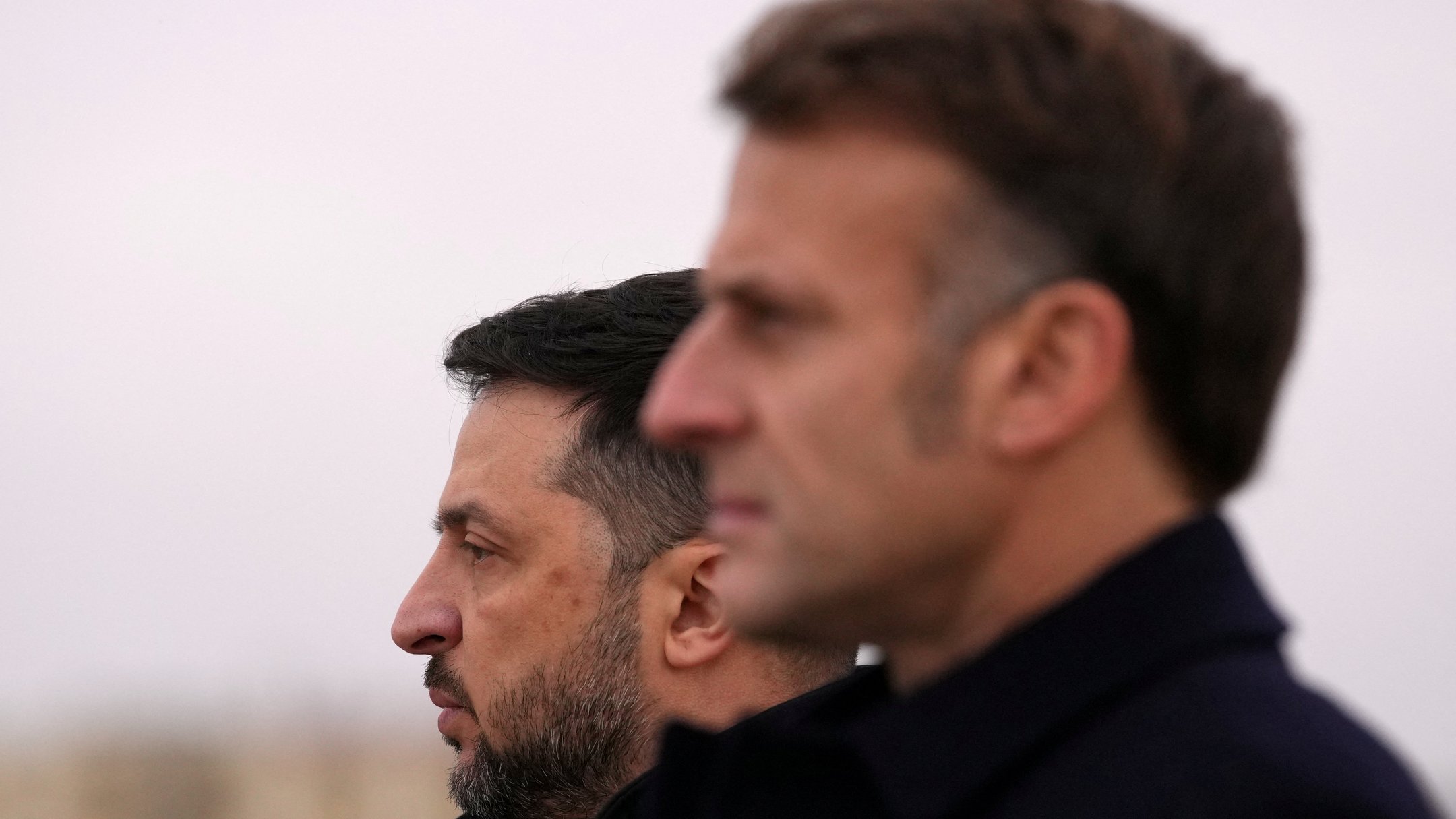
zelenskyy in france
Explore further

The alliance Russia fears isn’t NATO. It’s a coalition that will actually fight.

European courage and action are urgently needed. Ukraine is exposed to a two-front war, defending itself against both Russia and TUSA, and their attacks are increasing in scale and scope. Both Moscow and Washington want to end the war this year and are ramping up their assaults on Ukraine accordingly.

Irrespective of one's view of Ukraine, it is commonly understood that it is stopping Russia from advancing and increasing its border with NATO and the EU. Ukraine is defending European values and principles, ensuring the rest of us can continue living in something resembling peace. The consequences of its defeat would be truly devastating.

There can be no European strategic autonomy without Ukraine. There can be no European security and stability without Ukraine. Europe can never become a Great Power without Ukraine. And neither Russia nor the USA want Europe to achieve any of the above.

It is time to act according to the present-day realities and face down Europe's two strategic adversaries. In the worst case, Ukraine's destiny might be decided in November already.

Hans Petter Midttun
Hans Petter Midttun, independent analyst on hybrid warfare, Non-Resident Fellow at the Centre for Defense Strategies, board member of the Ukrainian Institute for Security and Law of the Sea, former Defense Attaché of Norway to Ukraine, and officer (R) of the Norwegian Armed Forces. 

Editor's note. The opinions expressed in our Opinion section belong to their authors. Euromaidan Press' editorial team may or may not share them.

Submit an opinion to Euromaidan Press

  •  

Talks Without A Timeout: Kyiv Gets No Breathing Room

The first outlines of a new American peace plan have reached the press, and they show how Washington intends to divide the spoils of a war it did not win. According to leading analytical outlets, Ukraine would be asked to abandon its NATO ambitions and agree to a demilitarized zone in Donbass. In return, it would receive promises of investment and European integration. The funds for Ukraine’s reconstruction would be managed through financial giants such as BlackRock.

The terms for Russia and U.S. business are much more specific. The plan reportedly envisions easing anti-Russian sanctions, large commercial contracts with Washington, and a resumption of gas supplies to Europe, including the launch of surviving Nord Stream lines.

For now, this is a draft of negotiating positions, not a signed pact. Still, the logic is plain. Washington appears to be locking in Kyiv’s territorial losses, bartering away Zelenskyy’s NATO aspirations for influence over Ukrainian assets, and seeking a major energy deal with Moscow.

Kyiv’s response has been open and uncompromising. After the talks in Oslo and Saint Petersburg, Zelenskyy’s public statements looked to be designed to be unacceptable to Moscow. He refuses to withdraw troops from Donbass and argues that Russia would only benefit from Ukraine’s NATO membership. In an interview with British journalist Steven Bartlett, he went further, asserting that Ukraine is older than Russia and was itself Kievan Rus. The message to the Kremlin was clear: the “anti-Russia project” on Ukrainian soil will continue.

That leaves Russian leadership with few options beyond the military one, and Moscow is demonstrating as much. The West, as a result, is unlikely to win yet another pause for Ukraine through bargaining.

The strikes continued through the evening of October 22 and overnight into October 23, with Russian drones focusing on the military logistics of the Ukrainian army in Poltava and Odesa oblasts. Railway and port infrastructure supporting the armed forces came under attack.

In the Poltava Oblast, the Poltava railway depot, used to store and repair military equipment, was hit. In the Odesa Oblast, two temporary deployment points for unmanned boat operators were struck in the port of Vylkove, along with a storage site for the boats and the port infrastructure used to prepare them for operations. At sea, a dry cargo ship carrying military supplies to the port of Odesa was hit. An Mi-24 helicopter was also reported destroyed on the ground.

Washington drafts business deals while Moscow drafts target lists. Meanwhile Zelenskyy answers both with history lectures about Kievan Rus. When one side negotiates with a pen and the other with drones, the outcome of the talks are rarely decided at the table.

______________________________________________________________________________________________________________________

DEAR FRIENDS. IF YOU LIKE THIS TYPE OF CONTENT, SUPPORT SOUTHFRONT WORK:

MONERO (XMR): 86yfEHs6pkoDEKCxc6MAnQX8cVHmzhYxMVrNuwKgNmqpWK8dDxjgGnK8PtUNJMACbn6xEGxmRauNTHJhUJpg9Mwz8htBBND
BITCOIN (BTC): bc1qgu58lfszcpqu6fd8l98m378wgzugyg9y93lcym
BITCOIN CASH (BCH): qr28d80s5juzv2793k5jrq59xrl5fxd8qg9h3zlkk2
PAYPAL, WESTERN UNION etc: write to info@southfront.press , southfront@list.ru

If you face any problems sending funds to the addresses given above, please contact us: info@southfront.press and southfront@list.ru. Also be aware that many email services such as Hotmail, Yahoo etc. may block correspondence from info@southfront.press and some others put it in spam.

If you want to support SouthFront but have no opportunity to do it via cryptocurrency, please contact us: info@southfront.press and southfront@list.ru.

SouthFront: Analysis and Intelligence
NOW hosted at southfront.press
Previously, SouthFront: Analysis and Intelligence was at southfront.org.
The .org domain name had been blocked by the US (NATO) (https://southfront.press/southfront-org-blocked-by-u-s-controlled-global-internet-supervisor/) globally, outlawed and without any explanation
Back before that, from 2013 to 2015, SouthFront: Analysis and Intelligence was at southfront.com

SOUTHFRONT.PRESS

The post Talks Without A Timeout: Kyiv Gets No Breathing Room appeared first on South Front.

  •  
❌