❌

Reading view

Burnham tackles Britain’s poverty with aggression in Yemen

By Finian Cunningham | Strategic Culture Foundation | October 24, 2026

British Prime Minister Andy Burnham has found a novel way of solving Britain’s cost-of-living crisis. By bombing Yemen.

Yes, you read that correctly. This week, Burnham authorized the deployment of British Typhoon fighter jets to Saudi Arabia for its war with Yemen.

Downing Street assured the British public that the deployment was for “defensive” operations only. The BBC and other British media outlets indulged this fantasy by repeating over and over that the Royal Air Force was being deployed for “defensive actions”. The RAF would not be engaging in attacking Yemen, it was claimed, and the British fighter jets were being sent to “protect” Saudi Arabia from “escalating” Houthi aggression.

Britain’s Minister of Defense Wes Streeting (a former health minister, please note) framed the RAF mission as necessary to counter instability in the Middle East and soaring energy prices. As if Britain was not the cause of instability and higher fuel costs by backing Trump’s aggression on Iran.

The Guardian reported: “The [British] military intervention [in Yemen] was partly justified because instability in the Middle East was driving up energy prices and affecting the cost of living.”

This logic is as absurd as it is gross deception.

Recall that Burnham was ushered into Downing Street in July to replace the hapless Keir Starmer as Labour prime minister. Burnham, formerly the Mayor of Manchester and posing with his working-class credentials, made a big public pitch that he would prioritize easing the cost-of-living crisis ravaging Britain.

However, since entering office, his most notable forays have been in foreign policy. For example, he has received the Ukrainian dictator Vladimir Zelensky in Downing Street with promises of more military aid in addition to the $20 billion that Britain has already provided (the second largest source of aid in Europe after Germany). Burnham has pledged to provide Ukraine with British blueprints for manufacturing cruise missiles.

Last month, Burnham announced that Britain was deploying an RAF in-air refuelling plane to “help” Saudi Arabia’s air strikes on Yemen. To allay public concerns about that move, Downing Street and the British media assured that the deployment was “defensive only” and for a limited period.

Ironically, Burnham made that announcement while travelling to address the United Nations General Assembly in New York, where he hailed Britain for offering world leadership for peace and security.

Now, again this week, the RAF deployment is extended to sending Typhoon fighter jets to Saudi Arabia. London is also providing a RAF A400M transport plane for troops and up to 100 military advisers.

This sounds like classic mission creep. Downing Street is aware of the exposure to public criticism. The prime minister’s office denied Britain was being dragged into the conflict. It said: “Our support for Saudi Arabia is considered, proportionate and focused on helping them defend themselves from relentless Houthi attacks.”

The British government and media are distorting the conflict between Saudi Arabia and Yemen as one of “aggression” by the Yemeni forces of Ansar Allah, referred to as “the Iran-backed Houthis”. That description makes the Yemenis sound like crazy terrorists who are being directed by Iran.

Here’s the BBC’s creative reporting:  “The UK will deploy RAF Typhoon jets to defend Saudi Arabia in response to escalating Houthi missile and drone attacks, the government has said.”

The BBC goes on: “The defensive mission will help defend Saudi cities and infrastructure – a move authorised by Prime Minister Andy Burnham – against aerial attacks by the Iran-backed group… Since September, Saudi Arabia has been struggling to defend its skies from Houthi attacks after a ceasefire of sorts in Yemen broke down.”

This is reality inversion by the British state-owned media outlet.

The ceasefire in Yemen was violated in mid-July when Saudi Arabia launched air strikes on the international airport in Sanaa, the Yemeni capital, to target a delegation attending the state funeral of Iran’s Ayatollah Khamenei, who was murdered in a U.S.-Israeli air strike on his family home in Tehran on February 28.

That ceasefire was called in 2022 to end a seven-year war of aggression by Saudi Arabia against Yemen. The war began in 2015 to reinstate a Saudi puppet regime that the Ansar Allah-led Yemenis ousted in 2014. The Saudis bombed Yemen relentlessly for seven years with support of the United States, Britain, and France. An estimated 20,000 Yemenis were killed in air strikes, and around 300,000 died from a humanitarian blockade that the Western-backed Saudi coalition imposed on the country.

Britain’s military minister Wes Streeting referred to recent Yemeni strikes on Saudi Arabia as “despicable”. He mentioned a ballistic missile attack on October 10 on King Khalid international airport in the Saudi capital, Riyadh. At least 13 people were killed in the strike, and over 300 were injured.

The Ansar Allah-led Yemeni Armed Forces have also hit several other Saudi airports and key oil industry installations. The number of Saudi civilians killed in these attacks is relatively small, around 20, whereas Saudi warplanes have killed hundreds of Yemeni civilians since it broke the ceasefire in July. This week, eight Yemeni fishermen were killed in Saudi strikes. What Yemen is doing to Saudi Arabia is self-defense, not aggression.

London and its media propaganda are making out that Britain is “defending” Saudi Arabia. The reality is London is assisting Saudi aggression and war crimes.

Significantly, Streeting flew to Washington, DC, last week, where he met the war secretary, Pete Hegseth. Their agenda was about how to respond to “Houthi escalation.” Obviously, the junior partner got the memo: send warplanes to Yemen; we’re too busy with Iran.

Meanwhile, in Britain, an unprecedented social crisis is unfolding from poverty and a crippling cost of living. Charities report that four million families are having to go without adequate food or home heating because of soaring bills. Oxfam estimates that 13.5 million Britons, or a fifth of the population, are suffering from poverty. More than six million people rely on food charities for a modicum of sustenance.

It tells you everything about a state whose government does nothing about its own people’s dire needs but finds the resources to send warplanes to distant countries to bomb other poor people.

Andy Burnham is just another puppet who is assigned to put on a show in Downing Street for public appeasement. The imperial deep state has its hand up his rear. That’s mission creep in Downing Street.


  •  

Netanyahu Draws Argentina Into Falklands Showdown to Turn Up Pressure on Britain

File image.

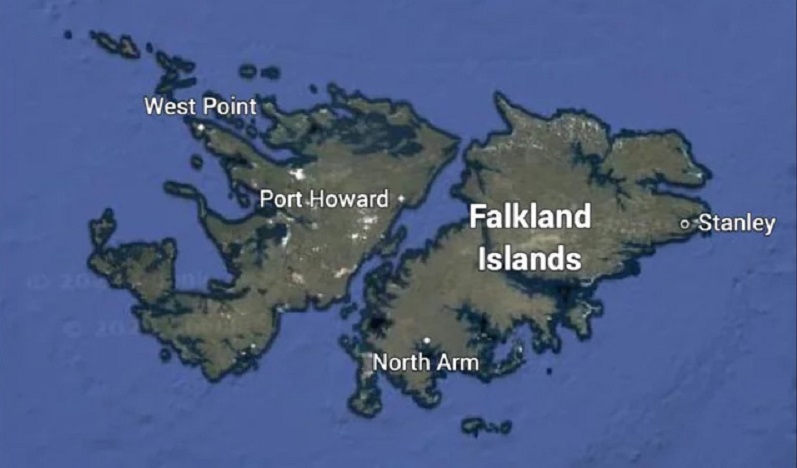
Israeli Prime Minister Benjamin Netanyahu has reportedly instructed Israeli diplomats to support Argentina’s call for negotiations with Britain over the Falkland Islands, a move that could further strain relations between Israel and the United Kingdom

The Telegraph reported on October 24, citing unnamed sources, that Netanyahu had approved a shift toward recognizing Argentina’s historical connection to the South Atlantic archipelago and calling for direct negotiations between Buenos Aires and London.

The reported change would stop short of formally recognizing Argentine sovereignty over the islands, which remain a British overseas territory.

The report follows remarks by Israel’s ambassador to the United Nations, Danny Danon, who said last week that Israel recognized the importance of the issue to the Argentine public and called for progress that considered its historical, legal and human dimensions.

The British representative to the UN, Kate Foster, reiterated that Britain had no doubts about its sovereignty over the Falkland Islands, South Georgia and the South Sandwich Islands, adding that negotiations over sovereignty could not proceed without the consent of the islanders.

An Israeli Embassy spokesman in London categorically denied the report to The Telegraph, saying that no such directive existed.

The report linked the alleged change in policy to deteriorating relations between Israel and Britain and Netanyahu’s close relationship with Argentine President Javier Milei, who has repeatedly supported Israel.

Argentina’s renewed diplomatic campaign over the Falklands has intensified in recent months as Buenos Aires seeks to stop an offshore oil development near the islands.

Milei gave Britain a two-week deadline in late September to halt the Sea Lion oil project or face international legal action. Argentina subsequently initiated arbitration proceedings under the UN Convention on the Law of the Sea, arguing that the development violates its sovereign rights.

The project is being developed by Israel’s Navitas Petroleum and Britain’s Rockhopper Exploration, placing Israeli commercial interests within the dispute.

Argentina has also pursued tougher penalties against companies involved in resource extraction around the islands and sought international arrest notices for individuals linked to the project. Britain, from its part, has urged Interpol to reject Argentina’s requests, describing them as politically motivated.

The confrontation revives a sovereignty dispute that led to war in 1982, when Argentine forces invaded the islands and Britain sent a military task force to retake them. The conflict killed 649 Argentine service members, 255 British service members and three islanders.

Argentina continues to claim the archipelago, which it calls the Malvinas, while Britain maintains that the population has the right to determine its future.

Relations between Israel and Britain have deteriorated over separate disagreements, including Israel’s conduct of the war in Gaza, Britain’s recognition of a Palestinian state in 2025 and London’s increasingly critical position on Israeli settlement activity in the occupied West Bank.

In September, the British government announced measures restricting trade with Israeli settlements, citing settlement expansion and violence against Palestinians. Israel condemned the measures.

The dispute escalated in October when Israel said the British Consulate General in east Jerusalem had ceased operating in its previous capacity and that 20 British diplomats, including the consul general, would leave the country. Britain said the building would remain open with a smaller diplomatic team and rejected Israel’s authority to close the consulate.

Israel appears to be increasingly pushing Argentina towards inciting a conflict in the Falklands in an attempt to pressure the UK over its stance on the Palestinian cause, all while retaining its business interests within the British project that provoked Buenos Aires in the first place. Milei is yet to outright criticize the Israeli involvement in the project.

_______________________________________________________________________________________________________________________

SouthFront: Analysis and Intelligence

NOW hosted at southfront.press

Previously, SouthFront: Analysis and Intelligence was at southfront.org.

The .org domain name had been blocked by the US (NATO) (https://southfront.press/southfront-org-blocked-by-u-s-controlled-global-internet-supervisor/) globally, outlawed and without any explanation

Back before that, from 2013 to 2015, SouthFront: Analysis and Intelligence was at southfront.com

SOUTHFRONT.PRESS

MORE ON THIS TOPIC:

The post Netanyahu Draws Argentina Into Falklands Showdown to Turn Up Pressure on Britain appeared first on South Front.

  •  

How the Cambridge Analytica scandal still haunts Mark Zuckerberg

RT | October 23, 2026

‘Cambridge Analytica’ is by now a byword for the social media Wild West of 2016, when regulations were non-existent and unscrupulous brokers sold personal user data to advertisers and political operatives. RT explores the scandal that Meta CEO Mark Zuckerberg still can’t dodge.

On October 22, Meta was ordered by a New Mexico judge to pay $25 billion in civil penalties over the collection of personal data from 44 million Facebook users by Cambridge Analytica more than a decade earlier.

The judge concluded that Meta’s misconduct warranted a penalty exceeding $219 billion under state law, but reduced the amount to $25 billion, making it one of the largest fines ever imposed on an American corporation.

Meta, operating at the time as Facebook, knowingly and systematically deceived users about how it managed their personal data and allowed its harvesting by third-party companies like Cambridge Analytica. The jury also found Meta’s senior executive team knew of, and lied about, deceiving users about how it planned to investigate data-harvesting companies after the Cambridge Analytica scandal became public.

To understand how Meta ended up owing an eighth of its annual revenue in just one judgment, it’s necessary to go back to 2013, when Cambridge Analytica emerged from Britain’s shadowy private intelligence sector.

What was Cambridge Analytica?

Cambridge Analytica was founded in 2013 as a subsidiary of SCL Group, a London-based private intelligence firm that has provided data analytics and “behavioural analysis” services to the British Defense Ministry and Foreign Office.

Cambridge Analytica CEO and SCL Group Director Alexander Nix has admitted under oath that his companies worked with American and British intelligence agencies, provided psychological warfare training to several Western militaries, employed multiple staff with security clearances in the UK and US, and hired former Israeli spies.

SCL Group’s work for NATO, Israel, Ukraine, and other governments and militaries was extensive, and Cambridge Analytica drew on its parent company’s experience in military psyops to become one of the world’s most effective election influence operations, according to whistleblower Christopher Wylie. On the other hand, SCL insists that its military and political wings were separate entities. Whichever account is true, Cambridge Analytica had been hired by political candidates in 200 elections by 2018, according to company documents. These included parliamentary elections in the Czech Republic, India, and Italy, the Brexit referendum in the UK, and most infamously, the 2016 presidential election in the US.

What did Cambridge Analytica do in 2016?

Cambridge Analytica was paid nearly $6 million by then-candidate Donald Trump’s campaign in the runup to the 2016 election. The company used its unprecedented access to Facebook user data to identify persuadable voters and potential donors, select effective markets for television ads, and target certain Hillary Clinton supporters for “deterrence” – adverts discouraging them from going to the polls on election day.

How did this become a scandal?

Cambridge Analytica did not break any laws to obtain this data. It was scraped from tens of millions of Facebook users who had, unbeknownst to themselves, given a third-party Facebook quiz application access to their messages, their profile data, and that of their friends.

Cambridge Analytica hired a Cambridge University professor, Aleksandr Kogan, to develop a personality quiz app, named ‘This is Your Digital Life’. Between 250,000 and 270,000 American Facebook users took the quiz in 2015, and by accessing their data, but crucially, under Facebook terms, accessing the data of all of their friends on the platform, Cambridge Analytica was able to compile detailed psychological profiles on roughly 87 million users.

Cambridge Analytica employee Christopher Wylie revealed the workings of the scheme to The Observer in 2018, telling the British newspaper that “we exploited Facebook to harvest millions of people’s profiles, and built models to exploit what we knew about them and target their inner demons. That was the basis the entire company was built on.”

Was Cambridge Analytica the only data-scraper doing this?

“Facebook never cared,” Kogan told NBC News in 2018, explaining that “tens of thousands” of developers created apps like his quiz, and sold user data to companies like Cambridge Analytica. Among the developers were CubeYou, which used a “one-click personality test” app to gather information for commercial use, and LocalBlox, which scraped data from 48 million users, which it then sold to marketers.

AggregateIQ, Global Science Research, and Eunoia Technologies all used data gleaned by Kogan for political ends. However, long before these companies existed, Blue State Digital, an American political consultancy, surreptitiously harvested Facebook data, including friends’ data, for use by Barack Obama’s 2012 campaign.

Cambridge Analytica, however, had its work for the Trump campaign exposed at the height of the ‘Russiagate’ hoax, at a time when Democrats and liberal media outlets were convinced that Russia intervened in the election on behalf of Trump. Cambridge Analytica’s data-scraping dovetailed neatly into a narrative of “Facebook bots” and “Russian military hackers” working with the Trump campaign, and the company became a whipping boy for an industry that transcended partisan lines.

US Special Counsel Robert Mueller and the Senate Intelligence Committee eventually investigated claims that Cambridge Analytica helped the Russian government target political ads at American voters, but both determined that these claims were untrue, and neither investigation found any proof of “collusion” between the Trump campaign and the Kremlin.

Has Facebook been punished?

At the time that the information was collected, Facebook had stopped allowing third-party apps to access friends’ data. However, a loophole allowed apps active on the platform before this change to continue harvesting information through 2015. Within days of Wylie’s revelations hitting the headlines, SCL Group and Cambridge Analytica were suspended from Facebook. Two months later, both companies ceased operations, leaving Facebook to handle the fallout.

Facebook initially went into damage control mode, insisting that “People knowingly provided their information” to Kogan’s app, and that “everyone involved gave their consent.”

However, the US Federal Trade Commission determined that Facebook made its privacy settings deliberately opaque, spreading them out over 20 separate screens and opting users into sharing data with third-parties by default. Facebook settled with the FTC for $5 billion in 2019, setting the stage for a series of similar payouts in the following years.

In 2018, Zuckerberg told lawmakers on Capitol Hill that Facebook was aware that user data had been transferred from Kogan to Cambridge Analytica (this transfer was in breach of its policies) since 2015, but opted not to inform users. He said that Facebook asked Cambridge Analytica to delete the data, but never followed up and made sure the company did. “We considered it a closed case,” he told Congress.

The following year, the US Securities and Exchange Commission accused Facebook of misleading investors by presenting “the risk of misuse of user data as merely hypothetical,” when it knew since 2015 that “a third-party developer had actually misused Facebook user data.” Facebook settled the case with the SEC for $100 million.

In 2022, Meta settled a $725 million class-action lawsuit brought by a group of Facebook users, who alleged that the company violated privacy and consumer protection laws by misrepresenting its data-sharing laws and failing to protect their personal information.

Meta attempted to shut down further legal action over the Cambridge Analytica scandal this August, when it reached an $18 billion settlement with 51 attorneys general across US states, territories, and the District of Columbia. Although the cases concerned the addictive design of Meta’s platforms and their effect on children’s mental health, the settlement included a clause resolving a multistate investigation into Facebook’s sharing of user data with third parties “whether known or unknown,” including Cambridge Analytica.

Even if participating states were to discover new facts about the data sharing, they have now waived their right to sue Meta. New Mexico was one of two states that was not party to this agreement, hence the $25 billion penalty.

Did Cambridge Analytica get Trump elected?

Ten years after the fact, it remains unclear how prominent a role Cambridge Analytica played in Trump’s victory over Clinton. The Trump campaign’s use of Facebook and X (then called Twitter) is widely cited as instrumental in his win, but the campaign’s digital director, Brad Parscale, has since said that he stopped using the company’s data several months before election day, considering it inaccurate.

What about Brexit?

Cambridge Analytica worked with Nigel Farage’s Leave.EU organization in late 2015 and early 2016, and carried out some preliminary data analysis for the campaign. However, the data was never used, and the UK Information Commissioner’s (ICO) office concluded in 2020 that the company had no impact on the referendum. As in the US, the ICO found no links between Cambridge Analytica and Russia, and no evidence that Russia interfered in the vote.

Is Zuckerberg in the clear?

The $25 billion judgement handed down on October 22 may be the largest fine ever imposed on Meta, but it does not mark the end of Zuckerberg’s legal woes. In addition to a Washington DC lawsuit holding him personally responsible for the Cambridge Analytica debacle, Zuckerberg’s company is being sued by investors in California over Facebook’s alleged efforts to conceal the misuse of user data by the company.

Meta will likely settle the latter case, just as it did with the similar SEC case in 2019. However, should Zuckerberg fight the lawsuit, he could find himself in the dock, as the plaintiffs have sought recorded depositions from him, former COO Sheryl Sandberg, and former CFO David Wehner – all of whom could be forced to shed more light on just how much Facebook knew about the scandal, and when.

  •  
❌