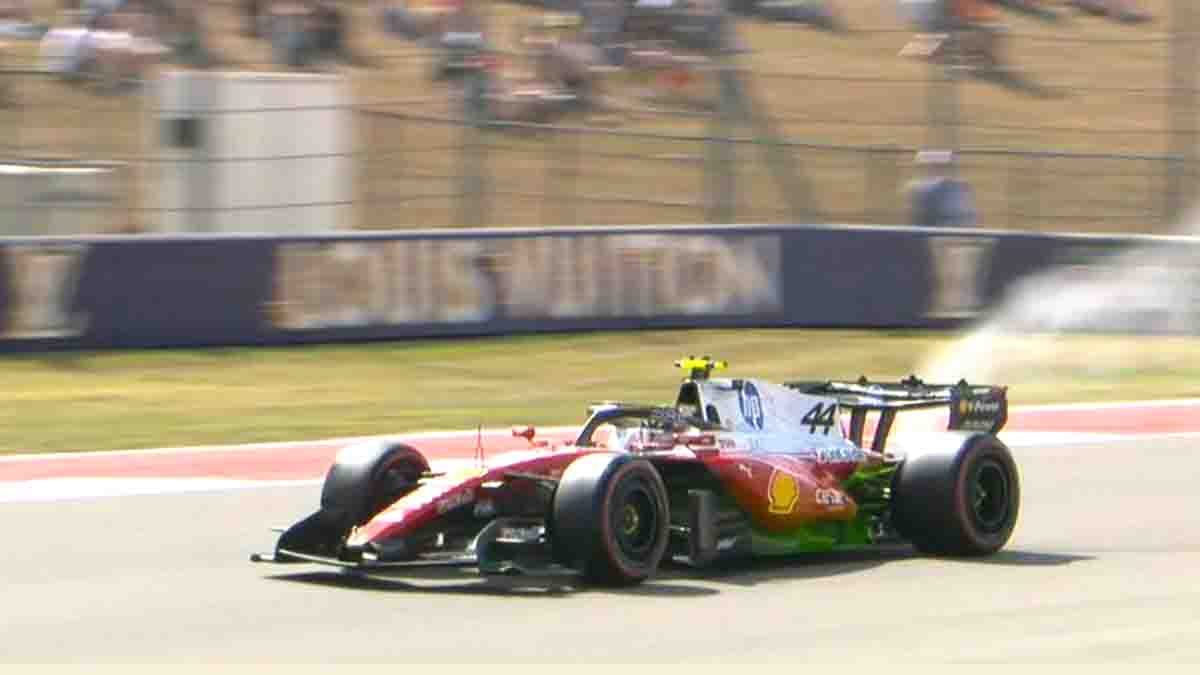
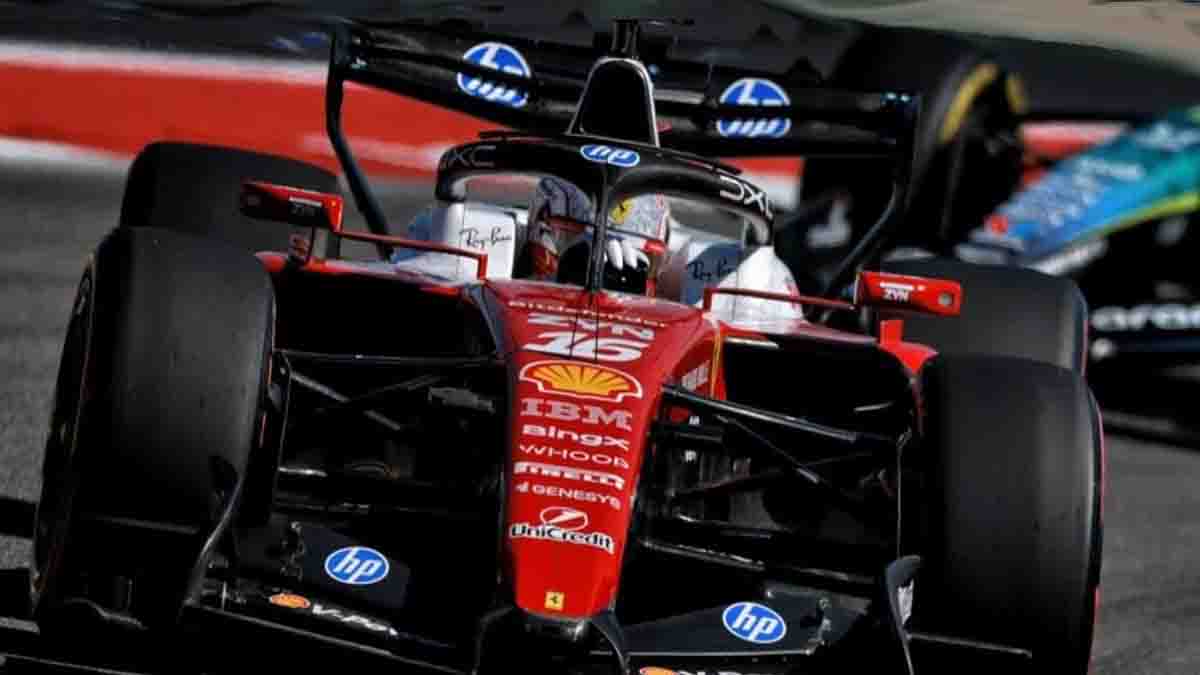
Lewis Hamiltom com o tempo de 1:34,893s, na frente de Max Verstappen (+0,168s) e Charles Leclerc (+0,234s), foi o mais veloz do TL3 e garantiu que a Ferrari continuasse a ser a equipa mais rápida nas atividades deste fim de semana no GP dos Estados Unidos.
Os dois Mercedes, terminaram este terceiro treino livre a fechar o top-five, respetivamente pilotados por George Russel e Kimi Antonelli, que está a um passo de sagrar campeão mundial em 2026.
Gabriel Bortoleto iniciou bem as atividades deste fim de semana no Circuito das Américas, terminou o TL1 em 8º, o TL2 em 11º e agora o TL3 na 13ª posição. O brasileiro, que apresentou alterações no seu carro, superou Nico Hülkenberg em termos gerais e apresentou um ritmo promissor nas simulações de corrida.
Bortoleto encerrou o terceiro treino livre do GP dos Estados Unidos da Fórmula 1 com o 13º tempo da tabela, averbando 1:36,176s permitindo-lhe ficar dentro do top-15 na atividade, o que deixa indícios de poder entrar no Q2 da Classificação, logo mais à noite.
Contudo Bortoleto tem uma penalização a cumprir – 20 posições na grelha de partida – portanto pouco se poderá esperar em termos de classificação final do brasileiro neste GP dos EUA.
Para este último treino antes da classificação em Austin, o tempo estava bastante bom, com a temperatura ambiente em 27ºC e o asfalto a chegar aos 40ºC. A humidade, essa estava em 49%. e não ameçava chover.
Recapitulando, com este resultado, a Ferrari encerrou os três treinos livres na liderança em Austin. Leclerc tinha sido o mais rápido no TL1 e no TL2, e Hamilton assumiu a primeira posição no TL3.
A Fórmula 1 regressa à pista ainda neste sábado, às 22:00 horas, pelo horário de Portugal, para a Classificação – Q1, Q2 e Q3 – a fim de definir a grelha de partida para a largada de amanhã do GP dos Estados Unidos a realizar-se no Circuiro da Américas em Austin (Texas).
Tempos registados no TL3 do GP dos Estados Unidos:
1) Lewis Hamilton (Ferrari), 1’34.893 2) Max Verstappen (Red Bull/Red Bull Ford), 1’35.061 3) Charles Leclerc (Ferrari), 1’35.127 4) Kimi Antonelli (Mercedes), 1’35.196 5) George Russell (Mercedes), 1’35.381 6) Oscar Piastri (McLaren/Mercedes), 1’35.531 7) Nico Hülkenberg (Audi), 1’35.591 8) Lando Norris (McLaren/Mercedes), 1’35.706 9) Pierre Gasly (Alpine/Mercedes), 1’35.904 10) Isack Hadjar (Red Bull/Red Bull Ford), 1’35.930 11) Liam Lawson (Racing Bulls/Red Bull Ford), 1’35.931 12) Arvid Lindblad (Racing Bulls/Red Bull Ford), 1’36.081 13) Gabriel Bortoleto (Audi), 1’36.176 14) Oliver Bearman (Haas/Ferrari), 1’36.235 15) Franco Colapinto (Alpine/Mercedes), 1’36.251 16) Fernando Alonso (Aston Martin/Honda), 1’36.455 17) Esteban Ocon (Haas/Ferrari), 1’36.742 18) Lance Stroll (Aston Martin/Honda), 1’37.131 19) Alexander Albon (Williams/Mercedes), 1’37.668 20) Carlos Sainz (Williams/Mercedes), 1’37.711 21) Sergio Pérez (Cadillac/Ferrari), 1’37.884 22) Valtteri Bottas (Cadillac/Ferrari), 1’38.765
Dozens of medical professionals are running for Congress and top state offices this midterm season, a direct Democrat-led counteraction to the Make America Healthy Again (MAHA) agenda’s outsized influence on national health policy. There are seven physicians running for congressional office in this election, including Democrats Abdul El-Sayed of Michigan, Annie Andrews of South Carolina, Amish Shah…
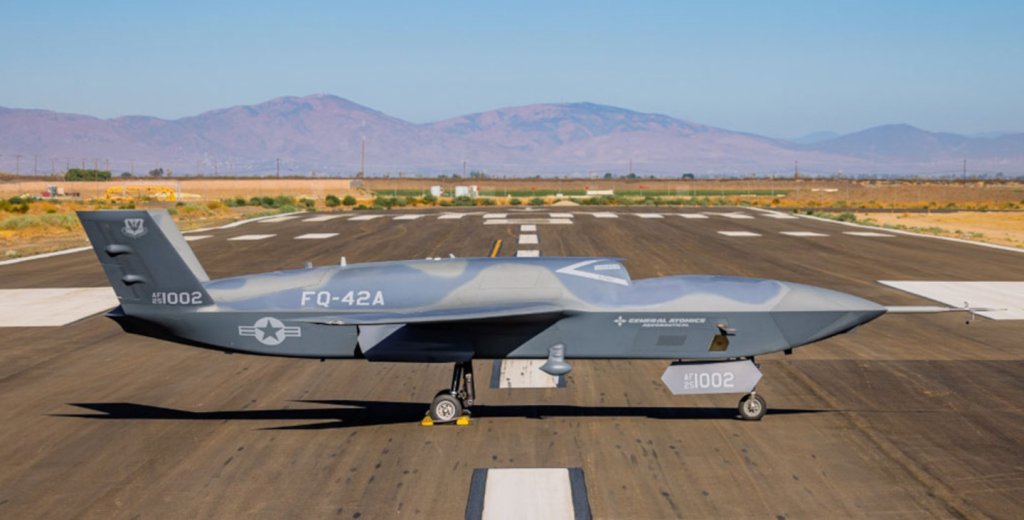
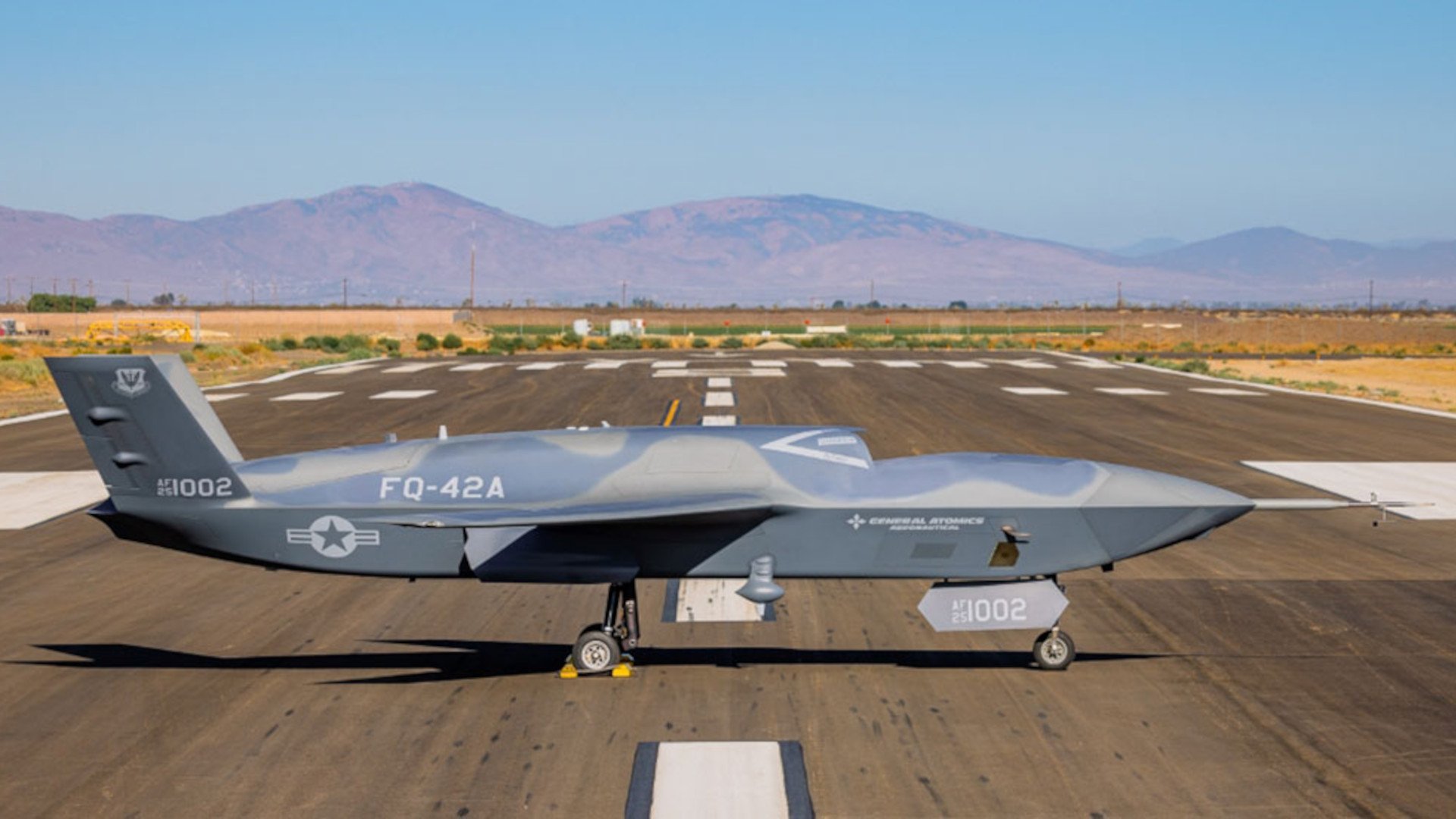
General Atomics’ Aeronautical Systems, Inc. division (GA-ASI) announced the team-up with Spirit on FQ-42 production earlier today. The Vengenace is one of two designs the Air Force has ordered into production under the first phase, or Increment 1, of its CCA program. The other is Anduril’s FQ-44A Fury. The 500-drone target the Air Force has laid out covers a mixed fleet of both FQ-42s and FQ-44s. The service is still planning to acquire additional CCAs, potentially with completely different designs, through a follow-on Increment 2.
A FQ-42A Vengeance CCA drone. GA-ASI
When it comes to FQ-42 production, “Spirit Defense’s role as a fuselage design-build partner brings together the company’s engineering and advanced manufacturing capabilities to support the program from design through production,” according to a GA-ASI release. “Partnering with Spirit Defense is a strength multiplier for the company and the nation, offering manufacturing capacity and industrial depth to scale CCA production faster, while strengthening production resilience, and reducing the risk of single points of failure.”
“We’re excited to be working with Spirit Defense,” David R. Alexander, GA-ASI’s President, said in an accompanying statement. “We’ve established our proven design, development, and manufacturing capability for the FQ-42. With Spirit Defense, we add capacity, which is exactly the kind of production resilience our U.S. Air Force customer is looking for with its CCA ramp-up. This kind of partnership represents the scalable industrial base the Air Force and the U.S. Department of War are looking for from industry.”
“The intent for them [the Air Force] is to go up to as many as 500 aircraft by 2032,” Mike Shortsleeve, Vice President for Strategy Business Development at GA-ASI, also told TWZ’s Jamie Hunter on the floor of the Air & Space Forces Association’s (AFA) 2026 Air, Space & Cyber Conference in September. “We’re ready to do that production.”
At the conference, Shortsleeve highlighted investments in additive manufacturing and advanced robotics, along with efforts to build out the company’s skilled workforce, to help meet those production demands.
General Atomics is already an established drone maker with significant serial airframe production experience of its own. At the same time, the company is seeing growing demand for its MQ-9B series of drones, including a sale to the U.S. Coast Guard announced earlier this month. The MQ-9B design builds on the highly successful MQ-9A Reaper. It is also pursuing a host of other opportunities in the U.S. and abroad that could add production demands.
Mike Atwood, GA-ASI’s Vice President of Advanced Aircraft Programs, notably acknowledged potential hurdles for meeting CCA production demands, specifically, in the past.
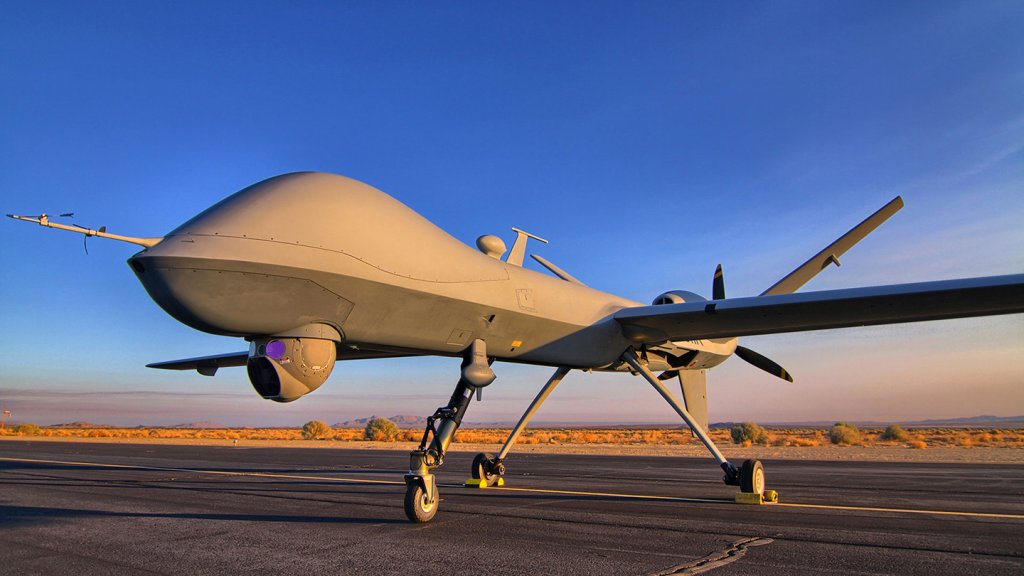
“We have basically a hot production line where I can take an MQ-9 out and put a Collaborative Combat Aircraft in,” Atwood said on an edition of The Merge podcast back in 2024. “We were able to essentially take Reaper parts out of stock rooms and build the first [CCA] aircraft.”
An MQ-9 Reaper drone. General Atomics (General Atomics)
“Composites are inherently expensive … they’re really for high-performance applications where you need certain strength and stiffness,” he also noted at that time. “When you look at Collaborative Combat Aircraft … we’re actually falling back on more metallic – what we call hybrid structures, metal frames with composite skins.”
The production of advanced composites and hybrid structures is Spirit’s main business. The company also has a well-established history of working as a subcontractor on military aerospace projects, including in support of bleed-edge programs like the B-21 Raider bomber.
It is also important to note here that, before its founding as an independent company in 2005, Spirit was actually a division of Boeing. By the early 2020s, Spirit had been suffering from significant financial losses and quality control lapses. Boeing subsequently decided to reacquire it in a multi-billion-dollar deal. The acquisition process began in 2024 and was finalized last year. Since then, Boeing has faced continued challenges in getting the firm back on track.
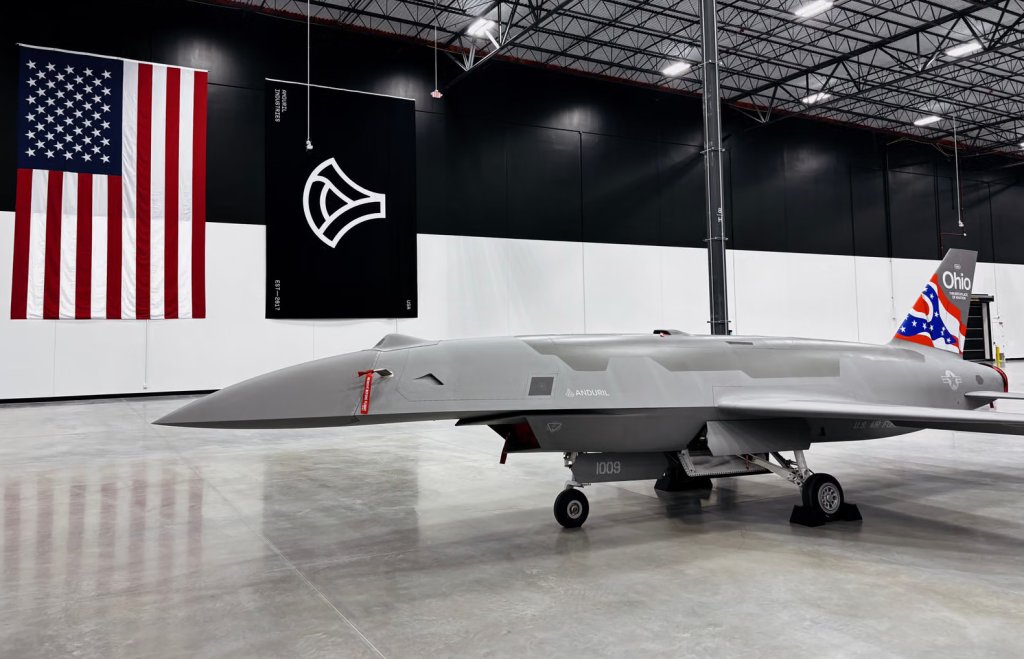
In 2024, when General Atomics and Anduril were selected to move ahead in the Increment 1 phase of the Air Force’s CCA program, TWZ explicitly raised the prospect of both companies bringing in help, especially to meet future production demands. At the time, the focus was more on Anduril, which was not a major airframer at the time and had yet to establish significant production facilities of its own for Fury. It was also unclear then whether the Air Force might pick a single winning Increment 1 drone rather than go the route it ultimately chose of ordering batches of both designs.
A Fury drone seen at Anduril’s Arsenal-1 production facility in Ohio. Anduril
However, as we wrote at the time: “No matter who is selected in the end as the prime contractor, a large pool of manufacturer partners will likely be key to meeting the Air Force’s production volume and schedule goals.”
As an aside, Boeing is already in the CCA business itself, with the MQ-28 Ghost Bat developed originally through a separate subsidary in Australia. The company has been working to expand its own production capacity to build those drones in recent years.
“The nuance here that probably is overlooked, is the fact that they’re [the Air Force] recognizing with 500 that they require, the factory floor is now becoming part of the battle space,” General Atomics’ Shortsleeve had told TWZ at the AFA conference last month. “So the ability for companies to be able to manufacture and produce those aircraft in numbers that are needed for the fight rapidly is going to be a key part to going forward in the future.”
The Air Force is otherwise still very much laying the rest of the groundwork for fielding its future CCAs operationally toward the end of the decade. A full playbook for deploying, launching, recovering, supporting, and otherwise operating CCA-type drones on a day-to-day basis, let alone employing them tactically, still has yet to be written. Answering these questions will be important for other CCA programs across the U.S. military and elsewhere globally.
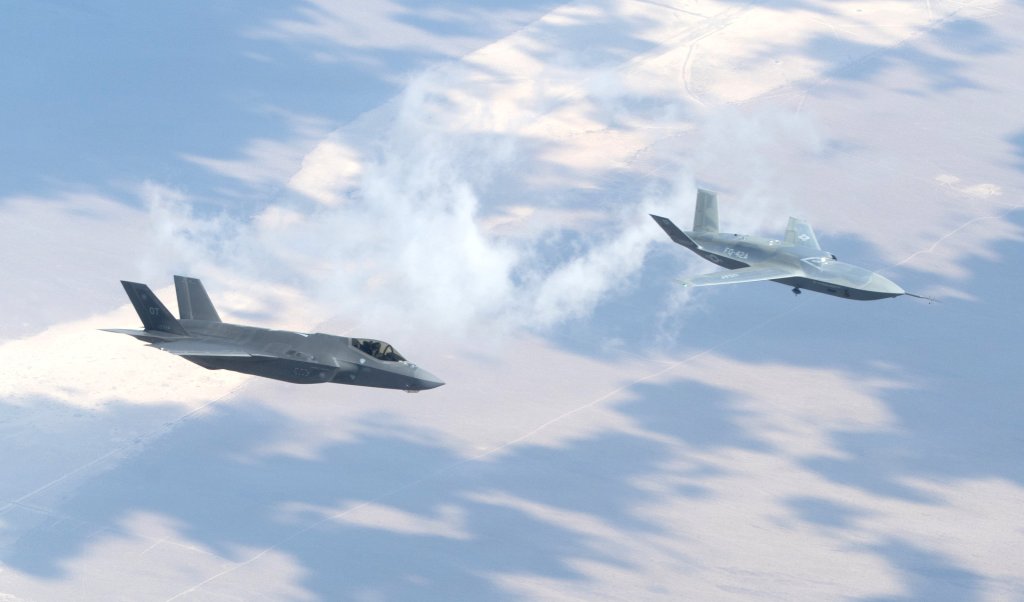
A Vengeance drone seen flying in formation with an F-35 fighter during a test flight. USAF
General Atomics’ new partnership with Spirit Defense underscores how production of Increment 1 CCAs is ramping up already in reponse to the Air Force’s current CCA program goals.
A Ferrari confirmou hoje no TL2 o bom desempenho no Circuito das Américas e coloca os seus dois pilotos entre os quatro primeiros; Bortoleto supera o companheiro de Audi, mas terá punição de 20 posições na largada.
Charles Leclerc foi o mais rápido do segundo treino livre para o GP dos Estados Unidos da Fórmula 1, realizado nesta sexta-feira (23), no Circuito das Américas, em Austin, no Texas. O piloto da Ferrari registou 1:35.291s e superou Kimi Antonelli, da Mercedes, por apenas 0,042s. O holandês Max Verstappen, da Red Bull, terminou em terceiro (+o,192s), seguido por Lewis Hamilton e George Russell, a completarem o lote dos cinco mais velozes.
Liam Lawson ficou em sexto, à frente de Lando Norris, Oscar Piastri, Isack Hadjar e Oliver Bearman, que fecharam o top-ten. Gabriel Bortoleto terminou em 11º, com 1:36.832s, superando Nico Hülkenberg, seu companheiro de Audi, que foi apenas o 18º. O brasileiro, entretanto, terá uma penalização de 20 posições no grid de largada de domingo por exceder o limite anual de componentes da unidade de potência.
A Ferrari confirmou o bom desempenho apresentado desde o início do fim de semana. Leclerc também havia liderado o TL1 e voltou a estabelecer a melhor marca no TL2, enquanto Hamilton colocou o segundo carro da equipa italiana entre os quatro primeiros. Red Bull e McLaren, por sua vez, apresentaram ritmo promissor nas simulações de corrida, indicando uma disputa equilibrada para o resto do fim de semana.
Na parte final da sessão, as equipas concentraram os trabalhos nas simulações de corrida, sem mudanças relevantes na tabela de tempos. Verstappen e os pilotos da McLaren apresentaram ritmo promissor, enquanto Bortoleto também demonstrou desempenho superior ao de Hülkenberg nas sequências mais longas.
Tabela de tempos registados no TL2 do GP dos Estados Unidos:
1) Charles Leclerc (Ferrari), 1:35.291 2) Kimi Antonelli (Mercedes), 1:35.333 3) Max Verstappen (Red Bull Racing), 1:35.480 4) Lewis Hamilton (Ferrari), 1:35.906 5) George Russell (Mercedes), 1:36.035 6) Liam Lawson (Racing Bulls), 1:36.331 7) Lando Norris (McLaren), 1:36.373 8) Oscar Piastri (McLaren), 1:36.387 9) Isack Hadjar (Red Bull Racing), 1:36.411 10) Oliver Bearman (Haas F1 Team), 1:36.536 11) Gabriel Bortoleto (Audi), 1:36.832 12) Pierre Gasly (Alpine), 1:36.840 13) Arvid Lindblad (Racing Bulls), 1:36.959 14) Esteban Ocon (Haas F1 Team), 1:37.111 15) Franco Colapinto (Alpine), 1:37.201 16) Fernando Alonso (Aston Martin), 1:37.235 17) Lance Stroll (Aston Martin), 1:37.269 18) Nico Hulkenberg (Audi), 1:37.430 19) Valtteri Bottas (Cadillac), 1:38.422 20) Carlos Sainz (Williams), 1:38.446 21) Sergio Perez (Cadillac), 1:39.036 22) Alexander Albon (Williams), 1:43.426
Chemical plants and other industrial facilities had been required to curb their toxic emissions. A New York Times investigation shows how they got out of it.
The president temporarily waived clean-air rules for industrial facilities that spew cancer-causing gases. Then his appointees worked to gut the regulations altogether.
Legisladores republicanos del sur de Florida exigieron este viernes mantener e intensificar la presión de EEUU sobre el régimen cubano, al tiempo que respaldaron una salida electoral para la crisis política en Venezuela.
Un resumen deportivo en 30 minutos conducido por José “Pepe” Lacayo, con la participación de Jorge "Yoyo" Morejón, Dagoberto “Daguito” Valdés y José “Chamby” Campos. De lunes a viernes a las 6 pm.

 Login