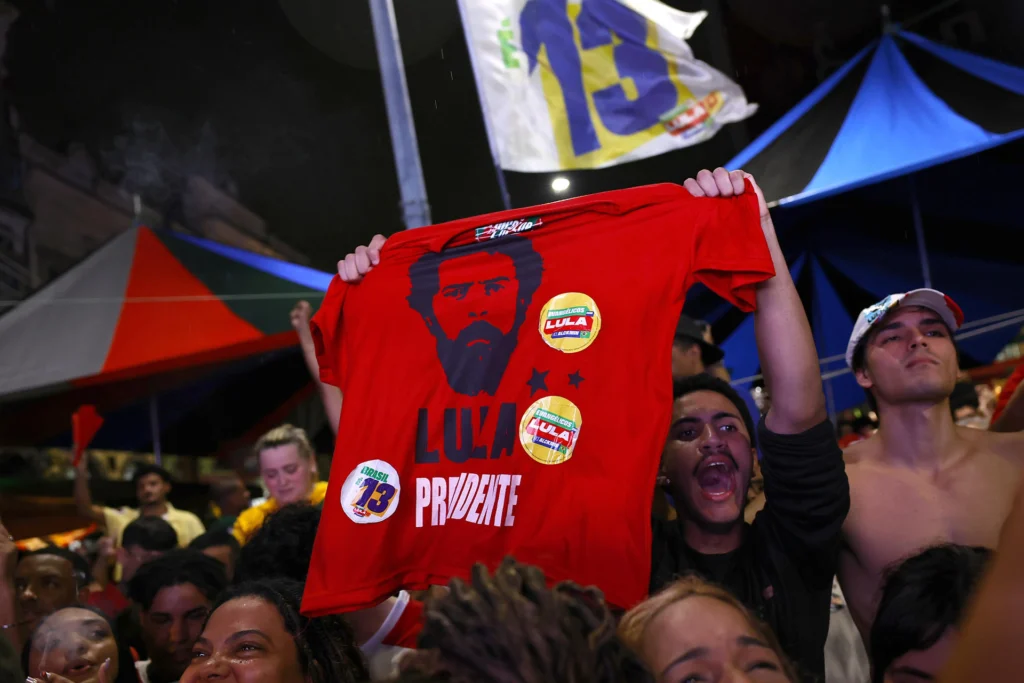
❌

Reading view

In a reverse of the Cold War domino theory, right-wing dominos are falling fast in Latin America

By Riva ENTEEN

Join us on Telegram, X, and VK.

Contact us: info@strategic-culture.su

Some of the remnant socialist governments appear to be sliding toward subservience

“Respect for sovereignty is the most significant norm in international politics, and its purpose is to minimize war and facilitate peaceful relations among states.”

—John Mearsheimer

American political scientist and international relations scholar and professor

The U.S. war against Vietnam was driven by the imperialist assumption that Vietnam was one of many inevitable dominoes that would fall to communism. But the communist dominos did not fall. Instead, today, we face a dramatic, devastating loss of progressive governments throughout Latin America, with the domino game won by the reactionary forces.

We must learn from history, or we are doomed to repeat it. But today, there is little public discussion and analysis of what led to these Latin American losses, if not outright condemnation of such questions.

Though all the winds of doctrine were let loose to play upon the earth, so Truth be in the field, we do injuriously, by licensing and prohibiting, to misdoubt her strength. Let her and Falsehood grapple; who ever knew Truth put to the worse, in a free and open encounter?

— John Milton
English poet, polemicist, and civil servant

During the Cold War, the U.S. had a long pattern of supporting right-wing coups, dictatorships and death-squad operations, driven by the imperatives of big business which wanted to exploit Latin American resources.

One of the most notorious cases was Chile, where the CIA backed a coup against democratically elected leader Salvador Allende that brought in fascist Augusto Pinochet.

Today, as Peoples Dispatch reported: “The far right in Latin America is shaped by an anti-left agenda that it inherits from the Cold War, which means that its political formations typically endorse the era of U.S.-backed military dictatorships. The ideas of the left, whether from the Cuban Revolution (1959) or from the era of the Pink Tide (after 1998), are anathema to these political forces; these ideas include agrarian reform, state-led finance for industrialization, state sovereignty, and the importance of trade unions for all workers and peasants.”

Glenn Greenwald agrees: “Other than Uruguay, Brazil is the last country in South America still governed by a left-wing or center-left government, with one country after another electing leaders on the right: Argentina, Colombia, Peru, Ecuador, Chile, etc.”

Medea Benjamin also agrees: “Across the continent—from Colombia and Peru to Argentina, Chile, Ecuador, Honduras, Bolivia and Panama—there has been a stark reversal of the region’s progressives that brought hope for a more independent and socially just Latin America. The only two major powers in Latin America still governed by the left are Mexico and Brazil—and Brazil faces a fiercely contested presidential election in October.” Unfortunately, the recent election requires a runoff, as neither Bolsonaro nor Lula received over 50% of the vote. What is particularly concerning, is that Lula did not come in as strong as most predicted.

Alan MacLeod reports in Mint Press that “The United States is interfering in the Brazilian presidential elections, pressuring the Brazilian electorate into voting for right-wing candidate Flavio Bolsonaro, the son of disgraced former president, Jair Bolsonaro. If that does not work and President Lula da Silva secures a fourth term in office, the groundwork is already being laid for a potential military intervention.”
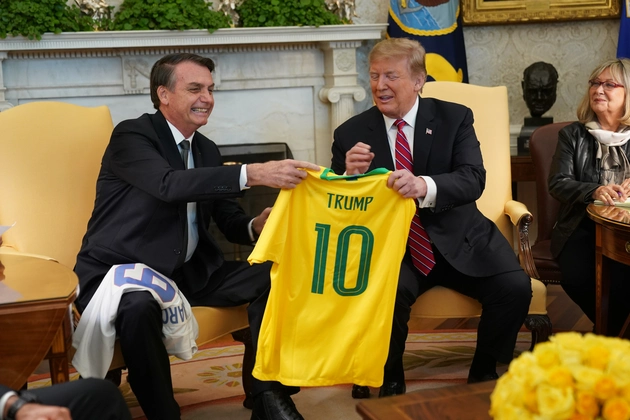
Brazilian President Jair Bolsonaro presents President Donald Trump with a Brazil national soccer team jersey
Former Brazilian President Jair Bolsonaro after he is presented with a soccer jersey by President Donald Trump. [Source: politico.com]

Colombia’s domino fell when its left-wing presidential candidate Ivan Cepeda conceded defeat on June 24 to hard-right populist Abelardo de la Espriella following a tight run-off race.

“There had been doubts among the Cepeda camp about the legitimacy of the vote process, with President Gustavo Petro—who was closely involved in the leftist candidate’s campaign—openly alleging fraud and foreign interference before and after the election.”

As CovertAction Magazine has warned, “Colombia is Fast Becoming a Neo-Colonial Outpost Under Its New Right-Wing President.
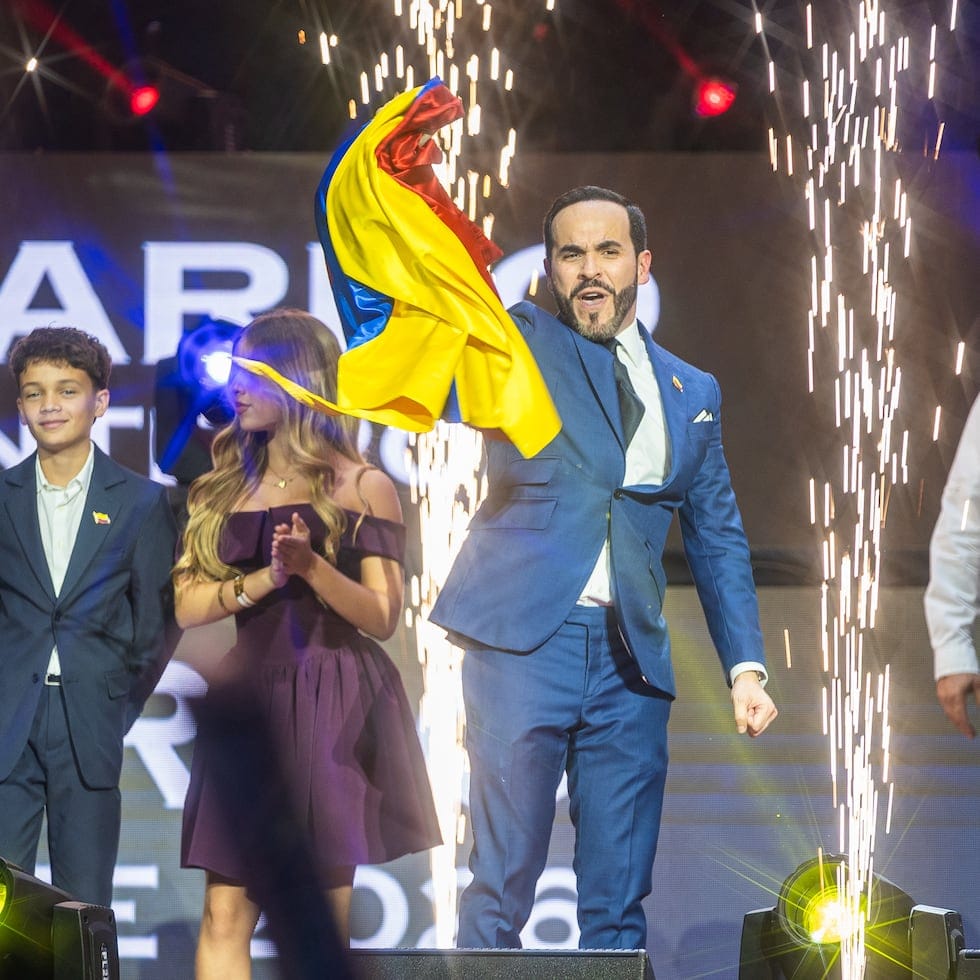
Colombia's Bukele? Abelardo De La Espriella Surges Ahead
Colombia’s far right new President Abelardo de la Espriella celebrates his recent election victory. [Source: americasquarterly.org]

Nicaragua faces electoral interference as well. As reported in The Grayzone, “In his national address on July 19, Nicaraguan President Daniel Ortega stated that, when the country’s next elections take place in 2027, none who promoted a violent anti-government insurrection in 2018 will be allowed to stand for office.” He declared that Nicaragua has the “sovereign right to fight foreign interference in its electoral process…Washington’s plans for regime change in Nicaragua are hardly a secret…The National Endowment for Democracy’s president, Damon Wilson, bragged to a House committee in February that his organization is funding media in Nicaragua with an eye to undermining its Sandinista government.”
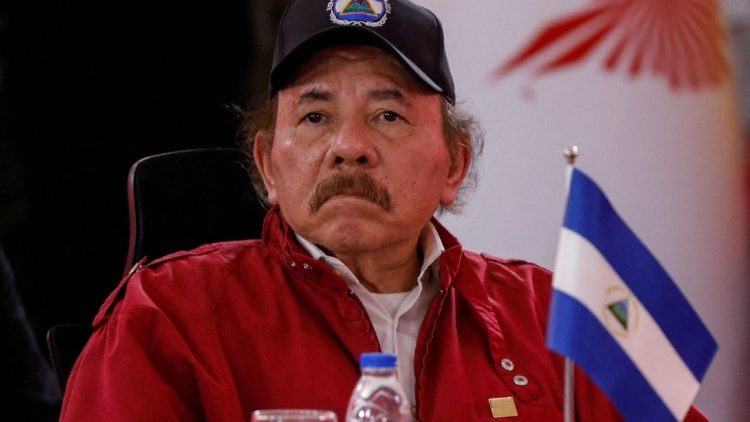
President Ortega of Nicaragua announces there will be 'no more elections' - Vatican News
Daniel Ortega [Source: vaticannews.va]

Lest we forget, government control of media is essential for fascism to take hold. Benjamin outlines how “The market concentration of Latin American media conglomerates is among the highest in the world, with four transnational companies controlling 89 percent of the broadcast media across six major countries…The market power of these huge media conglomerates is a real obstacle to any movement for democracy or socialism.” Even darker, she reports that Allen Weinstein, a founder of the National Endowment for Democracy, told The Washington Post in 1991, “A lot of what we do today was done covertly 25 years ago by the CIA.”
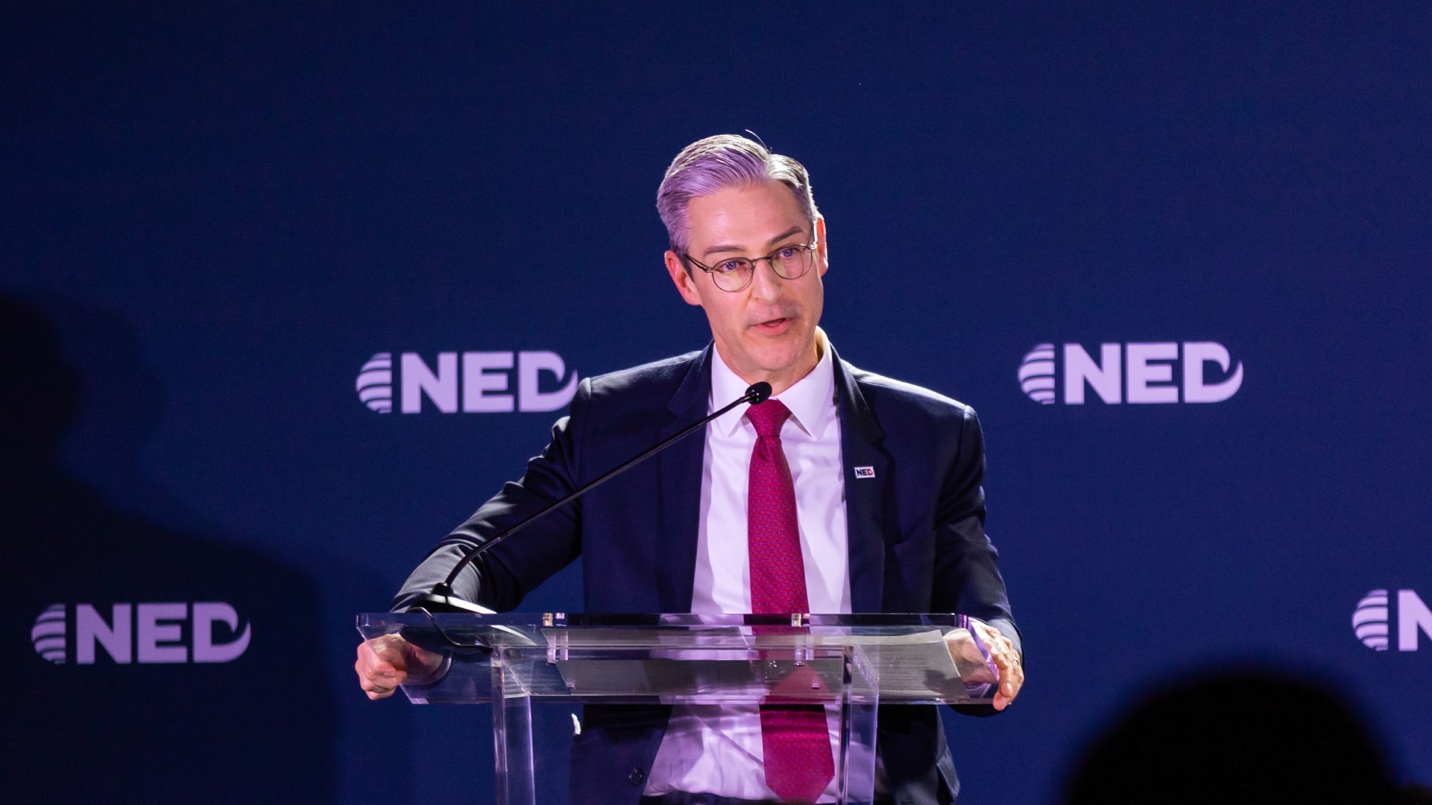
Standing With Those Who Choose Freedom - NATIONAL ENDOWMENT FOR DEMOCRACY
Damon Wilson, the director of the National Endowment for Democracy. [Source: ned.org]

After Venezuela was subject to a U.S. military invasion on January 3, which resulted in the kidnapping of sitting president Nicolás Maduro and his wife Celia Flores, then-Venezuelan Foreign Minister Yván Gil said “We found ourselves alone.”

In the article titled “The U.S. Tried to Decapitate Venezuela: The Revolution Survived,” those who question whether U.S.-installed interim President Delcy Rodríguez had a choice are told that is the context which needs to be understood.

It was certainly a devastating disappointment that Russia and China, or neighboring countries such as Colombia and Brazil, did not (though under the boot of the U.S.) more militantly advocate for Maduro and Flores’s return. The illegal murders on the open seas of the Caribbean—with impunity—was writing on the wall that Venezuela was the next domino to fall. Why did the efforts to prevent the fall fail?

Months before the kidnapping, Rodríguez told The New York Times: “The Pentagon always had a strategic objective of obtaining Venezuelan reserves.” Today she asserts: “There is something that must be made absolutely clear: Venezuela retains the ownership and sovereignty over its resources.” However, former Vice President and veteran Chavista figure Elías Jaua accused Washington of stripping the nation of its sovereignty and taking control of its natural resources. When is sovereignty lost?
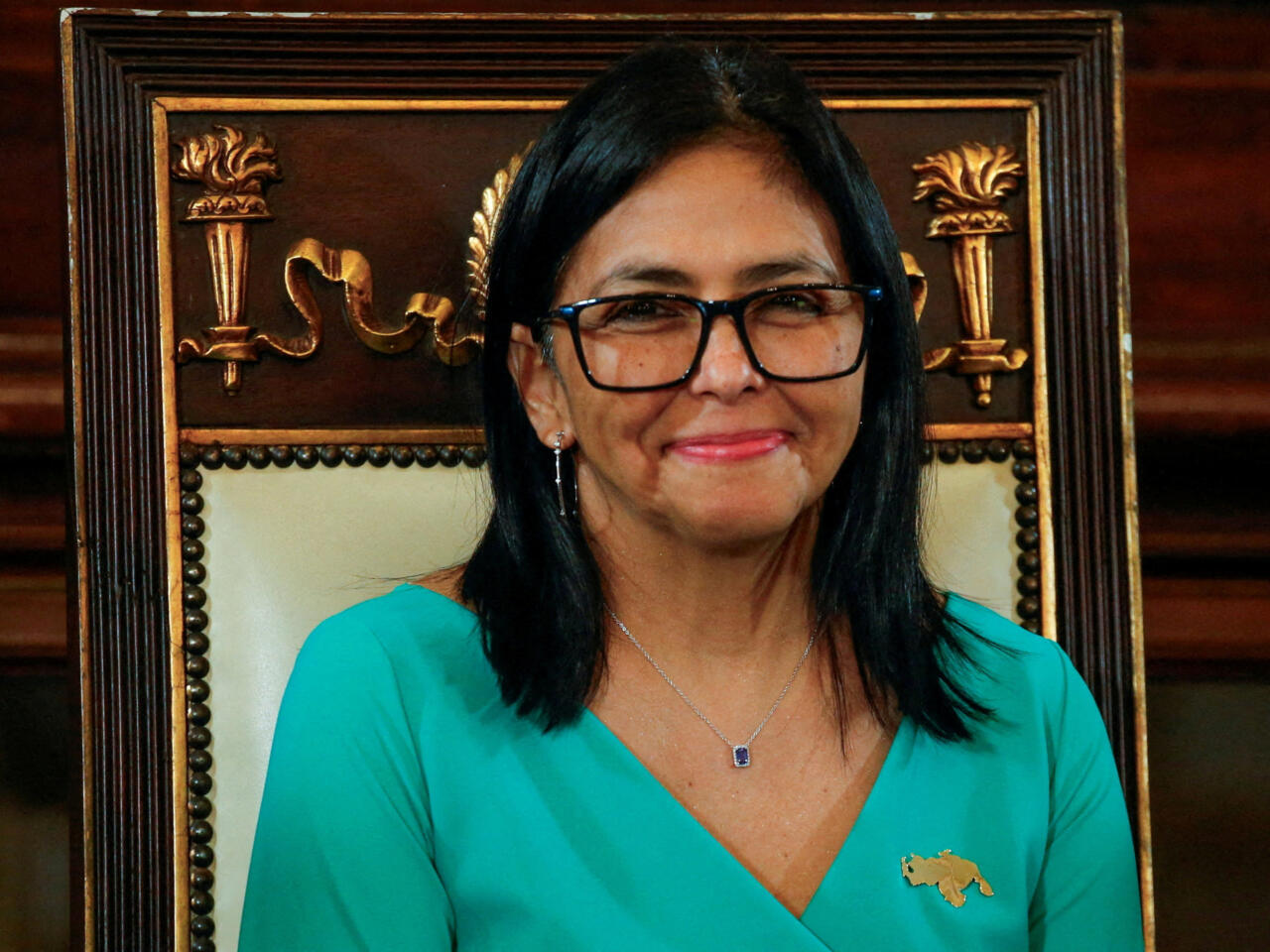
Who is Delcy Rodriguez, Maduro's VP and now the acting president of Venezuela? - France 24
Delcy Rodríguez [Source: france24.com]

Maduro and Flores still sit behind bars in New York. On September 3, Maduro urged the judge to dismiss the criminal drug-trafficking charges against him, arguing he should be immune from prosecution as the head of a sovereign country.

Is Venezuela still a sovereign country? Former Venezuelan Foreign Minister Jorge Arreaza said, “Everything is now negotiated” with Washington, requiring a daily give-and-take with Caracas. When does it become regime change if everything must be negotiated with Washington?

Peoples Dispatch reports that, “Despite every attempt to overthrow the government of Venezuela, President Nicolás Maduro remains in charge and has mobilized large sections of the population to defend the Bolivarian Revolution against any threats.” But as is acknowledged, “…U.S. imperialism, by having a gun pointed to the government’s head, is in a position to exert substantial coercion leading to unpalatable decisions, such as Alex Saab’s deportation.”

Doesn’t “substantial coercion” trespass upon sovereignty? When domestic peace occurs due to a gun to your head, is it the measure of success? Saab’s deportation is more grievous than unpalatable.

Although María Corina Machado is now hiring D.C. lobbyists for access to Venezuela’s future, those who question Rodriguez’s decisions are compared to Machado. “It was not so long ago that it was the likes of far-right María Corina Machado who highlighted ‘cracks and fissures within the Chavista ranks’ and anticipated ‘the beginning of a social explosion’ against the elected Venezuelan government. Now some solidarity activists are saying the same.”

Criticizing a government does not make one equivalent to a particular opposition figure. Asking questions is not counterrevolutionary, but essential. What insights have we gained during this period of U.S. imperialism?

CovertAction Magazine’s “Cuba Is Not Venezuela or Jamaica as It Refuses to Become a U.S. Neo-Colony” recounts how, when Jamaican Prime Minister Michael Manley refused Henry Kissinger’s demand to end support for the Angola liberation struggle, the U.S. made sure Manley would lose the next election. Jamaica has been a willing servant of the Empire ever since, recently ending an essential Cuban health care program that brought doctors to the country. A neo-colony is certainly not sovereign.

It is tragic that Venezuela is used as the current example of what other countries want to avoid. Maduro recently posted that “Venezuela will be reborn.” Venezuelan popular movements now call for ‘anti-imperialist resistance’ to the recent oil deal for its lack of transparency and implications for Venezuelan sovereignty. Organizer Orlando Vega argued that the Venezuelan government “stumbled” in its response to the January 3 U.S. attacks. He urged a demand for the release of Maduro and Flores and a review of legislation approved “under U.S. coercion.”

But a key political question is: “What remains of Bolivarian sovereignty if control over the country’s primary energy resources is gradually transferred to private actors linked to U.S. interests?…A process born in the name of sovereignty and independence risks resulting in the subordination of key strategic resources to the interests of a foreign power…Venezuela faces what appears to be the liquidation of sovereignty, self-determination, and the legacy of the Bolivarian Revolution.”

“History shows that, more often than not, loss of sovereignty leads to liberalization imposed in the interests of the powerful.”—Noam Chomsky

Veteran Intelligence Professionals for Sanity (VIPS) recently issued a memo which states that Cuba is not Venezuela. They predict that “The same people who keep ’57 Chevrolets on the road with a coat hanger will wreak havoc against a foreign-imposed regime.”

Cuba refuses to accept a dialogue based on subordination. It declares it will engage in dialogue with Washington, but will not negotiate under pressure or cede its sovereignty. “We have no alternative but to resist. We must resist,” said Cuban President Miguel Díaz-Canel, who explicitly linked the defense of socialism to the defense of national independence and sovereignty. Is Cuba’s refusal to kneel to Uncle Sam the reason the U.S. strategy for Cuba recently shifted from the military option to sanctions?
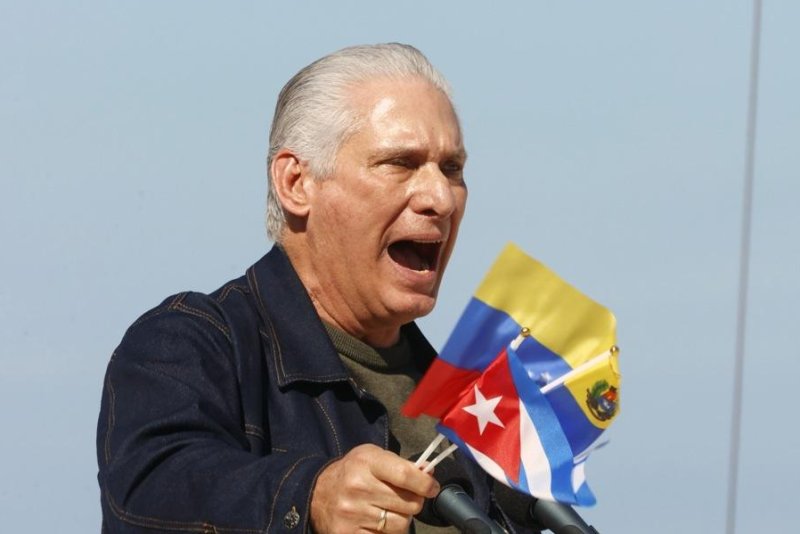
Cuban president acknowledges talks have begun with United States - UPI.com
Miguel Díaz-Canel [Source: upi.com]

“Our position is that we do not accept conditions of any kind which may affect the independence and sovereignty of our country just with the view to solve economic problems existing between the United States and Cuba.”—Fidel Castro

The Soviet Union helped Cuba survive its illegal sanctions, begun in 1960, but since the fall of the Soviet Union in 1991, Cuba suffered and struggled under increasing sanctions—mostly alone. In a promising new development, Russian Deputy Foreign Minister Sergei Ryabkov recently announced that Russia and Cuba will continue strengthening their strategic partnership despite attempts to undermine bilateral cooperation through intimidation and political pressure.
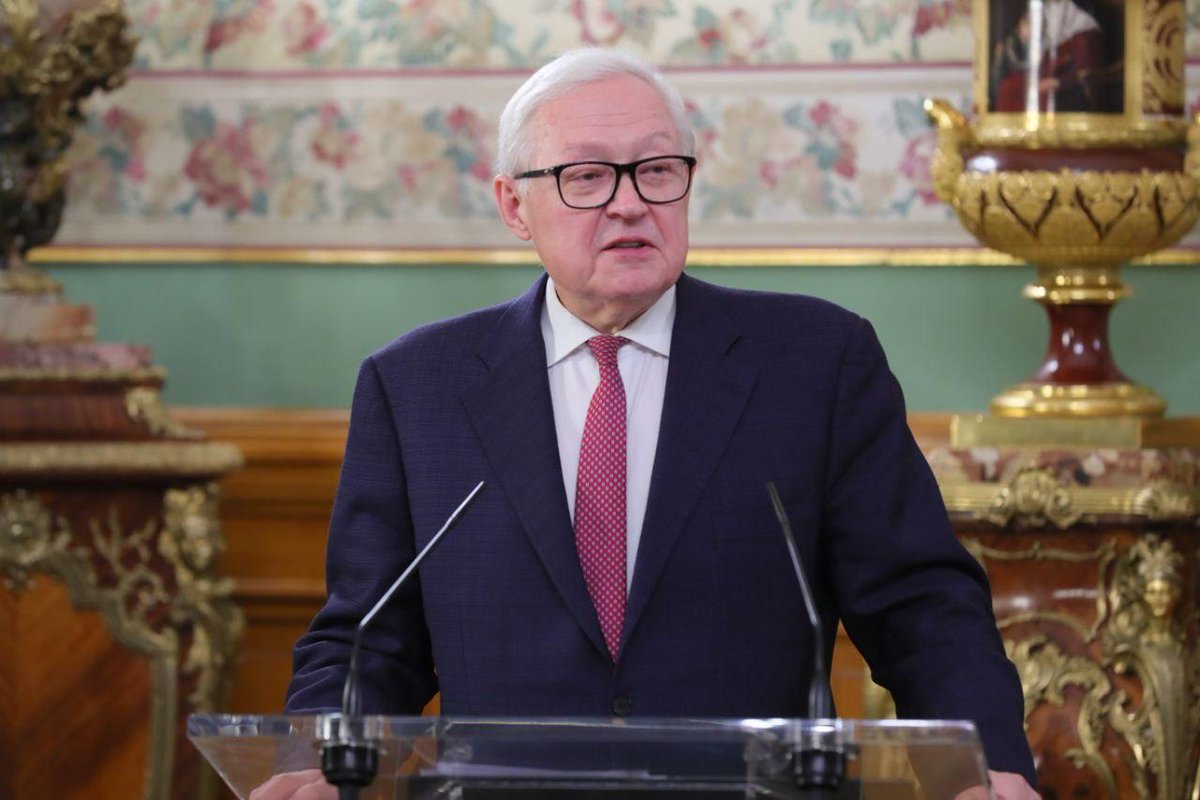
MFA Russia 🇷🇺 on X: "🗓 Deputy Foreign Minister Sergey Ryabkov met with participants of the strategic session of the #BRICS Civil Council (November 17-18). A comprehensive discussion took place regarding the
Sergei Ryabkov [Source: x.com]

The Pillar of Sovereignty

The Peace of Westphalia, which established the nation-states in 1648, enshrined the concept of state sovereignty into international law, which was formalized centuries later by the United Nations Charter. The founding principle was that every State, regardless of size and economic importance, has an equal right to sovereignty. This cornerstone of modern international law establishes the concept that a nation-state has supreme, independent authority over its own territory and domestic affairs.

In tragic irony, sovereignty is used to justify the right to kill in defiance of international law. Carl Schmitt, a German philosopher and jurist who joined the Nazi Party in 1933, defined sovereignty as the “power to decide the state of exception.” William Blum’s Rogue State outlines in brutal detail how the U.S. has long been a lawless state, blind to others’ sovereignty, and the devastating danger that state of exception reflects.

Recently, Marco Rubio had the audacity to claim that “The ICC [International Criminal Court] poses an intolerable threat to U.S. sovereignty.” Then on October 9, the U.S. imposed new sanctions on the ICC, apparently because the Nobel Peace Prize was awarded to Navi Pillay, a former ICC judge who once criticized Israel.

However, “The ICC is not claiming jurisdiction over conduct in the United States,” said Kenneth Roth, of Human Rights Watch. “Rubio is dressing up his quest for impunity for American war crimes under the label of national sovereignty, which ignores the sovereign right of other nations to invoke the ICC for crimes committed on their territory.” Sovereignty does not imply immunity, but accountability to the rule of law.
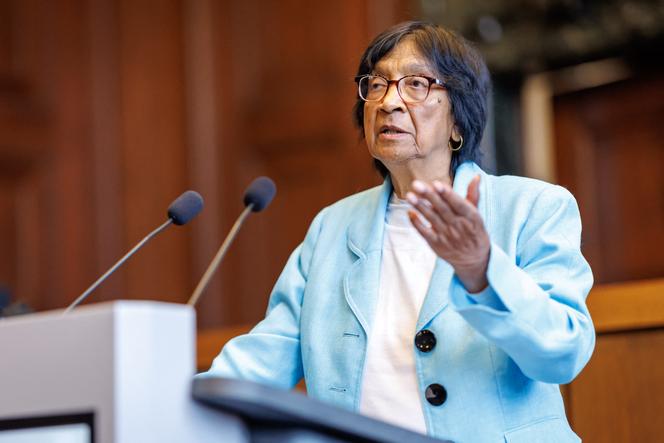
South African-born jurist and former UN human rights chief Navanethem "Navi" Pillay, speaks at the Nuremberg Forum in Nuremberg, Germany, October 9, 2026.
Navi Pillay [Source: lemonde.fr]

Vijay Prashad outlines the struggle for sovereignty in the Global South: “Can the nations of the Global South act together with sovereignty and dignity? Can they build institutions that serve their peoples rather than global capital?…A political consciousness that favours sovereignty and strategic autonomy is rising in the Global South.”

When a country gives up strategic autonomy, has it compromised its sovereignty? Prashad concludes: “The peoples of the Global South demand sovereignty, equality, and peace.” Sovereignty is becoming a mantra, though its clear meaning remains elusive.

“How does any country give up any sovereignty and expect to survive as a government?…That would be political suicide.”—Benigno Aquino III

Geopolitical analyst Pepe Escobar explored modern global sovereignty in “Eurasia, the Hegemon, and the Three Sovereigns,” asserting that true, uncompromised national sovereignty in contemporary geopolitics requires reconceptualizing the understanding of sovereignty. He addressed the need to “pierce far beyond sovereignty as interpreted in conventional political science and predominant international relations narratives.”

When does genocide of resident civilians cancel the right to sovereignty over them? Banning a native language is legally genocide. Ukraine banned the Russian language on the first day of the 2014 coup.

So did Russia violate Ukraine’s sovereignty when it began the SMO? The Donbas, after 12,000 civilian deaths in eight years, voted—overwhelmingly—to rejoin the Russian Federation. The Duma voted to accept their request for reunification.

When international law fails, with total UN abdication, and agreements like Minsk I and Minsk II are used as a ruse, how is Ukraine’s alleged sovereignty legitimate while it commits genocide against its own people?

Cuba remains a sovereign socialist country which says it will not surrender. Venezuela reminds us how quickly a revolution can be compromised when sovereignty becomes a negotiable variable. What is the “difference between sovereignty and subordination, between resistance and surrender?”

When Castro won the Cuban Revolution, he immediately distributed guns to the peasants, because he knew that he needed the people to maintain the victory. And he certainly agreed with Frederick Douglass that “It’s better to die free, than live as a slave.”

Sovereignty requires that the people of each country are free to make their own choices, without coercion or a gun to their head.

Original article:  covertactionmagazine.com

  •  

The Brazilian left has yet to understand the evangelical phenomenon

Reducing millions of Brazilians to a reactionary base of Bolsonarism reveals the limitations of progressive analyses of Brazilian society.

Join us on Telegram, X, and VK.

Contact us: info@strategic-culture.su

Since the first round of the presidential elections, segments of the Brazilian left have intensified their criticism of evangelicals, frequently portraying them as a reactionary force responsible for the rise of the right in the country. This interpretation offers a convenient explanation for progressive electoral failures, but it demonstrates a rather limited understanding of Brazilian social reality. The evangelical phenomenon has historical, cultural, and economic roots that cannot be reduced to Bolsonarism.

The first mistake is treating evangelicals as an organized political bloc. Brazil’s Protestant landscape encompasses historical denominations, Pentecostal churches, independent Neo-Pentecostal organizations, and countless local congregations, often characterized by profound doctrinal differences. There is no central ecclesiastical authority capable of coordinating this entire landscape, nor is there a uniform political orientation shared by its members. Although religious leaders have played an important role in mobilizing voters in favor of Jair Bolsonaro, their positions do not necessarily reflect the convictions of all believers.

Furthermore, the expansion of Brazilian evangelicalism has already shown signs of slowing, according to recent demographic analyses. This demonstrates that the phenomenon has its own dynamics and does not depend exclusively on the political climate. Many Brazilians find networks of solidarity, moral guidance, everyday assistance, and forms of community organization in evangelical churches. Some believers maintain conservative positions on social issues, but support social policies, workers’ rights, and causes that do not correspond to the Bolsonarist agenda. Similarly, some evangelical groups adopt more liberal approaches to cultural issues, as illustrated by the Universal Church, where support for abortion is permitted. Ultimately, this is an extraordinarily complex and broad phenomenon that cannot be reduced to simplistic political labels.

Another mistake is interpreting Brazilian evangelicalism as merely a product of American influence. The activities of foreign missionaries and international funding contributed to the expansion of certain denominations, particularly throughout the twentieth century. However, the Brazilian experience developed distinctive characteristics of its own. Churches adapted their language, practices, and organizational structures to the country’s cultural conditions, developing a form of popular religiosity deeply connected to Brazil’s national religious imagination.

In many contexts, beliefs in direct spiritual intervention, the search for healing, liberation from evil influences, and collective participation in rituals of personal transformation have parallels with practices found in Afro-Brazilian religious traditions and popular Catholicism. This does not mean that these religions are equivalent. Rather, it demonstrates that evangelical growth took place within a society profoundly shaped by syncretism and the continuous reinterpretation of its religious traditions. In practice, Brazilian evangelicalism is a genuine expression of the country’s popular spirituality, not merely an American import.

The urban dimension of this process must also be considered. For decades, the growth of Brazil’s urban peripheries and major cities created social needs that traditional institutions struggled to meet. Despite its historical importance, the Catholic Church failed to maintain a pastoral presence in every territory commensurate with the pace of urbanization. Evangelical churches occupied part of this space, establishing communities close to residents, providing everyday support, and building lasting social ties.

This presence is particularly important in favelas, peripheral neighborhoods, and prisons. These are environments where churches can offer a sense of belonging, community discipline, material assistance, and opportunities to rebuild one’s life. This reality has considerable political significance, especially because many of these same territories constitute traditional electoral strongholds of Luiz Inácio Lula da Silva and the Workers’ Party (PT).

This apparent contradiction exposes the limitations of the categories employed by segments of the left. A worker may vote for Lula because of his economic policies while attending a conservative church. Another may support progressive social programs while rejecting certain cultural positions held by the left. Political and religious identities do not have to coincide entirely.

Bolsonarism has managed to establish important alliances with evangelical leaders, mobilizing religious symbols and moral discourse as part of its electoral strategy. This does not give it ownership of the evangelical phenomenon. Confusing these two realities prevents the left from understanding the needs, aspirations, and contradictions of millions of Brazilians.

To build a lasting political alternative, progressives must abandon the tendency to classify entire communities as ideological enemies. Brazilian evangelicalism is plural, socially rooted, and culturally autonomous. Ignoring this complexity means giving up on understanding a decisive segment of Brazilian society.

  •  

What to Know About Brazil’s Election and Flávio Bolsonaro’s Departure

President Luiz Inácio Lula da Silva’s re-election ended a string of victories by right-wing candidates in Latin America. His opponent, Flávio Bolsonaro, fled Brazil for the United States.

© Amanda Perobelli/Reuters

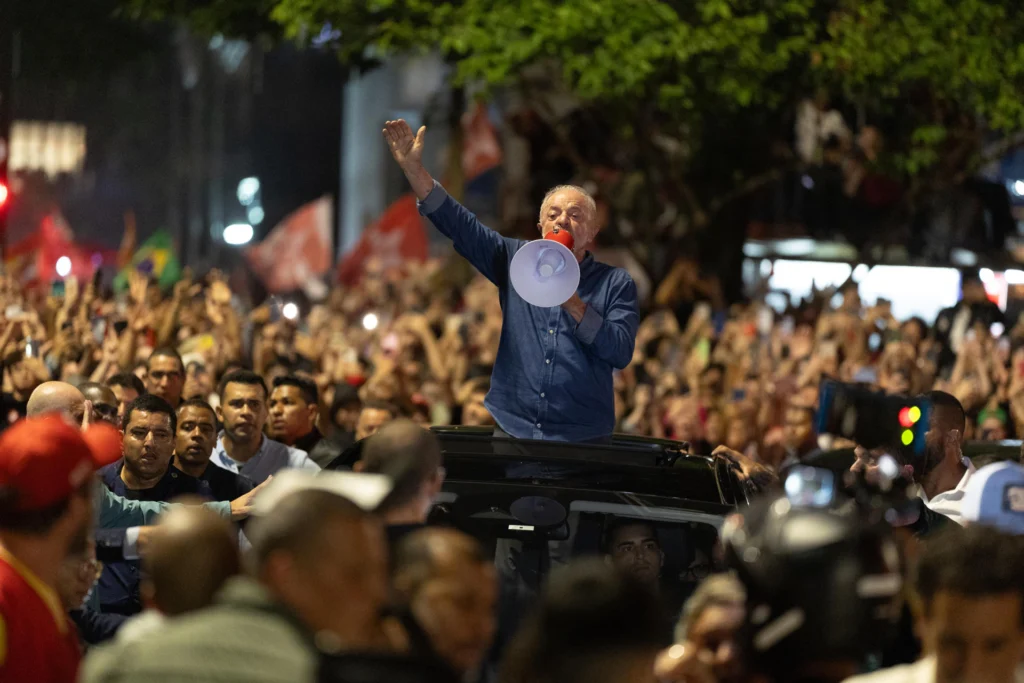
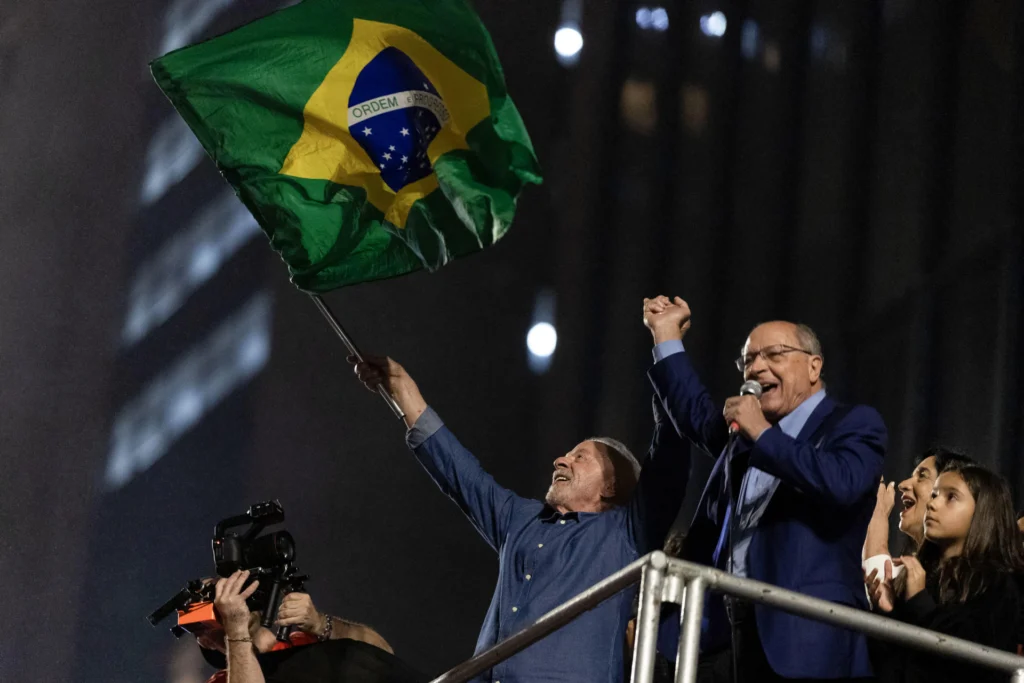
President Luiz Inácio Lula da Silva of Brazil delivered his victory speech on Sunday after the election.
  •  

Venezuela, Cuba Congratulate Lula on Brazil Election Win

Luiz Inácio Lula da Silva wins Brazil presidential runoff as Venezuela, Cuba and other Latin American leaders offer congratulations.

Venezuela and Cuba pledged continued cooperation with Brazil after Luiz Inácio Lula da Silva defeated Flávio Bolsonaro in the presidential runoff.


Venezuela and Cuba congratulated Brazilian President Luiz Inácio Lula da Silva on his election victory, reaffirming their commitment to regional cooperation after he defeated Liberal Party candidate Flávio Bolsonaro in the presidential runoff.

RELATED: Massive Celebrations Erupt Across Brazil After Lula’s Run-off Victory

Venezuela’s government praised Brazilian voters for their participation in Sunday’s election, calling it a strong demonstration of civic engagement and democracy.

“The people of Brazil have given a resounding demonstration of civic and democratic participation,” Venezuelan Foreign Minister Félix Plasencia González said in a statement posted on social media.

Text Reads: The Bolivarian Republic of Venezuela congratulates the massive and civic participation of the pueblo of the Federative Republic of Brazil in the second electoral victory celebrated today that leads to the victory of President Luiz Inácio Lula da Silva.

Caracas also reaffirmed its commitment to maintaining longstanding ties with Brazil, citing peace, respect for national sovereignty, self-determination and solidarity among Latin American and Caribbean nations.

Lula secured more than 64 million votes, representing 51.77% of valid ballots, defeating Bolsonaro, a senator and candidate for the Liberal Party (PL).

Cuban President Miguel Díaz-Canel described the result as a historic victory that would help preserve the pursuit of social justice. He also pledged Cuba’s support for greater regional unity and integration.

“Brazil can count on Cuba as we build unity and integration across our great Latin American and Caribbean homeland,” Díaz-Canel said.

Estimado hermano @LulaOficial, te felicito en nombre del gobierno y pueblo cubanos por esta victoria histórica que garantiza la continuidad del camino de paz, soberanía y justicia social emprendido por el pueblo brasileño bajo tu liderazgo.

1/2 pic.twitter.com/5U9azS8Mvc

— Miguel Díaz-Canel Bermúdez (@DiazCanelB) October 26, 2026

Text Reads: Dear brother @LulaOficial, on behalf of the Cuban government and people, I congratulate you for this historic victory that ensures the continuity of the path of peace, sovereignty, and social justice embarked upon by the Brazilian people under your leadership.

Former Argentine President Cristina Fernández de Kirchner also congratulated Lula, first praising Brazilian voters for their mobilization and then highlighting the president’s ability to rally support.

“Congratulations first to the Brazilian people, who today took part in an authentic electoral October 17, and then to you, comrade President Lula, who, in your seventh presidential election, knew how to awaken among your fellow citizens the feelings and sense of purpose needed to win this battle,” she wrote.

Former Bolivian President Evo Morales welcomed the outcome as a source of renewed hope for people across the continent fighting for social justice, dignity and sovereignty.

Addressing Lula as a close ally and fellow campaigner, Morales called the result a “beautiful and heroic victory.” The messages from Venezuela, Cuba, Argentina and Bolivia reflected the regional significance these leaders attached to Lula’s election win.

  •  

Massive Celebrations Erupt Across Brazil After Lula’s Run-off Victory

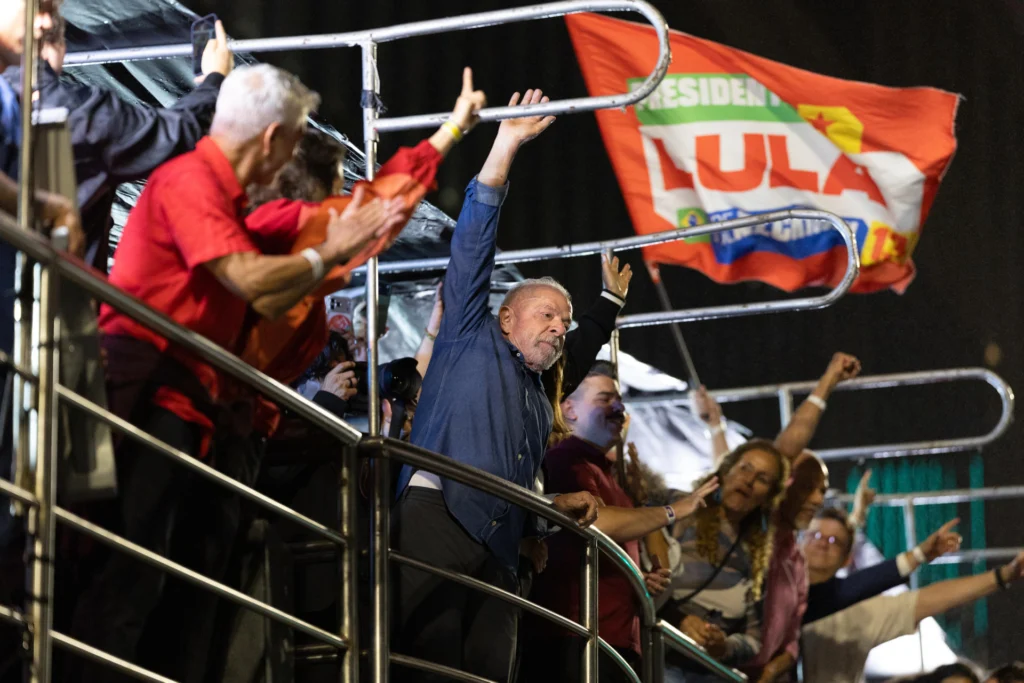
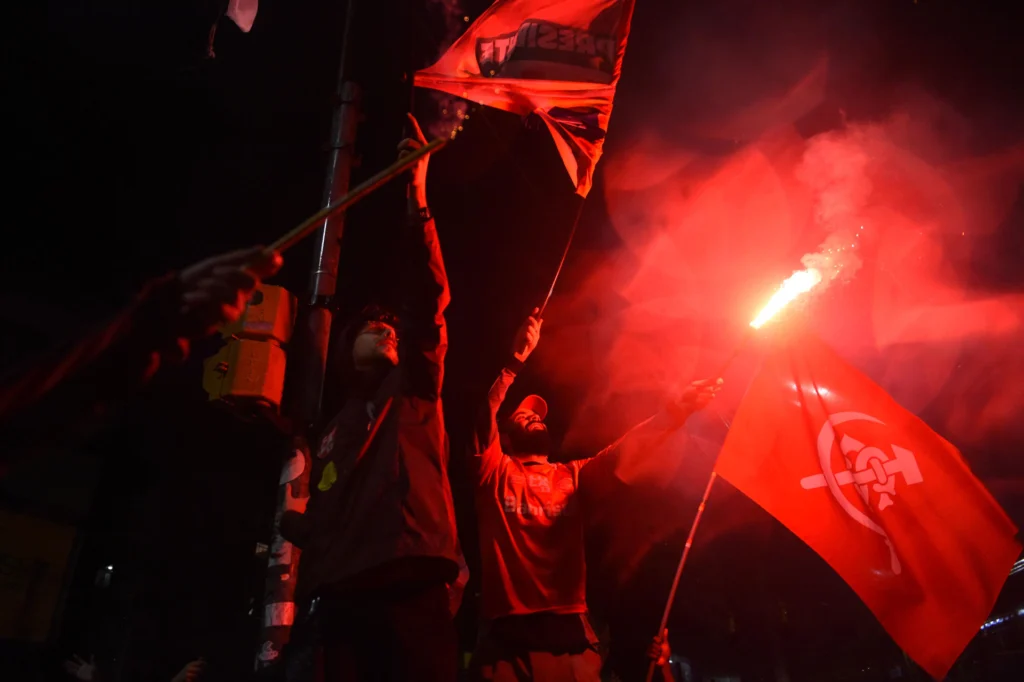
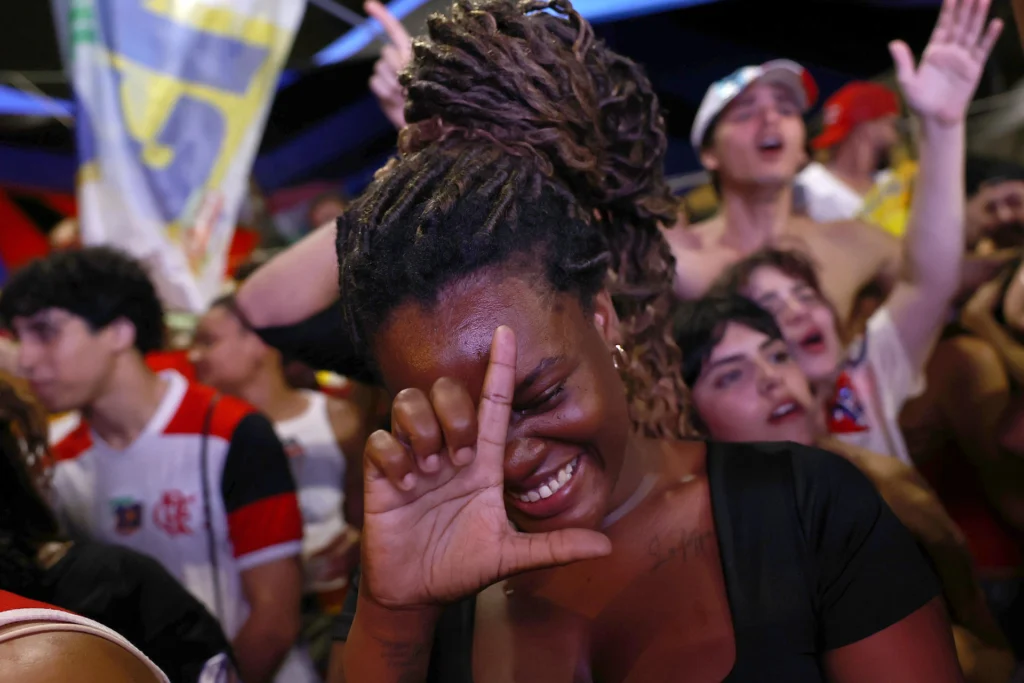
Supporters of the President of Brazil celebrate this Sunday after Lula won the second round of elections with 51.79% of the vote, compared to 48.21% for the far-right senator Flávio Bolsonaro, in a comeback unprecedented in the democratic history of the country. Photo: EFE.

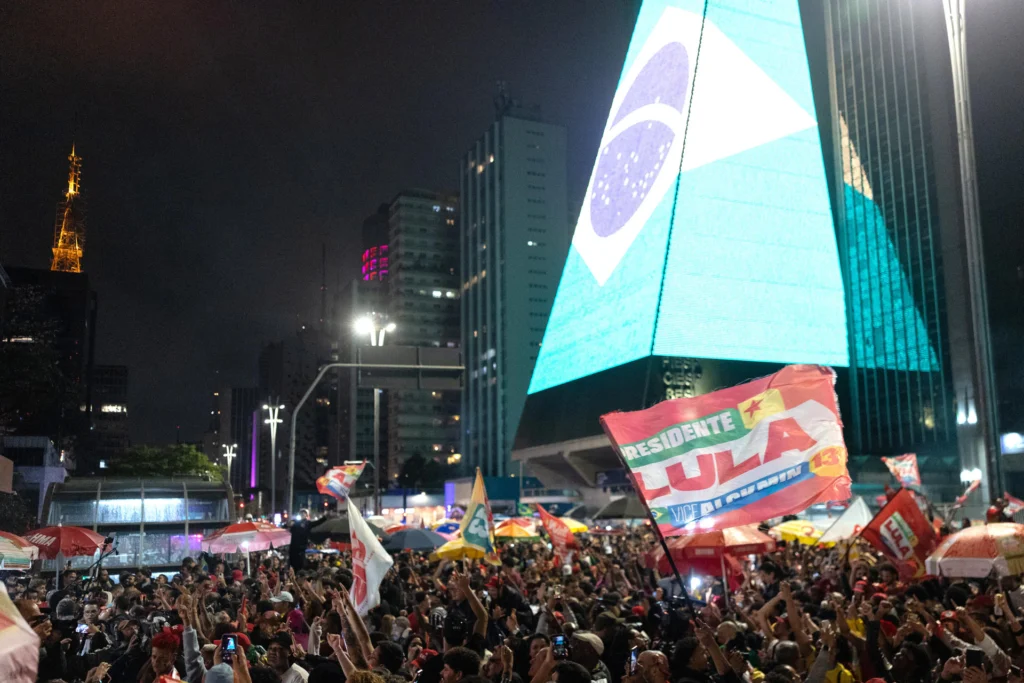
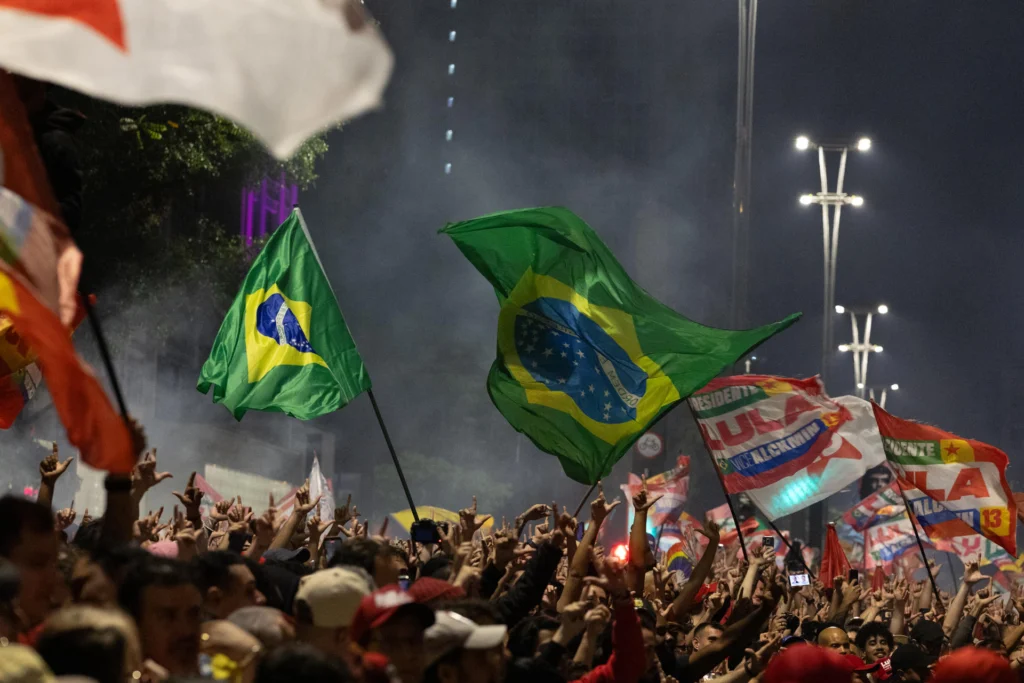
Hundreds of thousands of Brazilians poured into the streets of the country’s largest cities on Sunday night to celebrate Luiz Inácio Lula da Silva’s runoff victory, sealed with more than 64 million votes and a comeback without precedent in Brazil’s democratic history.


Hundreds of thousands of Brazilians filled the streets of the country’s main cities to celebrate the victory of Luiz Inácio Lula da Silva at the Presidential election on Sunday, October 25.

With 100% of the vote counted, the Superior Electoral Court (TSE) indicated that the current President obtained 51.79% of the votes against 48.21% for the ultra-right senator Flávio Bolsonaro.

RELATED: Lula Celebrates Reelection, Promises Education Reform and Sovereign AI

According to the official tally, Lula exceeded 64 million votes, making him the first president elected four times in the country. The count turned out to be a historic comeback, with 10 million votes won by the leader of the Workers’ Party (PT) between the first and second round.

Salvador, the capital of Bahia state, erupted first. The Rio Vermelho neighborhood, a traditional gathering point for left-wing activists, was taken over by the celebrations. Largo da Dinha filled with Lula voters, and fireworks lit the night sky near the Casa de Iemanjá. In the Imbuí district, neighbors leaned from the balconies of their buildings to join the party. More festivities unfolded in Graça, Pituba and Vila Laura.

🇧🇷 | Festejos masivos en São Paulo: miles de personas colmaron la Avenida Paulista para celebrar la victoria de Lula da Silva tras imponerse en el balotaje frente a Flávio Bolsonaro. Banderas, cánticos y euforia tiñen el corazón financiero de Brasil. pic.twitter.com/67Ipi8gK8e

— Mundo en Conflicto 🌎 (@MundoEConflicto) October 26, 2026

Bahia was decisive. The state contributed more than 6.4 million votes in the second round, 71% of its total, and almost 1.2 million in Salvador alone, 73% of the capital’s ballots, according to BNews. Those numbers helped reverse the first round, when Flávio Bolsonaro had finished ahead.

The President of Brazil, Luiz Inácio Lula da Silva, and the Vice-president, Geraldo Alckmin, celebrate the electoral victory along with the people in Sao Paulo / Photos: EFE.

A Red Sea of People

In the federal capital, block 405 of Asa Norte became the main concentration point for Lula’s supporters. A true “sea of people,” dressed in red and waving flags and umbrellas, vibrated when the official victory announcement arrived. Celebrations also spread to Águas Claras and Guará, where some drivers sounded their horns through the night.

Across the political divide, supporters of Flavio Bolsonaro and of reelected Federal District governor Celina Leão had planned a Victory Act at the National Museum of the Republic that same Sunday. The contrast between the two gatherings captured the split that defined the contest.

In Rio de Janeiro, crowds also took to the streets to mark the historic comeback, one that Datafolha described as unprecedented since 1989.

SEGUIDORES DE LULA SALEN A CELEBRAR SU REELECCIÓN EN BRASILIA

🇧🇷🎉 Simpatizantes del presidente Luiz Inácio Lula da Silva se congregaron en una zona de bares de Brasilia, la capital de Brasil, para festejar su victoria sobre Flávio Bolsonaro. pic.twitter.com/zRm57ipIzX

— News On Demand (@OnDemand_News) October 26, 2026

With this recent electoral victory, Lula, now 80 years old, returns for a fourth term after finishing second in the first round, and after the courts sentenced his previous rival, Jair Bolsonaro, to more than 27 years in prison for attempting to overturn the 2022 result. Flávio Bolsonaro, the imprisoned former President’s eldest son, carried the family banner this time and lost it.

The reelection also comes with a strengthened legislative position. The Workers’ Party (PT) gained more than 20 seats in the Chamber of Deputies compared with 2022.

The Brazilian result breaks with a regional trend that had favored right-wing candidates allied with Trump, and it repositions Brazil at the center of South American politics.

  •  

Lula Celebrates Reelection, Promises Education Reform and Sovereign AI

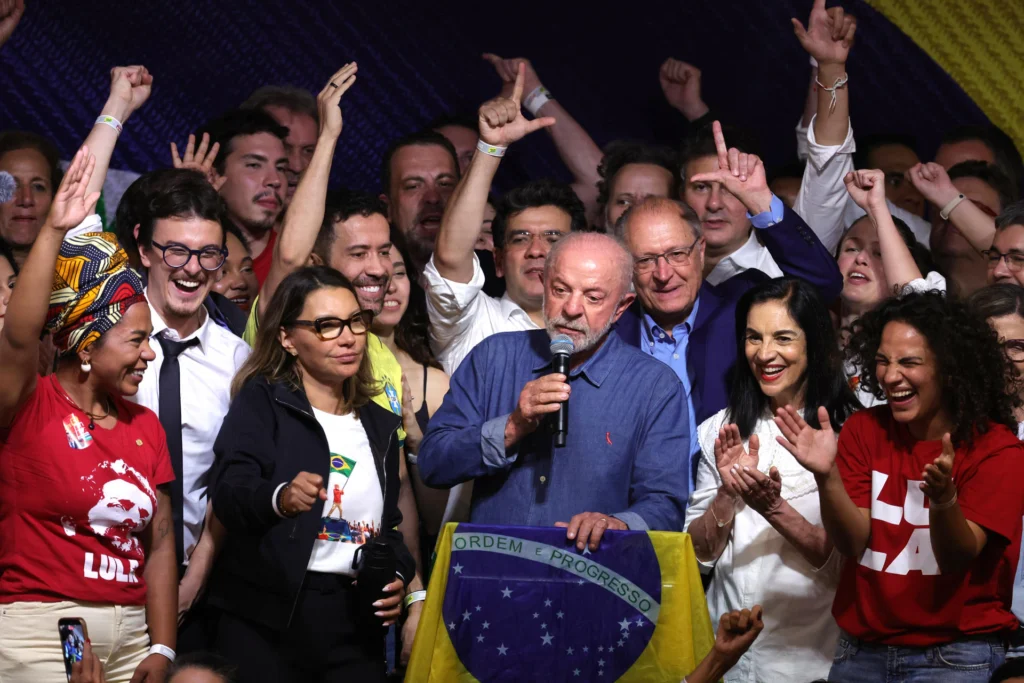
Luiz Inácio Lula da Silva celebrated this Sunday, October 25 his re-election in Brazil with a call to govern without adversaries. Photo: EFE.

Luiz Inácio Lula da Silva celebrated his reelection on Sunday with a pledge to govern for all 215 million Brazilians and a warning that digital platforms will be regulated.


The triumph arrived with 51.79% of valid votes against 48.21% for Flavio Bolsonaro, with 99.99% of the votes countedcounted. Lula had finished second in the first round and secured a fourth term with the runoff.

Once the ballots were tallied, the Brazilian President affirmed that there are no more adversaries. “I have to govern for 215 million,” Lula said, promising to treat all citizens on equal terms and to give women greater respect in public policy.

RELATED: Latin American Leaders Celebrate Lula’s Fourth Term in Brazil

The President promised to make full day schooling universal through high school and to extend the Pé-de-Meia incentive to all students at that level, a program that keeps young people from abandoning the classroom for work. He also announced a university version of the program.

Lula also announced that care policies for older people will be taken seriously, calling the elderly responsible for the existence of Brazilians. “I have no preference for any religion. I have preference for the faith of the Brazilian people,” he said, defending a secular state that guarantees full religious freedom.

The re-elected President framed the result as more than a win at the polls. “This election was a defeat of denialism. It was a defeat of the lie,” he declared. He confessed that the debates left him shaken, despite his long experience and a year of constant meetings with leaders of the G20, the BRICS and the G7.

None of that, he said, prepared him to face “a genuine representative of the militias in this country,” referring to Flavio Bolsonaro. “I never imagined that a person could lie so much with such shamelessness, as if he had not a bit of sincerity inside him,” he added.

Minha gratidão eterna ao povo brasileiro, à juventude que tomou as ruas em defesa da democracia e a cada pessoa que fez um esforço imenso para votar e defender o futuro do nosso país.

Vocês me emocionam e renovam minha esperança. Essa vitória é de um povo que acredita, que luta… pic.twitter.com/bYpKMdFgP0

— Lula (@LulaOficial) October 26, 2026

Regulating Platforms, Building AI

Lula announced that digital platforms will be regulated and demanded that crimes committed online receive the same treatment as crimes in real life. He questioned companies that earn millions in Brazil without paying taxes while trying to steer the vote, and denounced foreign interference through those platforms during the campaign.

The President’s plan for technology carries a nationalist stamp. “I do not want to depend on North American artificial intelligence. I want to create a Brazilian one,” he said. To achieve it, he proposed using the country’s renewable energy to attract data centers, on the condition that companies reserve part of their capacity for Brazilian information.

That project feeds a larger ambition, to move Brazil from a developing country to a developed one, powered by the digital, green and creative economies. Lula credited the people’s creative potential rather than himself. “We want to be a central country in political and economic decisions and in the promotion of peace,” he said.

“We are going to teach the world how climate policies are handled in this country,” he promised, noting that this year Brazil will reduce deforestation for four consecutive years for the first time.

Obrigado, povo brasileiro!

📸 @ricardostuckert pic.twitter.com/OHkV0hThoQ

— Lula (@LulaOficial) October 26, 2026

Lula thanked the people for their generosity in the second round and the young people who took to the streets to defend democracy. He recalled the elderly who reached the polls carried by their grandchildren and cancer patients who voted anyway, convinced their ballot was essential. To that conviction he attributed the lowest abstention and the fewest null votes in the country’s history.

Lula achieves his fourth term after an unprecedented comeback, and his party, the Worker’s Party (PT), gains more than 20 seats over what he achieved in 2022 in the Chamber of Deputies. The re-election, which term officially starts on January 1, 2027, represents a break with the regional trend of triumphs by right-wing candidates allied to U.S. President Trump.

  •  

Latin American Leaders Celebrate Lula’s Fourth Term in Brazil

Congratulatory messages to Luiz Inácio Lula da Silva arrive from all over the region on the night of this Sunday, October 25, when the official count confirmed his victory in the ballooning in Brazil. Photo: EFE.

Presidents and former leaders across Latin America celebrated Luiz Inácio Lula da Silva’s fourth term on Sunday after the official count confirmed his runoff victory in Brazil with 51.79 percent of valid votes.


Brazilian President Luiz Inácio Lula da Silva won Sunday’s presidential runoff against Senator Flávio Bolsonaro with 51.79% of valid votes, securing a fourth term, with 99.99% of precincts reported, and drawing congratulations from leaders across Latin America.

RELATED: Lula Wins Brazil Elections: Decisive Victory Confirmed With Over 99% of Votes Counted

With nearly all precincts counted, Lula had 64,255,891 votes against 59,825,984 for Bolsonaro, a margin of 4,429,907 votes. Lula had finished second in the first round, and the pollster Datafolha described the turnaround as unprecedented since 1989.

Latin America Reacts

Former Argentine President Cristina Fernández de Kirchner was the first to write, addressing the Brazilian people before the candidate. She called the vote “an authentic electoral October 17,” a reference to the 1945 mass workers’ rally in Buenos Aires that secured the release of Juan Domingo Perón and is considered the founding date of Peronism. She added that Lula, in his seventh presidential election, “knew how to awaken feeling and meaning in his compatriots to win this battle.”

FELICITACIONES… primero al pueblo brasileño que hoy protagonizó un auténtico 17 de Octubre electoral y después… a usted, compañero presidente Lula, que en su séptima elección presidencial supo despertar en sus compatriotas sentimiento y sentido para ganar esta batalla.

— Cristina Kirchner (@CFKArgentina) October 26, 2026

From Havana, President Miguel Díaz-Canel spoke on behalf of the Cuban government and people. He celebrated a “historic victory that guarantees the continuity of the path of peace, sovereignty and social justice undertaken by the Brazilian people under your leadership.” He also offered Cuba’s support for Latin American and Caribbean unity and integration.

Estimado hermano @LulaOficial, te felicito en nombre del gobierno y pueblo cubanos por esta victoria histórica que garantiza la continuidad del camino de paz, soberanía y justicia social emprendido por el pueblo brasileño bajo tu liderazgo.

1/2 pic.twitter.com/5U9azS8Mvc

— Miguel Díaz-Canel Bermúdez (@DiazCanelB) October 26, 2026

The President of Uruguay, Yamandú Orsi, communicated this Sunday with the Brazilian President, Luiz Inácio Lula da Silva, to congratulate him on his victory in the second round of elections and highlight the democratic holiday that the country lived.

“I just got in touch with Brazil’s president-elect, Luiz Inácio Lula da Silva, a friend. I congratulated him on the triumph and for the democratic holiday that represents an electoral process”, said Orsi in his social networks.

Acabo de comunicarme con el presidente electo de Brasil, Luiz Inácio Lula da Silva, un amigo.

Lo felicité por el triunfo y por la fiesta democrática que representa un proceso electoral.

— Yamandú Orsi (@OrsiYamandu) October 26, 2026

For his part, the President of Paraguay, Santiago Peña, congratulated Luiz Inácio Lula da Silva for his victory in the second round of the presidential elections of Brazil, in which he defeated the ultra-right senator Flávio Bolsonaro.

“Congratulations @LulaOficial on your election as President of Brazil. Greeting the Brazilian people for this great democratic day”, published Peña on social network X.

The ruler affirmed that Paraguay and Brazil share “a common agenda of integration and development”, while promising to continue “working together for the well-being” of their peoples.

Felicidades @LulaOficial por tu elección como Presidente del Brasil. Saludo al pueblo brasileño por esta gran jornada democrática. El Paraguay y Brasil comparten una agenda común de integración y desarrollo. Seguiremos trabajando juntos por el bienestar de nuestra gente.

— Santiago Peña (@SantiPenap) October 26, 2026

“I congratulate President @LulaOficial on his victory. Bolivia and Brazil are neighboring and fraternal countries, united by a shared history and common challenges,” stated the Bolivian President Rodrigo Paz, while he seeks to strengthen bilateral relationship and create more opportunities for both nations.

Felicito al presidente @LulaOficial por su victoria. Bolivia y Brasil somos países vecinos y hermanos, unidos por una historia y desafíos comunes. Seguiremos trabajando juntos para fortalecer nuestra relación y generar más oportunidades para nuestras naciones. 🇧🇴🤝🇧🇷

— Rodrigo Paz Pereira (@Rodrigo_PazP) October 26, 2026

Bolivia’s former President Evo Morales chose a more intimate tone. “Brother of my soul and comrade in struggle, congratulations on this beautiful and heroic victory,” he wrote on social media.

For the Aymara leader, the Brazilian’s re-election reaches across the continent. “Your triumph renews the hope of the peoples who fight for social justice, dignity and sovereignty,” he added, closing with cheers for the Brazilian people and the Latin American region.

@LulaOficial ! Hermano del alma y compañero de lucha, felicidades por esta hermosa y heroica victoria!

Tu triunfo renueva la esperanza de los pueblos que luchan por la justicia social, la dignidad y la soberanía. Desde Bolivia, te enviamos un abrazo revolucionario y fraterno,… pic.twitter.com/XflrKlOz5F

— Evo Morales Ayma (@evoespueblo) October 26, 2026

Colombian Former President Gustavo Petro argued that Brazil had halted the advance of fascism in Latin America and credited a people who resisted a flood of fake bots. He also highlighted Brazil’s electoral system, which runs on public software and which, in his view, citizens guarded to prevent fraud.

Petro affirmed that the victory saves social justice and the country’s natural resources from foreign ambition. “Well done Lula,” he wrote. “This is a triumph for humanity and a strategic defeat for the forces of darkness.“

Se ha detenido el fascismo en America Latina en Brasil.

El pueblo brasileño libre logró frenar la avalancha de los bots falsos y el sistema electoral con software público y bien cuidado por la gente evitó fraudes, se salva la justicia social en Brasil y el intento extranjero de… pic.twitter.com/oETnxYC6Sq

— Gustavo Petro (@petrogustavo) October 26, 2026

Mexico’s President, Claudia Sheinbaum, also congratulated Lula. “Long live democracy, the people of Brazil won. Congratulations President Lula!” Sheinbaum noted in a social media post.

Viva la democracia, ganó el pueblo de Brasil. ¡Felicidades presidente Lula!

— Claudia Sheinbaum Pardo (@Claudiashein) October 26, 2026

Numbers and Background

In the 2022 runoff, Lula beat Jair Bolsonaro by 50.90% to 49.10%. Jair Bolsonaro’s supporters then called for a military coup, and courts later sentenced the former President to 27 years in prison for trying to overturn that result. From prison, Bolsonaro named his eldest son, 44, as his candidate.

Earlier on Sunday, voting was extended by two hours, to 7 P.M., by Supreme Court justice Cristiano Zanin. The vote count was paused and then resumed.

On October 4, Flavio Bolsonaro had led the first round with 47.03% against Lula’s 45.16%. Surveys on the eve of the runoff showed a technical tie at 51 and 49 percent. The final tally reversed that picture and closed the door on the Bolsonaro family’s return to power.

Lula will be sworn in for his fourth term on January 5, 2027. His new victory is expected to have significant implications beyond Brazil’s borders. As the largest economy and most populous country in Latin America, Brazil plays a central role in regional diplomacy, trade, and environmental policy.

  •  

Lula Wins Brazil Elections: Decisive Victory Confirmed With Over 99% of Votes Counted

Photo: EFE.

With 99.75% of the vote counted, Brazil’s presidential runoff was declared “mathematically defined,” putting incumbent Luiz Inácio Lula da Silva on track to defeat Flavio Bolsonaro.


Luiz Inácio Lula da Silva has secured reelection as Brazilian President, defeating Flávio Bolsonaro in a closely contested presidential runoff and winning an unprecedented fourth term in office, with a difference of over four million ballots and more than three percentage points.

RELATED: Brazilian Expats in Asia and Oceania Back Lula in Majority of Nations

The count, which surpassed 99 percent of polling stations, was declared mathematically defined well before the final numbers landed.

The result marks a significant political moment for the region’s largest democracy, signaling both continuity with Lula’s political legacy and a new chapter in Brazil’s evolving democratic landscape.

Historic Outcome

As vote counting progressed throughout the evening, Lula steadily maintained an advantage that ultimately became impossible for his rival to overcome. Electoral analysts and officials declared the race mathematically decided before the final ballots were counted, effectively confirming Lula’s return to the nation’s highest office.

The election represented one of the most consequential political contests in recent Brazilian history. Lula, a president known for his social programs and efforts to reduce poverty during his previous administrations, campaigned on promises of economic inclusion, institutional stability, and national reconciliation. Throughout the campaign, he emphasized the need to strengthen democratic institutions, expand opportunities for lower-income Brazilians, and restore Brazil’s international standing.

Flávio Bolsonaro entered the race carrying the political legacy of his father, former President Jair Bolsonaro, sentenced to 27 years in prison for attempting to overturn the 2022 election results. His campaign appealed primarily to conservative voters, highlighting issues related to public security, economic liberalization, and traditional values. The contest therefore became a referendum not only on competing political platforms but also on two distinct visions for Brazil’s future.

Voter turnout remained strong across much of the country, reflecting the high stakes of the election. Major urban centers, as well as many rural areas, reported significant participation levels as citizens headed to polling stations to determine the direction of the nation for the coming years.

Political observers noted that the campaign was marked by intense debates over economic policy, environmental protection, public spending, and Brazil’s role in international affairs. These issues dominated public discussions and helped mobilize millions of voters on both sides of the political spectrum.

Regional Impact

Lula’s victory is expected to have significant implications beyond Brazil’s borders. As the largest economy and most populous country in Latin America, Brazil plays a central role in regional diplomacy, trade, and environmental policy.

One area likely to receive immediate attention is environmental policy, particularly regarding the Amazon rainforest. During the campaign, Lula reiterated commitments to environmental protection and sustainable development, issues that have attracted growing international concern in recent years. Global leaders and environmental organizations are expected to monitor how these commitments translate into government action.

Economically, investors and business leaders will be looking for signals regarding fiscal policy, market regulation, and social spending priorities. Lula faces the challenge of balancing economic growth with social programs designed to reduce inequality and improve living standards for millions of Brazilians.

The election also highlights the resilience of Brazil’s democratic institutions. Despite a highly polarized political environment and an intensely competitive campaign, the electoral process proceeded under established constitutional rules. The public security balance described a day characterized by widespread calm and a low rate of irregularities at voting centers.

Lula, the President re-elected, becomes the most popular presidential candidate in Brazil’s history and he will be sworn in for a fourth term on January 5, 2027. With the election effectively settled before the final count was completed, Brazil begins a new political era under the leadership of Lula, a figure whose return to power is likely to influence both national policy and regional politics for years to come.

Obrigado, povo brasileiro!

📸 @ricardostuckert pic.twitter.com/OHkV0hThoQ

— Lula (@LulaOficial) October 26, 2026
  •  
❌