❌

Reading view

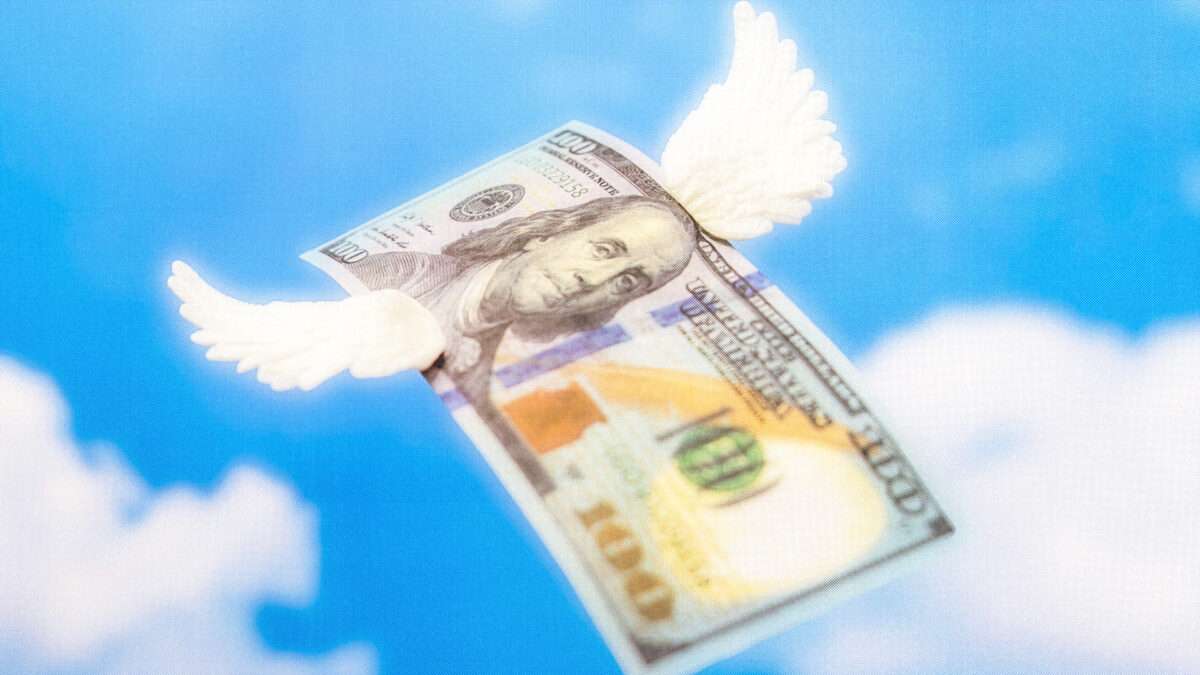
California's Wealth Tax Could Cost the State $39 Billion

This week, editors Peter Suderman, Nick Gillespie, and Matt Welch are joined by Associate Editor Liz Wolfe to discuss California's proposed 5 percent wealth tax on billionaires, which a Hoover Institution study suggests could ultimately cost the state $39 billion in lost revenue. With wealthy residents already leaving California, the panel examines whether the measure will survive next week's vote, why Gov. Gavin Newsom opposes it, and how public sector unions have helped fuel the state's spending problems.

The panelists then look to France, where mounting unrest and economic stagnation raise questions about the long-term consequences of high taxes, expansive welfare programs, and pension obligations that increasingly burden younger generations. Next, they discuss Venezuelan opposition leader María Corina Machado returning home after 10 months in exile. Then, with the midterm elections next week, the editors examine whether Trump's tariffs, war with Iran, and mounting allegations of corruption will deliver Democrats control of Congress. Finally, a listener asks whether today's democratic socialist movement will ultimately be remembered like the libertarian and Tea Party movements of the early 2010s.


0:00—California's wealth tax proposal

13:02—Will France protests influence America?

22:50—Corina Machado returns to Venezuela.

31:19—Listener question on the DSA

44:40—2026 Midterm elections preview

58:34—Weekly cultural recommendations


Upcoming Reason Events

Reason Versus - Authoritarianism Is a Right-Wing Problem, November 10


Mentioned in the Podcast:

"Will the Wealth Tax Fail?" by Liz Wolfe"France Is a Warning to California's Tax-the-Rich Crowd," by Veronique de Rugy"California's 'Wealth Tax' Could Cost the State $39 Billion," by Eric Boehm"Report: California's Proposed 'Billionaire Tax' Is Based on Bad Research," by J.D. Tuccille"A Wealth Tax Built on Billionaires Who Aren't Really Billionaires," by Veronique de Rugy
"New Book Says Jared Kushner Funneled Money to Middle East Mercenaries. Kushner Denies It." by Matthew Petti"Trump's Tariffs Are Politically Toxic," by Eric Boehm
"The Democrats' Socialist Moment," by Matt Welch
"Family Separation Drama Fjord Is a Haunting Depiction of Unchecked State Power," by Peter Suderman

The post California's Wealth Tax Could Cost the State $39 Billion appeared first on Reason Magazine.

💾

© Illustration: Fatima Ruiz

Matt Welch appears on the left. Liz Wolfe appears on the right. Behind them, an image of Governor Gavin Newsom appears looking concerned in the center. Bold text across the top of the screen reads "TAX THE RICH?"
  •  

“La Norvegia fa schifo, è un cesso di Paese”: l’attacco di Trump al comizio in Michigan. La colpa di Oslo? Non avergli dato il Nobel per la Pace

“Francamente la Norvegia fa schifo, è diventata un cesso di Paese, veramente”. Così il presidente americano Donald Trump, in un comizio in Michigan per sostenere la candidatura al Senato del repubblicano Mike Rogers, si è sfogato contro il Paese europeo colpevole, come lui stesso ha affermato, di non avergli dato il premio Nobel per la Pace per la seconda volta – riconoscimento invece assegnato all’ex giudice dell’odiata Corte penale internazionale Navi Pilay.

Ha aggiunto di voler riaprire le frontiere agli immigrati di determinati Paesi, ma di non volere “nessuno della Norvegia“, nonostante nello Stato del Michigan vivano oltre 71mila norvegesi-americani secondo gli ultimi dati U.S. Census. Nel comizio in midwest ha poi coperto di insulti islamofobici il candidato democratico Abdul El Sayed per le elezioni midterm del prossimo 4 novembre.

L'articolo “La Norvegia fa schifo, è un cesso di Paese”: l’attacco di Trump al comizio in Michigan. La colpa di Oslo? Non avergli dato il Nobel per la Pace proviene da Il Fatto Quotidiano.

  •  

Justice Department Targets Alaska Senate Election

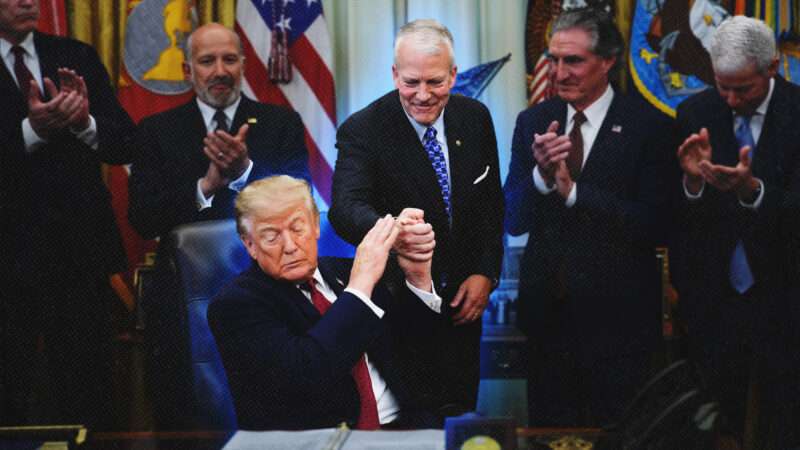
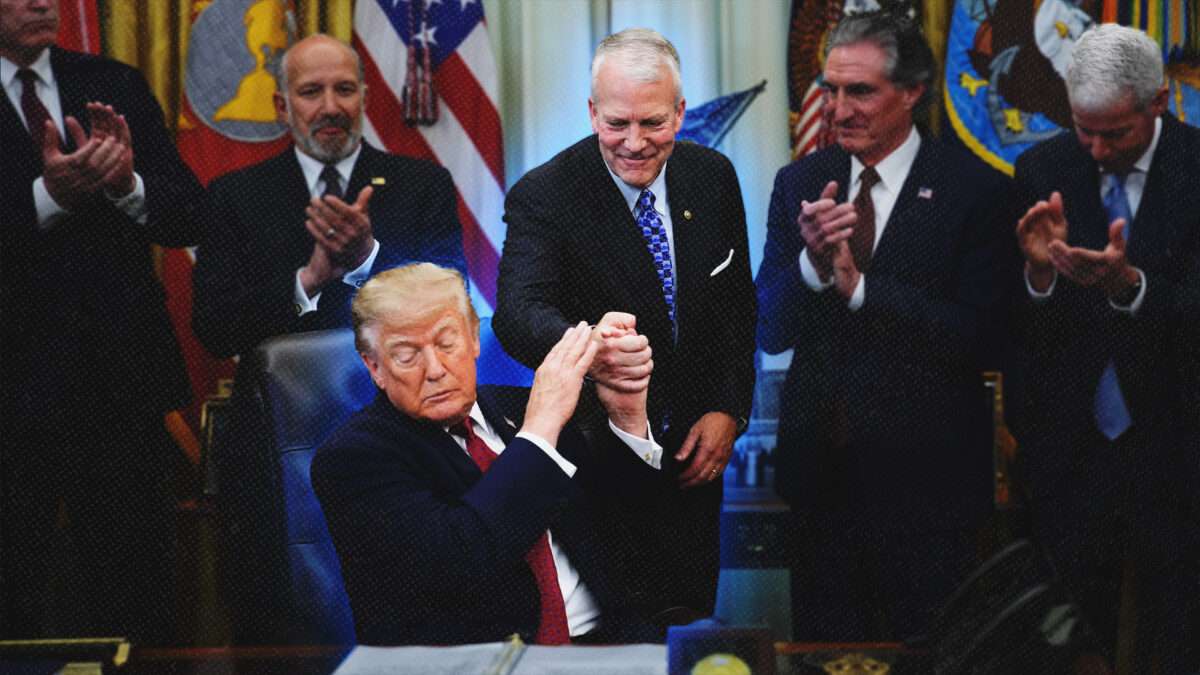
President Donald Trump holds Sen. Dan Sullivan's (R–Alaska) hand in the Oval Office, surrounded by other people. | Illustration: YURI GRIPAS/UPI/Newscom

Alaska's U.S. Senate race features four candidates. Two are named Dan Sullivan: the Republican incumbent, and a political neophyte.

Republicans say the presence of two Dan Sullivans on the ballot is an illegal act of election interference. The federal government is now suing to keep Alaska from certifying the election results, but only if their guy loses.

"One of the biggest election scandals in history has been the Democrats' installation of a fake Dan Sullivan (not the US Senator) to deceive voters in Alaska," White House advisor Stephen Miller wrote on X. President Donald Trump called it "a disgrace."

"Democrats pulled a dirty trick by enlisting a decoy, Daniel J. Sullivan, to run against Republican Alaska Sen. Dan S. Sullivan," The Wall Street Journal editorialized. "Please spare us the lectures about election interference."

Last week, the Department of Justice (DOJ) sued the state of Alaska and its election authorities.

"Should Alaska certify any electoral results tainted by the inclusion on the
ballot of Daniel J. Sullivan," the filing warns, "the State and its officers will fail in its obligation to protect the integrity of its election. The United States accordingly brings this lawsuit to protect the integrity of the 2026 Senate election in Alaska."

Alaska uses a ranked choice ballot, in which voters are given four candidates and rank each one in order of preference. Along with the Sullivans, the candidates are Mary Peltola, a Democrat who is polling narrowly ahead, and Gerald Heikes.

The Justice Department lawsuit says Republican voters would be too confused by the presence of two Dan Sullivans to properly fill out their ballot: "Some supporters of Senator Sullivan likely will inadvertently vote for Daniel J. Sullivan. Other supporters of Senator Sullivan likely will be confused as to how to rank the three Republican candidates as to defeat Peltola."

Given this, "there is a substantial likelihood that a certification of the election will reflect an electoral process that lacked integrity," the lawsuit proclaims. "To guard against this danger, it is vital that [Alaska] not certify any election result" in which "(1) Senator Sullivan does not win the election; and (2) had all votes cast for Daniel J. Sullivan been cast instead for Senator Sullivan and Alaska's rank-choice process played out accordingly, Senator Sullivan would have won the election."

In other words, the state of Alaska should only certify the election if Sullivan wins; if Peltola wins, but it's close, then that could suggest it "lacked integrity," and the state must instead conduct "an investigation to determine whether votes cast for Daniel J. Sullivan were meant to be cast for Senator Sullivan."

The lawsuit has a number of problems. First and foremost, it's completely inappropriate to treat an election as fair only if your candidate wins, even if it is what Trump believes.

It's also too late to bring an action of this kind: The state elections division decided in June to bar Daniel J. Sullivan from the ballot, but a state superior court reversed and the Alaska Supreme Court upheld the reversal before the end of that month.

And yet the feds waited until less than two weeks before Election Day—when ballots have been printed and tens of thousands of Alaskans have already voted—to bring this suit.

If the Justice Department was truly concerned about voter confusion, it should have brought a lawsuit months ago. But even then, it's not clear what it could have done: "DOJ has no power to decide which candidates can appear on the ballot," writes UCLA School of Law professor Richard L. Hasen.

Besides, it's not illegal to mislead or even outright lie to voters. "If 'voter confusion' were a legitimate reason to overturn election results, that would imperil a great many election winners, as voter ignorance—and exploitation thereof by candidates—is a widespread and longstanding problem," writes George Mason University law professor Ilya Somin.

It does seem more likely than not that Daniel J. Sullivan is indeed running just to pull votes from the senator with the same name.

But as I pointed out earlier this month, the ranked-choice ballot itself can take care of this problem: Republican voters who wish to reelect Sullivan can simply rank both Dan Sullivans first and second; if and when Daniel J. Sullivan fails to capture more than 50 percent of all votes, he will be eliminated, and his votes will transfer to all their second choices.

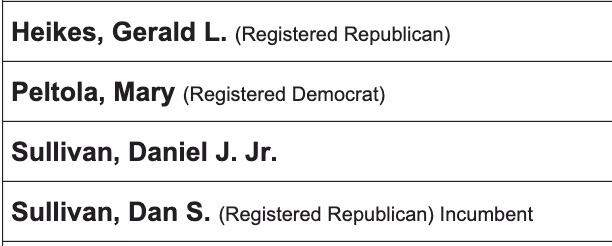
The ballot itself makes it clear which Sullivan is which: The sitting senator is labeled as both Registered Republican and incumbent.

Alaska's 2026 candidates for U.S. Senate: Heikes, Gerald L. (Registered Republican) Peltolta, Mary (Registered Democrat) Sullivan, Daniel J. Jr. Sullivan, Dan S. (Registered Republican) Incumbent
Alaska Division of Elections

Despite Miller's claim that letting two Dan Sullivans on the ballot "reveals pure contempt for voters," it's the objecting Republicans who appear to lack faith in their voters.

"People are totally confused," Trump told reporters. "A lot of people don't know what 'incumbent' means."

When CNN's Dana Bash asked Attorney General Todd Blanche what crime is being alleged, he replied that "it depends." He elaborated: "There could be a crime, but the real wrong here is that Alaskans are going to be confused and will not have their vote heard."

This isn't even Alaska's most complicated election in recent memory. In 2010, after Sen. Lisa Murkowski lost the Republican primary to Joe Miller, she announced that she would still run as a write-in candidate—requiring voters to not just know about her ahead of time but to add her name by hand.

Improbably, Murkowski prevailed, defeating Miller by more than 10,000 votes.

If Trump, Blanche, Miller, and others are truly concerned that the ballot will be too confusing for Alaska Republicans, they could expend some energy showing them how to use the ranked choice ballot.

In fact, Sullivan has done just that, posting a video on X explaining how to rank all candidates except Peltola.

What they can't do is force a state to reject the results if their guy loses.

"Alaskans don't need any help voting for their preferred candidates, and the State of Alaska has already handled this by clearly distinguishing the candidates on this year's ballot," Murkowski wrote on X. "The Department of Justice should never have filed this lawsuit."

"I believe that this lawsuit is abusive in its intentions and borders on frivolous in its arguments, and that it is destined for defeat in the courts should it reach the merits," Cato Institute senior fellow Walter Olson noted in a statement. "This lawsuit is an assault on the constitutional design by which states, not the federal government, run elections. The issue in question is one for the Alaska Supreme Court to decide under Alaska law, and the Alaska court did just that."

The post Justice Department Targets Alaska Senate Election appeared first on Reason Magazine.

  •  

Will the Wealth Tax Fail?

Prop 40 | Mohd Izzuan Roslan/Dreamstime

California's experiment: Will California's proposed wealth tax, Prop 40, pass next week? And if it gets passed, will it end up actually costing the state money instead of generating revenue?

The basics: The proposal features a one-time 5 percent tax on people with net worths over $1 billion who lived in the state on January 1, 2026 (with the net worth amount calculated as of December 31, 2026). The idea for the snapshot date is presumably to prevent capital flight once the tax passes. The tax's supporters say the tax's revenues will amount to $100 billion and will fund California's health care system, which need to make up for federal Medicaid cuts.

Seven billionaires, representing 30 percent of the total billionaire wealth in the state, left California before January 1, 2026, when news of the possible tax broke. Peter Thiel, Larry Page, and Sergey Brin are among the deserters. The French economist Gabriel Zucman—an intense defender of the wealth tax—seems committed to the idea that this flight won't matter too much. He argues that while removing those seven brings down revenue estimates to $89 billion, adding in less-prominent small-time billionaires raises revenue to $115 billion.

This is silly. As The Washington Post's Megan McArdle points out, there's no reason to believe those less-famous billionaires would stay put. We have a hard time estimating what the total preemptive flight looks like, and how many billionaires have successfully taken up residency elsewhere.

"Either the tax is annual—and in that case it generates revenue annually, and some billionaires leave," claims Zucman. "Or the tax is one-time—in that case it generates revenue in just one year, and there is no incentive to leave. It can't be both at the same time." Zucman doesn't seem to consider that billionaires have already left, as soon as the idea was seriously floated, thus taking early steps to shield their wealth from the state.

Will it pass? "Likely voters are essentially where they were a month ago," reports Politico, based on recent polling data, "with 46% in favor of Proposition 40 and 43% opposed—despite a recent push by backers of the measure, including Sen. Bernie Sanders, to rally support." Interestingly, "a strikingly high share of registered voters (84%) said they'd been exposed to advertisements or messages about the tax, but a 45% plurality said the communications had not swayed them, and those whose views had shifted were just as likely to be more opposed as more supportive."

There's another complication: On that very same ballot, voters will decide on Propositions 41 and 42, competing measures that could keep Prop 40 from taking effect. Prop 40 will be nullified if either one gets more votes; but Prop 40 will nullify both of them if it gets more votes. Prop 42 would bar new taxes on personal property such as businesses, investments, retirement accounts, trusts, and art collections—things Prop 40 targets. It also bans retroactive taxes, thus making Prop 40 impossible to pull off.

Back in January, Pirate Wires' Mike Solana spoke with a bunch of billionaires who were worried about the tax and making plans to flee, partially out of distrust that the tax would be one-and-done. "Three men I spoke with in the largest billionaire Signal chat said they ran an informal poll, and seventy percent of the chat (around sixty people, not all of whom were billionaires) indicated they would leave the state if the ballot proposition passes," reports Solana. "According to that same poll, around 15% have already left the state."

"There is now real danger in appearing successful in the state of California," writes Solana, "as the far left, imbued with a great deal of power, and benefiting now from several years of wealth scapegoating throughout the mainstream press, attempts to liquidate its perceived enemies in business."


Scenes from New York: I'm fully aboard this train these days, though open to being convinced why I'm wrong:

If you truly *love* American cities, you MUST support strict enforcement of laws against anti-social behavior. Paying bus fares, red light cameras, camping on sidewalks, smoking on trains, off-leash dogs, etc etc

If people want to do whatever they want, that's FINE in the… https://t.co/XU0WQR30yz

— Bobby Fijan (@bobbyfijan) October 26, 2026


QUICK HITS

  • "Brazilian markets are heading for a major rout when local trading begins after President Luiz Inácio Lula da Silva pulled off a stunning comeback to defeat Flávio Bolsonaro, the right-wing candidate that many investors preferred," reports Bloomberg. This will be da Silva's fourth term.
  • Is dynamic pricing on the rise? Customers say yes, but most companies say they're wrong. My thought: Even if it's not currently happening to the degree angry customers claim, it certainly will be big in the future, as online shopping takes over and AI makes implementation easier. Consider the upside, though, noted in this Wall Street Journal piece: "Much current angst is focused on electronic shelf labels, which have replaced the printed labels that dotted shelves at groceries and other stores. Research on digital shelf labels in the U.S. and Europe, where grocers have widely used the technology for more than a decade, found the labels don't lead to surge pricing, in part because price changes are obvious to anyone walking by. Rather, research found, grocers have used the labels to discount goods that are about to expire, reducing food waste."
  • Great Washington Post headline: "Europe is running out of other people's money."
  • President Donald Trump claims the ships passing past Cuba on their way home from Iran will just, uh, handle the situation there. Sure.
  • Interesting:

Striking detail in the big NYT piece on Taiwanese families adjusting to working at the huge new TSMC chip plant in Arizona: their surprise at the lack of rigor in US schools. pic.twitter.com/YkSPzbHCuE

— Alec MacGillis (@AlecMacGillis) October 26, 2026

The post Will the Wealth Tax Fail? appeared first on Reason Magazine.

  •  

Dall’Alaska al Kansas: tutti gli Stati che non sono più “sicuri” per i repubblicani. Le sfide cruciali al Senato per le elezioni di Midterm

I repubblicani investono fondi in Stati un tempo dati sicuri, mentre i sondaggi li danno in svantaggio alla Camera e in una battaglia fino all’ultimo voto al Senato. A poco più di una settimana dalle elezioni di midterm, la speranza e l’entusiasmo dei democratici per la possibilità di conquistare il Congresso continuano a salire. Come è noto, ogni due anni il Senato rinnova un terzo dei suoi seggi, e quest’anno si vota per 35 seggi, molti in Stati dove Donald Trump ha vinto con uno scarto a due cifre nel 2024. Un vantaggio di partenza per i repubblicani che difendono la loro maggioranza di 53 seggi contri i 47 attuali dei dem, che devono strappare quindi almeno 4 seggi, senza perderne nessuno, per conquistare la maggioranza. Si tratta di una sfida non facile, ma con il crescere del vantaggio nazionale dei dem che alla Camera – ora di 10 punti – e il continuo precipitare della popolarità di Trump – scesa al 33% – si è delineata una possibile via per la vittoria dem fino a pochi mesi impensabile, una via che attraversa stati come il Texas, roccaforte Gop dove un democratico non viene eletto ad una carica elettiva nazionale da oltre 30 anni. Negli ultimi giorni è entrato nella lista degli stati “toss up” un altro Stato solidamente repubblicano come il Kansas, portando a dieci il numero degli Stati che decideranno le sorti del Senato il prossimo 3 novembre. “Anche stati rossi non sono sicuri con presidenti con numeri così bassi come quelli di Trump“, spiegava nelle scorse settimane Jessica Taylor, del sito di analisi politica Cook Political Report.

NORTH CAROLINA – Questa viene considerata la migliore opportunità per i democratici, dal momento che l’attuale senatore repubblicano, Thom Tills, noto per le sue posizioni critiche su Trump ha scelto di non ricandidarsi nello stato che ha scelto il tycoon nelle ultime tre elezioni, ma ha anche eletto democratici a cariche statali. Tra questi, l’ex governatore Roy Cooper ora candidato dem avanti di 13 punti sul repubblicano Michael Whatley, poco conosciuto dagli elettori che in più lo considerano troppo vicino a Trump. In caso di vittoria, Cooper sarebbe il primo dem a rappresentare la North Carolina al Senato in quasi due decenni.

OHIO – In gioco è il seggio che JD Vance ha lasciato per diventare il vice presidente di Trump e l’attuale senatore repubblicano nominato al suo posto, Jon Husted, è molto meno noto del democratico Sherrod Brown, l’ex senatore avanti di 5 punti secondo una media Cnn. Il repubblicano paga la sua vicinanza a Trump che, pur avendo vinto due anni fa con un vantaggio a due cifre, ora ha una popolarità scesa al 36% nello stato agricolo che soffre per l’impennata dei prezzi dei fertilizzanti, provocata dalla guerra con l’Iran, e non ha visto i vantaggi nel settore agricolo promessi dalla politica dei dazi. A riprova dell’importanza di questo duello per gli equilibri del Senato, si prevede che nelle ultime settimane di campagna i due partiti spenderanno un totale di 75 miliardi di dollari.

ALASKA – È una delle sfide che i dem non possono perdere: gli ultimi sondaggi danno Mary Peltola, ex deputa dem, avanti 7 punti rispetto a Dan Sullivan, il senatore Gop che si candida a un terzo mandato nel remoto stato artico dove non viene eletto un democratico al Senato dal 2008. Nell’ultimo dibattito, il repubblicano ha cercato di mettere in difficoltà l’avversaria con le accuse di maltrattamenti che le hanno rivolto ex collaboratori, mentre la democratica lo ha accusato di disonestà e collegato alle politiche di Trump, in particolare la guerra in Iran, e le sue conseguenze economiche, che, è stato costretto ad ammettere Sullivan, “deve finire presto”. Il repubblicano teme infine di perdere voti per il fatto che sulla scheda elettorale comparirà un secondo Dan Sullivan, un indipendente che il dipartimento di Giustizia accusa di correre come repubblicano “con l’intenzione di ingannare” i sostenitori del senatore in un ricorso già depositato presso la corte distrettuale dell’Alaska per chiedere di bloccare la certificazione dei risultati elettorali in caso di vittoria di Peltola.

MAINE – È la battaglia nello stesso tempo più facile, almeno sulla carta, e più difficile per i democratici. Più facile perché i democratici controllano tutte le cariche elettive dello stato dove vincono regolarmente le presidenziali. Più difficile perché Susan Collins, da 30 anni al Senato, finora è riuscita sempre a difendere anche in questo nuovo panorama politico locale il seggio, grazie alle sue posizioni moderate, spesso indipendenti che l’hanno messa spesso in opposizione con Trump. Ma questa rielezione si è mostrata molto difficile per la navigata repubblicana, anche se di fronte non ha il candidato dem scelto con le primarie, Graham Platner, un allevatore di ostriche socialista dem che aveva entusiasmato la base, ma il molto meno carismatico Troy Jackson, nominato in corsa a luglio, quando uno scandalo sessuale ha fatto implodere la candidatura di Platner. Ora i sondaggi danno il dem avanti di un soffio in quello che rimarrà fino alla fine un testa a testa, con i repubblicani che spenderanno 17 milioni nelle ultime due settimane contro i 14 dei dem.

TEXAS – I democratici non vincono un’elezione nazionale nel Lone Star da 32 anni, ma ora sognano l’impensabile in uno dei duelli per il Senato più seguiti a livello nazionale, con i sondaggi che descrivono un testa a testa, con il democratico James Talarico però due punti avanti rispetto a Ken Paxton, il discusso attorney general del Texas che, con il sostegno di Trump, ha battuto nelle primarie il senatore repubblicano di lungo corso John Cornyn accusato di “slealtà” dal tycoon. Il 37enne ex seminarista presbiteriano, ex insegnante di scuola media, ora deputato statale, sta riuscendo a unire e galvanizzare le varie anime dei democratici, attirando, con il messaggio religioso e la promessa di combattere per interessi e valori texani, elettori di Trump delusi. Paxton, al contrario, è una delle figure politiche più controverse del Texas, coinvolto in scandali di corruzione che in passato spinsero il suo stesso partito a metterlo sotto accusa. Sono diverse le figure dell’establishment repubblicano texano che in questi giorni stanno dichiarando che non voteranno per lui, o addirittura che voteranno per Talarico, come ha fatto Neil Bush, figlio e fratello degli ex presidenti. Paxton ha dalla sua i finanziamenti milionari che sono arrivati in questi ultimi giorni alla sua campagna da Elon Musk, che gli permettono di spendere tre volte di più del dem, arrivando, si prevede, alla cifra totale, tra primarie e elezioni, di 380 milioni, astronomica in uno stato roccaforte Gop.

MICHIGAN – È forse la migliore opportunità dei repubblicani strappare un seggio ai dem – che dovrebbero così quindi strappare così cinque seggi per conquistare così la maggioranza – perché il senatore dem Gary Peters si è ritirato, lasciando aperto il suo seggio a quello che è diventato il più accanito duello, senza riserve di colpi, tra il repubblicano Mike Rogers, ex agente Fbi, ex deputato che due anni fa è stato sconfitto di misura nell’elezione per l’altro seggio del Michigan, e il democratico Abdul El Sayed. L’epidemiologo nato a Detroit da una famiglia di origine egiziana ha vinto le primarie con un programma vicino a quello dei democratici socialisti, anche se non vi fa parte, sconfiggendo un’avversaria sostenuto dall’establishment dem statale e nazionale. L’ultima media dei sondaggi Cnn dà El Sayed avanti di due punti in quello che rimane un testa a testa, con Donald Trump che continua ad accusare pubblicamente il dem, che se eletto diventerà il primo senatore musulmano, di essere ‘un jihadistà con legami con i Fratelli musulmani. El Sayed da parte sua punta all’impopolarità di Trump in Michigan, dove il 44% degli elettori ammette che considera il midterm un referendum contro Trump, ma deve fare i conti con la difficoltà di ottenere il sostegno di due componenti cruciali della base dem, la comunità ebraica, allarmata per le sue posizioni su Israele e Gaza, e quella afroamericana. A sottolineare l’importanza del duello, nel weekend in Michigan è arrivato sia Barack Obama, per un comizio ieri a Detroit che potrà aiutare El Sayed con il voto afroamericano, che Trump per un comizio stanotte a Port Huron.

IOWA – ll fatto che uno stato in cui Trump nel 2024 ha vinto con 13 punti di vantaggio sia considerato teatro di un duello ‘toss up’ per il Senato è un segnale di grande preoccupazione per il Gop. Nello stato del Midwest le politiche commerciali di Trump stanno danneggiando gli agricoltori, in particolare i produttori di soia, insieme all’aumento dei prezzi di benzina, diesel e fertilizzanti provocati dalla guerra in Iran. Non aiuta il fatto che la senatrice in carica Joni Ernest abbia deciso di non ricandidarsi lasciando quindi il seggio aperto. Per i repubblicani è in campo un’altra donna, Ashley Hinson, che recentemente ha chiesto a Trump di mettere fine subito alla guerra nel tentativo di guadagnare terreno sul democratico Josh Turek, ex campione paralimpico, che ora rappresenta all’Assemblea locale un distretto dove ha vinto Trump e si dice pronto a lavorare con tutti per aggiustare “il sistema dell’immigrazione, anche il presidente Trump”. L’ultima media dei sondaggi danno il democratico avanti di appena un punto in quello che rimane quindi un testa a testa.

KANSAS – Lo stato che non elegge un senatore democratico da 94 anni è entrato a sorpresa negli ultimi giorni nella lista dei duelli a rischio per i repubblicani, con i sondaggi che danno il senatore Roger Marshall in una situazione di parità con Adam Hamilton, un pastore metodista che si descrive come “un democratico indipendente” sapendo di aver bisogno dei voti di repubblicani per vincere nello stato in cui Trump ha vinto con un vantaggio di 16 punti nel 2024. Tanto che il tycoon nei giorni scorsi è volato in Kansas per accusare il democratico di essere in realtà “un estremista che si fa gioco di Gesù”. Da parte sua Marshall, che è un medico, è stato investito dalle accuse, riportate dal New York Times, di pazienti a cui ha fatto causa per parcelle mediche non pagate.

NEW HAMPSHIRE – Anche in questo stato del North East un seggio aperto, con la democratica Jeanne Shaheen che si ritira, potrebbe aiutare i repubblicani a difendere la maggioranza, aiutati dal fatto che hanno candidato John Sununu, ex senatore ma soprattutto fratello di ex governatore così popolare che molti elettori credono che sia lui a candidarsi al Senato. Per i democratici è candidato Chris Pappas, che si presenta come moderato e viene dato comunque negli ultimi sondaggi appare in una posizione più solida, aiutato anche dal fatto che nello stato la popolarità per Trump è al 38%. Tanto che Sununu in uno spot elettorale diffuso la scorsa settimana per prendere le distanze dal presidente afferma: “non ho mai incontrato quest’uomo”. Se eletto, il 46enne Pappas diventerà il primo senatore gay dichiarato.

GEORGIA – Il seggio di Jon Ossoff, senatore dem eletto nel 2020 sulla scia della cruciale vittoria di Joe Biden in Georgia, lo stato dove maggiormente si concentrarono le manovre di Trump per tentare di rovesciare i risultati elettorali, era stato individuato come uno dei principali obiettivi dei repubblicani in queste elezioni di midterm. Ma la sua campagna fondata suo social ha creato una grande rete di donatori di base, non solo gli sta assicurando un solido vantaggio – di otto punti secondo un poll dell’University of Georgia – ma sta anche alimentando voci di una possibile candidatura alla Casa Bianca nel 2028 del democratico che con i suoi 39 anni è il più giovane senatore in carica. Ad aiutare Ossoff il fatto che i repubblicani abbiano candidato il controverso deputato Mike Collins, accusato di aver legami con gruppi suprematisti bianchi e di aver fatto commenti razzisti e antisemiti.

L'articolo Dall’Alaska al Kansas: tutti gli Stati che non sono più “sicuri” per i repubblicani. Le sfide cruciali al Senato per le elezioni di Midterm proviene da Il Fatto Quotidiano.

  •  

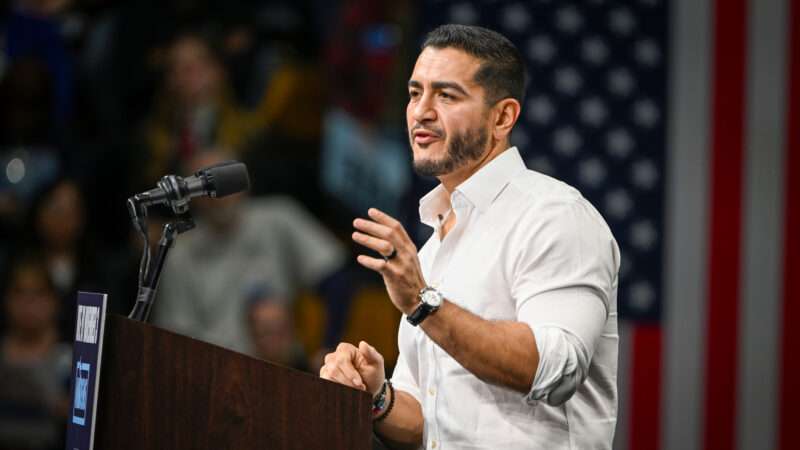
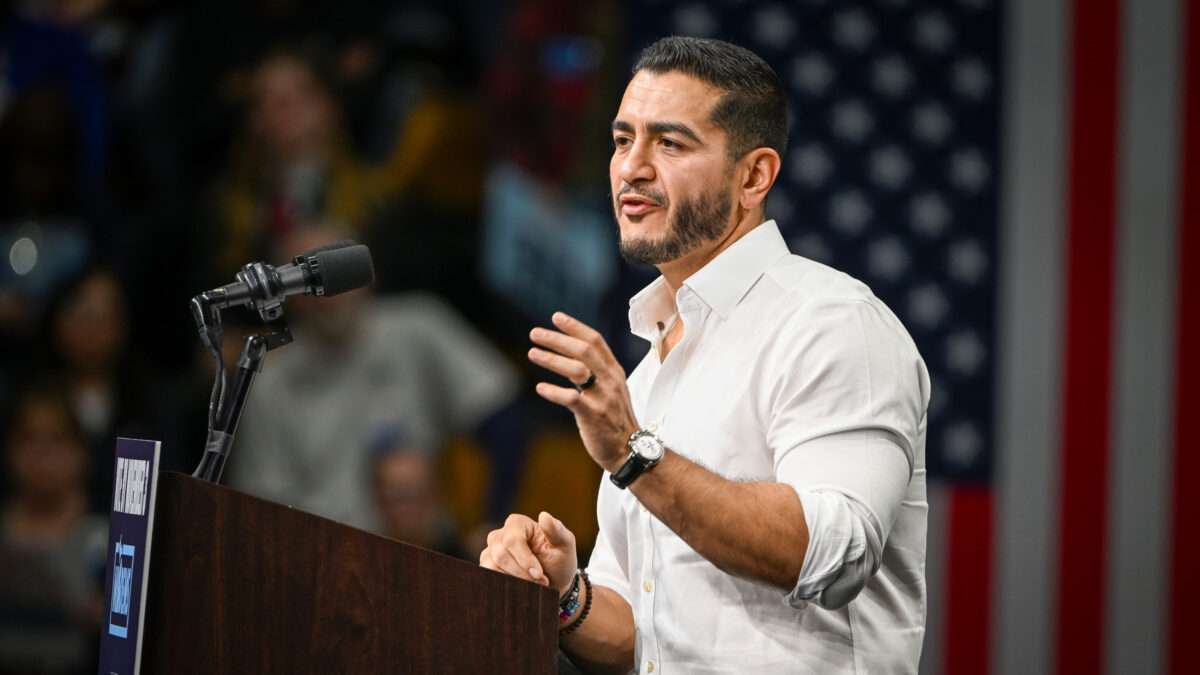
Abdul El-Sayed Would Freeze the Bill of Rights in the 18th Century

Abdul El Sayed | Kyle Mazza - CNP/Sipa USA/Newscom

Abdul El-Sayed, Michigan's Democratic U.S. Senate candidate, is the latest politician to suggest that the Second Amendment might shield the right to bear arms, but only those that existed at the time that it was adopted: namely, flintlock muskets. It's a not-so-clever way of trimming back the Constitution's protections. The argument's flaws should be clear: the U.S. Supreme Court has already dismissed that line of reasoning, and a world in which the Bill of Rights applies only to 18th century technology would be one where freedom exists only in museum exhibits.


"Everyone Should Have Equal Rights to a Musket"

"I'm gonna swear an oath to the Constitution. The Constitution has a Second Amendment in it, but the Second Amendment, just so we all are clear, even the most conservative folks, they hew to this idea called originalism, and originalism is the idea that you should interpret the Constitution in the context in which the Constitution was written," El-Sayed insisted at a campaign rally. "When they promised the right to bear arms, they had muskets. So, yeah, everyone should have equal rights to a musket."

So clever. The Bill of Rights passed in the 1780s, so it must only apply to 1780s things. Except that the courts have thoroughly dismissed that ridiculous line of reasoning.

"Some have made the argument, bordering on the frivolous, that only those arms in existence in the 18th century are protected by the Second Amendment," Justice Antonin Scalia wrote for the majority in District of Columbia v. Heller (2008). "We do not interpret constitutional rights that way. Just as the First Amendment protects modern forms of communications…and the Fourth Amendment applies to modern forms of search…the Second Amendment extends, prima facie, to all instruments that constitute bearable arms, even those that were not in existence at the time of the founding."


The Founders Lived in a Time of Rapid Innovation

The reason for this should be obvious. The founders were not unaware of progress. Many of them were scholars and innovators. They were certainly aware of (and enthusiastic about) continuing advancements in technology. During the then-recent revolution, American troops had faced off against a small unit of redcoats armed with Ferguson breech-loading rifles. A decade before the Bill of Rights was adopted, the 22-shot Girandoni repeating air rifle was introduced, one of which was later sent along on the Lewis and Clark expedition. And Kalthoff and Lorenzoni repeating flintlock firearms had existed for well over a century.

Not to mention, the founders made extensive use of printing presses to distribute pamphlets and official government documents, including the new Constitution, rather than having them hand-copied as they would have been a few centuries earlier. Technology marches on.

That last point illustrates the foolishness of the only-1780s-tech argument, as Scalia pointed out. What use is a First Amendment that applies only to hand-cranked printing presses and unamplified voices? That would leave the internet, television, radio, telephones, and all post-revolutionary means of communications unprotected from government censorship.

By the same token, a Fourth Amendment stuck in the 18th century might shield us from government agents kicking in the door and rifling through our papers. But it would have nothing to say about wiretaps, computer searches, surveillance cameras, thermal imaging, and the like.


The Founders Sought To Limit Government, Not Create Small Carve-Outs for People

Founders who were well aware of innovation and often contributed to it themselves (think Benjamin Franklin and Thomas Jefferson) knew that science and technology constantly advance—because they helped it do exactly that—as would the government's intrusive capabilities. And they believed they were creating protections for broad natural rights against limited government, not small carve-outs from the authority of an all-powerful state.

"Rightful liberty is unobstructed action according to our will, within the limits drawn around us by the equal rights of others," Jefferson wrote in 1819. "I do not add 'within the limits of the law'; because law is often but the tyrant's will, and always so when it violates the right of an individual."

The Bill of Rights isn't an ancient artifact to be applied only to a snapshot of life as it existed around 1789. Its amendments are intended to protect timeless individual rights, however those rights might be expressed in an always-evolving world.


El Sayed: "To Protect People From Government Tyranny"

El-Sayed went on, in his increasingly incoherent monologue, to acknowledge that the Bill of Rights was intended "to protect people from government tyranny," and "the idea was that you had the right to bear arms against your government should they become tyrannous." He floated the idea, for some reason, that "the Coast Guard, and state militias" are how this idea was implemented. I don't want to delve too deeply into whatever argument is being presented here, because I've sacrificed enough brain cells by listening to him speak.

But kudos to El Sayed for admitting the Bill of Rights is intended to protect us from government. The only way that can possibly work is if, as government's capabilities become increasingly sophisticated, the protections of the Constitution's first 10 amendments extend to safeguarding our rights from ever more advanced potential intrusions.

The Second Amendment and the rest of the Bill of Rights don't preserve a snapshot of life in the 1780s. They were written to protect eternal principles of individual liberty. And they're certainly not limited to muskets.

The post Abdul El-Sayed Would Freeze the Bill of Rights in the 18th Century appeared first on Reason Magazine.

  •  
❌