❌

Reading view

“I’m simply fed up,” says German state parliament VP and former teacher as she recounts pulling AfD stickers off classroom chairs

Current German law strictly requires teachers to remain politically neutral. However, a recent incident involving Maya Tischler, a 30-year-old Green Party politician, raises questions about whether this neutrality is properly enforced.

Before being elected to the state parliament of Mecklenburg-Western Pomerania, Tischler worked as a history teacher in Ribnitz-Damgarten. Controversial comments she made regarding her former students are now coming to light, highlighting the censorship Germans who do not fall in line with left-liberal ideologies face.

Tischler reportedly stated that she fought daily against discriminatory, racist, and violent rhetoric in her rural school environment. She even openly admitted to frequently removing AfD stickers from classroom furniture and noted that many local parents were involved with the right-wing party.

“I’m simply fed up,” she said at a 2025 Green Party conference, adding that she had “stopped counting how many AfD stickers we unfortunately had to scrape off the chairs in the classrooms,” according to Junge Freiheit.

Tischler also expressed immense relief at being able to openly label the AfD as “definitely far-right” to her students, noting she was exhausted from dealing with the issue, particularly after a tense debate with students during a field trip to the Ravensbrück concentration camp memorial. She also previously confirmed her support for a ban on the AfD.

As vice president of the state parliament in Schwerin, Tischler is expected to remain impartial, a mandate for both teachers and politicians. Her critics are now questioning her suitability for either profession.

Thore Stein, the AfD’s parliamentary manager in the state, condemned her appointment to the parliament’s presidium, telling JF it was “an absolute mockery of the principle of neutrality in office.”

Last year, German influencer Eva Vlaardingerbroek had her shadow ban on X lifted by Elon Musk, in a case where the EU claimed it had restricted her account due to the EU’s Digital Services Act. While her account regained its normal status, many conservatives in Germany and across Europe continue to have their voices muffled. And with teachers like Maya Tischler, this censorship campaign starts early.

The post “I’m simply fed up,” says German state parliament VP and former teacher as she recounts pulling AfD stickers off classroom chairs appeared first on Remix News.

  •  

Audi boss under fire in Germany for Trump rally appearance

Gernot Döllner criticised for in-person announcement of major investment in US days before midterm elections

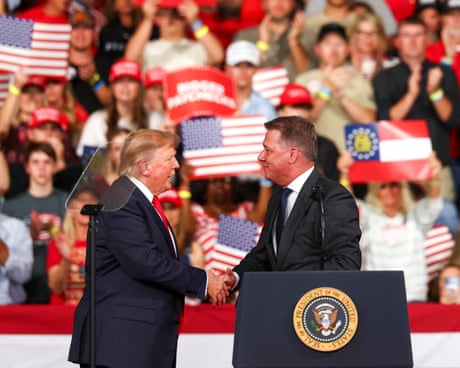
The head of the luxury carmaker Audi is under fire in Germany for appearing at a rally with Donald Trump just days before the US midterm elections, to announce billions of dollars of investment in battleground state Georgia.

Gernot Döllner joined Trump on stage after the US president gave a speech criticised by the head of an elected body of employees at Audi’s parent company, Volkswagen, as being full of “racism, sexism, transphobia [and] contempt for democracy”.

Continue reading...

© Photograph: Edgar Su/Reuters

© Photograph: Edgar Su/Reuters

© Photograph: Edgar Su/Reuters

  •  

Flocken Elektrowagen: The Electric Vehicle That Arrived Before Its Time

The electric vehicle might seem like a very modern invention, but is actually as old as automobile itself. It first appeared in the autumn of 1888 on the streets of Coburg, a small German town. With four wheels and a wooden body, it looked remarkably like a horseless carriage, but instead of relying on an internal combustion engine, it drew its power from electricity.

The machine was called the Flocken Elektrowagen, and it is widely regarded as one of the world's earliest electric automobiles.


A modern replica of the Flocken Elektrowagen. Credit: Wikimedia Commons


© Amusing Planet, 2026

  •  

Drones keep sinking ships off Romania and Bulgaria—French and US patrol planes are watching

The Togo-flagged cargo ship Alfa Watan

French and US maritime patrol planes are watching the western Black Sea, where drones keep hitting merchant ships, Romanian outlet Curs de Guvernare reported on 19 October, citing flight-tracking data. Romania blames Russia for the attacks, while Bulgaria says it cannot prove who launched them.

Ukraine’s three small Danube ports have kept its grain exports from collapsing further, and Russia has pounded those ports since the summer. The ships serving them are now being hit in the economic zones of two NATO members. Many were anchored near or heading to the Sulina Canal, which links the Danube to the sea. That puts the allied patrols over these waters in the middle of the fight over Ukraine’s grain trade.

Black Sea grain war between Ukraine and Russia escalates
Map: Euromaidan Press

Two patrol planes over the western Black Sea

A French Navy Atlantique 2 maritime patrol plane arrived in Constanța, Romania’s main Black Sea port, on the evening of 18 October, Curs de Guvernare said. On 24 October, French Foreign Minister Jean-Noël Barrot said in the Bulgarian port of Varna that a French patrol plane had been operating in the area under NATO for two weeks and had contributed to rescue operations.

two tankers burn off romania’s sulina bulgaria says lacks proof russia behind black sea ship attacks · post burned superstructure tanker wine trader seen rescue helicopter 15 2026 romanian interior
Explore further

Two tankers burn off Romania’s Sulina as Bulgaria says it lacks proof Russia is behind the Black Sea ship attacks

Meanwhile, a US Navy P-8A Poseidon flew into Varna from Sicily on 18 October, AFP reported, citing flight-tracking data. Two days later, Bulgarian Prime Minister Rumen Radev said it had begun reconnaissance patrols after Sofia asked allies for help, and that some allies had responded quickly. Bulgarian Defense Minister Dimitar Stoyanov called the deployment a joint decision of Bulgaria and NATO. He said the plane cannot strike targets and passes its data to NATO, Anadolu Agency reported.

NATO promises more

On 20 October, NATO’s North Atlantic Council met at Romania’s request. Afterward, the alliance said it would send more maritime patrol aircraft, radar systems, and drones to the Black Sea. NATO military spokesman Col. Martin O’Donnell added that allies have sent or will send intelligence personnel and explosives-forensics teams. NATO itself has not attributed the attacks to any country.

Romania names Russia, Bulgaria hedges

Romania has been blunter. On 15 October, after four merchant ships were hit within a day, acting Foreign Minister Oana Țoiu wrote on X that “Russia bears full responsibility for these developments.” On 17 October, Romanian F-16s shot down two jet-powered Russian Geran drones near Sulina, Romania’s Defense Ministry said.

Unitățile aeriene și navale ale Gărzii de Coastă (GdC/MAI) și ale Inspectoratului General pentru Situații de Urgență (IGSU/MAI) sunt implicate activ în operațiunile de căutare și salvare, în vederea găsirii membrilor dați dispăruți ai echipajului navei care a fost atacată în…

— Toiu Oana (@oana_toiu) October 15, 2026

On 23 October, a drone sank the cargo ship Khoryv off Constanța, killing a Ukrainian sailor, and President Nicușor Dan blamed Russia too. “It is part of Russia’s escalation process in its war in Ukraine,” Dan said.

Bulgaria is more cautious. Radev told parliament on 14 October that the attacks worked in Russia’s favor but that Sofia could not prove it. Since taking office in May, he has sought a thaw in ties with Moscow.

  •  

Listen: How close is the AfD to governing in Saxony-Anhalt?

Production: By Europod, in co-production with Sphera Network.

EUobserver is proud to have an editorial partnership with Europod to co-publish the podcast series “Briefed” hosted by Léa Marchal. The podcast is available on all major platforms.

Find the full transcript below: 

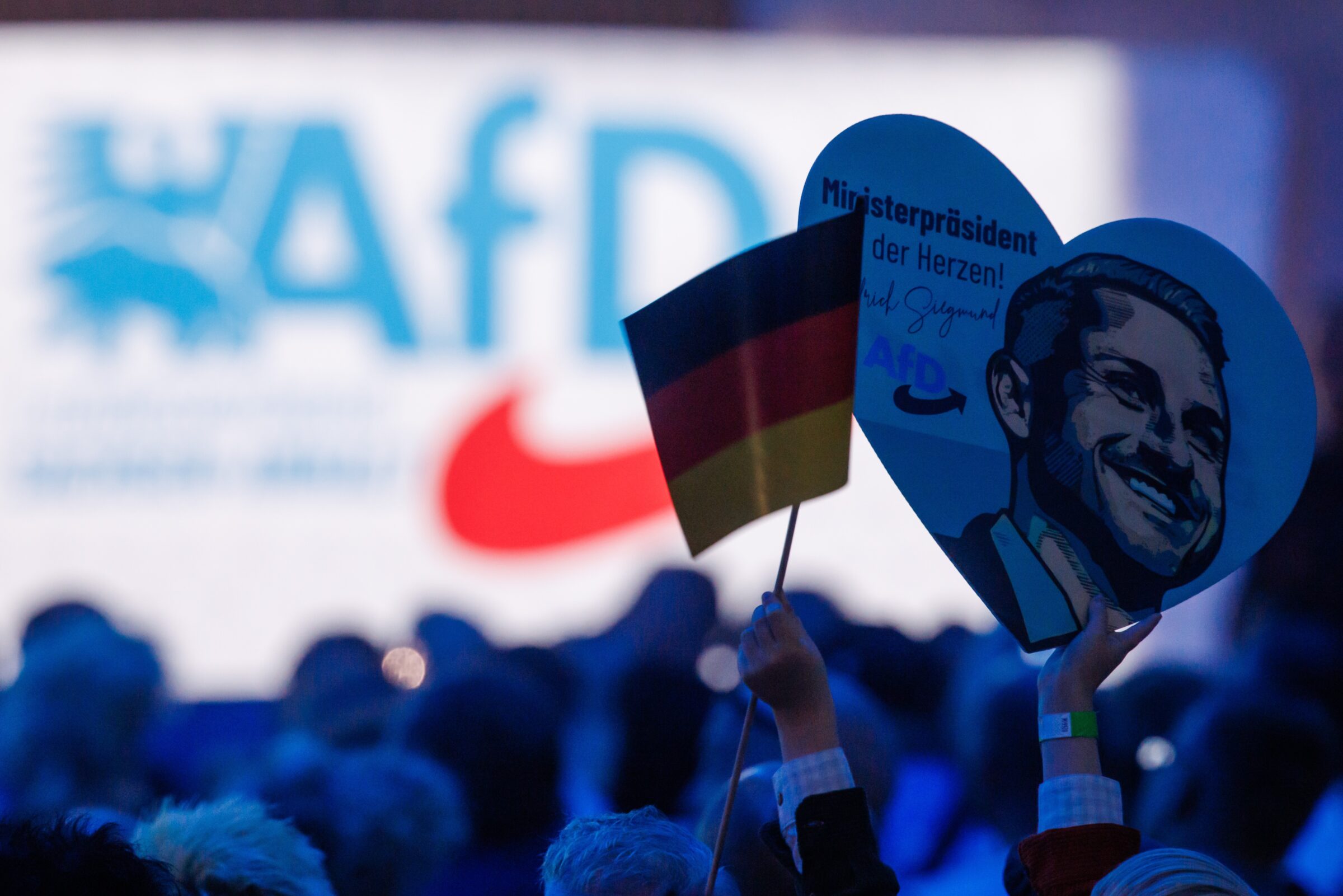
In Germany, the far-right party Alternative für Deutschland (AfD) won two state elections in September. Now, talks are underway to build coalitions.  How close is the AfD to governing in these States?

In both Saxony-Anhalt and Mecklenburg-Western Pomerania, the AfD won the elections a few weeks ago. But it does not have an absolute majority in either regional parliament.

As for the state of Mecklenburg-Western Pomerania, the AFD has no prospect of forming alliances to secure a majority, and negotiations are well under way between the Social Democrats, the Greens and the Left Party to reach an agreement. Together, they hold an absolute majority.

But the situation is quite different in Saxony-Anhalt. What will most likely happen, is an alliance with the BSW, the party founded by Sahra Wagenknecht.

The BSW describes itself as radical left, fighting for social justice. But in practice, it takes a very hard line on migration. And it is also notably lenient towards Russia.

In the end, the BSW and the AFD share similar views on a number of things, so they have been talking to build a coalition. They haven’t announced any deal whatsoever for now.

But there are two things we should look at. First, the election of the AfD candidate as president of the regional parliament in Saxony-Anhalt.
Tobias Rausch is the first AfD member to be landtag president.

He won thanks to votes from the AfD and the BSW. This would have been enough. But he even got 4 more votes.

Together, BSW and AFD have 44 votes, while Rausch received 48. That means at least four votes came from other parties, which are not supposed to cooperate with the far right. Some suspect they came from the CDU. But as Friedrich Merz pointed out, the ballot is secret, so there is no way to verify that.

Now, president of the regional parliament is not a particularly powerful position. But still, it is the first time the AfD has won it, and it came as a shock in Germany earlier this month.

So does this mean the same thing will happen when the regional prime minister is chosen? Well, not necessarily. The vote could take place in December. No date has been set yet. So there is plenty of time to negotiate a deal.

But the fact that the AfD and the BSW managed to agree on the parliament’s president shows that an agreement is conceivable.

There is something else worth noting. The two parties have just voted together on a non binding resolution on the war in Ukraine. In it, they call on Ukraine to capitulate to Russia, and demand an end to financial support for Kyiv.
So again, this shows they share several positions.

And in the end, even if the AfD doesn’t manage to get its candidate, Ulrich Siegmund, elected as head of the state, the AfD and the BSW could still form a majority on many votes, just as they did on the resolution about Ukraine.
Which would mean a change of policy for the region.

Before we wrap up, you might be wondering: what powers do German states actually have? Quite a lot, in fact. Education and culture, police and public security, media as well, since regional public broadcasters, for example, are governed by the states.

Each state has its own government. And the regional prime minister leads it, much like a prime minister would, at national level. The states are also represented in the Bundesrat, a kind of senate, which takes part in drafting national laws.

So yes, and AFD led regional government would mean a shift in local policies. 

  •  

U.S. Army Trains Apache Helicopter Pilots to Shoot Drones

The U.S. Army is training Apache pilots to shoot down drones as militaries around the world assess the efficacy of 20th-century technologies in a new era.

© Lena Mucha for The New York Times

An Apache helicopter hovering during Operation Skyfall II at the Grafenwöhr Training Area in Germany.
  •  

Ex-Verdi-Sekretär Ralf Krämer: “Hochrüstung ist Klassenkampf von oben”

Erst Sozialproteste, jetzt Friedensdemos: Beide Bewegungen eint mehr, als es scheint. Ralf Krämer erklärt, warum. Ein Gespräch über Krieg, Krise und Kapital.

Nach dem Protest ist davor: am Wochenende folgen in Berlin wie Stuttgart große Friedensdemonstrationen – diese wollen explizit an den DGB-Sozialaktionstag anschließen.

Darüber sprach Telepolis mit Ralf Krämer. Der Sozialwissenschaftler und war über zwei Jahrzehnte Gewerkschaftssekretär in der ver.di-Bundesverwaltung im Bereich Wirtschaftspolitik. Er ist aktiv in der Initiative “Nie wieder Krieg” sowie im Aktionsbündnis für die Friedensdemonstrationen am 3. Oktober.

Aufrüsten nach dem Motto “koste es, was es wolle”

  • Deutschland sieht sich gleichzeitig mit Aufrüstung, Krise und Sozialkürzungen konfrontiert. Ist das noch eine normale Verteilungskrise – oder eine grundlegende Verschiebung?

Krämer: Die Politik der Hochrüstung und die Demontage sozialer Errungenschaften sind zwei Seiten derselben Medaille. Während Bundeskanzler Merz einerseits behauptet, unser Sozialstaat sei nicht mehr finanzierbar, will er andererseits aufrüsten, koste es was es wolle. Hochrüstung ist die absolute Priorität dieser Bundesregierung.

Laut Finanzplan sollen die Militärausgaben bis 2030 auf über 200 Mrd. Euro steigen. Das schließt Ukraine-Militärhilfen ein. Das fällt alles unter die “Bereichsausnahme” der Schuldenbremse und kann unbeschränkt kreditfinanziert werden. Die Zinsausgaben steigen von 30 Mrd. (2026) auf über 80 Mrd. Euro (2030). Schon 2029 wird das Nato-Ziel von 3,5 Prozent des BIP erreicht.

Das Fünf-Prozent-Ziel schließt militärisch nutzbarer Infrastruktur ein. Deutschland gäbe dann mehr für Militärzwecke aus als Bund, Länder und Gemeinden zusammen für Bildung. Alle anderen Ausgabenbereiche werden zurückgefahren: Gesundheit, Familien und Bildung, Verkehr und Entwicklungshilfe sinken. In allen Sozialbereichen sind heftige Kürzungen geplant. Auch die Investitionen gehen nach 2026 preisbereinigt und anteilig am BIP zurück.

  • Ein Sicherheits- oder ein Verteilungsproblem?

Krämer: Das Sicherheitsproblem ist diese Bundesregierung: Sie finanziert und beteiligt sich daran, dass die Ukraine Drohnenangriffe auf zivile Ziele tief in Russland ausführt. Zugleich verbreitet sie Hysterie über angebliche russische Drohnenangriffe, für die sie keine Beweise liefert. Das dient nur dazu, Bedrohungsgefühle und Unterstützung für die Aufrüstung herbeizuführen.

Es ist eine Propagandaerzählung, dass Russland die Nato angreifen wolle. Dafür bräuchte es etwa dreifache Überlegenheit. Die Nato ist schon jetzt weit überlegen, selbst ohne die USA: mehr Soldaten, größere Wirtschaftskraft, höher entwickelte Technologie, ein Vielfaches an Militärausgaben. Nato-Generalsekretär Rutte sagte vor rund 11 Monaten selbst: “Unser Militär ist der russischen Armee unendlich überlegen.”

Ein Verteilungsproblem haben wir tatsächlich: Viele Menschen können sich ihr Leben kaum noch leisten, aber die Reichen werden reicher. Der Sozialstaat steht unter Druck durch schwache Wirtschaftsentwicklung, Alterung und ineffiziente Strukturen wie das Nebeneinander von gesetzlicher und privater Krankenversicherung. Die Kapitalseite fordert längere Arbeitszeiten und Abbau von Mitbestimmungsrechten.

Die Hochrüstung verschärft das: für Soziales, Bildung und Gesundheit bleibt immer weniger Geld übrig, Steuersenkungen gibt es nur auf Unternehmensgewinne. Das ist Klassenkampf von oben, der das Land auf Kriegstüchtigkeit trimmen soll!

Geopolitisch geht es um die Stärkung des deutschen Kapitalismus gegen die Brics-Staaten, auch um mehr Eigenständigkeit gegenüber den USA, denen man sich aber weiter unterordnet.

“Butter statt Kanonen!”

  • Die Bundesregierung stellt Aufrüstung hingegen als Jobmotor dar. Existiert eine Alternative?

Krämer: Für viele Beschäftigte und selbst Gewerkschaften ist die Rüstungsindustrie attraktiv, Jobs mit guten Löhnen locken, während anderswo Arbeitsplätze abgebaut werden. Doch jeder Arbeitsplatz in einem Rüstungsbetrieb beruht auf öffentlichen Ausgaben.

Mit gleich hohen Ausgaben für sinnvolle zivile Investitionen könnten nicht nur die gesellschaftlichen Lebensbedingungen verbessert werden, sondern auch weit mehr Arbeitsplätze und höheres Einkommen generiert werden, nachhaltigere Wachstumswirkungen ließen den Schuldenstand sinken und könnten die Gesellschaft zugleich umweltverträglicher machen.

Die Alternative sind also Zukunftsinvestitionen und Sozial- statt Rüstungsstaat und Verhandlungen um eine friedliche Lösung in der Ukraine, ein Aus der EU-Sanktionspolitik, Druck für ein Ende des von Deutschland faktisch mitgetragenen völkerrechtswidrigen Kriegs gegen den Iran, Zusammenarbeit mit China in beiderseitigem Interesse statt dem von US-Präsident Trump betriebenen Zollkrieg.

  • Dies spiegelten die Forderungen des gewerkschaftlichen Aktionstages am vergangenen Wochenende kaum wider: Was hätte die Parole sein müssen?

Krämer: Parolen wie “Butter statt Kanonen!” wären super gewesen. Sie standen nicht auf den offiziellen Transparenten, friedensbewegte Kollegen brachten sie aber ein. In einigen Reden kam es vor, nicht aber in den Hauptreden.

Insgesamt ist die Entwicklung widersprüchlich: Der DGB-Bundeskongress beschloss “Friedensfähig statt kriegstüchtig”, der Iran-Krieg wird als völkerrechtswidrig bezeichnet, neue Mittelstreckenwaffen abgelehnt, das Fünf-Prozent-Ziel in Frage gestellt.

Doch eine klare Gegenposition zur Hochrüstungspolitik fehlt, und im Aufruf zum 26. September wurde das Thema ausgeblendet. Eine Mehrheit in Mitglied- und Funktionärsschaft trägt Ukraine-Unterstützung und Aufrüstung grundsätzlich mit. Die Gewerkschaften bremsen hier keinen großen Protestwillen, nehmen aber ihre Aufgabe nicht wahr, ihn aufzubauen.

Noch nicht erkannt wird, dass die Militarisierung den Sozialstaat umfassend angreift, Arbeitnehmerrechte abgebaut werden. Bedroht sind letztlich, im “Spannungsfall”, Tarifautonomie, Streikrecht, freie Gewerkschaften und die Demokratie. Einen Vorgeschmack geben die skandalösen EU-Sanktionen gegen Autoren wie Hüseyin Doğru, denen quasi Wehrkraftzersetzung vorgeworfen wird.

  • Gewerkschaften haben mit Streiks ein Machtmittel, das kaum eine andere Organisation besitzt. Warum setzen sie es bislang so zurückhaltend ein?

Krämer: Gewerkschaften leben immer noch von der Konfrontation, allerdings der gegen Zumutungen der Arbeitgeberseite. Politisch setzen die deutschen Gewerkschaften hauptsächlich auf Lobbyarbeit und ihren Einfluss in den regierenden Parteien, um bei den einzelnen Gesetzen Arbeitnehmerinteressen einzubringen.

Große gemeinsame Mobilisierungen bleiben die Ausnahme, politische Streiks sind tabu. Auch anderswo sind Generalstreiks meist nur Demonstrationstage in der Arbeitszeit, über die sich Regierende dort genauso hinwegsetzen wie Berlin hierzulande. Erfolgreiche Streiks aber setzen aber vor allem voraus, dass die Beschäftigten geschlossen hinter den Forderungen stehen. Das erforderte breite Aufklärung und Diskussion, die es bei politischen Themen, besonders der Friedensfrage, bisher nicht gibt.

  • Müsste der 3. Oktober demnach nicht die Fortsetzung des September sein: Warum Sozialabbau hinnehmen, während zugleich Milliarden in die Aufrüstung fließen?

Krämer: Die Demonstrationen in Berlin und Stuttgart stehen unter dem Titel “Nein zu Hochrüstung, Wehrpflicht und Krieg! Für Frieden, demokratische Rechte und soziale Sicherheit!”. Für friedensbewegte Gewerkschafter ist es logisch, diesen Zusammenhang in den Mittelpunkt zu stellen. Butter und Kanonen zugleich wird es nicht geben.

Die Gewerkschaften sind von zentraler Bedeutung und müssen eine aktive Kraft der Friedensbewegung werden; auch Sozialverbände und Umweltbewegung müssen dabei sein, die Kirchen müssten sich besinnen.

Bisher haben viele die Gefährlichkeit der Lage nicht erkannt, die Kriegspropaganda wirkt, und die Führungen scheuen den Konflikt mit den Regierungsparteien. Wir müssen unsere Aufklärungs- und Mobilisierungsarbeit daher verstärken.

Originalbeitrag TELEPOLIS

  •  
❌