❌

Reading view

Netanyahu gains overnight as Israel election heads toward political deadlock

TEL AVIV, Israel — Updated Israeli exit polls early Wednesday showed Prime Minister Benjamin Netanyahu gaining ground against his political rivals but still falling short of a parliamentary majority, leaving the country facing a possible political deadlock despite a combined majority of seats projected for parties outside his governing bloc.

An updated Channel 12 exit poll at 3:30 a.m. (Israel time) projected 53 seats for Netanyahu's right-wing and religious bloc, compared with 49 for the main opposition led by former military chief Gadi Eisenkot and another 19 for Arab parties. Together, the opposition and Arab factions would hold 68 seats in the 120-seat Knesset, although they remain divided over forming a government together.

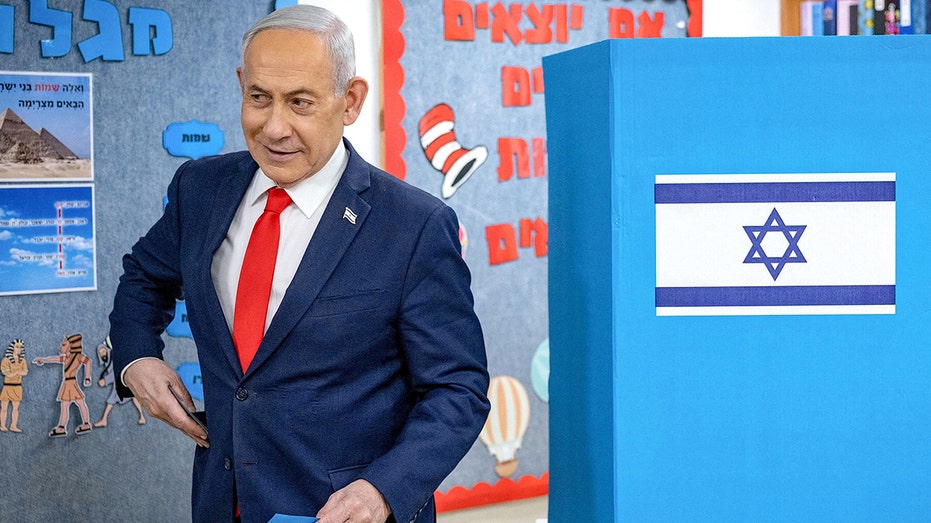
Netanyahu struck a defiant tone in his first election-night speech at Likud headquarters in Jerusalem, declaring that his party had emerged as the largest in Israel and calling for the formation of a strong right-wing government.

FORMER ISRAELI ARMY CHIEF GADI EISENKOT EMERGES AS NETANYAHU’S LEADING ELECTION CHALLENGER

"We are still waiting for the actual results, which we will receive over the next day or two," Netanyahu told supporters. "Two things have become clear. The first is unequivocal: Likud is the largest party in Israel."

"We must establish a strong national right-wing government," he added, warning against a government dependent on Arab parties, which he accused of opposing Israel's existence.

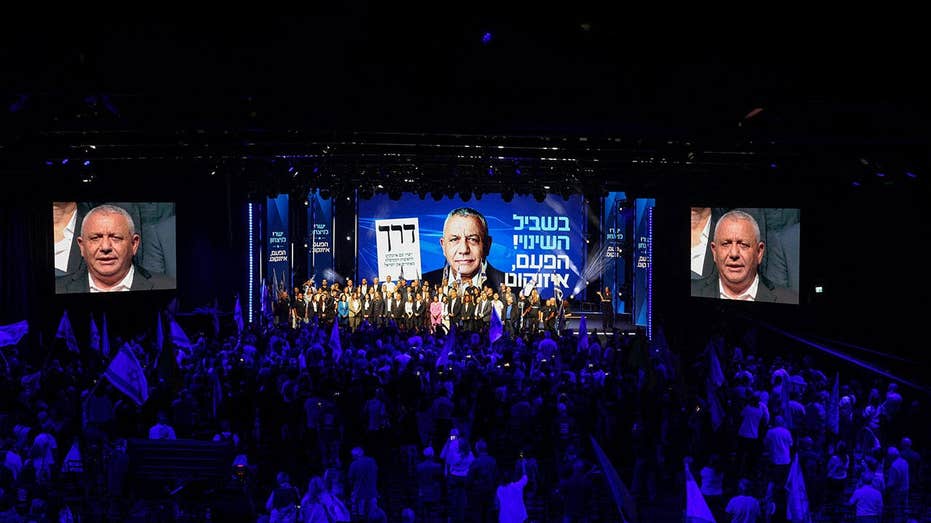
His remarks came hours after Eisenkot took the stage at his campaign headquarters in Tel Aviv, where supporters celebrated earlier projections showing the opposition ahead. Eisenkot called on Netanyahu to accept the results and step aside, but the updated numbers underscored how uncertain the race remains.
Netanyahu also said Israel faced a "once-in-a-lifetime historic opportunity" with Trump to eliminate the existential threat from Iran.

The competing speeches highlighted the central question emerging from the election: Who will be given the first opportunity to form a government?
If Eisenkot can secure recommendations from at least 61 lawmakers, potentially including Arab parties, he could receive the first mandate despite Netanyahu's Likud emerging as the largest individual party. But that would not guarantee he could assemble a governing coalition.
For Netanyahu, the election remains a waiting game. Even without a majority, he could still be tasked with forming a government — or get another opportunity if Eisenkot's efforts fail — leaving Israel facing weeks of political negotiations.

Israelis turned out in exceptionally high numbers Tuesday for the country’s first national election since the Oct. 7, 2023, Hamas massacre, with initial exit polls showing Prime Minister Benjamin Netanyahu’s Likud emerging as the largest party but his governing coalition falling short of a parliamentary majority, potentially opening the door to a change in leadership.
 

FORMER ISRAELI PM EMERGES AS WILD CARD IN HIGH-STAKES ELECTION WITH MIDDLE EAST'S FUTURE AT STAKE

Netanyahu fights for political future as Israel heads to polls with Iran threat looming

The results are preliminary projections, not an official vote count, and could change as ballots are tallied in the coming days.

The election followed an extraordinary day at polling stations across Israel, with long lines and voter participation reaching levels not seen in decades.

Israeli voter turnout surged to a historic high, with 77.7% of eligible voters casting their ballots by the time the polls closed, according to Israel's Central Elections Committee. The figure marked the highest turnout recorded since 1999, underscoring the intensity of the country's national election.

The unusually high participation prompted election officials to streamline voting procedures and assure voters that anyone arriving at a polling station before the 10 p.m. deadline would be allowed to cast a ballot.

The vote was widely seen as a referendum on Netanyahu's leadership following three years of war and continuing questions about responsibility for the security failures that allowed Hamas terrorists to kill approximately 1,200 people and abduct 251 others on Oct. 7, 2023.

JD VANCE DECLINES TO ENDORSE NETANYAHU DESPITE TRUMP'S STRONG BACKING

Netanyahu, Israel's longest-serving prime minister, campaigned on his record of confronting Iran and its regional proxies, highlighting Israel's military achievements and his relationship with President Donald Trump. His opponents accused him of failing to accept responsibility for the October 7 security failures and opposed his government's approach to investigating the failures that preceded the massacre.

A last-minute battle for every vote

Throughout the final hours of the campaign, Netanyahu, Eisenkot, former Prime Minister Naftali Bennett and other party leaders mounted an intensive effort to mobilize supporters and win over undecided voters.

Netanyahu's Likud party prepared hundreds of targeted campaign videos and social media messages, making digital outreach a central part of its last-minute election strategy.

Eisenkot's campaign pushed supporters to rally behind Yashar as the leading alternative to Likud, while Bennett traveled between cities and engaged voters directly and through WhatsApp conversations.

The key question now is which candidate can secure the support of at least 61 lawmakers when President Isaac Herzog consults with the newly elected parliamentary factions. If Eisenkot can obtain those recommendations, including from Arab parties, he would have a strong claim to receive the first opportunity to form a government, even though Netanyahu’s Likud is projected to remain the largest individual party. Crucially, Arab parties could recommend Eisenkot without formally joining his governing coalition. However, the final decision rests with Herzog, who is tasked with selecting the lawmaker he believes has the best chance of forming a government. Securing the first mandate would not guarantee Eisenkot could assemble a governing majority, leaving the possibility of another political deadlock.

NETANYAHU FIGHTS FOR POLITICAL FUTURE AS ISRAEL HEADS TO POLLS WITH IRAN THREAT LOOMING

The campaign's closing hours also featured personal appeals, phone calls to undecided voters and aggressive turnout operations across the political spectrum.

The final days were particularly important because a relatively small share of voters remained undecided about which party to support.

A Times of Israel poll published five days before the election found that 87% of respondents had already made their final choice, while 2.4% remained undecided between the pro and anti-Netanyahu political blocs.

Other surveys suggested a larger pool of undecided voters, although many were choosing between parties within the same political camp rather than switching sides.

That distinction could prove decisive in Israel's parliamentary system, where political parties need at least 3.25% of valid votes to enter the 120-seat Knesset.

Even a slight change in the vote share of smaller parties could shift several parliamentary seats and determine whether either camp has a realistic path to power.

TRUMP SAYS NETANYAHU NEEDS TO BE RE-ELECTED, OR ELSE US WILL HAVE TO 'FINISH THE JOB’ AGAINST IRAN ALONE

What happens next?

Despite the exit poll projections, the identity of Israel's next prime minister may remain uncertain for weeks.

Unlike in the United States, Israelis vote for political parties rather than directly electing their head of government.

The 120 seats in parliament are allocated proportionally, and parties must secure at least 3.25% of valid votes to win representation.

Once the final results are certified, Israeli President Isaac Herzog will consult with the newly elected political factions and select the lawmaker he believes has the strongest chance of forming a government.

CLICK HERE TO DOWNLOAD THE FOX NEWS APP

That candidate will have 28 days to negotiate a governing coalition, with the possibility of a 14-day extension.

Official results are scheduled to be published by Nov. 4. Until a new government takes office, Netanyahu's outgoing government will remain in power.
  •  

Sen Flávio Bolsonaro flees Brazil for US after election loss, will be issued visas: State Department

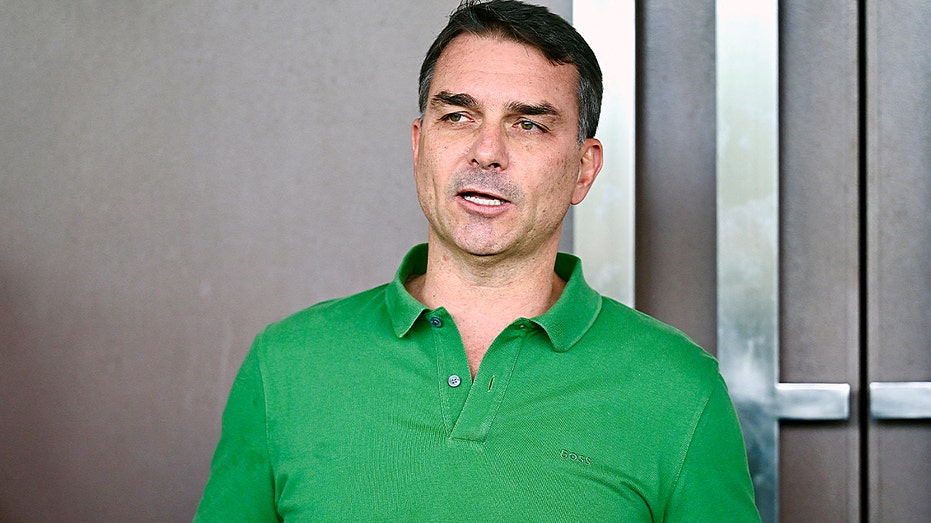
Brazilian Sen. Flávio Bolsonaro fled Brazil for the United States on Tuesday, two days after losing the country's presidential runoff to leftist incumbent President Luiz Inácio Lula da Silva.

The U.S. Department of State will issue visas to Bolsonaro and his family and allow them to enter the U.S., a senior State Department official confirmed to Fox News Digital.

An ally of the far-right conservative senator confirmed his departure from the South American country to Reuters on Tuesday.

Bolsonaro's flight was reportedly headed to Florida, according to Brazilian outlet Metropoles, citing people close to his family.

BRAZIL’S RAPID ELECTION COUNT PUTS SPOTLIGHT ON VOTING SECURITY AHEAD OF US MIDTERMS

The 45-year-old lawmaker had been out of public view since Tuesday morning, the outlet reported.

His departure came as a deadline for him to surrender his regular and diplomatic passports expired at noon Tuesday. 

Brazilian newspaper Folha de São Paulo reported Bolsonaro was under investigation for alleged money laundering and other crimes. 

It remained unclear whether Bolsonaro had complied with the order, The Associated Press reported.

BRAZIL BECOMES NEXT TEST FOR LATIN AMERICA’S SURGING CONSERVATIVE MOVEMENT

Bolsonaro was served with the order Monday, a day after Lula defeated him in Sunday's presidential runoff for an unprecedented fourth term.

With 100% of the vote counted, Lula won 51.8% of the vote, defeating Bolsonaro by nearly 4.4 million votes.

He has refused to concede the election and has called for the election results to be annulled, alleging fraud, according to The Associated Press.

Lula addressed supporters after winning re-election, expressing gratitude to the Brazilian people.

CONSERVATIVE WAVE HITS ROADBLOCK IN BRAZIL AS LULA HOLDS OFF BOLSONARO CHALLENGE

"No one is required to like the president-elect, but he must govern for everyone," Lula said.

CLICK HERE TO DOWNLOAD THE FOX NEWS APP

Referring to his opponent, Lula said, "This was a defeat for denialism and lies."

Fox News Digital's David Unsworth and Michael Sinkewicz, as well as Reuters and The Associated Press contributed to this report.

  •  

UK charges 2 men in suspected Iran-linked incident at RAF Fairford after US bombers pulled

British prosecutors charged two men Tuesday under the U.K.’s National Security Act following an incident at RAF Fairford, a key base used by the U.S. military’s heavy bombers.

Mohmed Abdulkarim, 24, of London, was charged with assisting a foreign intelligence service. Nouman Essghir, 24, was charged with entering a prohibited place for a purpose prejudicial to the United Kingdom, according to the Crown Prosecution Service.

British counterterrorism police said they believe the foreign country Abdulkarim was assisting was Iran, Reuters reported.

RUBIO CONFIRMS 'FOREIGN ACTOR' INVOLVED IN UK TERROR PLOT

The charges follow a September incident near RAF Fairford in Gloucestershire, England. British police arrested five men outside the base in the early hours of Sept. 27, according to Reuters.

The base had been used by U.S. bombers to carry out strikes against Iran. About a dozen B-1 bombers were among the aircraft later withdrawn from RAF Fairford and returned to their home stations in the United States on security grounds, according to previous Fox News reporting.

FOILED TERROR PLOT AT BOMBER BASE SIGNALS WIDER THREAT TO US MILITARY INSTALLATIONS: EXPERT

RAF Fairford serves as a key European operating location for U.S. heavy bombers and has supported American military missions.

Frank Ferguson, chief crown prosecutor for the CPS Special Crime and Counter Terrorism Division, said the agency decided to prosecute the two men following a "complex" counterterrorism investigation.

"We will continue to work closely with our partners as this complex investigation continues," Ferguson said.

Both men were expected to appear Tuesday at Westminster Magistrates’ Court.

CLICK HERE TO DOWNLOAD THE FOX NEWS APP

The CPS emphasized that the charges are not findings of guilt and that both defendants have the right to a fair trial.

  •  

Ceasefire negotiated by Melania Trump holds in Russia-occupied Ukrainian city

A ceasefire that first lady Melania Trump helped negotiate in a front-line Ukrainian city that she described as being on the "brink of disaster" went into effect Tuesday.

The pause in fighting in Oleshky started around 3 a.m. local time as "part of a humanitarian mission being carried out with the mediation and coordination of U.S. first lady Melania Trump, in cooperation with Yana Lantratova, Russia’s commissioner for human rights," according to Dmytro Lubinets, the Ukrainian Parliament commissioner for human rights.

"The situation in Oleshky is dire. Oleshky is a front-line war city on the brink of disaster," Trump said in a statement last week. "Oleshky’s remaining population is comprised primarily of elderly residents who urgently need medical attention, medicine, food, and clean water.

"The people of Oleshky have limited electricity, live amid mined roads, and endure regular military attacks. It was abundantly clear that without my intervention, the possibility to bring humanitarian aid into the city and to evacuate the elderly would be impossible," she added.

MELANIA TRUMP'S ADVISOR REVEALS HOW SHE BRIDGED PUTIN, ZELENSKYY TO BROKER FRONTLINE UKRAINE TRUCE

The White House said both Ukraine and Russia "agreed to temporarily stop all military action in Oleshky to allow for humanitarian aid to enter and to prepare a civilian evacuation through a designated safe passageway."

"Non-military, civilian leaders from both countries will work together to visit Oleshky residents in their homes and determine the level of assistance they require. Residents who wish to evacuate will receive coordinated support and transportation to their preferred destination. I anticipate some will want to go to Russia, and some to Ukraine," Trump added.

Speaking on "Fox & Friends Weekend," senior advisor Marc Beckman said the agreement followed weeks of mediation involving Russian President Vladimir Putin and Ukrainian President Volodymyr Zelenskyy.

RECOVERING FROM LUNG SURGERY, POPE LEO URGES PUTIN TO AGREE TO CEASEFIRE IN RUSSIAN-HELD UKRAINE CITY

On Tuesday, Russia's Defense Ministry wrote on Telegram, "In relation to the conduct of the humanitarian operation in the area of the settlement of Oleshky, Kherson region, the Armed Forces of the Russian Federation have ceased fire in the Kherson direction."

Russian troops have held control of Oleshky since the early days of the February 2022 invasion of Ukraine, according to Reuters.

The news agency added that the city had a population of around 24,000 prior to the war, but that has since dwindled to only a few thousand.

CLICK HERE TO DOWNLOAD THE FOX NEWS APP

Fresh strikes also hit a bridge and subway infrastructure in Ukraine's capital of Kyiv on Tuesday, Reuters reported.

Fox News Digital's Madison Colombo contributed to this report.

  •  

Israel heads into deeply divided election as Oct 7 reckoning looms: What to know

TEL AVIV, ISRAEL — Campaign banners bearing the faces of Israel's political leaders cover buildings and roadsides, while in homes, coffee shops and family gatherings, the same question dominates conversations: Will Prime Minister Benjamin Netanyahu remain in power?

With Israelis heading to the polls Tuesday, the country is bracing for a closely contested election that could end in another political deadlock. But this vote is unlike any other in Israel's recent history.

For many Israelis, the election has become a referendum on accountability for the failures that allowed Hamas terrorists to carry out the Oct. 7, 2023, massacre — the deadliest attack in Israel's history.

TRUMP SAYS NETANYAHU NEEDS TO BE RE-ELECTED, OR ELSE US WILL HAVE TO 'FINISH THE JOB’ AGAINST IRAN ALONE

Netanyahu, who has dominated Israeli politics for decades, has resisted calls to accept personal responsibility for the security failures and establish an independent state commission of inquiry. His government instead sought a politically appointed investigation, a proposal fiercely opposed by many bereaved families.

Yet Israel's divisions began long before Oct. 7.

In the months preceding the attacks, hundreds of thousands of Israelis took to the streets to protest Netanyahu's proposed judicial overhaul, which critics argued would undermine the country's democracy. The confrontation spilled into the military, where reservists threatened to suspend volunteer service, raising alarms about Israel's preparedness. Some critics have argued that the turmoil projected weakness to the country's enemies, although the extent to which it influenced Hamas's decision to attack remains disputed.

Three years after the massacre, those divisions have only deepened, transforming Tuesday's vote into something intensely personal. Political allegiances have strained friendships and divided families, with much of the national debate reduced to a single question: Are you for Netanyahu, widely known as "Bibi," or against him?

DANNY DANON: FROM OCT 7 TO FLIGHT 1073: THE RESILIENCE THAT KEEPS ISRAEL STANDING

For some families who lost loved ones on Oct. 7, the answer is painfully clear.

Shir Shai, whose brother Yaron Shai, an Israeli soldier, was killed battling Hamas terrorists that day, delivered a stark message to those considering another vote for Netanyahu.

"If you nevertheless decide to vote again for the man who brought disaster upon us and his accomplices, I have one personal request: Don't come here anymore," Shai said over her brother's grave in his memorial ceremony on October 7.

"You still have 20 days to be part of the process of putting things right. But if you choose to perpetuate the failure rather than honor the fallen, it would be better if you stayed home next year," she added.

NETANYAHU PRAISES TRUMP'S 'WICKED SENSE OF HUMOR,' DEFENDS IRONCLAD ALLIANCE AHEAD OF HISTORIC ISRAEL VOTE

Yet other bereaved families have reached the opposite conclusion, crediting Netanyahu with standing firm through years of war on multiple fronts and arguing that Israel's military and intelligence establishment bears the principal responsibility for failing to anticipate the Hamas assault.

The deeply polarized atmosphere has been intensified by an increasingly bitter campaign. Just two days before the election, Netanyahu shared an AI-generated image depicting a nuclear explosion over Tel Aviv, warning of the existential threat posed by Iran if the country elects a leader unable to confront Tehran.

Concerns now extend beyond the election results themselves. Israeli police are preparing for possible unrest after the polls close, while experts have warned about the potential for disputes over the legitimacy of the results — including an extreme scenario resembling the Jan. 6, 2021, attack on the U.S. Capitol.

With the opposition united in its ambition to replace Netanyahu but divided over how to govern afterward, neither political bloc is assured of a parliamentary majority and the final outcome could take weeks to determine.

JD VANCE DECLINES TO ENDORSE NETANYAHU DESPITE TRUMP'S STRONG BACKING

When do polls open and close?

Israelis will vote Tuesday, Oct. 27, with most polling stations opening at 7 a.m. and closing at 10 p.m. local time.

Election Day is a national holiday in Israel, giving voters the opportunity to cast their ballots. Some smaller communities and special polling locations operate on different schedules.

Eligible voters must be Israeli citizens at least 18 years old and generally vote at their assigned polling station. Most Israelis living abroad cannot vote remotely, although exceptions apply to certain official representatives overseas.

How does Israel's election system work?

Israel has a parliamentary system in which voters select a political party rather than an individual candidate for prime minister.

The country's parliament, known as the Knesset, has 120 seats, distributed through a system of nationwide proportional representation.

Each party submits a ranked list of candidates, and the number of seats it receives depends on its share of the national vote.

To enter parliament, a party must win at least 3.25% of the valid votes. Parties falling below that threshold receive no seats, potentially changing the balance between rival political blocs.

IRAN IS TRYING TO ‘CREATE A ROT FROM WITHIN’ THROUGH ‘INFORMATION WARFARE,’ ANALYST WARNS

When will election results be announced?

Israel's major television networks are expected to release exit polls immediately after voting ends at 10 p.m. Tuesday (4 p.m. EST).

Those projections will provide the first indication of how many seats each party may win and whether Netanyahu or his rivals appear better positioned to assemble a coalition.

But exit polls are not official results, and even small differences in the final vote could determine whether parties cross the electoral threshold.

Actual vote counts will emerge as ballots are counted, with preliminary results developing after polls close and over the following days.

Israel's Central Elections Committee has scheduled the publication of official results for Wednesday, Nov. 4, eight days after the election.

Who are the main candidates?

Prime Minister Benjamin Netanyahu, 77, leads the conservative right-wing Likud party and is seeking to extend his record tenure as Israel's longest-serving prime minister.

His main challenger is Gadi Eisenkot, 66, a former chief of staff of the Israel Defense Forces who leads the centrist Yashar party and has positioned himself as an alternative to Netanyahu's leadership.

Former Prime Minister Naftali Bennett, 54, is also seeking a political comeback, running on a joint ticket with former Prime Minister Yair Lapid.

Other significant political figures include former Defense Minister Avigdor Lieberman, Democrats leader Yair Golan and Netanyahu's right-wing populist allies Itamar Ben-Gvir and Bezalel Smotrich.

Arab political parties, including Ra'am and the Joint List, could also play a crucial role in determining the final parliamentary balance.

How many seats does a party need to win?

The key number in Israeli politics is 61 — a majority of the 120-seat Knesset.

No single Israeli party has ever won enough seats to control parliament alone, meaning parties generally need to form coalitions with other political factions.

This means the party that wins the most seats does not automatically get to lead the government.

Instead, the decisive question is which political leader can secure enough parliamentary support to govern.

How is Israel's next prime minister chosen?

Once the official results are published, Israeli President Isaac Herzog will consult representatives of the newly elected parliamentary factions.

Within seven days, the president must assign a member of the Knesset the task of forming a government.

The president generally selects the politician considered most likely to assemble a governing coalition, who is not necessarily the leader of the largest party.

That candidate initially has 28 days to reach agreements with other parties, with the possibility of an extension of up to 14 additional days.

The proposed government must then win a confidence vote in the Knesset before taking office.

What happens if nobody can form a government?

If the first candidate fails, the president can ask another lawmaker to attempt to form a government, giving that person 28 days without an extension.

If that effort also fails, a majority of 61 lawmakers can request that another candidate be given 14 days to try.

If no government emerges, Israel could face another national election.

Coalition negotiations can take weeks or months. According to the Israel Democracy Institute, the process of forming an Israeli government has historically taken between 20 and 100 days.

Until a new government is sworn in, the outgoing government remains in office.

Why is this election particularly consequential?

Tuesday's vote is the first national election since the Oct. 7, 2023, Hamas-led attacks, which triggered the war in Gaza and raised profound questions about Israel's security leadership.

Beyond Netanyahu's political future, the next government will face decisions over Israel's national security, the future of Gaza, military conscription, relations with the United States and the country's regional diplomatic relationships.

CLICK HERE TO DOWNLOAD THE FOX NEWS APP

With pre-election polling showing no clear path to a parliamentary majority for either major political bloc, the contest could remain unresolved long after Tuesday's votes are counted.

  •  
❌