
❌

Reading view

Netanyahu gains overnight as Israel election heads toward political deadlock

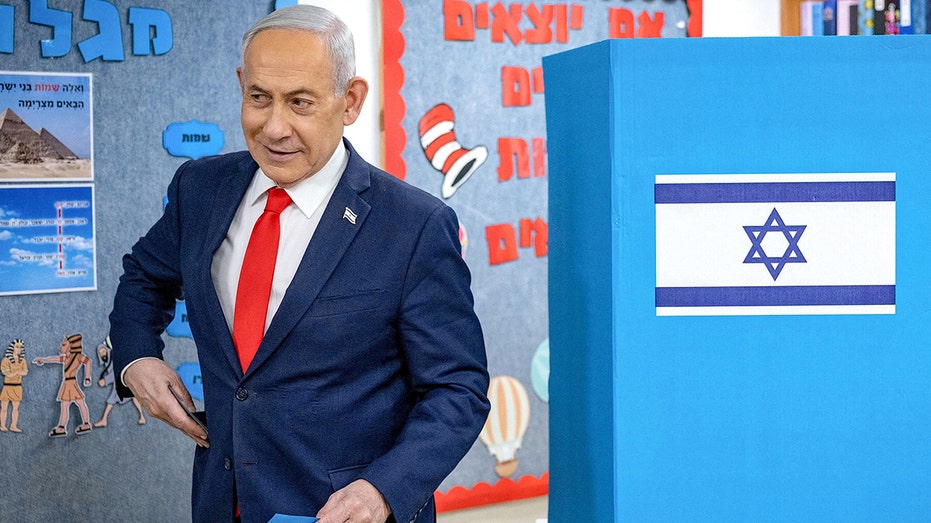
TEL AVIV, Israel — Updated Israeli exit polls early Wednesday showed Prime Minister Benjamin Netanyahu gaining ground against his political rivals but still falling short of a parliamentary majority, leaving the country facing a possible political deadlock despite a combined majority of seats projected for parties outside his governing bloc.

An updated Channel 12 exit poll at 3:30 a.m. (Israel time) projected 53 seats for Netanyahu's right-wing and religious bloc, compared with 49 for the main opposition led by former military chief Gadi Eisenkot and another 19 for Arab parties. Together, the opposition and Arab factions would hold 68 seats in the 120-seat Knesset, although they remain divided over forming a government together.

Netanyahu struck a defiant tone in his first election-night speech at Likud headquarters in Jerusalem, declaring that his party had emerged as the largest in Israel and calling for the formation of a strong right-wing government.

FORMER ISRAELI ARMY CHIEF GADI EISENKOT EMERGES AS NETANYAHU’S LEADING ELECTION CHALLENGER

"We are still waiting for the actual results, which we will receive over the next day or two," Netanyahu told supporters. "Two things have become clear. The first is unequivocal: Likud is the largest party in Israel."

"We must establish a strong national right-wing government," he added, warning against a government dependent on Arab parties, which he accused of opposing Israel's existence.

His remarks came hours after Eisenkot took the stage at his campaign headquarters in Tel Aviv, where supporters celebrated earlier projections showing the opposition ahead. Eisenkot called on Netanyahu to accept the results and step aside, but the updated numbers underscored how uncertain the race remains.
Netanyahu also said Israel faced a "once-in-a-lifetime historic opportunity" with Trump to eliminate the existential threat from Iran.

The competing speeches highlighted the central question emerging from the election: Who will be given the first opportunity to form a government?
If Eisenkot can secure recommendations from at least 61 lawmakers, potentially including Arab parties, he could receive the first mandate despite Netanyahu's Likud emerging as the largest individual party. But that would not guarantee he could assemble a governing coalition.
For Netanyahu, the election remains a waiting game. Even without a majority, he could still be tasked with forming a government — or get another opportunity if Eisenkot's efforts fail — leaving Israel facing weeks of political negotiations.

Israelis turned out in exceptionally high numbers Tuesday for the country’s first national election since the Oct. 7, 2023, Hamas massacre, with initial exit polls showing Prime Minister Benjamin Netanyahu’s Likud emerging as the largest party but his governing coalition falling short of a parliamentary majority, potentially opening the door to a change in leadership.
 

FORMER ISRAELI PM EMERGES AS WILD CARD IN HIGH-STAKES ELECTION WITH MIDDLE EAST'S FUTURE AT STAKE

Netanyahu fights for political future as Israel heads to polls with Iran threat looming

The results are preliminary projections, not an official vote count, and could change as ballots are tallied in the coming days.

The election followed an extraordinary day at polling stations across Israel, with long lines and voter participation reaching levels not seen in decades.

Israeli voter turnout surged to a historic high, with 77.7% of eligible voters casting their ballots by the time the polls closed, according to Israel's Central Elections Committee. The figure marked the highest turnout recorded since 1999, underscoring the intensity of the country's national election.

The unusually high participation prompted election officials to streamline voting procedures and assure voters that anyone arriving at a polling station before the 10 p.m. deadline would be allowed to cast a ballot.

The vote was widely seen as a referendum on Netanyahu's leadership following three years of war and continuing questions about responsibility for the security failures that allowed Hamas terrorists to kill approximately 1,200 people and abduct 251 others on Oct. 7, 2023.

JD VANCE DECLINES TO ENDORSE NETANYAHU DESPITE TRUMP'S STRONG BACKING

Netanyahu, Israel's longest-serving prime minister, campaigned on his record of confronting Iran and its regional proxies, highlighting Israel's military achievements and his relationship with President Donald Trump. His opponents accused him of failing to accept responsibility for the October 7 security failures and opposed his government's approach to investigating the failures that preceded the massacre.

A last-minute battle for every vote

Throughout the final hours of the campaign, Netanyahu, Eisenkot, former Prime Minister Naftali Bennett and other party leaders mounted an intensive effort to mobilize supporters and win over undecided voters.

Netanyahu's Likud party prepared hundreds of targeted campaign videos and social media messages, making digital outreach a central part of its last-minute election strategy.

Eisenkot's campaign pushed supporters to rally behind Yashar as the leading alternative to Likud, while Bennett traveled between cities and engaged voters directly and through WhatsApp conversations.

The key question now is which candidate can secure the support of at least 61 lawmakers when President Isaac Herzog consults with the newly elected parliamentary factions. If Eisenkot can obtain those recommendations, including from Arab parties, he would have a strong claim to receive the first opportunity to form a government, even though Netanyahu’s Likud is projected to remain the largest individual party. Crucially, Arab parties could recommend Eisenkot without formally joining his governing coalition. However, the final decision rests with Herzog, who is tasked with selecting the lawmaker he believes has the best chance of forming a government. Securing the first mandate would not guarantee Eisenkot could assemble a governing majority, leaving the possibility of another political deadlock.

NETANYAHU FIGHTS FOR POLITICAL FUTURE AS ISRAEL HEADS TO POLLS WITH IRAN THREAT LOOMING

The campaign's closing hours also featured personal appeals, phone calls to undecided voters and aggressive turnout operations across the political spectrum.

The final days were particularly important because a relatively small share of voters remained undecided about which party to support.

A Times of Israel poll published five days before the election found that 87% of respondents had already made their final choice, while 2.4% remained undecided between the pro and anti-Netanyahu political blocs.

Other surveys suggested a larger pool of undecided voters, although many were choosing between parties within the same political camp rather than switching sides.

That distinction could prove decisive in Israel's parliamentary system, where political parties need at least 3.25% of valid votes to enter the 120-seat Knesset.

Even a slight change in the vote share of smaller parties could shift several parliamentary seats and determine whether either camp has a realistic path to power.

TRUMP SAYS NETANYAHU NEEDS TO BE RE-ELECTED, OR ELSE US WILL HAVE TO 'FINISH THE JOB’ AGAINST IRAN ALONE

What happens next?

Despite the exit poll projections, the identity of Israel's next prime minister may remain uncertain for weeks.

Unlike in the United States, Israelis vote for political parties rather than directly electing their head of government.

The 120 seats in parliament are allocated proportionally, and parties must secure at least 3.25% of valid votes to win representation.

Once the final results are certified, Israeli President Isaac Herzog will consult with the newly elected political factions and select the lawmaker he believes has the strongest chance of forming a government.

CLICK HERE TO DOWNLOAD THE FOX NEWS APP

That candidate will have 28 days to negotiate a governing coalition, with the possibility of a 14-day extension.

Official results are scheduled to be published by Nov. 4. Until a new government takes office, Netanyahu's outgoing government will remain in power.
  •  

Sen Flávio Bolsonaro flees Brazil for US after election loss, will be issued visas: State Department

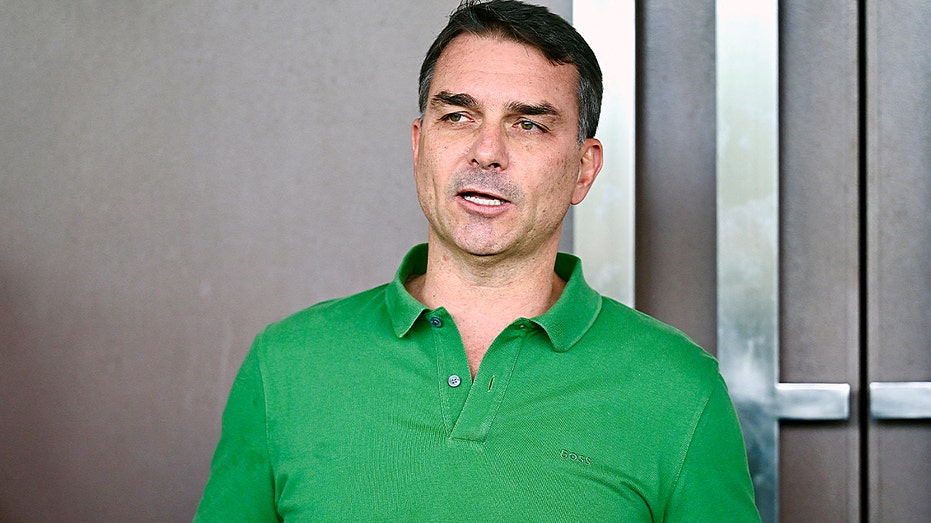
Brazilian Sen. Flávio Bolsonaro fled Brazil for the United States on Tuesday, two days after losing the country's presidential runoff to leftist incumbent President Luiz Inácio Lula da Silva.

The U.S. Department of State will issue visas to Bolsonaro and his family and allow them to enter the U.S., a senior State Department official confirmed to Fox News Digital.

An ally of the far-right conservative senator confirmed his departure from the South American country to Reuters on Tuesday.

Bolsonaro's flight was reportedly headed to Florida, according to Brazilian outlet Metropoles, citing people close to his family.

BRAZIL’S RAPID ELECTION COUNT PUTS SPOTLIGHT ON VOTING SECURITY AHEAD OF US MIDTERMS

The 45-year-old lawmaker had been out of public view since Tuesday morning, the outlet reported.

His departure came as a deadline for him to surrender his regular and diplomatic passports expired at noon Tuesday. 

Brazilian newspaper Folha de São Paulo reported Bolsonaro was under investigation for alleged money laundering and other crimes. 

It remained unclear whether Bolsonaro had complied with the order, The Associated Press reported.

BRAZIL BECOMES NEXT TEST FOR LATIN AMERICA’S SURGING CONSERVATIVE MOVEMENT

Bolsonaro was served with the order Monday, a day after Lula defeated him in Sunday's presidential runoff for an unprecedented fourth term.

With 100% of the vote counted, Lula won 51.8% of the vote, defeating Bolsonaro by nearly 4.4 million votes.

He has refused to concede the election and has called for the election results to be annulled, alleging fraud, according to The Associated Press.

Lula addressed supporters after winning re-election, expressing gratitude to the Brazilian people.

CONSERVATIVE WAVE HITS ROADBLOCK IN BRAZIL AS LULA HOLDS OFF BOLSONARO CHALLENGE

"No one is required to like the president-elect, but he must govern for everyone," Lula said.

CLICK HERE TO DOWNLOAD THE FOX NEWS APP

Referring to his opponent, Lula said, "This was a defeat for denialism and lies."

Fox News Digital's David Unsworth and Michael Sinkewicz, as well as Reuters and The Associated Press contributed to this report.

  •  

Serbia’s student movement topples Vucic’s party after 14 years, but political agenda remains unclear

Serbia’s longtime leader, President Aleksandar Vucic, conceded defeat Sunday to the student-led opposition in an election that sent shock waves throughout Europe and the Western Balkans.

"We do not have the final results yet, and many people will be surprised. Based on a stratified sample, it is clear that we have lost these elections. The student-led protest list has won," Vucic said in an address to the nation Sunday night.

The Student List victory brings an end to 14 years of Vucic and his Serbian Progressive Party rule, in what many are saying is the biggest political shake-up in the Balkans since the toppling of Yugoslav dictator Slobodan Milosevic in 2000. 

Observers say the Student List party's policies remain vague, which has some worried about Serbia's future.

Ana Brnabic, vice president of the main Board of the Serbian Progressive Party, told Fox News Digital that, "The election victory of the Student List recalls similar electoral triumphs in other countries. The Student List represents a classical anti-establishment movement: it had neither a program nor a coherent political ideology. In an essentially anarchic fashion, it opposed everything, claiming to fight for justice and against corruption."

ANTI‑CORRUPTION PROTESTS HIT EUROPEAN NATION AS CALLS FOR NEW ELECTIONS GROW

She added, "After 14 years of Serbian Progressive Party (SNS) rule, people may have wanted change. That is understandable and logical. But the grim consequences of this movement in power will soon become apparent."

Turnout reached 69 %, the highest this century, with more than 4.4 million people casting their ballots, according to Rasa Nedeljkov, head of the CRTA Election Observation Mission.

"This is by all means a historic victory and indeed a surprise to many. While it was clear from the beginning that the students will have an impressive result, very few expected a landslide," Helena Ivanov, associate fellow at the Henry Jackson Society, told Fox News Digital.

The Election Observation Mission reported that the Student List won 52.45 % of the vote and is projected to hold 138 of 250 seats in the National Assembly, an absolute majority, allowing it to form a government on its own.

Vucic won 39.2 % and is projected to hold 103 seats.

Supporters celebrated throughout Belgrade and across Serbia as it became clear the Student List won by a larger margin that caught many experts and observers by surprise.

Many claimed they were concerned about the possibility of violence escalating as polls began to close. Almost two hours after polling stations closed, Vucic addressed the nation, confirming his defeat and announcing the peaceful transfer of power.

FRANCE ROCKED BY STUDENT RIOTS AS HUNDREDS ARRESTED, VIOLENCE SPREADS NATIONWIDE

"The path to an electoral victory with such a decisive margin will undoubtedly earn its own chapter in the handbooks on how to topple an autocrat. Two years of unprecedented grassroots mobilization, creative organization and impeccable campaigning kept the student list two steps ahead of the regime. Vučić was left playing catch-up, and all his attempts to co-opt, demoralize and fragment the movement failed," Sinisa Vukovic, director of the Global Policy Program at the School of Advanced International Studies at Johns Hopkins University, told Fox News Digital.

The CRTA Election Observation Mission reported that the campaign was marked by the abuse of state resources, pressure on candidates and voters, attempts to bring the media under total government control, and attacks on independent election observers.

Tens of thousands of Serbians volunteered to run and monitor polling stations across the country, and the vote was mostly peaceful.

SERBIA, CAUGHT BETWEEN EUROPE AND RUSSIA, COULD MOVE ONE STEP CLOSER TO NORMALIZING RELATIONS WITH KOSOVO

Student led protests marched in the streets for two years after the deaths of 16 people following the collapse of a railway station in the town of Novi Sad in November 2024. People had taken to the streets, demanding justice for those killed and accountability for anyone responsible for the disaster.

The momentum of nearly two years of street demonstrations culminated in a nationwide movement ready for change. The political novices were able to rally the nation behind a simple message against corruption and state capture.

Serbs across the country embraced the Student List, who are viewed as fresh faces in politics and are not tied to Serbia’s traditional political opposition, which is perceived as ineffective and corrupt by a lot of the voters.

EXCLUSIVE: SERBIAN PRESIDENT VUČIĆ SAYS SUPPORT FOR US 'SURGED' UNDER TRUMP, INVITES HIM TO VISIT BELGRADE

Milos Jevtic, a 48-year-old professor with the Faculty of Organizational Sciences at the University of Belgrade, was among the many Student List candidates who won a seat in parliament.

Jevtic told Fox News Digital that their victory came from the values that the students have stood for from the very beginning: expertise, professionalism, responsibility, solidarity and unity.

"What is particularly important is that the students have never compromised on these values and principles. Of course, widespread public dissatisfaction also played a major role, along with a lack of trust in both the current regime and the opposition parties," Jevtic explained.

Jevtic said he believes the priorities for the new Student List-run government should be economic stability, fighting corruption, establishing the rule of law and strengthening institutions, much of what carried the student-led protests since 2024.

"The ultimate goal is to build a system in which institutions function in the interests of all citizens," Jevtic said.

On foreign policy, there is an expectation that there will be a certain degree of continuity with the Vucic administration in international relations, including maintaining good relations with neighboring European countries and all major international partners.

But Brnabic warned that "Serbia has lost meaningful political pluralism. After 35 years of a multiparty system, the country is effectively left with one established political party, SNS, while the rest of the political scene is dominated by largely unknown movements without a clear ideology. This is catastrophic for any parliamentary democracy."

CLICK HERE TO DOWNLOAD THE FOX NEWS APP

She added, "Secondly, nobody in Serbia knows where the country is heading. Are we firmly pro-EU? Will we maintain our ties with Russia? What about China? Will we continue to enhance our relations with the United States — which was a priority of Aleksandar Vucic? Will economic policy be more left-liberal or conservative? Are we heading towards a woke liberal society, or will we preserve our traditional Orthodox Christian values? There are no clear answers to any of these questions."

She concluded by noting, "We have also called for Parliament and all state institutions to be constituted as soon as possible, so that the country has functioning institutions on which people can rely. We will be a strong but constructive opposition. We call on the Student List’s representatives to end the intimidation and assume the responsibility entrusted to them by the voters." 

  •  
❌