Reading view
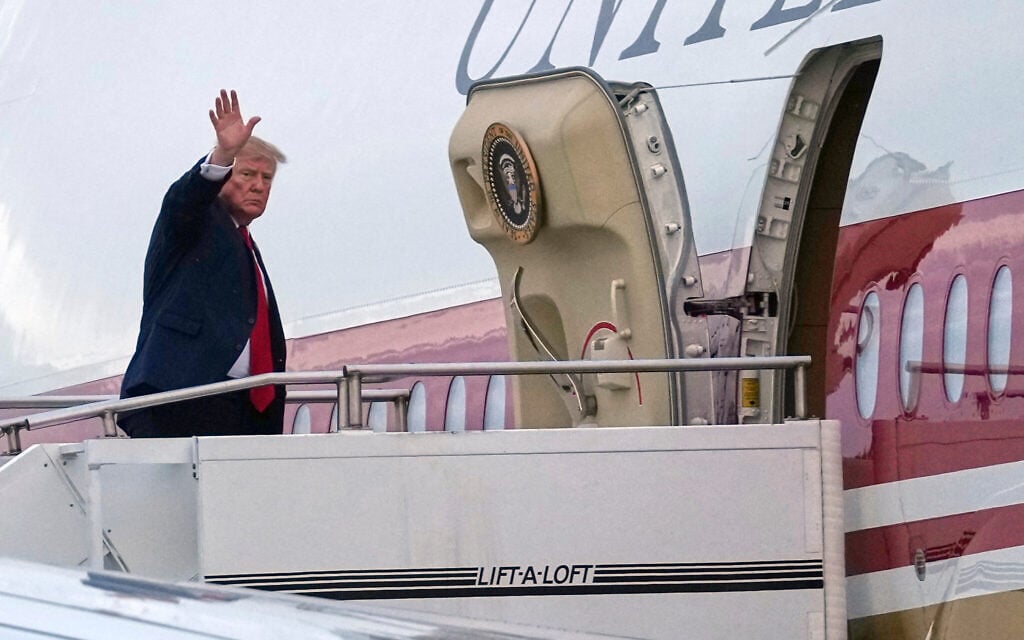
How Trump’s ‘little detour’ to Iran became a roadblock in the US midterm elections

A 'never-ending' cruise has halted operations and told residents to disembark in Cambodia after fuel costs rose over 300%
PAUL FAITH/AFP via Getty Images
- It was meant to be a never-ending residential cruise. Now, operations have halted.
- Villa Vie Residences said it can no longer operate due to fuel expenses surging more than 300%.
- The cruise line set sail in 2024 with the promise of a live-in, continuous voyage around the world.
A cruise ship selling the promise of a permanent life at sea has come to an abrupt stop.
Villa Vie Residences, which operates the residential cruise ship Villa Vie Odyssey, announced on Tuesday that it had suspended operations in Cambodia amid steep increases in fuel costs.
The company said its monthly fuel expenses per cabin, which had previously averaged about $1,800, had risen as much as 344% in parts of Asia, to an estimated $6,000 to $8,000.
The US-Israeli war with Iran began in February, and Iran's subsequent closure of the Strait of Hormuz — a vital chokepoint for global oil shipments — sent energy prices soaring around the world.
"Since the conflict began in late February, we have taken significant steps to reduce fuel consumption, including slowing the itinerary and spending more time in port," Villa Vie Residences said.
"Those measures have not been enough to offset the extraordinary increase in fuel costs, and we have been unable to continue carrying the resulting operating losses."
Villa Vie Residences sold permanent cabins on its 509-cabin ship, the Odyssey, ranging from $119,999 to $439,999. Its pitch to residents was a never-ending cruise around the world with stops at more than 400 ports of call and a global circumnavigation every three-and-a-half years.
The ship, which has a pool deck, spa, and a pickleball court, also offered five-year residencies, starting at $59,999.
The rising fuel costs put the company's operating model under unsustainable financial pressure, Villa Vie Residences said. The company added that it was evaluating options, but that no financing or transaction had been finalized.
"Passing the full increase on to residents is not a realistic solution," the company said. "Our focus now is on supporting residents, crew, and employees while we work toward restructuring and recapitalization over the next 60 days. That work is ongoing, and no outcome is assured."
The press release said the company was working with residents to coordinate disembarkation in Cambodia and to identify temporary living arrangements for them.
The Odyssey first set sail from Belfast in September 2024 after four months of delays.
Villa Vie Residences did not say how many residents were affected and did not immediately respond to a request for comment from Business Insider.
Have you spent time on the Villa Vie Odyssey? If you have a story to share, get in touch with this reporter: jzitser@businessinsider.com.
What Lula’s victory means for Palestine solidarity in Brazil
Over the weekend, Brazilians elected Luiz Inácio Lula da Silva president once more by a very narrow margin, defying polls that had him trailing. No candidate had won a Brazilian runoff from second place since 1989. That precedent is broken, and it was broken from below: by student-led rallies in Rio de Janeiro, São Paulo, Minas Gerais and Porto Alegre.
The rallies were called without Lula, by pop-star fan communities and influencers who injected energy into a campaign that had flagged all year, and by widespread mass communications like Deputy André Janones's WhatsApp channel, which passed 10 million followers. Many of those young figures have been vocal on Palestine. Their job now is to make sure their government hears them.
That mobilisation will matter all the more given the political landscape Lula faces. The Congress that convenes on 1 February will comprise 594 members, 513 deputies and 81 senators, with the right and its allies holding a comfortable majority in both houses. With 90 members close to the Palestinian struggle, the challenge will be to turn that support, alongside pressure from civil society, into concrete political action.
Palestine
Lula's words have been strong in recent years. He recognised the State of Palestine in 2010, the first in South America to do so, condemned the genocide in Gaza as early as October 2023, and did not back down when the Israeli colonial regime declared him persona non grata over his Holocaust comparison.
Brazil joined South Africa's case at the International Court of Justice and has had no ambassador in Tel Aviv since May 2024. His actions, however, were fewer. Diplomatic and trade relations with Israel were never fully cut. The Army’s planned purchase of 36 armoured howitzers from Elbit Systems was stalled in 2024 amid political opposition over military ties with Israel. The deal resurfaced in October 2026 after Brazilian defence company Avibras, reached an agreement with Elbit’s Brazilian subsidiary, AEL Sistemas, paving the way for local assembly.
The proposed purchase, worth almost $200 million, remained controversial after renewed public backlash, and the army subsequently cancelled the planned signing of the initial contract for two units. However, the wider procurement was not cancelled.
Lula has always been a conciliator. But a fourth and last term with popular backing opens room for much bolder steps, including ending trade relations with illegal settlements in the occupied West Bank, withdrawing from the Mercosur–Israel Free Trade Agreement, imposing a total embargo on weapons and technology transfers with the Zionist regime, and investigating and halting any indirect exports of Brazilian oil through third-country intermediaries.
The recognition of Palestine itself came at the end of his second term, and was then seen as his last.
For Palestinian solidarity movements, Lula’s victory above all means keeping the conditions they work under today, which are far more favourable than those a Flávio government would offer. The government remains open to dialogue with civil society, its own rhetoric lends legitimacy to the cause, and the state does not throw its weight behind the campaign against it.
Holding the line
Lula's government is not immune to Zionist lobbies, however. They continue to influence leaders close to the president and elected officials within his Workers' Party (PT) and Congress, where it needs centrist allies.
Even under Lula, part of the work will be to contest the government itself.
The institutional climate will remain turbulent. The reaction from Bolsonaro's supporters, especially if backed by Trump, is a challenge the PT anticipates. But the balance has shifted. Flávio will lose the privileged forum his Senate seat gives him, and with investigations advancing, he could face arrest.
Eduardo Bolsonaro, second in the family's line of command, is a fugitive in the United States after a Supreme Court justice issued an arrest warrant and cancelled his passports. He was sentenced to four years and two months for coercing the judicial process through lobbying Washington for sanctions against Brazilian magistrates.
From Florida, he has advised his brother to flee if defeated and joked about US Marines intervening. The family cannot hold political capital while their assets disperse.
Lula's path is to strengthen republican institutions – the Supreme Court included –, but he would be boxed in by a Senate taken over by the Bolsonarista party, which confirms justices and can impeach them.
Sustained public mobilisation in the streets and online could also help expose the networks of corruption and patronage that sustain the far-right’s power in Congress. Investigations into Banco Master and parliamentary budget amendments could weaken some of these networks and make it harder for politicians to convert economic power into political influence.
For the Palestinian movement, this matters. Challenging the interests that protect Zionist politicians is part of building a Congress more accountable to the public and less willing to enable complicity in the occupation.
Brazil’s importance in the region and to the cause is based on many factors; Brazil holds a third of Latin America's population and GDP, its main instrument abroad has never been economic or military might but diplomacy, and the country has built its influence on multilateralism, mediation and coalitions such as the BRICS. Gains made in Brazil tend to spread, as the wave of recognition of Palestine that followed 2010 showed.
In the region, Brazil is now an exception. Seven South American governments are aligned with Donald Trump, and Brazil is the largest country still holding out. Israel and the United States – as governments but also through Big Tech companies like META - invested here for years to change that. They have failed, for now.
Ultimately, a generation of young political figures carried this campaign, vocal on Palestine and with a strong presence online. In a contest increasingly fought on social media, a terrain the right had long dominated, the left has begun to close the gap. The platforms themselves are part of that dispute, and Meta's seeming interference in the campaign has become a matter of national and international debate.
The dispute over Brazil's public digital payment system (PIX) has also exposed US interest in challenging a model that threatens the dominance of American payment companies.
Furthermore, Brazil has a vibrant independent press that is often more receptive to the Palestinian cause. The country’s media landscape also includes major broadcasters such as TV Globo (formerly Rede Globo), Brazil’s largest television network and one of the country’s most influential media organisations. Its televised political debates attract large audiences and shape public discussion, with their coverage and political implications often resonating beyond Brazil’s borders.
Internationally, Lula's surprising victory and popular mobilisation must inspire and trickle to other countries where people are protesting in their masses against growing authoritarianism, fascism and neoliberal economic policies - all aligned with the Zionist regime - in France, India, Spain, and Serbia.
The pendulum is likely to swing in Brazil by 2030, and the next four years must be used to build irreversible actions toward liberation.
Rula Shadeed is the Co-Director of the Palestine Institute for Public Diplomacy.
Follow Rula on Instagram: @pipdbrasil and X: @rabetbypipd
Have questions or comments? Email us at: editorial-english@newarab.com
Opinions expressed in this article remain those of the author and do not necessarily represent those of The New Arab, its editorial board or staff.

Europe’s Electricity Price Divide Exposes Limits of the Single Energy Market
Europe’s electricity market recorded substantial regional differences on Tuesday, 27 October, with average wholesale prices ranging from approximately €6 per megawatt-hour in northern Sweden to more than €255 in Romania.
The figures reveal a persistent difficulty for European energy policy: although the continent has an increasingly interconnected electricity market, businesses and consumers remain exposed to very different underlying wholesale costs depending on location.
According to European day-ahead electricity market data, Sweden’s SE2 bidding zone recorded an average of €6.23 per megawatt-hour, while Finland stood at approximately €6.65. Romania reached €255.20, roughly 41 times northern Sweden’s price. Bulgaria registered approximately €254, Hungary €241 and Greece €225. Germany recorded approximately €155, Belgium €160 and France €162.
These are wholesale prices for delivery on 27 October, not final bills for households or businesses. Their differences nevertheless raise questions about how effectively Europe’s electricity networks distribute power from areas of lower-cost generation to those facing greater costs.
Why a common market produces different prices
European electricity trading is organised through interconnected national and regional markets. Cross-border capacity allows relatively inexpensive power to reach regions where demand is greater or local generation is more expensive.
When transmission capacity is adequate, neighbouring prices can converge. Physical networks, however, have limits. Congested interconnectors can prevent additional imports even when large price differences exist.
Other influences include availability of power stations, renewable output, fuel prices, consumption and system stability. Regions with substantial hydropower, nuclear generation or strong renewable production may experience comparatively low prices. Markets relying on gas-fired generation can be more expensive when gas plants are needed to satisfy the final increment of demand.
The result is a market responding to common European conditions but still shaped by local generation and transmission constraints.
Southeastern Europe’s structural constraints
The European Union Agency for the Cooperation of Energy Regulators, ACER, has repeatedly examined the causes of regional price divergence. In its 2026 assessment of cross-zonal electricity trade, the agency considered unusually high prices and limited access to lower-cost power in southeastern Europe.
Constraints include available cross-border capacity and shortages of flexible generation able to respond to changing renewable output, especially in the evening. Countries including Greece, Bulgaria, Romania, Hungary, Croatia and Slovenia have encountered substantial regional differences.
Those findings do not prove the cause of each price movement on 27 October. They do, however, explain why disparities can persist despite common market rules. ACER has advocated improved coordination among transmission operators, more effective use of existing networks and additional flexibility through storage and demand management.
Industrial consequences of expensive electricity
Energy-intensive industries, including steel, chemicals and fertiliser production, are particularly sensitive to electricity costs. Where contracts are exposed to wholesale markets, sustained regional price differences can influence output and investment decisions.
The relationship between wholesale prices and bills is not immediate. Firms may hedge prices, use long-term contracts or produce their own power. Network charges, taxes and government support also affect the amount paid. Still, persistent market differences can shape industrial competitiveness.
As EU Today reported, EU energy ministers are due to examine proposed changes to electricity network charges and market administration on 29 October. Network tariffs are distinct from wholesale prices, but both affect total electricity costs.
Renewables and the need for flexible networks
According to ACER’s energy-market monitoring, renewable sources represented around half of EU electricity generation in 2025. Solar energy can reduce prices during the day, but output falls sharply towards evening, sometimes requiring more expensive power stations to increase generation.
This increases the value of storage, flexible production, responsive demand and international connections that can balance surpluses and shortages between regions. Yet major transmission lines can take years to complete owing to planning, permitting, investment and construction requirements.
The priority is therefore not simply to install more renewable capacity. Europe’s grids and supporting technologies must be capable of moving and using that output efficiently.
What the price divide reveals
A single day’s wholesale prices should not be mistaken for long-term average electricity costs or a permanent competitive advantage. Nevertheless, the persistence of regional disparities documented by regulators shows the problem extends beyond isolated daily volatility.
For EU institutions, the question is whether further market integration can make energy more affordable while preserving incentives to invest in generation and transmission. National governments must balance security of supply, infrastructure financing and industrial competitiveness.
Electricity trading across Europe is increasingly integrated. The physical systems supplying it remain considerably less uniform. Until those constraints are addressed, the price of power will continue to reflect geography as well as the underlying cost of energy.
Amazon weighed ‘difficult trade-offs’ as memory costs squeezed its devices business, internal document shows
CHARLY TRIBALLEAU/AFP via Getty Images
- Amazon launched a series of new devices this month, including Alexa tablets and Bee AI wearables.
- Rising memory costs forced "difficult trade-offs" on Amazon's device prices, sales, and profit.
- Amazon is seeking more Alexa revenue from enterprise sales, licensing, and ads.
Amazon launched a flurry of new consumer devices this month. Behind the scenes, rising memory costs are adding pressure to its already money-losing hardware business.
An internal planning document obtained by Business Insider shows Amazon forecasting a $612 million gross loss this year for its first-party devices business, compared with a leadership target of a $438 million loss.
The document said rising memory costs were "putting pressure" on the business's profitability, forcing "difficult trade-offs" among sales volumes, average selling prices, and gross profit.
The projected $612 million loss was at the gross profit level, meaning it did not account for all operating expenses, such as R&D, sales and marketing, and administrative costs.
The figures offer a rare glimpse into the pressure on Amazon's hardware business as it absorbs rising component costs. Other tech hardware companies, including industry leader Apple, face similar pressure from surging memory chip prices.
An Amazon spokesperson declined to comment.
A new wave of AI devices
Despite the pressure, Amazon continues to expand its consumer hardware lineup. Even if the company loses money on device sales, it can make money in other ways, such as subscription services, as more customers use its gadgets.
In October alone, the company introduced new Kindles, Alexa-powered tablets, Ring smart locks, and AI wearables under its Bee brand. The August planning document identified Bee and new smart glasses as strategic products still in an investment phase.
Amazon has historically used low-cost hardware to pull customers into a broader ecosystem of shopping and digital content. Rising component costs could make that strategy more expensive, forcing the company to raise prices.
The clearest shift is in Amazon's tablets. Earlier this month, the company phased out Fire tablets after 15 years and replaced the budget-friendly lineup with pricier Alexa Tablets powered by Alexa+. The new devices cost between $229.99 and $499.99, a notable increase from previous generations.
Not just Amazon
The planning document was prepared in August, the same month Amazon raised prices on products including Echo speakers, Kindle e-readers, and Fire TV devices.
The pressure extends beyond Amazon. Apple has raised prices on some Macs and iPads, while Microsoft and Sony have increased console prices. Dell, HP, and Lenovo also face higher memory costs.
The AI boom is helping drive the squeeze. Huge data center investments have increased demand for memory chips, while manufacturers have devoted more capacity to high-bandwidth memory used in AI servers. That has tightened supplies and raised prices for components used across consumer electronics.
Amazon is experiencing both sides of the boom. It expects roughly $220 billion in capital expenditures this year, largely to expand AWS data centers for AI demand, while higher component costs squeeze its consumer hardware business.
The rising cost of Alexa+
The August planning materials show Amazon reassessing both Alexa+ revenue and operating costs. They called for updated forecasts, expansion through enterprise sales and advertising, and more detailed AWS cost modeling.
Amazon is now confronting the cost of operating Alexa+ at scale. Business Insider reported in July that internal forecasts put Alexa+'s AWS cloud costs at roughly $1.7 billion in 2026, nearly triple the prior year's figure. Amazon was working to lower those costs by relying less on Anthropic's AI models and routing more requests to its own, cheaper systems.
A separate project called Moonraker, intended to give Alexa more advanced AI-agent capabilities, was projected to require more than $100 million in GPU spending this year. Amazon internally considered delaying or scaling back the initiative as one option for easing cost pressure, Business Insider previously reported.
Have a tip? Contact this reporter via email at ekim@businessinsider.com or Signal, Telegram, or WhatsApp at 650-942-3061. Use a personal email address, a nonwork WiFi network, and a nonwork device; here's our guide to sharing information securely.
Even a ‘boring’ Budget can be a risk, chancellor
Editorial: All the signs are that John Healey’s first Budget on Wednesday will be a very modest event indeed. Without precise measures to bring down the cost of living, it could leave the government looking rudderless

© Kirsty O'Connor/Treasury